Naar de inhoud

Romenu

Over literatuur, gedichten, kunst en cultuur
akke.beakke.be

Berichten van 11 januari 2019 tot 12 januari 2019

Cees van der Pluijm, David Mitchell, Jacques Hamelink, Haruki Murakami, Kamiel Verwer, Jakob Lenz, Fatos Kongoli

De Nederlandse dichter, schrijver en columnist Cees van der Pluijm werd geboren op 12 januari 1954 te Radio Kootwijk (Gld.). Zie ook alle tags voor Cees van der Pluijm op dit blog.


Filippino Lippi (1459-‑1504) ─ zelfportret

Zijn ogen zijn van stilte overtogen
En uit de open, welgevormde mond
Klinkt niets dat je verrukken kan of schokken ─
Hij lijkt een zwijgend kind van zestien jaar

Zijn zacht gelaat is jongensachtig rond
Voorzichtig springen hier en daar zijn lokken
Iets op uit de gekamde regelmaat
Van zijn in bruine lagen vallend haar

Toch ziet hij je met zijn verstarde ogen
Er broeit iets dat zich slechts beschrijven laat
Als niet onaangedaan en niet verveeld

Je hoort zijn stem in dit verstomde beeld
En proeft de hartstocht die hier onbewogen
Voor eeuwig in de kalk geschilderd staat


De kleine waterval

Het water maakt een lange reis
Nu valt het hier van het plateau
Waar even het de hoogte vond
En dan verzinkt als vloeibaar ijs

Ginds komt het wellend uit de grond
Passeert het slot en trapsgewijs
Verandert telkens het niveau

Zo gaat het heel de wereld rond
En keert terug waar het ontstond
En stroomt dan weer van ons vandaan

Ontspringen, zijn, ten ondergaan –
Wij stromen als het water mee
Het spiegelt ons vergeefs bestaan:
We drijven langzaamaan naar zee


Katholieke roman
Paul Lemmens S.J.

In 't oude huis heerst droefenis en schrik
De bleke vader loopt vertwijfeld rond
Eenieder ziet zijn triest omfloerste blik

De zeven zoons, zij houden braaf hun mond
En ook de meisjes, negen in totaal
Ontzien hun lieve vader in deez' stond

Want in de stille kamer, hoog en kaal
Ligt zij, de moeder van de kinderschaar
Nu opgebaard, haar lichaam koud als staal

Ze ligt, met zoete bloempjes in het haar
Als slapend op het bed dat werd tot baar


 2207039-e216935667c4a2f4739cb9b391f6b2c8.jpg
Cees van der Pluijm (12 januari 1954 – 14 december 2014)


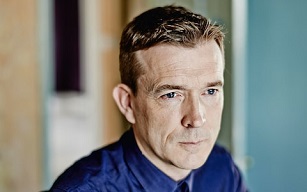
De Britse schrijver David Mitchell werd geboren in Southport op 12 januari 1969. Zie ook alle tags voor David Mitchell op dit blog.

Uit:Black Swan Green

“Do not set foot in my office. That's Dad's rule. But the phone'd rung twenty-five times. Normal people give up after ten or eleven, unless it's a matter of life or death. Don't they? Dad's got an answering machine like James Garner's in The Rockford Files with big reels of tape. But he's stopped leaving it switched on recently. Thirty rings, the phone got to. Julia couldn't hear it up in her converted attic 'cause "Don't You Want Me?" by Human League was thumping out dead loud. Forty rings. Mum couldn't hear 'cause the washing machine was on berserk cycle and she was hoovering the living room. Fifty rings. That's just not normal. S'pose Dad'd been mangled by a juggernaut on the M5 and the police only had this office number 'cause all his other I.D.'d got incinerated? We could lose our final chance to see our charred father in the terminal ward.
So I went in, thinking of a bride going into Bluebeard's chamber after being told not to. (Bluebeard, mind, was waiting for that to happen.) Dad's office smells of pound notes, papery but metallic too. The blinds were down so it felt like evening, not ten in the morning. There's a serious clock on the wall, exactly the same make as the serious clocks on the walls at school. There's a photo of Dad shaking hands with Craig Salt when Dad got made regional sales director for Greenland. (Greenland the supermarket chain, not Greenland the country.) Dad's IBM computer sits on the steel desk. Thousands of pounds, IBMs cost. The office phone's red like a nuclear hotline and it's got buttons you push, not the dial you get on normal phones. So anyway, I took a deep breath, picked up the receiver, and said our number. I can say that without stammering, at least. Usually. But the person on the other end didn't answer.
"Hello?" I said. "Hello?"
They breathed in like they'd cut themselves on paper.
"Can you hear me? I can't hear you."
Very faint, I recognized the Sesame Street music.
"If you can hear me"—I remembered a Children's Film Foundation film where this happened—"tap the phone, once."
There was no tap, just more Sesame Street.
"You might have the wrong number," I said, wondering.
A baby began wailing and the receiver was slammed down.
When people listen they make a listening noise.
I'd heard it, so they'd heard me.
"May as well be hanged for a sheep as hanged for a handkerchief." Miss Throckmorton taught us that aeons ago. 'Cause I'd sort of had a reason to have come into the forbidden chamber, I peered through Dad's razor-sharp blind, over the glebe, past the cockerel tree, over more fields, up to the Malvern Hills”.
 

 2207039-5241a0f256aa5de9ab9aeb0d01b6f9cd.jpg
David Mitchell (Southport, 12 januari 1969)


De Nederlandse dichter en schrijver Jacques Hamelink werd geboren op 12 januari 1939 in Driewegen, bij Terneuzen. Zie ook alle tags voor Jacques Hamelink op dit blog.


Het idee

De magnolia, voorloper,
verspilde zijn bloesems nog. Daarna kwam
in de koude wind de bosduif terug
van verleden jaar. Een nieuwe vestigingspoging –

      het idee
geeft me je geneurie, onafgebroken,
dat niet zingt maar zacht stookt,
aanstuurt op zang.


De Moorse tuin

Als kind, je weet het, vond ik troost
bij de vlier die uitliep
langs de slootkant. Zijn verwarrende geur
werd tot chiffre van mijn folklore, hartzeer

dat zich hier hervindt. Voor het gevoel
wieg je, weerleg je mijn aarzeling nog weer
als gisteren, toen in de wrange wind
de oleander in bloei ging.


Ansicht

Dorre dag, fijn schuurzand dat ons gesloten heden
door kieren binnendringt; armetierig leven,
dat aan de basis ligt, dat ons slikt; doorgangshuis
voor de wind die hijgt naar de regen, de lathyrus losrukt
van de latten, tot vervelens toe je bloemperken rammeit
terwijl hier, in de tochtloze hemisfeer
van een huurkamer, een kitschpendule onder een stolp
werktuigelijk het museale begrip tijd intakt houdt.

Wat zei je ook weer, dat de wind ging liggen?
De weinige woorden hebben alle bijbetekenissen afgelegd,
hier kan niets meer gebeuren of gebeurt
bij het minste of het geringste alles opnieuw, zodra
een pauze valt onder de lamp, je polshorloge luider gaat tikken,
je je adem inhoudt, buiten
eindelijk de regen begint, een nachtvogel schreeuwt,
je bij vergissing misschien het gebaar vindt
dat aan zijn bedoeling beantwoordt.
 

 2207039-1d898a58c86c8fe201c41ade391e9787.jpg
Jacques Hamelink (Terneuzen, 12 januari 1939)


De Japanse schrijver en vertaler Haruki Murakami werd geboren op 12 januari 1949 in Kyoto. Zie ook alle tags voor Haruki Murakami op dit blog.

Uit: Colorless Tsukuru Tazaki and His Years of Pilgrimage (Vertaald door Philip Gabriel)

“One Saturday night, Tsukuru and Haida were up talking late as usual when they turned to the subject of death. They talked about the significance of dying, about having to live with the knowledge that you were going to die. They discussed it mainly in theoretical terms. Tsukuru wanted to explain how close to death he had been very recently, and the profound changes that experience had brought about, both physically and mentally. He wanted to tell Haida about the strange things he’d seen. But he knew that if he mentioned it, he’d have to explain the whole sequence of events, from start to finish. So as always, Haida did most of the talking, while Tsukuru sat back and listened.
A little past 11 p.m. their conversation petered out and silence descended on the room. At this point they would normally have called it a night and gotten ready for bed. Both of them tended to wake up early. But Haida remained seated, cross-legged, on the sofa, deep in thought. Then, in a hesitant tone, something unusual for him, he spoke up.
“I have a kind of weird story related to death. Something my father told me. He said it was an actual experience he had when he was in his early twenties. Just the age I am now. I’ve heard the story so many times I can remember every detail. It’s a really strange story—it’s hard even now for me to believe it actually happened— but my father isn’t the type to lie about something like that. Or the type who would concoct such a story. I’m sure you know this, but when you make up a story the details change each time you retell it. You tend to embellish things, and forget what you said before. ... But my father’s story, from start to finish, was always exactly the same, each time he told it. So I think it must be something he actually experienced. I’m his son, and I know him really well, so the only thing I can do is believe what he said. But you don’t know my father, Tsukuru, so feel free to believe it or not. Just understand that this is what he told me. You can take it as folklore, or a tale of the supernatural, I don’t mind. It’s a long story, and it’s already late, but do you mind if I tell it?”
Sure, Tsukuru said, that would be fine. I’m not sleepy yet.”

 2207039-2530bcf0502d5f4ceca7b25476874247.jpg
Haruki Murakami (Kioto, 12 januari 1949)


De Nederlandse dichter en schrijver Kamiel Verwer werd op 12 januari 1979 in Tilburg geboren. Zie ook alle tags voor Kamiel Verwer op dit blog.

Uit: Plezier met het CJIB

“Maar dat is toch vreemd. Het is al drie maanden geleden.”
– “Het kan soms wel langer duren.”
“Ik bel omdat ik misschien in de niet al te verre toekomst ga emigreren naar een land buiten Europa. Het adres dat ik aan de agenten heb opgegeven is dan niet meer geldig. Wat gebeurt er wanneer de brief de afzender niet kan bereiken?”
– “Dat hangt ervan af.”
“Stel: ik kom over twintig jaar terug naar Nederland om afscheid te nemen van een doodziek familielid. Wat gebeurt er wanneer die boete nog open staat?”
– “Dat zou ik u niet kunnen zeggen.”
“Mooi. Dat is belangrijk voor me om te weten.”
– “Het hangt van de beslissing van de politie over twintig jaar af. U zou bijvoorbeeld kunnen worden aangehouden.”
“Aangehouden? Zou ik in de cel kunnen worden gezet?”
– “Dat behoort eventueel ook tot de mogelijkheden, ja.”
“Goed zo. En in die cel wordt me ook nooit duidelijk gemaakt waar ik precies aan toe ben?”
– “Maakt u zich maar geen zorgen, meneer Verwer.”
“Prachtig. Er zijn nog een paar kleine dingetjes die ik wil weten.”
– “Vraagt u maar. We zijn er om u te helpen.”
“Stel dat ik bij u langskom aan de balie, en dan de boete direct betaal. Dat scheelt u weer een brief en…”
– “Helaas hebben wij geen bezoekadres.”
“Prima! Dat is waar ik stiekem op had gehoopt.”
– “Ik ben blij dat ik u van dienst heb kunnen zijn. Heeft u verder nog vragen?”
“Heeft u enig idee om wat voor boete het gaat?”
– “Daarvoor zou ik u moeten doorverbinden naar een andere afdeling.”
“Dit is schitterend. Dank u wel!”
– “Een prettige middag nog, meneer Verwer.”
 

 2207039-9b92b17f9f2ce4787366c5ac238d0db0.jpg
Kamiel Verwer (Tilburg, 12 januari 1979)


De Duitse dichter en schrijver Jakob Michael Reinho;d Lenz werd geboren op 12 januari 1751 in Seßwegen. Zie ook alle tags voor Jakob Michael Reinhold Lenz op dit blog.


Das Vertrauen auf Gott

Ich weiß nichts von Angst und Sorgen,
Denn, erwach' ich jeden Morgen,
Seh' ich, daß mein Gott noch lebt,
Der die ganze Welt belebt.

Dem hab' ich mich übergeben,
Er mag auf mich Achtung geben,
Er ist Vater, ich das Kind,
Meinem Vater folg' ich blind.

Ich bins so gewohnt von Langem,
Unverrückt an ihm zu hangen.
Wo ich bin, da ist auch er,
Wenn es auch bei'm Teufel wär'.

Toben Stürme, Unglücks-Wellen,
Wenn die Feinde noch so bellen,
Bin ich ruhig, denn mein Gott
Half mir noch aus aller Noth.

Und wenn auch die Noth am größten,
Eben recht, so dient's am besten:
Wenn die Wege wunderlich,
Gehn sie immer seliglich.

Wenn du willst an Ihm verzagen,
Dich mit eitlen Sorgen plagen,
Ei so sag' nicht, daß du bist
Gotteskind, ein wahrer Christ.[12]

Der aus Nichts die Welten machte
Unser Gott im Himmel sagte:
Ruf' mich an, so führ' ich dich,
Helf' dir, und errette dich.

Gott hat Jesum uns gegeben,
Daß wir möchten durch Ihn leben:
Jesum, Seinen lieben Sohn,
Sandte Er vom Himmelsthron.

Er ist unser Fürst geworden,
Er soll helfen aller Orten,
Denen, die sich Seiner freu'n,
Und ihr Herz der Liebe weih'n.

Wird denn Der dich lassen sterben,
Der dich hat gesetzt zum Erben?
Der für dich geschmeckt den Tod?
Gott bleibt immer Gott, dein Gott!

Hoffe nun, steh' fest im Glauben,
Laß dir nichts die Hoffnung rauben;
Ließe dich dein Fürst in Noth,
Würd' Er selbst der Feinde Spott.
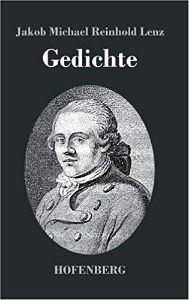
 

 2207039-45cfbde9ab3226ed64a21a3d1b3874e9.jpg
Jakob Michael Reinhold Lenz (12 januari 1751- 24 mei 1792)
Cover


De Albanese schrijver Fatos Kongoli werd geboren op 12 januari 1944 in Elbasan. Zie ook alle tags voor Fatos Kongoli op dit blog.

Uit: The Loser (Vertaald door Robert Elsie en Janice Mathie-Heck)

“All of a sudden I turned and bolted. Vilma stood there at the fence with Max. Years later, she reminded me of the scene. ‘You were so strange, the way you stared at me, looking right into my eyes! I went back to the stairs with Max and pretended I was reading, but actually I was waiting for you to come back and stare into my eyes again. No boy had ever looked at me that way and I didn’t understand what it was that made me wait for you. I never stopped believing that you’d reappear at the fence one day, even later when you were going to university and rumours had spread in town that you were having an affair with a widow. But you never turned up. I waited for you, even though you poisoned my Max. I cried for him as I would have for a brother. And yet, I waited for you, though I was convinced you’d never come back.’
From the moment I started to run, I was convinced, too, that I wouldn’t go back. When Vilma picked Max up and started to talk to me, I knew that if I stayed any longer, I wouldn’t be able to take revenge at all. I don’t know how to explain it properly, but I felt that if I hung around near Vilma, listening to her voice, looking into her eyes and watching her pet the dog, I wouldn’t feel up to poisoning Max. And if I didn’t poison Max, Vilma wouldn’t cry. And if Vilma didn’t cry, Xhoda wouldn’t lose his mind.
Max had a painful but quick end. Before we committed the crime, Sherif asked me to find out what food the dog preferred. With some trouble, I found out from a boy who used to visit Vilma quite often – they were cousins – that Max loved fried liver, preferably lamb. I got some. Without his father noticing, Sherif mixed it with the poison used to exterminate wild dogs. We did away with Max one afternoon while Vilma was taking him out for a walk, as she often did, to the edge of town where the fields start.”
 

 2207039-7227f5c68edd99271d38d117069d1007.jpg
Fatos Kongoli (Elbasan, 12 januari 1944)


Zie voor nog meer schrijvers van de 12e januari ook mijn vorige blog van vandaag.
Geschreven door Romenu om 11:35 Reageer op dit bericht

Jack London, Ferenc Molnár, Alain Teister, William Nicholson, Florian Havemann, Charles Perrault

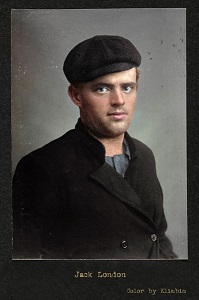
De Amerikaanse schrijver Jack London (eig. John Griffith Chaney) werd geboren op 12 januari 1876 in San Francisco, Californië. Zie ook alle tags voor Jack London op dit blog.

Uit: The Call of the Wild

“With the aurora borealis flaming coldly overhead, or the stars leaping in the frost dance, and the land numb and frozen under its pall of snow, this song of the huskies might have been the defiance of life, only it was pitched in minor key, with long-drawn wailings and half-sobs, and was more the pleading of life, the articulate travail of existence. It was an old song, old as the breed itself—one of the first songs of the younger world in a day when songs were sad. It was invested with the woe of unnumbered generations, this plaint by which Buck was so strangely stirred. When he moaned and sobbed, it was with the pain of living that was of old the pain of his wild fathers, and the fear and mystery of the cold and dark that was to them fear and mystery. And that he should be stirred by it marked the completeness with which he harked back through the ages of fire and roof to the raw beginnings of life in the howling ages. Seven days from the time they pulled into Dawson, they dropped down the steep bank by the Barracks to the Yukon Trail, and pulled for Dyea and Salt Water. Perrault was carrying despatches if anything more urgent than those he had brought in; also, the travel pride had gripped him, and he purposed to make the record trip of the year. Several things favored him in this. The week's rest had recuperated the dogs and put them in thorough trim. The trail they had broken into the country was packed hard by later journeyers. And further, the police had arranged in two or three places deposits of grub for dog and man, and he was travelling light. They made Sixty Mile, which is a fifty-mile run, on the first day; and the second day saw them booming up the Yukon well on their way to Pelly. But such splendid running was achieved not without great trouble and vexation on the part of Francois. The insidious revolt led by Buck had destroyed the solidarity of the team. It no longer was as one dog leaping in the traces. The encouragement Buck gave the rebels led them into all kinds of petty misdemeanors. No more was Spitz a leader greatly to be feared. The old awe departed, and they grew equal to challenging his authority. Pike robbed him of half a fish one night, and gulped it down under the protection of Buck. Another night Dub and Joe fought Spitz and made him forego the punishment they deserved. And even Billee, the good-natured, was less good-natured, and whined not half so placatingly as in former days. Buck never came near Spitz without snarling and bristling menacingly.”


 2207033-e3ffad0ecf8313440f121b34089b5e11.jpg
Jack London (12 januari 1876 – 22 november 1916)


De Hongaarse schrijver Ferenc Molnár werd op 12 januari 1878 in een burgerlijk-joods gezin van Duitse afkomst geboren. Zie ook alle tags voor Ferenc Molnár op dit blog.

Uit: A Matter Of Husbands (Vertaald door Benjamin Glazer)

“EARNEST YOUNG WOMAN: No. I'll read it to you. [She opens it and reads mournfully] "My darling, Shan't be able to call for you at the theater tonight. Urgent business. A thousand apologies. Ten thousand kisses. Alfred."
FAMOUS ACTRESS: Oh!
EARNEST YOUNG WOMAN: I found it on his desk this morning. He probably intended to send it to the theater by messenger. But he forgot it. And I opened it. [She weeps.]
FAMOUS ACTRESS: You mustn't cry.
EARNEST YOUNG WOMAN: [Sobbing] Why mustn't I? You steal my husband and I mustn't cry! Oh, I know how little it means to you. And how easy it is for you. One night you dress like a royal princess, and the next night you undress like a Greek goddess. You blacken your eyebrows and redden your lips and wax your lashes and paint your face. You have cosmetics and bright lights to make you seem beautiful. An author's lines to make you seem witty and wise. No wonder a poor, simple-minded lawyer falls in love with you. What chance have I against you in my cheap little frock, my own lips and eyebrows, my own unstudied ways? I don't know how to strut and pose and lure a man. I haven't got Mr. Shakespeare to write beautiful speeches for me. In reality you may be more stupid than I am, but I admit that when it comes to alluring men I am no match for you.
FAMOUS ACTRESS: [Without anger, slowly, regards her appraisingly] This is a very interesting case.
EARNEST YOUNG WOMAN: What is?
FAMOUS ACTRESS: Yours.
EARNEST YOUNG WOMAN: Mine? What do you mean?
FAMOUS ACTRESS: I mean that I never received a flower, or a letter, or anything else from your husband. Tell me, haven't you and your husband been getting on rather badly of late?
EARNEST YOUNG WOMAN: Yes, of course.
FAMOUS ACTRESS: You used to be very affectionate to each other?
EARNEST YOUNG WOMAN: Why, yes.
FAMOUS ACTRESS: And of late you have been quite cold?
EARNEST YOUNG WOMAN: Yes.”


 2207033-d32e8388fb9f102c3d2bc7db95cefb0f.jpg
Ferenc Molnár (12 januari 1878 – 1 april 1952)
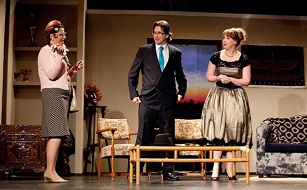
Scene uit een opvoering in Brisbane, 2011


De Nederlandse dichter, schrijver en schilder Alain Teister (eig. Jacob Martinus Boersma werd geboren in Amsterdam op 12 januari 1932. Zie ook alle tags voor Alan Teister op dit blog.

Uit:Brief aan de eigenaar

“Als hulpverlening voor de lange zondagmiddagen, waar we werkelijk geen raad meer mee wisten, had een vriend ons een handige kaart doen verstrekken, die toegang gaf tot een landgoed dat ik voor het gemak, of eerder uit veiligheidsoverwegingen Eikenhof zal noemen. De kaart kon door dames en heren worden verworven mits zij van Nederlandse nationaliteit waren, van onbesproken gedrag en een soort meerderjarigheid bezaten: achttien jaar was de grens, alsof men op gezette tijden tegen het herfstrood van bomen en struikgewas kleine, onzedelijke films vertoonde.
Ka en ik zijn duidelijk geen mensen voor bos, landgoed en wandeling. Maar ook niet, bleek, voor zondagmiddag, waar wij toch eens heftig verlangend naar hadden uitgezien: stille, warme middagen, samen lezend, beschermd door uitvluchten tegen allerlei mogelijk aankomende vrienden; de kachel zou zacht branden (wij stelden onze toekomstverwachtingen meestal in op een stervend na-seizoen), en tegen vijven besloop schemering de kamer; elkaar aankijken, en zo.
Hoe aardig de boeken ook waren, die we hadden gekocht of uit bibliotheken haalden, we redden het niet. In hoeverre dat samenhing met de kwaliteit van ons huwelijk is niet zo eenvoudig na te gaan, maar wat vroeger een eiland van rust had geschenen (welke tien boeken zoudt u meenemen als u met uw vrouw op een onbewoond eiland zoudt geraken) werd nu een onrustig geschuifel, heen en weer lopen, de radio aan en uit draaien, het ‘niet hebben’. Ik zal hierover kort zijn, ook al omdat er verder niets over te zeggen valt dan dat het godvergeten afschuwelijke middagen werden, waarop we allebei het neerdrukkende gevoel hadden tekort te schieten, tegenover elkaar, tegenover onze lectuur ook wel; van beiden werd iets verwacht wat we niet uitspraken, maar wat nog wel duidelijk worden zal; ik dacht er vaak aan, dat ik in het café zou willen zitten, langzaam biljartend, kleine glazen jenever drinkend, met drie vier mensen zwijgend aan tafeltjes; schemerig zou het er al zijn, nu, een beetje geurend naar brouwersvaten, en dan terug naar Ka, die het eten klaar zou hebben.”


 2207033-b3abb44d916842afbc23a5c672f94a8f.JPG
Alain Teister (12 januari 1932 – 6 februari 1979)
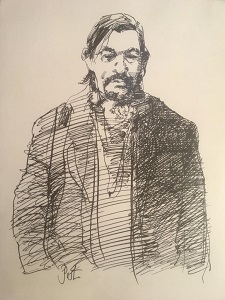
Portret door Waldemar Post, jaren 1970


De Britse schrijver William Nicholson werd geboren op 12 januari 1948 in Tunbridge Wells, Kent. Zie ook alle tags voor William Nicholson op dit blog.

Uit: Rich and Mad

“I've decided to fall in love,' said Maddy Fisher. Cath nodded to show she was listening, but did not look up from her magazine. `I'm seriously serious. I'm too young to get married but I'm too old to be single. I need love.' `And sex,' said Cath. `Well, yes. But I'm not talking about a quick grope at a party. I'm talking about can't-eat can't-sleep crazy in love.' `Any idea who?' said Cath. `Not a single clue.'
Outside the old coaching inn, on the broad grass verge beside the main road, there stood a large wooden camel. The camel was painted gold, and wore a curious smirk on its face. The inn was now a shop; more than a shop, an emporium, crammed with furniture imported from India and the Far East. It was called Caravanserai. But all those who stopped to explore its warren of exotic rooms knew it as the camel shop. Late one Wednesday afternoon in September, on the last day of the summer holidays, only three browsers remained as closing time approached: an elegant middle-aged woman and two very good-looking young men, her sons. The woman was intent on a display case of silver and coral necklaces. The older and more handsome of her two sons was sprawled in a teak planter's chair, his long legs stretched out and his eyes closed. The younger son wandered off to explore on his own. Up a flight of broad stairs hung with winking mirrors framed in fruitwood, through the high-windowed front room crammed with lacquered Ming Dynasty wedding cabinets, he made his aimless way at last to a back room that was given over to a display of cushions, textiles and rugs. He stood in the doorway and gazed into the cave of colours. A central skylight made of stained glass streamed crimsons and purples and golds on to bolts of glittering fabric. Beds of Indonesian bangsat wood draped in rainbow weaves crowded against chaises longues inlaid with patterns of rosewood acacia, on which plump cushions were piled in bright profusion. The room was a nest for an oriental princess. It was also Maddy Fisher's special place. Unseen at first by the visitor, Maddy was curled up on the bed, screened by a curtain of mirror-fabric. She heard the approaching footsteps and frowned in irritation, quietly closing the laptop that lay on the bed beside her.”


 2207033-8d6422c57bd4327ae02b466be34d4bb2.jpg
William Nicholson (Tunbridge Wells, 12 januari 1948)


De Duitse schrijver, schilder en componist Florian Havemann werd geboren op 12 januari 1952 in Oost-Berlijn. Zie ook alle tags voor Florian Havemann op dit blog.

Uit: Havemann

„Mein Vater war der Anfiihrer der Opposition in einem Staat, der offiziell keine Opposition zuließ. Mein Vater hat Gedichte geschrie-ben, mein Vater hat Bücher geschrieben. Ich bin Elektriker von Beruf, ich habe Bühnenbild studiert, habe als Reinigungskraft gearbeitet. Ich habe Bilder gemalt, Theaterstücke geschrieben, ein paar Gedichte auch, einen Roman bisher. Ich habe Musik gemacht, Musik komponiert. Ich bin zum Verfassungsrichter geworden. Ich habe für den Bundestag kandidiert. Ich bin Herausgeber einer Zeitschrift. Und das ist Havemann. Vielleicht in meinem Falle schon Havemann im Delirium, in einem Zuviel an Have-mann. Aber Havemann, denn Havemann bedeutet: sich nicht auf eine Sache festlegen wollen, sich nicht auf eine einzige Sache festlegen können. Aber aus Havemann wird auch dann erst richtig Havemann, wenn sich Havemann mit Nicht-Havemann verbindet. Mein Großvater hat eine ad-lige junge Dame geheiratet, eine Malerin. Mein Vater hat eine Karin von Bamberg geheiratet, meine Mutter. Eine Kriegerwitwe. Die Frau eines U-Boot-Kommandanten, der im Atlantik verblieben ist. Und ich, ich habe eine Französin geheiratet, eine junge Frau aus der französischen Provinz, der mittellose Künstler hat sich mit einer Frau zusammengetan, die in einer gutbürgerlichen Familie groß geworden ist, der Atheist Havemann hat sich mit einer Katholikin zusammengetan, und das ist Havemann. Sich mit Nicht-Havemann zu verbinden, das ist Havemann.
April 2oo6, an einem Wochentag, morgens früh, Viertel nach sechs, kurz vor halb sieben. An einer Bushaltestelle, an der Bushaltestelle, an der ich immer einsteige, um von meinem Atelier, meinen Arbeitsräumen am Kottbusser Damm, zur Wohnung, unserer Wohnung, der der Familie Havemann, in der Schleiermacherstraße zu fahren. Das kann doch nicht wahr sein. Ich glaub, mich tritt ein Pferd — nein, kein Pferd weit und breit zu sehen, in Berlin doch nicht.“


2207033-79a7a516e781e1c7160cb05d28bb2230.jpg 
Florian Havemann (Oost-Berlijn,12 januari 1952) 


De Franse schrijver Charles Perrault werd geboren op 12 januari 1628 in Parijs. Zie ook alle tags voor Charles Perrault op dit blog.

Uit: La Belle au bois dormant

« Il était une fois un Roi et une Reine, qui étaient si fâchés de n'avoir point d'enfants, si fâchés qu'on ne saurait dire. Ils allèrent à toutes les eaux du monde ; voeux, pèlerinages, menues dévotions, tout fut mis en oeuvre, et rien n'y faisait. Enfin pourtant la Reine devint grosse, et accoucha d'une fille : on fit un beau Baptême ; on donna pour Marraines à la petite Princesse toutes les Fées qu'on pût trouver dans le Pays (il s'en trouva sept), afin que chacune d'elles lui faisant un don, comme c'était la coutume des Fées en ce temps-là, la Princesse eût par ce moyen toutes les perfections imaginables. Après les cérémonies du Baptême toute la compagnie revint au Palais du Roi, où il y avait un grand festin pour les Fées. On mit devant chacune d'elles un couvert magnifique, avec un étui d'or massif, où il y avait une cuiller une fourchette, et un couteau de fin or garni de diamants et de rubis.
Mais comme chacun prenait sa place à table, on vit entrer une vieille Fée qu'on n'avait point priée parce qu'il y avait plus de cinquante ans qu'elle n'était sortie d'une Tour et qu'on la croyait morte, ou enchantée. Le Roi lui fit donner un couvert, mais il n'y eut pas moyen de lui donner un étui d'or massif, comme aux autres, parce que l'on n'en avait fait faire que sept pour les sept Fées. La vieille crut qu'on la méprisait, et grommela quelques menaces entre ses dents. Une des jeunes Fées qui se trouva auprès d'elle l'entendit, et jugeant qu'elle pourrait donner quelque fâcheux don à la petite Princesse, alla dès qu'on fut sorti de table se cacher derrière la tapisserie, afin de parler la dernière, et de pouvoir réparer autant qu'il lui serait possible le mal que la vieille aurait fait."


 2207033-0312cd58e4649d449340b0783b8350bb.jpg
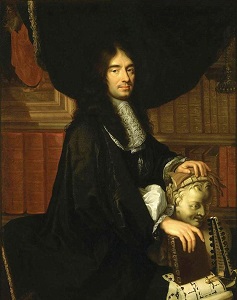
Charles Perrault (12 januari 1628 – 16 mei 1703)
Portret door Philippe Lallemand, 1672

Geschreven door Romenu om 11:33 Reageer op dit bericht

Katharina Hacker, Jasper Fforde, W. C. Heinz, Nikos Kavvadias, Mart Smeets, Oswald de Andrade, Eduardo Mendoza, Diana Gabaldon, Slavko Janevski

De Duitse dichteres en schrijfster Katharina Hacker werd geboren op 11 januari 1967 in Frankfurt am Main. Zie ook alle tags voor Katharina Hacker op dit blog.

Uit: Eine Dorfgeschichte

„Ein Toter oder Apfeldieb oder auch ein Soldat aus dem hinteren Wald, der abschüssig in Richtung Tal ging und im Frühling voller Buschwindröschen war. Unter den Buschwindröschen oder zwischen Zweigen, Blättern, Steinen konnte man Helme und Patronenhülsen aus dem Krieg finden, weil in dem Waldstück Soldaten gekämpft hatten, gegen die anrückenden Amerikaner, die dann doch ersehnt waren, weil es im Dorf Flüchtige gab, Fahnenflüchtige, Deserteure, später dann andere Flüchtlinge, woher die kamen, aus dem Osten und wie, auf Wagen oder mit der Eisenbahn bis Michelstadt, bis Amorbach, den Berg zu Fuß hinauf, vor den letzten Bomben fliehend oder eben vor den Befreiern, Besatzern, das Parteibuch zerrissen, die Abzeichen versteckt. Juden hatte es im Dorf nicht gegeben, sie hatten wohlweislich nicht versucht, dorthin zu flüchten, es hätte ihnen kaum geholfen.
Die Synagoge in Michelstadt wurde verwüstet, vielleicht war sie zu nahe an den anderen Häusern, als dass man sie hätte abbrennen mögen, für die Menschen hat das nichts geändert. Wir haben uns vorgestellt als Kinder, wo Verstecke hätten sein können, wir zeigten sie meiner Großmutter, wir zeigten sie meinem Großvater, schauten neugierig, wie sie schwieg, wie er schwieg, und dann richteten wir uns gerade auf, denn wir, das wussten wir mit Sicherheit, hätten nicht zugelassen, dass auch nur einem Juden ein Haar gekrümmt wird.
Meine Großmutter spielte nicht mit, wenn wir Flüchtlingszug aus dem Osten spielten, gab uns kein Brot und keine Wasserflasche. Wir borgten von den Nachbarsbauern Säcke für den großen Leiterwagen und füllten sie mit Heu und Stroh, wir zogen einer den anderen die Feldwege entlang, stöhnend und klagend, verbanden die Verletzten, luden Tote ab, ließen sie liegen.
Frederik war der beste Tote, den wir hatten. Er blieb liegen, bis abends, bis zum Essen, bis meine Mutter rief, mein Vater suchte, fand ihn am Waldrand, starr geworden vom langen Tod. Mit Frederik wagte ich mich auch wieder in jenen Keller, er war ein Angsthase, aber furchtlos dabei, er plapperte ausgiebig von seiner Angst, ging in den Höllenschlund, in jedes dunkle Loch, lief mutterseelenallein - laut rufend, wie er sich fürchte - in das Verlies der Wildenburg, die wir mit jedem neuen Gast besuchen mussten, verschwand, und wieder musste mein Vater ihn finden. Denn wenn wir Krieg spielten, waren meinem Großvater die Hände gebunden, und meine Großmutter konnte uns nicht retten.“


 2206852-fa35430a82a9366c08bb3f1cef7a33a6.jpg
Katharina Hacker (Frankfurt am Main, 11 januari 1967)


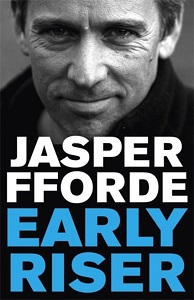
De Britse schrijver en cameraman Jasper Fforde werd geboren op 11 januari 1961 in Londen. Zie ook alle tags voor Jasper Fforde op dit blog.

Uit: Early Riser

“We drove across the city at daybreak, the tracks of the Sno-Trac clean and sharp over a fresh fall of snow, the sky slate-grey. Only the thin trails of vapour rising from the numerous Dormitoria gave any clue that we were in a city of almost half a million people. Despite it being two days before Winter officially began, most people had already hunkered down, and anyone who wasn't yet asleep would be going through their pre-hibernatory nesting rituals. Yoga and Gregorian chants were always popular, with yoyo, tango, humming, bezique and watercolouring going in and out of favour as the vagaries of fashion saw fit. But for most people it was a simple slowing of activity, purposefully avoiding anything exciting. This was a winding down, a relaxing of mind and spirit. To assist initial descent and a free return in case of an accidental awakening, the networks ran looped repeats of Bonanza throughout the Winter. Residents with Random Waking Syndrome kept a TV switched on at the foot of their bed, sound turned down low, the picture dimmed.
`It's only dull by endless repetition,' Logan had explained earlier, while we discussed strategies to ease anomalous wakers back to sleep, 'and the close familiarity of the characters and situations make for an often transcendental drifting of the mind.' No one quite knew why Bonanza had become the TV series of choice for the Winter, but the more it was watched, the more suited to easement it became. If the machinations of the Cartwright family didn't work, you could always watch reruns of Crossroads or resort to the default entry-level route to welcome catatonia: Ulysses, Moby Dick or War and Peace. I halted the Sno-Trac outside the Beryl Cook Dormitorium, the largest of twenty-seven Kipshopsn on the seafront at Penarth. I made sure the compressed air tank was in the green so I could effect a restart, then stopped the engine and climbed out of the rear door.”


 2206852-b299b41987309b6fc22dc27c6d5ec8c5.jpg
Jasper Fforde (Londen, 11 januari 1961)
Cover


De Amerikaanse schrijver, sportjournalist en oorlogscorrespondent W. C. Heinz werd geboren op 11 januari 1915 in Mount Vernon, New York. Zie ook alle tags voor W. C. Heinz op dit blog.

Uit:The Professional

“I shall remember it as long as I live. I was young then, and I had been on the paper about I three years. They had me teething on boxing, and I had hit it off with Doc. Doc had a good-looking heavyweight at the time, a big blond, out of Des Moines and named Al Fraley. Fraley's old man had been a Methodist minister, and that made a natural for Doc. The big kid was devout enough, but Doc made him wear dark suits and black ties and carry a Bible into the dressing room, and he called him Deacon Fraley. It was an era when you sold a fighter to the public in every way that you could. This was right after Tunney retired with the title, and there was that confusion in the heavyweight ranks. There were three or four of the battleships with a chance, but the best of them all was the Deacon—or, rather, the Deacon and Doc. When a kid starts out to become a fighter and, somewhere, walks into a gym, bag in hand, he is like a rough-cut block of marble emerged from the quarry that is the mass of man. In any block a stone mason can see many things, but a master sculptor can see but one. In his eye no two blocks of marble are alike, and the thing he sees is the thing for which the block was created and that is the way Winged Victory comes about. That is the way it has always been, too, with Doc. In the boxing business, as in any business, there are hundreds of masons and three or four master sculptors, and the best was Doc. I watched him for years, with a dozen fighters, working carefully with reason and inspiration, shaping slowly and stepping back and looking at what he had done, hiding his excitement and his fear, too, behind that cynical front. Until Eddie Brown came along, Deacon Fraley, even more than Rusty Ryan, was the one. The greatest sculptor in the world, working in marble, cannot add a thing. If it is not there, it is not there. No man makes it, and so no man is truly creative, but by subtraction from the whole he reveals it. That is the nearest that man can come to creation, and that is why the great are afraid. Only they can see all of it, and they are afraid that, in their process of subtraction, they will not reveal the all of it, and what is hidden will remain hidden forever. They are even more afraid that, in the process, they will cut too far and destroy that much of it forever. It is that way in the making of all things, including the making of a fighter. At that time, Doc had the Deacon living in a boardinghouse on West Ninety-second Street, and Doc and I happened to be living in the same hotel. It was on West Forty-eighth Street, but it is not there any more, which is just as well. It was not much of a hotel. It was in the fall of the year. At about 10:30 that night the phone in my room rang and it was Doc. He asked me to come down to his room, and when I got there the door was open and I walked in. He came out of the bathroom, pressing a strip of adhesive over a strip of gauze on his right hand. "What happened to you?" I said. "I've just had a visit from the Almighty," he said.”


 2206852-95a023169a833faca816e2816757d7af.jpeg
W. C. Heinz (11 januari 1915 – 27 februari 2008)


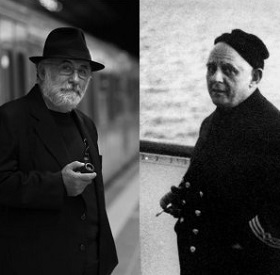
De Griekse dichter, schrijver en zeeman Nikos Kavvadias werd geboren op 11 januari 1910 in Nikolski Ousouriski. Zie ook alle tags voor Nikos Kavvadias op dit blog.


Black And White

Wann sieht man den Leuchtturm von Aalborg?
Das Konservatorium entliess die Schülerinnen.
Leuchtreklamen in der Odos Stadiou.
Die Brücke nass und finster.

Erschrecktes Auge, vergeblich halte ich an dir fest
Zur Zeit, wo gerade der Scirocco weht.
Arbeite mit der Schaufel, Schwarzer aus Marokko,
Der Kräuter kaut gegen das Fieber.

Femina! Tanz der Köpfe.
Die Nan-ko tanzen in Asien.
Du leidest - sagtest du mir - an der Feuchtigkeit
Und an deiner alten Krankheit von Toulon.

Ginger, die du mich durch die Brille anschaust,
Den Leuchtturm von Aalborg sieht man nicht.
Ich, ich sehe in London Fanny,
Die einen anderen küsst.

Gesalzenes Fleisch aus der Box.
Myopischer, alter Kapitän,
Ich kenne ein Zauberpulver,
Perfekt für die Pupille des Auges.

Mach Licht auf der Brücke.
In mir spricht ein Papagei,
Alt, krummschnäblig und gross
Aber voller Erfahrung und klug.

In mir tiefer Atem.
Die Matrosen des Kolumbus sind aufgewacht.
Verbrenne jetzt alle Raketen
Und schicke Marconi das SOS.


Vertaald door Heinz Schmitz


 2206852-63dbb1e59ccf9a6144ad0ffcf018cd9f.jpg
Nikos Kavvadias (11 januari 1910 – 10 februari 1975)
Hier met de componist Thanos Mikroutsikos (links)


De Nederlandse (sport)journalist, schrijver en radio- en televisiepresentator Martinus Jan (Mart) Smeets werd geboren in Arnhem op 11 januari 1947. Zie ook alle tags voor Mart Smeets op dit blog.

Uit:Verhaal halen

“Het schrijverschap van Mart Smeets is geboren uit liefde.
‘Dat begon op de middelbare school, de Tweede O.H.S. in Amsterdam. Door twee leraren Nederlands. De een was een gesjeesde romancier, Pieter Kuyk. De ander, Jaap Hoogteijling, rookte pijp. Ook voor de klas. Zij hebben mij de liefde voor het woord meegegeven. Zij wakkerden mijn belangstelling aan voor de Tachtigers, voor Hubert Lampo en voor vele andere Vlaamse schrijvers.’
Hij denkt dat er een dichter in hem schuilt, wanneer hij een eervolle vermelding krijgt bij de famos-gedichtenwedstrijd. Het pragmatisme wint. ‘Ik las vreselijk veel. Ik was vooral geïnteresseerd in hoe ik met het woord mensen kon bereiken. Dichten was me te vaag... heel moeilijk ook om dat goed te doen.’
Mart Smeets schrijft vanaf zijn zestiende. ‘Min of meer gestileerde verhalen’ noemt hij het.
Vanzelfsprekend maakt hij de clubkrant van de Amsterdamse basketbalvereniging DED, waar hij in de jaren zestig speelt. ‘De stencilmachine stond bij ons thuis.’ Iets serieuzer wordt het in 1966 en 1967. De stukken worden langer, met telkens de basketbalsport als onderwerp.
Op maandag koopt hij de Belgische krant Het Laatste Nieuws met iedere maandag van de hand van Bob Geuens een hele pagina over basketbal. ‘Ik spelde die krant en niet vanwege de wielerverhalen.’
Mart Smeets trekt de stoute schoenen aan, schrijft een stuk ‘over de stand van zaken in het Nederlands basketbal’ en stuurt het naar Geuens. Het Laatste Nieuws plaatst zijn bijdrage. ‘Ik kreeg er, per internationale postwissel, 25 gulden voor!’
ded is inmiddels Flamingo’s geworden, de Haarlemse hemelbestormer in het Nederlandse basketbal. Het is 1968. Smeets: ‘Mijn leven toen? Beetje basketballen, beetje schrijven.’


 2206852-88600090f8021529aea103e4926df102.jpg
Mart Smeets (Arnhem, 11 januari 1947)
Cover


De Braziliaanse schrijver Oswald de Andrade werd geboren op 11 januari 1890 in São Paulo. Zie ook alle tags voor Oswald de Andrade op dit blog.


Portuguese error

When the Portuguese arrived
In pouring rain
They clothed the Indian
What a shame!
Had it been a sunny morning
The Indian would have stripped
The Portuguese.


The discovery

We followed our course on that long sea
Until the eighth day of Easter
Sailing alongside birds
We sighted land
the savages
We showed them a chicken
Almost frightening them
They didn’t want to touch it
Then they took it, stupefied
it was fun
After a dance
Diogo Dias
Did a somersault
the young whores
Three or four girls really fit very nice
With long jet-black hair
And shameless tits so high so shapely
We all had a good look at them
We were not in the least ashamed.


3rd of May

I learned from my ten-year old son
That poetry is the discovery
Of things I’ve never seen.


Vertaald door Natalie d'Arbeloff


 2206852-f157923f440437f001b96ce70fa61e42.jpg
Oswald de Andrade (11 januari 1890 – 22 oktober 1954)
Expositie over de dichter in het Museu da Língua Portuguesa, São Paulo


De Spaanse schrijver Eduardo Mendoza werd geboren in Barcelona op 11 januari 1943. Zie ook alle tags voor Eduardo de Mendoza op dit blog.

Uit: Das Missverständnis (Vertaald door Benjamin Loy)

„Antolín Cabrales Pellejero, alias Poca Chicha, wurde in das hineingeboren, was man später eine dysfunktionale Familie zu nennen pflegte, türmte aus einigen Schulen und flog von verschiedenen anderen, weshalb er, als er mit 21 Jahren ins Gefängnis kam, zwar lesen und schreiben konnte, sonst aber auch weiter nichts. Nicht dass er die Kultur verachtete: Er hatte in ihr einfach nie ein Interesse oder einen Nutzen gesehen. Einmal im Gefängnis, hielt ihn diese Haltung jedoch nicht davon ab, von der Möglichkeit einer Strafreduzierung Gebrauch zu machen, indem er an Kursen teilnahm, die einige selbstlose Lehrer regelmäßig mit den Gefangenen durchführten. Angesichts dieser verlockenden Perspektive schrieb sich Antolín Cabrales gleich für mehrere Kurse ein, darunter einer über literarisches Schreiben und Interpretation und zugleich der einzige, in dem er mehr als zwei Tage durchhielt.
Die für den Literaturkurs verantwortliche Dozentin hieß Inés Fornillos und war eine 34 Jahre alte, winzige und leicht untersetzte Frau mit rundlichem Gesicht und kurzsichtigen Augen. Sie hatte Philosophie und Literatur studiert, einen Handelsvertreter geheiratet und eine Arbeit als Lehrerin für Latein, Griechisch sowie spanische Literatur und Literatur im Allgemeinen an einer Privatschule gefunden, die jedoch nach einigen Jahren aus wirtschaftlichen Gründen schließen musste und sie vor die Tür setzte. Damals begannen Frauen in Massen an die Universitäten zu strömen, und die Mehrheit entschied sich für ein Studium der Philosophie und Literatur, wo die Konkurrenz der Männer geringer war. Da der übliche Weg dieses Studiums in den Lehrerberuf führte, war der Markt bald übersättigt und so fand die Señorita Fornillos lediglich kurze Schwangerschaftsvertretungen und einige schlecht bezahlte Nachhilfestunden während der Sommermonate. Unzufrieden mit diesem Zustand der Unsicherheit wurde sie auf eine Stellenanzeige für Literaturkurse für Häftlinge aufmerksam und bewarb sich darauf. Ihr Mann war dagegen, aber sie hatten zwei kleine Kinder und es war nicht einfach, mit den Verkaufskommissionen über die Runden zu kommen. Sie erkundigten sich und man versicherte ihnen, dass die Arbeit im Gefängnis keinerlei Risiko mit sich brachte.“


 2206852-d53c7eb12f750ab539d938e202d6d047.jpg
Eduardo Mendoza (Barcelona, 11 januari 1943)


De Amerikaanse schrijfster Diana Gabaldon werd op 11 januari 1952 geboren in Williams, Arizona. Zie ook alle tags voor Diana Gabaldon op dit blog.

Uit: Go Tell The Bees That I Am Gone (Outlander 9)

“I was startled from a solid sleep by Jamie exploding out of bed beside me. This wasn’t an uncommon occurrence, but as usual, it left me sitting bolt upright amid the quilts, dry-mouthed and completely dazed, heart hammering like a drill-press.
He was already down the stairs; I heard the thump of his bare feet on the last few treads—and above that sound, frenzied pounding on the front door. A ripple of unrest spread through the house: rustling bedclothes, sleepy voices, opening doors.
I shook my head violently and flung off the covers. Him or me? was the first coherent thought that formed out of the fog drifting through my brain. Night alarms like this might be news of violence or misadventure, and sometimes of a nature that required all hands, like a house fire or someone having unexpectedly met with a hunting panther at a spring. More often, though…
I heard Jamie’s voice, and the panic left me. It was low, questioning, with a cadence that meant he was soothing someone. Someone else was talking, in high-pitched agitation, but it wasn’t the sound of disaster.
Me, then. Childbirth or accident? My mind had suddenly resurfaced and was working clearly, even while my body fumbled to and fro, trying to recall what I had done with my grubby stockings. Probably birth, in the middle of the night… But the uneasy thought of fire still lurked on the edge of my thoughts.
I had a clear picture in my mind of my emergency kit, and was grateful that I’d thought to refurbish it just before supper. It was sitting ready on the corner of my surgery table. My mind was less clear about other things; I’d put my stays on backward. I yanked them off, flung them on the bed, and went to splash water on my face, thinking a lot of things I couldn’t say out loud, as I could hear children’s feet now pattering across the landing.
I reached the bottom of the stairs belatedly, to find Fanny and Germaine with Jamie, who was talking with a very young girl no more than Fanny’s age, standing barefoot, distraught, and wearing nothing more than a threadbare shift. I didn’t recognize her.”


 2206852-b0128c3e2ef319de6b160ed78e11f821.jpg
Diana Gabaldon (Williams,11 januari 1952)
Scene uit de tv-serie "Outlander" met Caitroina Balfe (Clair) en Sam Heughan (Jamie)


De Macedonische dichter en schrijver Slavko Janevski werd geboren op 11 januari 1920 in Skopje. Zie ook alle tags voor Slavko Janevski op dit blog.


Silence

When the poppies pull themselves up from their roots
and start out
one after the other
toward the sunset,
do not follow them.
There are no weddings anymore
and each step stands autumn
ridiculous, white and bare.

When the poppies leave behind them devastation,
shut up the rain inside you.
Let it ring in the gutter of your veins
beneath a familiar ceiling.

And be quiet.

When the wind falls upon your window
with three thin cries
and the weeping of a half-grown crane,
again be quiet.
The poppies hate speaking.


 2206852-59f0c516402a572b9f1b1b3d7d978c38.jpg
Slavko Janevski (11 januari 1920 – 20 januari 2000) 
Monument in Skopje


Zie voor nog meer schrijvers van de 11e januari ook mijn blog van 11 januari 2017 en ook mijn blog van 11 januari 2015 en ook mijn blog van 11 januari 2016 deel 2.


Geschreven door Romenu om 19:14 Reageer op dit bericht

BNG Bank Literatuurprijs 2018 voor Nina Polak


BNG Bank Literatuurprijs 2018 voor Nina Polak


De Nederlandse schrijfster Nina Polak heeft met haar roman “Gebrek is een groot woord” de BNG Bank Literatuurprijs 2018 gewonnen. Dat maakte de jury op donderdag 10 januari 2019 in de Amstelkerk in Amsterdam bekend. Nina Polak werd geboren in Haarlem op 25 juni 1986. Zie ook alle tags voor Nina Polak op dit blog.

Uit:Gebrek is een groot woord

“Ik ben net tien en heb besloten een spreekbeurt te houden over zeecontainers. Die mysterieuze kisten fascineren me sinds ik op het journaal zag hoe er een aantal van het schip losraakte tijdens een storm op zee en aanspoelde aan een Franse kust. Er was een strand te zien waarop honderden teddyberen rondslingerden, blikken ravioli, radio’s en luiers, een slagveld van spullen. Daarna beelden van een containerhaven, duizenden containers in alle kleuren van de regenboog: hele dorpen en steden van levensgrote Lego, met hijskranen zo hoog als flatgebouwen.
Dagenlang vraag ik Nellie naar de zeecontainers. Wat zit er allemaal nog meer in? Veel spullen die we hier hebben komen uit een zeecontainer, antwoordt ze. Je kleren. Je poppen. De televisie. De auto. Auto’s!? Ik weet niet wat ik hoor. En waar komen die zeecontainers dan vandaan? Van over de hele wereld, China, Japan, India. Australië ook? Vast wel. Zitten er ook mensen in een zeecontainer? Soms wel, ben ik bang. Ze moet lachen om mijn openvallende mond. Ik heb de zee, die ik maar een paar keer gezien heb, tot dan toe beschouwd als een gevaarlijke grijze massa, waarin dingen verdwijnen. Nu realiseer ik me, met de genoegzaamheid waarmee een kind iets vanzelfsprekends ontdekt, dat de zee ook geeft en dat ze bovendien alles met alles verbindt, overal met overal. En hoeveel containers passen er dan op zo’n boot? Wel meer dan duizend, denkt Nellie.
Wanneer meester Marcouch van groep zes vraagt wie van ons ‘luie klaplopers’ er al een onderwerp weet voor de spreekbeurten, schiet mijn hand de lucht in. Ik gloei van trots bij het uitspreken van het woord. Zeecontainers. Men kijkt elkaar aan, er wordt gegrinnikt, maar meester Marcouch, die een ruim hart en een goed gevoel voor humor heeft, knikt goedkeurend en noteert mijn keuze.
‘We kunnen eens gaan kijken,’ zegt Nellie op een bijzonder gelukkige lenteavond, nadat we op het balkon een door haar gemaakte macaroni met kaas hebben gegeten. Ik klamp me vast aan haar leren jas terwijl ze in een bezeten tempo richting havens fietst. Tegen het bord dat ons weg moet jagen zet ze de fiets neer, zonder slot. We betreden verboden gebied. Er is niemand. Ze pakt even mijn arm en wijst in de verte, waar de brug van een kolossaal schip voorbijglijdt, richting de kranen en de eindeloze rijen containers, zo veel en zo groot dat ik stil ben. Het asfalt, het water en de containers schitteren in het lage, laatste licht, onze twee schaduwen strekken zich lang voor ons uit over het lege terrein.”


 2206728-1ca24fe6011b6e6389eff7972007b572.jpg
Nina Polak (Haarlem, 25 juni 1986)


Geschreven door Romenu om 07:23 Reageer op dit bericht

Meer van Romenu

↑ Terug naar de berichten