Naar de inhoud

Romenu

Over literatuur, gedichten, kunst en cultuur
akke.beakke.be

Berichten van 17 januari 2019 tot 18 januari 2019

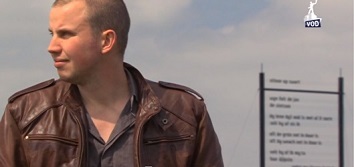
Tsead Bruinja nieuwe Dichter des Vaderlands

De Nederlandse dichter Tsead Bruinja is de nieuwe Dichter des Vaderlands. De komende twee jaar zal Bruinja gedichten schrijven bij nationale gebeurtenissen en optreden als ambassadeur van de poëzie. Hij volgt Ester Naomi Perquin op. Tsead Bruinja werd geboren in Rinsumageest op 17 juli 1974. Zie ook alle tags voor Tsead Bruinja op dit blog.


sarah & veronica (kollum drachten en afrika)

de jongen van twaalf achter het klasraam weet hoe sarah krijst

sarah is veertig en kaal
sarah heeft een mes in de tas
krijst
sarah van de drie bulten bij het park
sarah heeft een mes in de tas
jakkert een brief op de post
brief uit de tas
krijst

in de studio wordt daar een beat ondergezet met veel galm op de snare
door een drummer die zich grasmaaiend naar het einde snuift
de lamp boven beiden en schijnt op het dorre gras

sarah

ijstaart in de piepschuim doos
en je tantes vieze poedel
de lekkere wijven van veronica
de vale reigers van veronica
een handvol rijst voor de girokinderen
en voor de vliegen op hun ogen
uit afrika

zien ze het niet geef hen dan
de lekkere wijven van veronica
de vale reigers van veronica

een
icoon


Adem

voor wie na dit lichaam
verschijnt en in zijn bed
klimt vannacht

kruip dicht tegen haar aan
kruip dicht tegen hem aan

houd jezelf vast en
luister naar je adem

loop desnoods naar het
koude raam en bevochtig

voor wat na dit lichaam
verdwijnt en geen meer

havent

ik dank je alvast

voor wat na dit lichaam
verdwijnt en geen meer
havent

ik dank je alvast
voor de weg die je was

en blaas
voor wie hier na
voor wat hier na komt

adem


 2208791-d37c5fc18c65d0e4cce1245a745ddc40.jpg
Tsead Bruinja (Rinsumageest, 17 juli 1974)

Geschreven door Romenu om 19:18 Reageer op dit bericht

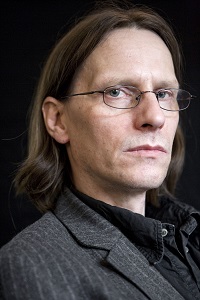
Peter Stamm, Sascha Kokot, Franz Blei, Jon Stallworthy, Montesquieu, Ioan Slavici, Rubén Darío, Paul Léautaud, Alan Alexander Milne

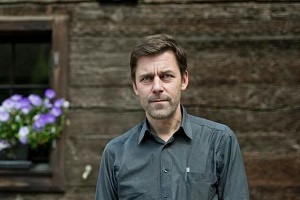
De Zwitserse schrijver Peter Stamm werd geboren op 18 januari 1963 in Weinfelden. Zie ook alle tags voor Peter Stamm op dit blog.

Uit: Die sanfte Gleichgültigkeit der Welt

„Magdalena musste sich über meine Nachricht gewundert haben. Ich hatte keine Telefonnummer und keine Adresse angegeben, nur die Zeit und den Ort und meinen Vornamen: Bitte kommen Sie morgen um vierzehn Uhr zum Skogskyrkogården. Ich möchte Ihnen eine Geschichte erzählen. Ich wartete beim Ausgang der S-Bahn-Station auf sie. Um Viertel nach zwei war sie noch nicht da, und ich dachte kurz, sie könnte ein Taxi genommen haben. Aber ihre Verspätung hatte nichts zu bedeuten, sie war immer unpünktlich gewesen, nicht auf die aggressive Art, die dem Wartenden zeigen soll, dass seine Zeit weniger wert ist als ihre, eher aus einer Art Zerstreutheit, mit der sie ihr ganzes Leben anging. Ich war sicher, dass sie kommen würde, dass ihre Neugier größer sein würde als ihr Misstrauen. Fünf Minuten später fuhr der nächste Zug ein, und als ich schon dachte, sie sei auch in diesem nicht gewesen, kam sie mit hüpfenden Schritten die Treppe herunter. Ich hatte mich gleich zu erkennen geben wollen, aber kaum sah ich sie, verschlug es mir wieder den Atem wie am Tag zuvor, als ich ihr vor dem Hotel aufgelauert und sie dann doch nicht angesprochen hatte. Sie musste bald dreißig sein, zwanzig Jahre jünger als ich, aber sie sah aus wie ein junges Mädchen, und wer uns zusammen begegnet wäre, hätte glauben können, wir seien Vater und Tochter. Ich ließ sie an mir vorüber- gehen, ohne sie anzusprechen, und folgte ihr in Richtung Friedhof. Sie wirkte nicht wie jemand, der verabredet ist. Sie ging mit schnellen Schritten die Straße hinunter, als sei sie den Weg schon hundertmal gegangen. Ich hatte angenommen, sie werde beim Eingang des Gelän- des warten, aber sie ging hinein und, ohne zu zögern, einen kleinen Hügel hoch, auf dem ein Kreis alter Bäume stand. Am Fuß des Hügels gab es ein riesiges Steinkreuz, dennoch hatte die Anlage etwas Heidnisches, die Landschaft und die Natur wirkten stärker als die sakralen Bauten und alle christlichen Symbole.
Magdalena hatte sich oben auf dem Hügel unter einen der kahlen Bäume gesetzt und schaute mir entgegen, als hätten wir ein Wettrennen gemacht und sie sei die Siegerin. Außer Atem kam ich bei ihr an, und obwohl sie mich noch nie gesehen hatte, schien sie sofort zu wissen, dass ich es war, der sie hierherbestellt hatte. Lena, sagte sie und streckte mir die Hand hin. Christoph, sagte ich und gab ihr etwas irritiert die Hand. Nicht Magdalena? Niemand nennt mich so, sagte sie mit einem Lächeln. Ein ungewöhnlicher Ort für ein Treffen. Ich wollte, dass wir ungestört reden können, sagte ich.“
 

 2208771-bf236cf854ca4c637323c1909ae53815.jpg
Peter Stamm (Weinfelden, 18 januari 1963)


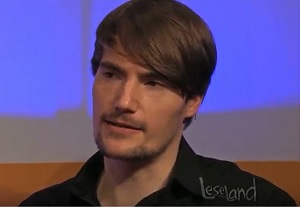
De Duitse dichter, schrijver en fotograaf Sascha Kokot werd geboren op 18 januari 1982 in Osterburg. Zie ook alle tags voor Sascha Kokot op dit blog.


das Bettzeug bleibt liegen

das Bettzeug bleibt liegen
für ein paar Tage
als gefiederter Abdruck
meiner Bewegung in diesem
Streitfall zwei Meter über
dem Boden schwelt es weiter
wühlen die Kinder deins
und meins darin umher
spielen Burg oder Grotte
so dick gepolstert tut ihnen
nichts weh liegen sie nicht
wund auf diesem Schlachtfeld


die Kinder sind uns abhandengekommen

die Kinder sind uns abhandengekommen
wir kennen ihre Namen nicht
es blieb keine Zeit sie auszuwählen einzustudieren
ihre Zimmer bleiben unbezogen
unsere Körper gehen darin brach
einander unsicher gegenüber
weisen sie uns immer weiter fort
sie scheinen die Routen verlässlich zu kennen
auch wenn wir kaum mehr wissen
was uns hier hält in den kalten Fluren
 

 2208771-947bbd9f73a6dfb2aa364fcc33d59651.jpg
Sascha Kokot (Osterburg, 18 januari 1982)


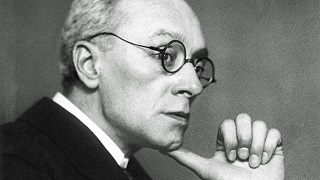
De Oostenrijkse schrijver, vertaler en uitgever Franz Blei werd geboren op 18 januari 1871 in Wenen. Zie ook alle tags voor Franz Blei op dit blog.

Uit: Das große Bestiarium der modernen Literatur

Die George

Die George, auch die große George genannt, ist ein hochbeiniger Watvogel, der durch die außerordentlich schöne Proportion seiner Glieder wie auch durch seine Größe weit über seine Genossen im Wasser hinausragt, die es ihm mit Strecken und Recken ihrer kurzen mißgeformten Glieder gleichtun wollen zum großen Vergnügen der zuschauenden Kinder. Aber die George nimmt solches Stelzen der andern lächelnd hin, weil es ihr ihre Einzigartigkeit und Mustergültigkeit beweist. Die George hat Töne, die sie nur im Gehen von sich gibt, und es bekommen diese vom wohlgeordneten Spiel der Glieder eine gefällige Rhythmik. Das Gesicht der George ist von geringem Umfang und wird von ihren Beinen beherrscht, insofern ihr Sehen darüber nicht hinausgeht. Ihr subtiler Organismus macht sie Krankheiten geneigt, die leicht chronisch, aber nicht gefährlich werden. So ist die George dauernd mit der leichten Indisposition einer Wolfskehl behaftet. Den Schmitz, den sie einmal am Bein hatte, hat sie rasch überwunden. Einen irritierenden Gerardy ist sie aber so wenig los geworden wie an ihrer linken Pfote einen Gundelfinger, der sich da breit macht.


Gide, André

ist ein zartgebauter Schüler des Port Royal, aus ihm entsprungen und seitdem – es ist leicht, aus einer Stadt zu entfliehen, aber schwer, dann die rechte Straße zu finden – seitdem müht sich dieses vom Port Royal sublimierte Gewissen um Weg und Wege zwischen Genf und Paris, Rom und Moskau. Es flüchtet bisweilen erschöpft in Gärten, vergeblich von Blumen derbe Früchte dieser Erde erwartend. Oder es eilt ins Parisische und trinkt sich ein ganz kleines Voltairesches Schwippschen an. Manchmal auch bleibt es zwischen Paris und Genf in der Provinz liegen. Die Saiten dieser Kunst, eine Zuflucht, sind über eine offene Wunde seiner Seele gespannt; er schlägt sie wie es nur möglich ist: diskret und mit peinlichster Gewissenhaftigkeit.
 

 2208771-b7963636269a51689bfb7f3b13cbdd5c.jpg
Franz Blei (18 januari 1871 – 10 juli 1942)


De Engelse dichter en letterkundige Jon Stallworthy werd geboren op 18 januari 1935 in Londen. Zie ook alle tags voor Jon Stallworthy op dit blog.


No Ordinary Sunday

No ordinary Sunday. First the light
falling dead through dormitory windows blind
with fog; and then, at breakfast, every plate
stained with the small, red cotton flower; and no
sixpence for pocket money. Greatcoats, lined
by the right, marched from their pegs, with slow
poppy fires smouldering in one lapel
to light us through the fallen cloud. Behind
that handkerchief sobbed the quick Sunday bell.

A granite cross, the school field underfoot,
inaudible prayers, hymn-sheets that stirred
too loudly in the hand. When hymns ran out,
silence, like silt, lay round so wide and deep
it seemed that winter held its breath. We heard
only the river talking in its sleep:
until the bugler flexed his lips, and sound
cutting the fog cleanly like a bird,
circled and sang out over the bandaged ground.

Then, low-voiced, the headmaster called the roll
of those who could not answer; every name
suffixed with honour — 'double first', 'kept goal
for Cambridge' — and a death — in Spitfires, tanks,
and ships torpedoed. At his call there came through
the mist blond heroes in broad ranks
with rainbows struggling on their chests. Ahead
of us, in strict step, as we idled home
marched the formations of the towering dead.

November again, and the bugles blown
in a tropical Holy Trinity,
the heroes today stand further off, grown
smaller but distinct. They flash no medals, keep
no ranks: through Last Post and Reveille
their chins loll on their chests, like birds asleep.
Only when the long, last note ascends
upon the wings of kites, some two or three
look up: and have the faces of my friends.
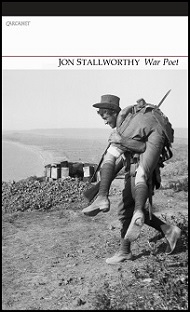
 

 2208771-e8f56b13de2607f4e4866c805b73c50c.jpg
Jon Stallworthy (18 januari 1935 – 19 november 2014)
Cover


De Franse schrijver en filosoof Charles Louis de Secondat, baron de La Brède et de Montesqieu werd geboren op 18 januari 1689 op het kasteel La Brède bij Bordeaux. Zie ook alle tags voor Montesquieu op dit blog.

Uit: Considérations sur les causes de la grandeur des Romains et de leur décadence

"La ville n’avait pas même de rues, si l’on n’appelle de ce nom la conti¬nuation des chemins qui y aboutissaient. Les maisons étaient placées sans ordre et très petites : car les hommes, toujours au travail ou dans la place publique, ne se tenaient guère dans les maisons.
Mais la grandeur de Rome parut bientôt dans ses édifices publics. Les ouvrages qui ont donné et qui donnent encore aujourd’hui la plus haute idée de sa puissance ont été faits sous les Rois. On commençait déjà à bâtir la ville éternelle.
Romulus et ses successeurs furent presque toujours en guerre avec leurs voisins pour avoir des citoyens, des femmes ou des terres. Ils revenaient dans la ville avec les dépouilles des peuples vaincus : c’étaient des gerbes de blé et des troupeaux ; cela y causait une grande joie. Voilà l’origine des triomphes, qui furent dans la suite la principale cause des grandeurs où cette ville parvint.
Rome accrut beaucoup ses forces par son union avec les Sabins, peuples durs et belliqueux comme les Lacédémoniens, dont ils étaient descendus. Romulus prit leur bouclier, qui était large, au lieu du petit bouclier argien, dont il s’était servi jusqu’alors, et on doit remarquer que ce qui a le plus contribué à rendre les Romains les maîtres du monde, c’est qu’ayant combattu successivement contre tous les peuples ils ont toujours renoncé à leurs usages sitôt qu’ils en ont trouvé de meilleurs.
On pensait alors dans les républiques d’Italie que les traités qu’elles avaient faits avec un roi ne les obligeaient point envers son successeur ; c’était pour elles une espèce de droit des gens. Ainsi tout ce qui avait été soumis par un roi de Rome se prétendait libre sous un autre, et les guerres naissaient toujours des guerres.
Le règne de Numa, long et pacifique, était très propre à laisser Rome dans sa médiocrité, et, si elle eût eu dans ce temps-là un territoire moins borné et une puissance plus grande, il y a apparence que sa fortune eût été fixée pour jamais.
Une des causes de sa prospérité, c’est que ses rois furent tous de grands personnages. On ne trouve point ailleurs, dans les histoires, une suite non interrompue de tels hommes d’État et de tels capitaines.
Dans la naissance des sociétés, ce sont les chefs des républiques qui font l’institution, et c’est ensuite l’institution qui forme les chefs des républiques.
Tarquin prit la couronne sans être élu par le Sénat ni par le peuple. Le pouvoir devenait héréditaire ; il le rendit absolu. Ces deux révolutions furent bientôt suivies d’une troisième."
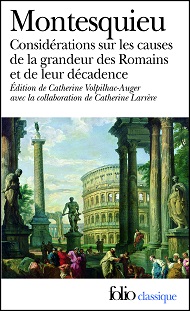
 

 2208771-a79cbfa51b95dcd29d4025637570d0b1.jpg
Montesquieu (18 januari 1689 – 10 februari 1755)
Cover


De Roemeense schrijver en journalist Ioan Slavici werd geboren op 18 januari 1848 in Siria. Zie ook alle tags voor Ioan Slavici op dit blog.

Uit: Popa Tanda (Vertaald door Lucy Byng)

“Then Father Trandafir reached this penitential spot. He could not expect to do as the others had done, come one day, stay the next, and depart the third. He was too much out of favour with the archdeacon to imagine that he would send him to another village. He could not remain without a village: a priest without a village—a cart without a wheel, a yoke without oxen, a hat on the top of a wig. He began to think what he must do; he must take things as they were, and stay gladly in Saraceni. It was only a village in name, but no one could say he was a priest without a village. But really a more suitable priest for a more suitable village you could not have found. The poverty of the priest corresponded to the poverty in the homes of his parishioners. From the beginning Trandafir realized one thing: it was much nicer in Butucani than in Saraceni. There the people all had something, and you could always have some of it. In Saraceni all the latches were made of wood. Then the Father reflected: the priest did all the business of the town, but the town took care of the priest's purse. Before long the Father began to feel sure that the people who started by being charitable and hospitable were not born fools. "It is a wise thing when men meet together to comfort and cheer each other. Even our Redeemer began with almsgiving, and the wedding at Cana of Galilee." Thus thought Father Trandafir; but in Saraceni there was neither almsgiving nor hospitality.
"There is one thing," said the Father to himself a little later on, "in a poor village there is no corn for the priest to gather. As long as the people of Saraceni are lazy, so long shall I be hungry!" And he began to think how he was going to make his parishioners industrious. The industrious man eats the stones, makes soup out of the stagnant water, and reaps corn where the hemlock used to grow. "Then"—concluded the priest—"when the cow has fodder she is no longer dry!"
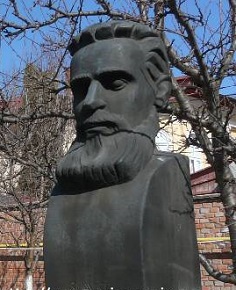
 2208771-6035c52227133dd330f80e222dee2911.jpg

Ioan Slavici (18 januari 1848 – 17 augustus 1925) 
Borstbeeld in Iaşi


De Nicaraguaanse schrijver Rubén Darío werd geboren in Metapa, tegenwoordig Ciudad Darío, op 18 januari 1867. Zie ook alle tags voor Rubén Darío op dit blog.


Symphony In Grey Major

The sea like a vast silvered mirror
reflects the sky like a sheet of zinc;
distant flocks of birds make stains
on the burnished pale grey background.

The sun, like a round, opaque window
with an invalid's steps climbs to the zenith;
the sea wind relaxes in the shade
using its black trumpet as a pillow.

The waves that move their leaden bellies
seem to moan beneath the pier.
Sitting on a cable, smoking his pipe,
is a sailor thinking of the beaches
of a vague, distant, misty land.

This sea-dog is old. The fiery beams
of Brazilian sun have tanned his face;
the wild typhoons of the China sea
have seen him drinking his bottle of gin.

The iodine and saltpetre foam
long has known his ruddy nose,
his curly hair, athletic biceps,
his canvas cap, his blouse of drill.

Surrounded by tobacco smoke
the old man sees the far off misty land
for which one hot and golden evening
his brig set out with all sails set ...

The siesta of the tropics. The sea-dog sleeps.
Now the shades of grey enfold him.
It is as if an enormous soft charcoal
rubbed out the lines of the horizon's arc.

The siesta of the tropics. The old cicada
tries out his senile, raucous guitar
and the cricket strikes up a monotonous solo
on the single string of his violin.
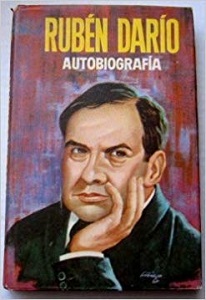
 

 2208771-b2cf8dc0158dfacdd0747c9088b5af38.jpg
Rubén Darío (18 januari 1867 – 6 februari 1916)
Cover autobiografie


De Franse schrijver Paul Léautaud werd geboren op 18 januari 1872 in Parijs. Zie ook alle tags voor Paul Léautaud op dit blog.

Uit: Journal littéraire

« 11 mars 1938

Cet illuminé qui se croit un homme d'État, ce niais dans ses vues sociales, ce faible et pleurard, - comme Gide dans son illuminisme pour la Russie des Soviets, s'enthousiasmant sans rien savoir et quand il a vu la réalité, tombant de son haut. Et on voit tous ces coquins politiques se faire photographier en riant (il y a encore deux jours, dans un journal, Pierre Cot et Jean Zay).
Parlé aussi avec Gérin de l'abaissement de tout dans la société d'aujourd'hui. Très curieux, ce garçon de 23 ans, ancien ouvrier mineur, écrivant dans des journaux d'extrême gauche, me disant qu'il cesse peu à peu d'être républicain, démocrate, qu'il faut de l'ordre, de la hiérarchie, chacun à sa place et qu'il découvre peu à peu que la monarchie avait ses mérites et que, pour la liberté, il n'est pas si sûr qu'on ait gagné au change. Ce qui prouve bien que le milieu ne fait rien, mais le tempérament, le caractère, la sensibilité, et qu'on peut être aristocrate tout en étant un ancien ouvrier mineur.
Parlé des atteintes qu'a subies de tout cela la littérature, les moeurs littéraires, la profusion de la production, les éloges déme­surés à tout propos, les rapprochements à chaque instant avec tel écrivain célèbre : on est un nouveau Balzac à bon marché, la médiocrité de la critique, son manque de liberté d'ailleurs, tant par les petits échanges d'intérêts que par le veto des journaux. II arrive à dire qu'il manque un Sainte-Beuve, qui ne serait peut-être plus possible d'ailleurs. »
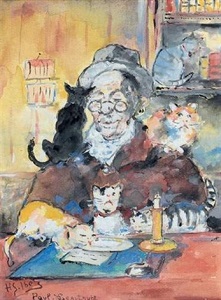
 

 2208771-0a6672d6194397edd4b45382a537e822.jpg
Paul Léautaud (18 januari 1872 – 22 februari 1956)
Portret van Léautaud met zijn katten door Henri Gabriel Ibels, z.j.


De Britse dichter en schrijver Alan Alexander Milne werd geboren op 18 januari 1882 in Londen. Zie ook alle tags voor Alan Alexander Milne op dit blog.


Vespers

Little Boy kneels at the foot of the bed,
Droops on the little hands little gold head.
Hush! Hush! Whisper who dares!
Christopher Robin is saying his prayers.

God bless Mummy. I know that's right.
Wasn't it fun in the bath to-night?
The cold's so cold, and the hot's so hot.
Oh! God bless Daddy - I quite forgot.

If I open my fingers a little bit more,
I can see Nanny's dressing-gown on the door.
It's a beautiful blue, but it hasn't a hood.
Oh! God bless Nanny and make her good.

Mine has a hood, and I lie in bed,
And pull the hood right over my head,
And I shut my eyes, and I curl up small,
And nobody knows that I'm there at all.

Oh! Thank you, God, for a lovely day.
And what was the other I had to say?
I said 'Bless Daddy,' so what can it be?
Oh! Now I remember it. God bless Me.

Little Boy kneels at the foot of the bed,
Droops on the little hands little gold head.
Hush! Hush! Whisper who dares!
Christopher Robin is saying his prayers.


Solitude

I have a house where I go
When there's too many people,
I have a house where I go
Where no one can be;
I have a house where I go,
Where nobody ever says 'No';
Where no one says anything- so
There is no one but me.
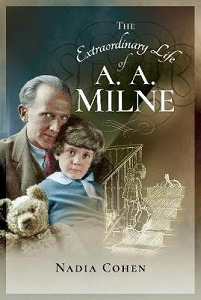
 

 2208771-f2eabb96f7aaed08216e6ae38e1c9b25.jpg
Alan Alexander Milne (18 januari 1882 – 31 januari 1956)
Cover biografie


Zie voor nog meer schrijvers van de 17e januari ook mijn blog van 18 januari 2015 deel 2 en ook deel 3.



Geschreven door Romenu om 18:35 Reageer op dit bericht

Ilja Leonard Pfeijffer, Tom Dolby, Jaap van den Born, Anton Valens, David Ebershoff, Gavin Extence, Hideo Yokoyama, Raoul Schrott, Nanne Tepper

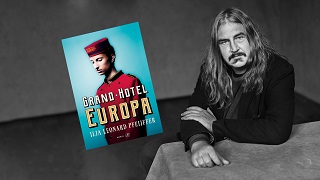
De Nederlandse dichter en schrijver Ilja Leonard Pfeijffer werd geboren op 17 janauari 1968 in Rijswijk. Zie ook alle tags voor Ilja Leonard Pfeijffer op dit blog.

Uit: Grand Hotel Europa

“De anonimiteit en vluchtigheid die een verblijf in een hotel normaal gesproken kenmerken, die de sensatie van treurnis en opwinding teweegbrengen dat je tijdelijk in een niemandsland tussen vertrek van huis en thuiskomst verzeild bent geraakt, waar, omdat er niets gebeurt, net zo goed alles zou kunnen gebeuren, en die een man alleen tussen vreemde lakens na een whisky te veel, achterovergeslagen op een kruk aan de bar in de lobby met een laatste slappe grap voor de stoïcijns glazen polerende barman, op het idee kunnen brengen dat er geen haan naar zou kraaien als hij de nachtportier belde met de vraag of hij iemand kende die haar diensten aanbood, waarbij het alleen die whisky te veel is die hem ervan weerhoudt om dat ook echt te doen, zijn hier in Grand Hotel Europa bleke herinneringen aan een moderniteit die zich ver weg van hier afspeelt in een andere wereld.
Niet in nieuwerwetse vluchtigheid wordt hier vertrouwen gesteld, maar in beproefde traagheid, die mij in de stemming brengt om lange zinnen te schrijven. Ook de internetverbinding is overigens erg traag, maar dat terzijde. In plaats van anonimiteit trof ik op mijn eerste avond mijn foutloos gespelde naam aan die in de verzilverde servetring was gegraveerd die mijn vaste tafel in het restaurant markeerde. Het was geen massief zilver, en toch stelde ik het gebaar bijzonder op prijs. Het is natuurlijk ook een geraffineerde vorm van klantenbinding, want alleen al vanwege die servetring zou ik mij schuldig hebben gevoeld als ik voornemens was geweest mijn reis binnen luttele dagen voort te zetten. Maar dat was ik niet, evenmin als de andere gasten, die geen van allen de indruk wekten op doorreis te zijn.
Enkelen van hen heb ik inmiddels mogen ontmoeten. De grote Griek was de eerste die mij aan zijn tafeltje noodde, eergisteren, tijdens de merenda, die elke dag tussen vier en halfvijf wordt geserveerd in de Chinese kamer. Volonaki heet hij. Zijn voornaam is zoiets als Yannis, als ik het mij goed herinner. Ik zou hem beschrijven als omvangrijk en uitbundig, met expansieve gebaren die een gevaar vormen voor het glaswerk, en een dik hoofd dat speciaal is gemaakt om ruimte te biewie ook wat goed was voor hemzelf en de wereld.
Uit eigen beweging vertelde hij mij dat hij afkomstig is van het eiland Kreta, dat de Europese beschaving daar is ontstaan, dat dat geen toeval is, dat hij eigenaar is van een rederij en scheepswerf in Heraklion, dat dat hard werken is maar dat hij zich graag inspant voor de mensheid en dat hij de economische crisis goed was doorgekomen omdat hij anders dan de meesten van zijn concurrenten al jaren geleden had begrepen dat de toekomst buiten Europa lag.”den aan zijn brede lach. Hij zat erbij als een man die overduidelijk geen maaltijd oversloeg en die ook voor het overige beter wist dan wie ook wat goed was voor hemzelf en de wereld.”


 2208522-e08a634bd1e46c3842c9dc4aa76b199e.jpg
Ilja Leonard Pfeijffer (Rijswijk, 17 janauari 1968)


De Amerikaanse schrijver, filmmaker, essayist, journalist en redacteur Tom Dolby werd geboren op 17 januari 1975 in Londen. Zie ook alle tags voor Tom Dolby op dit blog.

Uit: The Sixth Form

“Before he met Todd, in those first few weeks at Berkley Academy, Ethan Whitley sought refuge in the cool calm of the art studios, amidst the smells of dried paint and eraser shavings. The heat had surprised him; Massachusetts in September was balmy, sweltering, mosquitoes buzzing around brackish pools, verdant lawns that spread for acres beyond the brick facades of Berkley's Colonial campus. The advanced studios of the Stevenson Art Center were air-conditioned, a rare luxury for a school that prided itself on its Spartan, character-building accommodations. When he was working alone in these rooms, Ethan imagined that they protected him from all that lay waiting outside.
As he worked, he would think ahead to the next hour or two, safely tucking his portrait in his cubby, shuffling across the linoleum floor, walking upstairs, past the library, its fifty thousand volumes tempting him, across the inlaid marble of the school's foyer, through its atrium of white columns and vaulted ceilings, out the French doors of the main building. His fellow classmates-he didn't know their names; they were as anonymous as strangers in Grand Central Terminal-would lay sprawled on the grass under a cluster of birch trees like a clothing advertisement, a triple-page spread, their chlorinated blond locks falling lazily over their eyes, tanned legs, scratched in the right places (sports injuries, not clumsiness), skin free of blemishes. They lived in a world where people made witty remarks to each other, and no one worried too much about things like money or popularity or sex.
He was shocked then to find himself one evening, three weeks into the school year, sitting in a taxicab, a rattling old station wagon, barreling into town with Todd Eldon, a boy who lived on the floor above him. Five days earlier, Todd had burst into Ethan's room with the force of a raid-Hands up! We know you have no friends, and we're going to do something about it!-and asked him to summarize the week's English reading, the first section of Jane Eyre. Since that evening, the friendship had progressed so effortlessly that Ethan had nearly forgotten those horrible weeks prior, the sitting alone in his room after check-in, staring at the Jackson Pollock poster he had tacked to the wall above his bed, dreading the mealtime ritual of finding people to sit with, making conversation, smiling politely even when everyone who was done got up to study or goof off in the dorms.”


 2208522-9b052632b6dcbb00a236c7417e3fa29d.jpg
Tom Dolby (Londen, 17 januari 1975)


De Nederlandse dichter, kunstenaar en illustrator Jaap van den Born werd geboren in Nijmegen op 17 januari 1951. Zie ook alle tags voor Jaap van den Born op dit blog.

Uit: Dubbele moraal


Jezus predikt 'Hebt uw vijanden lief'

Wanneer men u in Mijn Naam zal belagen
Wanneer men u bespuugt, bespot, veracht
Dan moet u dat maar allemaal verdragen
Vergeef uw beul in vredig welbehagen
Als u om uw geloof wreed wordt geslagen
En daarna als een lam wordt afgeslacht


Matth. 5:44: 'En ik zeg jullie: heb je vijanden lief en bid voor wie jullie vervolgen, alleen dan zijn jullie werkelijk kinderen van je Vader in de hemel.'


Jezus haat Zijn vijanden

Mijn tegenstanders die Mij steeds belagen:
Ze worden zeer intens door Mij veracht
Hun aanblik kan Ik nauwelijks verdragen
Ik zie dan ook met innig welbehagen
Hoe deze vuile kliek flink wordt geslagen
En daarna zeer vakkundig afgeslacht


Lucas 19:27: 'En die vijanden van mij die niet wilden dat ik koning over hen werd, breng hen hier en dood ze voor mijn ogen.'


 2208522-11a936bad304083a897422e615adc0c8.jpg
Jaap van den Born (Nijmegen, 17 januari 1951)
Nijmegen 


De Nederlandse schrijver en schilder Anton Valens werd geboren op 17 januari 1964 in Paterswolde. Zie ook alle tags voor Anton Valens op dit blog.

Uit: Het compostcirculatieplan

“We gingen aan de slootkant zitten, onder de parasol. Om kwart over vier liepen twee mannen aan, de leptosoom (Max geheten) en een jongere gast een kop kleiner. Met een morose gezichtsuitdrukking en een grafstem maakte deze zich bekend als Herman. Hij had de torso en de armen van een gewichtheffer, vol tatoeages.
Nadat Max aan de hand van het bouwplan de werkzaamheden aan Herman had uitgelegd, pakten ze ieder een schep en vulden de kruiwagens met zand. Ze braken een strook van het oude terras af en stapelden de crimineel zware grindtegels op. De hitte was verzengend, ze trokken hun T-­shirt uit. Ik zag Jens gluren naar de zonverbrande, gladgeschoren en van zweet glimmende borstkas van Herman. Daaronder een sixpack.
Herman begon steeds donkerder te kijken, alsof zijn wenkbrauwen instortten. Hij had een gluiperige kop, vond ik. Dat leek Jens niet te kunnen schelen.
De dampkring betrok met een elektrisch geladen sluier, een vaal blauwgrijs waas, er hing een vreemde, broeierige windloosheid. Heel de namiddag en vooravond leek het alsof ieder moment een verschrikkelijk onweer kon losbarsten. Van tijd tot tijd loerde Jens met een bezorgde frons om het hoekje om te zien of ze opschoten, maar de stratenmakers kwamen langzaam op gang.
We aten om acht uur. Enigszins opgelaten zaten we tegenover elkaar aan de tafel bij de sloot. Zelfs Jens had geen vloeiende conversatie klaarliggen. Max, die de kip wegspoelde met bierglazen cola, had nog het meeste praats. Maar toen hij zijn collega, die ieder oogcontact uit de weg ging, jolig begon te sarren, zag Jens een mogelijkheid in te breken.
Jens: ‘Hoe oud ben je, Herman?’
‘Drieëndertig.’
Max: ‘Hij heeft nog een heel leven voor zich.’
‘Maar dat betekent ook dat hij nog vreselijk lang moet werken.’
Max mekkerde. Een torpedovormige Zware Jongen kleefde aan zijn onderlip.
Herman scheurde een stuk brood af, sopte het in de saus van de kip en antwoordde nurks: ‘Als ik er zat van ben, maak ik er ’n eind an.’


 2208522-b0016a11c04d6e9af55ee346e6879260.jpg
Anton Valens (Paterswolde, 17 januari 1964)


De Amerikaanse schrijver David Ebershoff werd geboren op 17 januari 1969 in Pasadena, Californië. Zie ook alle tags voor David Ebershoff op dit blog.

Uit: The Rose City

“Chuck Paa, not five and a half feet tall, his eyes gold and set deep beneath the brow, asked, "What do you need, Mr. Boyal? Chips? Cake mix? Corn oil? Where's your shopping list? Get out your list."
Mr. Boyal, glasses slipping down his nose, pointed to the breast pocket of Chuck's parka. Only a quarter of an hour before Chuck had picked up the list from the telephone table next to Mr. Boyal's front door, zipping it into the parka and patting the flap for good measure. Then Chuck had forgotten all about it. He must have been thinking of something else at the time: his paycheck arriving in tomorrow's mail; the red-and-black HELP WANTED sign in the window of the liquor store; the call he needed to place to Mr. Riley. Yes, something.
Now Mr. Boyal was leaning heavily on the shopping cart as he pushed it down the baked-goods aisle. It rolled slowly, its back wheels trembling, until Mr. Boyal seemed to lose track of what he was doing, steering the cart into a display pyramid of canned pickled beets. The pyramid collapsed on itself with an extended clatter, and Chuck Paa tried to look the other way.
But worse than the racket of the cans rolling down the aisle was the sight of Mr. Boyal himself. His knees were wobbling, his blue hand was grasping the cart's handle, and Mr. Boyal was on the verge of crumbling into a heap. Here we go again, thought Chuck, moving to catch Mr. Boyal. More than once Chuck had told him it was time to buy a walker, preferably the kind with the little white skis. But Mr. Boyal had—as Chuck expected—resisted. Yet when Chuck mentioned the walker to Mrs. Boyal, Mr. Boyal's sad-mouthed mother who lived far away in Pasadena, her tongue snapped across the phone line. "I couldn't agree more. I just didn't have the heart to bring it up myself." "Well, I have the heart," Chuck replied. And Mrs. Boyal, with her poof of silver-blond hair and pinched oily nose, said, "Oh, Chuck. Aren't you kind to us all."


 2208522-799c54f10b4bda4f796fe0addff487e7.jpg
David Ebershoff (Pasadena, 17 januari 1969)


De Engelse schrijver Gavin Extence werd geboren op 17 januari 1982 in Swineshead, Lincolnshire. Zie ook alle tags voor Gavin Extence op dit blog.

Uit: The Universe Versus Alex Woods

“They finally stopped me at Dover as I was trying to get back into the country. I was half expecting it, but it still came as kind of a shock when the barrier stayed down. It's funny how some things can be so mixed up like that. Having come this far, I'd started to think that I might make it the whole way home after all. It would have been nice to have been able to explain things to my mother. You know: before anyone else had to get involved.
It was 1 a.m., and it was raining. I'd rolled Mr Peterson's car up to the booth in the 'Nothing to Declare' lane, where a single customs officer was on duty. His weight rested on his elbows, his chin was cupped in his hands, and, but for this crude arrangement of scaffolding, his whole body looked ready to fall like a sack of potatoes to the floor. The graveyard shift–dreary dull from dusk till dawn–and for a few heartbeats it seemed that the customs officer lacked the willpower necessary to rotate his eyeballs and check my credentials. But then the moment collapsed. His gaze shifted; his eyes widened. He signalled for me to wait and spoke into his walkie-talkie, rapidly and with obvious agitation. That was the instant I knew for sure. I found out later that my picture had been circulated in every major port from Aberdeen to Plymouth. With that and the TV appeals, I never stood a chance.
What I remember next is kind of muddled and strange, but I'll try to describe it for you as best I can.
The side door of the booth was swinging open and at the same moment there washed over me the scent of a field full of lilacs. It came on just like that, from nowhere, and I knew straight away that I'd have to concentrate extra hard to stay in the present. In hindsight, an episode like this had been on the cards for a while. You have to bear in mind that I hadn't slept properly for several days, and Bad Sleeping Habits has always been one of my triggers. Stress is another.
I looked straight ahead and I focussed. I focussed on the windscreen wipers moving back and forth and tried to count my breaths, but by the time I'd got to five, it was pretty clear that this wasn't going to be enough. Everything was becoming slow and blurry. I had no choice but to turn the stereo up to maximum. Handel's Messiah flooded the car–the 'Hallelujah' chorus, loud enough to rattle the exhaust. I hadn't planned it or anything. I mean, if I'd had time to prepare for this, I'd have chosen something simpler and calmer and quieter: Chopin's nocturnes or one of Bach's cello suites, perhaps.”


 2208522-74ab7c9f8af203e4b70fd24293fb8823.jpg
Gavin Extence (Swineshead, 17 januari 1982)


De Japanse schrijver Hideo Yokoyama werd geboren op 17 januari in Tokio. Zie ook alle tags voor Hideo Yokoyama op dit blog.

Uit: Seventeen

“The wheels on the old-fashioned train clanked to a stop.
Doai Station on the Japan Railways Joetsu Line was in the far north tip of Gunma Prefecture. The platform was in a deep underground tunnel, with 486 steps to climb to reach daylight. Perhaps “scale” would have been a better word than “climb,” given how much his legs were having to work. It was fair to say that the ascent of Mount Tanigawa began right here.
Kazumasa Yuuki began to feel pain as the tips of his toes pressed against his climbing boots. Pain-free, it would have been enough of a challenge to get to the top of the steps in one go. He reached the landing at the three hundredth step (the number was painted on it) and took a breather. He was struck by the same thought he’d had all those years before. He was being tested; maybe this was what separated the men from the boys. But if climbing stairs was enough to leave him out of breath, perhaps he didn’t have what it took to make an assault on Devil’s Mountain. Seventeen years ago, the excesses of a newspaper reporter’s lifestyle had left him struggling for breath; now, his fifty-seven years on this earth were taking their toll on his heart rate.
He was going to climb the Tsuitate rock face.
He felt his determination beginning to waver, but Kyoichiro Anzai’s twinkling eyes were still there in the back of his mind. He could still hear him, too—particularly one phrase that the veteran rock climber had casually dropped into conversation: “I climb up to step down.”
Yuuki raised his head and began once again to climb the stairs.
“I climb up to step down.” He had always wondered about the meaning of this riddle. He believed he had the solution, but the only person who knew the definitive answer wasn’t around anymore to ask.
Ground level at last. He stood a moment, bathed in the gentle early autumn sunshine. It had just turned two in the afternoon, and the wind felt a little cold on his cheek. Takasaki City, farther south in Gunma Prefecture, where Yuuki had lived most of his life, was nothing like this. The temperature and the way the air smelled were completely different here.
He set off walking north along Route 291, leaving the red, pointed roof of the station building behind him. He passed over a level crossing, through a snow-break tunnel, and then, on his right, was a large swath of lawn. Doai Cemetery.”


 2208522-f42edc5e2f0eb7a8627a7b6d373573cc.jpg
Hideo Yokoyama (Tokio, 17 januari 1957)


De Oostenrijkse dichter schrijver Raoul Schrott werd op 17 januari 1964 geboren in Landeck, Tirol (en volgens andere bronnen op een schip „São Paulo“ dat van Brazilië onderweg was naar Europa). Zie ook alle tags voor Raoul Schrott op dit blog.


Sant Apollinare in Classe

die schritte hallen durch steinkiefern · in felseichen
und kiesrosen die zwischen marmornen strandlilien
in den verlorenen wald reichen
sommerschneeblumen unter den vigilien
seiner nadelkronen · nichts schreckt die steinhühner
aus dem moos · sie tragen ihre strophen vor
zu denen die meerbrise ein kehlen anstimmt um sich am gras
als tau niederzulegen · ihr blau wird immer grüner
um in einem wiesenflor
dem sonnengelb zu weichen · o sancta simplicitas
in der nur die bäume in den himmel ragen
aus deren steinfrüchten man licht gewinnt
und die felstauben sich mit dem bebenden schlagen
ihrer seelen in der luft halten · im rotgold gottes ein papagei
an dessen gefieder aus malachit jeder regen abrinnt


Ein Strassenbauarbeiter

kies in schotterkoffer schaufeln · heissen teer ausrechen
damit der walzenzug ihn planiert
eine fahrbahn wird nie eben ­ erst bombiert
fliesst das wetter ab · pfosten setzen · an den leitblechen
distanzstücke montieren: jeder folgt einem mittelstreifen
und fährt ins irgendwo oder vor
etwas davon · die trassierungen reichten zusammen um den äquator
mögliche schlaglöcher werden von uns im frühjahr repariert
spritzwasser und sirrende reifen
das leben aber verläuft im schritttempo und die galerien die ich baue
zeigen allerorts die gleiche ansicht:
postkarten von wächten und lawinenhängen · das rauhgraue
von gneis der talwärts rutscht · eine tagesschicht
die hände dreckig und voll schwielen arbeite ich
ohne ein ende zu erkennen · alle strassen führen
auch stets zurück · nichts wird jemals fertig · hunger spüren
und trockenen munds weitermachen
der himmel ölig schillernd in lachen
die luft wie sie nach rost schmeckt · spitzwegerich
wuchernd an der böschung und holunder
das aufblitzen ihrer staubig weissen dolden ist mir genug an wunder


 2208522-fcf4e3b61557ff51c941ffda3a67384b.jpg
Raoul Schrott (Landeck, 17 januari 1964)


De Nederlandse schrijver, popjournalist en muzikant Nanne Tepper werd geboren in Hoogezand op 17 januari 1962. Zie ook alle tags voor Nanne Tepper op dit blog.

Uit: De lijfbard van Knut de verschrikkelijke

“Men kan mij veel wijsmaken — en vice versa — maar zodra ik een kunstwerk verklaard zie door zijn schepper, in volzinnen en in voetnoten, word ik argwanend. Nu is dat niet helemaal koosjer, want ten eerste begrijp ik de behoefte van sommige kunstenaars om eindeloos over hun geheimenis te spreken volkomen (vraag maar aan mijn buren), ten tweede kan ik me voorstellen dat het moeilijk is om niet toe te geven aan met roem gepaard gaande interesse van derden naar beweegredenen en bewijsvoering, en ten slotte valt het me — hoe obsceen, dat wel — licht te begrijpen dat men een kunstenaar bij wie men aan zijn gerief gekomen is, het hemd van het lijf wil vragen. Voyeurisme Es tenslotte, in tegenstelling tot wat sommige auteurs graag beweren, ziekte en zondeval ineen, 'in deze tijd van deze eeuw'. Niet zo heel erg lang geleden hoorde ik een beroemd auteur op de televisie zeggen dat zijn schrijverschap ontstaan was op het toilet uit zijn kinderjaren, alwaar hij, niet persend maar stuitend en genietend van een zekere aandrang achter het staartbeen, klontering van zielenroerselen meende te constateren. Sindsdien beschouwde hij al wat aan hem kleefde als materiaal. Inspiratie, sprak de man, was hem vreemd. De kunst der verdichting kon hij in zijn eentje rooien. Ik bewonder enkele werken van deze schrijver zeer, maar zijn her en der gedeponeerde autobiografie heb ik altijd een aanfluiting gevonden. Juist het onontkoombare lot dat schrijvers die hun leven als materiaal beschouwen delen — men loopt elkaar wel eens tegen het lijf in elkanders werk, in een pishok of een cul-de-sac — maakte dat ik mij schaamde voor zijn zichtbaar ingestudeerde ontboezeming. Een schrijverschap kent geen geboorte, of men moet de geboorte van het kind dat ooit zal schrijven als aanstichtster of verwekster willen zien. Een schrijverschap kent de vondst van bronnen, en daarin ligt het mysterie. Men kan het vinden van die bronnen achteraf — in vlagen van melancholie, of tijdens zittingen van Mnemosyne en muzen — betichten van grote betekenis, van het neerdalen van een geest of het opgaan van een lichtje, maar mij komt zo een herschepping van je levensloop voor als moedwillige vervalsing. Die bronnen — ach, je ruikt ze wel eens als je, op leeftijd geraakt, op een avond in augustus een laan afloopt en overvallen wordt door een alchimie van geuren, schaduwen en banale beslommeringen: de door de spiegel gestapte dubbelganger van het déjà vu, de zachte duw tegen je zielenleven, iets van daar en ooit en eens; een kluwen, toen al onontwarbaar door het spoken van de tijd die garen spint van onze levens.”


 2208522-398ef792b0f354a69fd4cf18994c17a1.jpg
Nanne Tepper (17 januari 1962 – 10 november 2012)


Zie voor nog meer schrijvers van de 17e januari ook mijn blog van 17 januari 2018, mijn blog van 17 januari 2017 en ook mijn blog van 17 januari 2016 deel 1 en deel 2 en eveneens deel 3.

Geschreven door Romenu om 18:45 Reageer op dit bericht

Meer van Romenu

↑ Terug naar de berichten