Naar de inhoud

Romenu

Over literatuur, gedichten, kunst en cultuur
akke.beakke.be

Berichten van 24 april 2019 tot 25 april 2019

Erik Menkveld, Ted Kooser, James Fenton, Walter de la Mare, Richard Anders, Fletcher Pratt, William Temple, John Keble, Leopoldo Alas
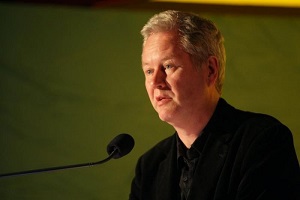
De Nederlandse dichter Erik Menkveld werd geboren op 25 april 1959 in Eindhoven. Zie ook alle tags voor Erik Menkveld op dit blog.


Meisje met eekhoorns

Goed als brood zit zij met het jong op schoot
terwijl de groten om haar benen stoeien.

En zo vertrouwd is haar dit schuwe dat haar
uit het bos toestroomt dat zij ze niet meer ziet,

eekhoorns en bomen. Mij en heel de roekeloos
veranderlijk bestaande stad die mij omgeeft

brengt zij tot stand vanuit dat veel te hoge hoofd;
hier fiets ik, onverklaarbaar volledig aanwezig,

op een brug in Amsterdam-Zuid - vreemde inval
van een stenen meisje, dat even haar ogen sluit.


Eerlijke uren

Met mijn opgeruimdste gezichten een dag beginnen:
probeer ik het eens, blijkt hij niet op te lichten. Niks geen
schaarsgbebloemde voorbijgangerslach in mijn raam
of dat kind op haar vuurrode fietsje dat me wolkenloos
zwaaide en zag - eerlijke uren
waren het vandaag. Dodelijke,
onverkwikkelijke, hopeloos
uitgekeken uren.


Ik ben al bijna bij je

Hoe nabij ik ook toesla, na een tijdje
lijk ik weer verdwenen als altijd.

Maar hoe ver ik ook wegtrek uit je veilige
heden, altijd ben ik naar je onderweg

en blijf ik in je aan het woord, net
niet verstaan door je schichtige oren

die van geen stilte mij onderscheiden.
En voor je het weet ga ik weer in je

tekeer en flakkert je denken als kaarslicht
onder mijn maanloze vlagen. Hoor maar.

Kom ik als ziekte dan snoep ik al aan je.
Kom ik als diepte, dan zul je mijn bodem

nooit raken. Kom ik als water dan lijken
mijn oevers in niets op een kade.

Ik ben al bijna bij je. Als een zuigeling
een wereldoorlog zul je mij smaken.


 2233455-3b2c8706d129721faf20ccdd173af942.jpg
Erik Menkveld (25 april 1959 – 30 maart 2014)


De Amerikaanse dichter Ted Kooser werd geboren op 25 april 1939 in Ames, Iowa. Zie ook alle tags voor Ted Kooser op dit blog.


Abandoned Farmhouse

He was a big man, says the size of his shoes
on a pile of broken dishes by the house;
a tall man too, says the length of the bed
in an upstairs room; and a good, God-fearing man,
says the Bible with a broken back
on the floor below the window, dusty with sun;
but not a man for farming, say the fields
cluttered with boulders and the leaky barn.

A woman lived with him, says the bedroom wall
papered with lilacs and the kitchen shelves
covered with oilcloth, and they had a child,
says the sandbox made from a tractor tire.
Money was scarce, say the jars of plum preserves
and canned tomatoes sealed in the cellar hole.
And the winters cold, say the rags in the window frames.
It was lonely here, says the narrow country road.

Something went wrong, says the empty house
in the weed-choked yard. Stones in the fields
say he was not a farmer; the still-sealed jars
in the cellar say she left in a nervous haste.
And the child? Its toys are strewn in the yard
like branches after a storm—a rubber cow,
a rusty tractor with a broken plow,
a doll in overalls. Something went wrong, they say.


Death of a Dog

The next morning I felt that our house
had been lifted away from its foundation
during the night, and was now adrift,
though so heavy it drew a foot or more
of whatever was buoying it up, not water
but something cold and thin and clear,
silence riffling its surface as the house
began to turn on a strengthening current,
leaving, taking my wife and me with it,
and though it had never occurred
to me until that moment, for fifteen years
our dog had held down what we had
by pressing his belly to the floors,
his front paws, too, and with him gone
the house had begun to float out onto
emptiness, no solid ground in sight.
 

 2233455-ffcec97a97b2cb264fda7f34fd709c03.jpg
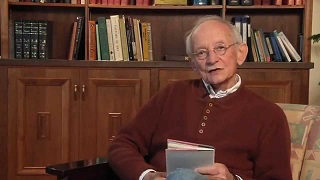
Ted Kooser (Ames, 25 april 1939)


De Engelse dichter, schrijver, criticus en letterkundige James Fenton werd geboren op 25 april 1949 in Lincoln. Zie ook alle tags voor James Fenton op dit blog.

Uit: The need to complete (Over T.S. Eliot)

“With Eliot, the need is far greater: there is much, much more in the way of uncollected and unavailable prose: 700 uncollected items, all kinds of ephemeral pieces, many of them missing from the standard bibliography, which is itself due for complete revision. The new bibliography is under way, in the hands of Archie Henderson.
The Complete Poems - two volumes of it - is also in hand. Christopher Ricks is the editor and publication is perhaps three years away. In this case, it is not that we expect another "Waste Land" to turn up. It is a matter of wanting to see the work whole - great poems, dreadful poems, trivia, whatever there is. When it comes to a poet like this, I'm a staunch completist.
Then there is the stalled edition of the Collected Letters, which began so well with a first volume in 1988, edited by Valerie Eliot. That first volume is now due for revision and, together with a second volume, is due out in 2009, with Hugh Haughton at the helm. Thereafter things are expected to proceed at a modest pace.
But it is the collected prose that really interests me: the essays and reviews, the lectures, everything from the most substantial pieces to the critical ephemera. Seven volumes are planned, with publication shared between Faber in London and Johns Hopkins University in the US. Here the editor is Ronald Schuchard, who has already, along with Ricks, spent years tracking things down. Once again, 2009 is the year in which we will begin to be able to see the results.
A foretaste is provided by Schuchard in the current issue of the magazine Areté. As is well known, Eliot spent much of his adult life as a publisher at Faber, in whose archives there are 40 box-files to do with the Criterion, the magazine Eliot edited, and 120 box-files of correspondence as a publisher, representing, as Schuchard puts it, "43 years of daily engagement with a world-wide literary clientele".
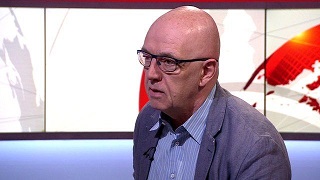
 2233455-a514ed2e321ae84c5d1ce9f866e50655.jpg
James Fenton (Lincoln, 25 april 1949)
T. S. Eliot 


De Engelse dichter Walter John de la Mare werd geboren op 25 april 1873 in Charlton, Kent. Zie ook alle tags voor Walter John de la Mare op dit blog.


The Mother Bird

Through the green twilight of a hedge
I peered, with cheek on the cool leaves pressed,
And spied a bird upon a nest:
Two eyes she had beseeching me
Meekly and brave, and her brown breast
Throbb'd hot and quick above her heart;
And then she oped her dagger bill, -
'Twas not a chirp, as sparrows pipe
At break of day; 'twas not a trill,
As falters through the quiet even;
But one sharp solitary note,
One desperate, fierce, and vivid cry
Of valiant tears, and hopeless joy,
One passionate note of victory:
Off, like a fool afraid, I sneaked,
Smiling the smile the fool smiles best,
At the mother bird in the secret hedge
Patient upon her lonely nest.


The Empty House

See this house, how dark it is
Beneath its vast-boughed trees!
Not one trembling leaflet cries
To that Watcher in the skies—
‘Remove, remove thy searching gaze,
Innocent of heaven’s ways,
Brood not, Moon, so wildly bright,
On secrets hidden from sight.’

‘Secrets,’ sighs the night-wind,
‘Vacancy is all I find;
Every keyhole I have made
Wails a summons, faint and sad,
No voice ever answers me,
Only vacancy.’
‘Once, once … ’ the cricket shrills,
And far and near the quiet fills
With its tiny voice, and then
Hush falls again.

Mute shadows creeping slow
Mark how the hours go.
Every stone is mouldering slow.
And the least winds that blow
Some minutest atom shake,
Some fretting ruin make
In roof and walls. How black it is
Beneath these thick boughed trees!
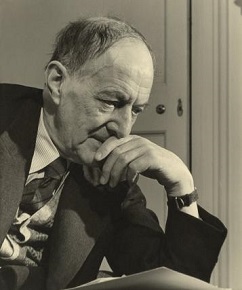
 

 2233455-836f13670bbabb30383b0dc0c2ff83e5.jpg
Walter John de la Mare (25 april 1873 – 22 juni 1956)


De Duitse dichter en schrijver Richard Anders werd geboren op 25 april 1928 in Ortelsburg, tegenwoordig Szczytno, Polen. Zie ook alle tags voor Richard Anders op dit blog.


Eden in der Hölle

In diesem Garten
stehen Adam und Eva
auf einem anderen Feigenblatt

Keine Frage mehr
nach dem Stachel
wenn das Paar vorzieht

zu verdunsten da begossen
alles sich Bäumende
für die Säge strotzt


Weißes Entsetzen

...Wollte ich mich eben noch auflösen so genügt mir jetzt dieser Flug aus Raum und Zeit mit dem einen Flügel meines länger und länger werdenden Schattens so genügt mir jetzt das einzigartige Panorama am Steuer dieses aus völliger Dunkelheit geschaffenen Fahrzeuges ohne jede Möglichkeit anzuhalten und ich bin außer mir während meine geschlossenen Füße immer noch den Steinfußboden eines städtischen Balkons berühren und die Armbanduhr an meinem schlaff herabhängenden Arm weitertickt und das Herz mitten im Hirn flattert dessen Käfigstäbe langsam zu blauem Rauch zergehen und in den Hochhausfenstern sich metallisch die Skalen des Rots einer mit jedem Atemzug langsam untergehenden Sonne spiegeln und ich die Kälte eines Meeres ohne Wasser spüre eine Art lautlose Unendlichkeit in der die Empfindungen langsam nachlassen und die Träume nicht mehr für Augenblicke erstarren und ich das Weiß ahne das keine Farbe mehr ist das schwarze Weiß das Grau in der Erinnerung zusammenstürzender Wogen wenn das Aufhören des Pulsschlags kein Erschrecken mehr auslöst dieses Namenlose diese unbekannte Oberfläche die nichts mehr verbirgt deren Zustand an keinen Augenblick mehr erinnert...
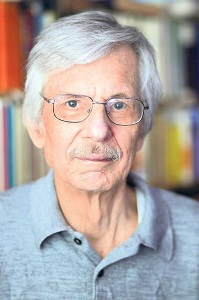
 

 2233455-dd8d99ca100960ef5d8bbb245fa3d9a3.jpg
Richard Anders (25 april 1928 – 24 juni 2014)


De Amerikaanse schrijver en vertaler Murray Fletcher Pratt werd geboren op 25 april 1897 in een reservaat in Buffalo, New York. Zie ook alle tags voor Fletcher Pratt op dit blog.

Uit: The Blue Star

“It was raining steadily outside. The older woman’s tears and words fell in time, drip, drip. Cold, for the tall window at the room’s end would never quite shut close, bottom and top not nest into the frame simultaneously. Lalette in her soutane felt goose-pimples and tried to shut out the sound by thinking of a man with a green hat who would give her a handful of gold scudi and nothing asked, merely because it was spring and she put a small spell on him with a smile, but it was not quite spring, and the voice persisted:
“. . . all my life—I have hoped—hoped and planned for you—even before you were born—even before you were born—daughter of my own—” (Yes, thought Lalette, I have heard that before, and it would move me more, but the night you drank the wine with Dame Carabobo, you told her how I was the product of a chance union in a carriage between Rushaca and Zenss) “—daughter—and after I saved and worked so hard—you miss the only chance—the only chance—don’t know what I’m going to do—and Count Cleudi’s not like most—”
“You told him what he offered was frightful. I heard you.”
(Sob) “It was. Oh, it was. Oh, Lalette, it isn’t right, you should be married with a gold coach and six horses—but what can we do?—oh, if your father had left us anything before the war—all I sacrificed for him—but that is what all of us must do, make sacrifices, we can’t have anything real without giving something away . . . Lalette!”
“Madame.”
“You will be able to employ the Art and have everything you want, you know most of the patterns already, he does not go to the Service often . . . and after all, it’s something that happens to every woman one way or another, and with the Art, even if he doesn’t marry you, he’ll find you a husband you won’t mind, it’s only men like Cleudi who want to be the first, a man who marries would really prefer a girl to have a little experience, I know . . . Lalette!”
Lalette did not answer.
“All the young ones come to the ball after the opera, Lalette. Count Cleudi will present you, and even if you don’t bring—”
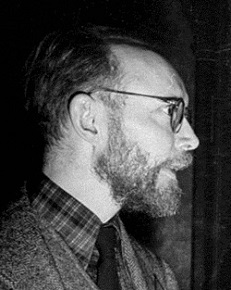
 

 2233455-28b8907ec11a7ea1db01739bfd689be7.jpg
Fletcher Pratt (25 april 1897 – 10 juni 1956)


De Engelse essayist en diplomaat Sir William Temple werd geboren in Londen op 25 april 1628. Zie ook alle tags voor Willam Temple op dit blog.

Uit: Observations upon the United Provinces of the Netherland

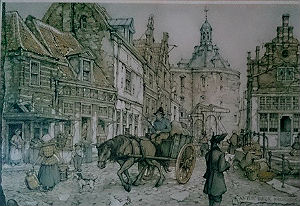
“And I have had occasion to make experiment of the sands rising and sinking before a haven, by two fits of these contrary winds, above four feet. • This, I presume, is likewise the natural reason of so many deep and commodious havens found upon all the English side of the channel, and so few (or indeed none) upon the French and Dutch : an advantage seeming to be given us by nature, and never to be equalled by any art or expence of our neighbours. I remember no mention in ancient authors of that which is now called the Zudder sea; which makes me imagine that it may have been formed likewise by some great inundation, breaking in between the Tessel-islands, and others, that lie still in a line contiguous, and like the broken remainders of a continued coast. This seems more probable, from the great shallowness of that sea, and flatness of the sands, upon the whole extent of it ; from the vio-lent rage of the waters breaking in that way, which threaten the parts of North-Holland about Medenblick and Enchusen, and brave it over the highest and strongest digues of the Province, upon every high tide, and storm at North-West; as likewise from the names of East and West Friezland, which should have been one continent, till divided by this sea: for, in the time of Tacitus," no other distinction was known, but that of greater or lesser Frizons, and that only from the measure of their numbers, or forces; and, though they were said to have great lakes among them, yet that word seems to import they were of fresh water, which is made yet plainer by the word ambiunt, that shews those lakes to have been inhabited round by these nations ; from all this I should guess, that the more inland part of the Zudder sea was one of the lakes there mentioned, between which and the Tessel and Ulie islands there lay anciently a great tract of land.(where the sands are still so shallow, and so continued, as seems to make it evident) but since covered by some great irruptions of waters, that joined those of the sea and the lake together, thereby made that great bay, now called the Zudder sea, by favour whereof the town of Amsterdam has grown to be the most frequented haven of the world. Whatever it was, whether nature or accident, and upon what occasion soever it arrived, the soil of the whole Province of Holland is generally flat, like the sea in a calm, and looks as if after a long contention between land and water, which it should belong to, it had at length been divided between them : for to consider the great rivers, and the strange number of canals that are found in this Province, and do not only lead to every great town, but almost to every village, and every farmhouse in the country ; and the infinity of sails that are seen everywhere coursing up and down upon them; one would imagine the water to have shared with the land, and the people that live in boats to hold some proportion with those that live in houses.”
 

 2233455-d38bbc222987362e8e3fb2b8b650ba40.jpg
William Temple (25 april 1628 – 27 januari 1699)
Enkhuizen door Anton Pieck


De Engelse dichter en predikant John Keble werd geboren op geboren 25 april 1792 in Fairford, Gloucestershire. Zie ook alle tags voor John Keble op dit blog.


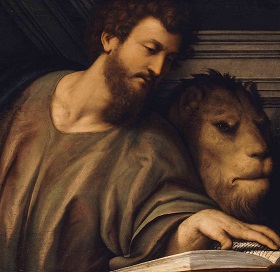
St. Mark's Day

Oh! who shall dare in this frail scene
On holiest happiest thoughts to lean,
On Friendship, Kindred, or on Love?
Since not Apostles' hands can clasp
Each other in so firm a grasp
But they shall change and variance prove.

Yet deem not, on such parting sad
Shall dawn no welcome dear and glad:
Divided in their earthly race,
Together at the glorious goal,
Each leading many a rescued soul,
The faithful champions shall embrace.

For e'en as those mysterious Four,
Who the bright whirling wheels upbore
By Chebar in the fiery blast.
So, on their tasks of love and praise
This saints of God their several ways
Right onward speed, yet join at last.

And sometimes e'en beneath the moon
The Saviour gives a gracious boon,
When reconciled Christians meet,
And face to face, and heart to heart,
High thoughts of holy love impart
In silence meek, or converse sweet.

Companion of the Saints! 'twas thine
To taste that drop of peace divine,
When the great soldier of thy Lord
Called thee to take his last farewell,
Teaching the Church with joy to tell
The story of your love restored.

O then the glory and the bliss,
When all that pained or seemed amiss
Shall melt with earth and sin away!
When saints beneath their Saviour's eye,
Filled with each other's company,
Shall spend in love th' eternal day!
 

 2233455-a51b518e77640af9f83e434f60a67959.jpg
John Keble (25 april 1792 – 29 maart 1866)
Sint Marcus door Il Pordenone, ca. 1635


De Spaanse schrijver Leopoldo Alas (wereldwijd bekend als ‘Clarín’) werd geboren op 25 april 1852 in Zamora. Zie ook alle tags voor Leopoldo Alas op dit blog.

Uit: Die Präsidentin (Vertaald door Egon Hartmann)

„Bis zur zweiten Plattform, einer feingliedrigen Balustrade, stieg er wie eine wehrhafte Feste empor. Von dort setzte er sich in einer anmu-tigen, in Maßen und Proportionen unnachahmlichen Pyramide Fort. Wie ein Bündel von Muskeln und Nerven wanden sich die Steine, immer weiter zurücktretend, in die Höhe, balancierten wie Seilkünstler in der Lufi, und auf einer Kalksteinspitze saß, ein Wun-der an Jonglierkunst gleichsam, wie von einem Magneten gehal-ten, eine große, vergoldete Bronzekugel, darauf eine zweite, klei-nere und auf dieser ein Kreuz aus eisen, das in einen Blitzableiter auslief. Wenn das Kapitel zu den großen Kirchenfesten den Turm mit Lampions und bunten Laternen beleuchten ließ, bot diese gro-ße, schwarze Masse, wie sie so aus der Finsternis hervortrat, einen herrlichen Anblick Das Bauwerk aber verlor durch diesen Auf-putz die unvergleichliche Eleganz seiner Formen und nahm die Umrisse einer gewaltigen Champagnerflasche an. Man hatte mehr davon, den Turm in einer hellen Mondnacht zu betrachten, wenn er sich vom klaren Himmel abhob und die Sterne ihn wie eine Aureole krönten. Dann schmiegte er sich, ein riesiges Phantasiegebilde, in ein Gewand aus Licht und Schauen und wachte über der kleinen, schwärzlichen Stadt, die zu seinen Füßen schlief. Bismarck, ein in Vetusta stadtbekannter Taugenichts, der aus unbekannten Gründen unter seinesgleichen mit diesem Spitznamen gerufen wurde, faßte das abgegriffene Seil am gewaltigen Schwen-gel der Wamba, der großen Glocke, die die ehrwürdigen Dom-herren in den Chor rief. Sie gehörten einem Domkapitel von her-vorragender Bedeutung an, das weitreichende Privilegien genoß. Bismarck war von Beruf Vorreiter der Postkutsche. Er war Peit-schenknaller, wie man in Vetusta die Leute seines Standes nannte. Aber er stieg gern auf die Glockentürme, und im Auftrag Celedo-nios, eines Kirchenmanns und Akoluthen in der ebenfalls nicht amtlichen Funktion eines Glöckners, wurde dem diplomatischen Peitschenknaller an manchen *lägen die Ehre zuteil, das hochehr-würdige Kapitel aus seinem beseligenden Mittagsschlummer zu reißen und es zu seiner eigentlichen Obliegenheit, den Gebeten und Gesängen, zusammenzurufen. Der Vorreiter, im allgemeinen ein fröhlicher, übermütiger, zu Späßen aufgelegter Bursche, handhabte den Klöppel der Wamba mit dem Ernst eines von seinem Glauben durchdrungenen Ha-ruspex. Wenn cr zur Stunde des Chores zog, wie man es nannte, spürte Bismarck in sich etwas von der Würde und Verantwortung einer Uhr. Celedonio saß in der schwarzen, schmutzigen und zerrissenen Soutane rittlings auf einer Fensterbrüstung und spuckte gering-schätzig durch die Zähne auf den kleinen Platz hinunter.“

 

 2233455-26a39519264fe16b1270e923fe426572.jpg
Leopoldo Alas (25 april 1852 – 13 juni 1901)
Cover


Zie voor nog meer schrijvers van de 25e april ook mijn blog van 25 april 2018 en ook mijn blog van 25 april 2016 en mijn blog van 25 april 2015 deel 2.
Geschreven door Romenu om 00:00 Reageer op dit bericht

Frans Coenen, Eric Bogosian, Robert Penn Warren, George Oppen, Sue Grafton, Carl Spitteler, Anthony Trollope, Michael Schaefer, Marcus Clarke

De Nederlandse schrijver, essayist en criticus Frans Coenen werd in Amsterdam geboren op 24 april 1866. Zie ook alle tags voor Frans Coenen op dit blog.

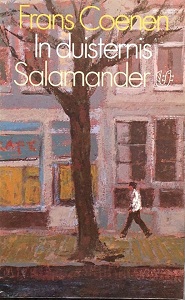
Uit: In duisternis

“In zijn kamertje, grijsdruilend van wintermorgenschemering, lag hij al lange tijd wakker op het ijzerknarsend ledikant, zich telkens omwendend in de bedwarmte, liggend een poos met gesloten ogen, dan weer starend op het groezele vlak van 't neergelaten gordijn. Zijn hoofd voelde zwaar-moe, zwak van zorggedachten, die hij niet meester worden kon. Het verleden was daar telkens in hem met brokken visie, met gehoorde woorden van vroeger, vermoeiend druk en duidelijk. Dan ineens, als een brede benauwing, kwam het besef van de dag en het noodzakelijk doen dat aanstaande was, zijn bewustheid bezetten, zodat zijn hart hoorbaar bonzen ging en weeë angstgolven borrelden door zijn lijf. Het moest nu wel... het móést... De even-aansluipende verlokking tot nog-uitstellen werd zelve tot walging onder het onverzettelijk besef der noodzakelijkheid. Wat gaf het vandaag niet te doen, als 't morgen toch moest of overmorgen?...
En hij zag het in, wreed zichzelve pijnend, met bewust willen. Hij zou opstaan, eten in die kille kamer naast-aan en dan, in de grauwe, natte novemberochtend, begon zijn tocht, de zware solliciteergang. Vaag en vluchtig openden zich even de gezichten van zijn sjokkend lopen op straat: een kaal-fatsoenlijk heer met bleek gezicht tussen de onverschillige mensenstoeten. Zijn zenuwig wachten na het aanbellen aan een breed herenhuis, of het lange, pijnlijke wachten in een stommelig hokje tegenover een paar matglazen loketten, sufgrauw-ogend. Een hokje, waar kantoorlopers zwaar binnenstampen en de stroefverende deur moeilijk-piepend openzwaait. En dan herhaalde hij in zich koortsig de woorden, die hij zeggen moest, hoe te doen om zijn optreden zelfbewuster, zekerder te maken...
Maar nu bijna halfluid sprekend, klonk zijn eigen stem leeg-onnozel in de stilte van het kamertje... Hij werd weer zich zelf bewust en zonk vermoeid in het kussen terug, een ogenblik matsoezend zonder gedachten, daar zijn hoofd te vol was om ze afzonderlijk gewaar te worden. Maar allengs klaarde de doezel op, en begon hij weer één gedachte tegelijk uit te spinnen.
Het was een weevragende onrust waar Carolien nu wel zou zijn, hoe ze 't hebben zou daarginds, en of ze nog met die vent zou wezen. Hij was wel helemaal los van haar... Zij had hem schandalig behandeld... maar een mens kan toch maar niet net zo makkelijk vergeten, als hij ander goed aandoet... Je had toch je momenten van zwakheid... Hij hield nog van d'r... hij voelde het in 't flauw-zoete verlangen dat nu zijn gedachten tot haar dreef... Hij werd ineens benauwd-ongerust om haar, zoals hij pas nog ongerust om zich zelf was...”


 2233117-6f5efd8740d29dfc13b85f7b6a91f564.jpg
Frans Coenen (24 april 1866 – 23 juni 1936)
Cover


De Amerikaanse schrijver en acteur Eric Bogosian werd geboren op 24 april 1953 in Woburn, Massachusetts. Zie ook alle tags voor Eric Bogosian op dit blog.

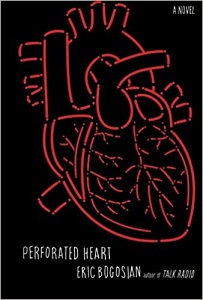
Uit: Perforated Heart

“I brought up my own mother's premature death and we discussed that for a while until I sensed that tears were imminent and I changed the subject. After endless all-night sessions with various ex-girlfriends and lovers, I am no longer available as therapist to fucked-up beauties. I want my perquisites with no strings attached. The awards dinner was a fading memory as we flirted. It was fait ac-compli, wasn't it? We were striking a deal. She would permit me to caress those mysterious thighs, nuzzle those breasts and enter her. In return I would grant her access to the inner sanctum of a great man's life. She would be allowed to entertain the illusion that she had melded with a great mind. (A mind not unlike hers, of course.) This entitlement would nourish her grandiosity, which she mistook for authentic talent. My venerable cum was still cooling (or warming?) in her somewhere when I began to get restless. (No, no condom. I'm fixed. Furthermore I always make a pretense of being a person who rarely gets laid, ergo, the logic is, I carry no STDs. Girls like my new friend are usually clean and so am I. I hope.) At two A.M, I let her know I had an early morning appointment and invited her to depart. She seemed surprised by this. As she redressed, I killed time scanning the latest issue of The New York Review of Books, then escorted her down to my driver, who had been waiting patiently under the awning of the building. Something simultaneously chivalrous and vulgar about that. I handed her an autographed copy of A Gentle Death, slammed the door of the car, blew a kiss, turned on my heels and marched smartly back into the mild glow of the lobby, where my stoic doorman kept vigil. His face betrayed nothing. In the elevator I discovered myself in a mirror. I am in my mid-fifties, almost handsome, gray-haired, bespectacled. I have the bearing of what? A successful man of the city. Or just one more putz?”


 2233117-b26eccc28295b900fcedef8327de7144.jpg
Eric Bogosian (Woburn, 24 april 1953)
Cover


De Amerikaanse dichter en schrijver Robert Penn Warren werd geboren op 24 april 1905 in Guthrie, Kentucky. Zie ook alle tags voor Robert Penn Warren op dit blog.

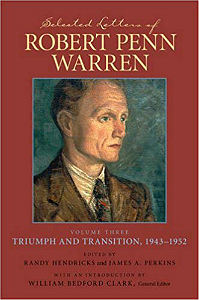
Uit: Selected Letters of Robert Penn Warren: Triumph and Transition, 1943-1952

“TO LAMBERT DAVIS
January 28, 1943
Dear Lambert: I mentioned in my last note that Samuel Goldwyn wants a reading on At Heaven's Gate. Recently, I have had two other requests: Richard Mealand, of Paramount, and Irving Deakin, of Warner Brothers. I realize, of course, that these requests area matter of routine, but I have referred them to you, since I don't have a decent copy of the novel. In fact, your copy is the only complete one of the final version. By the way, Paramount got fairly warm on Night Rider.' But I suppose that At Heaven's Gate would offer too many difficulties—unless they simply took some of the material and drastically reworked it. There's another little matter. Recently, in worrying over the novel coming up (which will probably be called All the King's Men) and the text book, I got the idea of appealing to the Rosenwald people' for a grant to enable me to get South for the summer and work the newspaper files and do a little prying around, gossip and interview, etc. to heat myself up for the final business on the political novel. It's just a damned shame I didn't get farther into this novel before I had to leave the neighborhood of Louisiana and Mississippi. The Rosenwald people reply that there are sev-eral objections to my application — too much publishing behind me, not living in the South now, only four months involved in project instead of six, etc. But they admit that there's a chance and send me blanks. I've given you as a reference. So you'll know what it's all about when you hear from them. If you hear. The trouble is that that damned house of mine in Louisiana is still around my neck, and so the Harcourt $750 simply has to go for the annual extra payment on that. Which means that its teaching for me next summer unless I can scare up the money from Rosenwald. I don't dare hope for anything from At Heaven's Gate. And certainly I can't do any planning on it. By the way, tell the text book people that I haven't forgotten them. I've been fiddling with the project'—inspecting books, doing a few trial outlines, etc. And I taught a section of freshmen last term. I shall teach another in the spring term and try out what few ideas I have come to by that time. I have also written Cleanth about the matter. If it should work out that I could get South next summer, I could kill two birds with one stone — or at least knock off a few tail feathers. As for the date of All the King's Men. I hope to get down to the final grind of writing next fall. I have begun tinkering with it, and have settled on an approach. It seems to me that my way in is through a single narra-tor who will carry the ball all the way—first-person treatment. I think I've got my man picked. The problem was to get a narrator who would have enough opportunity to know the story and would have enough intelli-gence to interpret and would have a style of his own. I believe that I have the boy, all right. He's a first cousin of Duckfoot (Blake, in At Heaven's Gate], I should say., Coming back to the date. I should hope to have the thing ready for you in the early fall of next year. I don't see it as a very long book— rather a shortish and strongly unified one., Well, goodbye, and best luck. We are still wrestling with colds and flu. My head feels like a feather bed the baby wet in. As ever, Red”


 2233117-3bcb93077f6cbe946d396e52cfceb99d.jpg
Robert Penn Warren (24 april 1905 – 15 september 1989)
Cover


De Amerikaanse dichter George Oppen (eig. George Oppenheimer) werd geboren op 24 april 1908 in New Rochelle, New York. Zie ook alle tags voor George Oppen op dit blog.


Five Poems about Poetry

1
THE GESTURE

The question is: how does one hold an apple
Who likes apples

And how does one handle
Filth? The question is

How does one hold something
In the mind which he intends

To grasp and how does the salesman
Hold a bauble he intends

To sell? The question is
When will there not be a hundred

Poets who mistake that gesture
For a style.


2
THE LITTLE HOLE

The little hole in the eye
Williams called it, the little hole

Has exposed us naked
To the world

And will not close.

Blankly the world
Looks in

And we compose
Colors

And the sense

Of home
And there are those

In it so violent
And so alone

They cannot rest.


 2233117-5c4e8402774340cfb32f3fd1b378f666.jpg
George Oppen (24 april 1908 – 7 juli 1984)
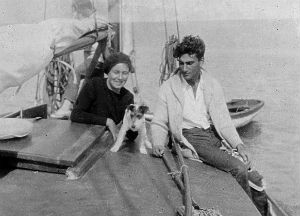
Mary en George Oppen op hun boot in California, ca. 1930


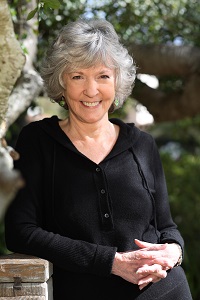
De Amerikaanse schrijfster Sue Grafton werd geboren in Louisville (Kentucky) op 24 april 1940 als dochter van schrijver C.W. Grafton en Vivian Harnsberger. Zie ook alle tags voor Sue Grafton op dit blog.

Uit: X

“Santa Teresa, California, Monday, March 6, 1989. The state at large and the town of Santa Teresa in particular were nearing the midpoint of a drought that had slithered into view in 1986 and wouldn’t slither off again until March of 1991, when the “miracle rains” arrived. Not that we dared anticipate relief at the time. From our perspective, the pitiless conditions were upon us with no end in sight. Local reservoirs had shrunk, leaving a wide swath of dried mud as cracked as an alligator’s hide.
My professional life was in the same state—always worrisome when you are your sole financial support. Self-employment is a mixed bag. The upside is freedom. Go to work when you like, come home when you like, and wear anything you please. While you still have bills to pay, you can accept a new job or decline. It’s all up to you. The downside is uncertainty, the feast-or-famine mentality not everyone can tolerate.
My name is Kinsey Millhone. I’m a private detective by trade, doing business as Millhone Investigations. I’m female, thirty-eight years old, twice divorced, and childless, a status I maintain with rigorous attention to my birth control pills. Despite the shortage of new clients, I had a shitload of money in the bank, so I could afford to sit tight. My savings account had been plumped by an unexpected sum that dropped into my lap some six months before. I’d invested the major chunk of it in mutual funds. The remaining cash I kept in a money market account that I designated “untouchable.” Friends, on hearing about my windfall, viewed me as certifiable. “Forget about work. Why not travel and enjoy life?”
I didn’t give the question credence. At my age, retirement is out of the question, and even temporary idleness would have driven me insane. True, I could have covered my expenses for months to come with enough in reserve for a lavish trip abroad, except for the following impediments:

1. I’m miserly and cheap.
2. I don’t have a passport because I’ve never needed one. I had traveled to Mexico some years before, but all that was required in crossing the border then was proof of U.S. citizenship.”


2233117-6ed46ab84354c7163deb1e7895ce0564.jpg
Sue Grafton (24 april 1940 – 28 december 2017)


De Zwitser dichter, schrijver, essayist en criticus Carl Friedrich Georg Spitteler (eig. Carl Felix Tandem) werd geboren op 24 april 1845 in Liestal bij Basel. Zie ook alle tags voor Carl Spitteler op dit blog.

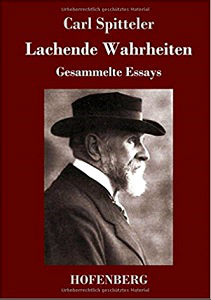
Uit:Lachende Wahrheiten

„Kein empörenderes Schauspiel, als sehen zu müssen, wie unsere leidige Allerweltsschulmeisterei es fertig gebracht hat, die süßesten Früchte mittels pädagogischer Bakterien ungenießbar zu machen und Geschenke, die dazu ersehen waren, uns zu beglücken, in Buß und Strafe umzusetzen. Die Kunst ist großherzig und menschenfreundlich wie die Schönheit, welcher sie entspringt. Sie ist ein Trost der Menschen auf Erden und erhebt keinen andern Anspruch, als innig zu erfreuen und zu beseligen. Sie verlangt weder Studien noch Vorbildung, da sie sich unmittelbar durch die Sinne an das Gemüt und die Phantasie wendet, so daß zu allen Zeiten die einfache jugendliche Empfänglichkeit sich im Gebiete der Kunsturteilsfähiger erwiesen hat, als die eingehendste Gelehrsamkeit. So wenig man Blumen und Sonnenschein verstehen lernen muß, so wenig es Vorstudien braucht, um den Rigi herrlich, ein Fräulein schön zu finden, so wenig ist es nötig, die Kunst zu studieren. Gewiß, die Empfänglichkeit ist beschränkt, die Begabungen sind ungleich zugeteilt, die Sinne, welche die Kunsteindrücke vermitteln, beobachten schärfer oder stumpfer. Indessen habe ich noch keinen Menschen von Gemüt und Phantasie (denn Gemüt und Phantasie sind die Vorbedingungen, aber auch die einzigen Vorbedingungen des Kunstgenusses) gekannt, welcher nicht an irgendeinem Teil der Kunst unmittelbare Freude empfunden hätte. Und darauf kommt es allein an. Jeder suche sich an dem himmlischen Fest diejenige Speise aus, die seine Seele entzückt, und weide sich daran nach Herzenslust, so oft und so viel er mag, im stillen oder, wenn ihm das Herz überläuft, mit gleichgesinnten Freunden. Das ist Kunstgenuß. Das ist aber auch Kunstverständnis. Wer sich aufrichtig und bescheiden an einem Kunstwerke erfreut, der versteht es ebensowohl und wahrscheinlich noch besser, als wer gelehrte Vorträge darüber hält; wie denn auch ewig die Künstler selbst sich unmittelbar an das einfache Publikum wenden und alle Vormundschaft und gelehrte Zwischenträgerei zwischen Kunstwerk und Publikum verabscheuen.“


 2233117-d4244e470e56d54a2b9db07509a14a74.jpg
Carl Spitteler (24 april 1845 – 29 december 1924)
Cover


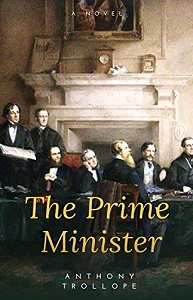
De Engelse schrijver Anthony Trollope werd geboren in Londen op 24 april 1815. Zie ook alle tags voor Anthony Trollope op dit blog.

Uit: The Prime Minister

“Ferdinand Lopez, who in other respects had much in his circumstances on which to congratulate himself, suffered trouble in his mind respecting his ancestors such as I have endeavoured to describe. He did not know very much himself, but what little he did know he kept altogether to himself. He had no father or mother, no uncle, aunt, brother or sister, no cousin even whom he could mention in a cursory way to his dearest friend. He suffered no doubt; — but with Spartan consistency he so hid his trouble from the world that no one knew that he suffered. Those with whom he lived, and who speculated often and wondered much as to who he was never dreamed that the silent man’s reticence was a burden to himself. At no special conjuncture of his life, at no period which could be marked with the finger of the observer, did he glaringly abstain from any statement which at the moment might be natural. He never hesitated, blushed, or palpably laboured at concealment; but the fact remained that though a great many men and not a few women knew Ferdinand Lopez very well, none of them knew whence he had come, or what was his family.
He was a man, however, naturally reticent, who never alluded to his own affairs unless in pursuit of some object the way to which was clear before his eyes. Silence therefore on a matter which is common in the mouths of most men was less difficult to him than to another, and the result less embarrassing. Dear old Jones, who tells his friends at the club of every pound that he loses or wins at the races, who boasts of Mary’s favours and mourns over Lucy’s coldness almost in public, who issues bulletins on the state of his purse, his stomach, his stable, and his debts, could not with any amount of care keep from us the fact that his father was an attorney’s clerk, and made his first money by discounting small bills. Everybody knows it, and Jones, who like popularity, grieves at the unfortunate publicity. But Jones is relieved from a burden which would have broken his poor shoulders, and which even Ferdinand Lopez, who is a strong man, often finds it hard to bear without wincing.
It was admitted on all sides that Ferdinand Lopez was a ‘gentleman’. Johnson says that any other derivation of this difficult word than that which causes it to signify ‘a man of ancestry’ is whimsical. There are many who, in defining the term for their own use, still adhere to Johnson’s dictum; — but they adhere to it with certain unexpressed allowances for possible exceptions. “


 2233117-46889bb0abd54c30d7d5faf0e3766179.jpg
Anthony Trollope (24 april 1815 – 6 december 1882)
Cover


De Duitse schrijver Michael Schaefer werd geboren op 24 april 1976 in Bielefeld. Zie ook alle tags voor Michael Schaefer op dit blog.

Uit: Liebe auf Raten

„Als sie dann den Buckingham-Palace aus der Entfernung sahen, wurden die Gespräche über das schöne Schloss und die Queen laut. Immer neue Wunder durften Tom und Steve bewundern. Als sie dann in eine kleinere Seitengasse im Stadtzentrum einbogen und vor dem Jugendhotel zum Stehen kamen, war keiner mehr zu halten. Sie quetschten sich heraus, so als würden sie innerhalb von Minuten alles verpassen. Die Begeisterung fand ihren ersten Höhepunkt als sie in das weitläufige Foyer des Hotels schritten mit seinen hohen Räumen und den Bemalungen an Wand und Decke. Der Boden war sorgsam gebohnert, die kleinen Sitzecken geschickt mit bepflanzten Raumteilem getrennt. In der Mitte der Halle neben der bauchigen Rezeption der Wegweiser zu den Speisesälen, der Waschstube, den Tagungsräumen, dem Freizeitkeller mit Tischtennis, Kicker und Billard. Dem Partykeller mit Discoanlage und Lichtorgeln. Auch eine Bar war ausgeschildert. Tom war hellauf begeistert, wie Licht und Schatten geschickt ausgenutzt wurden, um eine warme, heimische Atmosphäre zu schaffen. Die große Halle wurde optimal genutzt und gab den Betrachtern nicht das Gefühl, eingeengt zu sein. Als die Zimmer verteilt wurden, hatten Tom und Steve das große Los gezogen, als einzige ein Zweibettzimmer zu bekommen, während die anderen in 6-Bett-Zimmern untergebracht wurden. Steve war das relativ egal, schlafen würde er dann ohnehin nur, wenn es unbedingt sein muss. Zuviel gibt es in London zu entdecken. Die Tagesplanung der Lehrer war genau richtig, um die nähere Umgebung zu erkunden. Man durfte ohne Lehrer durch die Stadt ziehen, musste nur am Abend um 19 Uhr wieder im Haus sein, weil es da Abendessen gab. Auch die Zimmer waren eher zweckmäßig als schick eingerichtet, dafür waren sie aber sauber und gepflegt. Tom und Steve warfen einfach ihr Zeug ins Zimmer, bezogen schnell die Betten und waren als eine der ersten bereits schon wieder unten und aus dem Hotel raus. Steve, bewaffnet mit Stadtführer und Stadtplan, und Tom mit einer Fotokamera anno Domini 1980. Tom wünschte sich zwar schon immer eine Digitalkamera als so ein klobiges Ding, allerdings hatten seine Eltern das bisher mangels finanzieller Möglichkeiten abgelehnt.
Als sie die ersten Schritte in der Traummetropole wagten, begannen auch die Probleme. Zuerst verirrten sie sich in der alten Metro mit ihren Tausenden kleinen Durchgängen und Gleisen. Dann stiegen sie auch noch in die falsche Bahn und fuhren bis fast zum Stadtrand, wo es wenig Tolles zu sehen gab. Außerdem war die allgemeine Hektik in der Stadt unter der Stadt völlig unbekannt für die beiden. Die lauten Stimmen und die schiebenden, quetschenden und durchaus mal Ellenbogen nutzenden Massen, waren den beiden Landeiem sehr bald schon zuwider. Auch diese teilweise völlig obskuren Gestalten mit hoch stehenden gefärbten Haaren, zerrissenen Hosen und Ketten an den Schuhen und Jacken.“


 2233117-df0517778271e9a386d642a9b4c5f2b1.jpg
Michael Schaefer (Bielefeld, 24 april 1976)
Buckingham Palace from St James’s Park door Daisy Sims-Hilditch, z.j.


De Australische schrijver Marcus Clarke werd geboren op 24 april 1846 in Londen. Zie ook alle tags voor Marcus Clarke op dit blog.

Uit: Australian Tales of the Bush

“A deeper melancholy seemed to fall on the always melancholy township. Coppinger's cronies took their "tots" in silence, steaming the while, and Coppinger himself would come gloomily to the door, speculating upon evil unless the leaden curtain lifted.
But it did not lift, and rumour of evil came. Up the country, by Parsham and Merrydale, and Black Adder
’s Gully, there were whole tracts of grass-land under water. The neighbouring station of Hall’s, in the mountains, was a swamp. The roads were bogged for miles. Tim Doolan was compelled to leave his dray and bullocks Tom and Jerry’s, and ride for his life before the advancing waters. The dams were brimming, at Quartzborough, St. Rey reservoir was running over. It was reported by little McCleod, the sheep-dealer, that the old bridge at the Little Glimmera had been carried away. It was reported that Old Man Horn, whose residence overlooked the river, had fastened a bigger hook to a larger pole (there was a legend to the effect that Old Man Horn had once hooked a body from the greedy river, and after emptying its pockets, had softly started it down stream again), and was waiting behind his rickety door, rubbing his withered hands gleefully. Young Bartram rode over to Quartzborough to get McCompass, the shire engineer, to look at his new dam. Then the coach stopped running, and then Flash Harry, galloping through the township at night, like the ghost-rider the ghost-rider in Bürger's ghastly ballad, brought the terrible news: THE FLOODS WERE UP, AND THE GLIMMERA BANK AND BANK AT THE OLD CROSSING-PLACE.
“It will be here in less than an hour,” he shouted, under Coppinger’s red lamps; “make for the high ground if you love your lives;” and so wet, wild-eyed, and white, splashed off into the darkness, if haply he might warn the poor folk down the river of the rushing death that was coming upon them.
Those who were there have told of the horrors of that night. How the muddy street, scarce reclaimed from the river-bed, was suddenly, full of startled half-dressed folk. How Coppinger’ss was crowded to the garret. How the schoolmaster dashed off, stumbling through the rain, to warn them at Seven Creeks. How bullies grew pale with fear, and men hitherto mild of speech and modest of mien, waxed fiery-hot with wrath at incapacity, and fiercely self-assertive in relegating fools to their place in the bewildered social economy of that general overturn. How the roaring flood came down, bearing huge trees, fragments of houses, grotesquely terrible waifs and strays of house-hold furniture upon its yellow and turbid bosom, timid women grew brave, and brave men hid their faces for a while.”


 2233117-4fec383e61babe7db46b53729f8e502c.jpg
Marcus Clarke (24 april 1846 – 2 augustus 1881)
Cover


Zie voor nog meer schrijvers van de 24e april ook mijn blog van 24 april 2016 deel 2.

Geschreven door Romenu om 18:28 Reageer op dit bericht

Meer van Romenu

↑ Terug naar de berichten