Naar de inhoud

Romenu

Over literatuur, gedichten, kunst en cultuur
akke.beakke.be

Berichten van 8 mei 2019 tot 9 mei 2019

Willem Wilmink, Jorie Graham, Pieter Boskma, Charles Simic, Dolce far niente
 

Dolce far niente


 2236885-1c1fa2ac583e9f81bcd18d0df9c34d42.jpg
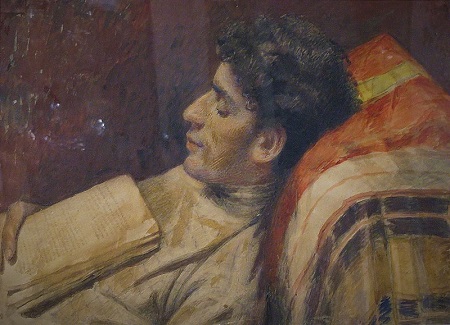
Slapende man met boek door Yehuda Pen


Een probleem

Vandaag vroeg mijn zoontje
met angstige stem :
'Als iemand dood gaat
wat gebeurt er dan met hem ?'
Nu ken ik wel iemand
die daarover zegt :
'Wie dood is komt in de hemel terecht
dus boven de wolken, dus altijd mooi weer
met een bal in het gras en ijsjes, meneer.'
Maar weer iemand anders vertelde zo waar
'Als je dood bent, dan komt er een tovenaar.
Dan tovert hij aan je en word je een dier
een mus of een tijger, een leeuw of een mier.
Zelf mag je kiezen welk dier je wilt zijn,
een mug of een olifant of een konijn.'
Maar op een morgen ben ik gegaan
naar een man die heel oud was, dus gauw dood zou gaan
'Of ik een dier wordt,' zei deze man
'Of ik in de hemel kom, ik weet er niets van,
maar als ik dood ben is 't eerste wat ik doe
honderd jaar slapen. Want ik ben moe…'
 

 2236885-b2f3c1e34e465d828b6a40c7391926ed.jpg
Willem Wilmink (25 oktober 1936 – 2 augustus 2003)
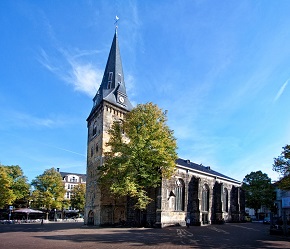
De Grote Kerk in Enschede, de geboorteplaats van Willem Wilmink


De Amerikaanse dichteres Jorie Graham werd geboren op 9 mei 1950 in New York geboren. Zie ook alle tags voor Jorie Graham op dit blog.


Mother’s Hands Drawing Me

Dying only mother’s hands continue
undying, blading into air,
impersonal, forced, curving it
down — drought incessant rain
revolution and the organs shutting
down but not these extremities,
here since I first opened my first
eyes first day and there they were,
delicate, pointing, will not back off,
cannot be remembered. Mother,
dying — mother not wanting to
die — mother scared awakening
each night thinking she’s dead —
crying out — mother not
remembering who I am as I run
in — who am I — mother we must
take away the phone because who
will you call next — now saying I
dreamt I have to get this dress on, if
I get this dress on I will not die —
mother who cannot get the dress on
because of broken hip and broken
arm and tubes and coils and pan
and everywhere pain, wandering
delirium, in the fetid shadow-
world — geotrauma — trans-
natural — what is this message
you have been scribbling all your
life to me, what is this you drag
again today into non-being. Draw it.
The me who is not here. Who is the
ghost in this room. What am I that
is now drawn. Where are we
heading. Into what do you throw
me with your quick eye — up onto
me then down onto the blank of the
page. You rip the face
off. I see my elbow there where
now you bend it with the pen, you
fill it in, you slough it off me onto
more just-now making of more
future. You look back up, you take
my strangeness from me, you
machine me, you hatch me in. To
make what, mother, here in this
eternity this second this million
years where I watch as each thing is
seen and cancelled-out and re-
produced — multiplying aspects of
light in the morning air — the
fingers dipping frantic into the bag
of pens, pencils, then here they
are — the images — and the hands
move — they are making a
line now, it is our world,
it horizons, we ghost, we sleepwalk,
everything around us is leveled,
canceled, we background, we
are barely remains, we remain, but
for what, the fingers are deepening
curling, bringing it round, the mind
does not — I don’t think — know this
but the fingers, oh, for all my life
scribbling open the unseen,
done with mere things, not
interested in appraisal, just
seizure — what is meant by
seizure — all energy, business-
serious, about direction, tracing
things that dissolve from thingness
into in-betweens — here firm lines,
here powdery lift off — hunger,
fear — the study begins — all is not
lost — the thought a few seconds
wide — the perusal having gone
from here to here, aggregates,
thicket, this spot could be where
we came in, or where we are saved,
could be a mistake, looks across
room through me, me not here
then, me trying to rise in the beam,
nothing I do will make it
happen, rock-face, work that
excludes everything that is not
itself, all urge in the process of
becoming all effect, how can I touch
that hand like snow moving, when
is it time again as here there is no
time, or time has been loaded but
not cocked, so is held in reserve, all
wound up, I was also made but not
like this, I look for reluctance,
expectation, but those are not the
temperatures — if only I could be in
the scene — my time is not
passing — whose is the time that is
passing — the hands rushing across
the paper, cloudy with a sun
outside also rushing scribbling —
wisdom turning itself away from
wisdom to be — what — a thing that
would gold-up but cannot, a patch
of blue outside suddenly like the
cessation of language when lips
cease to move — sun — self-
pronouncing — I want this to not be
my writing of it, want my hands not
to be here also, mingling with hers
who will not take my hand ever into
hers, no matter how late we are, no
matter that we have to run so fast
through all these people and I need
the hand, somewhere a radiant
clearing, are we heading for it, head
down towards the wide page, hand
full of high feeling, cannot tell if it
takes or gives, cannot tell what it is
that is generating the line, it comes
from the long fingers but is not
them, all is being spent, the feeling
that all — all that we need or have —
would be spent for this next thing
this capture, actually loud though
all you can hear is the small
scratching, and I feel dusk
approaching though it is still early
afternoon, just slipping,
no one here to see this but me, told
loud in silence by arcs, contours,
swell of wind, billowing, fluent —
ink chalk charcoal — sweeps, spirals,
the river that goes
nowhere, that has survived the
astonishments and will never
venture close to that heat again, is
cool here, looking up at what,
looking back down, how is it
possible the world still exists, as it
begins to take form there, in the not
being, there is once then there is the
big vocabulary, loosed, like
a jay’s song thrown down when the
bird goes away, cold mornings,
hauling dawn away with it, leaving
grackle and crow in sun — they have
known what to find in the unmade
undrawn unseen unmarked and
dragged it into here — that it be
visible.
 

 2236885-e695dbe993c0405e85c0631212548c74.jpg
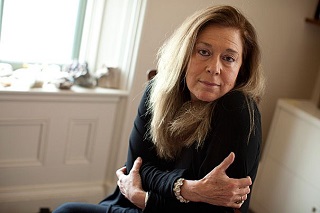
Jorie Graham (New York, 9 mei 1950)


De Nederlandse dichter en schrijver Pieter Boskma werd geboren in Leeuwarden op 9 mei 1956. Zie ook alle tags voor Pieter Boskma op dit blog.


Drie liedjes uit het zwarte water


(licht lied)

Liefje als het later
aan het zwarte water
onder lichtgeklater
nog als nu als nu kon zijn

Heel ons leven staat er
en alles alles gaat er
in een stille schater
door ons terug in zijn voorbij

Liefje als het later
zoals nu als nu kon zijn:
goud over berg en water
en dat oude goud zijn wij.


(donker lied)

Maar als het als het later
aan het lange zwarte water
onder duisternisgeklater
een alleen alleenzijn is
En jouw leven staat er
als een schaduw naast en
begint opnieuw te praten
als van onder aarde

Dan zal ook ik ontwaken
in de opgegraven stem
waarmee ik over water
naar je kom toegerend


Klamme lente

Een boeket violen staat
te zwiepen op de radio.
Ergens in een studio
zweet de dirigent zich dood.

Het is inderdaad een warme dag.
Anderhalf miljoen mussen
vielen van de daken - toch
glimlachen wij welterusten.

Slaap je al? Ik ook niet, nee.
Het is te warm, te warm...
Mijn God wat ben je klam...
Hoe laat? Een uur of twee.

Ook de kikkers raken al
vermoeid na drie keer kwaken.
Hoog in de concertzaal
puffen vaag de sterren

en beginnen zoek te raken.
Het waterig applaus wordt
afgebroken door het nieuws.
Negen Mei en dertig graden,

voorbij flitst het bestaan.
Bekkenslag. Een buiging.
En dan het zachte kraken
van de bevroren nacht.
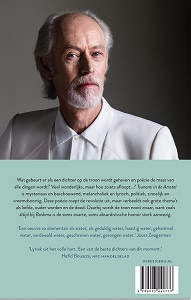
 

 2236885-0ec5ce4e322b502d93f3b11fa9d4f06c.jpg
Pieter Boskma (Leeuwarden, 9 mei 1956)
Cover


De Amerikaanse dichter Charles Simic werd geboren in Belgrado op 9 mei 1938. Zie ook alle tags voor Charles Simic op dit blog.


Old Couple

They're waiting to be murdered,
Or evicted. Soon
They expect to have nothing to eat.
In the meantime, they sit.

A violent pain is coming, they think.
It will start in the heart
And climb into the mouth.
They'll be carried off in stretchers, howling.

Tonight they watch the window
Without exchanging a word.
It has rained, and now it looks
Like it's going to snow a little.

I see him get up to lower the shades.
If their window stays dark,
I know his hand has reached hers
Just as she was about to turn on the lights.


So Early in the Morning

It pains me to see an old woman fret over
A few small coins outside a grocery store -
How swiftly I forget her as my own grief
Finds me again - a friend at death's door
And the memory of the night we spent together.

I had so much love in my heart afterward,
I could have run into the street naked
Confident anyone I met would understand
My madness and my need to tell them
About life being both cruel and beautiful,

But I did not - despite the overwhelming evidence:
A crow bent over a dead squirrel in the road,
The lilac bushes flowering in some yard,
And the sight of a dog free from his chain
Searching through a neighbor's trash can.
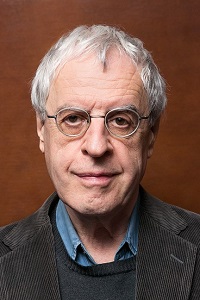
 

 2236885-8fdb650e903dd1d099d2c81fc6336e7f.jpg
Charles Simic (Belgrado, 9 mei 1938)


Zie voor nog meer schrijvers van de 9e mei ook mijn blog van 9 mei 2018 en ook mijn blog van 9 mei 2017 en ook mijn blog van 9 mei 2015 deel 2.

Geschreven door Romenu om 19:17 Reageer op dit bericht

Robert W. Service, Roddy Doyle, Thomas Pynchon, Pat Barker, Gary Snyder, Rocko Schamoni, Gerrit Kamphuis


Dolce far niente


 2236686-df58d080358b4daca07fb0f007638867.jpg
  Old man door Mark Liptrott, z. j.


My Rocking-Chair

When I am old and worse for wear
I want to buy a rocking-chair,
And set it on a porch where shine
The stars of morning-glory vine;
With just beyond, a gleam of grass,
A shady street where people pass;
And some who come with time to spare,
To yarn beside my rocking-chair.

Then I will light my corn-cob pipe
And dose and dream and rarely gripe.
My morning paper on my knee
I won't allow to worry me.
For if I know the latest news
Is bad,--to read it I'll refuse,
Since I have always tried to see
The side of life that clicks with glee.

And looking back with days nigh done,
I feel I've had a heap of fun.
Of course I guess that more or less
It's you yourself make happiness
And if your needs are small and few,
Like me you may be happy too:
And end up with a hope, a prayer,
A chuckle in a rocking-chair.


 2236686-3f92b39268398b0bd0789bfaa3ee7450.jpg
Robert W. Service (16 januari 1874 – 11 september 1958)
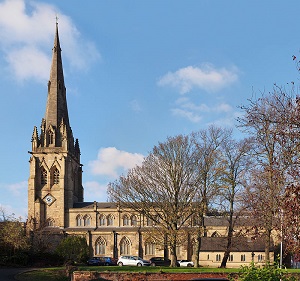
St. John's Minster in Preston, Lancashire, de geboorteplaats van Robert W. Service


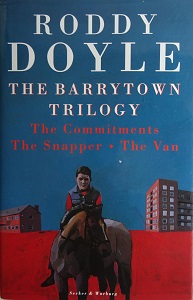
De Ierse schrijver Roddy Doyle werd geboren in Dublin op 8 mei 1958. Zie ook alle tags voor Roddy Doyle op dit blog.

Uit: The Snapper

“–It’s shockin’, said Jimmy Sr again,—so it is. Wha’ do you think o’ this?
He was talking to Veronica.
–I don’t know, said Veronica.
–Is tha’ the best yeh can do, Veronica?
–Well, what do YOU think?
Jimmy Sr creased his face and held it that way for a second.
–I don’t know, he said.—I should give ou’, I suppose. An’ throw a wobbler or somethin’. But—what’s the point?
Veronica nodded. She looked very tired now.
Jimmy Sr continued.
–If she was—
He turned to Sharon.
–You should’ve come to us earlier—before, yeh know—an’ said you were goin’ to get pregnant.
The three of them tried to laugh.
–Then we could’ve done somethin’ abou’ it.—My God, though.
No one said anything. Then Jimmy Sr spoke to Sharon again.
–You’re absolutely sure now? Positive?
–Yeah, I am. I done—
–Did, said Veronica.
–I did the test.
–The test? said Jimmy Sr.—Oh.—Did yeh go in by yourself?
–Yeah, said Sharon.
–Did yeh? Fair play to yeh, said Jimmy Sr.—I’d never’ve thought o’ tha’.
Sharon and Veronica looked at each other, and grinned quickly.
Jimmy Sr got down to business.
–Who was it?
–Wha’?—Oh. I don’t know.
–Ah now, Jaysis—!
–No, I do know.
–Well, then?
–I’m not tellin’.
Jimmy Sr could feel himself getting a bit angry now. That was better."


 2236686-fe374130e04b3282a402cabb8f3798c3.jpg
Roddy Doyle (Dublin, 8 mei 1958)
Cover


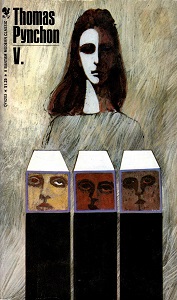
De Amerikaanse schrijver Thomas Pynchon werd op 8 mei 1937 geboren in Glen Cove, Long Island, New York. Zie ook alle tags voor Thomas Pynchon op dit blog.

Uit: V

“Beatrice brought beer. There was a piercing yelp from one of the back tables, she flinched, beer slopped over the edge of the glass. "God," she said, "it's Ploy again." Ploy was now an engine-man on the mine sweeper Impulsive and a scandal the length of East Main. He stood five feet nothing in sea boots and was always picking fights with the biggest people on the ship, knowing they would never take him seriously. Ten months ago (just before he'd transferred off the Scaffold) the Navy had decided to remove all of Ploy's teeth. Incensed, Ploy managed to punch his way through a chief corpsman and two dental officers before it was decided he was in earnest about keeping his teeth. "But think," the officers shouted, trying not to laugh, fending off his tiny fists: "root canal work, gum abscesses...." "No," screamed Ploy.
They finally had to hit him in the bicep with a Pentothal injection. On waking up, Ploy saw apocalypse, screamed lengthy obscenities. For two months he roamed ghastly around the Scaffold, leaping without warning to swing from the overhead like an orangutan, trying to kick officers in the teeth. He would stand on the fantail and harangue whoever would listen, flannelmouthed through aching gums. When his mouth had healed he was presented with a gleaming, regulation set of upper and lower plates. "Oh God," he bawled, and tried to jump over the side. But was restrained by a gargantuan Negro named Dahoud. "Hey there, little fellow," said Dahoud, picking Ploy up by the head and scrutinizing this convulsion of dungarees and despair whose feet thrashed a yard above the deck. "What do you want to go and do that for?" "Man, I want to die, is all," cried Ploy. "Don't you know," said Dahoud, "that life is the most precious possession you have?" "Ho, ho," said Ploy through his tears. "Why?" "Because," said Dahoud, "without it, you'd be dead." "Oh," said Ploy. He thought about this for a week. He calmed down, started to go on liberty again. His transfer to the Impulsive became reality. Soon, after Lights Out, the other snipes began to hear strange grating sounds from the direction of Ploy's rack. This went on for a couple-three weeks until one morning around two somebody turned on the lights in the compartment and there was Ploy, sitting crosslegged on his rack, sharpening his teeth with a small bastard file. Next payday night, Ploy sat at a table in the Sailor's Grave with a bunch of other snipes, quieter than usual. Around eleven, Beatrice swayed by, carrying a tray full of beers. Gleeful, Ploy stuck his head out, opened his jaws wide, and sank his newly filed dentures into the barmaid's right buttock. Beatrice screamed, glasses flew parabolic and glittering, spraying the Sailor's Grave with watery beer. It became Ploy's favorite amusement.”


 2236686-1d8b5162e8a361bbbb053957983121aa.jpg
Thomas Pynchon (Glen Cove, 8 mei 1937)


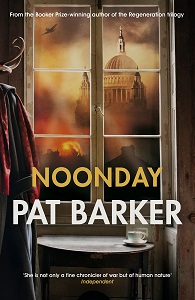
De Engelse schrijfster Pat Barker werd geboren in Thornaby-on-Tees op 8 mei 1943. Zie ook alle tags voor Pat Barker op dit blog.

Uit: Noonday

“Closing the front door quietly behind her, Elinor took a moment to absorb the silence. Facing her, directly opposite the front door, where nobody could possibly miss it, was a portrait of her brother, Toby, in uniform. It had been painted, from photographs, several years after his death and was frankly not very good. Everybody else seemed to like it, or at least tolerate it, but Elinor thought it was a complete travesty. Item: one standard-issue gallant young officer, Grim Reaper for the use of. There was nothing of Toby there at all. Nigel Featherstone was the artist: and he was very well regarded; you saw his portraits of judges, masters of colleges, politicians and generals everywhere, but she'd never liked his work. Her own portrait of Toby was stronger - not good, she didn't claim that - but certainly better than this. She resented not having been asked to paint this family portrait: his own sister, after all. And every visit to her sister's house began with her standing in front of it. When he was alive, Toby's presence had been the only thing that made weekends with the rest of her family bearable. Now, this portrait - that blank, lifeless face - was a reminder that she was going to have to face them alone.
She caught the creak of a leather armchair from the open door on her left. Oh, well, better get it over with. She went into the room and found Tim, her brother-in-law, sitting by the open window. As soon as he saw her he stood up and let his newspaper slide, sighing, to the floor. `Elinor.' He pecked her proffered cheek. 'Too early for a whisky?' Evidently it wasn't: there was a half-empty glass by his side. She opened her mouth to refuse but he'd already started to pour. 'How was the train?' `Crowded. Late.' 'Aren't they all?' When she'd first met Tim he might've been a neutered tomcat for all the interest he aroused in her. She'd thought him a nonentity, perhaps influenced in that - as in so much else - by Toby, who hadn't liked Tim, or perhaps hadn't found much in him to either like or dislike. And yet Tim had gone on to be a successful man; powerful, even. Something in Whitehall, in the War Office. Which was strange, because he'd never actually seen active service.”

 2236686-2d2a887bc22ec4cc4976d141fbd2da35.jpg
Pat Barker (Thornaby-on-Tees, 8 mei 1943)
Cover


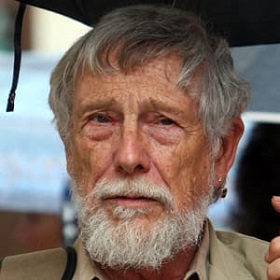
De Amerikaanse dichter Gary Snyder werd geboren op 8 mei 1930 in San Francisco. Zie ook alle tags voor Gary Snyder op dit blog.


Night Song of the Los Angeles Basin

Owl
calls,
pollen dust blows
Swirl of light strokes writhing
knot-tying light paths,

calligraphy of cars.

Los Angeles basin and hill slopes
Checkered with streetways. Floral loops
Of the freeway express and exchange.

Dragons of light in the dark
sweep going both ways
in the night city belly.
The passage of light end to end and rebound,
—ride drivers all heading somewhere—
etch in their traces to night's eye-mind

calligraphy of cars.

Vole paths. Mouse trails worn in
On meadow grass;
Winding pocket-gopher tunnels,
Marmot lookout rocks.
Houses with green watered gardens
Slip under the ghost of the dry chaparral,

Ghost
shrine to the L. A. River
The jinja that never was there
is there.
Where the river debouches
the place of the moment
of trembling and gathering and giving
so that lizards clap hands there
—just lizards
come pray, saying
"please give us health and long life."

A hawk,
a mouse.

Slash of calligraphy of freeways of cars.

Into the pools of the channelized river
the Goddess in tall rain dress
tosses a handful of meal.

Gold bellies roil
mouth-bubbles, frenzy of feeding,
the common ones, the bright-colored rare ones
show up, they tangle and tumble,
godlings ride by in Rolls Royce
wide-eyed in brokers' halls
lifted in hotels
being presented to, platters
of tidbit and wine,
snatch of fame,

churn and roil,

meal gone the water subsides.

A mouse,
a hawk.

The calligraphy of lights on the night
freeways of Los Angeles

will long be remembered.

Owl
calls;
late-rising moon.


Changing Diapers

How intelligent he looks!
on his back
both feet caught in my one hand
his glance set sideways,
on a giant poster of Geronimo
with a Sharp's repeating rifle by his knee.

I open, wipe, he doesn't even notice
nor do I.
Baby legs and knees
toes like little peas
little wrinkles, good-to-eat,
eyes bright, shiny ears
chest swelling drawing air,

No trouble, friend,
you and me and Geronimo
are men.


 2236686-83654369715703cde991a77a28dd9f18.jpg
Gary Snyder (San Francisco, 8 mei 1930)


De Duitse schrijver, entertainer, muzikant, acteur en clubeigenaar Rocko Schamoni (pseudoniem van Tobias Albrecht) werd geboren op 8 mei 1966 in Lütjenburg. Zie ook alle tags voor Rocko Schamoni op dit blog.

Uit: Fünf Löcher Im Himmel

„Ab und zu blieb er stehen, um die Hand am Koffergriff zu wechseln. Er bog in eine Seitengasse ein, lief sie hinunter, beobachtete schweigend die Häuser und Wohnungen, an denen er vorbeikam, die Kneipen und Läden und die überall geparkten Autos. Sein Gesichtsausdruck blieb regungslos. Straße für Straße lief er hinunter und Viertel für Viertel, manchmal setzte er sich für einen Moment auf eine Bank oder eine Mauer, rauchte eine Zigarette und starrte dabei in das Nichts zwischen den Sternen.
Schließlich, nach Stunden, erreichte er den Stadtrand. Die Häuser wurden flacher, es gab kaum noch Geschäfte und Kneipen, nur noch endlose Wohnsiedlungen, von kleinen Straßen und Wegen durchzogen, ab und zu einen Zeitungskiosk, die Außenhaut eines gigantischen Organismus.
Paul kam zu einer Schrebergartensiedlung. Die Nacht war halb vorüber, und es hatte zu nieseln begonnen, langsam zog die feuchte Kälte in seine Kleidung. Er fand eine Hütte, die verlassen aussah, die Parzelle war verwildert, die Gartenpforte hing schief in den Angeln. Vorsichtig betrat er das Grundstück, das von einer hohen Buchsbaumhecke umgeben war, und arbeitete sich zur Eingangstür der Hütte vor. Sie war verschlossen. Paul lehnte sich langsam, aber mit dem ganzen Gewicht seines Körpers dagegen und hielt den Griff gedrückt, irgendwann hörte er ein knackendes Geräusch, das morsche Holz des Türrahmens gab nach, und Paul trat ein. Er leuchtete mit dem Feuerzeug in den Raum. Vor ihm lag ein ziemlich verwahrlostes, kleines, aber komplett eingerichtetes Zimmer. Er schloss die Tür hinter sich und zündete die Kerze an, die auf einem Campingtisch in der Mitte des Raumes stand. Er setzte sich auf das Sofa dahinter und atmete tief durch. Eine Weile beobachtete er den Dunst, den seine Atemluft in der Kälte bildete, dann schlief er ein, und sein Kopf sank auf die Brust.
Ein Knurren weckte Paul. Er schlug die Augen auf. Ein paar Sonnenstrahlen schienen ihm durch das verstaubte Wohnzimmerfenster ins Gesicht. Es knurrte wieder, hell und unangenehm rasselnd. Langsam griff Paul nach dem Messer in seiner Manteltasche, er öffnete die Klinge mit dem Daumen und zog es vorsichtig heraus. Dann beugte er sich vor, um den Raum überblicken zu können. In der Ecke neben dem Kühlschrank hockte ein Tier, er konnte es im Schatten kaum erkennen, vielleicht ein Marder. Langsam erhob sich Paul und griff dabei mit der anderen Hand nach einem schweren gläsernen Aschenbecher vor ihm auf dem Tisch. Der Marder knurrte, bewegte seinen Kopf drohend vor und zurück. Je näher Paul kam, desto nervöser wurde das Tier, langsam hob er die Hand mit dem Aschenbecher, doch plötzlich brach der Marder fauchend aus der Ecke hervor, sprang blitzschnell an ihm hinauf, biss wütend in den Mantel und stürzte quiekend durch den Raum und unter das Sofa. Nervöses Geraschel war zu hören, dann herrschte für einige Sekun-den absolute Ruhe. Vorsichtig hob Paul mit der linken Hand das Sofa an, in der anderen hielt er den Aschenbecher. Aber der Marder war verschwunden. Paul durchsuchte die Schränke nach etwas Essbarem, er fand ein paar alte Teebeutel und zwei abgelaufene Konservendosen mit Erbsensuppe, die er sich auf dem Herd aufwärmte. Er sah sich ein bisschen um, entdeckte eine elektrische Heizung und drehte sie auf.“


 2236686-3ad1bbbc5fb59cb165aefbafa241cf6e.jpg
Rocko Schamoni (Lütjenburg, 8 mei 1966)


De Nederlandse dichter en essayist Gerrit Kamphuis werd geboren in Zwolle op 8 mei 1906. Zie ook alle tags voor Gerrit Kamphuis op dit blog.


Veronica's Doek

Dit hoofd. bloedrig bezweet en vuil,
de starend-groote schrik der oogen
en stekels scheurend in het hooge
Voorhoofd, verminkt door schram en buil.
Geen deernis en geen mededoogen,
afschuw van zooveel walglijk leed
Is in het neerslaan onzer oogen.

Maar God, waarom voor hem zoo wreed,
terwijl met ons Gij waart bewogen?

Doch geen, die uw geheimen weet
dan dat: Gij zijt met ons bewogen.


Twee vrienden

Het luide licht zweeg tot een schaduw grijs
En loom. De avond hief de donkre hulling
Van zijn mantel. En traag werd de vervulling
Der dingen stil, en 't zong een zachte wijs.

Wij gingen eenzaam langs het duistre water
En dachten ieder aan het leven om ons heen
En in ons hart; en elk wist zich alleen -
Toen hebben wij gesproken over nu en later.

Maar 't was vergeefs; het somberdreigend duister
Kon nimmer aan ons moede hart ontgaan -
Later, in een spiegel, zag elk 't ontdaan
Gelaat en hoorde zijn vervreemd gefluister.


2236686-5fe444ed6d4893e59037f15e3ec33e37.JPG 
Gerrit Kamphuis (8 mei 1906 – 25 april 1998)
Midden jaren 1920


Zie voor nog meer schrijvers van de 8e mei ook mijn blog van 8 mei 2018 en ook mijn blog van 8 mei 2016 deel 2.


Geschreven door Romenu om 18:38 Reageer op dit bericht

Meer van Romenu

↑ Terug naar de berichten