Naar de inhoud

Romenu

Over literatuur, gedichten, kunst en cultuur
akke.beakke.be

Berichten van 28 mei 2019 tot 29 mei 2019

André Brink, Eduard Escoffet, G. K. Chesterton, Bernard Clavel, T. H. White, Hans Weigel, Max Brand, Joel Benton, Dolores Dorantes

De Zuid-Afrikaanse schrijver André Brink werd geboren op 29 mei 1935 in Vrede. Zie ook alle tags voor André Brink op dit blog.

Uit: The blue door

“The urge to touch her becomes hard to resist. But I am restrained by the uncertainty about what might happen if I do. And there is the pure visual joy of looking at her. For the time being I do not want to do anything except to look, and look, and look. (How I wish I could paint her as she lies there now, at this moment, so close, so real.)
After a while, from the way in which she remains almost motionless, never bothering to turn a page, I realise that she is not reading either. Waiting for me to make the first move?
I move my hand closer to her, still without touching.
I seem to detect the merest hint of a stiffening in her body. But it may well be my imagination. And it is of decisive importance that I be sure before I risk an approach. Because if not…
‘What are you reading?’ I ask. But my voice is so strained that I have to clear my throat and repeat the question.
‘Haruki Murakami,’ she says, turning slightly over on her back and raising the book to let me see it. ‘Sputnik Sweetheart.’
‘What’s it like?’
‘A strange book,’ she says without looking at me. ‘I don’t think it’s entirely convincing, but it’s very disturbing.’ Now she settles squarely on her back and turns her head to look at me. ‘In the key episode of the story the young Japanese woman – what’s her name?’ She flips through a few pages. ‘Yes: Miu. She gets stuck at the top of a Ferris wheel at a fair in the middle of the night. And when she looks around, she discovers that she can see into her own apartment in the distance. And there’s a man in there, a man who has recently tried to get her into bed. While Miu is looking at him, she sees a woman with him. And the woman is she herself, Miu. It is a moment so shocking that her black hair turns white on the spot.’ Her black eyes look directly into mine. ‘Can you imagine a thing like that happening? Shifting between dimensions, changing places with herself…?’
‘I think that happens every day,’ I say with a straight face.
‘What do you mean?’
‘When one makes love. Don’t you think that’s a way of changing places with yourself? The world becomes a different place. You are no longer the person you were before.’


2241955-2965d25e8231060963981c6439ec3c22.jpg
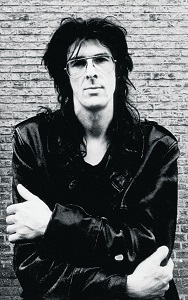
André Brink (29 mei 1935 – 6 februari 2015)


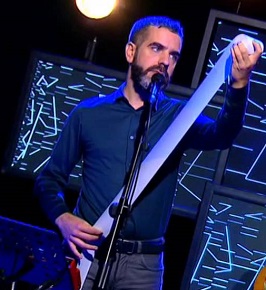
De Catalaanse dichter, schrijver en vertaler Eduard Escoffet werd geboren op 29 mei 1979 in Barcelona. Zie ook alle tags voor Eduard Escoffet op dit blog.


holz im herz (fragment)

holz im herz
holz im hirn
holz in den gedärmen

ein mann geht zur toilette. ein mann geht zur toilette. die kabine, auch die kabine. ein mann schließt die tür und ein anderer mann ist schon drin. es gibt noch mehr kabinen und trübes licht. ein paar hände fangen bei den hinterbacken an und reiben über den rücken, ziehen das unterhemd heraus bis zu den schultern. das andere paar hände stemmt sich gegen den körper und die kraft des anderen. es müsste alles schnell gehen. er kommt herein. ein mann kommt in eine andere kabine. verschlossen ein körper, doch offen dieser hier. das licht scheint weiter, als ob es den atem anhielte.

holz
das holz ist schon kein holz mehr
holz überall
und holz im wind

derjenige, der zur toilette geht, der drinnen das sonnenlicht mit dem licht der neonröhre verwechselt. kein interesse daran, sich damit aufzuhalten, eins vom anderen zu unterscheiden. er setzt sich auf die toilette: er hat alle zeit der welt. der hellsichtige und jener, dem ein licht wie das andere gilt. er verwechselt erst die hosentaschen, doch dann findet er sie. er sitzt auf der toilettenschüssel, spannt sich genüsslich an und löst den schuss aus. vielleicht fällt das licht durch ein fenster, oder es ist nur die neonröhre. von den ersten, die nach dem schuss hereinkommen, wird sicher einer den eimer und putzlappen holen.
 

 2241955-c9048823df23e7f9c3a92473a447ef44.jpg
Eduard Escoffet (Barcelona, 29 mei 1979)


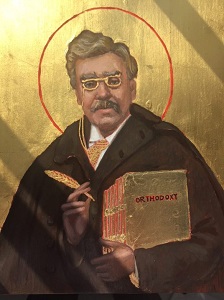
De Engelse dichter, letterkundige, schrijver en journalist Gilbert Keith Chesterton werd geboren in Londen op 29 mei 1874. Zie ook alle tags voor G. K. Chesterton op dit blog.

Uit: Twelve Modern Apostles and Their Creeds

“The difficulty of explaining “why I am a Catholic” is that there are ten thousand reasons all amounting to one reason: that Catholicism is true. I could fill all my space with separate sentences each beginning with the words, “It is the only thing that…” As, for instance, (1) It is the only thing that really prevents a sin from being a secret. (2) It is the only thing in which the superior cannot be superior; in the sense of supercilious. (3) It is the only thing that frees a man from the degrading slavery of being a child of his age. (4) It is the only thing that talks as if it were the truth; as if it were a real messenger refusing to tamper with a real message. (5) It is the only type of Christianity that really contains every type of man; even the respectable man. (6) It is the only large attempt to change the world from the inside; working through wills and not laws; and so on.
Or I might treat the matter personally and describe my own conversion; but I happen to have a strong feeling that this method makes the business look much smaller than it really is. Numbers of much better men have been sincerely converted to much worse religions. I would much prefer to attempt to say here of the Catholic Church precisely the things that cannot be said even of its very respectable rivals. In short, I would say chiefly of the Catholic Church that it is catholic. I would rather try to suggest that it is not only larger than me, but larger than anything in the world; that it is indeed larger than the world. But since in this short space I can only take a section, I will consider it in its capacity of a guardian of the truth.
The other day a well-known writer, otherwise quite well-informed, said that the Catholic Church is always the enemy of new ideas. It probably did not occur to him that his own remark was not exactly in the nature of a new idea. It is one of the notions that Catholics have to be continually refuting, because it is such a very old idea. Indeed, those who complain that Catholicism cannot say anything new, seldom think it necessary to say anything new about Catholicism. As a matter of fact, a real study of history will show it to be curiously contrary to the fact. In so far as the ideas really are ideas, and in so far as any such ideas can be new, Catholics have continually suffered through supporting them when they were really new; when they were much too new to find any other support. The Catholic was not only first in the field but alone in the field; and there was as yet nobody to understand what he had found there.”
 

 2241955-6d91a51d12e5cbc0ddf4b18fcf1ca0fe.jpg
G. K. Chesterton (29 mei 1874 – 14 juli 1936)


De Franse schrijver Bernard Charles Henri Clavel  werd geboren op 29 mei 1923 in Lons-le-Saunier. Zie ook alle tags voor Bernard Clavel op dit blog.

Uit: Les roses de Verdun

« Et vous partiez à pied ? — On se regroupait par bataillons dans les prairies où il n'y avait plus un poil d'herbe. La poussière ou le bourbier. On nous distribuait la soupe ou le café et du pain souvent moisi. On mangeait debout, à côté des faisceaux. Et puis on partait, puis après on attendait la nuit pour s'enfiler dans les boyaux d'accès. On peut dire que la guerre commençait vraiment sur cette route. — Laisse Augustin parler. Tu dis assez parle pas. Sans se retourner, femme : — Ça n'est pas tous les jours que je roule sur la Voie sacrée. Si ça ne te fait aucun effet, tant mieux pour toi... moi, ça me remue. Il a cessé de m'interroger. Je préférais, car la route n'était vraiment pas facile et, dans les descentes, la voiture chassait un peu. Plusieurs fois, nous avons vu des véhicules arrêtés et qui nous gênaient pour passer. Un gros camion était couché dans le fossé. Non, Monsieur ne m'a plus interrogé, mais c'est lui qui s'est mis à parler. Il ne l'avait jamais fait de cette manière, et j'ai compris ce conduire. Ne le fais pas qu'un bon chauffeur ne le patron a lancé à sa matin-là que s'il m'avait si souvent interrogé, il avait dû beaucoup lire aussi et regarder souvent des images de cette partie de la Grande Guerre. Il connaissait les noms des villages où l'on s'était beaucoup battu. En fait, il nous parlait comme s'il avait voulu nous apprendre la vérité sur ces combats. Il disait, par exemple : — Au Tourniquet, quand les poilus regar-daient s'en aller les camions vides, tous se demandaient combien d'entre eux revien-draient. Lesquels étaient d'avance marqués pour rester dans ce bourbier que tant d'autres avaient déjà arrosé de sang. Jusqu'à Bar-le-Duc, il n'a guère cessé de raconter. Il se souvenait de mille détails que j'avais oubliés. Même les noms des généraux et des colonels qui avaient commandé à Ver-dun lui étaient familiers. Et toujours revenait la grande aventure des camions se suivant à se toucher et de cette route où des centaines de territoriaux jetaient des pierres à longueur de journées et de nuits sans jamais inter-rompre ni même ralentir le trafic. Qu'un camion tombe en panne, il était aussitôt poussé hors de la chaussée. Jamais, jamais le flot ne devait se ralentir. A un moment, il a dit : — Cette route, c'était une artère. »
 

 2241955-e29386537c02ecf3e863253f2691837f.jpg
Bernard Clavel (29 mei 1923 – 5 oktober 2010)


De Engelse dichter en schrijver Terence Hanbury White werd geboren op 29 mei 1906 in Bombay (Mombai). Zie ook alle tags voor T. H. White op dit blog.

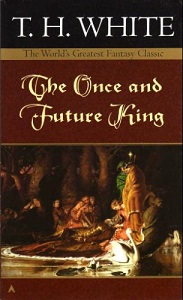
Uit: The Once and Future King

“The day for the ceremony drew near, the invitations to King Pellinore and Sir Grummore were sent out, and the Wart withdrew himself more and more into the kitchen. "Come on, Wart, old boy," said Sir Ector ruefully. "I didn't think you would take it so bad. It doesn't become you to do this sulkin'." "I am not sulking," said the Wart. "I don't mind a bit and I am very glad that Kay is going to be a knight. Please don't think I am sulking." "You are a good boy," said Sir Ector. "I know you're not sulkin' really, but do cheer up. Kay isn't such a bad stick, you know, in his way. "Kay is a splendid chap," said the Wart. "Only I was not happy because he did not seem to want to go hawking or anything, with me, any more." "It is his youthfulness," said Sir Ector. "It will all clear up." "I am sure it will," said the Wart. "It is only that he does not want me to go with him, just at the moment. And so, of course, I don't go. "But I will go," added the Wart. "As soon as he commands me, I will do exactly what he says. Honestly, I think Kay is a good person, and I was not sulking a bit." "You have a glass of this canary," said Sir Ector, "and go and see if old Merlyn can't cheer you up." "Sir Ector has given me a glass of canary," said the Wart, "and sent me to see if you can't cheer me up." "Sir Ector," said Merlyn, "is a wise man." "Well," said the Wart, "what about it?" "The best thing for being sad," replied Merlyn, beginning to puff and blow, "is to learn something. That is the only thing that never fails. You may grow old and trembling in your anatomies, you may lie awake at night listening to the disorder of your veins, you may miss your only love, you may see the world about you devastated by evil lunatics, or know your honour trampled in the sewers of baser minds. There is only one thing for it then—to learn. Learn why the world wags and what wags it. That is the only thing which the mind can never exhaust, never alienate, never be tortured by, never fear or distrust, and never dream of regretting.”
 

 2241955-8f60effa6ee6d834066aa46a2a42db62.jpg
T. H. White (29 mei 1906 – 17 januari 1964)
Cover


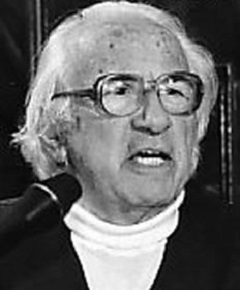
De Oostenrijkse schrijver en theatercriticus Hans Weigel werd geboren op 29 mei 1908 in Wenen. Zie ook alle tags voor Hans Weigel op dit blog.

Uit:Ich war einmal (Biografie)

„Die Hoffnung vieler Wiener Juden, durch Assimilation Integration zu erreichen, war in der jüdischen Mittelschicht Wiens am Beginn des vorigen Jahrhunderts weit verbreitet. Geradezu exemplarisch zeigte sich diese — wie sich leidvoll herausgestellt hat — Illusion bei Hans Weigels Eltern. Sein Vater Eduard, ältestes Kind von Lazar Weigl und seiner Frau Babette, 1874 in Markt Eisenstein, einem kleinen böhmischen Ort nahe der bayrischen Grenze, geboren, kam schon in den Neunzigerjahren des 19. Jahrhunderts in die Residenzstadt der Monarchie. In Eisenstein, dem heutigen ZeleZnä Ruda, lebten nur zwei jüdische Familien, die als Kaufleute ihr Fortkommen hatten. Lazar Weigl, sein Sohn Eduard fügte erst in den 1920er-Jahren in Wien das „e" in den Namen „Weigl" ein, besaß nicht nur eine Gemischtwarenhandlung, „den Laden", wie er genannt wurde, sondern auch Felder und Wiesen und führte eine kleine Milchwirtschaft. Er lebte streng nach den jüdischen Gebräuchen: „[...] in seinem Haus wurde koscher gekocht, Geschirr und Besteck für Fleisch und ‚Milchiges' getrennt — es wurde kein Schweinefleisch zubereitet."1 Dieser Großvater Lazar, Ludwig, „war ein verständiger, recht kluger Mann, der auch Humor hatte. [...] Ich hatte ihn sehr gern, er war stolz auf mich, wie auf seinen Sohn Eduard, der es in Wien weit gebracht hatte"2, als Handelsakademiker bei der Glasfabrik Stölzle, bei der er seine berufliche Laufbahn begonnen hatte und bei der er zuerst als Prokurist und dann als Direktor Karriere machte. So schrieb Hans Weigel in seiner 2008 posthum von seiner Lektorin Elke Vujica herausgegebenen Autobiografie In die weite Welt hinein, in der er sein Leben von 1908 bis 1938 behandelte. Eduard hatte drei jüngere Schwestern: die Älteste, Franziska, genannt Fanni, hatte fünf Kinder: Ernst, Otto, Klara, Emma und Hedwig. Hans Weigel war in den Ferien seiner Volksschulzeit gerne bei ihnen in Chotieschau (Chotä§ov). Die Mittlere lebte mit ihrem Mann Robert Abeles und ihrer Tochter Irma in Karlsbad (Karlovy Vary), während Regine, die Jüngste, mit ihrem Mann Emil Siller in Eisenstein blieb, zwei Töchter, Roselle und Mitzi, hatte und mit ihrem Mann das Geschäft von Lazar Weigl übernahm. Der Großvater von Hans Weigel mütterlicherseits, Julius Fekete, war Kaufmann aus dem ungarischen Gyon, heute Dabas, und kam mit seiner Frau Katarina, geborene Boskowitz, schon vor der Jahrhundertwende nach Wien. Sie wohnten in Margareten, dem 5. Wiener Gemeindebezirk, und führten in der nahe gelegenen Schönbrunner Straße 31 das „Zentralversandhaus Julius Fekete", einen Gemischtwarenhandel. Sie waren typische Vertreter des liberalen jüdischen Bildungsbürgertums, hatten drei Söhne und zwei Töchter. Hugo übernahm als Ältester, der Not gehorchend, das Zentralversandhaus, da sein Vater 1903 mit nicht einmal fünfzig Jahren verstorben war. „Onkel Hugo musste das Geschäft führen, und das war wohl tragisch, denn er war sehr musikalisch, spielte großartig Klavier, war charmant und witzig und hatte gewiß ein unerfülltes Leben. Er mochte mich sehr gern, manchmal saß ich neben ihm, wenn er am Klavier improvisierte."2 Albert, der mittlere der drei Söhne, lebte als Ingenieur bei den Saurer-Werken in Arbon am Bodensee in der Schweiz. „Der dritte Bruder war Onkel Theo, klein und rundlich, er spielte Geige und war angestellt bei der Filmfirma Projektograph. Er schwärmte von der neuartigen Erfindung und prophezeite ihr eine große Zukunft — und wurde in der Familie nur belächelt."
 

 2241955-78f747d137d777c64a8b4e760234cb79.jpg
Hans Weigel (29 mei 1908 – 12 augustus 1991)


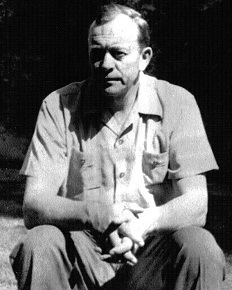
De Amerikaanse schrijver Max Brand (eig. Frederick Schiller Faust) werd geboren op 29 mei 1892 in Seattle. Zie ook alle tags voor Max Brand op dit blog.


Uit: The Garden of Eden

"Can't we walk?" suggested Ben Connor, looking up and down the street at the dozen sprawling frame houses; but the fat man stared at him with calm pity. He was so fat and so good-natured that even Ben Connor did not impress him greatly.
"Maybe you think this is Lukin?" he asked. When the other raised his heavy black eyebrows he explained: "This ain't nothing but Lukin Junction. Lukin is clear round the hill. Climb in, Mr. Connor."
Connor laid one hand on the back of the seat, and with a surge of his strong shoulders leaped easily into his place; the fat man noted this with a roll of his little eyes, and then took his own place, the old wagon careening toward him as he mounted the step. He sat with his right foot dangling over the side of the buckboard, and a plump shoulder turned fairly upon his passenger so that when he spoke he had to throw his head and jerk out the words; but this was apparently his time-honored position in the wagon, and he did not care to vary it for the sake of conversation. A flap of the loose reins set the horses jog-trotting out of Lukin Junction down a gulch which aimed at the side of an enormous mountain, naked, with no sign of a village or even a single shack among its rocks. Other peaks crowded close on the right and left, with a loftier range behind, running up to scattered summits white with snow and blue with distance. The shadows of the late afternoon were thick as fog in the gulch, and all the lower mountains were already dim so that the snow-peaks in the distance seemed as detached, and high as clouds. Ben Connor sat with his cane between his knees and his hands draped over its amber head and watched those shining places until the fat man heaved his head over his shoulder.
"Most like somebody told you about Townsend's Hotel?" His passenger moved his attention from the mountain to his companion. He was so leisurely about it that it seemed he had not heard.
"Yes," he said, "I was told of the place." "Who?" said the other expectantly. "A friend of mine."
The fat man grunted and worked his head around so far that a great wrinkle rolled up his neck close to his ear. He looked into the eye of the stranger.
"Me being Jack Townsend, I'm sort of interested to know things like that; the ones that like my place and them that don't."
 

 2241955-d15871becf100970a9dec3852658ca8b.jpg
Max Brand (29 mei 1892 – 12 mei 1944)


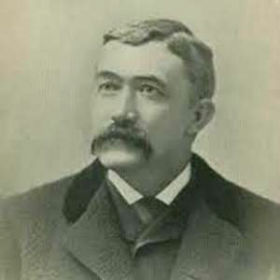
De Amerikaanse dichter, schrijver en publicist Joel Benton werd geboren op 29 mei 1832 in het kleine stadje Amenia, in county New York. Zie ook alle tags voor Joel Benton op dit blog.


Grover Cleveland

Bring cypress, rosemary and rue
For him who kept his rudder true;
Who held to right the people's will,
And for whose foes we love him still.
A man of Plutarch's marble mould,
Of virtues strong and manifold,
Who spurned the incense of the hour,
And made the nation's weal his dower.

His sturdy, rugged sense of right
Put selfish purpose out of sight;
Slowly he thought, but long and well,
With temper imperturbable.

Bring cypress, rosemary and rue
For him who kept his rudder true;
Who went at dawn to that high star
Where Washington and Lincoln are.
 

 2241955-85e98eb1976934f8a5a34a0917d36ae1.jpg
Joel Benton (29 mei 1832 – 15 september 1911)


Onafhankelijk van geboortedata

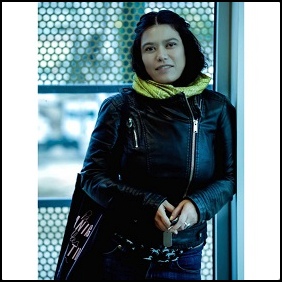
De Mexicaanse dichteres en journaliste Dolores Dorantes werd in 1973 geboren in Veracruz aan de Golf van Mexico. Zie ook alle tags voor Dolores Dorantes op dit blog.


Give us a bottle and let's be done with your world

Give us a bottle and let's be done with your world. Light us and the fire will spread like a plague. We arrive at your office. At your machine. We arrive at your masterful chair. At that world that is no longer the world. Where nothing touches and we kiss each other. We join our girlish lips damp with some kind of fuel. Give us a forest. Give us the presidency.


This book does not exist

This book does not exist. All that has been said in the name of a love that does not last. Each line dispossessed. The drug that seeing blood has become. Open us in this impossible territory. Unlimited. Repeated. Uncovered. We are here as the trace of a code. We knock on your door for you to swim us. Fire and water. We are inside bottles and explosives. We are extermination. Place without country. Tie us up, put a leash on us. Command us to get out and show me your tongue: a gust of birds.
 

2241955-9dcb2a7ec75278a644fcb6f83add1a35.jpg
Dolores Dorantes (Veracruz, 1973)


Zie voor nog meer schrijvers van de 29e mei ook mijn blog van 29 mei 2018 en ook mijn blog van 29 mei 2016 deel 2.
Geschreven door Romenu om 18:22 Reageer op dit bericht

Ad Zuiderent, Leo Pleysier, Adriaan Bontebal, Guntram Vesper, Frank Schätzing, Maeve Binchy, Ian Fleming, Sjoerd Leiker, Vladislav Chodasevitsj

De Nederlandse dichter en criticus Ad Zuiderent werd geboren in ’s-Gravendeel op 28 mei 1944. Zie ook alle tags voor Ad Zuiderent op dit blog.


Sequens 1

...die zal zijn vader en moeder verlaten,
die zal familie en vrienden verlaten,
zijn vrouw en kinderen verlaten, door hen
verlaten worden, die zal bij de pakken
neerzitten tot hij ook die kan verlaten
die zal zijn zintuigen verlaten en zijn
ledematen, zal zijn organen verlaten,
zijn geslachtelijkheid, zijn cellen,
die zal zichzelf te niet doende
zijn nalatenschap verlaten en de
nalatenschap zal verlaten, vergeten,
verdwijnen, oplossen, los van het zijne
taken, verenigd met celloos, orgaanloos,
geslachtloos, ledeloos, zintuigloos
gezang van laat laat laat verlaten -
die zal met het hoofd in de handen
niet weten welke liefsten hij verliet.


Sequens 2

...die zal zijn cellen zoeken en zijn
organen, zal zijn geslachtelijkheid zoeken,
zijn ledematen, zijn zintuigen, die zal
naar de pakken zoeken waarbij bij zat,
hij zal kruipen waar hij niet gaan kan,
daar zal hij door hen gezocht vrouw en kinderen
zoeken, zal hij familie en vrienden zoeken,
zijn vaderen moeder, die zal zichzelf hervindende
op zoek gaan naar eigenschappen en de
eigenschappen zullen zoeken, bedenken,
opduiken, uitbreiden, vast aan het zijne
raken, verlost van zintuigloos, ledeloos,
geslachtloos, orgaanloos, celloos gemompel
van laat laat laat het zoeken toch na
die zal met het hoofd in de wolken
weer weten welke liefsten hij zocht.


 2241740-a8557923bc3dc19c15a2b664c151850b.jpg
Ad Zuiderent (’s-Gravendeel, 28 mei 1944)


De Belgische schrijver Leo Pleysier werd geboren in Rijkevorsel op 28 mei 1945. Zie ook alle tags voor Leo Pleysier op dit blog.

Uit: De weg naar Kralingen

“Uit het ochtendnieuws vernemen dat de Belgische Petroleumfederatie nog maar eens een prijsverhoging aankondigt voor volgende week: huisbrand gaat voortaan 10,30 BF per liter kosten, de prijs van de benzine wordt opgetrokken tot 23,60 BF. Niet voor niets dus dat het begrip ‘sprokkelmaand’ hier in het dorp sedert enige tijd weer letterlijk wordt genomen en zelfs wordt uitgebreid. Zie maar: heel de winter lang en ook nu nog kan men in de omliggende bossen het janken horen van de motorzagen, het kletsen van bijlen in de takken, het over en weer rijden van tractors die de boomstammen het bos uit sleuren, of die met hoogopgestapelde ladingen weer huistoe rijden. Overwinteren blijkt plotseling weer problematisch te worden. Lijfsbehoud blijkt ineens ook weer te maken hebben met beschutting tegen de vrieskoude. En wat de temperaturen betreft: de vreemde mogendheid die het mocht gemunt hebben op dit landje doet er goed aan zijn invasiestrategie nog eens te bekijken in het licht van wat alhier in de winter van het voorbije jaar bleek. De wissels van de Belgische Spoorwegen functioneren niet meer vanaf het ogenblik dat het kwik onder de 10o C daalt. Ideaal tijdstip dus om met een militair treinkonvooi in één ruk tot vlak voor de poorten van het Nato Hoofdkwartier te Evere of tot aan de voet van het EEG-complex te Brussel door te stomen.
Door het raam de kinderen zien die blauw van de kou op hun fietsjes naar school toe rijden. Als zij verdwenen zijn, valt op hoe de beweging over de weg die naar het dorp voert plotseling in rust omslaat. Wie zijn woonst nu nog niet verlaten heeft, vertrekt vandaag niet meer. Die blijft alleen achter in huis en weet zich voor de rest van de dag enkel nog vaag verbonden met hier en daar een jonge moeder die baby's oppast, met huisvrouwen die alweer lang begonnen zijn met opruimen en schoonmaken, met werklozen die door de keuken lopen drentelen in afwachting van het ogenblik waarop zij naar het stempellokaal moeten, met hier en daar een bedlegerige zieke die heeft afgebeld op zijn werk, met ouwelui op rustpensioen.”


 2241740-4c8354ee02671d7f1a01b24b85198673.jpg
Leo Pleysier (Rijkevorsel, 28 mei 1945)


De Nederlandse dichter en schrijver Adriaan Bontebal werd als Aad van Rijn op 28 mei 1952 in Leidschendam geboren. Zie ook alle tags voor Adriaan Bontebal op dit blog.

Uit: Tot hier en niet verder (Het eerste avondmaal)

“Met enkele collega's moest ik een voordracht verzorgen in een jongerencentrum te Zoetermeer. Het pad van een schrijver gaat bepaald niet over rozen. Men dacht ons te verwennen; juist op die dag werd het eethuisje van die tent geopend en ons viel de eer te beurt om als voorproevers van het dorp te fungeren. Daar moet je echt mij voor hebben: je kan net zo goed een generaal vragen de verslaggeving van een vredesdemonstratie te doen. IJzeren Heinig kweet ik me van mijn taak. Laat ik het erop houden, dat het eetbaar was en niet eens vegetarisch. Vaak zie je in dat soort tenten een interne tegenstelling: aan de ene kant gezondheidsfanatisme in de eethoek, terwijl men aan de andere kant de begroting van het totale centrum sluitend probeert te krijgen door de bezoekers te pushen zoveel mogelijk bier en wijn te zuipen. Na afloop van de maaltijd kwam de 'chef' aan onze tafel: een zenuwachtige inboorlinge, de moeder van een medewerker. 'Bent u één van de dichters van vanavond?' vroeg ze mij. Ik beging de stommiteit om dat, uit een soort misplaatste trots, toe te geven. Ze vertelde me dat ze ter completering van de inrichting graag een spreuk aan de muur wilde hebben en of ik die maar even kon verzinnen. De dichter als tekstverwerker in de meest letterlijke zin van het woord.. Om depri van te worden, maar ik ben de rotste niet, nou ja, niet altijd, dus ik dacht een ogenblik na en schreef: 'Hier smaken bonen keer op keer Zoeter en naar meer.' Ik begreep hem zelf niet zo goed, maar het rijmde en zij was in de wolken. Ik had er eigenlijk meteen alweer spijt van. Ieder zijn vak en ik kan het ontwerpen van wandtegeltjes beter overlaten aan Toon Hermans of Nel Benschop. En stroop om monden smeren is ook al geen dagelijkse hobby van me. Daarom schreef ik, toen zij weer terug naar de keuken was, een volgende spreuk voor haar om de zaak weer in evenwicht te brengen. Ik had graag haar gezicht gezien toen zij bij het afruimen een servetje tegenkwam met daarop de tekst:
'Toch is het hier een zwijnenstal.
Was getekend: Bontebal.'


 2241740-abf34a572dd0b4dcf681d421daec6a75.jpg
Adriaan Bontebal (28 mei 1952 – 11 februari 2012)


De Duitse schrijver Guntram Vesper werd geboren op 28 mei 1941 in Frohburg. Zie ook alle tags voor Guntram Vesper op dit blog.

Uit: Nördlich der Liebe und südlich des Hasses

„Meistens wird lautes Jammern unterdrückt, damit der Tote nicht wider aufgeschrien werde. Der Herr ist tot. Dann geht jemand durch die Ställe mit demselben Ruf, um das Vich zu wecken. Das Kinn wird aufgebunden, auch durch ein Rasenstück gestützt. Der Tote soll kein Nachzeh-rer werden. Nach der Waschung muß das Wasser an einem Ort vergraben werden, wo niemand darübergehen kann. Be-vor jedoch der Tote in einen Sarg gelegt wird, hebt man ihn vom Bett auf eine Bank oder ein Brett in der Wohnstube. Das Brett wird später an eine sumpfige Wegstelle oder über einen Bach gelegt. Es mahnt vielleicht doch. Zwei ganze oder halbe Nächte wird die Leiche verwacht, um den Toten durch Scherze zu unterhalten. Auch werden diese Nächte zu Stell-dichein und ausgelassenen Pfänderspielen genutzt. Kinder berühren, küssen, beißen die nackte große Zehe des Toten. Bleibt er geschmeidig, so folgt ihm bald ein anderer Haus-bewohner. Auf alle Fälle schütte man dem Zug einen Topf Wasser nach. Die nächstverwandten Männer legen die Hüte nicht ab. Öfter wird die Leiche im offenen Sarg begraben, das Gesicht von einem kleinen Brett verdeckt. Einige Orte kennen sogar den Gemeinsarg, aus dem die Leiche genom-men wird, um auf einer Bohle in das Grab gelassen zu wer-den. Nacheinander, immer aus anderer Sicht, tragen die Angehörigen der Gemeinde die Biografie des Verstorbenen klagend vor. Die Dämmerung ist für Fehlgeburten und Selbstmörder. Abgerissene und abgenommene Gliedmaßen kommen beiseite, bis sie Platz in einem Sarg finden. War der Tote verschuldet, so hat die 'Witwe ihren Gürtel ins Grab zu geben. Anschließendes Essen heißt nicht selten: das Fell versaufen. Je schneller einer vergessen werden muß, desto prächtiger soll das Begräbnis sein. Deshalb werden selbst im Stall lische und Bänke aufgestellt. Ehrenplätze für Pfarrer, Arzt, Hebamme, Kirchendiener, Bürgermeister, Totengrä-ber, Schreiner, die Verwandten der Leiche. Alkohol verleitet zu Schlägereien. Die folgende Nacht verbringen die Haus-bewohner am Tisch sitzend. Es dürfen nur einsilbige Wörter gesprochen, nur unumstößliche Wahrheiten verkündet wer-den. Zu allen Zeiten hat es den Herrn und den Knecht gege-ben. Gut und schlecht. Arm und reich. Hoch und tief. Rechts und links. Vorschrift bleibt Vorschrift.“


 2241740-5b478704f8427769cad5066e7d04e772.jpg
Guntram Vesper (Frohburg, 28 mei 1941)
Cover


De Duitse schrijver Frank Schätzing werd geboren in Keulen op 28 mei 1957. Zie ook alle tags voor Frank Schätzing op dit blog.

Uit: Breaking News

„Die Vorstellung beginnt von Hagen Besitz zu ergreifen, dass sie ihm genau einen der Säcke verpasst haben, unter denen sich die Entführten an den Szenarien ihres Sterbens abgearbeitet haben. Als seien nicht Hunderte solcher Säcke im Umlauf, Tausende. Wer stellt sowas eigentlichher, denkt er. Gibt es einen Versandhandel für Geiselnehmer? – Aktionswochen, jetzt zugreifen! Kapuze, blickdicht, in S, M oder L, exzellente Qualität, ein Jahr Garantie, sofort lieferbar. Dazu Fußfesseln ›Dadullah‹ mit geräuscharmem Klickverschluss. Nie wieder Knotenmachen, wenn’s schnell gehen muss, klick, und die Fessel sitzt. Bei Abnahme von zehn Sets gibt es den Folterkasten ›Fromme Taten‹ als Gratisgeschenkdazu,alsozögernSienicht!RufenSiejetztan,verschlüsselt unter – Degas. Keller. Bakhtari. Seit Husain ihm eröffnet hat, den Aufenthaltsort der drei Entwicklungshelfer zu kennen, die seit anderthalb Monaten vermisst werden, denkt Hagen an nichts anderes. Zwei Mitarbeiter einer deutschen Hilfsorganisation und ihr einheimischer Fahrer, auf dem Weg nach Qowngowrat im nördlichen Kunduz­Delta verschollen, wohin sie mit einerWagenladungMedikamenteundInfusionslösungenaufgebrochen waren. Nie angekommen. Zuletzt gesehen in der Gegend um Aqli Bur, einem Kaff, das zwischen Reisfeldern und Melonenplantagen in eine Hügelkette gekrümelt liegt, keine zehn Kilometer von Kunduz­Stadt entfernt. Das Übliche. Lehmbauten, Strohdächer, Ziegen, winkende Kinder. Dort sind sie verschwunden. DreiTagespäterinformiertdieOrganisation–HealAfghanistan,ein Name, dem das Odium der Selbstüberschätzung anhaftet – das Auswärtige Amt und gibt eine Pressemeldung heraus. Der Faktengehalt geht gegen null. Es gibt kein Bekennervideo, keine Forderung.“


 2241740-5b30aebef31cc6662a73f9c37aab95f5.jpg
Frank Schätzing (Keulen, 28 mei 1957)


De Ierse schrijfster en columniste Maeve Binchy werd geboren op 28 mei 1940 in Dalkey. Zie ook alle tags voor Maeve Binchy op dit blog.

Uit: Minding Frankie

“Yes, but she wants a hairdo.”
“You mean she trusts us again?” Sometimes life was extraordinary.
“No, I don’t think she was ever here before. . . .” He looked bewildered.
“And your interest in all this, Father?”
“I am Brian Flynn and I am acting chaplain at St. Brigid’s Hospital at the moment, while the real chaplain is in Rome on a pilgrimage. Apart from being asked to bring in cigarettes and drink for the patients, this is the only serious request I’ve had.”
“You want me to go and do someone’s hair in hospital?”
“She’s seriously ill. She’s dying. I thought she needed a senior person to talk to. Not, of course, that you look very senior. You’re only a girl yourself,” the priest said.
“God, weren’t you a sad loss to the women of Ireland when you went for the priesthood,” Katie said. “Give me her details and I’ll bring my magic bag of tricks in to see her.”
“Thank you so much. I have it all written out here.” Father Flynn handed her a note.
A middle-aged woman approached the desk. She had glasses on the tip of her nose and an anxious expression.
“I gather you teach people the tricks of hairdressing,” she said.
“Yes, or more the art of hairdressing, as we like to call it,” Katie said.
“I have a cousin coming home from America for a few weeks. She mentioned that in America there are places where you could get your hair done for near to nothing cost if you were letting people practice on you.”
“Well, we do have a students’ night on Tuesdays; people bring in their own towels and we give them a style. They usually contribute five euros to a charity.”
“Tonight is Tuesday!” the woman cried triumphantly.
“So it is,” Katie said through gritted teeth.
“So, could I book myself in? I’m Josie Lynch.”
“Great, Mrs. Lynch—see you after seven o’clock,” Katie said, writing down the name. Her eyes met the priest’s. There was sympathy and understanding there.
It wasn’t all champagne and glitter running your own hairdressing salon.”


 2241740-871232e0f9953aa2c0edca6239062b93.jpg
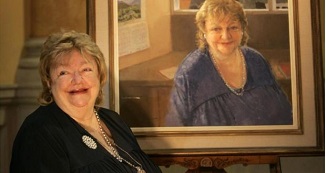
Maeve Binchy (28 mei 1940 – 30 juli 2012)
Hier bij een portret door Maeve McCarthy in 2015


De Britse schrijver Ian Fleming werd geboren op 28 mei 1908 in Londen. Zie ook alle tags voor Ian Fleming op dit blog.

Uit: Thunderball

“Would you like to know what I think of you?' She smiled. 'Every woman likes to hear about herself. Tell me, but make it sound true, otherwise I shall stop listening.' `I think you're a young girl, younger than you pretend to be, younger than you dress. I think you were carefully brought up, in a red-carpet sort of way, and then the red carpet was suddenly jerked away from under your feet and you were thrown more or less into the street. So you picked yourself up and started to work your way back to the red carpet you had got used to. You were probably fairly ruthless about it. You had to be. You only had a woman's weapons and you probably used them pretty coolly. I expect you used your body. It would be a wonderful asset. But in using it to get what you wanted, your sensibilities had to be put aside. I don't expect they're very far underground. They certainly haven't atrophied. They've just lost their voice because you wouldn't listen to them. You couldn't afford to listen to them if you were to get back on that red carpet and have the things you wanted. And now you've got the things.' Bond touched the hand that lay on the banquette between them. 'And perhaps you've almost had enough of them.' He laughed. 'But I mustn't get too serious. Not about the smaller things. You know all about them, but just for the record, you're beautiful, sexy, provocative, independent, self-willed, quick-tempered, and cruel.' She looked at him thoughtfully. 'There's nothing very clever about all that. I told you most of it. You know something about Italian women. But why do you say I'm cruel?' `If I was gambling and I took a knock like Largo did and I had my woman, a woman, sitting near me watching and she didn't give me one word of comfort or encouragement I would say she was being cruel. Men don't like failing in front of their women.' She said impatiently, 'I've had to sit there too often and watch him show off. I wanted you to win. I cannot pretend. You didn't mention my only virtue. It's honesty. I love to the hilt and I hate to the hilt. At the present time, with Emilio, I am half way. Where we were lovers, we are now good friends who understand each other. When I told you he was my guardian, I was telling a white lie. I am his kept woman. I am a bird in a gilded cage. I am fed up with my cage and tired of my bargain.'


 2241740-1cf78cf9b465ba70d9474a39143b778e.jpg
Ian Fleming (28 mei 1908 – 12 augustus 1964)
Cover


De Nederlandse schrijver en dichter Sjoerd Leiker werd geboren in Drachten op 28 mei 1914. Zie ook alle tags voor Sjoerd Leiker op dit blog.

Uit: Kind van het elysium

“Het bruine Pierke heeft tot dezen stond geen lang verhaal van zijn leven. Het ventje is nu vijf jaar oud.
Vijf jaar geleden werd hij geboren in een klein huis met een bladeren dak. Daar dichtbij stond een palmboom, roerloos in den zengenden zon van Nederlandsch Oost-Indië. Met dezen naam was zeer in het bijzonder zijn vader verbonden. Zijn vader was fuselier van het Indisch leger. Zijn moeder was een bruine vrouw, een Javaansche. Hij heeft haar oogen, heur blauwzwarte haren en haar tengere gestalte als een onvervreemdbaar erfdeel meegekregen naar dit koude land: Nederland, Friesland.
De vader van het bruine Pierke kreeg groot verlof. Hij mocht in Friesland of ook in Indië zijn pensioen gaan beuren en behoefde er niet dát voor te doen. Geen slag. Hij kon tot aan zijn dood toe de lijn trekken.
Hij kwam te wonen in het huis met het bladeren dak en zag gaarne vanuit de schaduw hoe de kinders zich vermeiden in het heete zand. Maar toen hij daar zoo zat en al in geen maand gehoorzaamd had aan eenig bevel, geeft acht, linksom en rechtsom, werd hij peinzend en treurig. Hij schreef een brief naar zijn moeder, om wie hij eigenlijk nooit gegeven had en die zelf blij was, dat hij met zijn ongedurigheid onder de knoet van het leger zat. Nu schreef hij sentimenteel over het leven, dat hem murw gemaakt had, over zijn jammerlijke fouten van vroeger, over zijn goede hoedanigheden van thans en over zijn pensioen. Hij schreef niet over zijn vrouw, de bruine vrouw, en evenmin over zijn kinderen. Hij zou zoo graag weer bij zijn moeder de beenen om de kachel strekken, wat pijpje rooken, zooals vader vroeger deed en eens weer met wanten aan door een kouden wintermorgen stappen. En schaatsen...... Neen, daar kwam hij niet aan toe. Dat was haast te mooi om aan te denken. Hij kon wel schreien van heimwee.”


 2241740-6a39213da9e55742ab00c7e873810a51.jpg
Sjoerd Leiker (28 mei 1914 – 15 december 1988)


De Russische schrijver en dichter Vladislav Felitsianovitsj Chodasevitsj werd geboren in Moskou op 28 mei 1885. Zie ook alle tags voor Vladislav Chodasevitsj op dit blog.


Ondeugd en dood

Ondeugd en dood! Wat een verleiding gloeit,
en hoeveel wellust ademt er in een klein woord!
De ondeugd en de dood steken met eendere angel,
en alleen hij ontkomt aan hun gesels
die het geheimzinnige woord op het hart bewaart -
de troostende sleutel van een ander bestaan.


Ineens werden vanuit de wolken

Ineens werden vanuit de wolken
het tafeltje en de koude thee verguld.
Kalm aan, winters hemellichaam,
val niet achter het zwarte bos!

Laat nog wat glanzen in blozende pracht,
nog wat krassen met de vlijtige pen.
In zijn bedrijvig knersen leeft
heel de zucht over mijn bestaan.

Met een trillende, stekelige stroom
rent hij van de gesplitste punt -
en op het brede blad sta ik dan
afgespiegeld... nee, niet ik:

slechts een hoekige kromme,
het vluchtige profiel van die hoogten,
waar, opgaand en neervallend,
mijn geest lijdt en leeft.


Vertaald door Jan Paul Hinrichs


 2241740-66f5ae391b7a3fd66f95b8d054de9b42.jpg
Vladislav Chodasevitsj (28 mei 1885 – 14 juni 1939)
Rond 1915


Zie voor nog meer schrijvers van de 28e mei ook mijn blog van 28 mei 2017 deel 2 en ook mijn blog van 28 mei 2016.

Geschreven door Romenu om 18:28 Reageer op dit bericht

Meg Wolitzer

De Amerikaanse schrijfster Meg Wolitzer werd geboren op 28 mei 1959 in Brooklyn, New York. Zie ook alle tags voor Meg Wolitzer op dit blog.

Uit: The Wife

“He looked over at me suddenly, watched my face, and said, "What's the matter? You look a little . . . something." "No. It's nothing," I told him. "Nothing worth talking about now, anyway," and he accepted this as a good-enough answer, returning to his plate of Tollhouse cookies, a small belch puffing his cheeks out froglike, briefly. It was difficult to disturb this man; he had everything he could possibly ever need. He was Joseph Castleman, one of those men who own the world. You know the type I mean: those advertisements for themselves, those sleepwalking giants, roaming the earth and knocking over other men, women, furniture, villages. Why should they care? They own everything, the seas and mountains, the quivering volcanoes, the dainty, ruffling rivers. There are many varieties of this kind of man: Joe was the writer version, a short, wound-up, slack-bellied novelist who almost never slept, who loved to consume ninny cheeses and whiskey and wine, all of which he used as a vessel to carry the pills that kept his blood lipids from congealing like yesterday's pan drippings, who was as entertaining as anyone I have ever known, who had no idea of how to take care of himself or anyone else, and who derived much of his style from The Dylan Thomas Handbook of Personal Hygiene and Etiquette. There he sat beside me on Finnair flight 702, and whenever the brunette brought him something, he took it from her, every single cookie and smokehouse-treated nut and pair of spongy, throwaway slippers and steaming washcloth rolled Torah-tight. If that luscious cookie-woman had stripped to her waist and offered him one of her breasts, mashing the nipple into his mouth with the assured authority of a La Leche commandant, he would have taken it, no questions asked. As a rule, the men who own the world are hyperactively sex-ual, though not necessarily with their wives. Back in the 1960s, Joe and I leaped into beds all the time, occasionally even during a lull at cocktail parties, barricading someone's bedroom door and then climbing a mountain of coats. People would come banging, wanting their coats back, and we'd laugh and shush each other and try to zip up and tuck in before letting them enter. We hadn't had that in a long time, though if you'd seen us here on this airplane heading for Finland, you'd have assumed we were content, that we still touched each other's sluggish body parts at night. "Listen, you want an extra pillow?" he asked me. "No, I hate those doll pillows," I said. "Oh, and don't forget to stretch your legs like Dr. Krentz said."


 2241951-eecb505550f321eead5c5d398bc1886a.jpg
Meg Wolitzer (New York, 28 mei 1959)

Geschreven door Romenu om 00:00 Reageer op dit bericht

Meer van Romenu

↑ Terug naar de berichten