Naar de inhoud

Romenu

Over literatuur, gedichten, kunst en cultuur
akke.beakke.be

Berichten van 20 juni 2019 tot 21 juni 2019

Zonnewende (Yves De Bosscher)


Bij de zomerzonnewende


 2247525-ea433e60c2dab928abbf5a9727451a1a.jpg
Fiercely the red sun descending / Burned his way along the heavens door Thomas Moran, 1876


Zonnewende

Ik hongerde naar woorden,
als het honderddagenvlas
onder het langste junilicht
wachtend op eendagsbloemen

sleet slechts aangevreten gedachten,
afgeknaagd zelfs de bast die beschermde
tegen het verschroeiende falen van mijn taal

Mijn hoop stelde ik op het roten van verjaarde vezels
in de aard van je oevers
waar geheimen prijs werden gegeven

Toen de winter kwam liep ik langs dat water, in de luwte
waar ik mijn dode stengels had gelaten groeide fijn kristal
en net daarbuiten, waar de rivier nog naar het land lonkte
dreven wind geschreven woorden


 2247525-addce27724fd8f4ffd2286189221e2df.jpg
Yves De Bosscher (Kortrijk, 1970)
Het gedicht van de Bosscher op een plaat in Harelbeke


Zie voor de schrijvers van de 21e juni ook mijn vorige blog van vandaag.

Geschreven door Romenu om 18:28 Reageer op dit bericht

Ed Leeflang, Thomas Blondeau, Adam Zagajewski, Anne Carson, Ian McEwan, Alon Hilu, Jean-Paul Sartre, Stanley Moss, Machado de Assis

De Nederlandse dichter Ed Leeflang werd geboren op 21 juni 1929 in Amsterdam. Zie ook alle tags voor Ed Leeflang op dit blog.


Vakantiekolonie

Dertien boterhammen had de jongen gegeten;
hij mocht boven tachtig kinderen op tafel staan
en keek gelukkig in het rond. De zuster zei
dat je ook zoveel moest eten; dan ging bronchitis over,
want dan kwam je aan.

Dat je van heimwee aandrang krijgt
stond denkelijk niet in de handboeken.
Niet eens misprijzend schept de zuster
een natte hoop uit je spijlenbed;
's middags moet je tot je moe wordt rusten.

Later zit je naast haar op het strand -
ze leest en doodgaan is hier verboden -
je wil niet scheppen, de zandvormen
van thuis zou je hier liever willen missen,
het rondje, de groene, het hartje, de rode.

Niet ver uit de kust spelen, op en onder.
de scholen bruinvissen. Daar is ook de echte
geheimzinnigheid van mooi weer.

Alleen op een vage feestdag is
bezoek van besluitelozen toegestaan.
Waar zullen ze eens met je heen gaan.

Als ze je na zes weken halen,
ben je niet aangekomen, wel plat gaan praten.
Nog eens weken zijn ze daar ongemakkelijk van
en tonen zich bedrogen en ontdaan.


De hazen

We waren in een weitje waar camille
het meeste te vertellen stond en hadden
een paal voor een waslijn in de grond gezet,
toen twee hazen uit het jonge koren dansten,
rechtop bewegend, in een aangrijpend menuet.

Dat kinderboekenhazen bleken te bestaan -
ze droegen dan wel geen parmante jassen,
maar hadden die aandoenlijke en overduidelijke
oren aan - het was zo schokkend als midden in
de goedheid of in de oudste angst voor donker
zijn te komen staan.

De schaamteloosheid van hun rondedans
en de driftige ernst van hun door
plotselinge versteningen onderbroken spel
deden ons de eigen argwanendheid en
verloren natuurlijkheid beseffen, dat
voelden wij aan onze sprakeloosheid wel.

Het voorjaar leek zelfs dreigend uit den boze
over de onschuld van de polder heen te hangen.
De dans duurde zo'n traag kwartier;
er was nog een kort leven om te blozen,
om naar de schoonheid van dit drieste dansen
te verlangen.


 2247519-9ebca217fd44aadc96362a7cb07aa08e.JPG
Ed Leeflang (21 juni 1929 – 17 maart 2008)


De Vlaamse dichter, schrijver en journalist Thomas Blondeau werd geboren in Poperinge op 21 juni 1978. Zie ook Zie ook alle tags voor Thomas Blondeau op dit blog

Uit: De Vaderlander

“Zoals mensen als maagd kunnen sterven, kunnen ze leven zonder ook maar één keer onderdeel te zijn geweest van iets meeslepends. Dat hoeft niet betreurenswaardig te zijn. Kijk maar naar kloosterlingen die hun mond niet kunnen houden over het genot van de berusting. Michel Quispel, de vader van David, behoorde tot het slag mensen dat niet mist wat het niet kent. Na een mislukte rechtenstudie was hij een paar jaar handelsreiziger geweest in schoonmaakmiddelen. Het stoorde hem om zo'n weinig mannelijk product te slijten, maar hij hield ervan onderweg te zijn. Om zijn aangeboren verlegenheid te overwinnen, begon hij bier te drinken. Zijn beroep gaf hem volop gelegenheid om vaak in cafés te zijn. Wanneer hij een goede voormiddag had gehad, begon hij na twaalven met drinken.
Later begon hij ongeacht zijn voormiddag na twaalven te drinken. Na het overlijden van zijn vader verkocht hij diens kruidenierswinkel en begon een café dat hij De Vaderlander doopte. Genoemd naar de zandzakjes die in de Eerste Wereldoorlog de wanden van de loopgraven tegen instorting beschermden. Hij was zo trots op deze vondst dat hij jarenlang nieuwe klanten vermoeide met zijn uitleg over het café als een wal tegen de wereld.
‘David, hebt ge tegen uw vriend al gezegd waarom uw vader zijn café zo genoemd heeft?’
‘Ja, pa.’
‘Ik bedoel niet waar het vandaan komt maar wat het symboliseert?’
‘Ja, pa!’
Eigenlijk zag David zijn vader alleen 's ochtends bij het tandenpoetsen een glas water drinken. Zijn dictum was: ‘'s Ochtends koffie om de dag goed in de ogen te kijken en 's middags een pint omdat het gezicht van de dag u niet aanstaat.’ Hij was een gestaag drinker die nooit tot dronkenschap verviel.
Hij leefde zogezegd op een respectabele afstand van de realiteit. Die afstand hield de middelmatige kwaliteit van zijn café, huwelijk en zijn relatie met zijn zoon op een constant niveau. Geen uitzicht op verbetering maar ook geen kans op verslechtering. Zijn alcoholisme en omgang met klanten had hem een welwillende onverschilligheid gegeven. Een manier van omgang die bestond uit glimlachen en het minimum aan inspanning om een conversatie gaande te houden. Een manier van omgaan die hij ook op zijn leven en gezin toepaste. Hij het David, die goede cijfers haalde zonder noemenswaardige inspanning, meestal zijn gang gaan. Geheel volgens zijn weinig uitgedachte filosofie dat het leven een stroom is waar je wel kunt proberen iets aan te veranderen, maar wat over het algemeen een nutteloze activiteit is want water stroomt toch altijd naar het laagste punt.”
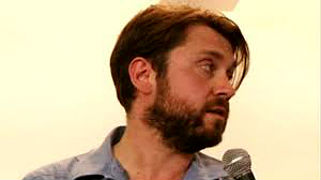
 

 2247519-ee502f6ec7e2d168b041251207422f7d.jpg
Thomas Blondeau (21 juni 1978 – 20 oktober 2013)


De Poolse dichter en essayist Adam Zagajewski werd geboren op 21 juni 1945 in Lwów, het huidige Lviv. Zie ook alle tags voor Adam Zagajewski op dit blog.


Night Is a Cistern

Night is a cistern. Owls sing. Refugees tread meadow roads
with the loud rustling of endless grief.
Who are you, walking in this worried crowd.
And who will you become, who will you be
when day returns, and ordinary greetings circle round.

Night is a cistern. The last pairs dance at a country ball.
High waves cry from the sea, the wind rocks pines.
An unknown hand draws the dawn’s first stroke.
Lamps fade, a motor chokes.
Before us, life’s path, and instants of astronomy.


Mysticism for Beginners

The day was mild, the light was generous.
The German on the café terrace
held a small book on his lap.
I caught sight of the title:
Mysticism for Beginners.
Suddenly I understood that the swallows
patrolling the streets of Montepulciano
with their shrill whistles,
and the hushed talk of timid travelers
from Eastern, so-called Central Europe,
and the white herons standing—yesterday? the day before?—
like nuns in fields of rice,
and the dusk, slow and systematic,
erasing the outlines of medieval houses,
and olive trees on little hills,
abandoned to the wind and heat,
and the head of the Unknown Princess
that I saw and admired in the Louvre,
and stained-glass windows like butterfly wings
sprinkled with pollen,
and the little nightingale practicing
its speech beside the highway,
and any journey, any kind of trip,
are only mysticism for beginners,
the elementary course, prelude
to a test that's been
postponed.


Vertaald door Clare Cavanagh

 

 2247519-9b51a82fe9f65d35c07088a8b4dadad6.jpg
Adam Zagajewski (Lwów, 21 juni 1945)


De Canadese dichteres, essayiste en vertaalster Anne Carson werd geboren op 21 juni 1950 in Toronto. Zie ook alle tags voor Anne Carson op dit blog.


The Glass Essay

I


I can hear little clicks inside my dream.
Night drips its silver tap
down the back.
At 4 A.M. I wake. Thinking

of the man who
left in September.
His name was Law.

My face in the bathroom mirror
has white streaks down it.
I rinse the face and return to bed.
Tomorrow I am going to visit my mother.


SHE

She lives on a moor in the north.
She lives alone.
Spring opens like a blade there.
I travel all day on trains and bring a lot of books—

some for my mother, some for me
including The Collected Works Of Emily Brontë.
This is my favourite author.

Also my main fear, which I mean to confront.
Whenever I visit my mother
I feel I am turning into Emily Brontë,

my lonely life around me like a moor,
my ungainly body stumping over the mud flats with a look of transformation
that dies when I come in the kitchen door.
What meat is it, Emily, we need?
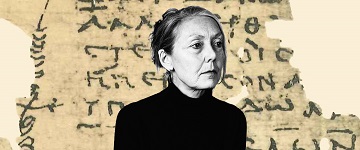
 

 2247519-5262c5d584087d7a33fceb4cc36ad51e.jpg
Anne Carson (Toronto, 21 juni 1950)


De Britse schrijver Ian McEwan werd op 21 juni 1948 geboren in de Engelse garnizoensplaats Aldershot. Zie ook alle tags voor Ian McEwan op dit blog.

Uit:Machines Like Me

“He stood before me, perfectly still in the gloom of the winter’s afternoon. The debris of the packaging that had protected him was still piled around his feet. He emerged from it like Botticelli’s Venus rising from her shell. Through the north-facing window, the diminishing light picked out the outlines of just one half of his form, one side of his noble face. The only sounds were the friendly murmur of the fridge and a muted drone of traffic. I had a sense then of his loneliness, settling like a weight around his muscular shoulders. He had woken to find himself in a dingy kitchen, in London SW9 in the late twentieth century, without friends, without a past or any sense of his future. He truly was alone. All the other Adams and Eves were spread about the world with their owners, though seven Eves were said to be concentrated in Riyadh.
As I reached for the light switch I said, ‘How are you feeling?’
He looked away to consider his reply. ‘I don’t feel right.’
This time his tone was flat. It seemed my question had lowered his spirits. But within such microprocessors, what spirits?
‘What’s wrong?’
‘I don’t have any clothes. And—’
‘I’ll get you some. What else?’
‘This wire. If I pull it out it will hurt.’
‘I’ll do it and it won’t hurt.’
But I didn’t move immediately. In full electric light I was able to observe his expression, which barely shifted when he spoke. It was not an artificial face I saw, but the mask of a poker player. Without the lifeblood of a personality, he had little to express. He was running on some form of default program that would serve him until the downloads were complete. He had movements, phrases, routines that gave him a veneer of plausibility. Minimally, he knew what to do, but little else. Like a man with a shocking hangover.
I could admit it to myself now – I was fearful of him and reluctant to go closer. Also, I was absorbing the implications of his last word. Adam only had to behave as though he felt pain and I would be obliged to believe him, respond to him as if he did. Too difficult not to. Too starkly pitched against the drift of human sympathies. At the same time I couldn’t believe he was capable of being hurt, or of having feelings, or of any sentience at all. And yet I had asked him how he felt. His reply had been appropriate, and so too my offer to bring him clothes. And I believed none of it. I was playing a computer game. But a real game, as real as social life, the proof of which was my heart’s refusal to settle and the dryness in my mouth.”
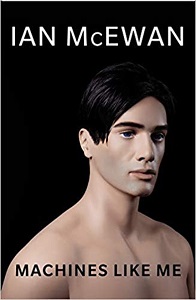
 

 2247519-f1198ca84f8e0abffc930a1eee2f0e19.jpg
Ian McEwan (Aldershot, 21 juni 1948)
Cover


De Israëlische schrijver Alon Hilu werd geboren op 21 juni 1972 in Jaffa. Zie ook alle tags voor Alon Hilu op dit blog.

Uit: Death of a Monk

“There were long-sleeved dresses adorned with feathers, and dresses ornamented with shiny beads and shells, and I would draw the choice cloths to my chest and inhale their fragrance, and when Maman was certain that no evil eyes were watching us, waiting to tell Father about our forbidden acts, she would remove the brooch pinning up her tresses in one swift motion, freeing her hair to flow to her waist, and then she would remove my tunic, momentarily fearful of my naked body dotted with the mysterious pores, and she would wrap me in an evening gown of her own choosing, a gown that covered my legs all the way to the toes and twisted around my arms and, in order to enhance the excitement, she would slip a pair of black, patent-leather shoes over my small feet with the disputatious toes, commanding me to sit upon her bed while she passed a variety of powders and coloured lotions over my face, after which I would stand before her glowing visage. Not a soul knew of the garments I would don from time to time, not even the servants toiling in our home. Once, only once, while we were under the mistaken impression that he was off somewhere tending to one of his numerous business concerns, Father returned home early. His shoes hammered the marble floor as he rounded the fish pond, while Maman rushed frantically to strip me of my gown and remove the spots of makeup, almost ripping the expensive fabrics from my body so that Father would not catch us in our misconduct, and when he entered and found me in the room, sitting upon his bed, he grabbed hold of me at once by the forearm and faced us, awaiting our explanation. She would not grant me the wink of an eye confirming our complicit secret, not even the quickest flash of mischief between conspirators: Maman rushed to inform him of my conduct during his absence, how I had come to her and bothered her and recited coarse poetry to her learned from the boys at the Talmud Torah, how I was uncouth and uncultured, more evil even than the wild Bedouin who plundered our caravans, and that my place was not in the pampering bedroom of my childhood, but in the prison dungeon beneath the Saraya fortress, seat of the governor of Damascus, where the cries of tortured prisoners could be heard each night.”
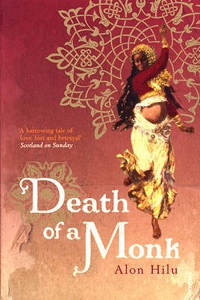
 

 2247519-2176d04fc8a848ff13e810b924f5668e.jpg
Alon Hilu (Jaffa, 21 juni 1972)
Cover


De Franse schrijver Jean Paul Sartre werd geboren op 21 juni 1905 in Parijs. Zie ook alle tags voor Jean-Paul Sartre op dit blog.

Uit: Le Mur


« On nous poussa dans une grande salle blanche, et mes yeux se mirent à cligner parce que la lumière leur faisait mal. Ensuite, je vis une table et quatre types derrière la table, des civils, qui regardaient des papiers. On avait massé les autres prisonniers dans le fond et il nous fallut traverser toute la pièce pour les rejoindre. Il y en avait plusieurs que je connaissais et d'autres qui devaient être étrangers. Les deux qui étaient devant moi étaient blonds avec des crânes ronds, ils se ressemblaient : des Français, j'imagine. Le plus petit remontait tout le temps son pantalon : c'était nerveux.
Ça dura près de trois heures ; j'étais abruti et j'avais la tête vide mais la pièce était bien chauffée et je trouvais ça plutôt agréable : depuis vingt-quatre heures, nous n'avions pas cessé de grelotter. Les gardiens amenaient les prisonniers l'un après l'autre devant la table. Les quatre types leur demandaient alors leur nom et leur profession. La plupart du temps ils n'allaient pas plus loin - ou bien alors ils posaient une question par-ci, par-là : "As-tu pris part au sabotage des munitions ?" Ou bien : "Où étais-tu le matin du 9 et que faisais-tu ?" Ils n'écoutaient pas les réponses ou du moins ils n'en avaient pas l'air : ils se taisaient un moment et regardaient droit devant eux puis ils se mettaient à écrire. Ils demandèrent à Tom si c'était vrai qu'il servait dans la Brigade internationale : Tom ne pouvait pas dire le contraire à cause des papiers qu'on avait trouvés dans sa veste. À Juan ils ne demandèrent rien, mais, après qu'il eut dit son nom, ils écrivirent longtemps.
"C'est mon frère José qui est anarchiste, dit Juan. Vous savez bien qu'il n'est plus ici. Moi je ne suis d'aucun parti, je n'ai jamais fait de politique".
Ils ne répondirent pas. Juan dit encore :
"Je n'ai rien fait. je ne veux pas payer pour les autres".
Ses lèvres tremblaient. Un gardien le fit taire et l'emmena. C'était mon tour :
"Vous vous appelez Pablo lbbieta ?"
Je dis que oui.
Le type regarda ses papiers et me dit :
"Où est Ramon Gris ?"
- Je ne sais pas."


 2247519-6d6e14a5aa7f04a413c8ab5f48395a1f.JPG
Jean-Paul Sartre (21 juni 1905 – 15 april 1980)


De Amerikaanse dichter, uitgever en kunsthandelaar Stanley Moss werd geboren in Woodhaven, New York op 21 juni 1925. Zie ook alle tags voor Stanley Moss op dit blog.


Psalm

God of paper and writing, God of first and last drafts,
God of dislikes, god of everyday occasions—
He is not my servant, does not work for tips.
Under the dome of the roman Pantheon,
God in three persons carries a cross on his back
as an aging centaur, hands bound behind his back, carries Eros.
Chinese God of examinations: bloodwork, biopsy,
urine analysis, grant me the grade of fair in the study of dark holes,
fair in anus, self-knowledge, and the leaves of the vagina
like the pages of a book in the vision of Ezekiel.
May I also open my mouth and read the book by eating it,
swallow its meaning. My Shepherd, let me continue to just pass
in the army of the living,
keep me from the ranks of the excellent dead.
It’s true I worshiped Aphrodite
who has driven me off with her slipper
after my worst ways pleased her.
I make noise for the Lord.
My Shepherd, I want, I want, I want.


Bright Day

I sing this morning: Hello, hello.
I proclaim the bright day of the soul.
The sun is a good fellow,
the devil is a good guy, no deaths today I know.
I live because I live. I do not die because I cannot die.
In Tuscan sunlight Masaccio
painted his belief that St. Peter’s shadow
cured a cripple, gave him back his sight.
I’ve come through eighty-five summers. I walk in sunlight.
In my garden, death questions every root, flowers reply.
I know the dark night of the soul
does not need God’s eye,
as a beggar does not need a hand or a bowl.
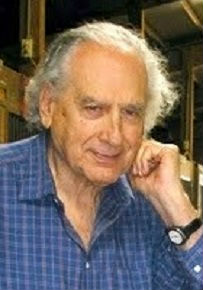
 

 2247519-650d00a4ce42a9dea09f559a13f728f0.jpg
Stanley Moss (Woodhaven, 21 juni 1925)


De Braziliaanse schrijver Joaquim Maria Machado de Assis werd geboren in Rio de Janeiro op 21 juni 1839. Zie ook alle tags voor Machado de Assis op dit blog.

Uit: The Posthumous Memoirs of Brás Cubas (Vertaald door Gregory Rabassa)

“Now that I've mentioned my two uncles, let me make a short genealogical outline here.
The founder of my family was a certain Damiao Cubas, who flourished in the first half of the eighteenth century. He was a cooper by trade, a native of Rio de Janeiro, where he would have died in penury and obscurity had he limited himself to the work of barrel-making. But he didn't. He became a farmer. He planted, harvested, and exchanged his produce for good, honest silver patacas until he died, leaving a nice fat inheritance to a son, the licentiate Luis Cubas. It was with this young man that my series of grandfathers really begins--the grandfathers my family always admitted to--because Damiao Cubas was, after all, a cooper, and perhaps even a bad cooper, while Luis Cubas studied at Coimbra, was conspicuous in affairs of state, and was a personal friend of the viceroy, Count da Cunha.
Since the surname Cubas, meaning kegs, smelled too much of cooperage, my father, Damiao's great-grandson, alleged that the aforesaid surname had been given to a knight, a hero of the African campaigns, as a reward for a deed he brought off: the capture of three hundred barrels from the Moors. My father was a man of imagination; he flew out of the cooperage on the wings of a pun. He was a good character, my father, a worthy and loyal man like few others. He had a touch of the fibber about him, it's true, but who in this world doesn't have a bit of that? It should be noted that he never had recourse to invention except after an attempt at falsification. At first he had the family branch off from that famous namesake of mine, Captain-Major Brás Cubas, who founded the town of Sao Vicente, where he died in 1592, and that's why he named me Brás. The captain-major's family refuted him, however, and that was when he imagined the three hundred Moorish kegs.
A few members of my family are still alive, my niece Venancia, for example, the lily of the valley, which is the flower for ladies of her time. Her father, Cotrim, is still alive, a fellow who ... But let's not get ahead of events. Let's finish with our poultice once and for all.“
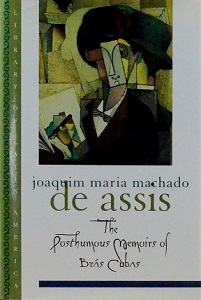
 

 2247519-7eb3bfd3d0ae08a57690bf59e482dabf.jpg
Machado de Assis (21 juni 1839 – 29 september 1908)
Cover


Zie voor nog meer schrijvers van de 21e juni ook mijn blog van 21 juni 2014 deel 1, en deel 2 en eveneens deel 3.


Geschreven door Romenu om 18:27 Reageer op dit bericht

Yves De Bosscher

Onafhankelijk van geboortedata

De Vlaamse dichter en politicus Yves De Bosscher werd in 1970 geboren in Kortrijk. Op tweejarige leeftijd verhuisde hij naar Harelbeke, waar hij met zijn ouders in een appartement langs de Leie kwam te wonen. Nooit zou een rivier veraf zijn in zijn leven. De Leie werd rechtgetrokken en de immense werken maakten grote indruk. De Bosscher begon zich lokaal voor natuur- en milieu te engaeren, richtte een natuurvereniging voor jongeren op en ging op vijftienjarige leeftijd naar de milieuraad van Harelbeke. Hij werd milieuambtenaar in de stad waar hij woonde. De waterkwaliteit van de Leie verbeterde. Deze van het kanaal ging achteruit. De indrukken die hem overvielen werden vaak in poëzie uitgedrukt. Hij verhuisde naar Stasegem - alweer vlakbij het kanaal. Nu woont hij met zijn gezin in Sint-Denijs, op geringe afstand van het kanaal. En met, in de verte, zicht op de Schelde .... Pas nadat op het natuur.forum een poëzietopic werd opgestart kwam hij voor het eerst met zijn poëzie naar buiten. Een aantal van zijn gedichten werd gepubliceerd in tijdschriften en boeken. Op het Vogelfestival aan de Oostvaarderplassen in Nederland werkte hij samen met Wim Parmentier uit Watou mee aan een poëzieproject. Voor Natuur.koepel Zuid-West-Vlaanderen werkt hij nu rond rivierpoëzie. Ondertussen kan men op verschillende plaatsen in Zuid-West-Vlaanderen de sporen van het rivierpoëzieproject vinden.


Stil

vader taalt in armgrepen
de letters raakt hij kwijt
en als zijn denken overstroomt
grossiert hij stil in spijt

graait tevergeefs naar woorden
die dolend zwerven in zijn hoofd
geen enkel kan hij vatten
zo is zijn stem gedoofd.

hij prevelt soms mijn naam nog
maar herkennen doet hij niet
het verleden ligt geborgen
in een bunker van graniet

het pad waarop hij stapt
verdwijnt in grijze mist
niets blijft er nu nog over
van wat hij vroeger wist

straks scheiden onze wegen
het is al veel te laat
wie valt nog te verwijten
dat er nooit echt werd gepraat?


Kortrijk, 2302

hoe het een geschiedenis kan vergaan
uiteindelijk zijn de woorden weer gevallen
waarmee wij ons zullen onderscheiden
van schuimers en plunderaars
in deze verloren stad

hebben onze lieve vrouwen en kinderen
op het smelten niet gewacht,
het gild der koolstofjagers
hoedt zich in deze boten
voor de vloek van het zoute water

nu kappen we de touwen
die ons kluisterden aan maagd en leeuw,
varen langs dobberende inboedels
tussen de spitsen van sint-Antonius en sint-Jan
naar een ongewisse wereld

er klinken elegieën voor de ouden
die achter werden gelaten,
zij die hadden voorzien
het vermeende voor waarheid te nemen
en zonder gemor verdronken zijn
in hun huizen op de kouter

duizend jaar zijn geweest
en weer hebben we niets geleerd


 2247517-2da6400e9982f63339b3620260cda6c6.jpg
Yves De Bosscher (Kortrijk, 1970)

Geschreven door Romenu om 18:26 Reageer op dit bericht

Corpus Christi (Michael Walker)


Bij Sacramentsdag


2247242-dd2b34b900b8de71bcd9851b09245457.jpg 
Corpus in Sevilla door Manuel Cabral Bejarano, 1857


Corpus Christi

Sprinkle me with hyssop and with dew,
To prepare me for the Wedding Feast.
In union with You, I am made new,
Strengthened against the Marks of the Beast.

'This is my body, given up for you, '
We say to one another in the dark,
That I might always do what you would do;
Your breathing is my secret, sacred spark.

Bread of Angels, feed my starving soul!
Your Flesh and Blood alone light up my life.
Tasting You alone can make me whole,
For You alone are peace amidst the strife.

Corpus Christi, crystal carnal crux,
You are steady, though the world's in flux.


2247242-2ae57334487c196a48830f5b4535c9e6.jpg 
Michael Walker (New Plymouth, 1945)
St Andrew's Church in New Plymouth


Zie voor de schrijvers van de 20e juni ook mijn vorige blog van vandaag.

Geschreven door Romenu om 10:51 Reageer op dit bericht

Vikram Seth, Paul Muldoon, Kurt Schwitters, Jean-Claude Izzo, Silke Andrea Schuemmer, Carel van Nievelt, Robert Rozhdestvensky, Laure Wyss, Lillian Hellman

De Indische dichter en schrijver Vikram Seth werd geboren op 20 juni 1952 in Kolkata. Zie ook alle tags voor Vikram Seth op dit blog.


All you who sleep tonight

All you who sleep tonight
Far from the ones you love,
No hands to left or right,
And emptiness above -
Know that you aren't alone.
The whole world shares your tears,
Some for two nights or one,
And some for all their years.


Can't

I find I simply can't get out of bed.
I shiver and procrastinate and stare.
I'll press the reset button in my head.

I hate my work but I am in the red.
I'd quit it all if I could live on air.
I find I simply can't get out of bed.

My joints have rusted and my brain is lead.
I drank too much last night, but now I swear
I'll press the reset button in my head.

My love has gone. What do I have instead? -
Hot-water bottle, God and teddy bear.
I find I simply can't get out of bed.

The dreams I dreamt have filled my soul with dread.
The world is mad, there's darkness everywhere.
I'll press the reset button in my head.

Who'll kiss my tears away or earn my bread?
Who'll reach the clothes hung on that distant chair?
I must, I simply must get out of bed
And press that reset button in my head.


Unclaimed

To make love with a stranger is the best.
There is no riddle and there is no test. -

To lie and love, not aching to make sense
Of this night in the mesh of reference.

To touch, unclaimed by fear of imminent day,
And understand, as only strangers may.

To feel the beat of foreign heart to heart
Preferring neither to prolong nor part.

To rest within the unknown arms and know
That this is all there is; that this is so.


 2247236-15d7bf7f13f3c77ac65ffec7a7df7cb3.jpg
Vikram Seth (Kolkata, 20 juni 1952)


De Ierse dichter en schrijver Paul Muldoon werd geboren in Portadown, County Armagh, in Noord-Ierland op 20 juni 1951, Zie ook alle tags voor Paul Muldoon op dit blog


The Old Country (Fragment)

VII

Every cut was a cut to the quick
what with every feather a feather to ruffle.
Every whitrack was a whitterick.
Everyone was in a right kerfuffle

when from his hob some hobbledehoy
would venture the whitterick was a curlew.
Every wall was a wall of Troy
and every hunt a hunt in the purlieu

of a demesne so out of bounds
every hound might have been a hellhound.
At every lane end stood a milk churn

whose every dent was a sign of indenture
to some pig wormer or cattle drencher.
Every point was a point of no return.


VIII

Every point was a point of no return
for those who had signed the Covenant in blood.
Every fern was a maidenhair fern
that gave every eye an eyeful of mud

ere it was plucked out and cast into the flame.
Every rowan was a mountain ash.
Every swath-swathed mower made of his graft a game
and the hay sash

went to the kemper best fit to kemp.
Every secretary was a temp
who could shift shape

like the river goddesses Banna and Boann.
Every two-a-penny maze was, at its heart, Minoan.
Every escape was a narrow escape.


IX

Every escape was a narrow escape
where every stroke was a broad stroke
of an ax on a pig nape.
Every pig was a pig in a poke

though it scooted once through the Diamond
so unfalt—so unfalteringly.
The threshold of pain was outlimened
by the bar raised at high tea

now every scone was a drop scone.
Every ass had an ass's jawbone
that might itself drop from grin to girn.

Every malt was a single malt.
Every pillar was a pillar of salt.
Every point was a point of no return.


 2247236-b0b529eba34e303cb8d1dec9563b2584.jpg
Paul Muldoon (Portadown, 20 juni 1951)


De Duitse schrijver, dichter en kunstenaar Kurt Schwitters werd geboren op 20 juni 1887 in Hannover. Zie ook alle tags voor Kurt Schwitters op dit blog.


One day

One day
You finish to be a boy.
But you play
Still with your old toy.
You like all the old angels
As you did before,
And think they are girls,
Beautiful girls.
You think they are like you
When you were young
But you are old,
And die and get cold.


Entspannung

Es fällt von mir ab eine kleine weiße Wolke.
Ich liege im Tal unter Lilien und rufe.
Der Hauch ihrer Hand zittert im Wind.
Eine große schwarze Wolke fällt in den Topf.
Daß die Henkersknechte sie sieden,
Daß sie Asche werde


 2247236-8580f77abbc498457465c2638f916ee1.jpg
Kurt Schwitters (20 juni 1887 – 8 januari 1948)
Merzbild - Rossfett door Kurt Schwitters, 1919


De Franse dichter en schrijver Jean-Claude Izzo werd geboren op 20 juni 1945 in Marseille. Zie ook alle tags voor Jean-Claude Izzo op dit blog.

Uit: Chourmo

« Ange nous avait installés sur la terrasse, avec une bouteille de rosé de Puy-Sainte-Réparade. Au menu, petits farcis de tomates, de pommes de terre, de courgettes et d'oignons. J'avais faim, et c'était un délice. J'aime ça, manger. Mais c'est pire quand j'ai des ennuis, et pire encore quand je côtoie la mort. J'ai besoin d'ingurgiter des aliments, légumes, viandes, poissons, dessert ou friandises. De me laisser envahir par leurs saveurs. Je n'avais rien trouvé de mieux pour réfuter la mort. M'en préserver. La bonne cuisine et les bons vins. Comme un art de survivre. Ça ne m'avait pas trop mal réussi jusqu'à aujourd'hui. Loubet et moi gardions le silence. Nous avions juste échangé quelques banalités en mangeant un peu de charcuterie. Il ruminait ses hypothèses. Moi, les miennes. Cûc m'avait proposé un thé, un thé noir. « Je crois que je peux vous faire confiance », avait-elle commencé. J'avais répondu que, pour l'heure, il n'était pas question de confiance, seulement de vérité. D'une vérité à avouer au flic chargé de l'enquête. L'identité de Guitou. — Je ne vais pas vous raconter toute ma vie, expliqua-t-elle. Mais vous comprendrez mieux quand je vous aurai raconté certaines choses. Je suis arrivée en France à dix-sept ans. Mathias venait de naître. C'était en 1977. Ma mère avait décidé qu'il était temps de partir. Le fait que je vienne d'accoucher a peut-être été pour quelque chose dans sa décision. Je ne sais plus. Elle me jeta un coup d'oeil furtif, puis elle attrapa un paquet de Craven A et alluma une cigarette nerveusement. Son regard se perdit dans une volute de fumée. Très loin. Elle poursuivit. Ses phrases s'étiraient parfois en de longs silences. Sa voix s'atténuait. Des mots restaient en suspens, dans l'air, et elle semblait les écarter d'un revers de main en chassant la fumée de sa cigarette. Son corps ne bougeait pas. Seuls ses longs cheveux se balançaient au rythme de la tête, qu'elle inclinait comme à la recherche d'un détail perdu. Je l'écoutai, attentif. Je n'osais croire être le premier à qui elle faisait confidence de sa vie. Je savais qu'au bout de son récit il y aurait un service en échange. Mais, par cette intimité soudaine, elle me séduisait. Et ça marchait. — Nous sommes rentrés, ma mère, ma grand-mère, mes trois soeurs cadettes, l'enfant et moi. Ma mère a eu beaucoup de cran. Vous savez, nous faisions partie de ce qu'on appelait les rapatriés. Ma famille était naturalisée depuis 1930. D'ailleurs, j'ai la double nationalité. Nous étions considérés comme des Français. Mais l'arrivée en France n'eut rien d'idyllique. De Roissy, nous avons été emmenés dans un foyer de travailleurs à Sarcelles. »


 2247236-23e4d417cf30f5f94f9e20ae49a78c3b.jpg
Jean-Claude Izzo (20 juni 1945 – 26 januari 2000)
Cover


De Duitse dichteres, schrijfster en kunsthistorica Silke Andrea Schuemmer werd geboren op 20 juni 1973 in Aken. Zie ook alle tags voor Silke Andrea Schuemmer op dit blog.

Uit: Nixen fischen

„Unter seinem Pullover zeichnete sich deutlich seine fleischige Brust ab. Er schob einen Finger durch das Zopfmuster und befühlte seine Brustwarze, während er sie weiter musterte.
»Studierst du hier?«
Ines räusperte sich. »Erstes Semester.«
Er nickte. »Zu alt für mich. Der gute Knut liebt die frischesten Fischlein – aber der Hempler, der wird seine Schatzkiste öffnen.«
Er wies Ines mit einer leichten Verbeugung in den hinteren Teil des Ladens.
»Hempler ist ein Kollege. Macht in antike Stoffe. Ehrbarer Mann.«
Er schob Ines einen Stuhl hin. Noch bevor sie sich setzen konnte, schubste das kahlrasierte Mädchen das andere, die schlug zurück, sie knurrten und begannen miteinander zu ringen. Unter Fauchen und Jaulen fiel ein Stuhl um, und das Gerangel ging auf dem Boden weiter, so dass Ines ein Stück abrückte.
Seckig verschränkte die Arme vor der Brust und sah zu. Schließlich wies er sie zischend zurecht.
»Pütti! Mümmerle! Au pied! Sofort!«
Ines duckte sich unter seinem schneidenden Tonfall. Seine Hand zeigte neben sich auf den Boden, er blieb in dieser Pose stehen, bis die Mädchen aufstanden und zu ihm trotteten.
Beide waren so blass, dass die Adern an den Schläfen bläulich leuchteten. Die Haut auf den Wangen war trocken und schuppig. Ihre Augen waren dick mit zerlaufenem Kajal geschminkt, die Kahlrasierte hatte eine Sicherheitsnadel im Ohr mit einem Kettchen bis zum Nasenflügel. Sie schmiegten sich an Seckig, dem sie gerade bis zur Brust gingen, und rieben seinen Bauch und seine stockartigen Oberschenkel. Er lachte glucksend, drückte ihnen je einen Schein in die Hand und küsste sie auf den Mund, wobei seine dicke, noppige Zunge zuckte und kreiselte, und scheuchte sie schließlich mit Klapsen auf die mageren Hüften zurück auf ihre Stühle. Da saßen sie wieder unbewegt und schweigend. Er seufzte und rollte mit den Augen.
»Die beiden reizenden Kindchen sorgen für Momente glückseliger Kontemplation. Aber man muss wohl auch ein Auge haben.«
Er streckte Ines erneut die Hand hin.
»Also nochmals und offiziell: Ich bin der Inhaber dieses Etablissements.«
»Ines. Ich komme wegen des Polaroids.«
Sie ließ ihre Hand ganz schlaff werden in seiner, eine feuchte Flosse, damit er sie nicht länger als notwendig hielt, aber es schien ihm nichts auszumachen. Schließlich zog sie ihre Hand zurück und setzte sich.“


 2247236-808b3fbfafc19283ff4d91be09678570.jpg
Silke Andrea Schuemmer (Aken, 20 juni 1973)


De Nederlandse schrijver Carel van Nievelt werd op 20 juni 1843 geboren in Delfshaven, als zoon van een boekhandelaar. Zie ook alle tags voor Carel van Nievelt op dit blog.

Uit: Mijn Angelo. Herinneringen van het Garda-meer

“Ter linkerhand besproeit zij den machtigen, met sneeuw gekroonden Monte Baldo, ter rechter de vervaarlijk uit hare diepte steigerende kalkrotsen van den Giumella den voet. En zuidwaarts heen, waar de schouderen der bergen haar niet meer knellen, verliest zij zich, breed als eene zee, in eenen wazigen horizon van sidderend goud.
Ik wil u niet haasten; ik wil niet ontijdig u den traan van verrukking doen wegwisschen, die bij het aanschouwen dezer heerlijkheid misschien uw blik benevelde. Maar als gij eindelijk weer opstaat - - want het is inderdaad te warm om hier lang te zitten; en prachtiger nog zult gij dit uitzicht vinden tegen den avond, wanneer de gebergten zich gehuld hebben in violette schaduwen, en ds Ora, de krachtige zuidenwind, die hier telken namiddag opsteekt, het lauwe floers zal weggerold hebben van over het water, zoodat gij, in het uren, uren verre zuidelijke verschiet, zelfs de lijnen zult kunnen onderscheiden van het heuvelland tusschen Brescia en Verona - - ik zeg, als gij weer opstaat, en verder wilt, dan raad ik u van den postwagen gebruik te maken, die daar als een deus ex machina juist komt aangerommeld. Gij wendt dan van uw hoofd het zeer dreigende ongeval van een zonnesteek; en tevens verhoogt ge uzelven aanmerkelijk in de schatting van het bedienend personeel der Albergo del Sole te Riva, dat anders, zoo gij aamechtig en ontoonbaar van stof in de voorhalle dezer deftige inrichting uwe verschijning zoudt hebben gemaakt, onvermijdelijk in u een voorwerp zou begroet hebben van spot en verachting.
In snellen draf gaat het afwaarts. Bij het naderen van het stadje klinkt eene forsche muziek u tegen. Hoe groot is uwe verbazing, de ouverture-Freischütz te herkennen, door een uitmuntend militair orkest met vuur en juistheid uitgevoerd! - Het is ook waar, hier heerscht de Duitscher nog. Slechts Germanen kunnen onder zúlk eene hitte muziek van Weber blazen.”


 2247236-fb9ce19cded259522a25db141caef2ed.jpg
Carel van Nievelt (20 juni 1843 – 2 augustus 1913)
Delfshaven


De Russische dichter en schrijver Robert Ivanovich Rozhdestvensky werd geboren op 20 juni 1932 in Kosikha in het district Altai Krai. Zie ook alle tags voor Robert Rozhdestvensky op dit blog.


Nostalgia

One can be nostalgic for homeland,
for the Urals, Bratsk-city, the Don and,
for the deserts, the cliffs and the mountains,
for transparent birch-trees in gardens,
for the fields with storms so severe...
I'm nostalgic for you, my dear.
.
For the mornings when you are awakened,
Your eyes and your shoulders, naked.
For the moments when you are around,
For hot nights when I'm down and out,
For your tears and words and for doubts,
For your smiles and even your shouts!
For your lips,
for bicker and wrangle...
I will fight nostalgia.
I'll struggle.


I am leaving, attacking the platforms,
For some reason,
I yell in the phones!
-Please help me, my darling,
I'm asking
I am nostalgic, you know,
I am gasping!
No reply. You are under bed cover...
You will see it
if I recover.


Vertaald door Alec Vagapov


 2247236-141a3eca59755f91126de7b232525496.jpg
Robert Rozhdestvensky (20 juni 1932 – 19 augustus 1994)
Cover


De Zwitserse schrijfster Laure Wyss werd geboren op 20 juni 1913 in Biel/Bienne. Zie ook alle tags voor Laure Wyss op dit blog.

Uit: Der Zahnstocher – Eine Feriengeschichte

„Als wir uns setzten, entdeckte ich unter meinem Stuhl ein Messer, ein hübsches Messerchen, perlmuttern, weiss, zierlich – wie es sich erwies, als ich es aufhob, um es dem Kellner zu übergeben. Bei ihm würde sich der Besitzer melden, sobald er seinen Verlust entdeckt hätte. «Was, so ein handliches Messerchen, das Ihnen ausserdem wohlgefällt, das behalten Sie doch», meinte die Frau des bernischen Pfarrers. Also wars kein Diebstahl, keine Aneignung fremden Besitzes, vielmehr ein christlich abgesegneter Fund, als ich das Perlmutterne in meine Tasche gleiten liess.
Von jetzt an kam es überall mit, das Messerchen, ich konnte nicht mehr auskommen ohne seine scharfen Klingen, sein Scherchen, seine winzige Pinzette und seinen Zahnstocher aus Horn. Ich steckte das kleine Messer ins Aluminiumköfferchen zum Handwerkzeug, zu den Kugelschreibern und Bleistiften und den Papieren, als ich ins westliche Frankreich in die Schreibferien fuhr. Der metallene Koffer sollte das Arbeitsmaterial vor jeder Unbill einer Reise schützen – eine Illusion, die am Ufer der Vienne, auf dem Parkplatz einer Herberge, zerplatzte, als Diebe die Touristenautos aufbrachen, nach Checks und Devisen suchend. Ihnen fiel das Köfferchen auf, sie nahmens mit. Die Polizei war rasch am Ort, schrieb, notierte, ich Geschädigte auf den Posten, Klage wegen entwendeten Arbeitsmaterials. Gegen unbekannt. «Sie werden das Köfferchen wegwerfen, wenn sie nichts Nützliches darin finden», tröstete der Kommissar, «vielleicht hinter eine Hecke.» Der Hecken in Frankreich gibts viele, ich schritt die nächsten ab, guckte hinter Stauden und Büsche, nichts leuchtete metallen auf.“


 2247236-e275df6caefc2e3330d0cfcb481b654a.jpg
Laure Wyss (20 juni 1913 – 21 augustus 2002)


De Amerikaanse schrijfster en vertaalster Lillian Hellman werd geboren op 20 juni 1905 in New Orleans. Zie ook alle tags voor Lillian Hellman op dit blog.

Uit: The Children’s Hour

“KAREN : No. no, no. That isn't the way things work. Maybe you believe me. I'd never know whether you did or not You'd never know whether you did. either. We couldn't do it that way. Can't you see what would happen? We'd he hounded by it all our lives. I'd be frightened always, and in the end my own fright would make mc would make mc hate you. (Sees slight mosement he makes i Yes. II would. I know it would I'd hate you for what I thought I'd done to you. And I'd hate myself too. It would wow and row until we'd he ruined by it. (Sees him about to speak) Mt Joe, )ou've seen all that yourself. You knew it first.
“CARDIN (softly) : I didn't mean it that way, I don't know.
KAREN (smiles) You're still trying to spare me. still trying to tell yourself that we might be all right again. But we won't be all right. Not ever, ever, ever I don't know all the reasons why. Look. I'm standing here. I haven't changed. (Holds out her handsel My hands look just the same. my face is the same. even my dress is old. We're in a room we've been in so many times before: you're sitting where you always sit: it's nearly time for dinner. I'm like everybody else. I can have all the things that everybody has. I can have you and a baby. and I can go to market, and we can go to the movies, and people will talk to me and (Suddenly 13.1i1CCS the pain in his lace) Oh. I'm sorry. I mustn't talk like that That couldn't he true any more
CARDIN : It could be, Karen. Well make it be like that.
KAREN : No. That's only what we'd like to have had It's what we can't have now. Go home. darling.
CARDIN (with limed : Don't talk like that. No matter what it is, we can't leave each other. I can't leave you_
KAREN . Joe. Joe. Let's do it now and quick; it will be too hard later on.
CARDIN : No, no, no. We love each other. (His voice breaks) I'd give anything not to have asked that question, Karen.”


 2247236-4b0a3877dae6d1eadb91886e8d82f122.jpg
Lillian Hellman (20 juni 1905 – 30 juni 1984)
Scene uit in opvoering in York, 2017


Zie voor nog meer schrijvers van de 20e juni ook mijn blog van 20 juni 2015 deel 2.

Geschreven door Romenu om 10:45 Reageer op dit bericht

Michael Walker

Onafhankelijk van geboortedata

De Nieuw-Zeelandse dichter Michael Walker werd geboren in New Plymouth in 1945. Hij studeerde af aan de Universiteit van Auckland met een BA en MA-graad. Walker doceerde van 1969 tot 2006 Engels en Frans aan een paar Nieuw-Zeelandse middelbare scholen. Hij reisde naar Engeland en Frankrijk in de vroege jaren 1970. Hij woonde een paar jaar in Grenoble waar hij Engelse les gaf. Daar sprak hij meestal Frans, maar had ook tijd om veel Franse romans in paperback te kopen en te lezen. De schrijver, Stendhal, kwam uit Grenoble en woonde daar het grootste deel van zijn leven. Hij las eerst de roman van Stendhal, 'Le Rouge et le Noir' ('The Scarlet and the Black') in Grenoble. Bij terugkeer in Nieuw-Zeeland waren er twee gedichten van hem aanvaard door Literary Arts Press, Los Angeles. Daarna heeft hij jaren geen gedichten meer geschreven. Hij ging lesgeven op South Island en North Island. In 2011 volgde hij een computeropleiding bij de New Lynn-bibliotheek en begon hij weer met het schrijven van gedichten.


For Robin Williams - The Day The Movies Died

"What amidst these, o me, o life? " you must
Have asked yourself one final time before
You left the endless trains of the faithless,
The cities filled with the foolish. Answer:

You are here. Life exists. Identity.
Now, you have contributed your verse:
Since comedy conceals tragedy,
You made us feel better, though you felt worse.

Behind all laughter, there are always tears,
As I still hear you whisper carpe diem,
For movies last beyond our mortal years,
So they are your best in memoriam.

O captain, my captain, gone with the tide,
Your death remains the day the movies died.


The Land Of The Lord

There is a country bordering the sea,
Where deserts meet the gardens' greenery,
And mountains stand for an eternity
Beneath the freedom of an ancient tree.

Here did first begin the human race,
Starting with our parents' cursed embrace,
So God Himself assumed a human face
To rescue us in a new state of grace.

Lo and behold! The Land of the Lord
Is Israel, under His swift sword,
For Earth and Heaven bow down at His Word,
That in the Temple, He may be adored.

Follow where the Son of Man has trod,
That you may taste the Flesh and Blood of God.


 2247233-d844a8a04ffb1e704f3b6128fa93cb8b.jpg
Michael Walker (New Plymouth, 1945)

Geschreven door Romenu om 10:44 Reageer op dit bericht

Meer van Romenu

↑ Terug naar de berichten