Naar de inhoud

Romenu

Over literatuur, gedichten, kunst en cultuur
seniorennet.beseniorennet.be

Honderd jaar Godfried Bomans, Multatuli, Thom Wolfe, John Irving, Michael Salinger
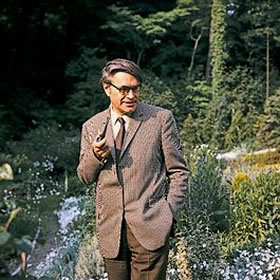
De Nederlandse schrijver Godfried Bomans werd geboren in Den Haag op 2 maart 1913. Zie ook alle tags voor Godfried Bomans op dit blog. Dat is vandaag precies honderd jaar geleden.


Uit: Pieter Bas


“Dit heb ik voorzeker met vele grote mannen gemeen: dat ik in Dordrecht geboren ben. De inwoners – die ik vanaf deze plaats hartelijk groet – kunnen u het eenvoudige huis aanwijzen: op de hoek van de Jan de Witstraat en het oude Muntplein. Zo van buiten gezien maakt

het niet de indruk dat een minister daar geboren is; dit was althans mijn  indruk toen ik het jaren later bezocht. Wanneer ge de moeite wilt nemen het Muntplein over te steken en u tegenover de slagerij van Bos op te stellen, krijgt ge een goede kijk op het geheel. Het raam

links, met de ijzeren spijltjes ervoor, is de kamer waar ik geboren ben. De gedenksteen erboven is natuurlijk later aangebracht. De twee ramen daarnaast werpen het licht in een vertrek dat wij gewoonlijk ‘het Kabinet’ noemden, vanwege het kleine eikenhouten bureau waaraan mijn vader te werken placht, wanneer zijn aanwezigheid niet op het stadhuis vereist werd. Hij vervulde daar de plaats van gemeentesecretaris, een woord dat wij moeilijk konden uitspreken. Zozeer waren wij destijds van zijn hoge positie en onmisbaarheid doordrongen, dat, toen hij een keer met verkoudheid in bed lag, wij verbaasd waren het verkeer op straat gewoon te zien doorgaan.

Naast ‘het Kabinet’, dat is dus het laatste raam rechts, bevond zich mijn slaapkamertje, sindsdien geheel verbouwd en veranderd; doch, naar ik hoor, zijn er reeds stappen gedaan alles in de vorige toestand te restaureren.

De dag dat ik het eerste licht zag, was een zeer bewogene. Het ministerie Brouwer-Kortenhoef was juist de vorige avond gevallen op een onderwijswet en ’s ochtends om acht uur kwam de mare hiervan tegelijk met het bericht van mijn geboorte ‘het Kabinet’ binnen, het eerste door de krant, het tweede door de baker.

Mijn vader schijnt een ogenblik in beraad te hebben gestaan aan welke van de twee bronnen hij het eerste zijn nieuwsgierigheid zou bevredigen, doch ten slotte zegevierde de vader in hem over de ambtenaar en kwam hij naar mijn toestand informeren.

‘Het is een gezonde jongen,’ zei hij, zich over het bed van zijn vrouw buigend en haar kussend, ‘het is een gezonde jongen en Kortenhoef is gewipt.’


 1346670-3acf4b7d7e2593423995a652864c8a69.jpg

Godfried Bomans (2 maart 1913 - 22 december 1971)


De Nederlandse schrijver Multatuli (pseudoniem van Eduard Douwes Dekker werd geboren in Amsterdam op 2 maart 1820. Zie ook alle tags voor Multatuli op dit blog.


Uit: Max Havelaar


“En dan komen later weer andere leugens. Een meisjen is een engel. Wie dit het eerst ontdekte, heeft nooit zusters gehad. Liefde is een zaligheid. Men vlucht met het een of ander voorwerp naar het einde der aarde. De aarde heeft geen einden, en die liefde is ook gekheid. Niemand kan zeggen dat ik niet goed leef met myn vrouw - zy is een dochter van Last & Co, makelaars in koffi - niemand kan iets op ons huwelyk aanmerken. Ik ben lid van Artis, zy heeft een sjaallong van twee-en-negentig gulden, en van zulk een malle liefde die volstrekt aan het einde der aarde wil wonen, is toch tusschen ons nooit spraak geweest. Toen we getrouwd zyn, hebben wy een toertje naar den Haag gemaakt - ze heeft daar flanel gekocht, waarvan ik nog borstrokken draag - en verder heeft ons de liefde nooit de wereld ingejaagd. Dus: alles gekheid en leugens!

En zou myn huwelyk nu minder gelukkig wezen, dan van de menschen die zich uit liefde de tering op den hals haalden, of de haren uit het hoofd? Of denkt ge dat myn huishouden iets minder wel geregeld is, dan het wezen zou als ik voor zeventien jaar myn meisjen in verzen gezegd had dat ik haar trouwen wilde? Gekheid! Ik had dit toch even goed kunnen doen als ieder ander, want verzenmaken is een ambacht, zeker minder moeielyk dan ivoordraaien. Hoe zouden anders de ulevellen met deviezen zoo goedkoop wezen? - Frits zegt: ‘Uhlefeldjes’ ik weet niet, waarom? - En vraag eens naar den prys van een stel billardballen!

Ik heb niets tegen verzen op-zichzelf. Wil men de woorden in 't gelid zetten, goed! Maar zeg niets wat niet waar is. ‘De lucht is guur, en 't is vier uur.’ Dit laat ik gelden, als het werkelyk guur en vier uur is. Maar als 't kwartier voor drieën is, kan ik, die myn woorden niet in 't gelid zet, zeggen: ‘de lucht is guur, en 't is kwartier voor drieën.’ De verzenmaker is door de guurheid van den eersten regel aan een vol uur gebonden.”


1346670-016caad553db3424bdb17bf627617dab.jpg 

Multatuli (2 maart 1820 - 19 februari 1887)

Cover Max Havelaar


De Amerikaanse schrijver
John Irving werd geboren op 2 maart 1942 in Exeter, New Hampshire. Zie ook alle tags voor John Irving op dit blog.


Uit: In One Person


“I'm going to begin by telling you about Miss Frost. While I say to everyone that I became a writer because I read a certain novel by Charles Dickens at the formative age of fifteen, the truth is I was younger than that when I first met Miss Frost and imagined having sex with her, and this moment of my sexual awakening also marked the fitful birth of my imagination. We are formed by what we desire. In less than a minute of excited, secretive longing, I desired to become a writer and to have sex with Miss Frost -- not necessarily in that order.

I met Miss Frost in a library. I like libraries, though I have difficulty pronouncing the word -- both the plural and the singular. It seems there are certain words I have considerable trouble pronouncing: nouns, for the most part -- people, places, and things that have caused me preternatural excitement, irresolvable conflict, or utter panic. Well, that is the opinion of various voice teachers and speech therapists and psychiatrists who've treated me -- alas, without success. In elementary school, I was held back a grade due to "severe speech impairments" -- an overstatement. I'm now in my late sixties, almost seventy; I've ceased to be interested in the cause of my mispronunciations . . .

It's all the more ironic that my first library was undistinguished. This was the public library in the small town of First Sister, Vermont -- a compact red-brick building on the same street where my grandparents lived. I lived in their house on River Street -- until I was fifteen, when my mom remarried. My mother met my stepfather in a play.

The town's amateur theatrical society was called the First Sister Players; for as far back as I can remember, I saw all the plays in our town's little theater.”


 1346670-0b88e54663f8b0238374ca05012b1fd1.jpg

John Irving (Exeter, 2 maart 1942)


De Amerikaanse schrijver en journalist Thom Wolfe werd geboren op 2 maart 1930 in Richmond, Virginia. Zie ook alle tags voor Thomas Wolfe op dit blog.


Uit: Back To Blood


“It was December, which in Miami Beach had only the most boring meteorological significance. Imagine a picture book with the same photograph on every page … every page … high noon beneath a flawless cloudless bright-blue sky … on every page … a tropical sun that turns those rare old birds, pedestrians, into stumpy abstract black shadows on the sidewalk … on every page … unending views of the Atlantic Ocean, “unending” meaning that every couple of blocks, if you squint at a certain angle between the gleaming pinkish butter-colored condominium towers that wall off the shining sea from clueless gawkers who come to Miami Beach thinking they can just drive down to the shore and see the beaches and the indolent recliner & umbrella people and the lapping waves and the ocean sparkling and glistening and stretching out to the horizon in a perfect 180-degree arc … if you squint just right, every couple of blocks you can get a skinny, thin-as-a-ballpoint-refill, vertical glimpse of the ocean—blip—and it’s gone … on every page … glimpse—blip—and it’s gone … on every page … on every page …”


1346670-12ceef4ac468d4501e2347312dabadd4.jpg
Thom Wolfe (Richmond, 2 maart 1930)


De Amerikaanse dichter en performer Michael Salinger werd geboren op 2 maart 1962 in Cleveland, Ohio. Zie ook alle tags voor Michael Salinger op dit blog.


Fidel Castro at Birdland

Fidel Castro
playing jazz guitar at Birdland
in New York City
on April 26, 2006
his acoustic guitar made by a Japanese man
living in Brazil
where the mahogany for the neck
of the instrument grew
fingerboard crafted from
imported Indian ebony
the front
Oregon cedar
back and sides
the wood of
trumpet shaped blue flowered
jacaranda tree
the machinehead
ivory tipped peg and gear assembly
holding eight strings
in tune
precision fabricated in Japan
by computer numerical controlled lathe
and Fidel Castro is singing in Portuguese
laughing at his own lyrics
his left hand crab crawling
up and down the frets
his right bouncing about the strings
as if he were counting the notes
on an adding machine
back up guitar and bass players
nod and crack jokes
behind his back
and Fidel Castro sings about love
and he sings about losing love
and he sings about finding another love
and he sings about the love he thought he’d lost
but was merely hibernating
in places he had failed to look
til this very instant
Fidel Castro spits a bit
when he sings
droplets backlit by blue stage light
reminiscent of time lapsed film
of dogwood flower
shooting pollen into the air
all the while
drummer accentuating downbeats
on cowbell muted with duct tape
and we sit at our manhole
sized table
exorbitantly priced drinks
soaking semi circles into white linen
and we listen
to this
Fidel Castro
this Fidel Castro
who in 1945
while a law student at the university
of Havana
followed
the black spike-heeled blonde
wearing that blue sequined dress
into the Tropicana Club
where he listened to Dizzy Gillespie
completely forgetting about his date
with the redhead
at the communist party meeting
this Fidel Castro
for whom music
is the revolution.


 1346670-afd8ab84a7f22025bffc168e8fd69563.jpg

Michael Salinger (Cleveland, 2 maart 1962)


Zie voor nog meer schrijvers van de 2e maart ook mijn vorige blog van vandaag.
Geschreven door Romenu om 14:59 Reageer op dit bericht
Reageer op dit bericht

Reageer op dit bericht

Een titel of je eigen website toevoegen

De blogger leest alles eerst na: je tekst verschijnt zodra die goedgekeurd is.

János Arany, Jevgeni Baratynski, Pascal Rannou, Sholom Aleichem, Olivia Manning, Gerhard von Halem

De Hongaarse dichter János Arany werd geboren op 2 maart 1817 in Nagyszalonta. Zie ook alle tags voor János Arany op dit blog.


Uit: Toldi (Fragment)


First Canto

'He took in one hand an enormous rail
and pointed at the road to Buda.'
Ilosvai

The sun shrivels up the sparse alkali flats,
parched herds of grasshoppers are grazing about -
not a new blade in all the the stubble, not a handbreadth
in green in all the broad meadows. A dozen laborers
or so are snoring under the stack - all their work
is going fine, but the big haywagons loiter there,
empty or only half loaded with hay.

A lanky sweep dandles its skinny neck into the well
and spies for water - imagine a giant gnat sucking
the blood of old earth. Thirsty oxen mill around
the through, making war on an armyt of flies. But
lazybone Laczkó hangs on the hands, and who's to scoop
the water up?

As far as the eye can see on bleak earth and sky,
one workman alone on his feet. A whopping side-
rail sways on his browny shoulder ligthly, and still
not a trace of beard on his chin. He stares far,
far down the road as though to depart this village
and land for other fields. A live warning, you
would have thought him, planted at the crossroad on
a shallow hill.


Dear little brother, why stand in the blazing sun?
Look, others are snoring under the hay. The kuvasz,
too, is lolling there his tounge dangling out, not
for all the world would he go a-mousing. Or have you
never seen a whirlwind like this? It kicks up the
dust for a fight, lickd the road at breakneck speed,
a smoke-stack belching on the run.


 1346666-c10fab16573c406b0e69987e82aa9904.jpg

János Arany (2 maart 1817 – 22 oktober 1882)

Beeld in Boedapest


De Russische dichter Jevgeni Baratynski werd geboren op 2 maart 1800 in Sint Petersburg. Zie ook alle tags voor Jevgeni Baratynski op dit blog.


Premature


I am of the race of spirits,

But do not abide in Heaven's realm,

And whenever I attain the clouds,

Strength fails me and I fall.

Heaven lies beyond these waves, I know,

So I rush about, a winged sigh,

'Twixt the earth and sky 

I adore the shining sun!


In the heights I frolic

'midst its vivifying rays.

I caress them like a cloudlet

With my playful wings;

I am free and light,

Gaily the thin air I drink,

Like a chirping bird I sing.


Foul weather soon comes nigh

Blowing earthly dust and leaves,

High up to the very clouds,

Dimming heaven's vault:

Poor spirit! Irrelevant spirit!

Fateful, stormy whirling

Like a feather throws me high

'neath the thundering sky.


Roaring tempest, whistling tempest!

Icy whirlwind, fiery whirlwind!

I am battered by leaves,

Choke on whirling dust!

Whether heavenward I turn,

Whether earthwards I look back -

Both are terrible and drear;


And I cry out in despair.

Muffled roars betimes of warring

Peoples fill my ears,

And the cries of carefree peasants

Crushed by horrible campaigns,

War's commotion, passions' wails,

And a sickly child's cry...

From my eyes flow streams of tears:


And I pity earthly creatures.

Tortured by the pangs of yearning

I dash about the heavenly fields

The fields above me while below me -

Limitless-over-small for sorrow!

Cloaked by cloud rush,

Alien to the earthly sphere,

While the storm's voice overwhelms


Sorrowing voices of the human realm.

I descry the world in darkness:

As I heed the faint vibration

Of celestial harps...On earth

I brought back to life a premature child.

Never having lived, he left:

Fateful transience!

Your abundance burdens me

Meaningless eternity!


Vertaald door Rawley Grau


 1346666-77ba85f28dc0f4559b04dfcbeff371eb.jpg

Jevgeni Baratynski (2 maart 1800 – 11 juli 1844)


De Franse schrijver en letterkundige Pascal Rannou werd geboren op 2 maart 1958 in Laval. Zie ook alle tags voor Pascal Ramou op dit blog.


Uit: Noire la neige


“Chattanooga... Pitchipoï... Le train souffle et ahane, les étin­celles font des étoiles dans la nuit qui a tué les siennes. J'en ai connu des trains de nuit, de Boston à San Francisco, de Paris à Moscou, des avions, des bateaux, des limousines blanches... et la caravane du cirque de Pa', traînée par des chevaux, puis par de vieilles voitures retirées de la casse... Chattanooga... Pitchipoï... Mes souvenirs s'embrument et je voudrais dormir. Il fait froid, sur ces planches. Je ne peux pas dormir, mes voisines me gênent, ronflent, claquent des dents, me labourent les côtes. Ma' passe une main dans mes cheveux bouclés. Au loin, le train mugit son rythme de fox-trot. Je voudrais bien dormir, mais je ne le peux pas. Pourquoi suis-je si morte ? Je suis morte deux fois, sous les coups, les brimades, le travail et la faim, et je suis oubliée. Rappelez-vous de moi. Chattanooga... Pitchipoï... Le train dansait le jitterburg dans les Smoky Mountains, il est devenu fou dans les plaines de Silésie.”


 1346666-e9883752d4bce28690302314d1ff37fb.jpg

Pascal Rannou (Laval, 2 maart 1958)


De Russisch-joodse schrijver Sholom Aleichem werd geboren in Pereyslav bij Kiev op 2 maart 1859. Zie ook alle tags voor Sholom Aleichem op dit blog.


Uit: Elijah the Prophet


“It is not good to be an only child, fussed over by one’s parents. “From seven, only one remains.” Here–don’t stand. There–don’t go. This–don’t eat. That–don’t drink. Your head–cover. Your neck–wrap. Your hands–put away. Your nose–wipe.

Oy, it’s no good, no good to be an only son. And the son of a rich man besides! My dad is rich. He is a moneychanger. He goes about with a sack of small change to all the shops. He changes silver into small change and small change into silver. That’s why his fingers always look black and his fingernails are broken. He toils very hard. Each day, when he comes home he is exhausted and broken. “No feet,” he complains to Mama, “No feet, not a sign of feet.”

No feet, perhaps. But he does have a fine parnuseh ["job" or "living"]. So everyone says. They envy us because we have parnuseh and more parnuseh. My mother is pleased. Me too. “Paysach at my home this year for all good Jews, Ribono shel Oylum.” So Mama says and thanks God that we should have such a Paysach. I do too. But when will we see it already, this Paysach?

We scarcely could wait to see Paysach, lovely dear Paysach. They dressed me in kingly raiment as is fitting for a rich man’s son. But what did I get out of it? I must not leap about in the outdoors lest I catch cold. I must not fly about with all the beggar’s children for I am a rich man’s son. Such fine clothing but with no one before whom I could show it off. A pocket full of nuts but no one with whom to play.

It’s no good to be an only son, fussed over, the sole survivor from seven and a rich man’s son besides.”


 1346666-c35a9816764081ad5db2f1de39698883.jpg

Sholom Aleichem (2 maart 1859 - 13 mei 1916)

Cover 


De Britse schrijfster Olivia Manning werd geboren op 2 maart 1908 in Portsmouth. Zie ook alle tags voor Olivia Manning op dit blog.


Uit: The Balkan Trilogy (The spoilt city)


“Were you in England recently, sir?” Guy asked.

“Less than a month ago. You’d find it much changed, I think. Changed for the better, I mean.”

While Wheeler, with knotted brows, concentrated on the task of getting the car-key off the ring, Sir Brian talked in a leisurely way of a new sense of comradeship which he said was breaking down class-consciousness in England and drawing people together. “Your secretary calls you ‘Brian’ and the liftman says: ‘We’re all in it together.’ I like it. I like it very much.” Once or twice, while talking, he gave a slightly mischievous side-glance at Wheeler, so the others warmed to him, feeling he was one of them and on their side against the established prejudices of the Legation.

Wheeler, not listening, gave a sigh. The key had come off the ring. He gazed at it, perplexed, then set himself the more difficult task of getting it on again.

“After the war we shall see a new world,” Sir Brian said and smiled at the three young people, each of whom watched him with rapt, nostalgic gaze. “A classless world, I should like to think.”

Harriet thought how odd it was to be standing in this melancholy light, listening to this important person who had flown in that afternoon and would fly out again that night—an unreal visitant to a situation that must seem unreal to him. Yet, real or not, the other men would be left to the risk of imprisonment, torture and death.

Sir Brian suddenly interrupted his talk about England to say: “So it’s all over here, eh? Geography defeated us. The dice were loaded against us. No one to blame. These things can’t be helped.”


 1346666-03efbeda78cd693046e118256c8f398d.jpg

Olivia Manning (2 maart 1908 - 23 juli 1980)


De Duitse dichter en schrijver Gerhard Anton von Halem werd geboren op 2 maart 1752 in Oldenburg. Zie ook alle tags voor Gerhard von Halem op dit blog.


Die Bürgermeisterwahl

Die Stimme Bavs gab ihm den Wert,
Und Bav, ihr wißts, entschied sonst wenig.
So wiehert' einst Hydaspes Pferd,
Und sieh, der Reiter wurde König.


 1346666-16b7e113351556987f6633d16036d08a.jpg

Gerhard von Halem (2 maart 1752 – 4 januari 1819)

Oldenburg, Langestrasse

Geschreven door Romenu om 14:37 Reageer op dit bericht

Jan Eijkelboom, Franzobel, Jim Crace, Franz Hohler, Lytton Strachey

De Nederlandse dichter, vertaler en journalist Jan Eijkelboom werd op 1 maart 1926 in Ridderkerk geboren. Zie ook alle tags voor Jan Eijkelboom op dit blog.


Pictures in your head


Beweging zit er niet in:
het zijn stills uit een movie;
meestal stom,
soms met geluid,
kreten van vogels bijvoorbeeld,
zelden een stem.
Ze komen terug, steeds vaker:
Er komen er ook wel bij.

Duizenden plaatjes in
een o zo zwaartillend hoofd.
Je zit er maar mee
op de achterste rij
van je eigen theater.


Een uit de hand gelopen haiku


Maansikkel, koud schoudertje
tegen haast donkerblauw
van zonnige wintermorgen.

Te klein om er mijn hoofd
moe tegenaan te vlijen.

Eerder geschikt om er een hand
zorgzaam omheen te leggen.

Gesteld dan dat ik groter was
tot kosmische proporties uit kon dijen.

Ik zie daar, schurkend in mijn jas
en trouwens onderweg naar jou,
voorlopig nog van af.


Dit Eiland


Heden voelen mijn voeten zich goed
in hun sokken en die weer
in hun ruime maar nog niet
sloffende schoenen.

Waarom dan niet de paden op,
de bergen in, de velden over
bij deze stad vandaan
waar stegen uitlopen op steigers

niet meer door boten gebruikt.
Wel kan men daar gaan staan uitkijken
over het eeuwig veranderlijk
zichzelf blijvende water,

ervaren dat tussen benauwenis
en ruimtezucht een afgepaald
maar onbeklemd domein kan liggen:
dit met een dagmars af te ronden

eiland.


 1346289-91301c67d612ef48a21e95e7316cde1e.jpg

Jan Eijkelboom (1 maart 1926 – 28 februari 2008)


De Oostenrijkse schrijver, dichter en schilder Franzobel werd geboren op 1 maart 1967 in Vöcklabruck. Zie ook alle tags voor Franznobel op dit blog.


Ode auf Mailand


Mailand, meine Lieben, hat etwas Kurioses.

Schon daß es einzig ist, unwiederholbar,

macht so schnell ihm keiner nach.

Mailand, meine Lieben, hat etwas Furioses,

leicht perverses, weil es so x-beliebig kommt.

So krummbeinig. So rundherum daher.

Es schmeckt nach Marzipan und Knoblauchbrot,

nach lauen Lüftchen, Huschhuschhusch,

nach Jetzt-will-ich-nicht-alleine-sein.

Kalt ist es wie Leberkäse, ausgeraucht,

und warm wie Spucke da im Mund.

Es grinst, wenn es die Gänsehäute

die Rücken runterlaufen sieht, und weint,

wenn man ihm ungerührt entgegentritt.

Mailand, es bringt nichts, nimmt nichts mit,

ist einfach da, macht sichs bequem.

Mailand, meine Lieben, ist etwas Kurioses.

Schon daß es einzig ist, unwiederholbar,

macht so schnell ihm keiner nach.


Liebe 06


Wie ein Füller und ein Bleistift in der Schub-

Lade, liegen wir Dreissigjährigen im Hotelzimmerbett

Umschlugen, warten auf den großen Ladenöffner.

Ein Fernseher im Eck des Zimmers statt

Des Kruzifixes meint: Die Wahrheit liegt schon aufm Platz

Und grölt:


Cupblamage, Cupblamage, Cupblamage

Ball am Kappel unterm Arm, nein, Arsch

Krems an der Donau, Fladnitz Süd,

Ist rund, ist rund, ist rund, ist dreissig,

rund und frägt:


Sind Sie Epileptiker? Ja, vier Dioptrien,

ich verwechsle Hinz und Hechts,

Uben und Onten, Horn und Finten,

Dreissig und Schleissig und Ei

darum war ich Mittelstürmer jahrelang,

aber egal, das Spiel dauert 06 Minuten,

nur für den Goalie [Torhüter] ist es umgekehrt.

                                       .

          [Drehtür]


Wenn er nichts verhütet. Häusltor.


 1346289-dba51734884103970be03602356e8dbd.jpg

Franzobel (Vöcklabruck, 1 maart 1967)


De Engelse schrijver Jim Crace werd geboren op 1 maart 1946 in St. Albans, Hertfordshire. Zie ook alle tags voor Jim Crace op dit blog.

Uit: Quarantine

„Miri's husband was shouting in his sleep, not words that she could recognize but simple, blurting fanfares of distress. When, at last, she lit a lamp to discover what was tormenting him, she saw his tongue was black — scorched and sooty. Miri smelled the devil's eggy dinner roasting on his breath; she heard the snapping of the devil's kindling in his cough. She put her hand on to his chest; it was soft, damp and hot, like fresh bread. Her husband, Musa, was being baked alive. Good news.

Miri was as dutiful as she could be. She sat cross-legged inside their tent with Musa's neck resting on the pillow of her swollen ankles, his head pushed up against the new distension of her stomach, and tried to lure the fever out with incense and songs. He received the treatment that she — five months pregnant, and in some discomfort — deserved for herself. She wiped her husband's forehead with a dampened cloth. She rubbed his eyelids and his lips with honey water. She kept the flies away. She sang her litanies all night. But the fever was deaf. Or, perhaps, its hearing was so sharp that it had eavesdropped on Miri's deepest prayers and knew that Musa's death would not be unbearable. His death would rescue her.

In the morning Musa was as numb and dry as leather, but — cussed to the last — was gripping thinly on to life. His family and the other, older men from the caravan came in to kiss his forehead and mumble their regrets that they had not treated him with greater patience while he was healthy. When they had smelled and tasted the sourness of his skin and seen the ashy blackness of his mouth, they shook their heads and dabbed their eyes and calculated the extra profits they would make from selling Musa's merchandise on the sly.”


 1346289-9651d759a9fbf93d1913d92f1a866091.jpg

Jim Crace (St. Albans, 1 maart 1946)


De Zwitserse dichter, schrijver, cabaretier en liedjesmaker Franz Hohler werd geboren op 1 maart 1943 in Biel. Zie ook alle tags voor Franz Hohler op dit blog.


Letzter Zug


Wieso hält denn

der Zug

an jeder Station

wo kein Mensch mehr aussteigt

geschweige denn ein?


Weiß er denn nicht

wie dringend

ich heim muß

zu dir


und wie sehr ich hoffe

du seiest noch wach

wenn ich komme

und wartest auf mich?


Bitte an den Kameramann


Könntest du

Kameramann

das nächstemal

wenn du den Hunger filmst

und auf die Fliegen zoomst

an den Augen des äthiopischen Kindes

könntest du dann

deine Kamera sinken lassen

und statt dessen

die Fliegen vertreiben?


Danke.


 1346289-e33125a1963630bab869e62c62306bd1.jpg

Franz Hohler (Biel, 1 maart 1943)


De Britse schrijver
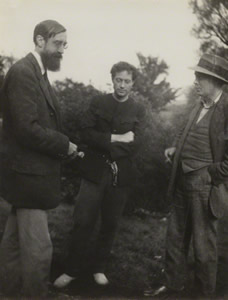
Giles Lytton Strachey werd geboren op 1 maart 1880 in Londen. Zie ook alle tags voor Lytton Strachey op dit blog.


Uit: Landmarks In French Literature


“Some of these qualities are already distinctly visible in the earliest French works which have come down to us — the Chansons de Geste. These poems consist of several groups or cycles of narrative verse, cast in the epic mould. It is probable that they first came into existence in the eleventh and twelfth centuries; and they continued to be produced in various forms of repetition, rearrangement, and at last degradation, throughout the Middle Ages. Originally they were not written, but recited. Their authors were the wandering minstrels, who found, in the crowds collected together at the great fairs and places of pilgrimage of those early days, an audience for long narratives of romance and adventure drawn from the Latin chronicles and the monkish traditions of a still more remote past. The earliest, the most famous, and the finest of these poems is the Chanson de Roland, which recounts the mythical incidents of a battle between Charlemagne, with ‘all his peerage’, and the hosts of the Saracens. Apart from some touches of the marvellous — such as the two hundred years of Charlemagne and the intervention of angels — the whole atmosphere of the work is that of eleventh-century France, with its aristocratic society, its barbaric vigour, its brutality, and its high sentiments of piety and honour. The beauty of the poem lies in the grand simplicity of its style. Without a trace of the delicacy and variety of a Homer, farther still from the consummate literary power of a Virgil or a Dante, the unknown minstrel who composed the Chanson de Roland possessed nevertheless a very real gift of art. He worked on a large scale with a bold confidence. Discarding absolutely the aids of ornament and the rhetorical elaboration of words, he has succeeded in evoking with an extraordinary, naked vividness the scenes of strife and heroism which he describes.”


 1346289-9392aaca03af6cdcce0f199da5f52f7f.jpg

Lytton Strachey (1 maart 1880 – 21 januari 1932)

Lytton Strachey, de schilder Duncan Grant en de criticus (Arthur) Clive Bell in 1922


Zie voor nog meer schrijvers van de 1e maart ook mijn blog van 1 maart 2012 deel 1 en ook deel 2 en eveneens deel 3.

Geschreven door Romenu om 21:39 Reageer op dit bericht

Martin Suter, Yórgos Seféris, Marin Sorescu, Howard Nemerov, John Byrom, Saul Williams

De Zwitserse schrijver Martin Suter werd geboren op 29 februari 1948 in Zürich. Zie ook alle tags voor Martin Suter op dit blog.


Uit: Der Koch


“Auf dem kurzen Weg von der Tramstation bis zur Theodorstraße 94 wurde Andrea von einem Junkie angebettelt, von einem Dealer angehauen und von einem Autofahrer angemacht. Für den Rückweg würde sie ein Taxi bestellen, auch wenn es früh am Abend war. Und es würde früh sein, das hatte sie sich fest vorgenommen. Gleich beim Betreten seiner Wohnung würde sie sagen, sie wäre beinahe nicht gekommen, so krank fühle sie sich. Im Treppenhaus roch es, wie es eben in Mietshäusern riecht um diese Zeit. Nur nicht nach Hackbraten, sondern nach Curry. Im ersten Stock standen zwei Tamilinnen in ihren halboenen Wohnungstüren und schwatzten. Im dritten wartete ein kleiner Junge auf dem Treppenabsatz und verschwand enttäuscht in der Wohnung, als er Andrea sah. Maravan erwartete sie vor seiner Wohnungstür. Er trug ein buntes Hemd und eine dunkle Hose, war frisch rasiert und frisch geduscht, gab ihr seine lange schmale Hand und sagte: »Willkommen in Maravans Curry Palace.« Er führte sie herein, nahm ihr den Wein ab und half ihr aus dem Mantel. Überall brannten Kerzen, nur da und dort sorgten ein paar Spots für eine etwas nüchterne Beleuchtung. »Die Wohnung erträgt nicht viel Licht«, erklärte er in seinem Schweizerhochdeutsch mit tamilischem Zungenschlag. Auf dem Wohnzimmerboden, keine zwanzig Zentimeter erhöht, war ein Tisch für zwei Personen gedeckt. Kissen und Tücher dienten als Sitzgelegenheit. An der Wand stand ein Hausaltar mit einer brennenden Deepam. In dessen Zentrum die Statue einer vierarmigen Göttin, die in einer Lotusblüte saß. »Lakshmi«, sagte Maravan mit einer Handbewegung, als stelle er einen weiteren Gast vor. »Weshalb hat sie vier Arme?« »Dharma, Kama, Artha und Moksha. Rechtschaenheit, Lust, Wohlstand und Erlösung.”


 1345612-e87c89340e095e8a9dff6fd5df2f02b6.jpg

Martin Suter (Zürich 29 februari 1948)


De Griekse dichter Yórgos Seféris werd geboren in Smyrna (nu Izmir, in Turkije) op 29 februari 1900. Zie ook alle tags voor Yórgos Seféris op dit blog.


An Old Man on the River Bank


And yet we should consider how we go forward.
To feel is not enough, nor to think, nor to move
nor to put your body in danger in front of an old loophole
when scalding oil and molten lead furrow the walls.

And yet we should consider towards what we go forward,
not as our pain would have it, and our hungry children
and the chasm between us and the companions calling from the opposite shore;
nor as the bluish light whispers it in an improvised hospital,
the pharmaceutic glimmer on the pillow of the youth operated on at noon;
but it should be in some other way, I would say like
the long river that emerges from the great lakes enclosed deep in Africa,
that was once a god and then became a road and a benefactor, a judge and a delta;
that is never the same, as the ancient wise men taught,
and yet always remains the same body, the same bed, and the same Sign,
the same orientation.

I want nothing more than to speak simply, to be granted that grace.
Because we've loaded even our song with so much music that it's slowly sinking
and we've decorated our art so much that its features have been eaten away by gold
and it's time to say our few words because tomorrow our soul sets sail.

If pain is human we are not human beings merely to suffer pain;
that's why I think so much these days about the great river,
this meaning that moves forward among herbs and greenery
and beasts that graze and drink, men who sow and harvest,
great tombs even and small habitations of the dead.
This current that goes its way and that is not so different from the blood of men,
from the eyes of men when they look straight ahead without fear in their hearts,
without the daily tremor for trivialities or even for important things;
when they look straight ahead like the traveller who is used to gauging his way by the stars,
not like us, the other day, gazing at the enclosed garden of a sleepy Arab house,
behind the lattices the cool garden changing shape, growing larger and smaller,
we too changing, as we gazed, the shape of our desire and our hearts,
at noon's precipitation, we the patient dough of a world that throws us out and kneads us,
caught in the embroidered nets of a life that was as it should be and then became dust and sank into the sands
leaving behind it only that vague dizzying sway of a tall palm tree


 1345612-a319ec6bce7ff7865b7b00836cbebd95.jpg

Yórgos Seféris (29 februari 1900 - 20 september 1971)

21 jaar oud


De Roemeense dichter Marin Sorescu werd geboren op 29 februari 1936 in Bulzeşti. Zie ook alle tags voor Marin Sorescu op dit blog.


Group


They’d been living together a long time
And were beginning to repeat each other:
He was her
And she was him,
She was her
And he was her as well,
She was, she wasn’t,
And he was them,
Or something like that.

Especially in the morning,
Until they’d sorted out
Who was who,
From where to where,
Why this was and not that,
A lot of time elapsed,
Time poured away like water.

Occasionally they wanted to kiss each other
But realised, at some point,
That they were both her —
Easier just to repeat.

Then they’d start yawning with fear,
A yawn like soft wool,
Which could even be crocheted
This way:
One was yawning very carefully
The other was holding the ball.


Vertaald door Ted Hughes en Ioanna Russell-Gebbett


 1345612-235648836bae9a4dc95308cb995c6326.jpg

Marin Sorescu (29 februari 1936 – 8 december 1996)


De Amerikaanse dichter en literatuurdocent Howard Nemerov werd geboren op 29 februari 1920 in New York. Zie ook alle tags voor Howard Nemerov op dit blog.


The Author to His Body on Their Fifteenth Birthday, 29 ii 80

“There’s never a dull moment in the human body.”
—The Insight Lady

Dear old equivocal and closest friend,
Grand Vizier to a weak bewildered king,
Now we approach The Ecclesiastean Age
Where the heart is like to go off inside your chest
Like a party favor, or the brain blow a fuse
And the comic-book light-bulb of Idea black out
Forever, the idiot balloon of speech
Go blank, and we shall know, if it be knowing,
The world as it was before language once again;

Mighty Fortress, maybe already mined
And readying to blow up grievances
About the lifetime of your servitude,
The body of this death one talkative saint
Wanted to be delivered of (not yet!),
Aggressively asserting your ancient right
To our humiliation by the bowel
Or the rough justice of the elderly lecher’s
Retiring from this incontinence to that;

Dark horse, it’s you we’ve put the money on
Regardless, the parody and satire and
The nevertheless forgiveness of the soul
Or mind, self, spirit, will or whatever else
The ever-unknowable unknown is calling itself
This time around—shall we renew our vows?
How should we know by now how we might do
Divorced? Homely animal, in sickness and health,
For the duration; buddy, you know the drill.


 1345612-cf1bb10fe9297298e5599dcd4647fa82.jpg

Howard Nemerov (29 februari 1920 – 5 juli 1991)


De Engelse dichter John Byrom werd geboren op 29 februari 1692 in Manchester. Zie ook alle tags voor John Byrom op dit blog.


Epigram I


Nor Steel, nor Flint alone produces fire;
No spark arises till they both conspire:
Nor Faith alone, nor work without is right;
Salvation rises, when they both unite.


Epigram II


Zeal without Meekness, like a ship at sea,
To rising storms may soon become a prey;
And Meekness without Zeal is still the same,
When a dead calm stops ev'ry sailor's aim.


 1345612-8e1aed7657ff79a8ac35f628af7053f4.jpg

John Byrom (29 februari 1692 – 26 september 1763)

Manchester, Town Hall 


De Amerikaanse dichter, schrijver, acteur, rapper en musicus
Saul Stacey Williams werd geboren in Newburgh, New York op 29 februari 1972. Zie ook alle tags voor Saul Williams op dit blog.


Uit: Coded Language (Fragment)


„Whereas, breakbeats have been the missing link connecting the diasporic community to its drum woven past Whereas the quantised drum has allowed the whirling mathematicians to calculate the ever changing distance between rock and stardom. Whereas the velocity of the spinning vinyl, cross-faded, spun backwards, and re-released at the same given moment of recorded history , yet at a different moment in time's continuum has allowed history to catch up with the present. We do hereby declare reality unkempt by the changing standards of dialogue. Statements, such as, "keep it real", especially when punctuating or anticipating modes of ultra-violence inflicted psychologically or physically or depicting an unchanging rule of events will hence forth be seen as retro-active and not representative of the individually determined is. Furthermore, as determined by the collective consciousness of this state of being and the lessened distance between thought patterns and their secular manifestations, the role of men as listening receptacles is to be increased by a number no less than 70 percent of the current enlisted as vocal aggressors.

Motherfuckers better realize, now is the time to self-actualize We have found evidence that hip hops standard 85 rpm when increased by a number as least half the rate of it's standard or decreased at ¾ of it's speed may be a determining factor in heightening consciousness. Studies show that when a given norm is changed in the face of the unchanging, the remaining contradictions will parallel the truth.”


 1345612-ce60a007aa445be51624c92c1d07296b.jpg

Saul Williams (Newburgh, 29 februari 1972)

Geschreven door Romenu om 19:04 Reageer op dit bericht

Stephen Spender, Bart Koubaa, Luc Dellisse, Bodo Morshäuser, John Montague

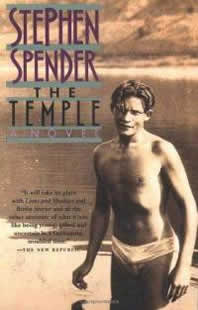
De Engelse dichter, essayist en schrijver Stephen Spender werd geboren op 28 februari 1909 in Londen. Zie ook alle tags voor Stephen Spender op dit blog.


My Parents kept me from children who were rough


My parents kept me from children who were rough
and who threw words like stones and who wore torn clothes.
Their thighs showed through rags. They ran in the street
And climbed cliffs and stripped by the country streams.

I feared more than tigers their muscles like iron
And their jerking hands and their knees tight on my arms.
I feared the salt coarse pointing of those boys
Who copied my lisp behind me on the road.

They were lithe, they sprang out behind hedges
Like dogs to bark at our world. They threw mud
And I looked another way, pretending to smile,
I longed to forgive them, yet they never smiled.


The Room Above the Square


The light in the window seemed perpetual
When you stayed in the high room for me;
It glowed above the trees through leaves
Like my certainty.

The light is fallen and you are hidden
In sunbright peninsulas of the sword:
Torn like leaves through Europe is the peace
That through us flowed.

Now I climb up alone to the high room
Above the darkened square
Where among stones and roots, the other
Unshattered lovers are.


O Night O Trembling Night


O night O trembling night O night of sighs
O night when my body was a rod O night
When my mouth was a vague animal cry
Pasturing on her flesh O night
When the close darkness was a nest
Made of her hair and filled with my eyes

(O stars impenetrable above
The fragile tent poled with our thighs
Among the petals falling fields of time
O night revolving all our dark away)

O day O gradual day O sheeted light
Covering her body as with dews
Until I brushed her sealing sleep away
To read once more in the uncurtained day
Her naked love, my great good news.


 1345605-14decdb1abb3b275de81235ffcfadade.jpg

Stephen Spender (28 februari 1909 – 16 juli 1995)

Cover 


De Vlaamse schrijver Bart Koubaa (pseudoniem van Bart van den Bossche) werd geboren op 28 februari 1968 in Eeklo. Zie ook alle tags voor Bart Koubaa op dit blog.

Uit: De leraar


“‘Mijn aandacht werd getrokken door een klein artikel waarin stond dat jongeren die een kracht- of vechtsport beoefenen meer dan anderen betrokken zijn bij vechtpartijen. Nee maar. Ze gebruiken ook meer wapens, spijbelen vaker en vernielen meer. Kijk eens aan. Maar kom, het is ook bewezen, althans zo blijkt uit een onderzoek waarvoor vijfhonderd jongeren tussen de elf en zeventien gedurende twee jaar gevolgd werden. Een derde van onze leerlingen is aangesloten bij een populaire kickboksclub…’

(…)


“Gisteren stond in de krant dat industriële sponsors enkel geld geven aan studies die hun goed uitkomen en dat onderzoekers hun stellingen formuleren conform de financiële belangen van de sponsor. Negatieve uitkomsten zien het licht niet. Vooral de farmaceutische industrie is een meesterfoefelaar. Als er vijftien jaar geleden in de klas één tussen zat die af en toe de boel op stelten zette, werd hij bestempeld als een kwajongen of een haantje/de/voorste, tegenwoordig is de diagnose ADHD. De pillen zijn zo licht geworden dat zowat de helft van onze leerlingen Ritaline slikt, interessant voor de economie, en die moet tot elke prijs draaien, anders komt onze sociale zekerheid op de helling en kunnen we de pillen niet terugbetaald krijgen. Verlaag met andere woorden de drempel voor de diagnose- ieder kind dat tegenspreekt of een raam aan diggelen gooit, heeft per definitie ADHD . Verlicht vervolgens de dosis van de pillen en schrijf ze voor.”


 1345605-a1f100dfceadf407dbffc9553fdcbc8a.jpg

Bart Koubaa (Eeklo, 28 februari 1968)


De Belgische-Franse dichter, schrijver, essayist, dramaturg en scenarioschrijver Luc Dellisse werd geboren op 28 februari 1953 in Brussel. Zie ook alle tags voor Luc Delisse op dit blog.


Faire-part


Ta main lisse posée sur le ventre

Ta douceur transformée en griffes

Tu montes en arrière dans la langue

Tu tournes la tête et tu chantes

Ta beauté de monstre savant éclate

Le feu crépite dans mes veines.

Je meurs


Je vois tes yeux de soufre et de salpêtre

Le jeu du tourbillon qui troue le plafond

Le ciel devient panique

L’été brûle les dernières fleurs

Je suis entré dans la douleur


J’attends la fin du jour, l’œil crevé

Le cyclope de la tempête

J’attends le vin et la froideur

L’amour a plus d’un tour

Pour nous briser le cœur

Je n’ai jamais été joueur


Je suis entré dans la douleur

Je dessine dans l’air ton visage

J’entends le chant de ta voix,

Le bonheur que tu m’as donné

Que tu m’as repris

Et qui reviendra un jour

Sans moi.


1345605-2308231d483d0a225bb7f793ad34670d.jpg
Luc Dellisse (Brussel, 28 februari 1953)


De Duitse dichter en schrijver Bodo Morshäuser werd geboren op 28 februari 1953 in Berlijn. Zie ook alle tags voor Bodo Morshäuser op dit blog.


Sonntags im Park


Ich war vier

er hob mich aufs Reiterdenkmal

im Tiergarten

winkte von Ferne

und ich war ohne Angst


Er kam zurück

nahm mich auf die Schulter

ich sollte es schöner haben

von seinem Vater

kannte er nur das Grab


Achtzehn Grad minus

und er hielt mich umarmt

dass uns warm war und sagte

so einen Winter hätte er

nur in Sibirien erlebt


 1345605-b161d2da2d36abebd3ed4bf6df382588.jpg

Bodo Morshäuser (Berlijn, 28 februari 1953)

Berlijn, Tiergarten 


De Ierse dichter John Montague werd geboren in New York op 28 februari 1929. Zie ook alle tags voor John Montague op dit blog.


A Small Death


My daughter, Úna, wanders
off to play in the forest,
unafraid, her new rag doll
clutched under one arm:
a small fairy queen, trail-
ed by her elderly knight.

At the centre, I find her
beneath black hemlock, red cedar,
halted on a carpet, a compost
of fallen leaves, rusty haws
and snowberries, knobbly chestnuts:
decay’s autumnal weft.

She has found a dead bird
which she holds up in her
other hand; eyes, bright beads,
but the long beak spiky, cold,
twig legs crisped inwards.
Why not fly? she demands

And as I kneel to explain
(taking the retted corpse away)
dead, she repeats, puzzled.
So we bury the scant body
under a mound of damp leaves,
a gnome’s pyre, a short barrow:

Her first funeral ceremony.
Home now, I nudge gently,
past the slapping branches,
the shallow Pacific rain pools
she loves ploutering through
in her diminutive wellingtons.

Beyond the tall woods, lights
of Victoria are flickering on:
yellow flares of sodium
under dark coastal clouds
crossing Vancouver Island;
dream cattle swaying home.


1345605-e16ae51dfbb0c0598c7f15dcf2289367.jpg 

John Montague (New York, 28 februari 1929)


Zie voor nog meer schrijvers van de 28e februari ook mijn blog van 28 februari 2012 deel 2.

Geschreven door Romenu om 18:54 Reageer op dit bericht

John Steinbeck, Lawrence Durrell, André Roy, Henry Longfellow, James T. Farrell

De Amerikaanse schrijver John Steinbeck werd geboren in Salinas, Californië, op 27 februari 1902. Zie ook alle tags voor John Steinbeck op dit blog.


Uit: East of Eden


“The summer sun drove it underground. It was not a fine river at all, but it was the only one we had and so we boasted about it—how dangerous it was in a wet winter and how dry it was in a dry summer. You can boast about anything if it's all you have. Maybe the less you have, the more you are required to boast.

The floor of the Salinas Valley, between the ranges and below the foothills, is level because this valley used to be the bottom of a hundred-mile inlet from the sea. The river mouth at Moss Landing was centuries ago the entrance to this long inland water. Once, fifty miles down the valley, my father bored a well. The drill came up first with topsoil and then with gravel and then with white sea sand full of shells and even pieces of whalebone. There were twenty feet of sand and then black earth again, and even a piece of redwood, that imperishable wood that does not rot. Before the inland sea the valley must have been a forest. And those things had happened right under our feet. And it seemed to me sometimes at night that I could feel both the sea and the redwood forest before it.


 1345000-0b7c018cebf9e65a199c9e514f06aa57.jpg

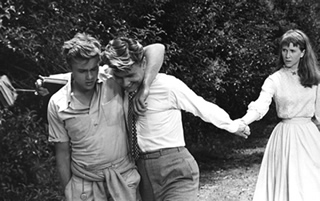
James Dean, Richard Davalos en Julie Harris in de film van Elias Kazan, 1955


On the wide level acres of the valley the topsoil lay deep and fertile. It required only a rich winter of rain to make it break forth in grass and flowers. The spring flowers in a wet year were unbelievable. The whole valley floor, and the foothills too, would be carpeted with lupins and poppies. Once a woman told me that colored flowers would seem more bright if you added a few white flowers to give the colors definition. Every petal of blue lupin is edged with white, so that a field of lupins is more blue than you can imagine. And mixed with these were splashes of California poppies. These too are of a burning color—not orange, not gold, but if pure gold were liquid and could raise a cream, that golden cream might be like the color of the poppies. When their season was over the yellow mustard came up and grew to a great height. When my grandfather came into the valley the mustard was so tall that a man on horseback showed only his head above the yellow flowers. On the uplands the grass would be strewn with buttercups, with hen-and-chickens, with black-centered yellow violets. And a little later in the season there would be red and yellow stands of Indian paintbrush. These were the flowers of the open places exposed to the sun.”


 1345000-411d2ce8ef10997f59465b99a643de1d.jpg

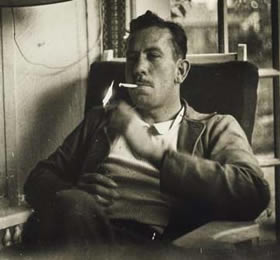
John Steinbeck (27 februari 1902 - 20 december 1968)


De Britse dichter en schrijver Lawrence George Durrell werd geboren op 27 februari 1912 in Jalandhar in India. Zie ook alle tags voor Lawrence Durrell op dit blog.


Bitter Lemons


In an island of bitter lemons
Where the moon’s cool fevers burn
From the dark globes of the fruit,

And the dry grass underfoot
Tortures memory and revises
Habits half a lifetime dead

Better leave the rest unsaid,
Beauty, darkness, vehemence
Let the old sea-nurses keep

Their memorials of sleep
And the Greek sea’s curly head
Keep its calms like tears unshed

Keep its calms like tears unshed.


Sarajevo


Bosnia. November. And the mountain roads
Earthbound but matching perfectly these long
And passionate self-communings counter-march,
Balanced on scarps of trap, ramble or blunder
Over traverses of cloud: and here they move,
Mule-teams like insects harnessed by a bell
Upon the leaf-edge of a winter sky,


And down at last into this lap of stone
Between four cataracts of rock: a town
Peopled by sleepy eagles, whispering only
Of the sunburnt herdsman’s hopeless ploy:
A sterile earth quickened by shards of rock
Where nothing grows, not even in his sleep,


Where minarets have twisted up like sugar
And a river, curdled with blond ice, drives on
Tinkling among the mule-teams and the mountaineers,
Under the bridges and the wooden trellises
Which tame the air and promise us a peace
Harmless with nightingales. None are singing now.


No history much? Perhaps. Only this ominous
Dark beauty flowering under veils,
Trapped in the spectrum of a dying style:
A village like an instinct left to rust,
Composed around the echo of a pistol-shot.


 1345000-a11925cdeca62571ddce704fc122e3bd.jpg

Lawrence Durrell (27 februari 1912 – 7 november 1990)


De Canadese dichter, schrijver en essayist André Roy werd geboren op 27 februari 1944 in Montréal. Zie ook mijn blog van 27 februari 2010 en ook mijn blog van 27 februari 2011.


L’expérience géographique

Quelque chose en avant comme la ville
la peau parcourue à l’ombre des buildings
attendre quant aux géographies amoureuses
que ce texte du savoir et des saveurs
ne cache jamais ou trop
le désordre des cerveaux
cigarettes précises ou drague inconsolable
que la ville inédite rend mon corps
périlleux puisque émeute d’âmes
quelque chose dans l’été lisse
le début de l’amour
car klaxonnements et bruissements :
c’est la perte de mon identité.

La ville ou l’expérience, dis-je.


 1345000-91da428c6ab17e5c20945858a648764b.jpg

André Roy (Montréal, 27 februari 1944)


De Amerikaanse dichter Henry Wadsworth Longfellow werd geboren in Portland, Maine, op 27 februari 1807. Zie ook alle tags voor Henry Longfellow op dit blog.


A Psalm of Life


Tell me not in mournful numbers,
Life is but an empty dream!
For the soul is dead that slumbers,
And things are not what they seem.

Life is real! Life is earnest!
And the grave is not its goal;
Dust thou are, to dust thou returnest,
Was not spoken of the soul.

Not enjoyment, and not sorrow,
Is our destined end or way;
But to act, that each tomorrow
Find us farther than today.

Art is long, and Time is fleeting,
And our hearts, though stout and brave,
Still, like muffled drums, are beating
Funeral marches to the grave.

In the world's broad field of battle,
In the bivouac of Life,
Be not like dumb, driven cattle!
Be a hero in the strife!

Trust no Future, howe'er pleasant!
Let the dead Past bury its dead!
Act, - act in the living Present!
Heart within, and God o'erhead!

Lives of great men all remind us
We can make our lives sublime,
And, departing, leave behind us
Footprints on the sand of time;

Footprints, that perhaps another,
Sailing o'er life's solenm main,
A forlorn and shipwrecked brother,
Seeing, shall take heart again.

Let us then be up and doing,
With a heart for any fate;
Still achieving, still pursuing,
Learn to labor and to wait.


 1345000-82a6bbd5c79bb39f95b43340c6c1c21b.jpg

Henry Longfellow (27 februari 1807 - 24 maart 1882)

Een jonge Longfellow


De Amerikaanse schrijver
James Thomas Farrell werd geboren op 27 februari 1904 in Chicago. Zie ook alle tags voor James T. Farrell op dit blog.


Uit: Judgment Day (Studs Lonigan)


"Out on the coast these days, business clubs and fraternal organizations are doing some novel fighting against the bogey of Old Man Depression. And is it fun, boys! I'll say it is!"

As the announcer spoke, the camera flashed a view of business men shouting jubilantly as they pelted each other with eggs like a crowd of school boys in a snow fight. The next shot presented the sight of huge piles of eggs guarded by shapely girls in bathing suits who filled baskets and knapsacks with eggs for ammunition. A blonde girl splattered an egg against the back of a departing warrior.

"Hot stuff," Pat whispered to Studs, while many in the theater laughed.

"Boy, that would be great fun," Ike whispered.

The laughter in the theater increased at the sight of a wobbling fat man, surrounded by enemies who subjected him to a merciless fire of eggs, spluttering and staining his white clothing.

"That's a shampoo, what's a shampoo," the announcer called with formalized enthusiasm as a detachment closed in on the fat man and broke his own basket of eggs over his head.

In a close-up, the fat man bawled like a baby, his hair matted, egg shells clinging to his face, his double chins dripping egg yolks.

"And watch this charge of the light brigade!" the announcer called as a crowd swept over the field of stricken eggs into the maw of a heavy fire. "We can't say that's not fun, and all in a novel manner which reduces the surplus of eggs, making it profitable for those who sell them. A new way of scrambling eggs, if you ask me."

Studs leaned forward, laughing. Wished he was in a fight like that.”


 1345000-5dae58483608d308351d6976dbeaaa74.jpg

James T. Farrell (27 februari 1904 – 22 augustus 1979)


Zie voor nog meer schrijvers van de 27e februari ook mijn blog van 27 februari 2012 deel 2 en eveneens deel 3.

Geschreven door Romenu om 18:52 Reageer op dit bericht

Michel Houellebecq, Victor Hugo, Adama van Scheltema, George Barker, Antonín Sova

De Franse schrijver Michel Houellebecq werd geboren in Réunion op 26 februari 1958 (1956). Zie ook alle tags voor Michel Houellebecq op dit blog.


Uit: The Elementary Particles (Vertaald door Frank Wynne)


“Young people in France were particularly repressed, a time bomb of resentment under the legacy of Gaullist patriarchy, which, according to Jane, a single spark would be enough to detonate. For some years now, Francesco's sole pleasure had been to smoke marijuana cigarettes with very young girls attracted by the spiritual aura of the movement and then fuck them among the mandalas and the smell of incense. The girls who arrived at Big Sur were, for the most part, stupid little WASP bitches, at least half of whom were virgins. Toward the end of the sixties the flow began to dwindle and he thought that perhaps it was time to go back to Europe. He found it strange that he thought of it as "going back," since he had left Italy when he was no more than five years old. If his father had been a militant revolutionary, he was also a cultivated man, an aesthete who loved his mother tongue. This had undoubtedly left its mark on Francesco. In truth, he had always thought of Americans as idiots.
He was still a handsome man, with a tanned, chiseled face and long, thick, wavy hair, but his cells had begun to reproduce in a haphazard fashion, damaging the DNA of neighboring cells and secreting toxins into the body. The specialists he consulted differed on most points, but on one they were agreed: he was dying. The cancer was inoperable and would continue inexorably to metastasize.
Overall his consultants were of the opinion that he would die peacefully and, with medication, probably would not suffer any physical pain; and to date he had experienced only a general tiredness. However, he refused to accept the diagnosis; he could not even imagine accepting it. In contemporary Western soiety, death is like white noise to a man in good health; it fills his mind when his dreams and plans fade. With age, the noise becomes increasingly insistent, like a dull roar with the occasional clang. In another age it was the expectant sound of the kingdom of God, it is now an anticipation of death. Such is life.”


 1344319-7666b130dc6fa2b07b7c1226932a8640.jpg

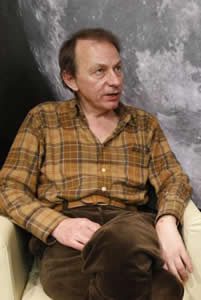
Michel Houellebecq (Réunion, 26 februari 1958)


De Franse dichter en schrijver Victor Hugo werd geboren in Besançon (Franche-Comté) op 26 februari 1802. Zie ook alle tags voor Victor Hugo op dit blog.


En hiver la terre pleure


En hiver la terre pleure ;
Le soleil froid, pâle et doux,
Vient tard, et part de bonne heure,
Ennuyé du rendez-vous.

Leurs idylles sont moroses.
- Soleil ! aimons ! - Essayons.
O terre, où donc sont tes roses ?
- Astre, où donc sont tes rayons ?

Il prend un prétexte, grêle,
Vent, nuage noir ou blanc,
Et dit : - C'est la nuit, ma belle ! -
Et la fait en s'en allant ;

Comme un amant qui retire
Chaque jour son coeur du noeud,
Et, ne sachant plus que dire,
S'en va le plus tôt qu'il peut.


Printemps


Voici donc les longs jours, lumière, amour, délire !
Voici le printemps ! mars, avril au doux sourire,
Mai fleuri, juin brûlant, tous les beaux mois amis !
Les peupliers, au bord des fleuves endormis,
Se courbent mollement comme de grandes palmes ;
L'oiseau palpite au fond des bois tièdes et calmes ;
Il semble que tout rit, et que les arbres verts
Sont joyeux d'être ensemble et se disent des vers.
Le jour naît couronné d'une aube fraîche et tendre ;
Le soir est plein d'amour ; la nuit, on croit entendre,
A travers l'ombre immense et sous le ciel béni,
Quelque chose d'heureux chanter dans l'infini.


Nuits de juin


L'été, lorsque le jour a fui, de fleurs couverte
La plaine verse au loin un parfum enivrant ;
Les yeux fermés, l'oreille aux rumeurs entrouverte,
On ne dort qu'à demi d'un sommeil transparent.

Les astres sont plus purs, l'ombre paraît meilleure ;
Un vague demi-jour teint le dôme éternel ;
Et l'aube douce et pâle, en attendant son heure,
Semble toute la nuit errer au bas du ciel.


 1344319-100699e53f45c30d8ed251e9329f28fc.jpg

Victor Hugo (26 februari 1802 – 22 mei 1885)

Standbeeld in Besançon


De Nederlandse dichter Carel Steven Adama van Scheltema werd geboren in Amsterdam op 26 februari 1877. Zie ook alle tags voor Adama van Scheltema op dit blog.


Ontwaken bij regen


't Is regen, - 't regent aan mijn ruit —
De regen wist mijn dromen uit
En draagt mij in de droom van 't leven;
Een beeld gaat om — een beeld beklijft,
Beeld van een lied - dat blijft, dat blijft:
Het zacht en zegenend geluid
Van droppelende regen.

't Is regen, - 't regent aan mijn huis -
Ik luister, sprakeloos en kuis,
Naar 't lied van 't ledig leven,
Dat dromend van de hemel leekt
En dromend weder leven kweekt
Dat mild en murmelend geruis
Van droppelende regen.

't Is regen, - 't regent aan mijn geest -
De regen wist wat is geweest
En laat maar een gerucht van leven:
Een zucht, een zweem van wat muziek,
De donzen vlucht van een wiek
Voorbij, voorbij mijn stille geest
0 — zo te mogen sterven!


Kindje


Kindje! Dat zacht met je vlasblonde popje
Speelt, je rein stemmetje kan nog niet schreien,
't Lacht nu en zingt in moederlijk verblijen
Tederlijk voor popje een liedje, - je kopje

Wiegt als een bloemetje, dat bij het glijen
's Avonds van de avondwind, 't zijige knopje
Deint, en vleiende van de zon nog 'n dropje
Krijgt van haar wijn, om welig te gedijen.

Kindje! Nu wiegt het leven je in zijn
Brede armen, als een popje zo zacht, je
Ogen zijn bloemen, het daglicht dat lacht je
Moederlijk toe - het sterke leven wacht je,

Mocht eenmaal - o! Kindje moge altijd mijn
Liefde als 'n krans muziek om je hoofdje zijn!


 1344319-c5ff5be7992e683f945d99cbdcf904a1.jpg

Adama van Scheltema (26 februari 1877 - 6 mei 1924)


De Engelse dichter George Granville Barker werd geboren op 26 februari 1913 in Loughton, Essex. Zie ook alle tags voor George Barker op dit blog.


Calamiterror (Section VI)


1
Meandering abroad in the Lincolnshire meadows day
Day and day a month perhaps, lying at night lonely,
The early September evening administering a mystery,
The moon executing its wavering sleight of hand, I sense the
Advent of the extraordinary event, the calamiterror,
Turn and encounter the mountain descending upon me
The moment of terror flashes like dead powder
Revealing the features of the mass as mine.


2
Time like a mountain made of my own shadow
Collapsing on me, buries me in my life.
It is the future, undermined by present,
Failing appallingly backward. I bring
The cracked escarpments hurling down, I catch
The agonised glint of years in a fall of
Rubble, the time clatters down with branches
I hear the broken life scream and sob like me.


 1344319-f38d9006a9f338e6e77b4a7128d8c48f.jpg

George Barker (26 februari 1913 – 27 oktober 1991)


De Tsjechische schrijver en dichter Antonín Sova werd geboren op 26 februari 1864 in Pacov (Dt. Patzau). Zie ook alle tags voor Antonín Sova op dit blog.


By Riversides


I love moist eve by riversides,

That shells abundantly adorn,

When coolness from them gently glides

And from afar white foam is borne.


I cherish there the birches most

And willows, where the shadows crowd;

Shrill crickets, flies, a dancing host

And distant towns in fading shroud.


Fishermen there entrance my sight

In sluggish skiff that hazes veil,

Afloat 'mid eve's decaying light,

When in blue mists red sunsets fail.


And when the eventide has sunk,

And on the stream the moon is reeling,

That rover of the night-time, drunk

With bluish haze from waters stealing,


My rhythmic tunes I love to lace

'Mid memories and wistful thought,

While wavelets plash with muffled grace

And all my spirit is distraught.


Vertaald door P. Selver


1344319-d2c96f16990f7e9feb3b5da4048f7de6.jpg
Antonín Sova (26 februari 1864 – 16 augustus 1928)

Standbeeld bij het kasteel in Pacov


Zie voor nog meer schrijvers van de 26e februari ook mijn blog van 26 februari 2012 deel 1 en eveneens deel 2.

Geschreven door Romenu om 17:44 Reageer op dit bericht

Amin Maalouf, Anthony Burgess, Aldo Busi, Robert Rius, Karl May

De Libanese (Franstalige) schrijver Amin Maalouf werd geboren in Beiroet, Libanon, op 25 februari 1949. Zie ook alle tags voor Amin Maalouf op dit blog.


Uit: Les croisades vues par les arabes


“Il va bientôt devenir le héros d'une épopée célèbre, intitulée précisément la Geste du roi Danishmend, qui décrit la conquête de Malatya, une ville arménienne située au sud-est d'Ankara, et dont la chute est considérée par les auteurs du récit comme le tournant décisif de l'islamisation de la future Turquie. Aux premiers mois de 1097, lorsque l'arrivée à Constantinople d'une nouvelle expédition franque est signalée à Kilij Arslan, la bataille de Malatya est déjà engagée. Danishmend assiège la ville, et le jeune sultan refuse l'idée que ce rival, qui a profité de la mort de son père pour occuper tout le nord-est de l’Anatolie, puisse remporter une victoire aussi prestigieuse. Déterminé à l'en empêcher, il se dirige, à la tête de ses cavaliers, vers les environs de Malatya et installe son camp à proximité de celui de Danishmend pour l'intimider. La tension monte, les escarmouches se multiplient, de plus en plus meurtrières.”

(…)


Ensuite, c'est grâce aux conseils des émirs de l'armée qu'il a pu, par la guerre, par le meurtre ou par la ruse, récupérer une partie de l'héritage paternel. Aujourd'hui, il peut se vanter d'avoir passé plus de temps sur la selle de son cheval que dans son palais. Pourtant, à l'arrivée des Franj, rien n'est encore joué. En Asie Mineure, ses rivaux restent puissants, même si, fort heureusement pour lui, ses cousins seldjoukides de Syrie et de Perse sont absorbés par leurs propres querelles.”


 1343383-8dc005a56f98a330370fa96ba47d2bba.jpg

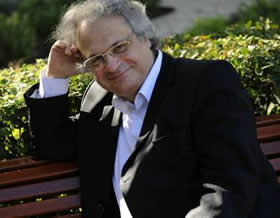
Amin Maalouf (Beiroet, 25 februari 1949)


De Italiaanse schrijver en vertaler Aldo Busi werd geboren op 25 februari 1948 in Montichiari, Brescia. Zie ook alle tags voor Aldo Busi op dit blog.


Uit: Standard Life of a Temporary Pantyhose Salesman (Vertaald door Ercole Guidi)


„And the setting: the afternoon light darting from sky to rock to olive trees to splinters of floating steel keels; and in here, in this stagnant aquarium where nothing ever makes your blood stir, the frank smile of he of whom you are fond.

Angelo, step after step, cautious not to slip, realized that in those four days he had done nothing but follow out of the corner of his eye this withdrawn figure of a disdainful man, even when he thought he had been watching the promontory of Manerba on the shoreline down there or the hydrofoil dashing off.

He accosted him looking away, continuing to fancy him for what, effortlessly, all about him soberly soared back to his memory, which had registered full lips, long and slightly asymmetric nose, hairless chest, sticking-out ears stretching out over pulled-back hair, and the red and white colors every other day of his shorts.

Angelo struggled to conceal his general unhappiness which vortically entwined into a sense of euphoria several suddenly stirred senses.

Even on his fingertips did he perceive a notion of futurity, of that very evening.

"Oh" goes the man laconically, "I thought you were someone else."

Angelo's eyes linger upon those beautiful lips now directly regarded, and revealing teeth just yellowed by the tartar.

One more justification and the narrowing crown pokes into the gums, leaving between tooth and tooth interstices through which pass hisses of condescension, glitters of second thoughts, the expeditiousness of the «I'm sorry».

He is fascinated by that set of teeth that incinerate him word after word; it reminds him of a school trip to the Solferino- San Martino's Risorgimento Ossuary, the neutrality of the skulls not expecting all that much from the end of the world anymore.”


1343383-4afb18e1a5aeb2854156c70268df5950.jpg
Aldo Busi (Montichiari, 25 februari 1948)


De Britse dichter en schrijver Anthony Burgess werd geboren op 25 februari 1917 in Manchester, Engeland. Zie ook alle tags voor Anthony Burgess op dit blog


Uit: A Clockwork Orange


“What's it going to be then, eh?'

The stereo was on and you got the idea that the singer's goloss was moving from one part of the bar to another, flying up to the ceiling and then swooping down again and whizzing from wall to wall. It was Berti Laski rasping a real starry oldie called 'You Blister My Paint'. One of the three ptitsas at the counter, the one with the green wig, kept pushing her belly out and pulling it in in time to what they called the music. I could feel the knives in the old moloko starting to prick, and now I was ready for a bit of twenty-to-one. So I yelped: 'Out out out out!' like a doggie, and then I cracked this veck who was sitting next to me and well away and burbling a horrorshow crack on the ooko or earhole, but he didn't feel it and went on with his 'Telephonic hardware and when the farfarculule gets rubadubdub'. He'd feel it all right when he came to, out of the land.

'Where out?' said Georgie.

'Oh, just to keep walking,' I said, 'and viddy what turns up, O my little brothers.'

So we scatted out into the big winter nochy and walked down Marghanita Boulevard and then turned into Boothby Avenue, and there we found what we were pretty well looking for, a malenky jest to start off the evening with. There was a doddery starry schoolmaster type veck, glasses on and his rot open to the cold nochy air. He had books under his arm and a crappy umbrella and was coming round the corner from the Public Biblio, which not many lewdies used those days. You never really saw many of the older bourgeois type out after nightfall those days, what with the shortage of police and we fine young malchickiwicks about, and this prof type chelloveck was the only one walking in the whole of the street. So we goolied up to him, very polite, and I said: 'Pardon me, brother.'


 1343383-2b28ecb8a14b85c94cead290f80308e0.jpg

Anthony Burgess (25 februari 1917 – 22 november 1993)

Scene uit de voorstelling door Alexandra Spencer-Jones, The Soho Theatre, Londen, 2012


De Franse dichter Robert Rius werd geboren op 25 februari 1914 in Castle-Roussillon. Zie ook alle tags voor Robert Rius op dit blog


LAME SOURDE


L’espace des voûtes oxygénées
se poursuit
au réveil des objets
Cette poignée de fenêtre
est une arme pendue au plafond
comme les trottoirs et les mayonnaises
sont anonymes
J’aspire aux routes du sommeil
Avec  la fleur et toute la vie d’un homme

Un dé court parallèlement
aux oiseaux des rues
jusqu’à ce que le soleil vieillissant
tourne sept fois la langue dans sa bouche avant de parler

Le nuage poursuit toujours mon désir
au fil des œufs
j’ai erré tout un sommeil
autour d’arbres renversés
leur chair a tracé leur vie
à l’encre de lune

Ma paupière est fermée
aux cheveux des moulins à vent


 1343383-c78ce76176fd5d50f69e98eca4dfded2.jpg

Robert Rius (25 februari 1914 - 21 juli 1944)

Rius hier helemaal links. Pyreneeën, 1933. Naast hem Charles Trenet.


De Duitse schrijver Karl May werd geboren op 25 februari 1842 in Hohenstein-Ernstthal. Zie ook alle tags voor Karl May op dit blog.


Uit: Von Bagdad nach Stambul


“Im Süden von den großen syrischen und mesopotamischen Wüsteneinöden liegt, vom rothen Meere und von dem persischen Golfe umgeben, die Halbinsel Arabien, welche ihre äußerste Kante weit in das stürmereiche arabisch-indische Meer hinein erstreckt.

An drei Seiten ist dieses Land von einem zwar schmalen, aber außerordentlich fruchtbaren Küstensaume eingefaßt, welcher nach innen zu einer weiten, wüsten Hochebene emporsteigt, deren theils trübselige, theils groteske Landschaftsbilder besonders im Osten durch hohe, unwegsame Gebirgsstöcke abgeschlossen werden, zu denen ganz hauptsächlich die öden Berge von Schammar zu zählen sind.

Dieses Land, dessen Quadratmeilenzahl man heut noch nicht genau anzugeben vermag, wurde im Alterthum eingetheilt in Arabia peträa, in Arabia deserta und in Arabia felix, zu Deutsch: in das peträische, wüste und glückliche Arabien. Wenn noch öfters jetzt gewisse Geographen der Ansicht sind, daß der Ausdruck peträa abzuleiten sei von dem griechisch-lateinischen Worte, das ›Stein, Fels‹ bedeutet, und deßhalb diesen Theil des Landes das ›steinichte‹ Arabien nennen, so beruht das auf einer irrthümlichen Auffassung; dieser Name ist vielmehr zurückzuführen auf das alte Petra, welches die Hauptstadt dieser nördlichsten Provinz des Landes war. Der Araber nennt seine Heimat Dschesirat el Arab, während sie bei den Türken und Persern Arabistan geheißen wird. Die jetzige Eintheilung wird verschieden angegeben; die nomadisirenden Einwohner lassen jedoch nur den einzigen Unterschied der Stämme gelten.

Über diesem Lande wölbt sich ein ewig heiterer Himmel, von welchem des Nachts die Sterne rein und klar herniederblicken; durch die Bergschluchten und über die zum großen Theile noch unerforschten Wüsten-Ebenen schweift der halbwilde Sohn der Steppe auf prachtvollem Pferde oder auf unermüdlichem Kameele.


 1343383-d48d554a26b7fd6fa6aa90677ddeb94d.jpg

Karl May (25 februari 1842 – 30 maart 1912)

May als Kara Ben Nemsi


Zie voor nog meer schrijvers van dfe 25e februari ook mijn blog van 25 februari 2012 deel 2 en eveneens deel 3

Geschreven door Romenu om 14:25 Reageer op dit bericht

Leon de Winter, Alain Mabanckou, August Derleth, Keto von Waberer, Yüksel Pazarkaya

De Nederlandse schrijver Leon de Winter werd geboren in ’s-Hertogenbosch op 24 februari 1954. Zie ook alle tags voor Leon de Winter op dit blog.


Uit: Het recht op terugkeer


“Hendrikus had er geen last van. Bram bleef op afstand staan en bewonderde het doorzettingsvermogen van het pezige beest. Hendrikus was hardhorend en na een aanval van een verongelijkte bouvier zes jaar geleden aan één oog blind. Volgens de dierenarts was Hendrikus een van de vijf oudste honden van de stad – Jeffrey was de oudste, een krasse zesentwintigjarige kruising tussen een herder en bullterriër, een ongewoon exemplaar aangezien middelgrote honden meestal jonger stierven dan kleine bastaarden als Hendrikus. Elke ochtend legde Hendrikus een vaste tocht af langs de stille monumenten van Duitse zakelijkheid. Het dier volgde de lijn van een rechthoek waarin zich zes woonblokken bevonden, zijn eigen patroon, snuffelend aan lantaarnpalen, de wielen van
afvalcontainers, autobanden, strategisch geplaatste struiken, zo nu en dan een andere ochtendhond.
Bram had de indruk dat er tien jaar geleden veel meer honden waren. Tel Aviv was een arme stad geworden waarin honden alleen gehouden werden door het handjevol rijken dat de stad nog telde. Dus waren de honden die zij onderweg tegenkwamen op leeftijd, net als Hendrikus, bezadigd en moe geblaft. Jonge hondjes waren een zeldzaamheid en de oude werden door liefhebbende bejaarden gekoesterd alsof ze hun eigen kinderen waren.
Ze stonden op de hoek van een straat die haaks op de strandboulevard lag. Aan het einde van de straat, tweehonderd meter verder in de smalle opening tussen de huizen, was een fractie van een seconde een gevechtshelikopter zichtbaar die geruisloos enkele meters boven het zand naar het zuiden schoot, richting Jaffa. Het was een nieuwe generatie met motoren die niet veel meer geluid maakten dan de vleugels van een roofvogel, de Taiwanezen hadden er twintig geleverd. Dragon Wings xr3, heetten ze, en de gelovigen hadden geëist dat ze werden omgedoopt omdat de draak een monster uit een onjoodse Aziatische mythologie was. In de volksmond heetten ze nu Chicken Wings.”


 1342788-736f5129fe90cf726767b76e36fef836.jpg

Leon de Winter (’s-Hertogenbosch, 24 februari 1954)


De Congolese dichter en schrijver Alain Mabanckou werd geboren op 24 februari 1966 in Congo-Brazzaville (Frans Congo). Zie ook alle tags voor Alain Mabanckou op dit blog.


Uit: Black Bazaar (Vertaald door Sarah Ardizzone)


“I’m a regular at Jip’s, the Afro-Cuban bar near the fountain at Les Halles in the first arrondissement, and these days you could say I’m even more of a regular than usual. Sometimes I doze off until I get woken by the clatter of chairs being stacked by Lazio the security guard who’s cursing under his breath because someone did a runner and he’s the one who takes the rap when it’s his job to sort out the riff-raff from the banlieues and not to worry about who has or hasn’t settled their bill. Willy the barman tells him there’s no difference between riff-raff smashing the place and a customer who hasn’t paid their bill. They’ve both got it coming, even if you pull your punches with the non-payer. . .

Lately, when I show up at Jip’s, Roger The French-Ivorian pounces on me. He’s heard it from Paul From The Big Congo that, in order to drown my sorrows after my ex left me and to control my anger against The Hybrid, I’m writing a journal at home with a typewriter I bought from a second-hand shop in Porte de Vincennes.

Take the day before yesterday, when he saw me coming he didn’t even give me time to reach the spot by the bar where Paul From The Big Congo often stands to get a better view of the girls going by in Rue Saint-Denis.

He said to me: ‘Here you are, Buttologist, just the person I’ve been waiting for! Paul From The Big Congo tells me you’re writing this and that and it is called Black Bazzar! So what’s your little game this time? Why are you writing? I suppose you think anyone can write stories, eh? Is this some rip-off for you to claim that you are unemployed, to squeeze through the chinks in the system, to steal other people’s benefits, to dig an even deeper hole in the dole and to put the brakes on Gallic social mobility?’


1342788-35b421f8bf50a07abf2e4d953c5efe60.jpg
Alain Mabanckou
(Congo-Brazzaville, 24 februari 1966)


De Amerikaanse schrijver en uitgever August William Derleth werd geboren op 24 februari 1909 in Sauk City, Wisconsin. Zie ook alle tags voor August Derleth op dit blog.


Uit: A Traveler In Time


"Tell me what time is," said Harrigan one late summer afternoon in a Madison Street bar. "I'd like to know."

"A dimension," I answered. "Everybody knows that."

"All right, granted. I know space is a dimension and you can move forward or back in space. And, of course, you keep on aging all the time."

"Elementary," I said.

"But what happens if you can move backward or forward in time? Do you age or get younger, or do you keep the status quo?"

"I'm not an authority on time, Tex. Do you know anyone who traveled in time?"

Harrigan shrugged aside my question. "That was the thing I couldn't get out of Vanderkamp, either. He presumed to know everything else."

"Vanderkamp?"

"He was another of those strange people a reporter always runs into. Lived in New York—downtown, near the Bowery. Man of about forty, I'd say, but a little on the old-fashioned side. Dutch background, and hipped on the subject of New Amsterdam, which, in case you don't know, was the original name of New York City."

"Don't mind my interrupting," I cut in. "But I'm not quite straight on what Vanderkamp has to do with time as dimension."

"Oh, he was touched on the subject. He claimed to travel in it. The fact is, he invented a time-traveling machine."

"You certainly meet the whacks, Tex!"

"Don't I!" He grinned appreciatively and leaned reminiscently over the bar. "But Vanderkamp had the wildest dreams of the lot. And in the end he managed the neatest conjuring trick of them all. I was on the Brooklyn Enterprise at that time; I spent about a year there. Special features, though I was on a reporter's salary. Vanderkamp was something of a local celebrity in a minor way; he wrote articles on the early Dutch in New York, the nomenclature of the Dutch, the history of Dutch place-names, and the like. He was handy with a pen, and even handier with tools. He was an amateur electrician, carpenter, house-painter, and claimed to be an expert in genealogy."


 1342788-eabfc5f142864e0409cc8eea5d4233a2.jpg

August Derleth (24 februari 1909 – 4 juli 1971)

Sauk City, Water Street


De Duitse schrijfster en architekte Keto von Waberer werd geboren op 24 februari 1942 in Augsburg. Zie ook alle tags voor Keto von Waberer op dit blog.


Uit: Die Kuh aus dem Meer


»Ich wollte, wir hätten Kühe am Meeresgrund!«

»Sie sind fett, sie sind dumm, sie riechen abscheulich«, rief  Bobo und überzog sich mit gelben Flecken. Das tat er immer,  wenn er sich aufregte. Aqua fasste einen seiner Arme und kitzelte seine Saugnäpfe.

»Schnauze!«, brüllte Aqua und lachte.

»Oktopoden haben keine Schnauze, glücklicherweise.«

So ging das jeden Abend.

Bobo und Aqua kannten sich aus der Tanzstunde, die Anja, Bobos Mutter, in einem Schiffswrack draußen am Riff gab. Aqua musste sich alle Mühe geben, um beim Tanzen mit Bobo mitzuhalten. Er wirbelte elegant und ohne jemals aus dem Takt zu kommen durchs Wasser. Seine kunstvollen Überschläge waren berühmt. Aber Anja sagte, dass auch Aqua sehr biegsam sei und sehr harmonisch in ihren Bewegungen, wenn sie die Wasser trommel schlug.

Zu Hause übte Aqua im Wohnzimmer, das hatte Mama ihr erlaubt. Mama war stolz auf sie, steckte silberne Muscheln an Aquas Schwanz, flocht ihr die grünen Haare mit Perlen und Bernsteinspangen und nannte sie »mein kleiner Tanzstern«.

Aqua lebte mit ihren Eltern unter der riesigen Eisenbrücke.  Keine gute Wohngegend, sagte Mama, aber Aquas Vater hatte  dort einen Laden für Treibgut, und unter der Brücke war ein guter Platz, um alles aufzusammeln, was die Landbewohner ins Wasser warfen: Blechdosen, Flaschen, Schuhe, Schiffsschrauben und Anker. All die andren Nixen und Nöcke wohnten draußen im Tangwald neben dem Riff. Bobos Mutter hatte sich in der Nachbarhöhle eingerichtet, aber auch sie träumte davon, weiter hinauszuziehen, weil dort das Wasser besser war und das Futterangebot üppiger.”


 1342788-967e9f0bd192070472caa74f89f37222.jpg

Keto von Waberer (Augsburg, 24 februari 1942)


De Turkse dichter, schrijver en vertaler Yüksel Pazarkaya werd geboren op 24 februari 1940 in Izmir. Zie ook alle tags voor Yüksel Pazarkaya op dit blog.


deutsche sprache

die ich vorbehaltlos liebe
die meine zweite heimat ist
die mir mehr zuversicht
die mir mehr geborgenheit
die mir mehr gab als die
die sie angeblich sprechen

sie gab mir lessing und heine
sie gab mir schiller und brecht
sie gab mir leibniz und feuerbach
sie gab mir hegel und marx
sie gab mir sehen und hören
sie gab mir hoffen und lieben
eine welt in der es sich leben läßt

die in ihr verstummen sind nicht in ihr
die in ihr lauthals reden halten sind nicht in ihr
die in ihr ein werkzeug der erniedrigung
die in ihr ein werkzeug der ausbeutung sehn
sie sind nicht in ihr sie nicht
meine behausung in der kälte der fremde
meine behausung in der hitze des hasses
meine behausung wenn mich verbiegt die bitterkeit
in ihr genoß ich die hoffnung
wie in meinem türkisch.


1342788-14082f1869f911fc8c13478cea58b1ee.jpg
Yüksel Pazarkaya (Izmir, 24 februari 1940)

Izmir, de klokkentoren bij winters weer


Zie voor nog meer schrijvers van de 24e februari ook mijn vorige twee blogs van vandaag.

Geschreven door Romenu om 18:35 Reageer op dit bericht

Erich Loest, Jacques Presser, Friedrich Spielhagen, Erich Pawlu, Luc Verbeke, Wilhelm Grimm

De Duitse schrijver Erich Loest werd geboren op 24 februari 1926 in Mittweida. Zie ook alle tags voor Erich Loest op dit blog.


Uit: Prozesskosten


“Diese Aufgabe löste er mit der linken Hand; in wenigen Monaten würde es damit vorbei sein.

Im Literaturinstitut gratulierte Direktor Alfred Kurella. Er pries dieses wundersame Alter: Mit dreißig habe einer entscheidende Lebensweichen gestellt, jetzt bestünden alle Chancen rasanten Vorwärtsdrängens.

Und das in einer phantastischen Zeit politischen Aufschwungs auf der Seite des Marxismus- Leninismus im Bunde mit der ruhmreichen Sowjetunion, in der jungen Deutschen Demokratischen Republik. Er schenkte L. eine zweibändige Ausgabe des Briefwechsels zwischen Goethe und Schiller.

Fern in Moskau fand in diesen Tagen der XX. Parteitag der Kommunistischen Partei der Sowjetunion

statt. Nikita Chruschtschow, der bullige Ukrainer, stand an der Spitze. Neues Deutschland meldete wie gewohnt: »Der Beifall steigerte sich zum Orkan, als N. A. Bulganin, N. S. Chruschtschow, L. M. Kaganowitsch, M. S. Saburow, M. A. Suslow und K. J. Woroschilow im Tagungsgebäude eintrafen«. Das Zentralorgan berichtete in der üblichen langatmigen Weise von Aufbauplänen und Siegen an allen Fronten. Überraschend immerhin: Der italienische Parteiführer Palmiro Togliatti stellte die These auf, unterschiedliche Länder könnten auf verschiedenen Wegen zum Sozialismus kommen, also nicht unbedingt durch Revolution, auch ein parlamentarischer Übergang sei möglich. Roch das nicht verdammt nach Revisionismus? Bot sich vielleicht doch ein deutscher Weg, was Anton Ackermann vermutet und nach harscher Kritik unterdessen weit von sich gewiesen hatte?”


 1342783-5177fc9fcf127c96b97d62c73e1d6c2b.jpg

Erich Loest (Mittweida, 24 februari 1926)

In 1955 


De Nederlandse historicus, schrijver en dichter Jacques (Jacob) Presser werd geboren in Amsterdam op 24 februari 1899. Zie ook alle tags voor Jacques Presser op dit blog.


Uit: Ondergang


„En dan natuurlijk oppermachtig: het gerucht. De historicus kan ermee volstaan, het te vermelden; zijn waarheidsgehalte te onderzoeken lijkt ons weggegooide moeite. Het bekendste is wel, dat volgens een mededeling uit Den Haag in IJmuiden een schip gereed lag voor die Joden, die naar Engeland wilden; het Comité voor Bijzondere Joodsche Belangen, in Amsterdam sinds 1933 gevestigd en in een volgend hoofdstuk nog te noemen, verbreidde dit algemeen, voor zover dat in een stad zonder telefoon mogelijk was - zonder telefoon (in verband met de oorlogstoestand afgesneden) en met geregeld luchtalarm. Iets organiseren? Liever dan na te gaan, wat men had kunnen doen, vermeldt de geschiedschrijver het wakkere initiatief van de enkele, die wat gedaan heeft. Mevrouw G. Wijsmuller-Meijer die in vijf door haar ergens vandaan getoverde touring-cars een aantal Joodse kinderen uit Duitsland en Oostenrijk, in het Burgerweeshuis ondergebracht, naar IJmuiden wist te brengen, waar zij ze zowaar op de ‘Bodegraven’ kreeg, die om tien voor achten de haven verliet: ‘had ik maar méér touring-cars gehad, dan had ik die mensen die daar gestaan hebben, tenminste nog hun redding kunnen brengen’.

Ach ja, meer touring-cars, maar ook meer permissies. Die laatste waren immers óók nodig, daar waar de vluchtelingen op eigen gelegenheid probeerden weg te komen. Het leek in Amsterdam niet zo moeilijk: als men maar naar IJmuiden ging. In de herinnering van velen overweegt echter, voor zover het de weg heen betreft, de hinderlijkheid, veelal als meedogenloosheid gevoeld, van de door Nederlandse militairen en/of politie uitgeoefende controle. Voor vluchtende statenlozen was zij in vele gevallen helemaal noodlottig. Waardoor of waarom nu juist in die uren zoveel en zo diepgaande controle werd uitgeoefend? Dit in verband met Vijfde Colonne vrees? De barmhartigste verklaring vindt de geschiedschrijver in de wel eens geuite veronderstelling die in ‘tegengestelde opdrachten’ de oorzaak ziet van de verwarring; de regering zou een boot hebben verzorgd en de mensen mochten niet of nauwelijks naar die boot toe.“


 1342783-efa20e48700387ce3f0df0fc63ecce52.jpg

Jacques Presser (24 februari 1899 - 30 april 1970)

Cover 


De Duitse schrijver Friedrich Spielhagen werd geboren op 24 februari 1829 in Magdeburg. Zie ook alle tags voor Friedrich Spielhagen op dit blog.


Uit: Die Dorfcoquette


“Es war nach dem Abendbrod. Vier von der Jagdgesellschaft, Gutsbesitzer und Gutsbesitzerssöhne aus der Nachbarschaft, waren weggefahren. Der lange Lieutenant von Prinzhelm, der die frische Landluft der dumpfen Atmosphäre seiner Garnison so entschieden vorzog, hatte sich – nicht zum ersten Mal – die so freundlich angebotene Gastfreundschaft gern gefallen lassen, um so mehr, als sein Urlaub erst übermorgen früh zu Ende und morgen ein paar Kaninchenbaue frettirt werden sollten. Dann war noch ein junger Herr zurückgeblieben; das Gut seines Vaters grenzte an die diesseitigen Felder, und er pflegte deshalb die Stunde seines Aufbruchs möglichst hinauszuschieben, besonders wenn es ihm, was auffallenderweise fast jedesmal geschah, gelungen war, im Salon einen Platz neben der jüngeren der beiden Töchter vom Hause zu erobern. Diese und außerdem Otto, dessen gutes Gesicht um diese Zeit des Tages einen weltvergessenen, traumseligen Ausdruck anzunehmen pflegte, und die ältere verheirathete Tochter plauderten an dem runden Tisch in der Mitte des Zimmers. In einiger Entfernung am Kamin, in welchem mehr der Behaglichkeit als der Wärme wegen die Buchenkohlen glühten, saß in ihrem Fauteuil, das Gesicht dem Feuer zugewandt, die Frau vom Hause. Ich ging in dem großen teppichbelegten Gemache auf und ab, und blickte bald nach der scherzenden und lachenden Gesellschaft, die um den Tisch versammelt war, bald nach den dunkeln Bildern an den Wänden, den Ahnherren und Ahnfrauen der Familie, die mit ihren Geisteraugen in dasselbe Gemach schauten, wo sie als Kinder gespielt hatten und ihre Kinder hatten spielen sehen. Endlich trat ich zu der Dame am Kamin und fragte, mich an ihrer Seite niederlassend: Ich störe Sie nicht in Ihren Meditationen?

Nicht im mindesten, antwortete die Dame, oder vielmehr, wenn Sie mich stören, thun Sie es in der angenehmsten Weise. Meine Gedanken waren nicht heiter.

Woran dachten Sie?

Ihr werdet nun in wenigen Tagen uns wieder verlassen, erwiderte die Dame. Ihre Stimme zitterte; ich küßte schweigend ihre Hand, die sie zärtlich drückte.”


1342783-4b356f5f1afb0b5b17eb9adbaf66e28c.jpg 

Friedrich Spielhagen (24 februari 1829 – 25 februari 1911)


De Duitse schrijver Erich Pawlu werd geboren op 24 februari 1934 in Frankstadt, Mähren. Zie ook alle tags voor Erich Pawlu op dit blog.


Uit: Gestörte Spiele (Der Kolichmann)


“Da begann der Kolich-Mann in seiner fremden Sprache zu jammern. Er blickte hilfesuchend um sich, aber die Käufer waren schnell weggegangen, nur die Kinder standen noch da, und die meisten lachten, weil die Sprache des Kolich-Mannes gar so merkwürdig klang. Der hatte schließlich sogar die Hände gefaltet und streckte sie in die Höhe, wie man es sonst nur auf Bildern in der Kirche sieht. Aber der Mann mit dem Hund sagte trocken: 
»Nichts da! Mit solchem Gesindel muß aufgeräumt werden.« 
Und er packte ihn schließlich am Ellenbogen und drängte ihn vorwärts. 
Der Kolich-Mann streifte noch einmal das Pony und den Wagen, die bunten Bänder und die Glöckchen mit einem Blick, aber da bellte der Hund, und der Kolich-Mann ging klein und alt neben dem uniformierten Herrn zur Gemeindekanzlei. 
Das Pony stand ruhig vor dem Wagen bis zum Abend und wartete. Am nächsten Morgen war alles verschwunden. Und auch in den folgenden Jahren ist der Kolich-Mann nicht mehr wiedergekommen.” 


 1342783-728b9a07c5d83c10ddb0aaf857acf385.jpg

Erich Pawlu (Frankstadt, 24 februari 1934)

Frankstadt (Tsjechisch: Nový Malín)


De Vlaamse dichter en schrijver Luc Verbeke werd geboren in Wakken op 24 februari 1924. Zie ook alle tags voor Luc Verbeke op dit blog.


Vergankelijkheid


Ik,

lierende leeuwerik

in het morgenlicht.

Wiegende waterbloem

in wind en zonneschijn.

En jij,

m'n hartsbeminde,

m'n witte akkerwinde.

Zoete, wilde wingerd-

rank, die mij omslingert.

En ook zij,

m'n lieve, blonde kinderen,

die mij argloos-blij

omvlinderen.

Geluk en licht!

Maar ach,

geluk dat vloeit

als helder water

door de open vingeren

van m'n hand.

Want,

dit is nog de lente niet,

dit is nog het leven niet,

dit is nog m'n lucht niet

noch m'n land,

maar dit is heimwee

weemoed.


 1342783-80f091fb00b4405e2041b7e058da0ffb.jpg

Luc Verbeke (Wakken, 24 februari 1924)


De Duitse schrijver en taalwetenschapper Wilhelm Karl Grimm werd geboren in Hanau op 24 februari 1786. Zie ook alle tags voor Wilhelm Grimm op dit blog.


Uit: Der Froschkönig oder der eiserne Heinrich


“In den alten Zeiten, wo das Wünschen noch geholfen hat, lebte ein König, dessen Töchter waren alle schön; aber die jüngste war so schön, dass die Sonne selber, die doch so vieles gesehen hat, sich verwunderte, sooft sie ihr ins Gesicht schien. Nahe bei dem Schlosse des Königs lag ein grosser dunkler Wald, und in dem Walde unter einer alten Linde war ein Brunnen; wenn nun der Tag recht heiss war, so ging das Königskind hinaus in den Wald und setzte sich an den Rand des kühlen Brunnens - und wenn sie Langeweile hatte, so nahm sie eine goldene Kugel, warf sie in die Höhe und fing sie wieder; und das war ihr liebstes Spielwerk.
Nun trug es sich einmal zu, dass die goldene Kugel der Königstochter nicht in ihr Händchen fiel, das sie in die Höhe gehalten hatte, sondern vorbei auf die Erde schlug und geradezu ins Wasser hineinrollte. Die Königstochter folgte ihr mit den Augen nach, aber die Kugel verschwand, und der Brunnen war tief, so tief, dass man keinen Grund sah. Da fing sie an zu weinen und weinte immer lauter und konnte sich gar nicht trösten. Und wie sie so klagte, rief ihr jemand zu: "Was hast du vor, Königstochter, du schreist ja, dass sich ein Stein erbarmen möchte." Sie sah sich um, woher die Stimme käme, da erblickte sie einen Frosch, der seinen dicken, hässlichen Kopf aus dem Wasser streckte. "Ach, du bist's, alter Wasserpatscher," sagte sie, "ich weine über meine goldene Kugel, die mir in den Brunnen hinabgefallen ist." - "Sei still und weine nicht," antwortete der Frosch, "ich kann wohl Rat schaffen, aber was gibst du mir, wenn ich dein Spielwerk wieder heraufhole?"


1342783-2b297b04b2906a04b365f6f2fd385eac.jpg
Wilhelm Grimm (24 februari 1786 – 16 december 1859)

Sidonie von Krosigk als prinses Sophie in de film “Der Froschkönig” uit 2008


Zie voor nog meer schrijvers van de 24e februari ook mijn vorige blog van vandaag.

Geschreven door Romenu om 18:35 Reageer op dit bericht

George Moore, Irène Némirovsky, Vincent Voiture, Rosalía de Castro, Paul Alfred Kleinert, Stanisław Witkiewicz

De Ierse schrijver en kunstcriticus George Augustus Moore werd geboren op 24 februari 1852 in Ballyglass. Zie ook alle tags voor George Moore op dit blog.


Uit: Confessions of a Young Man


“My soul, so far as I understand it, has very kindly taken colour and form from the many various modes of life that self-will and an impetuous temperament have forced me to indulge in. Therefore I may say that I am free from original qualities, defects, tastes, etc. What I have I acquire, or, to speak more exactly, chance bestowed, and still bestows, upon me. I came into the world apparently with a nature like a smooth sheet of wax, bearing no impress, but capable of receiving any; of being moulded into all

shapes. Nor am I exaggerating when I say I think that I might equally have been a Pharaoh, an ostler, a pimp, an archbishop, and that in the fulfilment of the duties of each a certain measure of success would have been mine. I have felt the goad of many impulses, I have hunted many a trail; when one scent failed another was taken up, and pursued with the pertinacity of an instinct, rather than the fervour of a reasoned conviction. Sometimes, it is true, there came moments of weariness, of

despondency, but they were not enduring: a word spoken, a book read, or yielding to the attraction of environment, I was soon off in another direction, forgetful of past failures. Intricate, indeed, was the labyrinth of my desires; all lights were followed with the same ardour, all cries were eagerly responded to: they came from the right, they came from the left, from every side. But one cry was more persistent, and as the years passed I learned to follow it with increasing vigour, and my strayings grew

fewer and the way wider.”


1342775-01550674d88514cae211321527f3da8a.jpg 

George Moore (24 februari 1852 – 20 januari 1933)

Portret door Jacques-Emile Blanche, 1903


De Franstalige schrijfster Irène Némirovsky werd op 24 februari 1903 in Kiev geboren. Zie ook alle tags voor Irène Némirovsky op dit blog.


Uit: Chaleur du sang


"Dîners de ma province! Soupe épaisse dans laquelle tient la cuiller, le brochet fourni par l'étang du domaine, énorme, onctueux mais tellement farci d'arrêtes qu'on croit avoir dans la bouche un fagot plein d'épines. Aussi personne ne dit mot. Tous ces gros cous penchés en avant et qui mâchent lentement, comme ceux des boeufs dans l'étable. Après le brochet, vient la première viande, une oie rôtie de préférence, puis la deuxième viande, en sauce celle-là, et son odeur d'herbe et de vin. Et pour finir, après les fromages que les convives mangent à la pointe de leur couteau, la tourtière aux pommes ou aux cerises selon la saison. Après, il n'y a plus qu'à entrer au salon et choisir dans ce cercle de jeunes filles en rose (avant la guerre toutes les jeunes filles à marier portaient des robes roses, du rose fade de la dragée au rose cru du jambon en tranches), parmi toutes ces jeunes filles, avec leur petit médaillon d'or sur le cou, leurs cheveux noués en chignon sur la nuque; leurs gants de filoselle et leurs mains rouges, la compagne de sa vie."


 1342775-b5bad434a2868e3b7de1d772a7606d73.jpg

Irène Némirovsky (24 februari 1903 – 17 augustus 1942)


De Franse dichter en schrijver Vincent Voiture werd geboren op 24 februari 1598 in Amiens. Zie ook alle tags voor Vincent Voiture op dit blog.


Rondeau


Ma foi c’est fait de moi, car Isabeau
M’a conjuré de lui faire un rondeau :
Cela me met en une peine extrême.
Quoi! treize vers, huit en EAU, cinq en ÊME!
Je lui ferai aussitôt un bateau.
En voilà cinq pourtant en un monceau.
Faisons-en sept en invoquant Brodeau,
Et puis mettons en quelques stratagèmes

Ma foi, c’est fait.


Si je pouvais encor de mon cerveau
Tirer cinq vers l’ouvrage serait beau.
Mais cependant me voilà dans l’onzième,
Et si je crois que je fais le douzième,
En voilà treize ajustés de nouveau.

Ma foi, c’est fait.


 1342775-a4e38839a226b0d2bfd55b1e7140f623.jpg

Vincent Voiture (24 februari 1598 – 26 mei 1648)

Portret, Franse School, 1598


De Spaanse dichteres
Rosalía de Castro
werd geboren op 24 februari 1837 in Santiago de Compostela. Zie ook alle tags voor Rosalía de Castro op dit blog.


Morning Song


I

Depart, night, start fleeing!
Come, dawn, start breaking
With your face that smiling
Scares away the shadow!


Sing, little bird, sing
From twig to branch for the sun rises
Over the green hill, over the hill green,
Gladdening the grass, gladdening the springs!


Sing, merry little bird, sing;
Sing so the wheat will grow, sing;
Sing so the light will listen;
Sing, sing for the night has fled.


II

The dark night on the switch comes severe
With her mantle of sadness,
With magic spells and fears,
Harbinger of heartaches,
Haven of regrets,
Cloak to every evil,
Leave!


For the darling dawn enamours
Colouring the sky with auroral colours,
With a semblance of gold and silver
Daintily dyed scarlet,
With some diamond gowns
Her lover sun embroiders
Among the glassy billows.


Leave, mistress in every evil!
For the sun already shines on the seashells in the sand,
For daylight dresses the earth with mirth,
For the sun melts the frigid frost with love.


White aurora, start arriving
And go knocking at the friendly doors
Of those who slumber waiting for
Your splendour.


Dawn's gorgeous colour
You spread fond over the window panes
Whereon the sun also dangles
When it lies on the sea yonder
A bonfire's vivid blaze,
Followed by feeble, fugitive,
Sad, vague glow.


Vertaald door Sasha Foreman


 1342775-8129e9f49036e36a5acb0b212a366f6b.jpg

Rosalía de Castro (24 februari 1837 – 15 juli 1885)

Buste in het Parque de la Independencia, Rosario


De Duitse dichter en schrijver Paul Alfred Kleinert werd geboren op 24 februari 1960 in Leipzig. Zie ook alle tags voor Paul Alfred Kleinert op dit blog.


Fehlstunden des Lebens


dort, wo ein Intervall im Leben Brücken schlägt

ein tiefer Ton für den Moment die ganze Hoffnung trägt

der Stand am Rand die Aussicht auch auf weit’res nicht benimmt

wird manchen Tags ein neuer Weg bestimmt


ein schmaler Weg, von dessen Ausrichtung man noch nicht weiß

mal ist Bewegung da und mal das Abstellgleis

in Zwischenzeiten Abfolge den schmalen Grad bemißt

an dem des Daseins Fülle einfach ist


 1342775-d8d3dc30c3cef112e141665d47d97c3f.jpg

Paul Alfred Kleinert (Leipzig, 24 februari 1960)


De Poolse schrijver, filosoof, fotograaf en schilder
Stanisław Witkiewicz werd geboren in Warschau op  24 februari 1885. Zie ook alle tags voor Stanisław Witkiewicz op dit blog.


Uit: 622 Abstürze Bungos oder Die dämonische Frau (Vertaald door Friedrich Griese)


"Ich erhielt einen Brief vom gleichen Datum, mit leicht abweichendem Inhalt, schau ihn dir bitte durch." Mit diesen Worten überreichte er Bungo einen Brief, der mit dem ersten scheinbar identisch war. Bungo begann gierig zu lesen.
"Also, wenn du physisch das Weibsbild wärest, bei dem am dritten September die Laparotomie vorgenommen wurde, könnte sie dich bei all ihrer Barmherzigkeit dennoch nicht lieben, selbst wenn deine Seele absolut dieselbe geblieben wäre", sagte Bungo nach einer kurzen Pause. "Das geht mir mächtig nahe." Beide bekamen einen unwiderstehlichen Lachanfall und wälzten sich eine Zeitlang auf dem Lager des Fürsten, bis dieser ausrief:
"Carrajo! Ich glaube, mir ist der Bruch aufgeplatzt." Er wickelte das Bruchband auf und musterte die kolossale Narbe auf der rechten Bauchseite. "Aber lies weiter."
Bungo las laut: "Heute war ich im Theater. Werter, lieber Edgar, verzeih mir. Einer der Schauspieler hatte eine solche Ähnlichkeit mit Bungo, erinnerte mich dermaßen an seinen Mund, daß ich es nicht ausgehalten und ihm einen Brief geschrieben habe. Ich weiß, es ist nicht wesentlich, und darum schreibe ich es dir. Verzeih mir. Morgen werde ich mich wieder sammeln und weiterschreiben. Es ist zwei Uhr nachts (ich bin schon im Bett, während ich dies schreibe). Werter, lieber Edgar. Ich habe mich wieder gesammelt. Morgen werde ich Früchte malen und versuchen, mich selbst bei so unwichtigen Dingen zu bezwingen. Ich drücke Dir ganz fest die Hand, Deine Freundin Querpia."


 412px-Stanis%C5%82aw_Ignacy_Witkiewicz.jpg

Stanisław Witkiewicz (24 februari 1885 - 18 september 1939)


Geschreven door Romenu om 18:33 Reageer op dit bericht

Robert Gray, César Aira, Sonya Hartnett, Maxim Februari, Toon Kortooms

De Australische dichter Robert Gray werd geboren op 23 februari 1945 in Port Macquarie. Zie ook alle tags voor Robert Gray op dit blog.


The Meatworks


Most of them worked around the slaughtering
out the back, where concrete gutters
crawled off
heavily, and the hot, fertilizer-thick,
sticky stench of blood
sent flies mad,
but I settled for one of the lowest-paid jobs, making mince
right the furthest end from those bellowing,
sloppy yards. Outside, the pigs’ fear
made them mount one another
at the last minute. I stood all day
by a shaking metal box
that had a chute in, and a spout,
snatching steaks from a bin they kept refilling
pushing them through
arm-thick corkscrews, grinding around inside it, meat or not -
chomping, bloody mouth -
using a greasy stick
shaped into a penis.
When I grabbed it the first time
it slipped, slippery as soap, out of my hand,
in the machine
that gnawed it hysterically a few moments
louder and louder, then, shuddering, stopped;
fused every light in the shop.
Too soon to sack me -
it was the first thing I’d done.
For a while, I had to lug gutted pigs
white as swedes
and with straight stick tails
to the ice rooms, hang them by the hooves
on hooks – their dripping
solidified like candle-wax – or pack a long intestine
with sausage meat.
We got to take meat home -
bags of blood;
red plastic with the fat showing through.
We’d wash, then
out on the blue metal
towards town; but after sticking your hands all day
in snail-sheened flesh,
you found, around the nails, there was still blood.
I usually didn’t take the meat.
I’d walk home on
the shiny, white-bruising beach, in mauve light,
past the town.
The beach, and those startling, storm-cloud mountains, high
beyond the furthest fibro houses, I’d come
to be with. (The only work
was at this Works.) – My wife
carried her sandals, in the sand and beach grass,
to meet me. I’d scoop up shell-grit
and scrub my hands,
treading about
through the icy ledges of the surf
as she came along. We said that working with meat was like
burning-off the live bush
and fertilizing with rottenness,
for this frail green money.
There was a flaw to the analogy
you felt, but one
I didn’t look at, then -
the way those pigs stuck there, clinging onto each other.


 1342258-c07dfced23d8d723051db38a0637556a.jpg

Robert Gray (Port Macquarie, 23 februari 1945)


De Argentijnse schrijver en vertaler César Aira werd geboren op 23 februari 1949 in Coronel Pringles. Zie ook alle tags voor César Aira op dit blog.


Uit: Varamo (Vertaald door Chris Andrews)


“One day in 1923, in the city of Colón (Panama), a third-class clerk, having finished his work, and, since it was payday, passed by the cashier’s desk to collect his monthly salary, left the Ministry in which he was employed.  In the interval between that moment and the dawn of the following day, ten or twelve hours later, he completed the composition of a long poem, from the initial decision to write it up to the final period, after which there were no further additions or corrections.  The self-contained nature of the interval emerges more clearly still if we take into account the fact that never, in all his fifty years, had he written or felt any inclination to write a single line of poetry, and nor would he ever again…Even so, this episode would have remained private and secret had its protagonist not been Varamo, ha it not produced that celebrated masterpiece of modern Central American poetry, The Song of the Virgin Child.

(…)


The races, said Cigarro, were fundamentally technical competitions, an opportunity for the fledgling automobile industry to test its innovations, and they appealed mainly to car fanatics rather than the general public, which made them rather esoteric.  The race underway was a special case, because it had been promoted by the Central Administration as part of the festivities for the inauguration of the linked highways running right across the isthmus, connecting the cities of Colón and Panamá.  In fact (and here he lowered his voice, as if revealing a state secret) the race had been planned, mainly, as a trap for anarchists.  To them, a regularity race was a provocation; it’s strict regulation of time and space was bound to prove repugnant to the libertarian spirit.”


 1342258-f8430d82b0ccd967103e98ba0f874c5c.jpg

César Aira (Coronel Pringles, 23 februari 1949)


De Australische schrijfster Sonya Hartnett werd geboren op 23 februari 1968 in Box Hill, Melbourne. Zie ook alle tags voor Sonya Hartnett op dit blog.


Uit: What the Birds See


“He worries that one day his grandmother will forget to pick him up from school. He thinks he could walk home if he had to, though the walk would take a long time, but when he tries to travel the route in his head, the streets twine and mingle like spaghetti in a can, disorienting him in his chair. Each time the school bell signals the end of another day, he feels a chill down his spine: maybe today is the day. To be lost or forgotten or abandoned and alone are, to Adrian, terrors more carnivorous than any midnight monster lurking underneath a bed.
And now there is this new fear, one that settles so comfortably among its myriad kin that it seems familiar, as if it’s skulked there, scarcely noticed, all along. He does not know those Metford children, but they are children just like him, just like the children he sees every day at school.”


 1342258-f056e42d13664f98332959ac3f467207.jpg

Sonya Hartnett (Box Hill, 23 februari 1968)


De Nederlandse schrijver, filosoof en columnist Maxim Februari (eig. M. Drenth) werd geboren in Coevorden op 23 februari 1963. Maxim Februari publiceerde eerder onder de naam Marjolijn Februarti. Sinds 15 september 2012 gaat hij als man door het leven. Zie ook mijn blog van 23 februari 2010 en ook mijn blog van 23 februari 2011 en eveneens mijn blog van 23 februari 2012.


Uit: Het verschil tussen bio en grafie (Het Extra Orgaan)


“Tijdens mijn overpeinzingen hierover stuitte ik toevallig op essay van Hans Groenewegen, uit zijn essaybundel Overvloed. Kritieken en kronieken over poëzie (2005). Groenewegen beschrijft hier hoe hij ooit gruwelijke ruzie kreeg met een filosoof, nota bene naar aanleiding van mijn werk. Ze bereidden samen een interview met me voor – dat overigens nooit heeft plaatsgevonden - toen de strenge filosoof mij ervan betichtte ethische grenzen te hebben overschreden.

Het ging om een passage uit mijn proefschrift waarin ik het gedicht Schibboleth van Paul Celan citeerde. 'Ruf's das Schibboleth, hinaus in die Fremde der Heimat: Februar.' De strenge filosoof vond dat ik met dit Februari-citaat te ver was gegaan. ‘Deze regels, alle regels van de door de shoah getekende dichter Celan mag je niet zo frivool op jezelf betrekken. Je mag ze überhaupt niet op jezelf betrekken. Dan ga je een grens over. Je schendt deze poëzie. Je instrumentaliseert.’ En hij concludeerde: Marjolijn lijdt aan betrekkingswaan.

Groenewegen werd daarom zo gruwelijk boos omdat hij betrekkingswaan niet wilde zien als een verwijt dat je maakt aan de lezer van poezie. ‘Zonder betrekkingswaan geen poëzie. Zonder betrekkingswaan kan geen poëzie gelezen worden. Zonder betrekkingswaan ontkom je niet aan de beschikkingsmacht van hen die een boek al uit hebben voor ze het openslaan. Betrekkingswaan is een oefening in empathie.’


 1342258-1bd67ef0a03f958936f1eb6eb251aba2.jpg

Maxim Februari (Coevorden, 23 februari 1963)


De Nederlandse schrijver Toon Kortooms werd op 23 februari 1916 in Deurne geboren. Zie ook alle tags voor Toon Kortooms op dit blog.


Uit: Help! De dokter verzuipt...


“Wij, hier in het veen, konden een dokter zeer wel gebruiken. Tot dan toe waren we, wat medische verzorging betrof, aangewezen op de stad. Het was u geraden geen niersteen, angina, buikvliesontsteking of wat voor pijnlijk ongemak te bekomen. Want liet ge een geneesheer uit de stad ontbieden, dan moest deze eerst op de landkaart zoeken waar uw nederzetting lag om vervolgens een expeditie naar uw lijdenssponde te ondernemen. Niet zelden kwam de brave medicus te laat. Ge ontwaakte plotseling aan de buitenkant van uw bewusteloosheid waar iemand zich over u heen boog. Ha, eindelijk, dacht ge verheugd, de dokter! Maar dan bleek het de heilige Petrus te zijn, rammelend met de sleutels van het Koninkrijk.

Nu kregen wij in ons midden geneesheer Edmund Angelino, wiens voorvaderen stamden uit Italië. Onze pastoor stond een helft van zijn kolossale pastorie af. De arts mocht er wonen en zijn praktijk houden. Geen mens begrijpt waarom dorpspastorieën zulke machtige bouwwerken moeten zijn. Toch zeker niet voor die ene keer in de tien jaar dat de bisschop komt vormen! Maar wij boften met die knots van een opstal. Geneesheer Angelino hoefde geen onderkomen te zoeken, niets te bouwen, niets te huren dat hem niet zinde.

Hij trok in enkele kamers die wel een kostschool hadden kunnen herbergen en begon vandaar uit ons lichamelijk welzijn te behartigen.

Zijn faam was hem vooruit gegaan. Nou krijgen we er ene! Een rauwe beer. Een die de dingen bij hun naam noemt. Die niemand ontziet. Rang en stand lapt hij aan zijn laars. Hij heeft aan kleinzieligheid een even grote hekel als aan kleinzerigheid. Hij walgt van kale kak. Voor de duivel en zijn moer niet bang. Hij durft te zeggen wat u scheelt. Ge dient zijn ruwe taal, opgedaan tussen de koppensnellers van Borneo, met ruwe taal te beantwoorden. Dat waardeert hij. Dan zijt ge zijn man.”


1342258-e5d87d4fc05a329660f15a9e69935ec7.jpg
Toon Kortooms (23 februari 1916 – 5 februari 1999)


Zie voor nog meer schrijvers van de 23e februari ook mijn twee vorige blogs van vandaag.

Geschreven door Romenu om 22:43 Reageer op dit bericht

Jef Geeraerts, Erich Kästner, Bernard Cornwell, Elisabeth Langgässer, Samuel Pepys

De Vlaamse schrijver Jef Geeraerts werd geboren op 23 februari 1930 in Antwerpen. Zie ook alle tags voor Jef Geeraerts op dit blog.


Uit: Le Récit de Matsombo (Vertaald door Marie Hooghe)


« J’étais assis dans un de ces fauteuils bas en rotin à la terrasse du Dolar, sans doute le plus fréquenté des bars de Madrid, et buvais un gin-tonic. »

(…)


« "En fait, c'est une longue histoire, docteur, qui commence pendant ces tristes jours de juillet 1960 - nom de Dieu ça fait vraiment déjà quatre ans ? - quand votre collègue Werther a été évacué en toute hâte de Bumba. Pour une raison qui n'en valait même pas la peine d'après moi. Enfin soit, c'était à lui d'en décider et un de mes rares principes est : ne te mêle jamais de la vie privée des autres. »

(…)


« Je dois dire que c’était une justice relativement primitive : les pauvres contre les profiteurs. Une justice basée sur la jalousie et l’envie. Les profiteurs étaient en minorité, ils devaient donc payer les pots cassés. La populace régnait. Les cadavres s’entassaient pêle-mêle contre le mur de la prison. Une puanteur épouvantable. A vous donner la nausée. Parfois, on n’arrivait plus à rien avaler. Un proverbe indigène dit : "L’endroit où pourrit l’éléphant, on le sent de loin." Simplement ré-pu-gnant. »


 1342251-a76449833c92bda10893b73e40e19cf9.jpg

Jef Geeraerts (Antwerpen, 23 februari 1930)

Hier met acteur Blerim Destani


De Duitse schrijver, dichter en cabaretier Erich Kästner werd geboren in Dresden op 23 februari 1899. Zie ook alle tags voor Erich Kästner op dit blog.


Sachliche Romanze

Als sie einander acht Jahre kannten
(und man darf sagen: sie kannten sich gut),
kam ihre Liebe plötzlich abhanden.
Wie andern Leuten ein Stock oder Hut.

Sie waren traurig, betrugen sich heiter,
versuchten Küsse, als ob nichts sei,
und sahen sich an und wußten nicht weiter.
Da weinte sie schließlich. Und er stand dabei.

Vom Fenster aus konnte man Schiffen winken.
Er sagte, es wäre schon Viertel nach Vier
und Zeit, irgendwo Kaffee zu trinken.
Nebenan übte ein Mensch Klavier.

Sie gingen ins kleinste Cafe am Ort
und rührten in ihren Tassen.
Am Abend saßen sie immer noch dort.
Sie saßen allein, und sie sprachen kein Wort
und konnten es einfach nicht fassen.


Kleine Rechenaufgabe


Allein ging jedem Alles schief.
Da packte sie die Wut.
Sie bildeten ein Kollektiv
und glaubten, nun sei‘s gut.
Sie blinzelten mit viel Geduld
der Zukunft ins Gesicht.
Es blieb, wie‘s war. Was war dran schuld?
Die Rechnung stimmte nicht.
Addiert die Null zehntausend Mal!
Rechnet‘s nur gründlich aus!
Multipliziert‘s mit jeder Zahl!
Steht Kopf! Es bleibt euch keine Wahl:
Zum Schluß kommt Null heraus.


 1342251-1e0465665b9d690345b6566223ca32e1.jpg

Erich Kästner (23 februari 1899 - 29 juli 1974)


De Britse schrijver Bernard Cornwell werd geboren op 23 februari 1944 in Londen. Zie ook alle tags voor Bernard Cornwell op dit blog.


Uit: The Last Kingdom


“He was my king and all that I have I owe to him. The food that I eat, the hall where I live and the swords of my men, all came from Alfred, my king, who hated me.

This story begins long before I met Alfred. It begins when I was ten years old and first saw the Danes. It was the year 866 and I was not called Uhtred then, but Osbert, for I was my father’s second son and it was the eldest who took the name Uhtred. My brother was seventeen then, tall and well built, with our family’s fair hair and my father’s morose face.

The day I first saw the Danes we were riding along the sea shore with hawks on our wrists. There was my father, my father’s brother, my brother, myself and a dozen retainers. It was autumn. The sea-cliffs were thick with the last growth of summer, there were seals on the rocks, and a host of sea-birds wheeling and shrieking above us, too many to let the hawks off their leashes. We rode till we came to the criss-crossing shallows that rippled between our land and Lindisfarena, the Holy Island, and I remember staring across the water at the broken walls of the abbey . The Danes had plundered it, but that had been many years before I was born, and though there were monks living there again the monastery had never regained its former glory.”


 1342251-3f1484ed0b7c49d6002e10c198e2eb49.jpg

Bernard Cornwell (Londen, 23 februari 1944)


De Duitse dichteres en schrijfster Elisabeth Langgässer werd geboren op 23 februari 1899 in Alzey. Zie ook alle tags voor Elisabeth Langgässer op dit blog.


Uit: Saisonbeginn


“Die Arbeiter kamen mit ihrem Schild und einem hölzernen Pfosten, auf den es genagelt werden sollte, zu dem Eingang der Ortschaft, die hoch in den Bergen an der letzten Passkehre lag. Es war ein heißer Spätfrühlingstag, die Schneegrenze hatte sich schon hinauf zu den Gletscherwänden gezogen. Überall standen die Wiesen wieder in Saft und Kraft; die Wucherblume verschwendete sich, der Löwenzahn strotzte und blähte sein Haupt über den milchigen Stängeln; Trollblumen, welche wie ein eingefettet mit gelber Sahne waren, platzten vor Glück, und in strahlenden Tümpeln kleinblutiger Enziane spiegelt sich ein Himmel von unwahrscheinlichem Blau. Auch die Häuser und Gasthöfe waren wie neu: ihre Fensterläden frisch angestrichen, die Schindeldächer gut ausgebessert, die Scherenzäune ergänzt. Ein Atemzug noch: Dann würden die Fremden, die Sommergäste kommen- die Lehrerinnen, die mutigen Sachsen, die Kinderreichen, die Alpinisten, aber vor allem die Autobesitzer in ihren großen Wagen… Röhr und Mercedes, Fiat und Opel, blitzend von Chrom und Glas. Das Geld würde anrollen. Alles war darauf vorbereitet. Ein Schild kam zum anderen, die Haarnadelkurve zu dem Totenkopf, Kilometerschilder und Schilder für Fußgänger: Zwei Minuten zum Cafe Alpenrose. An der Stelle, wo die Männer die Pfosten in die Erde einrammen wollten, stand ein Holzkreuz, über dem Kopf den Christus war auch ein Schild angebracht. Seine Inschrift war bis heute die gleiche, wie sie Pilatus entworfen hatte: J.N.R.I.- die Enttäuschung darüber, dass es im Grund hätte heißen sollen: er behauptet nur, dieser König zu sein, hat im Laufe der Jahrhunderte an Heftigkeit eingebüßt.”


1342251-f97c11024b9f66d71562fbc754e4b22a.jpg
Elisabeth Langgässer (23 februari 1899 – 25 juli 1950)

Cover 


De Engelse schrijver Samuel Pepys werd geboren op 23 februari 1633 in Londen. Zie ook alle tags voor Samuel Pepys op dit blog.


Uit: The Diary of Samuel Pepys


„Wednesday 22 February 1659/60

In the morning intended to have gone to Mr. Crew’s to borrow some money, but it raining I forbore, and went to my Lord’s lodging and look that all things were well there. Then home and sang a song to my viall, so to my office and to Will’s, where Mr. Pierce found me out, and told me that he would go with me to Cambridge, where Colonel Ayre’s regiment, to which he was surgeon, lieth. Walking in the Hall, I saw Major-General Brown, who had a long time been banished by the Rump, but now with his beard overgrown, he comes abroad and sat in the House.

To my father’s to dinner, where nothing but a small dish of powdered beef and dish of carrots; they being all busy to get things ready for my brother John to go to-morrow.

After dinner, my wife staying there, I went to Mr. Crew’s, and got; 5l. of Mr. Andrews, and so to Mrs. Jemimah, who now hath her instrument about her neck, and indeed is infinitely, altered, and holds her head upright. I paid her maid 40s. of the money that I have received of Mr. Andrews.

Hence home to my study, where I only wrote thus much of this day’s passages to this * and so out again. To White Hall, where I met with Will. Simons and Mr. Mabbot at Marsh’s, who told me how the House had this day voted that the gates of the City should be set up at the cost of the State. And that Major-General Brown’s being proclaimed a traitor be made void, and several other things of that nature.

Home for my lanthorn and so to my father’s, where I directed John what books to put for Cambridge.

After that to supper, where my Uncle Fenner and my Aunt, The. Turner, and Joyce, at a brave leg of veal roasted, and were very merry against John’s going to Cambridge. I observed this day how abominably Barebone’s windows are broke again last night. At past 9 o’clock my wife and I went home.


 1342251-5bf9e3e3e2458f935ab61245f2dd0f2b.jpg

Samuel Pepys (23 februari 1633 – 26 mei 1703)

Beeld door Karin Jonzen in Seething Lane Gardens, London.


Zie voor nog meer schrijvers van de 23e februari ook mijn vorige blog van vandaag.
Geschreven door Romenu om 22:16 Reageer op dit bericht

Henri Meilhac, B. Traven, Amoene van Haersolte, David Kalisch, Josephin Soulary

De Franse schrijver Henri Meilhac werd geboren op 23 februari 1831 in Parijs. Zie ook alle tags voor Henri Meilhac op dit blog.


Uit : La Belle Hélène


“Scène II

PHILOCOME, CALCHAS.

CALCHAS.

Plus personne… pas de frais inutiles !… (Il éteint un trépied, Philocôme éteint l’autre.) Fais rentrer les offrandes, Philocôme.

PHILOCOME.

Oui, grand augure.

Sur l’ordre de Philocôme, deux esclaves emportent les offrandes dans le temple.

CALCHAS.

De piètres offrandes, en vérité… deux tourterelles, une amphore de laitage, trois petits fromages, des fruits très peu, et des fleurs beaucoup. Toutes ces guirlandes nous encombrent en pure perte… Il est passé, le temps des troupeaux de bœufs et de moutons… Voilà où en sont les sacrifices !… Les dieux s’en vont ! Les dieux s’en vont !

PHILOCOME.

Pas tous, seigneur ! Voyez Vénus…

CALCHAS.

Elle lutte, je ne dis pas le contraire, elle lutte… J’ai lu dans le Moniteur de Cythère le chiffre exact des offrandes du mois dernier… c’est énorme !

PPHILOCOME.

Il doit faire de bonnes affaires, le grand augure de Vénus !

CALCHAS.

Le fait est qu’il n’y en a plus que pour elle, depuis que, grâce au berger Pâris, elle a battu Junon et Pallas dans le concours du mont Ida… tandis que ce pauvre

Jupiter, le père des dieux et des hommes cependant, il est dans une baisse !… Que de fleurs !… que de fleurs !… enfin… tu porteras ce bouquet de roses à la petite Mégara, la joueuse de flûte qui demeure près du temple de Bacchus…”


1342244-cfa30fdd7ad404b5107cb41acc46cd8b.jpg
Henri Meilhac (23 februari 1831 – 6 juli 1897)

Uitvoering van “La Belle Hélène“ in Bordeaux, Grand-Théâtre, 2011


De Duitstalige schrijver B. Traven werd (vermoedelijk op 23 februari) 1890 geboren. Zie ook alle tags voor B. Traven op dit blog.


Uit: Das Totenschiff


“Keiner kam mehr zurück. Es ging lieber selber unter, als von Streichbrechern begrapscht zu werden. Yes, Sir. Wird die Mannschaft schlecht beköstigt oder schlecht behandelt, das Schiff nimmt sofort Partei für die Mannschaft und schreit in jedem Hafen die Wahrheit so laut hinaus, daß sich der Skipper die Ohren zuhalten muß und oft genug eine Hafenkommission aus dem Schlafe gescheucht wird und nicht eher zur Ruhe findet, bis sie eine Untersuchung angestellt hat. Ich glaube sicher, daß man mich für ein ganz verfressenes Subjekt hält. Aber für den Seemann ist ja das einzige, womit er sich außer seiner Beschäftigung mit dem Schiff befassen kann, das Essen. Andere Freuden hat er nicht, und hart arbeiten verursacht einen gesunden Hunger. Das Essen ist ein wichtiger Bestandteil seines Lohnes. Auf der Yorikke aber, wie sie auch laut genug hinausschrie, wurde der elendeste Fraß für die Mannschaft gegeben, den eine geizige Kompanie und ein Skipper, der auf Nebenverdienste sehen mußte, nur herstellen konnte, um die Mannschaft eben gerade noch am Leben zu erhalten. Wie der Skipper selbst beschaffen war, verriet Yorikke jedem, der die Sprache eines Schiffes verstand. Er trank gern, aber nur gute Tropfen; er aß gern, aber nur gute Dinge; er stahl, wo er nur stehlen konnte; er machte Nebengeschäfte, mit wem er nur konnte und auf wessen Kosten er nur konnte. Im übrigen war ihm alles sehr gleichgültig, und er belästigte die Mannschaft persönlich nur wenig. Er belästigte sie auf dem Umwege über die Offiziere und die Ingenieure. Die Ingenieure hätten auf Schiffen, die nicht verrückt waren, sondern normal, nicht einmal als Öler arbeiten können. Wie war es nur möglich, daß Yorikke eine Mannschaft bekam und eine Mannschaft halten konnte?”


 1342244-12fb46bb81de2790dbf386e688e7f62e.jpg

B. Traven (vermoedelijk 1890 - 26 maart 1969)


De Nederlandse schrijfster Amoene van Haersolte (eig. Ernestine Amoene Sophia van Haersolte-van Holthe tot Echten)  werd geboren in Utrecht op 23 februari 1890. Zie ook alle tags voor Amoene van Haersolte op dit blog.


Uit: De gedenkschriften van Keizerin Eugenie


“Er is nog zoo iemand geweest als Eugenie de Montijo. Wie die keizerin Eugenie kent zooals ze voor ons verschijnt in memoires en biographieën en beschouwingen van haar tijdgenooten, zal aan de echtheid van deze memoires kunnen gelooven?

O, voorwaar, de felle clericale Eugenie met haar veelbewogen leven, dat ze zoo intens heeft geleefd, zou anders geschreven hebben en anders zou de polsslag van de eeuw geklopt hebben in een werk van haar hand.

Dit droge boek met zijn eindelooze redenaties heeft Eugenie niet kunnen schrijven, een historische figuur als deze laat niet met zich sollen.

Dit werk is een poppekast.

Het is alsof men een ornamentje uit een galanteriewinkel u wil verkoopen voor een kostbaar kleinood en ga dan maar eens vergelijken en ga dan maar eens demonstreeren dat het namaak is, waardelooze namaak. Is het dan wel noodig hier verder over te praten?

Kent ge veel memoires, die allerliefste getuigenissen uit vroeger dagen, die boeken waarin men zich zoo kan verliezen, dat men wel zou willen huilen omdat het zoo onherroepelijk voorbij is en omdat we haar nooit zullen kennen, haar, die ze schreef.? Dan kent ge de bekoring die er van die boeken uitgaat maar ook de betrouwbaarheid van deze bronnen om een indruk te krijgen van een tijd. Dat is het verschil tusschen een geschiedenisboek en een gedenkschrift. Een geschiedenisboek is nooit zoo levend, het zal u vertellen, hoe het was en waarom het zoo was.”


 1342244-c69c882b255d24b182e6a9cfe7ad4c86.jpg

Amoene van Haersolte (23 februari 1890 - 1 augustus 1952)


De Duitse schrijver David Kalisch werd geboren op 23 februari 1820 in Breslau. Zie ook alle tags voor David Kalisch op dit blog.


Uit: Berlin, wie es weint und lacht


“FERDINAND immer noch sitzend, ohne von der Lektüre aufzusehen.

Herr – hm!

BERNHARD verzagt, mit sich kämpfend. Ich brauche Geld – können Sie mir 200. Taler leihen?

FERDINAND. Sie belieben zu scherzen, Herr Schlicht!

BERNHARD. Ich weiß Sie haben sie – und noch mehr. Ich gebe Ihnen einen Wechsel.

FERDINAND. 'nen Wechsel? Entschuldigen Sie, das ist ein überwundener Standpunkt!

BERNHARD. Sie wissen, daß ich eine reiche Tante habe?

FERDINAND. Aber Ihre Frau Tante ist eine sehr ungemütliche Dame. Das letzte Mal, wie Sie auch nicht bei Mammon waren, und ich wegen der kleinen Nota kam, hat sie mich fast die Treppe hinuntergeworfen.

BERNHARD. Lieber Freund –

FERDINAND. Da muß man sich nichts daraus machen – gewiß!

Aber es paßt sich doch nicht.

BERNHARD. So wollen Sie mir nicht helfen?”


 1342244-fe5dc8b848cae6bff021a3a186aad7fe.jpg

David Kalisch (23 februari 1820 – 21 augustus 1872)


De Franse dichter Josephin Soulary werd geboren op 23 februari 1815 in Lyon. Zie ook alle tags voor Josephin Soulary op dit blog.


UNE GRANDE DOULEUR

Comme il vient de porter sa pauvre femme en terre,
Et qu’on est d’humeur noire un jour d’enterrement,
Il entre au cabaret ; car la tristesse altère,
Et les morts sont bien morts ! - c’est là son sentiment.

Il se prouve en buvant que la vie est sévère ;
Et, vu que tout bonheur ne dure qu’un moment,
Il regarde finir mélancoliquement
Le tabac dans sa pipe et le vin dans son verre.

Deux voisins ses amis sont là-bas chuchotant
Qu’il ne survivra pas à la défunte, en tant
Qu’elle était au travail aussi brave que quatre.

Et lui songe, les yeux d’une larme rougis,
Qu’il va rentrer ce soir, ivre-mort, au logis,
Bien chagrin - de n’y plus trouver personne à battre.


 1342244-e4ae503f4c421f1adc2ca13527b6d2b3.jpg

Josephin Soulary (23 februari 1815 – 28 maart 1891)

Geschreven door Romenu om 22:10 Reageer op dit bericht

Arnon Grunberg, Paul van Ostaijen, Hugo Ball

De Nederlandse schrijver Arnon Grunberg werd geboren in Amsterdam op 22 februari 1971. Zie ook alle tags voor Arnon Grunberg op dit blog.


Uit: De joodse messias


“Hij hield van de mensen

Omdat zijn grootvader met oprecht enthousiasme en veel vertrouwen in de vooruitgang de ss had gediend – de man was niet te beroerd de handen uit de mouwen te steken, niet zo’n slampamper van een opa die achter zijn schrijftafel bleef zitten, af en toe een stempel onder een document zette en zich om vijf uur naar vrouw en kind haastte, nee, een gentleman, die het handwerk van de dood verstond, zonder zijn gezin daarmee lastig te vallen, een man voor wie woorden als ‘eer’ en ‘trouw’ nog iets betekenden, een man met een moraal, met een visie, die trouw bleef aan die visie, ook onder barre omstandigheden, toen veel van zijn makkers hun uniform uitdeden en de benen namen, hij niet, hij zei: ‘een deugdzaam mens kent zijn taak, een deugdzaam mens leeft er niet op los’, en hij schoot de laatste kogels uit zijn geweer – wilde de kleinzoon met enthousiasme en vertrouwen in de vooruitgang een beweging dienen.

De jongen kwam de verdiensten van zijn grootvader bij toeval te weten, toen hij op een zondagmiddag ongevraagd geld leende van zijn moeder en papieren, foto’s en een boek vond, die wat haar betreft nooit gevonden hadden mogen worden. Hij was, ook in de duisternis van de puberteit, een opgeruimd mens met een goed ontwikkeld oog voor de aangename kanten van het leven. De wolken, pasta, baby’s in hun wieg, de geur van wijn, etalages vol mooie kleren, tijdschriften vol prikkelende foto’s, kunst die de tand des tijds had doorstaan, snelle auto’s en mensen, niet te vergeten, benen van mensen, armen, hoofden, haren, neuzen, handen, polsen, van die dunne, blanke polsjes die eerst roze worden in de zon, en dan langzaam rood. De jongen hield van de mensen, en zij van hem.

Het was alweer zo lang vrede in Europa toen hij geboren werd. De oorlog was ver weg, die oorlog in ieder geval, andere oorlogen ook, en tegen de tijd dat hij zich voor de vijanden van het geluk begon te interesseren, hadden deskundigen vastgesteld dat de Tweede Wereldoorlog nu eens en voor altijd een afgesloten hoofdstuk was. Een melancholisch hoofdstuk misschien, maar wel afgesloten. En daarbij, waren niet alle oorlogen melancholisch van aard? Al die slachtoffers, dat zinloze geweld, de daklozen?”


1341550-8cf2cb486853ad2fee1615994e213442.jpg
Arnon Grunberg (Amsterdam, 22 februari 1971)


De Vlaamse dichter en schrijver Paul van Ostaijen werd geboren in Antwerpen op 22 februari 1896. Zie ook alle tags voor Paul van Ostaijen op dit blog.


Souvenir


Schoon d'avond valt en tussen de beide grijze gevelrijen
het donker zwaar hangt als een klos en overdadig
ontsteekt geen hand het licht aan de lantaarnen

Zo wentelt plots aan d'ogen u het wonder van een vreemde stad
de grijze huizen van u dees' anders zo bekende stede

De zonnestralen sloegen hard aan d'aarde over dag
en uit het vuur van 't rosse loof persten zij die geur der aarde
daarop ons dulle zinnen de herrefst toewaarts matelik glijden

Dees' overdaad van zinnelike wondren van lichten en van geuren
is zó lauw en vol dat gij niet kunt begrijpen waarom
aan 't eind van deze dag
geen lach zich legt over uw brede mond
zoals een ree languit en lui zich aan een rotswand legt


GUIDO GEZELLE


Plant
fontein
scheut die schiet
straal die spat
tempeest over alle diepten
storm over alle vlakten
wilde rozelaars waaien
stemmen van elzekoningen bloot
Diepste verte
verste diepte
bloemekelk die schokt in de kelk van bei’ mijn palmen
en lief als de madelief
Als de klaproos rood
o wilde papaver mijn


VROLIK LANDSCHAP


Ochtend vroeg hemel klaar
er zijn aëro's van alle zijden
aëro en nog een aëro
lieve lieve aëro
puf puf
blauw

klaprozen in koren staan
er zijn nog zovele bloemen
blauwe vesten in de velden
en er is een rooie rok

rood op blauw en blauw op blauw
aëropuf aëropuf
Klaas en Klaartje
Klaas en Klaartje
Klaar is Kees


1341550-f2e4a677f7fc8e8f7fda5d5373c348f7.jpg
Paul van Ostaijen (22 februari 1896 – 18 maart 1928)


De Duitse dichter en schrijver
Hugo Ball werd geboren op 22 februari 1886 in Pirmasens. Zie ook alle tags voor Hugo Ball op dit blog.


König Salomo


Als König Salomo beim Tempelbau

Mit den Dämonen stritt, die ihn umsaßen,

Ließ er in Mitternächten dumpf und grau

Die Zymbel schlagen und Posaune blasen.


An seiner Seite sah man eine Frau,

Die aufgebaut war ganz aus Parabasen,

Aus Saba kam sie wie ein weißer Pfau

Und stand wie eine Mumie in Exstasen.


Der König selber saß in seinem Zelt,

Um dessen Öffnung Feuer hing in Fransen

Und wies gebietend in die Unterwelt.


Da stiegen Mauern auf gleich goldenen Schanzen

Die Zedern fügten sich und ungezählt

Sah man die Tiere und die Teufel tanzen.


Der Literat


Ich bin der große Gaukler Vauvert.

In hundert Flammen lauf ich einher.

Ich knie vor den Altären aus Sand,

Violette Sterne trägt mein Gewand.

Aus meinem Mund geht die Zeit hervor,

Die Menschen umfaß ich mit Auge und Ohr.


Ich bin aus dem Abgrund der falsche Prophet,

Der hinter den Rädern der Sonne steht.

Aus dem Meere, beschworen von dunkler Trompete,

Flieg ich im Dunste der Lügengebete.

Das Tympanum schlag ich mit großem Schall.

Ich hüte die Leichen im Wasserfall.


Ich bin der Geheimnisse lächelnder Ketzer,

Ein Buchstabenkönig und Alleszerschwätzer.

Hysteria clemens hab ich besungen

In jeder Gestalt ihrer Ausschweifungen.

Ein Spötter, ein Dichter, ein Literat

Streu ich der Worte verfängliche Saat.


 1341550-df23de94f896c8c519ad5766e8995cc0.jpg

Hugo Ball (22 februari 1886 – 14 september 1927)

Cover


Zie voor nog meer schrijvers van de 22e februari ook mijn vorige blog van vandaag.
Geschreven door Romenu om 19:02 Reageer op dit bericht

Danilo Kiš, Sean O'Faolain, Jane Bowles, Ishmael Reed

De Servische schrijver Danilo Kiš werd geboren op 22 febrari 1935 in Subotica. Zie ook alle tags voor Danilo Kiš op dit blog.


Uit: Garden, Ashes (Vertaald door William J. Hannaher)


“The little jars and glasses were just samples, specimens of the new lands at which the foolish barge of our days would be putting ashore on those summer mornings. Fresh water glistened in the glass, and we would drink it down expertly, in tiny sips, clucking like experienced tasters. We would sometimes express dissatisfaction by grimacing and coughing: the water was tasteless, greasy like rainwater, and full of autumnal sediment, while the honey had lost its color and turned thick and turbid, showing the first signs of crystallization. On rainy days, cloudy and gloomy, our fingerprints would stay on the teaspoon handle. Then, sad and disappointed, hating to get up, we would back under the covers to sleep through a day that had started out badly.

The branches of the wild chestnut trees on our street reached out to touch each other. Vault overgrown with ivylike leafage thrust in between these tall arcades. On ordinary windless days, this whole architectural structure would stand motionless, solid in its daring. From time to time the sun would hurtle its futile rays through the dense leafage. Once they had penetrated the slanting, intertwined branches, these rays would quiver for a while before melting and dripping onto the Turkish cobblestones like liquid silver. We pass underneath these solemn arches, grave and deserted, and hurry down the arteries of the city. Silence is everywhere, the dignified solemnity of a holiday morning. The postmen and salesclerks are still asleep behind the closed, dusty shutters. s we move along past the low one-story houses, we glance at each other and smile, filled with respect: the wheezings of the last sleepers are audible through the dark swaying curtains and accordion shutters. The great ships of sleep are sailing the dark Styx. At times it seems as though the engines will run down, that we are on the verge of a catastrophic failure. One engine starts to rattle, to lose its cadence, to falter, as if the ship has run aground on some underwater reef. But the damage has apparently been repaired, or possibly there had never been any damage at all. We are sailing downstream, at thirty knots.”


 1341548-3af55f7ba0f7812de02ecff53f31cb98.jpg

Danilo Kiš (22 februari 1935 – 15 oktober 1989)


De Ierse schrijver Sean O'Faolain werd geboren op 22 februari 1900 in Cork. Zie ook alle tags voor Sean O'Faolain op dit blog.


Uit: The Irish: A Character Study


‘If we turn to early Irish literature, as we naturally may, to see what sort of people the Irish were in the infancy of the race, we find ourselves wandering in delighted bewilderment through a darkness shot with lightning and purple flame. One expects the beginnings of any people to be dark; the darkness at the beginning of the story of the Irish mind is an unnatural darkness. There is somewhat too much of the supernatural about it. Alternatively we may feel that here a racial imagination has, from the start, got out of control; or we may simply say that early Irish literature is wildly romantic; or that the popular idea of the Celt as a romantic is correct; or that the nineteenth century, in exploiting this romantic quality, committed only the fault of piling on top of something already sufficiently embroidered by nature a lot of superfluous William Morris trappings. But the impression of a supernatural infusion is, I think, far and away the most important one.

The Celt’s sense of the Otherworld has dominated his imagination and affected his literature from the beginning. So I see him at any rate struggling, through century after century, with this imaginative domination, seeking for a synthesis between dream and reality, aspiration and experience, a shrewd knowledge of the world and a strange reluctance to cope with it, and tending always to find the balance not in an intellectual synthesis but in the rhythm of a perpetual emotional oscillation. “


 1341548-6f6b1a51ceb953d2e2c5f5f3965bacb1.jpg

Sean O'Faolain (22 februari 1900 – 20 april 1991)

Cork 


De Amerikaanse schrijfster
Jane Bowles werd als Jane Auer geboren op 22 februari 1917 in New York. Zie ook alle tags voor Jane Bowles op dit blog.


Uit: Everything is nice


„The highest street in the blue Moslem town skirted the edge of a cliff. She walked over to the thick protecting wall and looked down. The tide was out, and the flat dirty rocks below were swarming with skinny boys. A Moslem woman came up to the blue wall and stood next to her, grazing her hip with the basket she was carrying. She pretended not to notice her, and kept her eyes fixed on a white dog that had just slipped down the side of a rock and plunged into a crater of sea water. The sound of its bark was earsplitting. Then the woman jabbed the basket firmly into her ribs, and she looked up.

‘That one is a porcupine,’ said the woman, pointing a henna-stained finger into the basket.

This was true. A large dead porcupine lay there, with a pair of new yellow socks folded on top of it.

She looked again at the woman. She was dressed in a haik, and the white cloth covering the lower half of her face was loose, about to fall down.

‘I am Zodelia,’ she announced in a high voice. ‘And you are Betsoul’s friend.’ The loose cloth slipped below her chin and hung there like a bib. She did not pull it up. ‘You sit in her house and you sleep in her house and you eat in her house,’ the woman went on, and she nodded in agreement. ‘Your name is Jeanie and you live in a hotel with other Nazarenes. How much does the hotel cost you?’

A loaf of bread shaped like a disc flopped on to the ground from inside the folds of the woman’s haik, and she did not have to answer her question. With some difficulty the woman picked the loaf up and stuffed it in between the quills of the porcupine and the basket handle. Then she set the basket down on the top of the blue wall and turned to her with bright eyes.


 1341548-2deb82e0d94b1c07a324ba5dc1e8142c.jpg

Jane Bowles (22 februari 1917 – 4 mei 1973)


De Afro-Amerikaanse dichter, schrijver en essayist Ishmael Scott Reed werd geboren op 22 februari 1938 in Chattanooga, Tennessee. Zie ook alle tags voor Ishmael Reed op dit blog.


FOR DANCER


When lovers die they blossom
grapes
That's why there's so much
wine in love
That's why I'm still drunk
on you


KALI'S GALAXY


My 200 inch eyes are trained
on you, my love spectroscope
Breaking down your wavelengths
With my oscillating ear
I have painted your
Portrait: ermine curled about
Yonder's glistening neck


They say you are light-years
Away, but they understand so
Little


You are so near to me
We collide
Our stars erupt into supernovae
An ecstatic cataclysm that
Amazes astronomers


I enter your Milky Way
Seeking out your suns
Absorbing your heat
Circumventing your orbs
Radiating your nights


Once inside your heavens
I hop from world to world
Until I can go no longer
And Z out in your dust
Your new constellation
Known for my shining process
And fish-tailed chariot.


 1341548-bb0bb3223b019ed96391418f2440e491.jpg

Ishmael Reed (Chattanooga, 22 februari 1938)


Zie voor nog meer schrijvers van de 22e februari ook mijn blog van 22 februari 2011 deel 2.

Geschreven door Romenu om 18:57 Reageer op dit bericht

Herman de Coninck, Chuck Palahniuk, Hans Andreus, Wystan Hugh Auden, Laure Limongi, Justus van Effen

De Vlaamse dichter, essayist, journalist en tijdschriftuitgever Herman de Coninck werd geboren in Mechelen op 21 februari 1944. Zie ook alle tags voor Herman de Coninck op dit blog.


Winter


winter. je ziet weer de bomen
door het bos, en dit licht
is geen licht maar inzicht:
er is niets nieuws
zonder de zon.


En toch is ook de nacht niet
Uitzichtloos, zo lang er sneeuw ligt
Is het nooit volledig duister, nee,
Er is de klaarte van een soort geloof
Dat het nooit helemaal donker wordt.
Zo lang er sneeuw is, is er hoop.


Taarlo


Wij lopen door het najaar met ons twee.
En dat gevoel heb ik ook in de lente
Wij lopen door veel bruine kroegenbruin van blaren
en door veel donkerrood gemis, appellation controlée,


dat dieper wordt in de kelder van de jaren.
Wij lopen door de beiger wordende bossen van Drenthe.
Hoor de wind door de henna-bomen varen
met een klank van hobo,de zwerver onder de instrumenten.


33, en in het midden van het donker woud
des levens. En met een gevoel van nergens horen
in de bossen thuis en thuis verloren.


Zullen wij later, misschien, ooit?
De zomer is voorbij, er wordt niet meer gehooid.
Het hier is nergens, en het nu is nooit.


Toekomst


Weggaan. En terugkomen.

Dromen. En niet meer dromen.

En niet meer weggaan.


En echte weemoed, niet om hoe het vroeger was

maar om hoe het ook vroeger nooit is geweest.

De herinnering aan wat nooit heeft bestaan.


Ik steek nog even een sigaar

niet op, drink nog even niet van een glas Marc,

wacht nog even op wat ik heb, bedachtzamer.


Want we hebben de tijd.

Je bent in mij als schemer in de kamer.

We hebben de verleden tijd.


 1340914-743b99f7c079bb4ff9668c45288cd779.jpg

Herman de Coninck (21 februari 1944 - 22 mei 1997)


De Amerikaanse schrijver en journalist Chuck Palahniuk werd geboren op 21 februari 1962 in Pasco, Washington. Zie ook alle tags voor Chuck Palahniuk op dit blog.


Uit: Fight Club


“What about it? He shakes the paper under my nose. What do I think, he asks, what should he do with an employee who spends company time in some little fantasy world. If I was in his shoes, what would I do?
What would I do?
The hole in my cheek, the blue-black swelling around my eyes, and the swollen red scar of Tyler’s kiss on the back of my hand, a copy of a copy of a copy.
Speculation.
Why does Tyler want ten copies of the fight club rules?
Hindu cow.
What I would do, I say, is I’d be very careful who I talked to about this paper.
I say, it sounds like some dangerous psychotic killer wrote this, and this buttoned-down schizophrenic could probably go over the edge at any moment in the working day and stalk from office to office with an Armalite AR-180 carbine gas-operated semiautomatic.
My boss just looks at me.
The guy, I say, is probably at home every night with a little rattail file, filing a cross into the tip of every one of his rounds. This way, when he shows up to work one morning and pumps a round into his nagging, ineffectual, petty, whining, butt-sucking, candy-ass boss, that one round will split along the filed grooves and spread open the way a dumdum bullet flowers inside you to blow a bushel load of your stinking guts out through your spine. Picture your gut chakra opening in a slow-motion explosion of sausage-casing small intestine.


 1340914-eef4fb2d86b2f810b2ceb10ed95d58ad.jpg

Scene uit de film “Fight Club” uit 1999 met Brad Pitt


My boss takes the paper out from under my nose.
Go ahead, I say, read some more.
No really, I say, it sounds fascinating. The work of a totally diseased mind.
And I smile. The little butthole-looking edges of the hole in my cheek are the same blue-black as .a dog’s gums. The skin stretched tight across the swelling around my eyes feels varnished.
My boss just looks at me.
Let me help you, I say.
I say, the fourth rule of fight club is one fight at a time.
My boss looks at the rules and then looks at me.
I say, the fifth rule is no shoes, no shirts in the fight.
My boss looks at the rules and looks at me.”


 1340914-56f70117f05f020a05c787369fb01b25.jpg

Chuck Palahniuk (Pasco, 21 februari 1962)


De Nederlandse dichter en prozaschrijver Hans Andreus werd geboren in Amsterdam op 21 februari 1926. Zie ook alle tags voor Hans Andreus op dit blog.


Liedje van de luie week


Maandag
is Kalmpjes-aan-dag.
Dinsdag
is Kom-ik-begin-'s-dag.
Woensdag
is Zou-ik-het-wel-doen-dag,

Donderdag
is Dit-is-een-bijzondere-dag,

want Vrijdag
is Morgen-weer-vrij-dag

en Zaterdag
is 's Avonds-wordt-het-later-dag

en Zondag
is Eet-je-buikje-rond-dag,

dus Maandag,
tja Maandag,
dat is weer Kalmpjes-aan-dag.


Not for me


Niet voor mij,
de ferme stemmen,
de woorden als wapens
en tweede huid.

Wat moet ik met
schrijvers en praters?
Ik wil alleen
woorden waarvoor ik

zelf niet veilig ben, die
(om het nog eens te zeggen)
wit niet wit
licht geen licht

doorlaten, laten
bestaan
in mijn vluchtend en
terugvluchtend lichaam.


Kil


De herfst wordt nu kil.
De meeste bomen houden hun groen vol,
maar de berken, van vorm en tint toch al ijl, slinken tot geesten.
Hun schemerende skeletten zijn behangen
met dunne gouden munten waar de zon doorheen schijnt,
versleten dukaten die zullen
vallen op vochtige Hollandse zandgrond.


1340914-96efe74b3238136da4e34dde367f92b0.jpg
H
ans Andreus (21 februari 1926 – 9 juni 1977)


De Engelse dichter, essayist en criticus Wystan Hugh Auden werd geboren in York op 21 februari 1907. Zie ook alle tags voor Wystan Hugh Auden op dit blog.


The Fall of Rome


The piers are pummelled by the waves;

In a lonely field the rain

Lashes an abandoned train;

Outlaws fill the mountain caves.


Fantastic grow the evening gowns;

Agents of the Fisc pursue

Absconding tax-defaulters through

The sewers of provincial towns.


Private rites of magic send

The temple prostitutes to sleep;

All the literati keep

An imaginary friend.


Cerebrotonic Cato may

Extol the Ancient Disciplines,

But the muscle-bound Marines

Mutiny for food and pay.


Caesar's double-bed is warm

As an unimportant clerk

Writes I DO NOT LIKE MY WORK

On a pink official form.


Unendowed with wealth or pity,

Little birds with scarlet legs,

Sitting on their speckled eggs,

Eye each flu-infected city.


Altogether elsewhere, vast

Herds of reindeer move across

Miles and miles of golden moss,

Silently and very fast.


Funeral Blues


Stop all the clocks, cut off the telephone,

Prevent the dog from barking with a juicy bone,

Silence the pianos and with muffled drum

Bring out the coffin, let the mourners come.


Let aeroplanes circle moaning overhead

Scribbling on the sky the message He is Dead.

Put crepe bows round the white necks of the public doves,

Let the traffic policemen wear black cotton gloves.


He was my North, my South, my East and West,

My working week and my Sunday rest,

My noon, my midnight, my talk, my song;

I thought that love would last forever: I was wrong.


The stars are not wanted now; put out every one,

Pack up the moon and dismantle the sun,

Pour away the ocean and sweep up the wood;

For nothing now can ever come to any good.


 1340914-6f56bf20cd63d6106239e0301929f817.jpg

W. H. Auden (21 februari 1907 – 29 september 1973)


De Franse dichteres en schrijfster Laure Limongi werd geboren op 21 februari 1976 in Bastia (Corsica). Zie ook alle tags voor Laure Limongi op dit blog.


Résonnez sonnets !


La trame de Golden Gate serait assez classique
Si elle ne déchantait pas désespérément
Ses héros se déchirent sans apaisement
Sans goûter de l’amour la puissante musique.

Vikram Seth ose le vers contre toute prudence
Mais sa forme se fond dans la grâce de l’histoire
Et on est pris aux rets de son puissant vouloir
Transformant le roman en symphonie immense

Lecteur tu te plieras au doux spleen narquois
Que révèlent ses pages, tu en resteras coi
Charmé et cornaqué le long de la corniche

De ce pont traversant destinées, idéaux
Et tu remercieras le traducteur Claro
Qui nous dit que « la mort attend à l’hémistiche ».


1340914-df79bdcb8d44b319e3498cf8c1e33961.jpg 

Laure Limongi (Bastia 21, februari 1976)


De Nederlandse schrijver Justus van Effen werd geboren in Utrecht op 21 februari 1684. Zie ook alle tags voor Justus van Effen op dit blog.


Uit: No. 3. Den 3. September 1731. De Hollandsche Spectator


“Onlangs heb ik by geval 't geluk gehad van kennis te maaken met een fatzoenlyk Burgerman, die, hoewel, zyne levenswyze zich laagjens by de grond houd, veel geld, door zyn naarstigheid en goed overleg verkregen, bezit. My dunkt dat by alle Volken het middelbaare slag van Menschen het beste is, en zulks meen ik wel voornamentlyk in onze landaard te hebben ondervonden. Ik wil gaaren bekennen dat ik met diergelyke lieden het liefst omga. Myn nieuwe Vriend is niet openhartig, rondborstig, oprecht; 't is de oprechtheid en openhartigheid zelfs. Niets kan goedaardiger en vriendhoudender uitgedacht worden; in zyn leedige uuren is men hem altyd welkom, voornamentlyk indien men voor een verstandig of geestryk man te boek staat 't Is echter geen man van studie, maar in zaaken, waar op hy gevat is, en in welke zyne reden, door een al te groote onderwerping aan 't gevoelen van anderen niet misleid word, van een zeer gezond oordeel; hy verstaat de Koophandel in de grond, en de wyste mannen trachten, in de neteligste omstandigheden, welke deze nutte wetenschap betreffen, zich van 's mans raad te bedienen. Schoon hy nauwlyks zyn vyftigste jaar bereikt, heeft hy alle hoofdbrekende bezigheden van de hand gewezen, om voortaan een gerust en stil leven te lyden. Op allerlei wyzen is hy mildadig, en zo hy niet ruim, en volgens zyn inkomen leeft, de reden van die zuinigheid is, dat hy noit de kunst van geld te verteeren geleerd heeft.”


 1340914-13b39bd2242486922e4ece35d14083b0.jpg

Justus van Effen (21 februari 1684 - 18 september 1735)

Titelblad van De Hollandsche Spectator 


Zie voor nog meer schrijvers van de 21e februari mijn blog van 21 februari 2012 deel 2 en ook mijn blog van 21 februari 2011.

Geschreven door Romenu om 18:44 Reageer op dit bericht

P. C. Boutens, Ellen Gilchrist, Julia Franck, David Nolens, Georges Bernanos, William Carleton

De Nederlandse dichter Pieter Cornelis Boutens werd geboren in Middelburg op 20 februari 1870. Zie ook alle tags voor P. C. Boutens op dit blog.


In de mist


De zon wordt onverbeeldbaar schoon
Boven de mist die houdt omhangen
Der wereld windestille woon
In dit vertederd dagenlang verlangen.

Weer blankt de boskamp, een besloten zaal,
Een witte kamer die de bruid verwacht,
In smetteloze glanzeloze praal
Op uit de zwarte nacht.

't Berijpte hout van alle kanten
In gaasgeplooide wand verscholen
Reikt diepe tuilen van chrysanten,
Asters en gladiolen.

Daar daalt langs wolkentreê uit hoge toren
Van naakte voetjes luideloze tred:
Leden omsluierd overgloren
Het sneeuwen statiebed.


In de manteling bij Domburg


In de spanne luwe stilte
In de wieg van ’t glooiend mos
Lig ik: boven vaart de zilte
Zeewind over ’t neigend bos.

Al de toppen wuiveblinken
In der zonne gouden lust,
Wijl de dorre bladers zinken
Om mij heen tot rosse rust.

IJle vogelvluchten rissen
Achter weemlend twijgenweb:
’t Zijn de meeuwen die gaan vissen
Met de wederkeer der eb...

Ieder jaar wordt sneller ouder,
Vroeger avondt elke dag,–
Maar mijn hoofd ligt aan uw schouder
En ik hoor uw harteslag.
Boven drijft het leven over,
En geen schijn of schaûw ontgaat:
Elke siddering in ’t lover
Spiegelt over uw gelaat.

Als een god die zou beluistren
Aards gerucht uit hemels vreê,
Hoor ik uwe adem fluistren
Door de stem van wind en zee.


Uit: Strofen en andere verzen uit de nalatenschap van Andries de Hoghe


Vijfde strofe


Traag tot beminnen werd ik... Niet tot deze rijke wonden,

de scherpe weeën van dit staâg zichzelf herbarend leven,

die trouw in schemerwindselen van eenzaamheid genezen

tot zoeter wondbaarheid... Een andere rondomme deernis

houdt elken aandrift tegen in dees strakke onuitgesproken

beslotenheid, een onverdringbaar voorgevoel, een dreigend weten

dat nooit de bleeke geestdrift dezer onvolgroeide kindren

meêkomen kan door de verrukkingen van liefdes wegen,

en 't hard besef van 't lot van hen die achter zijn gebleven,

zoo droeven voordood en zoo wreed bewuste ballingschappen

in vaders nauwe huizing waar hun moeheid wel moet keeren,

maar nooit meer uitslaapt tot verlangens nieuwe morgenonrust...

Traag tot beminnen werd ik...


 1340256-dd931a7096e319e9d37a10ccb8a572c1.jpg

Pieter Cornelis Boutens (20 februari 1870 – 14 maart 1943)


De Amerikaanse schrijfster Ellen Gilchrist werd geboren op 20 februari 1935 in Vicksburg, Mississippi. Zie ook alle tags voor Ellen Gilchrist op dit blog.
 

Uit: Nora Jane: A Life in Stories


“Nora Jane's mother had a darker meaner view. She thought God and other people were to blame for everything that went wrong. She thought they had gotten together to kill her beautiful black-haired husband and she was paying them back by st aying inside and drinking herself to death. Still, it wasn't her fault she was weak. Her mother had been weak before her and her mother before that. It was their habit to be weak.

Nora Jane's grandmother came from a line of women who had a habit of being strong. One of them had come to New Orleans from France as a casket girl, had sailed across the Atlantic Ocean when she was only sixteen years old, carrying all her possessions in a little casket and when she arrived had refused to marry the man to whom she was assigned. She had married a Welshman instead, a man who had been on the boat as a steward. Each generation of women was told this story in Nora Jane's grandmother's family and so they believed they were strong women with strong genes and acted accordingly. When she was about four years old Nora Jane had looked at the strong story and the weak story and decided to be strong. It was the year her father died and her grandmother sat in the swing on her porch and watched the morning glory vines open and close and the sun rise and fall and believed that God did not hate her even if he had allowed her son to die in a stupid war. Many of the men who fought with him had written her letters and she read them out loud to Nora Jane. One young man, whose name was Fraser, came and stayed for five weeks and painted the outside of the house a fresher, brighter blue and put a new floor in the kitchen of the house. Every day he sat on the porch with Nora Jane's grandmother as the sun went down and talked about the place where he lived. A place called Nebraska. When all the painting was done and the furniture put back in the kitchen, he kissed Nora Jane and her grandmother good-bye and went off to see his own family. After he was gone Nora Jane and her grandmother would talk about him. "Where's Fraser gone?" Nora Jane would ask.”


 1340256-b326011da73ec75b5ea054a5ea057fdd.jpg

Ellen Gilchrist (Vicksburg, 20 februari 1935)


De Duitse schrijfster Julia Franck werd geboren op 20 februari 1970 in Oost-Berlijn. Zie ook alle tags voor Julia Frank op dit blog.


Uit: Streuselschnecke


“Der Anruf kam, als ich vierzehn war. Ich wohnte seit einem Jahr nicht mehr bei meiner Mutter und meinen Schwestern, sondern bei Freunden in Berlin. Eine fremde Stimme meldete sich, der Mann nannte seinen Namen, sagte mir, er lebe in Berlin, und fragte, ob ich ihn kennen lernen wolle. Ich zögerte, ich war mir nicht sicher. Zwar hatte ich schon viel über solche Treffen gehört und mir oft vorgestellt, wie so etwas wäre, aber als es soweit war, empfand ich eher Unbehagen.

Wir verabredeten uns. Er trug Jeans, Jacke und Hose. Ich hatte mich geschminkt. Er führte mich ins Café Richter am Hindemithplatz und wir gingen ins Kino, ein Film von Rohmer. Unsympathisch war er nicht, eher schüchtern. Er nahm mich mit ins Restaurant und stellte mich seinen Freunden vor. Ein feines, ironisches Lächeln zog er zwischen sich und die anderen Menschen. Ich ahnte, was das Lächeln verriet. Einige Male durfte ich ihn bei seiner Arbeit besuchen. Er schrieb Drehbücher und führte Regie bei Filmen.

Ich fragte mich, ob er mir Geld geben würde, wenn wir uns treffen, aber er gab mir keins, und ich traute mich nicht, danach zu fragen. Schlimm war das nicht, schließlich kannte ich ihn kaum, was sollte ich da schon verlangen? Außerdem konnte ich für mich selbst sorgen, ich ging zur Schule und putzen und arbeitete als Kindermädchen. Bald würde ich alt genug sein, um als Kellnerin zu arbeiten, und vielleicht würde ja auch noch eines Tages etwas Richtiges aus mir. Zwei Jahre später, der Mann und ich waren uns noch immer etwas fremd, sagte er mir, er sei krank. Er starb ein Jahr lang, ich besuchte ihn im Krankenhaus und fragte, was er sich wünsche. Er sagte mir, er habe Angst vor dem Tod und wolle es so schnell wie möglich hinter sich bringen.”


 1340256-6cbd2821fee33b145973d556778b9a3e.jpg

Julia Franck (Oost-Berlijn, 20 februari 1970)

Oost Berlijn, Palast der Republik, begin jaren ‘80 


De Vlaamse schrijver David Nolens werd geboren in Antwerpen op 20 februari 1973. Zie ook alle tags voor David Nolens op dit blog.


Uit: De kunst van het wachten


“Hij was inmiddels midden dertig en wat had hij bereikt? Hij was partner in een succesvol reclamebureau. Hij woonde in een mooi en ruim appartement in het centrum van Brussel. Hij was vrijgezel en werd begeerd. Als hij zijn aandeel in het agentschap zou verkopen, zou hij op voorwaarde van een sobere levensstijl kunnen rentenieren. Dit korte lijstje was de mantra waarmee hij zich steeds weer het geluk aanpraatte. Een soort rationeel geluk, louter gebaseerd op de feiten van zijn comfort.

(…)


"Het jarenlange bedenken van slogans deed iets met het eigen denkpatroon, dat in steeds kortere en gevattere boodschappen de eigen werkelijkheid trachtte te vatten. Tot er uiteindelijk, bedacht hij soms spottend, slechts een uitroepteken zou overblijven."

(…)


‘Van de weeromstuit zag Jack nu bij heel wat mannen een pronte bips, zodat hij vermoedde dat de push-up-slip, waarmee zijn bestemmingsvlucht was begonnen, ingang had gevonden. Maar waren de klassieke pantalons wel aangepast aan de iets dikkere siliconen van de nieuwe broekjes? Het leek toch of heel wat van de zich altijd voortbewegenden moeilijker liepen, of ze een luier droegen. Hun billen schuurden, hun kont stak te veel omhoog, de kont van een loopse baviaan.’


 1340256-5023c6a84ee6ff59baa45c928fa651d7.jpg

David Nolens (Antwerpen, 20 februari 1973)

Antwerpen, Grote Markt 


De Franse schrijver Georges Bernanos werd geboren in Parijs op 20 februari 1888. Zie ook alle tags voor Georges Bernanos op dit blog.


Uit: Sous le soleil de Satan


« - Vraiment ? tu n’as jamais senti … comment dire ? Cela nous vient comme une idée … comme un vertige … de se laisser tomber, glisser … d’aller jusqu’en bas, - tout à fait- jusqu’au fond, - où le mépris des imbéciles ne viendrait même pas vous chercher … Et puis, mon vieux, là encore, rien ne vous contente … quelque chose vous manque encore … Ah ! jadis … que j’avais peur ! d’une parole … d’un regard … de rien. Tiens ! cette veille dame Sangner …m’a-t-elle fait du mal, un jour ! – un jour que je passais sur le pont de Planques – en écartant de moi, bien vite, sa petite nièce Laure … Hé quoi ! suis-je donc la peste, je me disais … Ah ! maintenant ! Maintenant … maintenant … maintenant son mépris : je voudrais aller au-devant ! Quel sang ont-elles dans mes veines, ces femmes qu’un regard fait hésiter – oui – dont un regard empoisonnerait le plaisir, et qui se donnent l’illusion d’être d’honnêtes nitouches jusque dans les bras de leur amant … On a honte ? Bien sûr, si tu veux, on a honte ! Mais, entre nous, depuis le premier jour, est-ce qu’on cherche autre chose ? »

(…)


“Qu’elle est longue la route du retour, la longue route ! Celle des armées battues, la route du soir, qui ne mène à rien, dans la poussière vaine !… Il faut aller, cependant, il faut marcher, tant que bat ce pauvre vieux cœur – pour rien, pour user la vie – parce qu’il n’y a pas de repos tant que dure le jour tant que l’astre cruel nous regarde, de son œil unique, au-dessus de l’horizon. Tant que bat le pauvre vieux cœur.”


 1340256-3f9c9905f40110d86218876dfd0eb1e7.jpg

Georges Bernanos (20 februari 1888 - 5 juli 1948)

In 1946 


De Ierse schrijver William Carleton werd geboren op 20 februari 1794 in Glogher, in het graafschap Tyrone. Zie ook alle tags voor William Carleton op dit blog.


Uit: Wildgoose Lodge


“I had read the anonymous summons, but from its general import I believed it to be one of those special meetings convened for some purpose affecting the usual objects and proceedings of the body; at least the terms in which it was conveyed to me had nothing extraordinary or mysterious in them, beyond the simple fact, that it was not to be a general but a select meeting: this mark of confidence flattered me, and I determined to attend punctually. I was, it is true, desired to keep the circumstances entirely to myself, but there was nothing startling in this, for I had often received summonses of a similar nature. I therefore resolved to attend, according to the letter of my instructions, "on the next night, at the solemn hour of midnight, to deliberate and act upon such matters as should then and there be submitted to my consideration." The morning after I received this message, I arose and resumed my usual occupations; but, from whatever cause it may have proceeded, I felt a sense of approaching evil hang heavily upon me; the beats of my pulse were languid, and an undefinable feeling of anxiety pervaded my whole spirit; even my face was pale, and my eye so heavy, that my father and brothers concluded me to be ill; an opinion which I thought at the time to be correct, for I felt exactly that kind of depression which precedes a severe fever. I could not understand what I experienced, nor can I yet, except by supposing that there is in human nature some mysterious faculty, by which, in coming calamities, the dread of some fearful evil is anticipated, and that it is possible to catch a dark presentiment of the sensations which they subsequently produce. For my part I can neither analyze nor define it; but on that day I knew it by painful experience, and so have a thousand others in similar circumstances.”


 1340256-0ab8acaff572770a364aa63f80e74147.jpg

William Carleton (20 februari 1794 – 30 januari 1869)
Illustratie uit “Wildgoose Lodge”


Zie voor nog meer schrijvers van de 20e februari ook mijn blog van 20 februari 2012 deel 2.

Geschreven door Romenu om 19:25 Reageer op dit bericht

Björn Kuhligk, Amy Tan, Dmitri Lipskerov, Thomas Brasch

De Duitse dichter en schrijver Björn Kuhligk werd geboren op 19 februari 1975 in Berlijn. Zie ook alle tags voor Björn Kuhligk op dit blog.


Während des Freitagsgebetes

(für Katja Krauß)


WÄHREND DES FREITAGSGEBETES

die kopftuchgebückten Frauen

auf den Feldern, von den Minaretten

fallen die Worte wie Ringe um die Häuser, abends

stellen sich Sprenger an, die zerfallenen

Gewächshäuser, eine Ansammlung

Zelte, vor denen zwei Kinder am Feuer

bei Nacht der Swimmingpool, pauschal-beleuchtet

bis ins Hellblau, das Anschlagen der Zikaden

in den Dörfern stehen Häuser leer, auf den Dächern

rostende Wassertonnen, LADIES

AND GENTLEMEN: MR. GERMANY, dann

der Clubtanz, Hände hoch und rechts und links

und Beine breit, IHR NAME AUF EINEM REISKORN

die Sonne seilt sich, das kennt man hier, wie jeden Abend

hinter den Bergen ab, SIE WERDEN ES NICHT VERGESSEN

die Fotoserie, in der ein Pärchen am Meer

und freundlich auf das Wasser blickt

über den nackten Oberkörpern am Morgen

drei Kampfjets Richtung Osten

dann der Clubtanz, Hände hoch und rechts

und links, irgendjemand macht das Foto


Horizontbetrachter

Hier ist ein Wald

da sind die Bäume

darin sind die Ringe

darin schläft die Angst

du schlägst zu mit der Axt

und trinkst den Harzstein mit

und das Lieblingstier

das ist der Affe im Zoo

den kannst du besuchen

und er dich nicht


1339625-bc46e0b5bf3ac9e7365c82457eb282eb.jpg
Björn Kuhligk (Berlijn, 19 februari 1975)


De Amerikaanse schrijfster

Amy Tan werd geboren in Oakland, Ohio, op 19 februari 1952. Zie ook alle tags voor Amy Tan op dit blog.


Uit: The Hundred Secret Senses


“My sister Kwan believes she has yin eyes. She sees those who have died and now dwell in the World of Yin, ghosts who leave the mists just to visit her kitchen on Balboa Street in San Francisco.
"Libby-ah," she'll say to me. "Guess who I see yesterday, you guess." And I don't have to guess that she's talking about someone dead.
Actually, Kwan is my half sister, but I'm not supposed to mention that publicly. That would be an insult, as if she deserved only fifty percent of the love from our family. But just to set the genetic record straight, Kwan and I share a father, only that. She was born in China. My brothers, Kevin and Tommy, and I were born in San Francisco after my father, Jack Yee, immigrated here and married our mother, Louise Kenfield.
Mom calls herself "American mixed grill, a bit of everything white, fatty, and fried." She was born in Moscow, Idaho, where she was a champion baton twirler and once won a county fair prize for growing a deformed potato that had the profile of Jimmy Durante. She told me she dreamed she'd one day grow up to be different -- thin, exotic, and noble like Luise Rainer, who won an Oscar playing O-lan in The Good Earth. When Mom moved to San Francisco and became a Kelly girl instead, she did the next-best thing. She married our father. Mom thinks that her marrying out of the Anglo race makes her a liberal. "When Jack and I met," she still tells people, "there were laws against mixed marriages. We broke the law for love." She neglects to mention that those laws didn't apply in California.”


 1339625-6ef14c05904d73677e5414be9faf5351.jpg

Amy Tan (Oakland, 19 februari 1952)


De Russische schrijver Dmitri Lipskerov werd geboren op 19 februari 1964 in Moskou. Zie ook alle tags voor Dmitri Lipskerov op dit blog.


Uit: The Last Sleep of Reason (Vertaald door Dmitri Priven)


"My legs glow in the dark!"

"Send him away to the psychiatric ward!"

"I'm ready for discharge!" Volodya instantly came to his senses…

Later that day he was discharged and his sick leave was over.

Anna Karlovna brought her husband home in a taxi and nursed him like a baby, heedless of her husband's malicious taunts about her barren German belly and Nazi relatives.

That night Volodya's legs got frozen over like a river in winter, and he was already grateful to his wife for bandaging his sore thighs with angora wool. A forgiving woman, she was stroking her husband's hair till the morning; he was crying bitterly, bidding farewell to his hopes for international recognition and generalship. Of all his fantasies only one remained: that Zubov would give him some of his pumpkin seeds, but then only if Major Pogosian commanded so.

The following morning Anna Karlovna found her husband's legs absolutely recovered, at least exactly the same as they were before the relapse - just slightly swollen at thighs. Tenderly she rubbed grandma's live cell ointment into them and helped her husband into the boots.

The police department welcomed Sinichkin back with mixed feelings. Major Pogosian patted him on the shoulder, but then lifted up his hands with typical Armenian sadness and talked at length that fame can spoil you and it is all good that the record did not happen.”


 1339625-d01e15b21a079897377f76b107d1bbf0.jpg

Dmitri Lipskerov (Moskou, 19 februari 1964)


De Duitse dichter en schrijver Thomas Brasch werd geboren in Westow,Yorkshire (Engeland) op 19 februari 1945. Zie ook alle tags voor Thomas Brasch op dit blog.


Schlaflied für K.


Nacht oder Tag oder jetzt
Will ich bei dir liegen
Vom schlimmsten Frieden gehetzt
Zwischen zwei Kriegen


Ich oder wir oder du
Denken ohne Gedanken
Schließ deine Augen zu
Siehst du die Städte schwanken


In den Traum oder Tod oder Schlaf
Komm in den Steingarten
wo ich dich nie traf
will ich jetzt auf dich warten


WENN ICH DICH BEGEHRE GEGEN JEDE VERNUNFT

wenn ich in dir suche meine Unterkunft

wenn ich das Sehnen und die Sucht benenn mit deinem Namen

und denke, es war gestern, als wir zu uns kamen

wenn ich inmeiner Liebe ganz verfangen bin

und alle meine Wünsche wandern zu dir hin

was kann denn daran unvernünftig sein,

wenn wir nicht uns, nur der Vernunft jetzt sagen:

Bleib allein.


 1339625-7d965bb19e2d254c17515ea1a1dff527.jpg

Thomas Brasch (19 februari 1945 – 3 november 2001)


Zie voor nog meer schrijvers van de 19e februari ook mijn blog van 19 februari 2011 deel 2 en eveneens deel 3.

Geschreven door Romenu om 19:48 Reageer op dit bericht

Siri Hustvedt, Helen Fielding, Jaan Kross, Herbert Rosendorfer

De Amerikaanse schrijfster en essayiste Siri Hustvedt werd geboren op 19 februari 1955 in Northfield, Minnesota. Zie ook alle tags voor Siri Hustvedt op dit blog.


Uit: Living, Thinking, Looking


“DESIRE APPEARS AS A FEELING, a flicker or a bomb in the body, but it’s always a hunger for something, and it always propels us somewhere else, toward the thing that is missing. Even when this motion takes place on the inner terrain of fantasy, it has a quickening effect on the daydreamer. The object of desire—whether it’s a good meal, a beautiful dress or car, another person, or something abstract, such as fame, learning, or happiness—exists outside of us and at a distance. Whatever it is, we don’t have it now. Although they often overlap, desires and needs are semantically distinct. I need to eat, but I may not have much desire for what is placed in front of me. While a need is urgent for bodily comfort or even survival, a desire exists at another level of experience. It may be sensible or irrational, healthy or dangerous, fleeting or obsessive, weak or strong, but it isn’t essential to life and limb. The difference between need and desire may be behind the fact that I’ve never heard anyone talk of a rat’s “desire”—instincts, drives, behaviors, yes, but never desires. The word seems to imply an imaginative subject, someone who thinks and speaks. In Webster’s, the second definition for the noun desire is: “an expressed wish, a request.” One could argue about whether animals have “desires.” They certainly have preferences. Dogs bark to signal they wish to go outside, ravenously consume one food but leave another untouched, and make it known that the vet’s door is anathema. Monkeys express their wishes in forms sophisticated enough to rival those of their cousins, the Homo sapiens. Nevertheless, human desire is shaped and articulated in symbolic terms not available to animals.
When my sister Asti was three years old, her heart’s desire, repeatedly expressed, was a Mickey Mouse telephone, a Christmas wish that sent my parents on a multi-city search for a toy that had sold out everywhere.”


 1339630-01c864c9ab067be7d920162801b7ee9c.jpg

Siri Hustvedt (Northfield, 19 februari 1955)


De Engelse schrijfster Helen Fielding werd geboren in Morley, Yorkshire op 19 februari 1958. Zie ook alle tags voor Helen Fielding op dit blog.


Uit: Bridget Jones's Diary


"Sorry. I got lost."
"Lost? Durr! What are we going to do with you? Come on in!"
She led me through the frosted-glass doors into the lounge, shouting, "She got lost, everyone!"
"Bridget! Happy New Year!" said Geoffrey Alconbury, clad in a yellow diamond-patterned sweater. He did a jokey Bob Hope step then gave me the sort of hug which Boots would send straight to the police station.
"Hahumph," he said, going red in the face and pulling his trousers up by the waistband. "Which junction did you come off at?"
"Junction nineteen, but there was a diversion ..."
"Junction nineteen! Una, she came off at Junction nineteen! You've added an hour to your journey before you even started. Come on, let's get you a drink. How's your love life, anyway?"
Oh God. Why can't married people understand that this is no longer a polite question to ask? We wouldn't rush up to them and roar, "How's your marriage going? Still having sex?" Everyone knows that dating in your thirties is not the happy-go-lucky free-for-all it was when you were twenty-two and that the honest answer is more likely to be, "Actually, last night my married lover appeared wearing suspenders and a darling little Angora crop-top, told me he was gay/a sex addict/a narcotic addict/a commitment phobic and beat me up with a dildo," than, "Super, thanks."
Not being a natural liar, I ended up mumbling shamefacedly to Geoffrey, "Fine," at which point he boomed, "So you still haven't got a feller!"
"Bridget! What are we going to do with you!" said Una. "You career girls! I don't know! Can't put it off forever, you know. Tick-tock-tick-tock."


1339630-a4f58e9df98a7290d53f7d9d3b8fc983.jpg 

Helen Fielding (Morley, 19 februari 1958)


De Estlandse schrijver Jaan Kross werd geboren op 19 februari 1920 in Tallin. Zie ook alle tags voor Jaan Kross op dit blog.


Uit: Uncle (Vertaald door Eric Dickens)


“Why should the most valuable items be packed in the first place? To save them from air raids? All well and good. But not only for that reason. To also send them out of Estonia at the first opportunity! And why the hell should they have any interest in that? To rescue them from the impending battles in Tartu. Fine. But encouraging their theft?! No! The order the librarians had received was a monolithic order from a monolithic robot. Like the majority of orders at the time. Any attempt to sabotage it could in itself prove deadly. But a deadliness which may, in fact have spurred on rather than scared off. Lord knows. The order came from Berlin to Tallinn and Tallinn to Tartu like a vehicle speeding along on caterpillar tracks. Armoured, targeted and utterly merciless. Like most orders at that time. Resistance to the order shot up like so much grass (weeds, they would have said in the other camp). Victorious grass. Whose existence always presented the risk of a thickening of the blood, but which thrives and grow rank over everything. The result: the contents, numbers and addresses of the crates became all of a jumble.
Where what ended up, whether in Germany, Tallinn, Haapsalu or in the manor houses of the Province of Tartumaa, no one there ever found out for sure. Even now, in August '45, no one had a complete overview. But one thing was clear: some of the crates, about two or three lorry loads, had ended up at Mardimäe Manor in the cellars of the present schoolhouse. And now that the order had been given to return evacuated books to Tartu, these too had to be returned. Lorries drove out, to that end, from locations in Tartu, including the University, to seven or eight places that week. So the chain split off in seven or eight different directions. It was therefore pretty unlikely that anything had been left to chance.”


 1339630-38b2627777e9d0a99e09da79b2fa360b.jpg

Jaan Kross (19 februari 1920 – 27 december 2007)


De Duitse schrijver
Herbert Rosendorfer werd op 19 februari 1934 in Gries geboren. Zie ook alle tags voor Herbert Rosendorfer op dit blog.


Uit: Deutsche Geschichte. Ein Versuch (Das Jahrhundert des Prinzen Eugen)


“Nach dem Ende des Dreißigjährigen Krieges war in Deutschland, und nicht nur in Deutschland,

nichts mehr so, wie es vorher gewesen war.

Die katholische Seite hatte den Krieg verloren, die protestantische Seite ihn nicht gewonnen. Das Deutsche Reich gab es noch, stark angeschlagen und verwundet, vor allem wirtschaftlich geschwächt. Der einzige Vorteil aus dem Frieden von Münster und Osnabrück für das Reich war, daß in gewisser Weise der verbleibende Rest, geographisch und institutionell gesehen, festgeschrieben und umrissen war. Die Regeln der Diplomatie, die in den folgenden Jahrhunderten das Scharnier aller Politik zumindest in Friedenszeiten bilden sollten, beruhten auf den mühsamen Errungenschaften des Westfälischen Friedensinstruments. Daß die Reichsgewalt, die Macht des Kaisers, in rasantem Sinken

begriffen war, konnte davon allerdings nicht aufgehalten werden. Vermutlich bewirkte nur das immer

zu beobachtende politische Beharrungsvermögen, daß das Reich die Katastrophe von 1618/48 um eineinhalb Jahrhunderte überdauerte.

Die kleinen oder sogar winzigen Territorialherrschaften wurstelten recht und schlecht vor sich hin. Sie waren, sofern nicht Reichsstädte oder geistliche Fürstentümer, Aufsplitterungen von ehemals größeren Gebieten.”


 1339630-5133760814ae0cecb85ae26464e99429.jpg

Herbert Rosendorfer (Gries, 19 februari 1934)


Zie voor nog meer schrijvers van de 19e februari ook mijn vorige blog van vandaag

Geschreven door Romenu om 19:30 Reageer op dit bericht

Meer van Romenu

↑ Terug naar de berichten