Naar de inhoud

Romenu

Over literatuur, gedichten, kunst en cultuur
seniorennet.beseniorennet.be

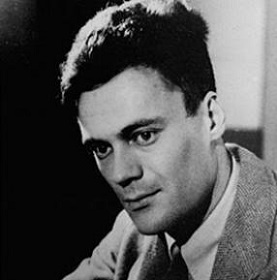
Godfried Bomans, Multatuli, Thom Wolfe, John Irving, Michael Salinger, János Arany

De Nederlandse schrijver Godfried Bomans werd geboren in Den Haag op 2 maart 1913. Zie ook alle tags voor Godfried Bomans op dit blog.

Uit: Wandelingen door Rome

“Ja mijne heren, de beste gids van Rome komt uit Sittard. Het is een klein stevig gebouwd mannetje, met borstelige, witte wenkbrauwen, een witte snor en een wit baardje dat aan de stevige kin vol moed begonnen is, maar zich dan plotseling bedenkt en er ineens mee uitscheidt. Hij draagt een wit hemd, dat van voren open is en daar een kettinkje laat zien, vermoedelijk eindigend in een gouden penning of medaille, doch daarover worden geen inlichtingen vertrekt. Opzij van de mond hebben zich twee kuiltjes gegraven, die op een algemene geneigdheid wijzen het leven een prettige instelling te vinden. De ogen zijn blauw en hebben de argeloze uitdrukking van een Walt Disney-kabouter. De schedel is opzij met een vermoeden van haar bekropen, doch in het midden volkomen kaal. Onder deze schedel bevindt zich Rome.’
(…)

“Naar het schoonmaken van de Trevi-fontein ben ik ook gaan kijken, maar om een heel andere reden. De Fontana di Trevi is de fontein, waar alle vreemdelingen, die later in Rome nog eens willen terugkeren, een munt ingooien. (..) Ik ging daar heen om te kijken, wat ze met al die duizenden munten zouden doen. Hoe vindt u die gedachte? Mij dunkt, dit is een typisch burgerlijke gedachte, die alleen door een Hollander kan worden voortgebracht. Niet de poëzie van zo’n munt in ‘t water gooien, met de volle maan boven je hoofd en een meisje aan je zij, nee, niets daarvan. Alleen de vraag: wáár blijven de duiten? Gaan ze naar de fiscus? Pikt de waterleiding ze in? Of verdwijnen ze in het potje der omliggende percelen? Kijk, aan zo’n vraag heb ik, als Hollander, houvast, daar kan ik mij uren in verdiepen.”
(…)

“Met honderden liepen ze in de stoet mee, allemaal als patertjes, nonnetjes, engelen of martelaren verkleed, met grote, oneindig verbaasde ogen, sommigen met hun eigen martelwerktuigjes in de hand en er verzonken op zuigend. Ik zag één engel, wier beide vleugels tot op de billetjes waren afgezakt en die liep nu juist heel ingetogen te bidden, in een brevier, dat zij precies omgekeerd in de beduimelde handjes hield. (..) Zestig Franciscaner paters trokken voorbij, ieder zeven jaar oud, met echte bruine pijtjes en hagelwitte koordjes, onder leiding van een dik gardiaantje, dat bijna omviel van de slaap.”


 1730337-70f0e7b5598f00110d5b70b43f024d8d.jpg
Godfried Bomans (2 maart 1913 - 22 december 1971)


De Nederlandse schrijver Multatuli (pseudoniem van Eduard Douwes Dekker werd geboren in Amsterdam op 2 maart 1820. Zie ook alle tags voor Multatuli op dit blog.

Uit: Ideën I

7.
Het beslissen by meerderheid van stemmen is 't recht van den sterkste in der minne. Het beduidt: àls we vochten zouden wy winnen... laat ons 't vechten overslaan.
Dit stelsel leidt dus niet zoozeer tot waarheid als tot rust. Doch slechts voor 't oogenblik, en palliatief. Want de leden der minderheid hebben meestal 't recht vóór zich, en zyn sterker, niet zoozeer uit besef van dat recht, als door meer geslotenheid en scherper prikkel tot inspanning. Wanneer de minderheid aangroeit tot meerderheid, verliest ze aan specifieke waarde wat ze wint in uitbreiding of aantal. Ze neemt al de fouten over van de verslagen tegenstanders die, op hùn beurt weer, deugd scheppen uit nederlaag.
De slotsom is treurig.

8.
Het besluiten tot iets groots kan geschieden met kalme vastberadenheid of in geestdrift. Het eerste staat natuurlyk hooger. Dit hoogere nu vindt men zelden, maar nu-en-dan toch, by 'n individu. By vergaderingen nooit.
Een grootsch besluit van 'n vergadering wordt altyd genomen in drift van geest en met geschreeuw. Dat noemt men met een deftig woord: akklamatie.
Lees niet, bid ik u, dat 'n vergadering die schreeuwt en driftig van geest is, grootsche besluiten neemt.

12.
Gedachten heeft ieder. By weinigen worden ze tot denkbeelden. Nog minder zyn er, die vorm en kleur weten weertegeven van die beelden. En wie dit doet, hoort gedurig ‘juist wat ik dacht.’ Ja, op omtrek na, op kleur na, op schaduw na. Dat is: op zeer veel na. (En vooral op den moed na, om daarmee op eigen verantwoordelykheid voor den dag te komen!)”


 1730337-50fdf1e4ffcd960d908cc296d19466aa.jpg
Multatuli (2 maart 1820 - 19 februari 1887)
Cover


De Amerikaanse schrijver John Irving werd geboren op 2 maart 1942 in Exeter, New Hampshire. Zie ook alle tags voor John Irving op dit blog.

Uit: The World According to Garp

“Duncan began talking about Walt and the undertow – a famous family story. For as far back as Duncan could remember, the Garps had gone every summer to Dog’s Head Harbor, New Hampshire, where the miles of beach in front of Jenny Fields’ estate were ravaged by a fearful undertow. When Walt was old enough to venture near the water, Duncan said to him – as Helen and Garp had, for years, said to Duncan – ‘Watch out for the undertow.’ Walt retreated, respectfully. And for three summers Walt was warned about the undertow. Duncan recalled all the phrases.
‘The undertow is bad today.’
‘The undertow is strong today.’
‘The undertow is wicked today.’ Wicked was a big word in New Hampshire – not just for the undertow.
And for years Walt reached out for it. From the first, when he asked what it could do to you, he had only been told that it could pull you out to sea. It could suck you under and drown you and drag you away.
It was Walt’s fourth summer at Dog’s Head Harbor, Duncan remembered, when Garp and Helen and Duncan observed Walt watching the sea. He stood ankle-deep in the foam from the surf and peered into the waves, without taking a step, for the longest time. The family went down to the water’s edge to have a word with him.
‘What are you doing, Walt?’ Helen asked.
‘What are you looking for, dummy?’ Duncan asked him.
‘I’m trying to see the Under Toad,’ Walt said.
‘The what?’ said Garp.
‘The Under Toad,’ Walt said. ‘I’m trying to see it. How big is it?”


 1730337-0b88e54663f8b0238374ca05012b1fd1.jpg
John Irving (Exeter, 2 maart 1942)
Cover dvd met Robin Williams


De Amerikaanse schrijver en journalist Tom Wolfe werd geboren op 2 maart 1930 in Richmond, Virginia. Zie ook alle tags voor Thomas Wolfe op dit blog.

Uit:A Man in Full

“One of the few freedoms that we have as human beings that cannot be taken away from us is the freedom to assent to what is true and to deny what is false. Nothing you can give me is worth surrendering that freedom for. At this moment I'm a man with complete tranquillity...I've been a real estate developer for most of my life, and I can tell you that a developer lives with the opposite of tranquillity, which is perturbation. You're perturbed about something all the time. You build your first development, and right away you want to build a bigger one, and you want a bigger house to live in, and if it ain't in Buckhead, you might as well cut your wrists. Soon's you got that, you want a plantation, tens of thousands of acres devoted solely to shooting quail, because you know of four or five developers who've already got that. And soon's you get that, you want a place on Sea Island and a Hatteras cruiser and a spread northwest of Buckhead, near the Chattahoochee, where you can ride a horse during the week, when you're not down at the plantation, plus a ranch in Wyoming, Colorado, or Montana, because truly successful men in Atlanta and New York all got their ranches, and of course now you need a private plane, a big one, too, a jet, a Gulfstream Five, because who's got the patience and the time and the humility to fly commercially, even to the plantation, much less out to a ranch? What is it you're looking for in this endless quest? Tranquillity. You think if only you can acquire enough worldly goods, enough recognition, enough eminence, you will be free, there'll be nothing more to worry about, and instead you become a bigger and bigger slave to how you think others are judging you.”


 1730337-12ceef4ac468d4501e2347312dabadd4.jpg
Tom Wolfe (Richmond, 2 maart 1930)


De Amerikaanse dichter en performer Michael Salinger werd geboren op 2 maart 1962 in Cleveland, Ohio. Zie ook alle tags voor Michael Salinger op dit blog.


The Domestique (Fragment)

Muscle fatigue is instigated
(according to the latest scientific hypothesis)
by tiny leaks of calcium on a cellular level
stimulating enzymes to assault muscle fibers
endeavoring to shut down whatever business is afoot
but,
you already knew this

It is your nature to ignore this chemistry
Legs pumping with the precision of locomotive pistons
transferring energy to chain, sprocket and wheels
cutting through space
incited salmon-like forward
while every fiber below your neck screams
for you to stop
calves sinews braiding into knots
thighs threatening to split as if baking bread
the peloton follows in your wake
a brightly colored migration of spandex butterflies
and you come out of your saddle
to dance on your pedals
as if Bix Beiderbecke was blowing a solo in your skull
and then it comes


 1730337-dfb5fe9076e31c9acb797b59a12281fb.jpg
Michael Salinger (Cleveland, 2 maart 1962)


De Hongaarse dichter János Arany werd geboren op 2 maart 1817 in Nagyszalonta. Zie ook alle tags voor János Arany op dit blog.


The Bard Of Wales (Fragment)

Edward the king, the English king,
Bestrides his tawny steed,
'For I will see if Wales,' said he,
'Accepts my rule indeed.

'Are stream and mountain fair to see?
Are meadow grasses good?
Do corn-lands bear a crop more rare
Since wash'd with rebel's blood?

'And are the wretched people there,
Whose insolence I broke
As happy as the oxen are
Beneath the driver's yoke?

'In truth this Wales, Sire, is a gem,
The fairest in your crown:
The stream and field rich harvest yield,
And fair and dale and down.

'And all the wretched people there
Are calm as man could crave;
Their hovels stand throughout the land
As silent as the grave.'


 1730337-8a0cddcfb86e3d9e2e2232b808163c35.jpg
János Arany (2 maart 1817 – 22 oktober 1882)
Borstbeeld in Boedapest, Nationaal Museum


Zie voor nog meer schrijvers van de 2e maart ook mijn blog van 2 maart 2014 deel 2.

Geschreven door Romenu om 18:41 Reageer op dit bericht
Reageer op dit bericht

Reageer op dit bericht

Een titel of je eigen website toevoegen

De blogger leest alles eerst na: je tekst verschijnt zodra die goedgekeurd is.

Frank Albers

De Vlaamse schrijver Frank Albers werd geboren op 2 maart 1960 in Schoten. Hij studeerde in Gent en Oxford en promoveerde aan Harvard op een proefschrift over het utopische denken van Jean-Jacques Rousseau en Ralph Waldo Emerson. Van 1998 tot 2000 leidde hij samen met Bernard Dewulf het Nieuw Wereldtijdschrift. In het jaar daarop werd hij chef van de boekenbijlage Standaard der Letteren (tot 2005). Als auteur trad Albers op de voorgrond met de fragmentarische roman “Angst van een Sneeuwman” (1982) waarvoor hij in 1983 de Yangprijs ontving. In 2007 verscheen het reisessay “Beatland”: In het spoor van Jack Kerouac’s On the road (De Bezige Bij), waarin hij verslag doet van zijn tocht dwars door de Verenigde Staten, vijftig jaar na het verschijnen van Kerouac’s cultroman. Voor het Nationale Toneel in Den Haag vertaalde Albers onder meer Hamlet, Titus Andronicus en King Lear. Albers houdt ook een blog bij en geeft lezingen over onder andere Shakespeare, Kerouac en Albert Camus.

Uit: Een zonderling land

“Er was eens een land dat niet wilde bestaan. Dat vonden de andere landen raar. De meeste landen waren trots op zichzelf. De meeste landen voelden zich beter dan alle andere landen. Zelfs een land dat hanger leed, deed vaak alsof het beter was dan een land dat te eten had. De meeste landen waren macho's. Wie hen tergde, kreeg een dreun. Zo waren vele landen ook ontstaan. Al vechtend. Vechten schept een band en soms een land. Al was er om een land bijeen te houden meer nodig
dan speren of bommen. De meeste landen waren een samenweefsel van gedeeld leed en gedeelde herinneringen, van gedeeld geloof en gedeelde taal. Soms. als ze wat ouder en wijzer waren geworden, leenden landen om met elkaar samen te werken. Dan gingen 2e bijvoorbeeld samen naar
de maan. of samen een ander land vernietigen. Maar hoe lang en innig ze ook met elkaar samenwerkten, uiteindelijk hielden landen altijd het meest van zichzelf. Dat zag je bij sportwedstrijden en fabriekssluitingen. Eens macho, altijd macho. Er bestaat geen tweelandenvlag.
Tussen al deze grote, trotse macholanden lag dus dit ene landje dat. tot verbijstering van velen, niet wilde bestaan. Het had zichzelf niet bedacht, was niet gegroeid uit het verlangen van mensen om binnen dezelfde grenzen te wonen, niet uit angst voor een vijand, niet uit krijgszucht of list, maar uit slib samengeklonterd in een trage bocht van de tijd. Het land was als een vondeling, verwekt en vergeten in een achterkamertje van de geschiedenis, een bastaardje dat de natuur niet bepaald had verwend, want behalve erg klein was het ook erg lelijk, en het bezat ook niets van wat kleine lelijke landjes voor grotere landen soms toch aantrekkelijk maakt. zoals gas olie of diamant.”


 1788778-fcb3e00aca34713bea34a0b778ac14b0.jpg
Frank Albers (Schoten, 2 maart 1960)

Geschreven door Romenu om 00:00 Reageer op dit bericht

Jan Eijkelboom, Franzobel, Jim Crace, Franz Hohler, Lytton Strachey

De Nederlandse dichter, vertaler en journalist Jan Eijkelboom werd op 1 maart 1926 in Ridderkerk geboren. Zie ook alle tags voor Jan Eijkelboom op dit blog.


Tuin Dordrechts museum

Als ik gestorven ben
zal in de tuin van dit museum
boven het warrig bladerengedruis
een merel net zo helder zingen
op net zo’n late voorjaarsdag

En ik, ik zal er niet meer zijn
om door dit zingen te vergeten
dat ik moet sterven mettertijd.

Maar aan de andre kant zal ik
– je weet maar nooit –
veel langer leven dan die vogel
En als ik dan toch onder de zoden lig
dan zal mijn zoon nog eens
een merel net zo horen klinken
op net zo’n late voorjaarsdag.
En hij zal weten wie ik was
en ach, een vogel weet van niets.

Maar aan de andre kant alweer:
als merels aan hun vaders konden denken
wellicht dat ze dan krasten als een raaf.


Een schilder

Op dijkjes langs de balkegaten
stonden wij stil te schetsen in de kou,
en dan maar over kunst en toekomst praten
als jij in elk geval een schilder wezen zou.
Ik wist nou nooit eens wat ik worden wou
en kon mezelf soms om die vaagheid haten.
Maar onder mijn bewondering voor jou
school toch dédain voor missers en hiaten
 
bij iemand die te weinig boeken las.
Jij slikte dankbaar, of het manna was,
al wat ik je vertelde over morgen
en over wat er vroeger is geweest.
Je schildert nu decors in Avereest,
in godsdienstwaan gekerkerd, of geborgen.


Moeilijk moment

Net als hij op 't café-toilet
in de verschoten spiegel kijkt
barst er een bloedrivier
zijn oogbal binnen.
Ook wordt het ademen beperkt:
de refusal is nog aan 't werk.
 
Toch weet hij in zijn ademnood
dat het maar even duurt,
dan kan het weer beginnen,
de zachte levensdood.
 
De stortbak heet Silentium.
Grijs bovenlicht zakt om hem heen.
Een vrede buiten kijf
vult hem, die net niet stierf,
van top tot teen.


 1729809-61636a06deafd8eec168bbf62763e4ef.jpg
Jan Eijkelboom (1 maart 1926 – 28 februari 2008)


De Oostenrijkse schrijver, dichter en schilder Franzobel werd geboren op 1 maart 1967 in Vöcklabruck. Zie ook alle tags voor Franznbel op dit blog

Uit:Liebesgeschichte

“1. Die sechste Stunde
Weil er beim Aufsperren einer Tür immer fürchtete, jemand könnte ihn beobachten, sich auf ihn stürzen, ihn überwältigen, blickte er sich hastig um, doch da war nichts, nur die dunkelblaue Nacht hing wie eine atmende, quallige Masse über den schlafenden Häusern und Autos. Auch wenn alles still war, beeilte er sich, den Haustorschlüssel ins Schloss zu stecken, zu drehen. Es klemmte. Verdammt! Er presste. Fluchte. Jetzt gelang es.
Alexander, ein graziler junger Mann von vierunddreißig Jahren, blutarm, nervös, hohlwangig mit zartgliedrigen Händen und einer mäßig vorstehenden, leicht aufwärtsgebogenen Nase im teigigen Gesicht, Alexander, der stets um Stil bemüht war, bedacht darauf, dass man sah, wer er war, einer, der die Welt aus ihren Angeln hob. Alexander keuchte. Wie ein anschlagender Jagdhund hing er in der straffen Leine seiner Atemröhre, keuchte heftig, fiel gegen die zugefallene Tür, griff sich an die Brust und hustete, als hätte er einen Hundertmeterlauf absolviert. Dabei war er nur von der Ecke hergelaufen, wo er den Taxifahrer hatte halten lassen.
Er strich die Falten aus dem Regenmantel, bückte sich, um seine Schuhbänder zu binden, und hastete durch das Treppenhaus, zog sich am Geländer hoch, vorbei an Fußabstreifern und ausgetragenen Zeitungen, hinweg über Specksteine, Tröpfchen von der inkontinenten Dackeldame Max, zog sich empor durch das Gründerzeittreppenhaus, vorbei an einem kleinen abgenagten Knochen mit blutigem Gelenk, vorbei an abgeschlagenen Wänden, von denen Putz rieselte, um endlich vor der ihm wohlbekannten Tür zu stehen.
Alexander keuchte, griff sich ans Herz, versuchte es zu kontrollieren, atmete langsam aus und ein, blickte aus dem Treppenhausfenster, sah den roten Streifen der ausbrechenden Sonne, die die quallige Nacht bald verscheucht haben würde, blieb an den Blumenkästen hängen, wunderte sich, wie sich seine Frau für dieses Grünzeug interessieren konnte, wo er nicht einmal die Namen dieser Gewächse behielt, alle Thujen nannte. Sie aber sagte, Pflanzen sind wie Tiere, die immer schlafen. Seit sieben Jahren waren sie verheiratet. Was wussten sie voneinander?“


 1729809-232ecc12bc9254896e23cd596ec3f60f.jpg
Franzobel (Vöcklabruck, 1 maart 1967)


De Engelse schrijver Jim Crace werd geboren op 1 maart 1946 in St. Albans, Hertfordshire. Zie ook alle tags voor Jim Crace op dit blog.

Uit:Quarantine

“Musa was paying a heavy price, his uncles said, for sleeping on his back without a cloth across his face. An idiotic way to die. A devil had slipped into his open mouth at night and built a fire beneath the rafters of his ribs. Devils were like anybody else; they had to find what warmth they could or perish in the desert cold. Now Musa had provided lodging for the devil's fever. He wouldn't last more than a day or two -- if he did, then it would be a miracle. And not a welcome one.
It was Miri's duty to Musa, everybody said, to let the caravan go on through Jericho towards the markets of the north without her. It couldn't travel with fever in its cargo. It couldn't wait while Musa died. Nor could it spare the forty days of mourning which would follow. That would be madness. Musa himself wouldn't expect such waste. He had been a merchant too, and would agree, if only he were conscious, God forbid, that business should not wait for funerals. Or pregnancies. Fortunes would be lost if merchants could not hurry on. Besides, the camels wouldn't last. They needed grazing and watering, and there was no standing water in this wilderness and hardly any hope of rain. No, it was a crippling sadness for them too, make no mistake, the uncles said, but Miri had to stay behind, continue with her singing till the end, and bury Musa on her own.
She'd have to put up stones to mark her husband's passing and tend his grave until the caravan returned for her. She would be safe and comfortable if she took care. There was sufficient water in skins for a week or so, and then she could locate a cistern of some kind; there were also figs and olives and some grain, some salted meat and other food, plus the tent, the family possessions, small amounts of different wools, a knife, some perfume and a little gold. She'd have company as well. They'd leave six goats for her, plus a halting donkey which was too slow and useless for the caravan. Two donkeys then. Both lame, she said, nodding at her husband.”


 1729809-f6689a572867ec23f49a6dd387ec6704.jpg
Jim Crace (St. Albans, 1 maart 1946)


De Zwitserse dichter, schrijver, cabaretier en liedjesmaker Franz Hohler werd geboren op 1 maart 1943 in Biel. Zie ook alle tags voor Franz Hohler op dit blog.


Nachtrag zu den Starenbäumen

Was die zwei
dienstags gefällten
Scheinzypressen betrifft
im Zentrum Örlikons

ihr kennt sie vielleicht
die Bäume
auf welchen sich jeweils
die Stare zum Abflug versammeln

so kann ich euch
nach Gesprächen mit allen Beteiligten
sagen:

Niemand kann etwas dafür
alle handelten nur
im Auftrag
oder weil es nicht anders ging
und es war auf jeden Fall
die vernünftigste Lösung.

Ich werd es
im Herbst
den Staren erklären.


Die Selbstgerechten

Und als der Irak
Kuweit überfiel –
habt ihr da auch demonstriert?

So fragen uns die
die selber nie demonstrieren

und falten die Hände
über den Bäuchen


 1729809-f5f98a8a77822c35121eeca7a5fb8f59.jpg
Franz Hohler (Biel, 1 maart 1943)


De Britse schrijver Giles Lytton Strachey werd geboren op 1 maart 1880 in Londen. Zie ook alle tags voor Lytton Strachey op dit blog.

Uit: The Letters of Lytton Strachey

“To Leonard Woolf
“Blackgang Chine Hotel Ventnor I of W [Easter 1902, c. March 30]

Dear Leon
It is no longer cold - we are sitting out in the sun on a quasi-lawn overlooking a blue-grey sea. (We = Ainsworth and I.) He is reading Anna Karenine in French; I have Montaigne, Swinburne, Webster and Hamlet on the table in front of me, and have just found your letter indoors. Don't be any more depressed. God's on his thorn - the snail's in his heaven ...
For the soul that is wisdom and freedom, the spirit of England redeemed from her past, Speaks life through the lips of the master and lord of her children, the first and the last. Thought, touched by his hand, and redeemed by his breath, sees, hears, and accepts from above The limitless lightnings of vision and passion, the measureless music of love!
We take immense walks most days - which is rather pleasant. Two others called Sanger and Robin Mayor have been with us - but have now gone. We laugh a good deal. I nearly quarrelled with Ainsworth t'other night but not quite. I don't like the personification of irrelevance - but that's all. The 'scholarship question' perhaps is hardly that. But when you see the GREAT LETTER you'll understand altogether.
I never heard of anything quite so mad as your and the Goth's proceedings. Dear, dear! Did he see his buds? In Suffolk, I mean. Mania! Mania!
I have not finished Pere Goriot and so I shall not yet say what I think about it. Maxim Gorki sounds death indeed. Yes, the great absurdity of most writers is that they will write about [illegible, perhaps Greek characters] and fools - or mere fantastic cranks. Down with them! Shakespeare's chief point, I think, is that he deals so much with geniuses. Meanwhile I have three Maupassant stories that I long to write - only for the most private of all circulation, of course. Can't write any more poetry, can you? If one only had indefinite empty years -! [...]
your G.L.S.”


 1729809-9392aaca03af6cdcce0f199da5f52f7f.jpg
Lytton Strachey (1 maart 1880 – 21 januari 1932)
Lytton Strachey Reading in the Garden at Tidmarsh door Dora Carrington, ca. 1918


Zie voor nog meer schrijvers van de 1e maart ook mijn vorige twee blogs van vandaag.

Geschreven door Romenu om 16:21 Reageer op dit bericht

Robert Lowell, Jacques Chessex, Ryūnosuke Akutagawa, Sabina Lorenz, Richard Wilbur, Ralph Ellison

De Amerikaanse dichter Robert Traill Spence Lowell werd geboren op 1 maart 1917 in Boston. Zie ook alle tags voor Robert Lowell op dit blog.


Homecoming

What was is ... since 1930;
the boys in my old gang
are senior partners. They start up
bald like baby birds
to embrace retirement.

At the altar of surrender,
I met you
in the hour of credulity.
How your misfortune came out clearly
to us at twenty.

At the gingerbread casino,
how innocent the nights we made it
on our Vesuvio martinis
with no vermouth but vodka
to sweeten the dry gin--

the lash across my face
that night we adored . . .
soon every night and all,
when your sweet, amorous
repetition changed.


"To Speak of Woe That Is in Marriage"

"The hot night makes us keep our bedroom windows open.
Our magnolia blossoms.Life begins to happen.
My hopped up husband drops his home disputes,
and hits the streets to cruise for prostitutes,
free-lancing out along the razor's edge.
This screwball might kill his wife, then take the pledge.
Oh the monotonous meanness of his lust. . .
It's the injustice . . . he is so unjust--
whiskey-blind, swaggering home at five.
My only thought is how to keep alive.
What makes him tick?Each night now I tie
ten dollars and his car key to my thigh. . . .
Gored by the climacteric of his want,
he stalls above me like an elephant."


 1729804-37ff98daa1452fc130500017bb812bae.jpg
Robert Lowell (1 maart 1917 - 12 September 1977)


De Franstalige, Zwitserse schrijver Jacques Chessex werd geboren op 1 maart 1934 in Payerne. Zie ook alle tags voor Jacques Chessex op dit blog.

Uit: Pardon mère

« Longtemps j’ai eu le temps. C’était quand ma mère vivait. J’étais désagréable avec elle, ingrat, méchant, je me disais : j’aime ma mère. Elle le sait ou elle finira bien par le savoir. J’ai le temps.(…) En attendant, le temps passait. Je rencontrais ma mère, je la blessais parce que tout en elle me blessait. Son esprit était droit, sa pensée juste, son élégance de bon goût, sa taille bien prise, son regard d’un bleu un peu gris était pur et me voyait. Et moi je n’étais pas digne de ce regard. » Un fils parle de sa mère, née à Vallorbe en 1910, morte le jeudi 15 février 2001, il regrette les méchantes pensées, l’indifférence, le temps de l’enfance évanouie trop vite. Sa mère, « le contraire de la vanité et du tapage », lectrice de la Fontaine au regard clair, et lui l’écrivain, l’excessif, le mauvais fils tapageur. Mais quand ce fils indigne s’appelle Jacques Chessex, alors c’est une relation forte, ambiguë, charnelle à la fois qui se noue avec sa mère. Tombeau et Résurrection, « fontaine de regret », violence et douceur, évocation pudique mais sans voile, ce livre autobiographique est l’un des plus beaux, des plus émouvants, de l’auteur. « Mère tu m’habites. Où es-tu dans ta mort ce matin ? »


 1729804-e095a390030cb53d4408f4f7b88f8353.jpg
Jacques Chessex (1 maart 1934 – 9 oktober 2009)


De Japanse dichter en schrijver Ryūnosuke Akutagawa werd geboren op 1 maart 1892 in Tokio. . Zie ook alle tags voor Ryūnosuke Akutagawa op dit blog.

Uit: In a Grove (Vertaald door Takashi Kojima)

“The man that I arrested? He is a notorious brigand called Tajomaru. When Iarrested him, he had fallen off his horse. He was groaning on the bridge atAwataguchi. The time? It was in the early hours of last night. For the record,I might say that the other day I tried to arrest him, but unfortunately heescaped. He was wearing a dark blue silk kimono and a large plain sword.And, as you see, he got a bow and arrows somewhere. You say that this bowand these arrows look like the ones owned by the dead man? Then Tajomarumust be the murderer. The bow wound with leather strips, the black lacquered quiver, the seventeen arrows with hawk feathers—these were allin his possession I believe. Yes, Sir, the horse is, as you say, a sorrel with afine mane. A little beyond the stone bridge I found the horse grazing by theroadside, with his long rein dangling. Surely there is some providence in hishaving been thrown by the horse.Of all the robbers prowling around Kyoto, this Tajomaru has given the mostgrief to the women in town. Last autumn a wife who came to the mountainback of the Pindora of the Toribe Temple, presumably to pay a visit, wasmurdered, along with a girl. It has been suspected that it was his doing. If this criminal murdered the man, you cannot tell what he may have done withthe man's wife. May it please your honor to look into this problem as well.”


 1729804-74187dac4c943c50e86c9da2f5fa65f5.jpg
Ryūnosuke Akutagawa (1 maart 1892 – 24 juli 1927)


De Duitse schrijfster en dichteres Sabina Lorenz werd geboren op 1 maart 1967 in München. Zie ook alle tags voor Sabine Lorenz op dit blog,


Ensō auf einem Balkon

Im Morgengrauen sind die Straßen still zu Schemen gefaltet.

Wild verzweigte Narben in diesem Teil der Stadt, der Mittlere
Ring: hinauswuchernde Schnittkanten (man könnte auch sagen

herein-), als wär das die richtige Form, uns zu häuten.
In diesem Moment schweben Netze aus Zufällen. Pinselhaare,

zusammengeführt zu einem kalligraphischen Schwung.
Wie der Ruderflug eines Vogels mit der Möglichkeit,

ein Irrgast zu sein auf seinem Zug. Hier das Gepäck,
übersetzt ins Gestern: es ist immer zu schwer oder zu leicht.

Unten streiten sich die Taxifahrer. Eilen Schichtarbeiter
von der Arbeit, in die Arbeit, allseits wie jetzt

nur ein leichter Schlaf, der vergessen lässt, dass man schläft.


 1729804-bf65006fc7f14367f50bba64c80e57a0.jpg
Sabina Lorenz (München, 1 maart 1967)


De Amerikaanse dichter Richard Wilbur werd geboren op 1 maart 1921 in New York. Zie ook alle tags voor Richard Wilbur op dit blog.


A Plain Song for Comadre

Though the unseen may vanish, though insight fails
And doubter and downcast saint
Join in the same complaint,
What holy things were ever frightened off
By a fly's buzz, or itches, or a cough?
Harder than nails

They are, more warmly constant than the sun,
At whose continual sign
The dimly prompted vine
Upbraids itself to a green excellence.
What evening, when the slow and forced expense
Of sweat is done,

Does not the dark come flooding the straight furrow
Or filling the well-made bowl?
What night will not the whole
Sky with its clear studs and steady spheres
Turn on a sound chimney? It is seventeen years
Come tomorrow

That Bruna Sandoval has kept the church
Of San Ysidro,** sweeping
And scrubbing the aisles, keeping
The candlesticks and the plaster faces bright,
And seen no visions but the thing done right
From the clay porch

To the white altar. For love and in all weathers
This is what she has done.
Sometimes the early sun
Shines as she flings the scrubwater out, with a crash
Of grimy rainbows, and the stained suds flash
Like angel-feathers.


 1729804-153504182962496f14fb63f87c4e0367.jpg
Richard Wilbur (New York, 1 maart 1921)


De Afro-Amerikaanse schrijver Ralph (Waldo) Ellison werd geboren in Oklahoma City op 1 maart 1913. Zie ook alle tags voor Ralph Ellison op dit blog.

Uit: Invisible Man

“He paused, removing the tissue paper and revealing a gleaming calfskin brief case.
". . . in the form of this first-class article from Shad Whitmore's shop."
"Boy," he said, addressing me, "take this prize and keep it well. Consider it a badge of office. Prize it. Keep developing as you are and some day it will be filled with important papers that will help shape the destiny of your people."
I was so moved that I could hardly express my thanks. A rope of bloody saliva forming a shape like an undiscovered continent drooled upon the leather and I wiped it quickly away. I felt an importance that I had never dreamed.
"Open it and see what's inside," I was told.
My fingers a-tremble, I complied, smelling the fresh leather and finding an official-looking document inside. It was a scholarship to the state college for Negroes. My eyes filled with tears and I ran awkwardly off the floor.
I was overjoyed; I did not even mind when I discovered that the gold pieces I had scrambled for were brass pocket tokens advertising a certain make of automobile.
When I reached home everyone was excited. Next day the neighbors came to congratulate me. I even felt safe from grandfather, whose deathbed curse usually spoiled my triumphs. I stood beneath his photograph with my brief case in hand and smiled triumphantly into his stolid black peasant's face. It was a face that fascinated me. The eyes seemed to follow everywhere I went.
That night I dreamed I was at a circus with him and that he refused to laugh at the clowns no matter what they did. Then later he told me to open my brief case and read what was inside and I did, finding an official envelope stamped with the state seal; and inside the envelope I found another and another, endlessly, and I thought I would fall of weariness. "Them's years," he said. "Now open that one." And I did and in it I found an engraved document containing a short message in letters of gold. "Read it," my grandfather said. "Out loud."


 1729804-eb7a7b832f11c1e799ad81e196400d23.jpg
Ralph Ellison (1 maart 1913 – 16 april 1994)
Cover


Zie voor nog meer schrijvers van de 1e maart ook mijn vorige blog van vandaag.

Geschreven door Romenu om 16:09 Reageer op dit bericht

Jean-Edern Hallier, Marcel Cabon, William Dean Howells, Steven Barnes, Mercedes de Acosta

De Franse schrijver Jean-Edern Hallier werd geboren op 1 maart 1936 in Saint-Germain-en-Laye. Zie ook alle tags voor Jean-Edern Hallier op dit blog.

Uit: Bréviaire pour une jeunesse déracinée

« Aujourd’hui, en mon train endiablé, quand je me retourne, je vois d’autres enfants qui me poursuivent, et se rapprochent. L’un me ressemble singulièrement, avec ses yeux verts, sa mèche noire. Il me fait plus peur que les autres, avec son air de farouche détermination. Lui, est sans pitié. A sa moue dédaigneuse, à son regard perdu et fixe de voyant, je reconnais qui je fus – et qui je redeviens, quand je m’évade de la société des hommes pour travailler à l’un de mes livres. O solitudes enchantées ! Ma force d’oubli se déverse souvent en un havre de grâce, un vert paradis où le temps se gonfle, reprenant sa capillarité perdue, sa subjectivité, et ce rêve habité de réel. Elle est partie. Quoi ? L’Eternité. La voici retrouvée. »


 1729800-0c1d498366adc4301a3da08ae9598b6a.jpg
Jean-Edern Hallier (1 maart 1936 – 12 januari 1997)


De Mauritiaanse dichter, schrijver en journalist Marcel Cabon werd geboren op 29 februari 1912 in Curepipe. Zie ook alle tags voor Marcel Cabon op dit blog.

Uit: Namasté

« Toujours il avait aimé à apprendre.Ce qu'il y a sous le ciel et ce qu'il y a dans les livres.Ce que les gens ont à dire.
A Bras d'Eau, l'huile était aux trois quarts consumée dans la lampe qu'il lisait encore.
-Viens dormir,lui disait sa mère.
Mais Ram n'entendait pas ou faisait la sourde oreille.Dormir quand il était en plein ciel,avec les dieux et les déesses?Dormir quand sur le champ de Dharma, le saint champ de Kuru, les hommes de Dhristarâshtra et les fils de Pându s'assemblaient, brûlants de combattre?
La crainte venait à la pauvrette qu'il ne tombât malade, que son sang ne tarît, comme l'huile dans la lampe.
A la classe du maraz, il était le premier arrivé.Et cette classe-lâ se faisait après le repas du soir, alors que les étoiles cheminaient déjà.
Homme, Ram se souvenait encore, - et ses yeux riaient à ce souvenir - de ce livre que vantait le maître (on y parlait des frasques d'Hanoumane), et qui se vendait à Flacq, chez le bijoutier.
Il avait douze ans,alors.Pas plus haut que ça.Pourtant, sou après sou, il avait acquis un petit pécule.Et un matin, il s'était mis en route, au chant du coq.
-Où vas-tu, Ram?
-Je reviens tout de suite.
Il s'en allait pour la moitié de la journée.
Qu'il était heureux! Et que la lune descendante était belle! Que l'odeur de la terre était pénétrante!Jamais encore la nuit qui s'achève ne lui semblerait aussi belle. »


 1729800-59c74766cd3fd4a296a54b9bc15f53c2.jpg
Marcel Cabon (29 februari 1912 – 31 januari 1972)


De Amerikaanse dichter, schrijver en criticus William Dean Howells werd geboren op 1 maart 1837 in Martinsville, Ohio. Zie ook alle tags voor William Dean Howells op dit blog.


Vision

Within a poor man’s squalid home I stood:
The one bare chamber, where his work-worn wife
Above the stove and wash-tub passed her life,
Next the sty where they slept with all their brood.
But I saw not that sunless, breathless lair,
The chamber’s sagging roof and reeking floor;
The smeared walls, broken sash, and battered door;
The foulness and forlornness everywhere.
I saw a great house with the portals wide
Upon a banquet room, and, from without,
The guests descending in a brilliant line
By the stair’s statued niches, and beside
The loveliest of the gemmed and silken rout
The poor man’s landlord leading down to dine.


Tomorrow

Old fraud, I know you in that gay disguise,
That air of hope, that promise of surprise:
Beneath your bravery, as you come this way,
I see the sordid presence of Today;
And I shall see there, before you are gone,
All the dull Yesterdays that I have known.

 1729800-65251efa301e9b9496aa24a9f1f64c7d.jpg
William Dean Howells (1 maart 1837 – 11 mei 1920)
Op 18-jarige leeftijd


De Amerikaanse schrijver Steven Barnes werd geboren op 1 maart 1952 in Los Angeles. Zie ook alle tags voor Steven Barnes op dit blog.

Uit: Shadow Valley

“Whatever the truth might be, a second disaster soon struck. From the south came the Mk*tk, brutal men who killed many and even stole three of the sacred dream dancers. The bloody war had almost undone the Ibandi.If Hot Tree’s daughter had not brought her here to Water boma, Tree did not know what might have become of her.
Much had changed since then. Sky Woman, the girl who had earned her name by climbing Great Sky, had fled north with half the tribe, accompanied by her lover, Frog Hopping, who had climbed Great Sky with her in search of wisdom. Some said he was a mighty hunter, but Tree had never been impressed by Frog. Both his elder brothers, greater providers by far, had died on the great mountain, but their widows, Ember and Flamingo, had traveled north with Frog.
Hot Tree inhaled deeply. The afternoon air reeked of burnt grass. She stood just outside the boma’s bamboo gate at the edge of the wide blackened zone singed every moon to deny hiding space to leopards. Beyond that dark space, grass grew knee- high, and beyond that the plain was broken by round and flat- topped trees and dusky scrub ranging out to a thinly ridged northern horizon. The air smelled of dust and burnt thornbush.
Her old eyes could just barely distinguish a hyena’s brownish- gray pelt, lurking a spear’s throw from the edge of the blackened zone.
Another four or five spear casts distant loped three giraffes, two adults and one calf half the height of its parents. Even as she watched, they dissolved into the shimmering air, much like the cloud creatures the strange boy Frog had so often babbled of.”


 1729800-09e8f20215c75e4c9eb0b643f174653c.jpg
Steven Barnes (Los Angeles, 1 maart 1952)


De Spaans-Amerikaanse schrijfster en dichteres Mercedes de Acosta werd geboren op 1 maart 1893 in New York. Zie ook alle tags voor Mercedes de Acosta op dit blog.

Uit: Here Lies the Heart

“Imoved near Bhagavan, sitting at his feet and facing him. Guy was right. Not long after this Bhagavan opened his eyes. He moved his head and looked directly down at me, his eyes looking into mine. It would be impossible to describe this moment and I am not going to attempt it. I can only say that at this second I felt my inner being raised to a new level-as if, suddenly, my state of consciousness was lifted to a much higher degree. Perhaps in this split second I was no longer my human self but the Self. Then Bhagavan smiled at me. It seemed to me that I had never before known what a smile was. I said, "I have come a long way to see you."
There was silence. I had stupidly brought a piece of paper on which I had written a number of questions I wanted to ask him. I fumbled for it in my pocket, but the questions were already answered by merely being in his presence. There was no need for questions or answers. Nevertheless, my dull intellect expressed one.
"Tell me, whom shall I follow-what shall I follow? I have been trying to find this out for years by seeking in religions, in philosophies, in teachings." Again there was silence. After a few minutes, which seemed to me a long time, he spoke."


 1729800-a28bf545fd777ca7078ed40e39fd2fea.jpg
Mercedes de Acosta (1 maart 1893 – 9 mei 1968)

Geschreven door Romenu om 16:09 Reageer op dit bericht

Myrthe van der Meer

De Nederlandse schrijfster Myrthe van der Meer (pseudoniem) werd geboren op 1 maart 1983 in Den Bosch. Zij werkte als redacteur bij een grote uitgeverij, tot ze een burn-out kreeg en zwaar depressief vijf maanden op de paaz belandde, de psychiatrische afdeling van een ziekenhuis. Over deze ervaring schreef ze haar debuut “PAAZ”. Het boek werd meer dan 50.000 keer verkocht en het werd genomineerd voor de Dioraphte Jongerenliteratuur Prijs. Myrthe won de Psyche Mediaprijs en de Viva400-Award. In 2013 verscheen haar tweede boek, de roman “Kalf”. In 2015 volgde het vervolg op “PAAZ”, de roman “UP”.

Uit: PAAZ

“Over drie uur begint de vakantie.
Ik leun achterover in mijn bureaustoel en draai weer in het rond. Onder me kruipt het verkeer zich een infarct rond de kantoorflat. Ik zet me nog een keer af en de kamer, mijn collega en de ramen zwiepen weer voorbij. Over drie uur ben ik vier weken vrij. Vier weken helemaal niets.
‘Is het feest soms al begonnen, Emma?’ zegt Simon als hij de kamer binnenloopt.
‘Yep,’ zeg ik lachend. ‘Wat moet je? Kan ik iets doen?’
‘Jij mocht toch niets meer doen?’ vraagt hij met een frons.
Ik kijk snel naar Felix die tegenover me volledig in beslag genomen wordt door het telefoontje van een auteur die ervan overtuigd is dat zijn boekomslag in precies de verkeerde tint azuurblauw is gedrukt.
Met een opgeluchte grijns wijs ik naar mijn bureau. Naast de stapel afgewezen manuscripten en de calculaties voor de herdrukken liggen de teksten en omslagen voor de nieuwe catalogus, voor me ligt de lijst met boeken die ik net heb aangekocht. in productie zijn of waar de afdeling promotie mee bezig is, en onder op het toetsenbord kleeft de traditionele post-it met mijn inloggegevens en wachtwoord.
Ik steek mijn armen in de lucht, draai nog een keer rond en kijk hem triomfantelijk aan.
‘Oké,’ verzucht hij. ‘Wil je de vormgever van de herdruk dan vragen of hij de maten van het omslag nog eens controleert? Volgens de drukker klopt er namelijk niets van en het moet echt aan zijn computer liggen of anders...’Ik krijg het gevoel dat ik langzaam gewurgd word.
‘Geen probleem,’ zeg ik en ik trek het printje uit zijn handen voor hij zich kan bedenken. ‘Ik gooi het mailtje er meteen uit. Anders nog iets?’
‘Dat jij als ik hier straks langskom ook echt weg bent,’ bromt hij goedmoedig. ‘En dat je nog even naar me zwaait voor je vertrekt.’
Ik steek mijn hand op.
‘Straks pas, tuttebel.’
Als Felix de hoorn op de haak legt, kijkt hij me argwanend aan”.


 1843463-068d36a381f57d3139bbbd731d6c436e.jpg
Myrthe van der Meer (Den Bosch, 1 maart 1983)

Geschreven door Romenu om 00:00 Reageer op dit bericht

Martin Suter, Yórgos Seféris, Marin Sorescu, Howard Nemerov, Saul Williams, John Byrom

Zwitserse schrijver Martin Suter werd geboren op 29 februari 1948 in Zürich. Zie ook alle tags voor Martin Suter op dit blog.

Uit: Ein perfekter Freund

"Das wollte ich Sie fragen."
"Keine Ahnung?"
Fabio schüttelte vorsichtig den Kopf. Die Frau liess sein Handgelenk los, nahm das Krankenblatt vom Bettgestell und notierte etwas. "Sie sind in der Neurochirurgie der Uniklinik."
"Weshalb?"
"Sie haben eine Kopfverletzung." Sie überprüfte die Infusionsflasche.
"Was für eine?"
"Ein Schädel-Hirn-Trauma. Sie haben einen Schlag auf den Kopf erhalten."
"Wie das?"
Sie lächelte: "Das wollte ich Sie fragen."
Fabio schloss die Augen. "Seit wann bin ich hier?"
"Seit fünf Tagen."
Fabio schlug die Augen auf. "Ich war fünf Tage im Koma?"
"Nein, Sie sind seit drei Tagen wach."
"Ich erinnere mich nicht."
"Das hängt mit Ihrer Kopfverletzung zusammen."
"Ist sie so schlimm?"
"Es geht. Kein Schädelbruch und keine Blutung."
"Und der Verband?"
"Auf der Intensivstation hatte man Ihnen eine Hirndrucksonde eingesetzt."


 1729341-755d8a5410ed1fa20c26a647511f62ef.jpg
Martin Suter (Zürich 29 februari 1948)


De Griekse dichter Yórgos Seféris werd geboren in Smyrna (nu Izmir, in Turkije) op 29 februari 1900. Zie ook alle tags voor Yórgos Seféris op dit blog.


Erotikos Logos


I
Rose of fate, you looked for ways to wound us
yet you bent like the secret about to be released
and the command you chose to give us was beautiful
and your smile was like a ready sword.

The ascent of your cycle livened creation
from your thorn emerged the way's thought
our impulse dawned naked to possess you
the world was easy: a simple pulsation.


II

The secrets of the sea are forgotten on the shores
the darkness of the depths is forgotten in the surf;
the corals of memory suddenly shine purple. . .
O do not stir. . . listen to hear its light

motion. . . you touched the tree with the apples
the hand reached out, the thread points the way and guides you. . .
O dark shivering in the roots and the leaves
if it were but you who would bring the forgotten dawn!

May lilies blossom again on the meadow of separation
may days open mature, the embrace of the heavens,
may those eyes alone shine in the glare
the pure soul be outlined like the song of a flute.

Was it night that shut its eyes? Ashes remain,
as from the string of a bow a choked hum remains,
ash and dizziness on the black shore
and dense fluttering imprisoned in surmise.

Rose of the wind, you knew but took us unknowing
at a time when thought was building bridges
so that fingers would knit and two fates pass by
and spill into the low and rested light.

Vertaald door Edmund Keeley en Phillip Sherrar


 1729341-48f03fed46ca7516207455fab22349bb.jpg
Yórgos Seféris (29 februari 1900 - 20 september 1971)


De Roemeense dichter Marin Sorescu werd geboren op 29 februari 1936 in Bulzeşti. Zie ook alle tags voor Marin Sorescu op dit blog.


Ladder To Heaven

A silk thread spun by a spider
Is hanging from the ceiling
Just above my bed.

Every day I notice it
Descending lower.
Now I am even offered
The ladder to Heaven – I say

It comes from ‘up there’.

Although I had lost weight to the point
Where I am only the spectre of my former self
I believe that my body
May be too heavy
For this delicate ladder.

You, soul of mine, I think that you ought to go first.
Pitter-patter, pitter-patter!.


Vertaald door Constantin Roman


With Only One Life

Hold with both hands
The tray of every day
And pass in turn
Along this counter.

There is enough sun
For everybody.
There is enough sky,
And there is moon enough.

The earth gives off the smell
Of luck, of happiness, of glory,
Which tickles your nostrils
Temptingly.

So don’t be miserly,
Live after your own heart.
The prices are derisory.

For instance, with only one life
You can acquire
The most beautiful woman,
Plus a biscuit.


Vertaald door Joana Russell-Gebbett en D.J. Enright


 1729341-235648836bae9a4dc95308cb995c6326.jpg
Marin Sorescu (29 februari 1936 – 8 december 1996)


De Amerikaanse dichter en literatuurdocent Howard Nemerov werd geboren op 29 februari 1920 in New York. Zie ook alle tags voor Howard Nemerov op dit blog.


Walking The Dog

Two universes mosey down the street
Connected by love and a leash and nothing else.
Mostly I look at lamplight through the leaves
While he mooches along with tail up and snout down,
Getting a secret knowledge through the nose
Almost entirely hidden from my sight.

We stand while he's enraptured by a bush
Till I can't stand our standing any more
And haul him off; for our relationship
Is patience balancing to this side tug
And that side drag; a pair of symbionts
Contented not to think each other's thoughts.

What else we have in common's what he taught,
Our interest in shit. We know its every state
From steaming fresh through stink to nature's way
Of sluicing it downstreet dissolved in rain
Or drying it to dust that blows away.
We move along the street inspecting shit.

His sense of it is keener far than mine,
And only when he finds the place precise
He signifies by sniffing urgently
And circles thrice about, and squats, and shits,
Whereon we both with dignity walk home
And just to show who's master I write the poem.


Kicks

The fishermen on Lake Michigan, sometimes,
For kicks, they spit two hunks of bait on hooks
At either end of a single length of line
And toss that up among the scavenging gulls,

Who go for it so fast that often two of them
Make the connection before it hits the water.
Hooked and hung up like that, they do a dance
That lasts only so long.
The fishermen

Do that for kicks, on Lake Michigan, sometimes.


 1729341-cf1bb10fe9297298e5599dcd4647fa82.jpg
Howard Nemerov (29 februari 1920 – 5 juli 1991)


De Amerikaanse dichter, schrijver, acteur, rapper en musicus Saul Stacey Williams werd geboren in Newburgh, New York op 29 februari 1972. Zie ook alle tags voor Saul Williams op dit blog.


1987

CHAPTER 1
Acid wash Guess with the leather patches,
sportin the white Diadoras with the hoodie
that matches. I’m wearing two Swatches and
a small Gucci pouch. I could have worn the
Louis but I left it in the house.

My NGHs Duce and Wayne got gold plates
with their name, with the skyline on it and the
box link chain. I’m wearing my frames they
match my gear with their tint. And you know
Lagerfield is the scent.

My NGH Rafael just got his jeep out the shop.
Mint green sidekick. Custom made ragtop. Strictly
Business is the album that we play. “You’re a
Customer,” the pick of the day.


 1729341-a49923cd3f03c2fe72859ccafb302def.jpg
Saul Williams (Newburgh, 29 februari 1972)


De Engelse dichter John Byrom werd geboren op 29 februari 1692 in Manchester. Zie ook alle tags voor John Byrom op dit blog.


Epigram V.

Prayer and thanksgiving is the vital breath
That keeps the spirit of a man from death;
For pray'r attracts into the living soul
The life, that fills the universal whole.


Epigram VI.

To own a God, who does not speak to men,
Is first to own, and then disown again;
Of all idolatry the total sum
Is having gods, that are both deaf and dumb.


 1729341-9573284683524f4e9c0fe3f6eeed4040.jpg
John Byrom (29 februari 1692 – 26 september 1763)
Old Market Street, Manchester door Paul Brandonm 1820


Zie voor de schrijvers van de 28e februari ook mijn vorige twee blogs van vandaag.

Geschreven door Romenu om 14:53 Reageer op dit bericht

Stephen Spender, Bart Koubaa, Luc Dellisse, John Montague, Marcel Pagnol, Raphaële Billetdoux, Bodo Morshäuser

De Engelse dichter, essayist en schrijver Stephen Spender werd geboren op 28 februari 1909 in Londen. Zie ook alle tags voor Stephen Spender op dit blog.


A Childhood

I am glad I met you on the edge
Of your barbarous childhood

In what purity of pleasure
You danced alone like a peasant
For the stamping joy's own sake!

How, set in their sandy sockets,
Your clear, truthful, transparent eyes
Shone out of the black frozen landscape
Of those gray-clothed schoolboys!

How your shy hand offered
The total generosity
Of original unforewarned fearful trust,
In a world grown old in iron hatred!

I am glad to set down
The first and ultimate you,
Your inescapable soul. Although
It fade like a fading smile
Or light falling from faces
Which some grimmer preoccupation replaces.

This happens everywhere at every time:
Joy lacks the cause for joy,
Love the answering love,
And truth the objectless persistent loneliness,
As they grow older,
To become later what they were
In childhood earlier,
In a world of cheating compromise.

Childhood, its own flower,
Flushes from the grasses with no reason
Except the sky of that season.
But the grown desires need objects
And taste of these corrupts the tongue
And the natural need is scattered
In satisfactions which satisfy
A debased need.

Yet all prayers are on die side of
Giving strength to naturalness,
So I pray for nothing new,
I pray only, after such knowledge,
That you may have the strength to be you.

And I shall remember
You who, being younger,
Will probably forget.


 1729337-5d645801b25b777451611ad5db863df8.jpg
Stephen Spender (28 februari 1909 – 16 juli 1995)
Portret door Wyndham Lewis, 1938


De Vlaamse schrijver Bart Koubaa (pseudoniem van Bart van den Bossche) werd geboren op 28 februari 1968 in Eeklo. Zie ook alle tags voor Bart Koubaa op dit blog.

Uit: Maria van Barcelona

“Ik had de ontspanner ingedrukt op het moment dat Lukas’ hoed van zijn hoofd afwaaide. Ik had hem zien staan in de zoeker, als een boegbeeld, lichtjes voorovergebogen, steunend op de noordenwind, daar ben ik honderd procent zeker van. Hij stond er toen ik afdrukte. En toch is op de foto alleen een zwevende hoed te zien; alsof ik het moment had vastgelegd waarop hij als een konijn in die hoed was verdwenen. Misschien betekende dat beeld zijn einde; een einde dat alleen maar door een goocheltoer verbroken kon worden.
...Ik twijfelde of ik naar de zwarte Opel Astra zou teruglopen of een café zou binnen gaan om Lukas op te wachten. Ik overtuigde mezelf ervan dat hij zou terugkomen, het leek me logisch. Ik nam het zekere voor het onzekere en ging naar de auto. Lukas had in zijn haast en verwarring de deuren niet gesloten. Als de Noordzee hem niet had tegengehouden, waren we nog altijd aan het rijden, maar daarbeneden op de promenade waar de journalisten als dwergen de zon trotseren, op nog geen honderd meter van deze kamer, had Lukas zichzelf met zeesterren, visgraten en mosselschelpen gekroond.
Ik nam zijn jas uit de kofferbak en stapte in; de sleutels zaten nog in het contact. Ik wachtte vier, vijf uur, nam af en toe een slok gin, stapte uit, liep een paar keer rond de auto, stapte weer in, zette de verwarming aan, luisterde naar de radio, viel in slaap. ’s Ochtends werd ik gewekt door meeuwen die vochten om een paar glimmende haringkoppen. Verwarring, tactiek, de aanval, het toeslaan en de vlucht van de winnaar die met zijn trofee het ongeloof van de verliezer versterkt. Ik herkende dat ongeloof en voelde dat de kans dat ik Lukas in levenden lijve zou terugzien één op honderdduizend was.
Aan het licht buiten kon ik onmogelijk opmaken hoe laat het was en het klokje in de auto stond stil. Ik strekte mijn benen, masseerde mijn oogleden en zocht een sigaret; een kleine lichtstraal verblindde me. Ik deed de zonneklep naar beneden en schrok van mezelf, mijn hoofd losdraaiend als de grijze roodstaart van mijn moeder die elke dag op het balkon vanuit zijn Arabische kooi de schouder van zijn kapitein zocht.”


 1729337-f1403ecdf5d1e7c2645ca880c5f9e664.jpg
Bart Koubaa (Eeklo, 28 februari 1968)


De Belgische-Franse dichter, schrijver, essayist, dramaturg en scenarioschrijver Luc Dellisse werd geboren op 28 februari 1953 in Brussel. Zie ook alle tags voor Luc Delisse op dit blog.

Uit: Le jugement dernier

« La vérité était pourtant lisible noir sur blanc.
Il y avait place dans ma vie, non pour une passion unique, mais pour deux passions en même temps. Au grand jour et à l'insu de tous, j'ai mené les deux de front. Ecrire, qui m'a apporté l'obscurité nécessaire, qui m'a permis de n'être personne et d'aller dans des villes inconnues pour rencontrer les inconnus. Et puis, traquer quelque chose d'obsédant qui finissait toujours par venir.
Souvent, je jouais avec le feu, j'attaquais à contretemps. Par mille signes je me trahissais. Il m'est arrivé de passer à l'acte devant le mari, l'amant, les frères, les vigiles, sans que rien ne transpire. Personne ne vous croit capable d'une chose pareille, surtout personne ne m'en croyait capable ; sorti des choses de l'esprit j'ai l'air d'une cloche. Je ne sais ni conduire une voiture, ni réparer une fuite, ni voir la différence entre deux joueurs de football. Ma place à l'évidence était dans un de ces ateliers protégés qu'on appelle une bibliothèque.
Il m'est arrivé dans mes livres et mes articles de faire allusion au secret. Je racontais des aventures, sans y toucher. Sécurité parfaite. On n'est jamais lu. En tout cas, pas dans le texte. Personne n'a deviné Pindisable. Ni vu ni connu.”


 1729337-aa0d1d250cb9244259b76c34e471e623.jpg
Luc Dellisse (Brussel, 28 februari 1953)


De Ierse dichter John Montague werd geboren in New York op 28 februari 1929. Zie ook alle tags voor John Montague op dit blog.


White Water

for Line McKie

The light, tarred skin
of the currach rides
and receives the current,
rolls and responds to
the harsh sea swell.

Inside the wooden ribs
a slithering frenzy; a sheen
of black-barred silver-
green and flailing mackerel:
the iridescent hoop
of a gasping sea trout.

As a fish gleams most
fiercely before it dies,
so the scales of the sea-hag
shine with a hectic
putrescent glitter:

luminous, bleached—
white water—
that light in the narrows
before a storm breaks.


All Legendary Obstacles

All legendary obstacles lay between
Us, the long imaginary plain,
The monstrous ruck of mountains
And, swinging across the night,
Flooding the Sacramento, San Joaquin,
The hissing drift of winter rain.

All day I waited, shifting
Nervously from station to bar
As I saw another train sail
By, the San Francisco Chief or
Golden Gate, water dripping
From great flanged wheels.

At midnight you came, pale
Above the negro porter's lamp.
I was too blind with rain
And doubt to speak, but
Reached from the platform
Until our chilled hands met.

You had been traveling for days
With an old lady, who marked
A neat circle on the glass
With her glove, to watch us
Move into the wet darkness
Kissing, still unable to speak.


 1729337-46ff1c67e053dc53cc6ddb4446546f60.jpg
John Montague (New York, 28 februari 1929)


De Franse dichter, schrijver, dramaturg en regisseur Marcel Pagnol werd geboren op 28 februari 1895 in Aubagne, Bouches-du-Rhône. Zie ook alle tags voor Marcel Pagnol op dit blog.


Œufs de Paques

Voici venir Pâques fleuries,
Et devant les confiseries
Les petits vagabonds s'arrêtent, envieux.
Ils lèchent leurs lèvres de rose
Tout en contemplant quelque chose
Qui met de la flamme à leurs yeux.

Leurs regards avides attaquent
Les magnifiques œufs de Pâques
Qui trônent, orgueilleux, dans les grands magasins,
Magnifiques, fermes et lisses,
Et que regardent en coulisse
Les poissons d'avril, leurs voisins.

Les uns sont blancs comme la neige.
Des copeaux soyeux les protègent.
Leurs flancs sont faits de sucre. Et l'on voit, à côté,
D'autres, montrant sur leurs flancs sombres
De chocolat brillant dans l'ombre,
De tout petits anges sculptés.

Les uns sont petits et graciles,
Il semble qu'il serait facile
D'en croquer plus d'un à la fois ;
Et d'autres, prenant bien leurs aises,
Unis, simples, pansus, obèses,
S'étalent comme des bourgeois.

Tous sont noués de faveurs roses.
On sent que mille bonnes choses
Logent dans leurs flancs spacieux
L'estomac et la poche vides,
Les pauvres petits, l'œil avide,
Semblent les savourer des yeux.


 1729337-0e636b916d5e9ddcbce1394183c2001c.jpg
Marcel Pagnol (28 februari 1895 – 18 april 1974)


De Franse schrijfster Raphaële Billetdoux werd geboren op 28 februari 1951 in Neuilly sur Seine. Zie ook alle tags voor Raphaële Billetdoux op dit blog.

Uit: C'est fou, une fille...

« Tout, j'aime tout de toi, même ce que tu n'aimes pas de toi, je l'aime... Je désespérais de rencontrer une femme comme toi, avant toi j'étais mort, j'étais en train de mourir, c'est une femme comme... toi que je veux, avec toi tout est différent, je t'attendais, je t'aime, j'ai envie de toi, j'ai besoin de toi, j'ai besoin de toi pour toujours, c'est fou la force que tu dégages, tu rayonnes, tu rayonnes littéralement, aucune femme avant toi ne m'avait fait cet effet-là, avec toi, c'est incroyable, je m'aime, j'ai tellement de mal à croire qu'on puisse m'aimer, il y a de la lumière, de la grandeur en toi, tu me plais, tu me rends à moi-même, je n'imaginais pas que tu pouvais être aussi douce, avec toi je suis moi, avec toi, je peux être moi, j'ai toujours cru que je n'étais pas aimable, personne n'a su, comme toi, accéder à mon intimité, une seule, une fois, peut-être, mais je ne l'aimais pas, c'est une comme toi que j'espérais, je ne veux pas passer à côté d'une femme telle que toi, je ne veux jamais te perdre, je t'aime partout, je t'aime en entier et pour toujours, tu peux faire de moi ce que tu veux, tu es une grande dame, rien ne pourra entamer un amour comme celui que je ressens, je me connais, c'est la première fois que j'aime vraiment, je n'ai jamais aimé quelqu'un comme ça, je t'aime, je suis à toi. »


 1729337-4fc593e172834392b42f73a755fb0635.jpg
Raphaële Billetdoux (Neuilly sur Seine, 28 februari 1951)


De Duitse dichter en schrijver Bodo Morshäuser werd geboren op 28 februari 1953 in Berlijn. Zie ook alle tags voor Bodo Morshäuser op dit blog.

Uit: Und die Sonne scheint

“Ich hatte noch drei Monate Zeit, bis ich meine Wohnung, die ich längst gekündigt hatte, übergeben musste. Von nun an war ich jede Woche in meiner alten Umgebung, um den Auszug vorzubereiten und über jeden Gegenstand in der Wohnung zu entscheiden, ob ich ihn in Zukunft bei mir haben wollte oder nicht. Ich wusste, ich würde nicht nur auf meine Vergangenheit stoßen, sondern auf Vergangenheiten.
Ich würde so weit und tief auf mein gelebtes Leben zurück- und in es hineinschauen wie nie zuvor, ganz egal, ob ich wollte oder nicht. Würde Begebenheiten vor Augen haben, an die ich jahrelang nie hatte erinnert werden wollen. Ich wusste nicht, um welche Begebenheiten es sich handelte, war jedoch sicher, es gab solche. Ich stellte mich auf letztes Abschiednehmen und überraschende Wiedersehen ein, auf’s Staunen und auf’s Grausen. Abschied von Dingen, die ich nicht mit mir herumtragen wollte, und Wiedersehen mit Erinnerungen, die ich geflohen war.
Der Musiker, von dem es keine neuen Lieder gab, saß vor der Bäckerei und telefonierte, am Ladenschild fehlte immer noch das R. Höflich wartete der Müllmann, bis ein mit seinem Fahrrad verwachsener dicker Schauspieler und die Müttergruppe vorüber waren. Hinter zwei Fenstern wurden Dielen abgeschliffen, zwei Männer steckten ihre Köpfe in einen geöffneten Klingelkasten, der Stau in der kleinen zugeparkten Straße kam keinen Meter voran, und derWeinhändler füllte seinen Kofferraum mit Kartons.“


 1729337-c7c5549a2a7e9bae2ab9a60741f2c0e1.jpg
Bodo Morshäuser (Berlijn, 28 februari 1953)


Zie voor nog meer schrijvers van de 28e februari ook mijn vorige blog van vandaag.

Geschreven door Romenu om 14:41 Reageer op dit bericht

Daniel Handler, Dee Brown, Berthold Auerbach, José Vasconcelos, Sophie Tieck, Michel de Montaigne, Ernest Renan

De Amerikaanse schrijver Daniel Handler werd geboren op 28 februari 1970 in San Francisco, Californië Zie ook alle tags Daniel Handler op dit blog.

Uit: Why We Broke Up

“So it all went into the box and the box went into my closet with some shoes on top of it I never wear. Every last souvenir of the love we had, the prizes and the debris of this relationship, like the glitter in the gutter when the parade has passed, all the everything and whatnot kicked to the curb. I’m dumping the whole box back into your life, Ed, every item of you and me. I’m dumping this box on your porch, Ed, but it is you, Ed, who is getting dumped.
The thunk, I admit it, will make me smile. A rare thing lately. Lately I’ve been like Aimeé Rondelé in The Sky Cries Too, a movie, French, you haven’t seen. She plays an assassin and dress designer, and she only smiles twice in the whole film. Once is when the kingpin who killed her father gets thrown off the building, which is not the time I’m thinking of. It’s the time at the end, when she finally has the envelope with the photographs and burns it unopened in the gorgeous ashtray and she knows it’s over and lights a cigarette and stands in that perfect green of a dress watching the blackbirds swarm and flurry around the church spire.
I can see it. The world is right again, is the smile. I loved you and now here’s back your stuff, out of my life like you belong, is the smile. I know you can’t see it, not you, Ed, but maybe if I tell you the whole plot you’ll understand it this once, because even now I want you to see it. I don’t love you anymore, of course I don’t, but still there’s something I can show you. You know I want to be a director, but you could never truly see the movies in my head and that, Ed, is why we broke up.”


 1729330-4ed8cf9923affaa2452e78071c8b0ade.jpg
Daniel Handler (San Francisco, 28 februari 1970)


De Amerikaanse schrijver en historicus Dee Brown werd geboren op 28 februari 1908 in Alberta, Louisiana. Zie ook alle tags voor Dee Brown op dit blog.

Uit: Bury My Heart at Wounded Knee

“The decade following establishment of the “permanent Indian frontier” was a bad time for the eastern tribes. The great Cherokee nation had survived more than a hundred years of the white man’s wars, diseases, and whiskey, but now it was to be blotted out. Because the Cherokees numbered several thousands, their removal to the West was planned to be in gradual stages, but the discovery of Appalachian gold within their territory brought on a clamor for their immediate wholesale exodus. During the autumn of 1838, General Winfield Scott’s soldiers rounded them up and concentrated them into camps. (A few hundred escaped to the Smoky Mountains and many years later where given a small reservation in North Carolina.) From the prison camps they were started westward to Indian Territory. On the long winter trek, one of every four Cherokees died from the cold, hunger, or disease. They called the march their “trail of tears.” The Choctaws, Chickasaws, Creeks, and Seminoles also gave up their homelands in the South. In the North, surviving remnants of the Shawnees, Miamis, Ottawas, Hurons, Delawares, and many other once mighty tribes walked or traveled by horseback and wagon beyond the Mississippi, carrying their shabby goods, their rusty farming tools, and bags of seed corn. All of them arrived as refugees, poor relations, in the country of the proud and free Plains Indians.”


 1729330-ad09f877924769c920893e426260d178.jpg
Dee Brown (28 februari 1908 – 12 december 2002)
Cover


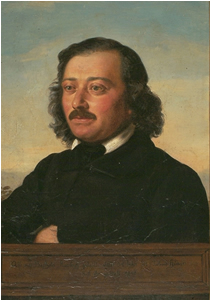
De Duitse schrijver Berthold Auerbach (eig. Moyses Baruch) werd geboren op 28 februari 1812 in Nordstetten in het Zwarte Woud. Zie ook alle tags voor Berthold Auerbach op dit blog.

Uit: Das Landhaus am Rhein

"Nur noch Augenblicke Geduld! dort winkt ein Mann, der mitfahren will,« sagte der Ferge. Im Kahne saß ein Mann mit Frau und Tochter.
Der Mann war von kleiner Gestalt, mit grauen Haaren und röthlich funkelnder Gesichtsfarbe, blaue Augen schauten gutmüthig aber träumerisch müde drein; ein die Oberlippe ganz bedeckender struppiger Schnurrbart schien sich in dies harmlose Gesicht verirrt zu haben; er trug ein graues Sommergewand von jenem neumodischen Stoff, der überall derart weiß besprenkelt ist, als hätte sich der Träger in einem Federbett gewälzt; eine zierliche, mit blauen und rothen Perlen gestickte Bügeltasche hing an einem Riemen über der rechten Schulter.
Die Frau, groß und stattlich, mit unruhigen Augen und scharfen Zügen, die einstmals wol einnehmend gewesen waren, trug ein Kleid von mattgelber Seide; der weiße Schleier am grauen Hut war wie eine Binde am Turban um die Rundung gewunden. Sie warf den Kopf rasch zurück, sah dann vor sich nieder, als wollte sie sich nicht um den Fremden kümmern, und bohrte die Zwinge ihres großen Sonnenschirms in das Bord des Kahns.
Neben dem Manne saß eine schlanke blonde Mädchengestalt in blauem Sommergewand; den kleinen, mit einem Vogelflügel verzierten braunen Hut hielt sie am Gummiband in der Hand. Der Kopf war groß und schwer, die mächtige Stirn durch reichüberquellendes, in Flechten gelegtes Haar noch gewaltiger, und zwei dicke Locken legten sich rechts und links auf Schulter und Brust. Das Antlitz des Mädchens war heiter und unbefangen, klar wie der helle Tag, der über der Landschaft leuchtete.
Jetzt setzte sie den Hut auf, und die Mutter rückte ihr denselben noch etwas zurecht. Dann wechselte sie schnell die rauhledernen Stulpenhandschuhe mit glanzigen, die sie aus der Tasche nahm, und während sie mit Behendigkeit das Leder über die Hand zog, schaute sie nach dem Ankömmling.“


 1729330-0163b24904792d3a07c1cda295c05052.jpg
Berthold Auerbach (28 februari 1812 - 8 februari 1882)
Portret door Julius Hübner, ca. 1846


De Mexicaanse schrijver, filosoof en politicus José Vasconcelos Calderón werd geboren in Oaxaca op 28 februari 1882. Zie ook alle tags voor José Vasconcelos op dit blog.

Uit:A Brief History of Mexico (Vertaald door César Tort)

“The independence of the Latin American nations is the result of the disintegration of the Spanish empire. None of the nations of Latin America had, by a process of natural growth, reached the maturity required for emancipation. . . . . In the colonies, the men of clearer vision and greater patriotism, for example, the bishop Abad y Queipo, gave Mexico up for lost, and rightly so, after he saw that the independence was inevitable. . . .
From the beginning, the war was supposed to destroy the Spaniards, who represented the force and culture of the country, in the same way that later a fight against the criollo was developed, and today against the mestizo—all under the pretext of freeing the Indian—in order to uproot Spanish culture and replace it with American.
The two lands most imbued with Spanish influence, Mexico and Peru, resisted independence, which happened through foreign intervention. Peru was freed by Colombians and Argentines. . . .
In the United States, the independence movement was not a race war. For Morelos, for example, to be comparable to Washington, it must be assumed that Washington had decided to recruit blacks and mulattoes to kill the English. Instead, Washington disdained blacks and mulattoes and recruited the English of America, who did not commit the folly of killing their own brothers, uncles, and relatives, only because they were born in England. Quite the contrary, each participant of the American Revolution felt pride for his British ancestry and hoped for the betterment of the English. This should have been the sense of our own emancipation, to transform New Spain into an improved Spain, better than that of the peninsula but with its blood, our blood. The whole later disaster of Mexico is explained by the blind, criminal decision that emerged from the womb of Hidalgo’s mobs and is expressed in the suicidal cry: “Death to the Spaniards!”


 1729330-a448d0bd19499e2c30b0dd1ceb3465b2.jpg
José Vasconcelos (28 februari 1882 – 30 juni 1959)


De Duitse dichteres en schrijfster Sophie Tieck werd geboren op 28 februari 1775 in Berlijn. Zie ook alle tags voor Sophie Tieck op dit blog.


Flore und Blanscheflur (Fragment)

Zu einer Zeit, wenn Sommerluft bezwungen
Den Winter, wenn die Blumen neu entspringen,
Und Gras und Kräuter aus dem Boden drungen
Und tausend Vögel aus den Lüften singen;
Die Bäche lieblich hin durch Grün geschlungen
Im Laufe über Kiesel scherzend klingen;
Wann bald April nun weicht der Lust des Maien
Wo alle Wonnen lieblich sich erneuen;
Da prangt im vollen Grün ein schöner Garten,
Dort konnte man versammelt herrlich schauen
Was man von Sommerwonne mag erwarten,
Das Laub des Waldes, und den Schmuck der Auen,
Die Glanz noch Duft noch keine Farbe sparten,
Und eine Schaar von Rittern und von Frauen,
Die so von Schönheit, Lieblichkeit umfunkelt,
Daß sie den Glanz des Gartens fast verdunkelt.
Der Sommer grünete in voller Güte,
Die Nachtigall vor allen Vögeln sang,
Es färbte sich roth, weiß, blau jede Blüte,
Die aus dem Boden, aus den Zweigen sprang,
Da lebten recht von neuem im Gemüthe
Die Wünsche derer, die die Minne zwang.
Durch Blumenglanz und holder Frauen Scherzen
Traf Liebesweh die unbewehrten Herzen.


 1729330-64a113e9a3a389d3cda7ccba4e442ee9.jpg
Sophie Tieck (28 februari 1775 – 1 oktober 1833)
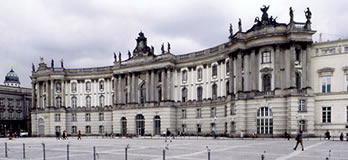
Berlijn, Alte Bibliothek


De Franse filosoof, schrijver en politicus Michel Eyquem de Montaigne werd geboren in Bordeaux op 28 februari 1533. Zie ook alle tags voor Michel de Montaigne op dit blog.

Uit: Over vriendschap (Vertaald door F. de Graaff)

“Er is niets waarvoor de natuur ons zozeer schijnt te hebben voorbestemd als voor het sociale. Aristoteles zei al, dat de goede wetgevers meer aandacht hadden voor vriendschap dan voor rechtvaardigheid. Welnu, het sociale leven vindt zijn hoogtepunt en vervolmaking in de vriendschap. Want in het algemeen zijn alle relaties, die vanwege de sexuele aantrekkingskracht of de voordelen of omdat het voor het huiselijke of openbare leven noodzakelijk is, worden aangeknoopt en onderhouden, minder mooi en edel. Ze zijn niet zozeer als vriendschappen te bestempelen, en wel in de mate, waarin die andere motieven, doeleinden en voordelen, die met vriendschap niets te maken hebben, er een rol in spelen. Ook de vier klassieke relatietypen - familie, samenleving, gastvrijheid en sexuele relatie - kunnen nòch afzonderlijk, nòch tesamen op één lijn gesteld worden met vriendschap.
Wat een kind voor zijn vader voelt is eerder respect. Vriendschap wordt gevoed door vertrouwelijke gedachtenuitwisseling, hetgeen tussen vaders en kinderen, vanwege de te grote ongelijkheid, onmogelijk is en wellicht in botsing zou komen met hun natuurlijke familieplichten. Want het is voor vaders niet altijd mogelijk hun geheime gedachten aan hun kinderen te vertellen, om geen ongepaste mate van vertrouwelijkheid te laten ontstaan, terwijl anderzijds kinderen hun vader niet zouden kunnen vermanen en terechtwijzen, wat een van de belangrijkste vriendendiensten is. Er zijn volken bekend waar het gebruikelijk is, dat de vaders door hun kinderen worden gedood, en andere, waar de vaders hun kinderen doden, om te voorkomen dat ze mogelijkerwijze elkaar ooit in de weg staan en omdat de één volgens de wetten van de natuur afhankelijk is van de ondergang van de ander. Er zijn filosofen geweest, die deze natuurlijke band verachtten, zoals Aristippus6: als iemand hem onder ogen bracht, dat hij zijn kinderen genegenheid verschuldigd was, omdat ze uit hem voortgekomen waren, dan begon hij te spugen en zei, dat die spuug ook uit hem kwam en dat we ook luizen en wormen voortbrengen."


 1729330-7fe2e2b947b8f9a0225b657eadea23ac.jpg
Michel de Montaigne (28 februari 1533 – 13 september 1592)
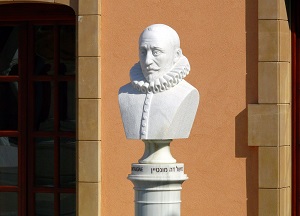
Borstbeeld in Caesarea


De Franse schrijver en filosoof Ernest Renan werd op 28 februari 1823 geboren in Tréguier in Bretagne uit een vissersfamilie. Zie ook alle tags voor Ernest Renan op dit blog.

Uit:Vie de Jésus

“Repose maintenant dans ta gloire, noble initiateur. Ton oeuvre est achevée; ta divinité est fondée. Ne crains plus de voir crouler par une faute l'édifice de tes efforts. Désormais hors des atteintes de la fragilité, tu assistera, du haut de la paix divine, aux conséquences infinies de tes actes. Au prix de quelques heures de souffrance, qui n'ont pas même atteint ta grande âme, tu as acheté la plus complète immortalité. Pour des milliers d'années, le monde va relever de toi. Drapeau de nos contradictions, tu sera le signe autour duquel se livrera la plus ardente bataille. Mille fois plus vivant, mille fois plus aimé depuis ta mort que durant les jours de ton passage ici-bas, tu deviendra à tel point la pierre angulaire de l'humanité, qu'arracher ton nom de ce monde serait l'ébranler jusqu'aux fondements. Entre toi et Dieu, on ne distinguera plus. Pleinement vainqueur de la mort, prends possession du royaume où te suivront, par la voie royale que tu as tracée, des siècles d'adorateurs. »


 1729330-beebd7621e1d637c5a66d84ad867bb78.jpg
Ernest Renan (28 februari 1823 – 12 oktober 1892)
Portret in zijn geboortehuis in Tréguier

Geschreven door Romenu om 14:29 Reageer op dit bericht

John Steinbeck, Lawrence Durrell, André Roy, Henry Longfellow, Elisabeth Borchers, James T. Farrell

De Amerikaanse schrijver John Steinbeck werd geboren in Salinas, Californië, op 27 februari 1902. Zie ook alle tags voor John Steinbeck op dit blog.

Uit: Travels with Charley

« The next passage in my journey is a love affair. I am in love with Montana. For other states I have admiration, respect, recognition, even some affection, but with Montana it is love, and it’s difficult to analyze love when you’re in it. Once, when I raptured in a violet glow given off by the Queen of the World, my father asked me why, and I thought he was crazy not to see. Of course I know now she was a mouse-haired, freckle-nosed, scabby-kneed little girl with a voice like a bat and the loving kindness of a gila monster, but then she lighted up the landscape and me. It seems to me that Montana is a great splash of grandeur. The scale is huge but not overpowering. The land is rich with grass and color, and the mountains are the kind I would create if mountains were ever put on my agenda. Montana seems to me to be what a small boy would think Texas is like from hearing Texans. Here for the first time I heard a definite regional accent unaffected by TV-ese, a slow-paced warm speech. It seemed to me that the frantic bustle of America was not in Montana. Its people did not seem afraid of shadows in a John Birch Society sense. The calm of the mountains and the rolling grasslands had got into the inhabitants. It was hunting season when I drove through the state. The men I talked to seemed to me not moved to a riot of seasonal slaughter but simply to be going out to kill edible meat. Again my attitude may be informed by love, but it seemed to me that the towns were places to live in rather than nervous hives. People had time to pause in their occupations to undertake the passing art of neighborliness.
I found I did not rush through the towns to get them over with. I even found things I had to buy to make myself linger. In Billings I bought a hat, in Livingston a jacket, in Butte a rifle I didn’t particularly need, a Remington bolt-action .22, secondhand but in beautiful condition."


 1728952-70d6680c10bd3f29ec48d31abd19687e.jpg
John Steinbeck (27 februari 1902 - 20 december 1968)
Hier met Charley


De Britse dichter en schrijver Lawrence George Durrell werd geboren op 27 februari 1912 in Jalandhar in India. Zie ook alle tags voor Lawrence Durrell op dit blog.

Uit: Spirit Of Place: Letters And Essays On Travel.

“You write,” says a friendly critic in Ohio, “as if the landscape were more important than the characters.” If not exactly true, this is near enough the mark, for I have evolved a private notion about the importance of landscape, and I willingly admit to seeing “characters” almost as functions of a landscape. This has only come about in recent years after a good deal of travel—though here again I doubt if this is quite the word, for I am not really a “travel-writer” so much as a “residence-writer.” My books are always about living in places, not just rushing through them. But as you get to know Europe slowly, tasting the wines, cheeses and characters of the different countries you begin to realize that the important determinant of any culture is after all—the spirit of place. Just as one particular vineyard will always give you a special wine with discernible characteristics so a Spain, an Italy, a Greece will always give you the same type of culture—will express itself through the human being just as it does through its wild flowers. We tend to see “culture” as a sort of historic pattern dictated by the human will, but for me this is no longer absolutely true. I don’t believe the British character, for example, or the German has changed a jot since Tacitus first described it; and so long as people keep getting born Greek or French or Italian their culture-productions will bear the unmistakable signature of the place. »


 1728952-3f0e71881c330a32bfc8d5d682282d7d.jpg
Lawrence Durrell (27 februari 1912 – 7 november 1990)
Cover biografie 


De Canadese dichter, schrijver en essayist André Roy werd geboren op 27 februari 1944 in Montréal. Zie ook alle tags van André Roy op dit blog.


C’est encore la nuit

C’est encore la nuit,
le rêve actif,
la machine de l’action;
la nuit dans les forêts, les déserts, les villes.
J’avais rêvé à deux mondes :
un, visible et mortel;
un autre, invisible avec des fantômes
fatigués dès leur naissance.
Je regarde, je vois la danse du temps,
les criminels revenus durant la nuit.


C’est plein, c’est lumière

C’est plein, c’est lumière;
éclairage debout,
caméra bougeant dans ma tête.
Toi cœur,
toi acte d’humain contre moi.
Les paysages se transforment
pour être pareils à nos sentiments,
pour les rêves que nous voulons parfaire.
Le vent, le brouillard, l’homme du lac.
Le drame des étoiles est d’être fixées aux ténèbres.
Les durs désirs des étrangers que nous sommes
quand nous grandissons.


 1728952-f569afa5ca94563db2b87f9179edc97c.jpg
André Roy (Montréal, 27 februari 1944)
Cover 


De Amerikaanse dichter Henry Wadsworth Longfellow werd geboren in Portland, Maine, op 27 februari 1807. Zie ook alle tags voor Henry Longfellow op dit blog.


Children

Come to me, O ye children!
For I hear you at your play,
And the questions that perplexed me
Have vanished quite away.

Ye open the eastern windows,
That lo
ok towards the sun,
Where thoughts are singing swallows
And the brooks of morning run.

In your hearts are the birds and the sunshine,
In your thoughts the brooklet's flow,
But in mine is the wind of Autumn
And the first fall of the snow.

Ah! what would the world be to us
If the children were no more?
We should dread the desert behind us
Worse than the dark before.

What the leaves are to the forest,
With light and air for food,
Ere their sweet and tender juices
Have been hardened into wood, --

That to the world are children;
Through them it feels the glow
Of a brighter and sunnier climate
Than reaches the trunks below.

Come to me, O ye children!
And whisper in my ear
What the birds and the winds are singing
In your sunny atmosphere.

For what are all our contrivings,
And the wisdom of our books,
When compared with your caresses,
And the gladness of your looks?

Ye are better than all the ballads
That ever were sung or said;
For ye are living poems,
And all the rest are dead.


 1728952-747998bf322ed2a56e6c88ff7a5687cf.jpg
Henry Longfellow (27 februari 1807 - 24 maart 1882)
Het gezin Longfellow


De Duitse schrijfster en dichteres Elisabeth Borchers werd geboren in Homberg op 27 februari 1926. . Zie ook alle tags voor Elisabeth Borchers op dit blog.


Ende des Sommers

Wir haben uns lange genug
herumgetrieben
jetzt fällt die Sonne
in Ohnmacht
sie kann nicht mehr

Die Bäume hören auf
die Welle kommt nicht mehr
wie gewöhnlich sind die Dinge geworden
wie gewöhnlich.

Die Wette war ich eingegangen
dass dieser Sommer bliebe


Umzug

Ich räume das Haus
die Zimmer, die Treppen
die Jahre, Jahrzehnte
die Tage und Nächte
die Freunde, die Feinde
die Tassen, die Teller
die Kissen, die Decken
den Himmel, die Hölle
die Gräber
ich räume und räume
den Winter, den Sommer
den Wind und das Wetter.


 1728952-a45eea8b2652dbcc09fbeb4bf53e1540.jpg
Elisabeth Borchers (27 februari 1926 – 25 september 2013)


De Amerikaanse schrijver James Thomas Farrell werd geboren op 27 februari 1904 in Chicago. Zie ook alle tags voor James T. Farrell op dit blog.

Uit: Young Lonigan

“School meant Bertha, and Bertha should have been put away long ago, where she could kneel down and pray herself to death, because she was old and crabby and always hauling off on somebody; it was a miracle that a person as old as Bertha could sock as hard or holler as loud as she could; even Sister Bernadette Marie, who was the superior and taught the seventh- and eighth-grade girls in the next room, sometimes had to come in and ask Bertha to make less noise, because she couldn’t teach with all that racket going on; but telling Bertha not to shout was like telling a bull that it had no right to see red. And smart guys, like Jim Clayburn, who did his homework every night, couldn’t learn much from her. And school meant Dan and Bill Donoghue and Tubby and all the guys in his bunch, and you couldn’t find a better gang of guys to pal with this side of Hell. And it meant going to mass in the barn-like church on the first floor, every morning in Lent, and to stations of the cross on Friday afternoons; stations of the cross were always too long unless Father Doneggan said them; and marching on Holy Thursday in church with a lily in your hand, and going to communion tired Sunday of every month at the eight o’clock mass with the boys’ sodality. It meant goofy young Danny O’Neill, the dippy punk who couldn’t be hurt or made cry, no matter howl he was socked, because his head was made of hard stuff like iron and ivory and marble. It meant Vinc Curley, who had water on the brain, and the doctors must have taken his brains out, drowned and dead like a dead fish, that time they were supposed to have taken a quart of water from his oversized bean. The kids in Vinc’s class said that Sister Cyrilla used to pound him on the bean with her clapper, and he’d sit there yelling he was going to tell his mother; and it was funny, and all the kids in the room laughed their guts out.”


 1728952-5dae58483608d308351d6976dbeaaa74.jpg
James T. Farrell (27 februari 1904 – 22 augustus 1979)
Cover


Zie voor nog meer schrijvers van de 27e februari ook mijn blog van 27 februari 2012 deel 2 en eveneens deel 3.

Geschreven door Romenu om 18:36 Reageer op dit bericht

Michel Houellebecq, Victor Hugo, Adama van Scheltema, George Barker, Hermann Lenz, Antonin Sova, Jean Teulé

De Franse dichter en schrijver Michel Houellebecq werd geboren in Réunion op 26 februari 1958 (1956). Zie ook alle tags voor Michel Houellebecq op dit blog.

Uit: Soumission

"La sous-population qui dispose du meilleur taux de reproduction, et qui parvient à transmettre ses valeurs, triomphe ; à leurs yeux c'est aussi simple que ça l'économie, la géopolitique même ne sont que de la poudre aux yeux : celui qui contrôle les enfants contrôle le futur, point final. Alors le seul point capital, le seul point sur lequel ils (la Fraternité musulmane, ndlr) veulent absolument avoir satisfaction, c'est l'éducation des enfants. [...] Chaque enfant français doit avoir la possibilité de bénéficier du début à la fin de sa scolarité d'un enseignement islamique.",
(…)

"Je me rendais bien compte pourtant, et depuis des années, que l'écart croissant, devenu abyssal, entre la population et ceux qui parlaient en son nom, politiciens et journalistes, devait nécessairement conduire à quelque chose de chaotique, de violent et d'imprévisible. La France, comme les autres pays d'Europe occidentale, se dirigeait depuis longtemps vers la guerre civile, c'était une évidence..."
(…)

"Et ce combat nécessaire pour l'instauration d'une nouvelle phase organique de civilisation ne pouvait plus, aujourd'hui être mené au nom du christianisme ; c'était l'islam, religion sœur, plus récente, plus simple et plus vraie"


 1728467-7a38af4851df1a5f41503e4042951fce.jpg
Michel Houellebecq (Réunion, 26 februari 1958)


De Franse dichter en schrijver Victor Hugo werd geboren in Besançon (Franche-Comté) op 26 februari 1802. Zie ook alle tags voor Victor Hugo op dit blog.


Moonlight On The Bosphorus ("La lune était sereine.")

Bright shone the merry moonbeams dancing o'er the wave;
At the cool casement, to the evening breeze flung wide,
Leans the Sultana, and delights to watch the tide,
With surge of silvery sheen, yon sleeping islets lave.

From her hand, as it falls, vibrates the light guitar.
She listens--hark! that sound that echoes dull and low.
Is it the beat upon the Archipelago
Of some long galley's oar, from Scio bound afar?

Is it the cormorants, whose black wings, one by one,
Cut the blue wave that o'er them breaks in liquid pearls?
Is it some hovering sprite with whistling scream that hurls
Down to the deep from yon old tower a loosened stone?

Who thus disturbs the tide near the seraglio?
'Tis no dark cormorants that on the ripple float,
'Tis no dull plume of stone--no oars of Turkish boat,
With measured beat along the water creeping slow.

'Tis heavy sacks, borne each by voiceless dusky slaves;
And could you dare to sound the depths of yon dark tide,
Something like human form would stir within its side.
Bright shone the merry moonbeams dancing o'er the wave.

'Tis heavy sacks, borne each by voiceless dusky slaves;
And could you dare to sound the depths of yon dark tide,
Something like human form would stir within its side.
Bright shone the merry moonbeams dancing o'er the wave.


The Greek Boy ("Les Turcs ont passés là.")

All is a ruin where rage knew no bounds:
Chio is levelled, and loathed by the hounds,
For shivered yest'reen was her lance;
Sulphurous vapors envenom the place
Where her true beauties of Beauty's true race
Were lately linked close in the dance.

Dark is the desert, with one single soul;
Cerulean eyes! whence the burning tears roll
In anguish of uttermost shame,
Under the shadow of one shrub of May,
Splashed still with ruddy drops, bent in decay
Where fiercely the hand of Lust came.

"Soft and sweet urchin, still red with the lash
Of rein and of scabbard of wild Kuzzilbash,
What lack you for changing your sob--
If not unto laughter beseeming a child--
To utterance milder, though they have defiled
The graves which they shrank not to rob?

"Would'st thou a trinket, a flower, or scarf,
Would'st thou have silver? I'm ready with half
These sequins a-shine in the sun!
Still more have I money--if you'll but speak!"
He spoke: and furious the cry of the Greek,
"Oh, give me your dagger and gun!"


Vertaald door John L. O’Sullivan


 1728467-690fceb33ef41175179974d0b3af6e23.jpg
Victor Hugo (26 februari 1802 – 22 mei 1885)
Portret door Paul Gavarni, 1829


De Nederlandse dichter Carel Steven Adama van Scheltema werd geboren in Amsterdam op 26 februari 1877. Zie ook alle tags voor Adama van Scheltema op dit blog.


Rumoer

Het leven is te hard van geluiden,
De mensen doen te druk:
Om een ander wat doms te beduiden
Verpraten ze hun eigen geluk!

In plaats van de vruchten te smaken,
Gooien ze elkaar met de schil,
Ze praten om maar leven te maken
En de wereld is zelf toch zo stil!

Ze konden het eindelijk wel weten
Dat geeneen het in woorden vindt,
En dat, waar ze hun woorden vergeten,
Het leven pas waarlijk begint!


December

Al de bladers zijn verdronken
In het water, in de regen,
En het donker bos staat open
En de droppelende stronken
Staan verlaten aan de wegen, -
Kille winter laat één sprokkel
Aan een hart, dat niet mag hopen!

Al de zon is uitgeblonken,
En het jaar is heengezegen,
En mijn handen zijn nog open,
En mijn hart is leeggeschonken,
En het heeft niets weergekregen, -
Schemer laat één lichte sprankel
Aan een hart, dat niet mag hopen!

En de nacht is neergezonken,
En de dag is opgestegen,
En mijn ogen zijn nog open,
En zijn duizend witte vonken
Hebben zo doodstil gezwegen, -
Klare nacht laat éne starre
Aan een hart, dat niet mag hopen!


 1728467-c5ff5be7992e683f945d99cbdcf904a1.jpg
Adama van Scheltema (26 februari 1877 - 6 mei 1924)
Cover brievenboek


De Engelse dichter George Granville Barker werd geboren op 26 februari 1913 in Loughton, Essex. Zie ook alle tags voor George Barker op dit blog.


Circular from America

Against the eagled
Hemisphere
I lean my eager
Editorial ear
And what the devil
You think I hear?
I hear the Beat
No not of the heart
But the dull palpitation
Of the New Art
As, on the dead tread,
Mill of no mind,
It follows its leaders
Unbeaten behind.
O Kerouac Kerouac
What on earth shall we do
If a single Idea
Ever gets through?
. . . 1/2 an idea
To a hundred pages
Now Jack, dear Jack,
That ain't fair wages
For labouring through
Prose that takes ages
Just to announce
That Gods and Men
Ought all to study
The Book of Zen.
If you really think
So low of the soul
Why don't you write
On a toilet roll?


 1728467-2d2a887bc22ec4cc4976d141fbd2da35.jpg
George Barker (26 februari 1913 – 27 oktober 1991)
Portretfoto door Lady Ottoline Morrell, 1936


De Duitse schrijver Hermann Lenz werd op 26 februari 1913 in Stuttgart geboren. Zie ook alle tags voor Hermann Lenz op dit blog.

Uit: Neue Zeit

“Die Stadt wiedersehen, wo das Siegestor im Nebel näherrückte, das Siegestor, dessen Erzmedaillons die Marmorflanken schwärzten, weil über sie der Regen hundert Jahre lang herabgeflossen war. Dahinter regten sich die gelben Pappeln, schon fast ausgekämmt.
Wie früher umstanden Staketenzäune die Vorgärten der Schackstraße rechter und linker Hand, und immer noch war die Schackstraße kaum belebt, weshalb er dachte: bilde dir ein, man schriebe das Jahr neunzehnhundertsieben . . . obwohl vor dreißig Jahren jener Sessel bei Baronesse Vellberg nicht so abgewetzt wie heut gewesen wäre, sein Sammet aber schon zu jener Zeit die Farbe von trockenen Gräsern gehabt hätte; denn er entsann sich nun, als er wieder nach München kam, des Sessels, hoffte, daß er wieder in das Zimmer jener Baronesse ein- ziehen könne, das im Hause Nummer sechs gelegen war, wo, ebenfalls wie vor drei Jahren, eine Tafel mit der Aufschrift ›Zimmer zu vermieten‹ hinterm Gitter der Haustüre und oben im dritten Stock am Fenster steckte; die Aufschrift hatte gotische
Er ging hinauf und hörte, nachdem er geläutet hatte, die schnell hackenden Schritte der Baronesse und wie die Messingklappe hinterm gläsernen Türauge klickte, bevor sie öffnete, und er bemerkte, daß auch ihre runzelige Oberlippe noch dieselbe war. Es dehnte sich der dunkle Flur mit hohen Schränken, und sie sagte: »Sie haben doch schon mal bei mir gewohnt.« –
»Dann kennen Sie mich also noch?« – »Natürlich«, antwortete sie, als wundere sie sich, und führte ihn zur Glaswand mit der nachgiebigen Klinke an der gedämpft klirrenden Türe, hinter der, wie früher, ein kindlicher Engel aus Raffaels Sixtinische Madonna auf einem Pastellbild schwärmerisch nach oben blickte und der Schreibsekretär wie ehemals am Fenster stand.
Es fehlte nur der Sessel, und er sagte: »Ich vermisse Ihren Sessel. Sie hatten damals einen mit hellgrünem Plüsch; der war so breit; der hat mir so gefallen.«


 1728467-45cfbde9ab3226ed64a21a3d1b3874e9.jpg
Hermann Lenz (26 februari 1913 – 12 mei 1998)


De Tsjechische schrijver en dichter Antonín Sova werd geboren op 26 februari 1864 in Pacov (Dt. Patzau). Zie ook alle tags voor Antonín Sova op dit blog.


The Springs Of Hope

To the springs in the groves of Hope, to drink I went,
The gleam of the waning stars in the morn was spent ;
On the spare trees and on the boughs it trailed,
The doves at the echo of my footsteps wailed.

On crooked pathwaj'^s that unending lay,
I met a thousand beings on my way ;
From the groves of Hope already they were fearing.
Within their palms the drops, they sought for, bearing.

And kings and beggars, throngs of women pour.
And little maidens whom princesses bore ;
With a new magic all their eyes shone brightly.
And all their lips 'neath kisses quivered lightly.

 
Vertaald door Henry J. Drane


 1728482-66493cb5b9c7699c3aeb10c604c00061.jpg
Antonín Sova (26 februari 1864 – 16 augustus 1928)


De Franse schrijver, scenarioschrijver en acteur Jean Teulé werd geboren op 26 februari 1953 in Saint-Lô, Manche. Zie ook alle tags voor Jean Teulé op dit blog.

Uit:Charly 9

« Le jeune roi aux joues arrondies hoche la tête d'un air consterné :
- Quand je pense que cet après-midi je suis allé rue de Béthisy, au chevet de l'amiral, lui promettre de faire rechercher et punir les coupables... C'étaient ma mère et mon frère !.. Mais pourquoi avez-vous décidé ça, tous les deux, mamma ?
Mamma, assise juste en face de son rejeton royal, porte autour du cou une immense collerette tuyautée en façon de roue de carrosse. Couverte d'une poudre de riz parfumée, celle-ci enfarine le haut des manches bouillonnées d'une robe noire de veuve. Yeux globuleux et joues molles, les lèvres lippues de la reine mère remuent :
- Charles, écoute-moi... Gaspard Coligny de Châtillon, certes grand amiral de France mais aussi chef du parti protestant, a maintenant trop d'emprise sur toi. Et depuis des semaines, il te presse en secret d'intervenir aux Pays-Bas espagnols sous prétexte que Philippe II y opprime les huguenots.
- Comment le savez-vous puisque c'est en secret ?
- Je le sais. Je sais tout ce qui se dit au Louvre.
- Encore l'escadron volant de vos espionnes, magicienne florentine ?.. sourit le doux roi indulgent."


 1728467-23b7e9bfb8d20288f7221498e7b5a469.jpg
Jean Teulé (Saint-Lô, Manche, 26 februari 1953)


Zie voor nog meer schrijvers van de 26e februari ook mijn blog van 26 februari 2012 deel 1 en eveneens deel 2.
Geschreven door Romenu om 20:16 Reageer op dit bericht

In Memoriam Fritz J. Raddatz


In Memoriam Fritz J. Raddatz

De Duitse schrijver, criticus, columnist, essayist en biograaf Fritz J. Raddatz is op 83-jarige leeftijd overleden. Zie ook alle tags voor Fritz J. Raddatz op fit blog.

Uit: Tagebücher

„15.–17. Mai 1982
Seltsames, im Grunde trauriges Wochenende in Berlin. Freitag abend mit Brasch essen, ein anfänglich wunderbarer, freundschaftlicher Abend – habe das Gefühl, daß wir uns gegenseitig sehr mögen (was er ja, als ich krank war, auch durch rührende Fürsorglichkeit bewies) und uns auch sehr viele « Wahrheiten » sagen können. Er wohnt sehr am Abgrund, an der Finsternis – und versteht dadurch offenbar meine Lebenssituation, die ich als immer auswegloser empfinde ; was ich ihm sagen kann. Sonst muß ich ja der Muntere und Flinke sein. « Ediert, nicht geboren », nannte das der ahnungslose Henrichs neulich, weil er annimmt, daß Leben für mich nur aus Lesen und Intellektualität bestünde. Wenn er wüßte, daß ich bereit wäre, die ganze Scheiß-Intellektualität hinzuwerfen, wenn . . . Neulich nach dem Montand-Konzert sah ich jemanden, der prompt hinterher auch im bösen Keller auftauchte, dann – obwohl ich ihn ansprach – sehr rasch « weg » war. Ärgerte mich nexten Tags, weil ich dachte, das sei wegen « betrunkener, alter Mann » gewesen. Nix da : Donnerstag abend, bevor ich nach Berlin flog, war ich dort wieder, traf den, sprach mit ihm – ein CDU-Parolen plappernder Dummkopf, der mir gleich sagte, er sei aber kein Gesprächspartner für mich. Erstens sei ich doch nun wohl alt genug geworden, um zu wissen, daß man sich hier nicht unterhalten wolle, und zweitens sei ich ihm zu « hoch » – er wisse genau, wer ich sei. Sprach’s und ging vor meinen Augen in den Dunkelraum. Das meinte Brasch , wenn er mich zu « mächtig » nannte. Ein gutes Wort auf der Suche nach dem Grund, war um Menschen – erst von mir fasziniert – mich gleichsam abstoßen, sich retten ; mindestens in die « Scheidung » à la Ledig : Alle retteten sich ja vor mir. Es ist irgendeine « Über »-Spannung in mir oder an mir. Ich habe das nun tausendmal erlebt. Der Brasch -Abend wurde eine Brasch-Nacht mit entsetzlichem Besäufnis, wohl ganz komisch, was er mir hinterher davon erzählte – ganze Teile, die ich nicht mehr erinnerte, habe dann ja förmliche Blackouts und wüßte selbst unter Mordverdacht nicht mehr zu sagen, was ich wann und wo tat. Auch kein gutes Zeichen.“


 1728441-0ef95017b18ea347072598399de97acc.JPG
Fritz J. Raddatz (3 september 1931 - 26 februari 2015)

Geschreven door Romenu om 18:26 Reageer op dit bericht

Elias Annes Borger

De Nederlandse schrijver, letterkundige en theoloog Elias Annes Borger werd geboren in Joure op 26 februari 1784. Zijn vader was een koopman en jeneverstoker in Joure, waar Elias Annes Borger Latijn en Grieks leerde. Op 17-jarige leeftijd trok hij naar Leiden om met beperkte middelen te studeren voor het predikantschap. Op 7 juni 1807 promoveerde hij tot doctor in de Godgeleerdheid. Ambities om tot Buitengewoon Hoogleraar te promoveren werden vertraagd door de inlijving van de Nederlanden bij Frankrijk. Na het vertrek van de Fransen in 1815 werd hij gewoon hoogleraar in de theologie. In 1817 werd Borger ook nog aangesteld tot hoogleraar in de algemene geschiedenis en Griekse letterkunde. Borger trouwde in 1814 met jonkvrouw Abrahamina van der Meulen, de zus van een Amsterdamse predikant. Een jaar later stierf zij echter in het kraambed. In 1819 trouwde hij opnieuw, ditmaal met jonkvrouw Cornelia Scheltema. Begin 1820 stierf ook zij in het kraambed, samen met een pasgeboren kind. Als gevolg hiervan raakte Borger in een zware depressie, waarbij hij slechts bij zijn overleden dierbaren wilde zijn. Zijn emoties uitte hij in zijn ode Aan den Rhijn in de Lente van het Jaar 1820. Acht maanden na de dood van zijn tweede vrouw overleed ook Borger, op 36-jarige leeftijd. Hij werd begraven in Katwijk. Borgers naam en zijn dichtstuk Aan den Rhijn in de Lente van het Jaar 1820 zijn door Hildebrand (Nicolaas Beets) in diens Camera Obscura vereeuwigd. In het gedeelte over de familie Stastok wordt Borgers gedicht door mevrouw Dorbeen op weinig succesvolle wijze voorgedragen. De Rederijkerskamer Borger uit Borger is vernoemd naar Elias Annes Borger.


Aan de Rijn, in de lente van het jaar 1820 (Fragment)

Aan de Rijn, in de lente van het jaar 1820
Zo rust dan eindlijk 't ruwe noorden
van hageljacht en stormgeloei,
en rolt de Rijn weer langs zijn boorden,
ontslagen van de winterboei.
Zijn waatren drenken de oude zomen,
en 't landvolk, spelende aan zijn vloed,
brengt vader Rijn de lentegroet,
als grootvorst van Europa's stromen,
die, van der Alpen top gedaald,
de stranden kust of scheurt de dijken,
de wereld splitst in koninkrijken,
en 't vorstlijk rechtsgebied bepaalt.
 
Ook ik heb onbewolkte dagen
aan deze oever doorgebracht,
en warm heeft mij het hart geslagen
bij 't levenslot mij toegedacht.
Een morgen gronds, een kleine woning
verheerlijkt door de liefde en trouw
was mij en mijne brave vrouw
de lusthof van de rijkste koning;
als wij in 't kunsteloos prieel
of onder 't ruim der sterrendaken
van God en 't eeuwig leven spraken,
en dankten voor 't bescheiden deel.
 
En nu - ik kan mijn haren tellen,
maar wie telt mijner tranen tal?
Eer keert de Rijn weer tot zijn wellen,
eer ik de slag vergeten zal,
die slag, die mij ten tweede male
de kroon deed vallen van het hoofd.-
'k Heb steeds, mijn God! aan U geloofd,
en zal zolang ik ademhale
mij sterken in uw Vadertrouw,
die nimmer plaagt uit lust tot plagen:
maar toch, het valt mij zwaar, te dragen
die zware last van dubble rouw!


 1835382-a038ba4b265984bfea00ffc6a911ba2e.png
Elias Annes Borger (26 februari 1784 – 12 oktober 1820)
Gravure door Philip Velijn, naar een schilderij van Davidsen, begin 19e eeuw

Geschreven door Romenu om 00:00 Reageer op dit bericht

Aldo Busi, Amin Maalouf, Anthony Burgess, Robert Rius, Karl May, Lesja Oekrajinka

De Italiaanse schrijver en vertaler Aldo Busi werd geboren op 25 februari 1948 in Montichiari, Brescia. Zie ook alle tags voor Aldo Busi op dit blog.

Uit: Standard Life of a Temporary Pantyhose Salesman (Vertaald door Ercole Guidi)

"He had called him and now he was telling him he didn't wish to speak with him or know him because it wasn't him. He had returned to his rock; he didn't feel like swimming anymore. He'd have only done it to drown himself.
He felt smothered by that humiliation mixed with the attraction which now, confused, acquired from the refusal an uncontainable acumen that shook his lungs. It was stimulating to be turned down, to be mistaken for another, it had to be admitted. One was forced out of the rite, the brain skidding off the usual tracks of costless renunciations. The sudden hatred, mingled with desire and by now shattered into petty self-justifications, dazed in an unusual way; it called to life.
That afternoon he had been fiddling about what to do, without ever again turning his head toward the place of the offense or turning it elsewhere. The colors plunged into a self-pitying languor, of uncommitted punishments to be given in his mind. He beheld under his fastened eyelids - of himself who had the air of one who's basking in the sun - the death's head: it stripped the flesh from his scalp with his own teeth, stripped the flesh off his skull, spit the gray matter to the frogs.
To be able to tear him to pieces! He put on his trousers very slowly; someone asked him mundane explanations as to his leaving so early, and, as he was out of everyone's view, he started running on the other side of the fence.
He thought he had always been kind and brotherly when he said «no». He knew he wasn't being sincere.
In the evening he received a phone call from Galeazzo, a cop from Naples, an invitation. He had yet to finish the baths; but he thought that after the inhalations he'd have gone back to the Grotte, see him again, perhaps consume himself in that inconclusive hatred for another week."


 1727964-4afb18e1a5aeb2854156c70268df5950.jpg
Aldo Busi (Montichiari, 25 februari 1948)
Hier links bij de opname van de film “Mutande pazze” , 1992


De Libanese (Franstalige) schrijver Amin Maalouf werd geboren in Beiroet, Libanon, op 25 februari 1949. Zie ook alle tags voor Amin Maalouf op dit blog.

Uit: In the Name of Identity (Vertaald door Barbara Bray)

“What makes me myself rather than anyone else is the very fact that I am poised between two countries, two or three languages, and several cultural traditions. It is precisely this that defines my identity. Would I exist more authentically if I cut off a part of myself”
(…)

“Can we reconcile indefinitely these two imperatives: the desire to preserve every individual's special identity and the need for Europeans to be able to communicate with one another all the time and as freely as possible? We cannot leave it to time to solve the dilemma and prevent people from engaging, a few years hence, in bitter and fruitless linguistic conflicts. We know all too well what time will do.
The only possible answer is a voluntary policy aimed at strengthening linguistic diversity and based on a simple idea: nowadays everybody obviously needs three languages. The first is his language of identity; the third is English. Between the two we have to promote a third language, freely chosen, which will often but not always be another European language. This will be for everyone the main foreign language taught at school, but it will also be much more than that--the language of the heart, the adopted language, the language you have married, the language you love.”


 1727964-17ccfc57e7d1b326b7fe125d0051934c.jpg
Amin Maalouf (Beiroet, 25 februari 1949)


De Britse dichter en schrijver Anthony Burgess werd geboren op 25 februari 1917 in Manchester, Engeland. Zie ook alle tags voor Anthony Burgess op dit blog

Uit: A Clockwork Orange

“An old man of your age, brother,' I said, and I started to rip up the book I'd got, and the others did the same with the ones they had, Dim and Pete doing a tug-of-war with The Rhombohedral System. The starry prof type began to creech: 'But those are not mine, those are the property of the municipality, this is sheer wantonness and vandal work,' or some such slovos. And he tried to sort of wrest the books back off of us, which was like pathetic. 'You deserve to be taught a lesson, brother,' I said, 'that you do.' This crystal book I had was very tough-bound and hard to razrez to bits, being real starry and made in days when things were made to last like, but I managed to rip the pages up and chuck them in handfuls of like snowflakes, though big, all over this creeching old veck, and then the others did the same with theirs, old Dim just dancing about like the clown he was. 'There you are,' said Pete. 'There's the mackerel of the cornflake for you, you dirty reader of filth and nastiness.'
'You naughty old veck, you,' I said, and then we began to filly about with him. Pete held his rookers and Georgie sort of hooked his rot wide open for him and Dim yanked out his false zoobies, upper and lower. He threw these down on the pavement and then I treated them to the old boot-crush, though they were hard bastards like, being made of some new horrorshow plastic stuff. The old veck began to make sort of chumbling shooms – 'wuf waf wof' – so Georgie let go of holding his goobers apart and just let him have one in the toothless rot with his ringy fist, and that made the old veck start moaning a lot then, then out comes the blood, my brothers, real beautiful. So all we did then was to pull his outer platties off, stripping him down to his vest and long underpants (very starry; Dim smecked his head off near), and then Pete kicks him lovely in his pot, and we let him go. He went sort of staggering off, it not having been too hard of a tolchock really, going 'Oh oh oh', not knowing where or what was what really, and we had a snigger at him and then riffled through his pockets, Dim dancing round with his crappy umbrella meanwhile, but there wasn't much in them. There were a few starry letters, some of them dating right back to i96o with 'My dearest dearest' in them and all that chepooka, and a keyring and a starry leaky pen.”


 1727964-b9c78d17f1145182b0027ba52cc702fc.jpg
Anthony Burgess (25 februari 1917 – 22 november 1993)
Scene uit de film van Stanley Kubrick uit 1971


De Franse dichter Robert Rius werd geboren op 25 februari 1914 in Castle-Roussillon. Zie ook alle tags voor Robert Rius op dit blog

Uit:Picasso

« LA SCULPTURE DE PLATRE. - Regardez comme je suis belle. J'étais un fil de fer autour duquel le désir s'est cristallisé.
LA SCULPTURE DE BRONZE (rêveuse). - Je suis le souvenir d'une promenade à travers le feu.
LA VITRINE. - J'ai été trop souvent traitée de philosophie aveugle. Je me retire.
UN VIEUX TUBE. - Mes désirs sont assouvis. Ma race crie vengeance.
LA GUITARE. - Vedette des grands jours, ma vogue reviendra-t-elle?
LA CARTE A JOUER. - Fille d'un siphon et d'une marchande de fleurs, je ne suis plus qu'une plante aromatique.
UN MEGOT (se secouant comme un chien). - Moi, je suis une auto garée dans une impasse.
L'ESCALIER. - Ma mère croyait aux miracles. (Il s'étire) … Mon père était ivrogne. Moi, je reçois les confidences.
LE FAUTEUIL. - J'étais femme. On m'a habillé à coups de crayon.
LE POELE. - Un jour l'on m'a endimanché. Depuis, on me regarde et je souffre du froid.
LA BALANCE. - J'aurais bien aimé être autre chose.
LES FENETRES (en chœur). - Comme c'est ennuyeux de rester toujours à la même place. »


 1727964-f37f5cf54f067501d324b282be22450e.jpg
Robert Rius (25 februari 1914 - 21 juli 1944)
Portret door Pedro Florès, 1940


De Duitse schrijver Karl May werd geboren op 25 februari 1842 in Hohenstein-Ernstthal. Zie ook alle tags voor Karl May op dit blog.


Die wilde Rose

Es glänzt der helle Thränenthau
In Deinem Kelch, dem todesmatten;
Du sehnst Dich nach des Himmels Blau
Hinaus aus düstrem Waldesschatten.
Es rauscht der Bach am Felsenspalt
Sein melancholisch Lied.
Hier ists so eng, hier ists so kalt,
Wo nie der Nebel flieht.

Du meine süße Himmelslust,
O traure nicht und laß das Weinen!
Dir soll ja stets an treuer Brust
Die Sonne meiner Liebe scheinen.
Drum schließe Deine Augen zu,
Worin die Thränen glühn.
Ja, meine wilde Rose, Du
Sollst nicht im Wald verblühn!


 1727964-cb60e772f0b07a0810dbeaa0d6349681.jpg
Karl May (25 februari 1842 – 30 maart 1912)
Geboortehuis in  Hohenstein-Ernstthal


De Oekraïense dichteres, schrijfster en vertaalster Lesja Oekrajinka werd geboren op 25 februari 1871 in Novograd-Volynsky. Zie ook alle tags voor Lesja Oekrajinka op dit blog.


Why are my words not like steel brightly flashing

Why are my words not like steel brightly flashing
Out in the field where two armies are clashing ?
Why not a sabre whose pitiless blows
Cut off the heads of our bitterest foes ?

You dagger-words, that I tempered and tested,
Gladly I'll draw from my breast where you rested,
But it is my heart to the purpose applying,
I'll shape a weapon with sparks from it flying,
Then I shall hang it up high on the wall
Others to gratify, me to appall.

My only weapon, dear words that I cherish,
We must ensure that not both of us perish !
Wielded by brothers we do not yet know,
You may do better in routing the foe.

My blade shall sever the fetters of iron,
Echo aloud in the forts of all tyrants.
Other blades also shall join it to bring
New days when speeches of free men will ring.

Mighty avengers my sword shall inherit,
With it they'll race to do battle with merit...
Sword, better service go render the brave
Than to my feeble hands you ever gave !

 
Vertaald door Peter Tempest


 1727964-68373557d17e2757399c1cffb373dfb1.jpg
Lesja Oekrajinka (25 februari 1871 – 1 augustus 1913)


Zie voor nog meer schrijvers van de 25e februari ook mijn blog van 25 februari 2012 deel 2 en eveneens deel 3.

Geschreven door Romenu om 18:40 Reageer op dit bericht

Vittoria Colonna


Onafhankelijk van geboortedata

De Italiaanse dichteres Vittoria Colonna werd in april 1490 in Marino, bij Rome, geboren als kind van hoge adel. Haar vader was Fabrizio Colonna, heer van Paliano, vanaf 1515 Gran Connestabile van Napels. Haar moeder was een dochter van hertog Federico van Urbino en Battista Sforza. Vader Fabrizio was legerleider van de Franse koning Karel VIII, maar toen na de inname van het koninkrijk Napels onder zijn leiding erkenning door de koning uitbleef bood hij zijn diensten aan de Spaanse koning aan.Ter bestendiging van de band met Spanje werd op aandringen van Ferdinand van Napels de jonge Vittoria in 1495 beloofd aan de jonge Spaanse edelman Ferdinand ( Ferrante) Francesco D’Avalos uit Ischia. De eerste jaren stond zij onder de hoede van haar moeder, zelf opgevoed aan het beroemde hof van Urbino, die zorgde voor een zorgvuldige humanistische opvoeding. Haar jeugd bracht ze door in Marino, Rome of op het kasteel van haar vader in Napels, dat het middelpunt was van de literaire kringen in het koninkrijk Napels . In 1501 werd de familie door de Franse troepen van hun goederen verdreven en viel in ongenade bij paus Alexander VI Borgia. Het gezin vond toen tijdelijk een veilig onderdak aan het hof van de D’Avalos op Ischia, totdat ze konden terugkeren naar Marino. Eind 1509 trad Vittoria officieel in het huwelijk met Ferrante D’Avalos, hertog van Pescara en legeraanvoerder van de Spaanse troepen. Terwijl Ferrante ten strijde trok verbleef Vittoria aan het kleine, maar verfijnde hof op Ischia. Vittoria was ook regelmatig in Napels, aan het hof van de Spaanse Vice-koning. Ze leefde het leven van een hoge edelvrouw, vol pracht en praal in Spaanse stijl, en verkeerde in het gezelschap van grote dichters, schrijvers en schilders. Hier legde ze zich vol enthousiasme toe op de dichtkunst. Haar huwelijksjaren waren eenzaam, want Ferrante was vanaf 1511 meestal op pad als legeraanvoerder. Tot haar verdriet bleef zij kinderloos, maar het echtpaar adopteerde de hertog van Vasto, een neef van Ferrante, als zoon en erfgenaam. Haar eerste werk, “Epistola a Ferrante Francesco D’Avalos, suo consorte, nella Rotta di Ravenna”, gericht aan haar in Ferrara en Milaan gevangen gehouden echtgenoot, verscheen in 1512. Hierin uitte ze haar grote verdriet om de afwezigheid van Ferrante, die ver van haar gevangen gehouden werd. Hij werd echter niet gevangen gehouden in een kerker, maar aan het hof, waar hij genoot van de aangename dingen des levens. Ook beschrijft ze de gruwel van het oorlogvoeren, waarin de man roem en glorie zoekt, terwijl de vrouw eenzaam en vol zorgen om zijn welzijn achterblijft. In 1521 ging hij als aanvoerder van het leger van Karel V naar Milaan om te vechten tegen Frans I van Frankrijk. Hij won de slag bij Pavia in 1525, maar stierf enkele maanden later in Milaan, aan de gevolgen van zijn verwondingen of door een samenzwering. Vittoria wijdde zich na de dood van Ferrante helemaal aan het schrijven van gedichten. Haar “Rime amorose” zijn voornamelijk gewijd aan de glorie en de heldhaftigheid van haar man, het verdriet om zijn dood en het verlangen naar haar eigen dood om daardoor weer met hem verenigd te worden. In 1534 verliet Vittoria het eiland Ischia en het Zuiden voorgoed en nam zij haar intrek in het klooster van San Silvestro in Rome. Daar wijdde zij zich enerzijds aan een contemplatief leven, anderzijds was zij volop actief in religieuze, politieke en literaire zaken.
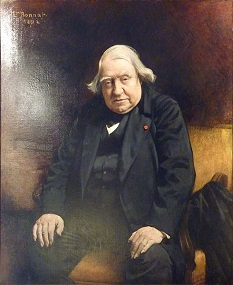
 

Wie traf sich selbst der Tod mit jenem Stoße

Wie traf sich selbst der Tod mit jenem Stoße
Gen ihn, mein Licht, das zu verdunkeln er
Zu schwach und dessen Ruhm nur mehr und mehr
Durch schönes Sterben wuchs ins Übergroße!

Nun droht er mir! Doch seine Faust erstarrt
Hoch in der Luft, mein Lächeln macht sie stocken …
Warum lässt er zum Streich sich nicht verlocken?
Wie grausam er mit Höflichkeit mich narrt!

Mein totes Leben such ich ihm zu schenken
Doch er, nicht solchen leichten Siegs gewohnt,
Übt nie erhörte Rache: er verschont

Mich seines Streichs, quält mich mit seinen Ränken,
Lässt lebend mich in diesem wahren Tod –
O, wie entrinn ich dieser letzten Not?


Vertaald door Hans Mühlestein


On what smooth seas, on what clear waves did sail

On what smooth seas, on what clear waves did sail
My fresh careened bark ! what costly freight
Of noble merchandise adorn’d its state !
How pure the breeze, how favouring the gale !

And Heaven, which now its beauteous rays doth veil,
Shone then serene and shadowless. But fate
For the too happy voyager lies in wait.
Oft fair beginnings in their endings fail.

And now doth impious changeful fortune bare
Her angry ruthless brow, whose threat’ning power
Rouses the tempest, and lets loose its war !

But though rains, winds, and lightnings fill the air,
And wild beasts seek to rend me and devour,
Still shines o’er my true soul its faithful star.


Like to a hungry nestling bird, that hears

Like to a hungry nestling bird, that hears
And sees the fluttering of his mother’s wings
Bearing him food, whence, loving what she brings
And her no less, a joyful mien he wears,

And struggles in the nest, and vainly stirs,
Wishful to follow her free wanderings,
And thanks her in such fashion, while he sings,
That the free voice beyond his strength appears;

So I, whene’er the warm and living glow
Of him my sun divine, that feeds my heart,
Shine’s brighter than its wont, take up the pen,

Urged by the force of my deep love; and so
Unconscious of the words unkempt by art
I write his praises o’er and o’er again.


Vertaald door Thomas Adolphus Trollope


 1879270-5cc90caf4f3fd78a9d2b10cbad52da0f.jpg
Vittoria Colonna (april 1492 – 25 februari 1547)
Anoniem portret uit de 16e eeuw

Geschreven door Romenu om 00:00 Reageer op dit bericht

Gabriël Smit

De Nederlandse dichter, essayist, toneelschrijver, vertaler, kunstcriticus, journalist, redacteur en politicus Gabriël Wijnand Smit werd geboren in Utrecht op 25 februari 1910. Smit werd geboren in een oudkatholiek gezin, maar stapte toen hij volwassen was over naar de rooms-katholieke Kerk. In 1969 liet hij deze kerk echter achter zich. Op zijn twintigste verhuisde hij naar Hilversum, later naar 's-Graveland, waar hij jarenlang raadslid voor de KVP was (hij was ook fractievoorzitter) alsook enige tijd waarnemend burgemeester, en vervolgens naar Laren, waar zijn grote gezin opgroeide en hij tenslotte op 71-jarige leeftijd aan een longaandoening overleed. Smit begon in 1933 als journalist bij de Gooi- en Eemlander, trad aan als redacteur van het antisemitische De Nieuwe Gemeenschap, waar hij samen met A. den Doolaard vertrok toen de hoofdredacteur openlijk het antisemitisme ging uitdragen. Vervolgens werkte hij voor de Linie en De Gids. Hij werd daarna kunstredacteur en -criticus en redacteur geestelijk leven van de Volkskrant, en schreef ook veel voor radio en televisie. Tijdens WO II werden zes bundels van Smit clandestien uitgegeven, maar hij was gelijktijdig hoofdcorrespondent van de nazistische Nederlandsche Kultuurkamer. Deze dubbelrol verleende hem dan ook de naam 'de dubbele pannebakker'. Of en in welke mate Smit pro-Duits was, is onduidelijk. Smit werd in 1955 ridder in de Orde van Sint-Gregorius de Grote in verband met zijn psalmberijming (Psalmen, 1952). In 1962 kreeg hij de cultuurprijs van de gemeente Hilversum voor zijn oeuvre en in 1970 de Marianne Philipsprijs.


Imbecile

Dit leven was een onverzettelike muur van vrezen,
en God alleen een slordig ‘Onze-Vader’.
de meeste mensen kwamen hem nooit nader,
kenden niet het duister-diepe van zijn wezen.
 
buiten - 's avonds - flitsten lichten door zijn haren,
auto's, razend - hij dacht een komeet -
en in een klampen, waarvan God slechts weet,
wist hij zijn hart dan langer te bewaren.
 
als hij aan tafel spijzen tot zich nam,
angstig, gulzig, in een blinde haast,
was hij om onze tranen steeds verbaasd,
en voelde niet waaruit de stilte kwam.
 
en mechanies dankend in een altijd-killer Onze-Vader,
sterker: ‘geef ons heden ons dageliks brood’,
kende hij de angsten om de dood
dieper dan één van ons, want zeer veel nader....


Tien sonnetten

I
Heer, het is niet dat Gij de stilte neemt,
dat Gij de wereld schreeuwen laat en gieren,
dat Gij het toelaat als de wilde dieren
van jacht en oogenblik - niets dat nog zweemt
 
naar maat en duur bleef hun gebrul nog eigen -
de dag verscheuren met hun hongerkreet,
Heer, het zijn niet de waanzin en het leed
die schreeuwend, schreeuwend om verlossing hijgen, -
 
dit alles is het niet, - want nu de nacht
het wreedst rumoer tot zwijgen heeft gebracht
hoor ik misschien weer hoe de sterren zingen.
 
Maar dat Gij hier, nabij, mijn kleine dingen
nog leeg laat, zonder stilte's fluisteringen,
nog dood van angst, - dit rooft mijn laatste kracht.


 1816996-2dd4e25fc0c27b707e5de2aa8b3dcbaa.jpg
Gabriël Smit (25 februari 1910 – 23 mei 1981)

Geschreven door Romenu om 00:00 Reageer op dit bericht

Alain Mabanckou, Leon de Winter, George Moore, Erich Loest, Luc Verbeke, Wilhelm Grimm, Friedrich Spielhagen

De Congolese dichter en schrijver Alain Mabanckou werd geboren op 24 februari 1966 in Congo-Brazzaville (Frans Congo). Zie ook alle tags voor Alain Mabanckou op dit blog.

Uit: African Psycho (Vertaald door Christine Schwartz Hartley)

“Still, it's weird: Every time one of my deeds ends in fiasco, something—I don't know what exactly—compels me to think about Angoualima, my idol, and to make for his grave in the cemetery of the Dead-Who-Are-Not-Allowed-to-Sleep in the first hours of the day. There I talk to him, listen to him take me to task, call me an imbecile, an idiot, or a pitiful character. I agree, abandon myself to the fascination he exerts over me, and take these insults as a sign of the affection that only he shows me. Now if only I could convince myself that it is not in my interest to compare myself to him or desperately seek his approval as a master of crime, I might be able to start working with a free spirit. To each his own manner and personality. I certainly have tried to pursue this course. It's not as simple as it seems.
Why take Angoualima as a model and not another of our town's bandits? I finally found an explanation. Actually, when I was just a teenager with skeletal legs, drifting through the sticky streets of the He-Who-Drinks-Water-Is-an-Idiot neighborhood, playing scarfball with other kids my age, I would already hear people talk about Angoualima and would recognize myself in each of his gestures, which the whole country decried. I felt admiration for him. In a certain way he had preceded me in the type of existence I dreamed of for myself. So as not to despair, I persuaded myself that I resembled him, that his destiny and mine had the same arc, and that little by little I would eventually climb each step until my head, shaped like a rectangular brick, deserved a crown of laurels.
I did resemble him. Not in any physical way, but in that he cultivated a taste for solitude and that he hadn't been recognized by his parents either—they abandoned him at a great crossroads of life where the poor child had no idea what path to take.”
 

1727480-d9e591ee006728bec56166478c3fff06.jpg
Alain Mabanckou (Congo-Brazzaville, 24 februari 1966)


De Nederlandse schrijver Leon de Winter werd geboren in ’s-Hertogenbosch op 24 februari 1954. Zie ook alle tags voor Leon de Winter op dit blog.

Uit: Supertex

“Ik moest Jimmy Tsjin bellen en de elektrische wekker begon te zeuren. Ik lag tegen de billen van Maria en slaperig draaide zij zich om toen ze voelde dat ik wilde opstaan. Ze sloeg haar armen om me heen en hing met haar volle gewicht aan mijn nek. Ik kon dat hebben want mijn overgewicht had zich voor een deel in mijn nek genesteld. “Even wachten, schatje, ”zei ik “eerst bellen, dan kom ik weer tegen je liggen.”
(…)

“Ik besefte dat ik hen zou raken. Een halve chassidische familie, zaterdag ochtend vroeg op weg naar de sjoel om tot G’d te bidden en Hem ook voor mij vergiffenis te vragen, zou ik wegvagen omdat ik zo hoognodig een telefoontje naar Bankok moest plegen over een partij wintergoed. Straks zouden ze de chassieden van de vooruit krabben en ik zou in het cachot geworpen worden. Ik reed hier honderdtwintig en was net van plan naar de vier door te schakelen om op het einde van de Lairese in de vijf en boven de tweehonderd te zitten. Ik zag hun onschuldige gezichten dichterbij kom en en ik begon te bidden. Opnieuw had de Heer mij uitverkoren.
De abs-remmen van ingenieur Porsche vertraagden de wagen met velen kilometers per meter en begon erop te lijken dat ik net ter hoogte van de voorste chassidische jongen tot stilstand zou komen. Als door een reusachtige hand tegengehouden verloor de auto zijn laatste snelheid. Een klein schokje kondigde absolute rust aan en alsof mijn tastzin zich tot de voorbumper had uitgestrekt merkte ik dat ik de jongen net schampte, zoals je iemand een schouderklopje geeft.”


 1727480-c44080ffe30de8b31d8bfccbb85338a2.jpg
Leon de Winter (’s-Hertogenbosch, 24 februari 1954)


De Ierse schrijver en kunstcriticus George Augustus Moore werd geboren op 24 februari 1852 in Ballyglass. Zie ook alle tags voor George Moore op dit blog.

Uit: The Untilled Field (A Letter To Rome)

“One morning the priest's housekeeper mentioned as she gathered up the breakfast things, that Mike Mulhare had refused to let his daughter Catherine marry James Murdoch until he had earned the price of a pig.
"This is bad news," said the priest, and he laid down the newspaper.
"And he waited for her all the summer! Wasn't it in February last that he came out of the poor-house? And the fine cabin he has built for her! He'll be that lonesome, he'll be going to America."
"To America!" said the priest.
"Maybe it will be going back to the poor-house he'll be, for he'll never earn the price of his passage at the relief works."
The priest looked at her for a moment as if he did not catch her meaning, and then a knock came at the door, and he said:—
"The inspector is here, and there are people waiting for me."
And while he was distributing the clothes he had received from Manchester, he argued with the inspector as to the direction the new road should take; and when he came back from the relief works, there was his dinner. He was busy writing letters all the afternoon; it was not until he had handed them to the post-mistress that his mind was free to think of poor James Murdoch, who had built a cabin at the end of one of the famine roads in a hollow out of the way of the wind. From a long way off the priest could see him digging his patch of bog."


 1727480-01550674d88514cae211321527f3da8a.jpg
George Moore (24 februari 1852 – 20 januari 1933)
Ballyglass, vuurtoren


De Duitse schrijver Erich Loest werd geboren op 24 februari 1926 in Mittweida. Zie ook alle tags voor Erich Loest op dit blog.

Uit: Durch die Erde ein Riß

„Kimme und Korn, verklemmt und verkantet, und kehrt wurde immer auf dem linken Absatz gemacht.
Landsknechtstrommeln dröhnten, Fanfaren gellten, abends loderte auf dem Markt ein Feuer. Mit Flammen hatten's die Nazis auch in Mittweida, mit Sonnwendfeuern und Fackelzügen; es muß sie geschmerzt haben, als sie im Herbst 1939 feindlicher Flieger wegen auf dieses Rauschmittel verzichten mußten. Schon einige Wochen vorher, an seinem zehnten Geburtstag, hatte der künftige Pimpf dies auf dem Gabentisch gefunden: Braunhemd und schwarze Hose von den Großeltern, Koppel und Schulterriemen von Tante Lucie, Halstuch und Knoten und Jacke von Mutter und Vater. Er machte sich uniform damit, bevor er sich am Morgen des 20. April mit wimmelnden Scharen anderer Jungen auf dem »Platz der SA« einfand und unter überlaut wiederholten und nicht verstandenen Befehlen in Reih und Glied geschubst wurde. Da merkte er schon, daß er pinkeln mußte und wagte nicht, sich ein Stückchen davonzumachen und in einen Winkel zu stellen; der Druck der Blase verstärkte sich beim Marsch durch die halbe Stadt zum Schützenhaus hin- auf, im Saal traute er sich erst recht nicht, einen Schnurträger um Erlaubnis zum Austreten zu bitten. Fahnen wurden hereinzelebriert, Reden gehalten, und im Pimpfanwärter L. wuchs die Scham, im heiligsten Augenblick, der ihm bislang vergönnt gewesen war, entlaufen zu müssen zur teergestrichenen Wand neben der Bühne, und es wuchs die Angst, er pißte sich in die Hosen. Als die Not am höchsten war, quälte er sich doch aus der Reihe und auf einen Beschnurten zu, der sah ihm seine Bedrängnis an und wartete keine Frage ab und zeigte eilfertig den Weg, der Gequälte erreichte die Teerwand mit Müh und Not und schiffte in panischer Hast durchs Hosenbein; das Glück dabei war größer als jedes andere an diesem Tag.“


 1727480-588dbcc9965d3b018eca0ecbf125b2a5.jpg
Erich Loest (24 februari 1926 - 12 september 2013)


De Vlaamse dichter en schrijver Luc Verbeke werd geboren in Wakken op 24 februari 1924. Zie ook alle tags voor Luc Verbeke op dit blog.


Wolken regenen verdriet

Wolken regenen verdriet
in het eeuwig-dorstige zand,
in poriën van de dood:
miljarden atomen
en cellen
van mens, dier en plant
in zon en vuur geschroeid,
versteend, verpulverd,
eeuwenlang
tot as gebrand.
Maar Geest waait de geest
los en vrij
waar hij wil
door licht, lucht en land,
levend nieuw als de wind.
Dood leeft van het brood
van het leven.
Leven leeft op de dood
en liefde wint.


 1727480-65926132574da43fbcd7a852608d8ccd.jpg
Luc Verbeke (24 februari 1924 – 30 september 2013)


De Duitse schrijver en taalwetenschapper Wilhelm Karl Grimm werd geboren in Hanau op 24 februari 1786. Zie ook alle tags voor Wilhelm Grimm op dit blog.

Uit: Die hagere Liese

„Ganz anders als der faule Heinz und die dicke Trine, die sich von nichts aus ihrer Ruhe bringen ließen, dachte die hagere Liese. Sie äscherte sich ab von Morgen bis Abend und lud ihrem Mann, dem langen Lenz, so viel Arbeit auf, daß er schwerer zu tragen hatte als ein Esel an drei Säcken. Es war aber alles umsonst, sie hatten nichts und kamen zu nichts. Eines Abends, als sie im Bette lag und vor Müdigkeit kaum ein Glied regen konnte, ließen sie die Gedanken doch nicht einschlafen. Sie stieß ihren Mann mit dem Ellenbogen in die Seite und sprach „hörst du, Lenz, was ich gedacht habe? wenn ich einen Gulden fände, und einer mir geschenkt würde, so wollte ich einen dazu borgen, und du solltest mir auch noch einen geben: so bald ich dann die vier Gulden beisammen hätte, so wollte ich eine junge Kuh kaufen.“ Dem Mann gefiel das recht gut, „ich weiß zwar nicht,“ sprach er, „woher ich den Gulden nehmen soll, den du von mir willst geschenkt haben, aber wenn du dennoch das Geld zusammenbringst, und du kannst dafür eine Kuh kaufen, so thust du wohl, wenn du dein Vorhaben ausführst. Ich freue mich,“ fügte er hinzu, „wenn die Kuh ein Kälbchen bringt, so werde ich doch manchmal zu meiner Erquickung einen Trunk Milch erhalten.“ „Die Milch ist nicht für dich,“ sagte die Frau, „wir lassen das Kalb saugen, damit es groß und fett wird, und wir es gut verkaufen können.“


 1727480-2b297b04b2906a04b365f6f2fd385eac.jpg
Wilhelm Grimm (24 februari 1786 – 16 december 1859)
Illustratie door Rudolf Schiestl


De Duitse schrijver Friedrich Spielhagen werd geboren op 24 februari 1829 in Magdeburg. Zie ook alle tags voor Friedrich Spielhagen op dit blog.

Uit: Uhlenhans

“Hans hatte, da ihn der Heimweg gerade durch Prora geführt, in dem Stalle des Gasthofes »zum König von Preußen« die frisch milchende Kuh angesehen, die er gestern hereingeschickt; den herzlichen Dank der jungen Frau verlegen abgelehnt; in der Wirtsstube von dem neuen Doppelbier, das ihm Clas Wenhak aufgenötigt, nur eben genippt, und war nun mit demselben zur Thür hinaus getreten, wo der Hausknecht sein Pferd am Zügel hielt.
Clas Wenhak schob den Mann beiseite: er selbst wollte dem Herrn Baron beim Aufsteigen behilflich sein. Der hatte bereits den Fuß im Bügel, zog ihn aber wieder zurück. Ueber den kleinen offenen Platz kam sehr schnell ein Jagdwägelchen heran gerasselt, in dessen zweitem Sitz, in die Ecke gelehnt, Fürst Prora saß und sich jetzt, als er des Barons gewahr wurde, schnell aufrichtete, dem Kutscher ein Wort zurufend.
Der Wagen hielt.
Hans war an das Gefährt heran getreten. Der Fürst streckte ihm lebhaft die Hand entgegen.
Guten Abend, lieber Baron! Was führt Sie so spät hierher?
Geschäfte, Durchlaucht –
Ich frage nur, weil ich mich selbst verspätet habe. Sie sind doch auch heute auf dem Zauberfeste in Griebenitz?“


 1727480-4b356f5f1afb0b5b17eb9adbaf66e28c.jpg
Friedrich Spielhagen (24 februari 1829 – 25 februari 1911)
Magdeburg, Alter Markt (Fotochroomafdruk)


Zie voor nog meer schrijvers van de 24e februari ook mijn blog van 24 februari 2013 deel 1 en ook deel 2 en eveneens deel 3.

Geschreven door Romenu om 19:22 Reageer op dit bericht

Herman Maas

De Nederlandse schrijver en journalist Herman Hubertus Joannes (Herman) Maas werd geboren in Venray op 24 februari 1877. Maas huwde in 1903 met Henriette Braem uit Arcen. Het echtpaar kreeg drie kinderen. Maas begon zijn carrière als onderwijzer op lagere scholen in Oirlo en Ospel. Vervolgens werkte hij vier jaar als verzekeringsagent. In 1915 werd hij leraar aan de kweekschool te Venlo. Maas schreef zijn eerste stuk in 1896 in het Venrayse weekblad Peel en Maas en gebruikte daarbij de schuilnaam Peter van Venrode. Gedurende zijn hele leven bleef zijn geboortestreek De Peel een belangrijke bron van inspiratie In 1900 begon Maas met literaire bijdragen met een kritische boodschap. Wat later werden deze ook politiek van aard. Zijn eerste roman uit 1901 kan exemplarisch geacht worden voor het latere werk. Maas kaart daarin sociale wantoestanden, kleinburgerlijkheid en wanbestuur aan. Zijn roman “Verstooteling” uit 1907 levert Maas dermate veel problemen op dat hij op zoek moest naar een andere baan. Van 1915 tot 1923 was hij leraar aan de Rijksnormaalschool te Venlo. Hij combineerde deze baan met zijn werk als journalist voor het blad Limburgs Belang en zijn deelname aan de plaatselijke politiek in zijn woonplaats Roermond. Maas is zich altijd blijven verzetten tegen de vergaande invloed van de confessionele coalitie op de maatschappelijke ontwikkelingen. Vanaf 1933 had hij door langdurige werkloosheid met slechts een klein wachtgeld te kampen met miserabele levensomstandigheden. Zijn echtgenote werd in dat jaar met een chronische depressie blijvend opgenomen op de gesloten afdeling van een psychiatrische inrichting. Mede onder invloed van zijn oudste zoon raakte hij steeds meer betrokken bij de fascistische wereldbeschouwing. Hij werd ook lid van de Kultuurkamer. Maas bleef tot op zijn 80e levensjaar als schrijver actief, hij had als bijnaam de Limburgse Zola.

Uit: Landelijke eenvoud

“Op de ‘groes’, onder een breedkruinigen appelboom, stonden Nel en Driek bij elkaar. Hij leunde met den schouder tegen den stam, het eene been over 't andere geslagen, in loom-hangerige houding. Nel stond voor hem, plukte aan haar blauw schort, de oogen gericht naar den grond, waar zij toch niets zag.
Terwijl haar eene klomp al maar door grasspieren neertrapte onder haar onbewust beweeg van den voet, vertelde zij, hoe vader en moeder 's avonds van te voren weer opgespeeld hadden, omdat zij het met Driek niet uitmaken wilde. Ze hadden haar uitgescholden voor al wat leelijk was, totdat zij eindelijk van kwaadheid naar bed was geloopen. Maar zij had gezegd, dat ze het niet deed, nooit. Ze ‘ging’ met Driek, als ze zelf wilde, en niemand had zich daarmee te bemoeien. Wat dachten ze wel?....
Toen ze in haar bed lag, had ze zich niet meer kunnen inhouden. Ze had wel een uur lang liggen schreien....
Telkens na eenige oogenblikken vlug vertellen, daalde een zwijging tusschen hen neer, alleen onderbroken door haar zuchten: ‘'t Is toch wat te zegge....’
Driek wist weinig of niets te antwoorden. Hij hoorde haar aan zonder blijken te geven, dat hij getroffen werd door haar verhaal.
Toch was hem dat lang niet onverschillig. En al had hij datzelfde dikwijls al gehoord, het verveelde hem ook nu niet. Maar het kwam niet in zijn gedachten op, dat hij haar zou moeten troosten, of haar moest verzekeren, dat niemand in staat zou zijn tusschen hen tweeën iets te veranderen. Ook verlangde zij dat niet. 't Was haar genoeg hem weer eens gezegd te hebben, wat zij thuis moest uitstaan.
Vader en moeder hadden zoo als altijd gekeven, dat de ouders van Driek hèn al jaren lang geplaagd en gesard hadden. En Driek was óók niks, een vent, dien ze voor hun oogen niet zien konden.
En als zij vroeg, wàt ze dan tegen Dirk hadden, of hij niet goed oppaste, en zoo, dan werden ze nog véél kwader en riepen maar, dat 't er niets op aankwam, zij wilden met Driek niks uit te staan hebben, en daarmee uit!...."


1842551-98fb07da964c30bd19fb4e155e356e02.jpg
Herman Maas (24 februari 1877 - 27 januari 1958)

Geschreven door Romenu om 00:00 Reageer op dit bericht

Ljoedmila Oelitskaja, Robert Gray, César Aira, Sonya Hartnett, Maxim Februari, Toon Kortooms, Erich Kästner

De Russische schrijfster Ljoedmila Jevgenjevna Oelitskaja werd geboren in Davlenkanovo, Basjkirostan, op 23 februari 1943. Zie ook alle tags voor Ljoedmila Oelitskaja op dit blog.

Uit: Een Russische geschiedenis (Vertaald door Arie van der Ent)

“Tamara zat voor een bord met een spiegelei en at terwijl ze haar droom nog afkeek.
Haar moeder Raïsa Iljinitsjna haalde zo teder ze kon de kam met de spaarzame tanden door haar haar en deed haar best het levende vilt zo veel mogelijk te ontzien.
De radio braakte plechtige muziek uit, maar niet te hard: oma lag te slapen achter het scherm. Toen zweeg de muziek. De pauze was te lang en niet zomaar, zo leek. Daarna weerklonk de stem die iedereen kende: ‘Attentie! Dit is Radio Moskou. Alle radiostations van de Sovjet-Unie zijn in de lucht. Dit is een mededeling van de overheid ...’
De kam verstarde in Tamara’s haar, zelf was ze mete en klaarwakker, schrokte haar gebakken ei op en zei met hese ochtendstem: ‘Mam, vast een of andere stomme verkoudheid en dan meteen het hele land ...’
Ze kreeg geen tijd haar zin af te maken, omdat Raïsa Iljinitsjna opeens met alle kracht een ruk aan de kam  gaf, Tamara’s hoofd abrupt achteroversloeg en haar tanden op elkaar klapten.
‘Hou je mond’, siste Raïsa met verstikte stem.
In de deuropening stond oma in haar kamerjas, zo oud als de Chinese Muur. Ze hoorde het radiobericht stralend aan en zei: ‘Rajetsjka, koop jij iets lekkers bij Jelesejev. Het is vandaag trouwens Poerim. Ik geloof echt dat Samech de pijp uit is.’
Tamara wist toen niet wat Poerim was, waarom er iets lekkers gekocht moest worden, laat staan wie Samech was, die de pijp uit was. Hoe had ze ook moeten weten dat Stalin en Lenin uit veiligheidsoverwegingen in hun familie sinds jaar en dag bij de eerste letter van hun partijnaam werden genoemd, de s en de l, en dan in een geheimzinnige oeroude taal: ‘samech’ en ‘labed’.”


 1726785-29294a08abc31e3812eaf1744d53aa3e.jpg
Ljoedmila Oelitskaja (Davlenkanovo, 23 februari 1943)


De Australische dichter Robert Gray werd geboren op 23 februari 1945 in Port Macquarie. Zie ook alle tags voor Robert Gray op dit blog.


In Departing Light (Fragment)

My mother all of ninety has to be tied up
in her wheelchair, but still she leans far out of it sideways;
she juts there brokenly,
able to cut
with the sight of her someone who is close. She is hung
like her hanging mouth
in the dignity
of her bleariness, and says that she is
perfectly all right. It is impossible
to get her to complain
or to register anything
for longer than a moment. She has made Stephen Hawking look healthy.
It’s as though
she is being sucked out of existence sideways through a porthole
and we’ve got hold of her feet.
She’s very calm.
If you live long enough it isn’t death you fear
but what life can still do. And she appears to know this
somewhere,
even if there’s no hope she could formulate it.
Yet she is so calm you think of an immortal – a Tithonus withering
forever on the edge
of life,
though never a moment’s grievance. Taken out to air
my mother seems in a motorcycle race, she
the sidecar passenger
who keeps the machine on the road, trying to lie far over
beyond the wheel.


 1726785-c07dfced23d8d723051db38a0637556a.jpg
Robert Gray (Port Macquarie, 23 februari 1945)


De Argentijnse schrijver en vertaler César Aira werd geboren op 23 februari 1949 in Coronel Pringles. Zie ook alle tags voor César Aira op dit blog.

Uit: De schimmen (Vertaald door Adri Boon)

“De verdieping daaronder was be- stemd voor opslag, met boxen of berghokken. Boven de zesde verdieping waren het verwarmde zwembad en de speelzaal, met een weids uitzicht over daken en straten. En de conciërgewoning, waar, ofschoon net zo onaf als de rest van het gebouw, sinds een paar maanden, met zijn gezin, de nachtwaker woonde, Raúl Viñas, een Chileense bouwvakker, die, hoewel een enorme drinkebroer, zeer betrouwbaar bleek. Het was buitengewoon warm. En van daar naar bene- den kijken gevaarlijk. De glazen panelen die het ter- ras zouden omgeven waren nog niet geplaatst. De be- zoekers hielden de kinderen ver weg van de rand. Het is waar dat ruimtes in een huis in aanbouw kleiner lijken zolang de ramen, deuren en vloeren niet zijn aangebracht. Dat weet iedereen. En toch was het om- gekeerde ook waar. Domingo Fresno, de architect die het interieur van de tweede verdieping zou verzor- gen, liep onrustig door dat uitgestrekte labyrint, alsof hij in een zandwoestijn ronddwaalde. Tello had rede- lijk goed werk geleverd. Het gebouw stond in elk ge- val stevig op de fundering; het had ook kunnen inzak- ken als een ijsje in de zon. Van de eerste verdieping was niemand gekomen. Op vierhoog waren meneer en mevrouw Kahn, een ouder echtpaar met twee jon- ge dochters, in gezelschap van een binnenhuisarchi- tecte, de buitengewone Elida Gramajo, die hardop be- rekeningen maakte voor de gordijnen. Er moest rekening gehouden worden met de kleinste dingen. En elk detail vereiste dat niet alleen de plek zelf werd opgemeten, maar ook de ruimte eromheen. Dus werd die grote betonnen kooi in al zijn drie dimensies tot op de millimeter nauwkeurig gemeten.Een in het paars geklede dame beklom hijgend de trap tussen de vijfde en de zesde verdieping. Anderen hoefden niet zoveel moeite te doen: ze zweefden naar boven en naar beneden, zelfs dwars door de vloertegels heen. De eigenaars vonden het niet erg dat de bouw vertra- ging had opgelopen, deels omdat pas bij oplevering het restbedrag moest worden voldaan, maar ook om- dat ze het wel prettig vonden extra tijd te hebben voor het kiezen van meubilair en de inrichting.”


 1726785-ca3698b5786727b1e11d0fecc70e623b.jpg
César Aira (Coronel Pringles, 23 februari 1949)


De Australische schrijfster Sonya Hartnett werd geboren op 23 februari 1968 in Box Hill, Melbourne. Zie ook alle tags voor Sonya Hartnett op dit blog.

Uit: Of A Boy

“It was a warm day and they had behaved, as they had promised they could, so there must be ice-cream. Veronica took her sister's hand. That afternoon, so near to winter, the sky was very blue; the sun felt soft as a cat. The children, on the footpath, paused to wave to their mother. For them, at their age, a trip to the milkbar could take on the dimensions of a voyage.
The mother straightened from the soil, hair falling into her eyes. Her children's voices were thin and high, the piping of chicks in a nest. 'Goodbye, my loves,' she said, the words no more than her habit. The mother would remember, later, the white glint of silver coins held tight in the palm of her son.
Christopher was five, with a child's ponderous gait; his older sisters, leggy as fillies, must match their pace to his. Zoe's thoughts would drift as she ambled, lingering on insects and flowers. Bending again to her garden, the mother knew without calculation that her children would be gone for half an hour: fifteen minutes to the shop, fifteen minutes home.
The route they'd take to the milkbar would bend around four corners of the suburban neighbourhood: two right turns, two left. The neighbourhood was a modest one, and the distances between corners were not great. The result of all the twisting was that no one who saw the Metford children walking through that clear afternoon would see them for very long.
The first witness was changing a tyre, on his knees uncomfortably on a stone driveway. He noticed the children because the little boy, passing the gate, made an infant's noise for a car, brmm. The sound made the man smile, the only thing to have done so all day. The witness recognised the Metfords as local, although he did not know their names. He would tell the police that, when he saw them, the children were alone.”


 1726785-f056e42d13664f98332959ac3f467207.jpg
Sonya Hartnett (Box Hill, 23 februari 1968)


De Nederlandse schrijver, filosoof en columnist Maxim Februari (eig. M. Drenth) werd geboren in Coevorden op 23 februari 1963. Maxim Februari publiceerde eerder onder de naam Marjolijn Februarti. Sinds 15 september 2012 gaat hij als man door het leven. Zie ook alle tags voor Maxim Februari op dit blog en eveneens mijn blog van 23 februari 2012.


Naar Manet

De suppoost veronderstelt een jongedame,
ze loopt de zaal door naar de verste hoek.
Daar eten op het gras drie mensen samen,
olie op doek.

Ze denkt ik zit heraldisch rechts
(gezien vanaf de bank in het park
of stilhoudend naast Titiaan)
en ik ben slechts een vrouw. Ik heb niets aan.

Ze denkt ik ben de linker god (met hoed),
geleund in het gras
beheers ik het geverfd helaal. En ik poseer
een handgebaar, mijn arm als as
doorkruist haar beeld voorgoed.

Ze denkt of zit ik altijd weer
met achter mij de muze (in het meer)
daar zwijgend tussen in.

De intercom roept om, ze loopt wat sneller
langs Titiaan de zaal uit naar het park.
(De bankjes zijn bezet. Men eet zijn maal.)

De suppoost na nazien van
de zaal en de bezoekers-teller
gaat opgewekt de deuren sluiten:
ieder die binnenkwam ging ook weer buiten.

Men hoort hem hymnen fluiten.


 1726785-139f97e6bee883e664871961ebe28bc6.JPG
Maxim Februari (Coevorden, 23 februari 1963)


De Nederlandse schrijver Toon Kortooms werd op 23 februari 1916 in Deurne geboren. Zie ook alle tags voor Toon Kortooms op dit blog.

Uit: Help! De dokter verzuipt...

“Wij staan in deze machteloos. Wij noteren slechts. Het is niet onze taal, doch de zijne. Voor degenen die ons verhaal te borstelig achten, is het lezen van het spoorboekje heilzamer. Het is warempel niet onze schuld dat Angelino voor geen goud ter wereld ooit sprak van een bips. Hij had een koud genoegen in het onbewimpeld benoemen van doorgaans bedekte lichaamsdelen. Bij hem bleef een bips wat het uiteindelijk toch ook is: een kont. Een veel voorkomend ongemak aan het achterste, aambeien, duidde hij aan met reetketelsteen. Doch het siert zijn aard dat hij, zodra er vrouwen aanwezig waren, na elke onparlementaire uitlating zijn verontschuldigingen aanbood met de woorden: neem mij niet kwalijk!
Tegelijkertijd hield hij ervan deftigklinkende woorden en termen te bezigen. Want er is geen wonderlijker en tegenstrijdiger wezen dan de mens. Tegen onze pastoor zei hij dienaar Gods, priester of herder of iets van die aard; een boer noemde hij bij voorkeur landbouwer en een dokter of arts was naar zijn opvattingen uitsluitend een geneesheer.
Groot was Edmund Angelino in zijn liefde voor zijn mensen. Hij luisterde naar hun hebben en houden. Alles wat zij hem vertelden, interesseerde hem hevig. Zieken en eenzamen vereerden hem, want hij schuwde geen moeite indien hij hen kon bijstaan in hun pijnen en hun alleen-zijn. Mogelijk omdat hij zelf in zijn stormachtig verleden zo eenzaam was geweest. Hij had in Borneo geen vrouw bemind. De tijd en de gelegenheid ontbraken hem daartoe. Of hij moest de vrouw van zijn formaat nog ontmoeten.”


 1726785-e5d87d4fc05a329660f15a9e69935ec7.jpg
Toon Kortooms (23 februari 1916 – 5 februari 1999)
Scene uit de film uit 1974 met Jules Croisset als dokter Angelino 


De Duitse schrijver, dichter en cabaretier Erich Kästner werd geboren in Dresden op 23 februari 1899. Zie ook alle tags voor Erich Kästner op dit blog.


Fantasie von Übermorgen

Und als der nächste Krieg begann,
da sagten die Frauen: Nein!
und schlossen Bruder, Sohn und Mann
fest in der Wohnung ein.
Dann zogen sie in jedem Land,
wohl vor des Hauptmanns Haus
und hielten Stöcke in der Hand
und holten die Kerle heraus.
Sie legten jeden übers Knie,
der diesen Krieg befahl:
die Herren der Bank und Industrie,
den Minister und General.
Da brach so mancher Stock entzwei.
Und manches Großmaul schwieg.
In allen Ländern gab's Geschrei,
und nirgends gab es Krieg.
Die Frauen gingen dann wieder nach Haus,
zum Bruder und Sohn und Mann,
und sagten ihnen, der Krieg sei aus!
Die Männer starrten zum Fenster hinaus
und sahen die Frauen nicht an...


 1726785-71938954ace993475be58bd51e6251e3.jpg
Erich Kästner (23 februari 1899 - 29 juli 1974)


Zie voor nog meer schrijvers van de 23e februari ook mijn blog van 23 februari 2014 deel 2 en eveneens deel 3.

Geschreven door Romenu om 19:19 Reageer op dit bericht

Arnon Grunberg, Paul van Ostaijen, Hugo Ball, Danilo Ki¨, Sean O'Faolain, Jane Bowles, Ishmael Reed

De Nederlandse schrijver Arnon Grunberg werd geboren in Amsterdam op 22 februari 1971. Zie ook alle tags voor Arnon Grunberg op dit blog.

Uit: Apocalyps

“Als kind heb ik veel in de zon gezeten. Mijn vader runde een vakantiepark (met bungalows, zwembad, restaurant en disco) aan het Gardameer. De zomers bracht ik door bij het zwembad. Toen ik oud genoeg was werkte ik in de keuken of ik hielp mee ijs te verkopen aan de bar naast het zwembad, waar we ook cocktails verkochten en snacks, maar ijs scheppen vond ik het leukst. Ik ontdekte al vroeg mijn commerciële talenten, de verkoop lag mij. Mijn ouders stimuleerden mijn commerciële talenten, zij het op speelse wijze. Er lag geen grote druk op mij. Als ik veel ijs had verkocht kreeg ik een cadeautje, een autootje, een voetbal, of ik mocht extra lang opblijven. Ik heb veel geknikkerd.
Vooral mijn vader was gelovig, hij was een fanatieke kerkganger, maar toen ik hem vertelde dat ik echt geen misdienaar meer wilde zijn knikte hij, verder zei hij niets. Ik heb een jongere broer. Met hem had ik weinig contact, hij hield niet van de zon, hij zat veel binnen. We gingen elkaar uit de weg.
Ik werd naar een internationale school gestuurd. In feite ben ik drietalig opgevoed: Nederlands, de taal van mijn ouders, Engels, de taal die op de internationale school werd gesproken, en Italiaans, de taal van het land waar ik mijn jeugd doorbracht en waar ik mijn commerciële talenten heb kunnen ontwikkelen.
Voor zover een jeugd zorgeloos kan zijn was de mijne zorgeloos. Mijn moeder overleed vrij jong, op mijn zestiende, toen was mijn jeugd feitelijk al voorbij.
Het lag voor de hand dat ik mijn commerciële talenten zou uitbuiten en in de verkoop zou gaan, maar ik besloot fysiotherapeut te worden. Het werken met lichamen trok me uiteindelijk meer dan de verkoop. Mijn halve jeugd heb ik halfnaakte mensen gezien, ik heb de mens leren kennen in zwemkleding. De scheiding tussen lichaam en ziel ervaar ik als iets onnatuurlijks, het lichaam ís de ziel. De fysiotherapie leek mij een natuurlijk vervolg op mijn jeugd aan het Gardameer. Stiekem was ik altijd al fysiotherapeut geweest.
In de winter ging het vakantiepark dicht, mijn vader richtte zich dan op het exporteren van Italiaanse olijfolie en wijnen naar Nederland. Ook hij had commerciële aanleg. Om van je naaste te kunnen houden als van jezelf moest je volgens mijn vader voldoende geld op je bankrekening hebben staan. Voor mij waren de winters een wachtkamer. Het leven begon pas weer als ik in mijn zwembroek langs de badgasten kon paraderen en als ik ze hoorde fluisteren: ‘Dat is de zoon van de eigenaar,’ dan was ik gelukkig.”


 1726385-5f894a39c74f6ab120beb34512d2ec00.jpg
Arnon Grunberg (Amsterdam, 22 februari 1971)


De Vlaamse dichter en schrijver Paul van Ostaijen werd geboren in Antwerpen op 22 februari 1896. Zie ook alle tags voor Paul van Ostaijen op dit blog.


Herfstlandschap

In de mist is trage een os met een ossenwagen
stappend naast de mist nooit mist zijn maat
de os van de ossenwagen
Uit de mist in de mist met de hortende wagen
dut de wagenvoerder zich niet vast
in een spoorloze slaap

Achter aan de wagen drijft lantaarnlicht
een geringe wig van klaarte in de donkerdiepstraat


Ik sta nu eenmaal voorbij de grens...

Ik sta nu eenmaal voorbij de grens,
Aan dewelke ieder normaal mens
Moet stilstand houden.
Een vriend heeft me onlangs verweten,
Dat ik buiten het normale, - volgens hem het goede - ben getreden.
Maar het lot, - of wie? - heeft het zo gewild,
Want het heeft mij het ongewone voorbehouden.
Niet ik ben ongewoon, maar wel mijn levenslot.
Bij mijn vrienden heb ik steeds het grootste verlangen gekend
Om een schone liefde, in de nieuwe Lente.

Maar mijn liefde ontstond
Op een Herfstavond,
Mijn grote liefde, even buiten de stad,
In het wijde park, toen het door de mensen, - de gewone dan? -
gans verlaten was.
Mijn liefde groeide sterk in de koude Winter, -
Enkel zeer mooie bloemen groeien dan. -
Daarom is mijn liefde ook oneindig schoon,
Al is zij, - 't spijt mijn vriend misschien, - ook ongewoon.


Wiegeliedje voor de geliefde

Dat trage zich toevouwen je oogleden,
te dragen het loom fluweel van onze nacht.

Onze dag is geweest als bange blanke vazen, die waren blij
de bloemen van ons liefdespel te scharen rei aan rei.

Nu zal je slapem, mijn teergeliefde kind,
want morgen moet je de ogen openen: 'n zeer fris blad dat beeft in morgenwind.

Nu zal je slapen, mijn zachte kind, in de kuil van je haren;
straks is het dag, dan moeten wij weer tuilen lezen gaan

Morgen zal er uit het Oosten 'n koning komen, met nieuwe bruidskleren voor ons beiden;
hem zullen wij, arm in arm, als kinderen in het woud, verbeiden.

Knijp nu je ogen dicht, mijn luie luipaard
en strek je heupen naar je lust. Ach du... du.


 1726385-abe9992335d803478c5a63ceead1bdb1.jpg
Paul van Ostaijen (22 februari 1896 – 18 maart 1928)
Portret door Floris Jespers, 1928


De Duitse dichter en schrijver Hugo Ball werd geboren op 22 februari 1886 in Pirmasens. Zie ook alle tags voor Hugo Ball op dit blog.


Noch mischt sich das Gold unsrer Augen

Noch mischt sich das Gold unsrer Augen
Noch fällt ein scheuer Strahl
Auf die lächelnde Madonna
Im sanften Saal.

Noch öffnen sich unsere Arme
Beim Kommen und Gehen weit
Und unsere leuchtenden Herzen
Tragen wir über dem Kleid.

Und alle Liebesglocken
Hängen uns noch im Ohr.
Es fallen und steigen die Locken
Im Engelchor.

Und im tiefgrünen Raume,
Da tanzet unser Kind.
Es wiegt sich auf den Zehen
Und hebet sein Röcklein lind.

Und über unserem Garten
Glänzet der Lilienschnee
Es spiegeln die weißen Flammen
Sich zart im blauen See ...

Noch sind unsere Hände verschlungen
Noch schluchzen die Vögel leis
Und mit den seligsten Tränen
Füllt sich der Zauberkreis ...


Karawane

jolifanto bambla o falli bambla
großgiga m'pfa habla horem
egiga goramen
higo bloiko russula huju
hollaka hollala
anlogo bung
blago bung blago bung
bosso fataka
ü üü ü
schampa wulla wussa olobo
hej tatta gorem
eschige zunbada
wulubu ssubudu uluwu ssubudu
tumba ba-umf
kusa gauma
ba – umf


 1726385-67d9f29c32b12bb8a5319df8758ba8fc.jpeg
Hugo Ball (22 februari 1886 – 14 september 1927)
Hugo Ball bij de voordracht van klankgedichten


De Servische schrijver Danilo Kiš werd geboren op 22 febrari 1935 in Subotica. Zie ook alle tags voor Danilo Kiš op dit blog.

Uit: The Attic (Vertaald door John K. Cox)

“Back at the time I think I first met her, I was feverishly demanding answers from life, and so I was completely caught up in myself—that is, caught up in the vital issues of existence.
Here are some of the questions to which I was seeking answers:
—the issue of the organic exchange of matter and
—the issue of nourishment
—metempsychosis
—life on other planets and
—out in space
—the age of the earth
—the difference between culture and civilization
—the race issue
—apoliticism or engagement
—kindness or heedlessness
—Superman or Everyman
—idealism or materialism
—Don Quixote or Sancho Panza
—Hamlet or Don Juan
—pessimism or optimism
—death or suicide
and so on and so forth.
These problems and a dozen more like them stood before me like an army of moody and taciturn sphinxes. And so, right when I had reached issue number nine—the issue of nourishment—after having solved the first eight problems in one fashion or another, the last addition to the list turned up: the question of love . . .”


 1726385-3c575ea23ad6acc16bb11ab2170ef5e6.jpg
Danilo Kiš (22 februari 1935 – 15 oktober 1989) 
Portret door Ratko Soc, z.j.


De Ierse schrijver Sean O'Faolain werd geboren op 22 februari 1900 in Cork. Zie ook alle tags voor Sean O'Faolain op dit blog.

Uit: The Faithless Wife

"Adding it all up (he was a persistent adder-upper" only one problem had so far defeated him: that he was a foreigner and did not know what sort of woman Irish women are. It was not as if he had not done his systematic best to find out, beginning with a course of reading through the novels of her country. A vain exercise. With the exception of the Molly Bloom of James Joyce the Irish Novel had not only failed to present him with any fascinating woman but it had presented him with, in his sense of the word, no woman at all.
(…)

"…half savage Brueghelesque peasants, or urban petite functionnaires drunk on religion, patriotism, or undiluted whiskey or taking flight to England..pastoral humbuggery or at its best pastoral lyricism.  As for Molly Bloom!  He enjoyed the smell of every kissable pore of her voluptuous body without for one moment believing she ever existed. James Joyce in drag."


 1726385-ab4c5c7fe839b70a33ed6a4ba7762627.jpg
Sean O'Faolain (22 februari 1900 – 20 april 1991)


De Amerikaanse schrijfster Jane Bowles werd als Jane Auer geboren op 22 februari 1917 in New York. Zie ook alle tags voor Jane Bowles op dit blog.

Uit: Two Serious Ladies

“Like most people, you are not able to face more than one fear during your lifetime. You also spend your life fleeing from your first fear towards your first hope. Be careful that you do not, through your own wiliness, end up always in the same position in which you began. I do not advise you to spend your life surrounding yourself with those things which you term necessary to your existence, regardless of whether or not they are objectively interesting in themselves or even to your own particular intellect. I believe sincerely that only those men who reach the stage where it is possible for them to combat a second tragedy within themselves, and not the first over and over again, are worthy of being called mature. When you think someone is going ahead, make sure that he is not really standing still. In order to go ahead, you must leave things behind which most people are unwilling to do. Your first pain, you carry it with you like a lodestone in your breast because all tenderness will come from there. You must carry it with you through your whole life but you must not circle around it. You must give up the search for those symbols which only serve to hide its face from you. You will have the illusion that they are disparate and manifold but they are always the same. if you are only interested in a bearable life, perhaps this letter does not concern you. For god's sake, a ship leaving port is still a wonderful thing to see.”


 1726385-8a5fbddd772e1927900abb5415d08234.jpg
Jane Bowles (22 februari 1917 – 4 mei 1973)
Cover


De Afro-Amerikaanse dichter, schrijver en essayist Ishmael Scott Reed werd geboren op 22 februari 1938 in Chattanooga, Tennessee. Zie ook alle tags voor Ishmael Reed op dit blog.


A Secretery Of Spirits

The following minutes were
logged by this Secretary to
the Spirits during the last five
years which have occasionally been
like a devil woman on a heart

Sometimes I felt
only a beetle could inch up
from this situation
Y'awl know what I mean

I am no bettle
not even a bishop
got 90% wrong on the priest's
exam
Scared of snakes

Just a red baboon with the
hurricane's eye
got up sometimes in a Businessman's
three-piece
Mostly an errand boy for the spirits
It's honest Work
You can even come by promotions
I'll rise or
maybe grow up even

I hail from a long line of
risers
like Grand ma ma, old oak
off on a new path
she sculpts from the clay


 1726385-0bd40c114be35239d36677435d299384.jpg
Ishmael Reed (Chattanooga, 22 februari 1938)


Zie voor nog meer schrijvers van de 22e februari ook mijn vorige blog van vandaag.

Geschreven door Romenu om 16:38 Reageer op dit bericht

Meer van Romenu

↑ Terug naar de berichten