Naar de inhoud

Romenu

Over literatuur, gedichten, kunst en cultuur
akke.beakke.be

Berichten van 28 oktober 2010 tot 29 oktober 2010

Harald Hartung, Matthias Zschokke, Claire Goll, Mohsen Emadi, Zbigniew Herbert

De Duitse schrijver, dichter en literatuurwetenschapper Harald Hartung werd geboren op 29 oktober 1932 in Heme. Zie ook mijn blog van 29 oktober 2006 en ook mijn blog van 29 oktober 2008 en ook mijn blog van 29 oktober 2009.


Vor dem Frost

Du räumst die Blumenkästen
vom Balkon und trägst
den Oleander ins Treppenhaus

die Nächte werden kalt sagst du
Wärme geht von dir aus


An die Wand gemalt


Der an die Wand gemalte

Teufel fiel aus dem Rahmen

und griff zum Fleischerhaken


Unter die Tische gerutscht

beschlossen wir

vegetarisch zu leben


Im Garten

geschah das Unerhörte:

die Rosen trieben Menschenohren.


Auf den Tod von Inger Christensen


Diese ältere Dame
aaaaabebrillt wie eine Provinzlehrerin:
Aus ihren Gläsern blickte
aaaaaetwas jenseits von Kälte und Feuer
Einmal nach einigen Drinks
aaaaasteckte sie die Zigarette verkehrt
in den Mund und lachte noch
aaaaaJeder schloß seine Augen wenn sie las
diese dänische Musik!
aaaaaSommervögel sah man die gaukelten
über einem heißen Tal
aaaaaSommervögel oder Totenvögel
Ihr Alphabet ging bis
n

aaaaaDann würden die Worte weiterwuchern
als Zellen oder Zeilen
aaaaains Weiß das die ewige Fülle ist


 770841-10cc159d43109886808606748dcfcd51.jpg

Harald Hartung (Herne, 29 oktober 1932)


De Zwitserse dichter, schrijver en filmmaker Matthias Zschokke werd geboren op 29 oktober 1954 in Bern. Zie ook mijn blog van 29 oktober 2008 en ook mijn blog van 29 oktober 2009.


Uit: Am Meer


„Gestern noch saß er auf der Hotelterrasse, schaute der Sonne zu, wie sie im Meer versank, versuchte, etwas dabei zu empfinden, Poetisches, Melodiöses, doch er sah nur die Kugel wegtauchen und war gleichmütig; dann stand er auf, und sie gingen zusammen essen, einen gegrillten Fisch mit Knoblauch und Bratkartoffeln, Salat, dazu tranken sie Wein; dann verließen sie das Restaurant, er schaute in den schwarzen Himmel, sah zwei, drei Sternschnuppen fallen, dachte daran, daß er sich bei der nächsten etwas wünschen sollte, überlegte, was er sich denn wünschen könnte, betrachtete das Gefunkel, sah keine weitere Sternschnuppe fallen; sie schlenderten am Ufer entlang zurück, legten sich ins Bett, hörten dem Meer zu und freuten sich aufs Einschlafen. Am folgenden Morgen war er kalt. So schnell geht das.
Sie war immer ruhig, wenn er draußen auf der Terrasse saß und der Sonne zuschaute oder den Sternen. Er guckte übelgelaunt und langweilte sich; zu Himmelskörpern fiel ihm nichts ein. Eigentlich saß er nur da, weil er nichts anderes mit sich anzufangen wußte. Er wartete auf sie, auf ihre Vorschläge. Und wenn es ihm zu lange dauerte, wurde er plötzlich wütend, sprang auf und rief hinein, er warte nicht mehr länger, er wisse, wie eine Sonne untergehe, er kenne das Meer, sie solle endlich voranmachen. Er trat ungeduldig an die Brüstung, ging auf und ab, drängelte, und sie mußte sich schnell anziehen und mit ihm das Zimmer verlassen. Doch schon im Treppenhaus verlangsamte er seine Schritte und wußte nicht weiter. Dann schaute er sie mißmutig an und erwartete, daß sie die Richtung vorgebe; kaum waren sie draußen ein paar Meter weiter gegangen, verlangte er, daß sie ihm erzählte, was sie tagsüber gedacht hatte. Ihre Sätze kommentierte er kaum. Er ging bloß neben ihr her und starrte mürrisch übers Meer. Und wenn sich im Gebüsch etwas regte, blieb er stehen, beugte sich vor, hielt den Atem an und versuchte herauszufinden, was da raschelte. Egal, ob sie gerade mitten in einem Satz steckte, er hörte ihr nicht weiter zu, um – wie nicht anders zu erwarten – jeweils eine Eidechse zu entdecken oder einen kleinen, grauen Vogel, irgendein alltägliches Tier halt, das an Straßenrändern, unter Sträuchern seine Zeit verbringt.
Jetzt sitzt er nicht mehr draußen auf der Terrasse, um der Sonne zuzuschauen, wie sie im Meer versinkt; und sie weiß nicht mehr, was die Terrasse soll, was die Sonne soll, das Meer – das kommt ihr alles leer vor, ohne Sinn, denn es muß doch von einem gesehen werden, wenn es etwas sein will.“


 770841-5f2a3ee48a0d44adb55523120f1fea7e.jpg

Matthias Zschokke (Bern, 29 oktober 1954)


De Duits – Franse schrijfster Claire Goll werd geboren op 29 oktober 1890 in Nürnberg. Zie ook mijn blog van 29 oktober 2006 en ook mijn blog van 29 oktober 2007 en ook mijn blog van 29 oktober 2008 en ook mijn blog van 29 oktober 2009.


Nie wieder


Das hab ich nie mehr gewollt
um das Telefon streichen am Fenster stehn
keinen Schritt aus dem Haus gehn Gespenster sehn
Das hab ich nie mehr gewollt

Das hab ich nie mehr gewollt
Briefe die triefen schreiben zerreißen
mich linksseitig quälen bis zu den Nägeln
Das hab ich nie gewollt

Das hab ich nie gewollt
Soll dich der Teufel holen.
Herbringen. Schnell.
Mehr hab ich das nie gewollt.


Entsündigung

Unter einem zärtlichen Mimosenbaum
Voll gelber Lächeln
Lieg ich –
Ohne die schamlosen Kleider
Ohne Stöckelschuhe, ohne Schmuck
Und Hut und Handschuh,
Den ganzen Kram der Stadt,
Die arme Verkleidung.
Nackt und fühlend an der riesigen Erde,
Die ich schüchtern in kleine Arme presse,
Und über mir der große Wind,
Der Weltreisende...
O sich in Blumen wiederzufinden,
O nur noch Erde zu sein!

Als ich noch eitel durch die Stadtstraßen ging,
Als ich noch wichtig am Postschalter stand
Oder beim Friseur die Haare kräuselte
– Während Mimosen von mir träumten –
Als ich mir noch die Nägel manikürte
Und nur daran dachte, zu gefallen, ...
Als ich ganz mittellos an Seele war,
Hörte ich aus den Körben der Händler
Mimosen wild hinausschrein –
Dem Nichts, dem Kehricht, dem Tod entgegen –
Da floh ich ihren blonden Wäldern zu.


Sept Souhaits


Que ne suis-je le bandeau autour de ton front
Si proche de tes pensées!


Que ne suis-je le grain de maïs
Qu’écrasent tes dents de chat sauvage!


Que ne suis-je à ton cou la turquoise,
Chaude de la tempête de ton sang!


Que ne suis-je la laine multicolore
Du métier à tisser, qui glisse entre tes doigts!


Que ne suis-je la tunique de velours
Sur le flux et le reflux de ton coeur!


Que ne suis-je le sable dans tes mocassins
Qui ose caresser tes orteils!


Que ne suis-je ton rêve nocturne
Lorsque dans les bras noirs du sommeil, tu gémis!


 770841-55edd9170acb00dc68df84664057ce54.jpg

Claire Goll (29 oktober 1890 – 30 mei 1977)


De Iraanse dichter en vertaler Mohsen Emadi werd geboren op 29 oktober 1976 in Teheran. Zie ook mijn blog van 29 oktober 2008 en ook mijn blog van 29 oktober 2009.


From The mute despair 

1


I write of your eyes

the words melt into water

I drink the text

poisoned, I wander the alleyways

strange passers-by become poisoned

and beautiful


your beauty

embraces a deranged child

and walk her in the streets

I paint you with that child in your arms

on the coffin of words.

you walk

the distance between your barefeet and the earth

catches fire.


from my mother-tongue

I spread out a carpet under your feet

to dance on.

watching you

I scatter a poem of ashes

in my voice.


The Portrait of a Cat in the Evening 


We were throwing our despair out of the rooms

and shouting: Be gone!

If a door stayed half-open carelessly

she would creep in to watch us with her only seeing eye

the wound of her blind eye

might have opened up to devour us

we would shut the doors and our despair, at last

would go out to play with the children.


One night

we came back to our rooms

locked up all the doors.

We had seen the children and her

who was running

running towards us in flames.


In the morning, on all fours

we were walking in the alleyways

the passers-by fleeing

people slamming the doors shut

and we

saying entreatingly: Mew, Mew! Mew, Mew!


 770841-cce3e91157b8b540a4e23382e6670ff1.jpg

Mohsen Emadi (Teheran, 29 oktober 1976)


De Poolse dichter, schrijver en essayist Zbigniew Herbert werd geboren op 29 oktober 1924 in Lemberg. Zie ook mijn blog van 29 oktober 2008 en ook mijn blog van 29 oktober 2009.


A ballad that we do not perish 


Those who sailed at dawn

but will never return

left their trace on a wave--


a shell fell to the bottom of the sea

beautiful as lips turned to stone


those who walked on a sandy road

but could not reach the shuttered windows

though they already saw the roofs--


they have found shelter in a bell of air


but those who leave behind only

a room grown cold a few books

an empty inkwell white paper--


in truth they have not completely died

their whisper travels through thickets of wallpaper

their level head still lives in the ceiling


their paradise was made of air

of water lime and earth an angel of wind

will pulverize the body in its hand

they will be

carried over the meadows of this world.


Report From Paradise 


In paradise the work week is fixed at thirty hours

salaries are higher prices steadily go down

manual labour is not tiring (because of reduced gravity)

chopping wood is no harder than typing

the social system is stable and the rulers are wise

really in paradise one is better off than in whatever country


At first it was to have been different

luminous circles choirs and degrees of abstraction

but they were not able to separate exactly

the soul from the flesh and so it would come here

with a drop of fat a thread of muscle

it was necessary to face the consequences

to mix a grain of the absolute with a grain of clay

one more departure from doctrine the last departure

only John foresaw it: you will be resurrected in the flesh


not many behold God

he is only for those of 100 per cent pneuma

the rest listen to communiqués about miracles and floods

some day God will be seen by all

when it will happen nobody knows


As it is now every Saturday at noon

sirens sweetly bellow

and from the factories go the heavenly proletarians

awkwardly under their arms they carry their wings like violins.


 770841-4fad7eba34c4eefe7baae6a138a1885d.jpg

Zbigniew Herbert (29 oktober 1924 – 28 juli 1998)

Buste in Kielce (Laan van beroemdheden)


Zie voor nog meer schrijvers van de 29e oktober ook mijn vorige blog van vandaag.
Geschreven door Romenu om 19:30 Reageer op dit bericht

Dominick Dunne, Aleksandr Zinovjev, Georg Engel, Jean Giraudoux, André Chénier

De Amerikaanse schrijver Dominick Dunne werd geboren op 29 oktober 1925 in Hartford, Connecticut. Zie ook mijn blog van 29 oktober 2008 en ook mijn blog van 29 oktober 2009.


Uit: Too Much Money


„Elias Renthal’s release from the federal prison in Las Vegas, Nevada, did not make the front pages of any of the New York papers. While Elias was living out his final moments as a convict, Adele Harcourt died at her apartment on Park Avenue, all alone except for Lil Altemus, who had just told Adele of the name change of the Manhattan Public Library, which would now be called the Konstantin and Perla Zacharias Library, in return for a $100 million gift, to be paid in the full amount, not in increments, from the Konstantin Zacharias Foundation. “She just closed her eyes and died, poor darling,” said Lil.

The next day Adele’s picture was on the front page of every New York paper, and her death was the lead story on all the local news programs. To the relief of Ruby Renthal, who had social aspirations, her husband Elias’s release-from-prison pictures were on the financial pages only and took second place in that section to the story of Leonard Watson’s prison sentence of 24 years for robbing his stockholders of $100 million.

Simon Cabot, in London, heard the news of Adele Harcourt’s death from Perla Zacharias, whose cook was a friend of Adele’s former butler, George, who had been relieved of his job by Mrs. Harcourt’s nephew from Wyoming, who felt that since Adele no longer went about in society she didn’t need a butler. George, whom Ruby had recently hired to be her butler at the house on 78th Street, kept up through hourly telephone calls with the maids still in Mrs. Harcourt’s employ, so concerned was he over the great lady, whom he had served for so many years. George called Perla’s cook one minute after Adele drew her last breath, and one and a half minutes later Perla Zacharias, who admired Adele Harcourt over any person and whose mantle she wanted to assume in New York society, loved having the news of such a piece of social history to pass on to Simon Cabot.“


 770826-4e1ef361df399c23e7b28607b8ffb755.jpg

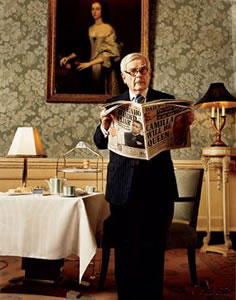
Dominick Dunne (29 oktober 1925 - 26 augustus 2009)


De Russische schrijver en wetenschapsfilosoof Aleksandr Aleksandrovitsj Zinovjev  werd geboren in Pachtino op 29 oktober 1922. Zie ook mijn blog van 29 oktober 2006 en ook mijn blog van 29 oktober 2008 en ook mijn blog van 29 oktober 2009.


Uit: Perestroika in Partygrad (Vertaald door Charles Janson)


„In the old days Partygrad was closed to foreigners. For two reasons.

First, because there was nothing to show them. True, there were a few churches, but without any historical or architectural interest. And all were shut except the most wretched one of all. There was

indeed an old monastery, but they'd put an anti-religious museum in it. In Partygrad one couldn't even find painted spoons, saucers or matryoshka dolls (which the West regards as the highest achievements of Russian national culture, though they've been made in Finland for a long time now). In the whole of Partygrad there was only one samovar, and that was in the museum of folklore.

The second reason why Partygrad was closed to foreigners was that it had a lot that foreigners shouldn't see: many military factories and schools, a chemical complex which turned out not so much

washing-powder as - more to the point - a secret weapon, a microbiological centre for ultra-secret research and a psychiatric hospital with the most lurid reputation in dissident circles. Corrective labour camps were sited round the town, also well known to dissidents; and an atomic factory which, though devoted to peaceful ends, had still managed to turn the whole region into a highly radioactive zone. But what foreigners above all must not see were the monstrous dwellings of the people, the empty shops, the long queues and all the other attributes of Russian provincial life. But when Gorbachev began his perestroika there a fundamental change came about. Not in the sense that the country or the life got bettersometimes they became worse. What did happen was that the government's view of the country and its life worsened. Thus the first period of Soviet history ended: the fault-hiding period; and a new epoch began when deficiencies were laid bare and officially acknowledged. Moreover, the authorities laid the faults bare not so much to their own citizens, who'd been quite aware of them without official guidance, but also to the West. It is not too much to say that the Soviet authorities initiated an orgy of admiration of their own ulcers and of boasting about them to the West.

This breakthrough coincided with the breakthrough in Soviet- Western relations. The West became interested not in the defects of the Soviet way of life but in the fact that Soviet officials recognized the presence of the defects; so that the recognition itself became the greatest virtue of the Soviet way of life.“


 770826-6130469b85315e5839f673a2b30be716.jpg

Aleksandr Zinovjev (29 oktober 1922 - 10 mei 2006)


De Duitse schrijver Georg Julius Leopold Engel werd geboren op 29 oktober 1866 in Greifswald.

Zie ook mijn blog van 29 oktober 2008.


Uit: Die Last


„Es war Tag geworden.

Noch immer rieselte der Regen und troff an den kleinen Fenstern der Krankenstube herunter. Bleigraues Licht stahl sich zögernd durch die Gardinen und mischte sich mit dem Schein der Lampe, die auch jetzt noch vor dem Bette brannte.

Auf dem großen Bauerngutshof erwachte einiges Leben. Man hörte zuweilen ein dumpfes Aufbrüllen der Kühe, und dazwischen das vereinzelte Rufen der Knechte. Doch klang alles gedämpft, als fürchte man, die Kranke zu stören.

Etwas Totes, Gedrücktes lag über dem Gehöft; und je mehr das trübe Sonnenlicht vorrückte, in desto größere Lautlosigkeit verfiel das Anwesen.

In dem weiten, zur ebenen Erde gelegenen Zimmer wurde ein schwacher Ruf laut. Kränklich, hohl, gebrochen, ein wenig gereizt klang er, aber so leise die Stimme auch flüsterte, sofort fuhr aus dem ledernen Sessel neben dem Bette ein Mann von mächtiger, imposanter Gestalt auf, rieb sich ein wenig die Augen, strich ein paarmal energisch über seine dicken, kurzgeschorenen Haare und legte dann seine Finger behutsam auf die Hand der leidenden Frau.

»Na, Elsing,« forschte er aufmunternd, wobei er seine Stimme soviel als möglich herabdämpfte, »geht’s ein bißchen besser?«

Statt einer Antwort rang die Angeredete die Hände und vergrub ihr Antlitz in die Kissen: »Du lieber Gott,« stöhnte sie leise, und es war beinahe, als ob aus dem weißen Linnen ein Schluchzen dränge.

Der Mann ließ seine Hand aufs Knie sinken und starrte auf den hellen, sandbestreuten Estrich der Stube.

Plötzlich warf sich das junge Weib herum und forschte hastig: »Du bist wohl eingeschlafen, Wilms?«

Seltsam, – neidisch fast schien die Frage.

»Ja, ich bin ein wenig eingenickt,« gab der Gatte zu. Und wieder konnte man leise Entschuldigung aus den Worten hören. »Ich sitz’ ja nun auch bald die vierte Nacht so,« murmelte er halb für sich.“


 770826-f1232b341d04bde414460cde8e8adf90.jpg

Georg Engel (29 oktober 1866 – 19 oktober 1931)

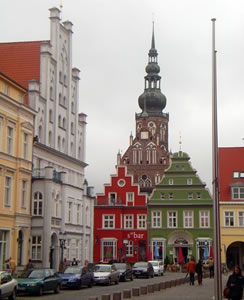
Greifswald, Fischmarkt (Geen portret beschikbaar)


De Franse schrijver, toneelauteur en beroepsdiplomaat Jean Giraudoux werd geboren op 29 oktober 1882 in Bellac/Haute-Vienne. Zie ook mijn blog van 29 oktober 2006 en ook mijn blog van 29 oktober 2008.


Uit: La guerre de Troie n'aura pas lieu


„HECTOR

Écoute-là, Cassandre, Écoute ce bloc de négation qui dit oui ! Tous m’ont cédé. Pâris m’a cédé, Priam m’a cédé, Hélène me cède. Et je sens qu’au contraire dans chacune de ces victoires apparentes, j’ai perdu. On croit lutter contre des géants, on va les vaincre, et il se trouve qu’on lutte contre quelque chose d’inflexible qui est un reflet sur la rétine d’une femme. Tu as beau me dire oui, Hélène, tu es comble d’une obstination qui me nargue !

HÉLÈNE

C’est possible. Mais je n’y peux rien. Ce n’est pas la mienne.

HECTOR

Par quelle divagation le monde a-t-il été placé son miroir dans cette tête obtuse.

HÉLÈNE

C’est regrettable, évidemment. Mais vous voyez un moyen de vaincre l’obstination des miroirs ?

HECTOR

Oui. C’est à celà que je songe depuis un moment.

HÉLÈNE

Si on les brise, ce qu’ils reflètaient n’en demeure peut-être pas moins ?

HECTOR

C’est là toute la question.

AUTRE MESSAGER

Hector, hâte-toi. La plage est en révolte. Les navires des Grecs sont en vue, et ils ont hissé leur pavillon non au ramat mais à l’écoutière. L’honneur de notre marine est en jeu. Priam craint que l’envoyé ne soit massacré à son débarquement.

HECTOR

Je te confie Hélène, Cassandre. J’enverrai mes ordres.“


770826-6c15494b62e2a3e2628dd3eae3049a4e.jpg
Jean Giraudoux
(29 oktober 1882 -  31 januari 1944)


De Franse dichter André Chénier (eigentlich André Marie Chénier ofde Chénier) werd geboren op 29 oktober 1762 in Galata bij Constantinopel. Zie ook mijn blog van 29 oktober 2008.


Art d'aimer, fragment III


Ainsi le jeune amant, seul, loin de ses délices,
S'assied sous un mélèze au bord des précipices,
Et là, revoit la lettre où, dans un doux ennui,
Sa belle amante pleure et ne vit que pour lui.
Il savoure à loisir ces lignes qu'il dévore ;
Il les lit, les relit et les relit encore,
Baise la feuille aimée et la porte à son coeur.
Tout à coup de ses doigts l'aquilon ravisseur
Vient, l'emporte et s'enfuit. Dieux ! il se lève, il crie,
Il voit, par le vallon, par l'air, par la prairie,
Fuir avec ce papier, cher soutien de ses jours,
Son âme et tout lui-même et toutes ses amours.
Il tremble de douleur, de crainte, de colère.
Dans ses yeux égarés roule une larme amère.
Il se jette en aveugle, à le suivre empressé,
Court, saute, vole, et l'oeil sur lui toujours fixé,
Franchit torrents, buissons, rochers, pendantes cimes,
Et l'atteint, hors d'haleine, à travers les abîmes.


 770826-c839ff8dcbf05c1db7044235f808e91e.jpg

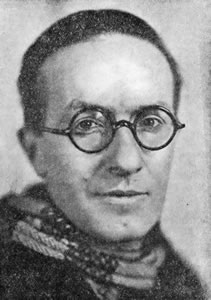
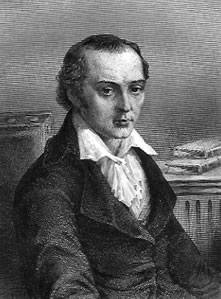
André Chénier (29 oktober 1762 – 25 juli 1794)

Geschreven door Romenu om 19:23 Reageer op dit bericht

Evelyn Waugh, JMH Berckmans, Uwe Tellkamp

De Britse schrijver Evelyn Waugh werd geboren in Londen op 28 oktober 1903. Zie ook mijn blog van 28 oktober 2006 en ook mijn blog van 28 oktober 2007 en ook mijn blog van 28 oktober 2008 en ook mijn blog van 28 oktober 2009.


Uit: Brideshead Revisited


"Isn't it early?" said Sebastian. "The women are still doing whatever women do to themselves before they come downstairs. Sloth has undone them. We're away. God bless Hardcastle."
"Whoever he may be."
"He thought he was coming with us. Sloth undid him too. Well, I did tell him ten. He's a very gloomy man in my college. He leads a double life. At least I assume he does. He couldn't go on being Hardcastle, day and night, always, could he? Or he'd die of it. He says he knows my father, which is impossible."
"Why?"
"No one knows Papa. He's a social leper. Hadn't you heard?"
"It's a pity neither of us can sing," I said.
At Swindon we turned off the main road and, as the sun mounted high, we were among dry-stone walls and ashlar houses. It was about eleven when Sebastian, without warning, turned the car into a cart track and stopped. It was hot enough now to make us seek the shade. On a sheep-cropped knoll under a clump of elms we ate the strawberries and drank the wine - as Sebastian promised, they were delicious together - and we lit fat, Turkish cigarettes and lay on our backs, Sebastian's eyes on the leaves above him, mine on his profile, while the blue-grey smoke rose, untroubled by any wind, to the blue-green shadows of foliage, and the sweet scent of the tobacco merged with the sweet summer scents around us and the fumes of the sweet, golden wine seemed to lift us a finger's breadth above the turf and hold us suspended.
"Just the place to bury a crock of gold," said Sebastian. "I should like to bury something precious in every place where I've been happy and then, when I was old and ugly and miserable, I could come back and dig it up and remember."


769990-c93e72922620c1948452eddc796fb784.jpg
Jeremy Irons en Anthony Andrews als Charles en Sebastian

In de tv-serie Brideshead Revisited uit 1981


This was my third term since matriculation, but I date my Oxford life from my first meeting with Sebastian, which had happened, by chance, in the middle of the term before. We were in different colleges and came from different schools; I might well have spent my three or four years in the University and never have met him, but for the chance of his getting drunk one evening in my college and of my having ground-floor rooms in the front quadrangle.
I had been warned against the dangers of these rooms by my cousin Jasper, who alone, when I first came up, thought me a suitable subject for detailed guidance. My father offered me none. Then, as always, he eschewed serious conversation with me. It was not until I was within a fortnight of going up that he mentioned the subject at all; then he said, shyly and rather slyly: "I've been talking about you. I met your future Warden at the Athenæum. I wanted to talk about Etruscan notions of immortality; he wanted to talk about extension lectures for the working-class; so we compromised and talked about you. I asked him what your allowance should be. He said, 'Three hundred a year; on no account give him more; that's all most men have.' I thought that a deplorable answer. I had more than most men when I was up, and my recollection is that nowhere else in the world and at no other time, do a few hundred pounds, one way or the other, make so much difference to one's importance and popularity. I toyed with the idea of giving you six hundred," said my father, snuffling a little, as he did when he was amused, "but I reflected that, should the Warden come to hear of it, it might sound deliberately impolite. So I shall give you five hundred and fifty."


 769990-8e1438cdfc75bddd81ef7b2adf4e1816.jpg

Evelyn Waugh (28 oktober 1903 – 10 april 1966)


De Vlaamse schrijver
JMH Berckmans (Jean-Marie Henri) werd geboren in Leopoldsburg op 28 oktober 1953. Zie ook mijn blog van 28 oktober 2008 en ook mijn blog van 28 oktober 2009.


Uit: De wortel in de brievenbus


„Je weet niet wat het is. Nog steeds niet. Na al het dolen en al het dwalen. Door die miljoenen straten van die duizenden steden. Overal ter wereld. Na al het schorremorrie waaraan je overbodige porties van je weinige nog resterende vrienschap hebt geschonken en die je allemaal verraden hebben, de ene na de andere, sommigen overdag, de meesten 's nachts. Wellicht zal je 't ook nooit weten. Ik zeg wellicht. Waarschijnlijk. Misschien. Eventueel. Mogelijkerwijs. Bijwoorden van, van wat eigenlijk, bijwoorden van twijfel en wanhoop. Bijwoorden van radeloosheid. Van kommer en kwel, tot je er krom en knoestig bijloopt en de lui in de straten zeggen kijk daar heb je die sukkelaar weer. Die met z'n beige anorak en z'n vettige jeans. Laat ze maar zeggen. Het zijn de lui in de straten maar. Het zijn Willy en Jeanine en Leo en Sylvia maar. En die zeggen zoveel. Die zeggen dat de zon schijnt of dat het regent. Terwijl het gewoon maar sneeuwt of de apocalyps is losgebarsten en het einde van de tijd nabij is. Dat we moeten verschijnen voor de Alwijze en Hij over ons zal oordelen. Dat sommigen aan z'n rechter en sommige anderen aan z'n linkerhand zullen zitten. Die zeggen dat binnenkort de regering valt, of op z'n minst door de Wetstraat gaat strompelen. Ze weten alles van alles en ze kennen iedereen. Dat helpt. Ze hoeven nooit nog met iemand kennis te maken. Nooit nog iemand de hand te drukken.

Misschien dat het je ooit in een flits te binnen schiet, terwijl je ergens straalbezopen in een goot ligt, op de voorlaatste bank van de bus naar het stempellokaal zit te twijfelen aan jezelf, aan de zin van je daden, aan de geldigheid van je roserode stempel straks, terwijl je ergens staat te pissen in een pissijn, in het holst van de nacht in een gore kroeg. Allicht Jean-Jaques.“


769990-8a06aa587e7fd8374ece420dc5826cf9.jpg
JMH Berckmans (28 oktober 1953 - 31 augustus 2008)


De Duitse schrijver Uwe Tellkamp werd geboren op 28 oktober 1968 in Dresden.Zie ook mijn blog van 14 oktober 2008 en ook ook mijn blog van 28 oktober 2008 en ook mijn blog van 28 oktober 2009.


Uit: The Tower (Vertaald door Rebecca K. Morrison)


“Ridged like a karst landscape, like the debris of jagged piled up ice floes, the island of coal stretched out in front of the four visitors; three of them showed their passes at the bridge control, then, when Richard had lowered little Philip from his shoulders and slipped his hand into Regine's, they made their way over the 'Copper Sister' to the offices beyond. The mist hung low over Ostrom, dampening the whistle of 'Black Mathilda' as she signalled her arrival through the tunnel at the heating works. The snow on the bridge had been trodden flat by numerous shoes, even at this early morning hour; it was the first Tuesday of the month – administration day. Meno shielded his eyes, the whiteness was dazzling, and he noted the first sharp shafts of the March sun striking off the heavily sloping, frost-encrusted roofs of the buildings, their frozen windows now clear as water, now a concentric whirl, like the splintering drops of dew caught in a spider's web, igniting sparks, flaring into a sudden confusion of light and a multi-faceted prismatic display that was echoed countless times in the broken axels of the buildings' depths: it found its counterpart in the compressed slabs of quartz, the ridges, the needles of ice.
They had arrived before the doors opened and joined the queue that stretched from the colonnaded entrance as far as the Marx and Engels monument area in the centre of the courtyard; cleared of snow, its grey concrete swept clean, the space could hardly be bridged by a human voice. Marx and Engels were holding books of bronze which they appeared to be reading; crows settled on their heads and the sentry on duty, not permitted to budge, tried to shoo them away with regular clicks of his tongue. Some of those waiting looked on with pity and raised their hands ready to clap, only to be discouraged by acquaintances less benevolently inclined, their gaze fixed on the colonnaded entrance. Richard gave up counting at 'one hundred', opened his bag, reassured himself that the report was still there (but who could have taken it – he had packed the bag himself and checked before leaving); Meno had opened his worn briefcase, too, and was rummaging through papers.”


769990-83326c2ca915279c690dbd879a794aec.jpg
Uwe Tellkamp (Dresden, 28 oktober 1968)


Zie voor nog meer schrijvers van de 28e oktober ook mijn vorige blog van vandaag.
Geschreven door Romenu om 00:00 Reageer op dit bericht

John Hollander, Al Galidi, Johannes Daniel Falk, Karl Philipp Conz

De Amerikaanse dichter en criticus John Hollander werd geboren op 28 oktober 1929 in New York. Zie ook mijn blog van 28 oktober 2009.


The Lady of the Castle


Venus Pudica stands, bent. Where her hand is

Cupping her marble mound a mystery has

Come into being as the sculptor hides what

Stone could not show yet,


Nor bronze expound. The goddess may be guarding

Herself, or in a special mode of pointing

Out (should we call it “curving in” ?) her temple,

Teaching her children


The central and precious, where they may be found.

Or indeed, as the girls say, she is hiding

Nothing, nor instructing—she is caressing

That which she barely


Touches, warming those feelings which for her are

Wisdom blossoming even within marble.

What her maker buried she loves, and thereby

We are revealed it.


Far in the minimal North, some contracted

Hand or eye has carved into senseless clunch an

Impudent and schematic presence, done in

Primal intaglio,


A circle head perched on a larger circle

Of lady body, spidery legs drawn up

And outward showing off on the church tower

Under the clock, and


Cut in a sort of Linear C, her slit.

Her hands touch nothing but her knees held open.

It is not she who joys in it, nor teaches;

But from beneath her


A very well-hung personage indeed is

Climbing up toward her, as if far from having

Merely no words for things, their sculptor had no

Method of using


Images for them: no things, only actions.

And thus translated into language her wedge

Would be a “Let’s-get-up-on-her-and-in-there.”

Hieroglyphic


Of nature’s own cuneiform, she sits high

But almost hiding in the irrelevance

Of a religious building now to the young

Mums of the village.


Ignored, then, or misread by mythographers

—Myopically concluding that a corpus

Christi lies beneath a bungled cross—as a

Crude Deposition,


She with her terrible thin cut is not to

Be any the less feared by those who read signs

And remember instances of their wide truths

Narrowed in darkness:


Hers is the closed door into the stone again.

The soft traps having long since sprung, the marble

Self-adoring dolls long crumbled, hers is the

Linear kingdom.


 769987-ab94b27410b87a3d8dad907772087c6b.jpg

John Hollander (New York,  28 oktober 1929)


De Nederlandstalige dichter en schrijver Al Galidi (eigenlijk Rodhan Al Khalidi) is van Iraakse afkomst. Zijn geboortedatum is onbekend, omdat zulke gegevens niet geregistreerd worden en verjaardagen niet gevierd worden in zijn streek van herkomst, maar valt waarschijnlijk in 1971. Geboren werd hij in Al-Najaf (een klein dorpje in het Zuiden van Irak). Zie ook mijn blog van 28 oktober 2008.


Wandeling door Harlingen

Zonder hond
zonder kat
zonder fiets
loop ik alleen naar zee.
Ik groet een oude man
en zijn hond antwoordt: “Hij is doof.”

Ik loop door
en groet een hond.
Zijn baas antwoordt:
“Hij houdt niet van vreemden.”

Ik blijf lopen en zie een fiets een vrouw leiden.
Ik ren en zie een hond die zijn baas uitlaat.
Ik wandel en zie een hond fietsen.

Ik kijk door een raam, misschien zie ik iemand,
maar ik zie alleen een kat naar me kijken
die roept: “wat een wereld!”

Ik doe mijn ogen dicht en ga verder.
O, wat moeilijk om in Harlingen te wonen
zonder hond
zonder kat
zonder fiets.


Boer

Geen aardappel
probeerde ooit zelfmoord te plegen.
Geen komkommer
zei ooit:
“Ik ben geen komkommer, ik ben een banaan.”
Geen tomaat zal zeggen:
“Ik wil niet in de soep, ik wil in de sla.”
Geen gehandicapte wortels
geen krankzinnige paprika’s


Daarom ben ik boer.


 769987-48a962ffd273142aa770b10b0b36089d.jpg

Al Galidi (Al-Najaf, 1971)


De Duitse dichter, schrijver en theoloog Johannes Daniel Falk werd geboren op 28 oktober 1768 in Danzig. Zie ook mijn blog van 28 oktober 2008 en en ook mijn blog van 28 oktober 2009.


Das Ungewitter im Walde

An Heloisen.


Bin ich allein auf dem Planeten

Mit Heloisen Hand in Hand?

Ob Blitze rings den Himmel röthen,

An deinem Busen ist mein Stand.


An diesen Pol will ich mich heften,

Nun rolle Welt! – ich halte dich.

So triff mit allen Himmelskräften,

Komm, Tod! triff Blizt! vernichte mich.


Mein süßes Licht in Lebensnächten,

Mein holder Wunsch, der mich entzückt,

Der darf getrost mit Göttern rechten,

Der Engel an sein Herz gedrückt.


Siehst du der Lilie Schnee am Stengel,

Sie nickt, sie wankt so lieberoth,

Und von den Himmeln steigt ein Engel,

Und küßt in Feuer sie zu Tod.


So will auch ich im Zeitenflusse

Mein Liebstes auf der Welt umfahn,

So faßt mit Heloisens Kusse

Verzehrend Himmelsgluth mich an.


Ertödtend liebliches Vergnügen!

Was fürchtest du von dem Geschwätz

Der Schwalben, die am Wasser fliegen?

Verschwiegenheit ist ihr Gesetz.


Warum erbebt vor Schamerröthen

Dein süß verschüchtertes Gesicht?

Des Himmels Donner kann uns tödten:

Verrathen? nein, das will er nicht!


Komm, reich’ – ein Engel über Sternen

Mir, Heloise, deine Hand:

Der darf, was Himmel ist, nicht lernen,

Der ihn in deinen Armen fand.


 769987-04ed8c550d66dd7e30c2594303bdd5c1.jpg

Johannes Daniel Falk (28 oktober 1768 – 14 februari 1826)


De Duitse dichter en schrijver Karl Philipp Conz werd geboren op 28 oktober 1762 in Lorch. Zie ook mijn blog van 28 oktober 2008 en en ook mijn blog van 28 oktober 2009.


Trostlied


Und wenn es trüb und unstöt geht,

Des Himmels Wolken sich verdüstern,

Und bangend Weid' und Esche flüstern,

Vorm Nordwind, der sie rauh umweht;

Zum Himmel doch schaut auf der Glaube,

Mit Augen, gleich der frommen Taube.   


Auch ist im Herzen nimmer fern,

Wo Glaube wohnet und Vertrauen,

Des Trostes Samen anzubauen,

Der Liebe milder Hoffnungsstern.

Der selbst die Sonn' ist und in trüben

Eewölken stralt, muß ewig lieben.    


Hast du verschuldet nicht die Roth,

Die dich umdrängt; gelaßner tragen

Kannst du sie leicht, und ihr entschlagen

Wird nach der Prüfung dich der Gott,

Zur Stunde, denn er kennt die rechten,

Der Licht oft schafft aus Mitternächten.    


Auch in der Trübsal thut sich kund

Sein Vaterherz, das Herz der Herzen.

Kann Liebe Liebe je verscherzen?

Was ausgesprochen hat sein Mund,

Das sprach er aus für alle Zeiten,

Und Altes kann dir Neues deuten.   


Mehr als die Gaben liebe nur

Den Geber immer aller Gaben,

Und mehr am Schöpfer Freude haben

Mußt du denn an der Kreatur;

So bleibt in deines Herzens Nähe

Der hohe Frieden aus der Hohe.


 769987-ac010088383d27ca54e4000a451b52c1.jpg

Karl Philipp Conz (28 oktober 1762 – 20 juni 1827)

Lorch

Geschreven door Romenu om 00:00 Reageer op dit bericht

Meer van Romenu

↑ Terug naar de berichten