Naar de inhoud

Romenu

Over literatuur, gedichten, kunst en cultuur
akke.beakke.be

Berichten van 4 maart 2011 tot 5 maart 2011

Pier Paolo Pasolini, Arthur van Schendel, Koos van Zomeren, Danny King, Nelly Arcan, Jean Orizet, Leslie Marmon Silko
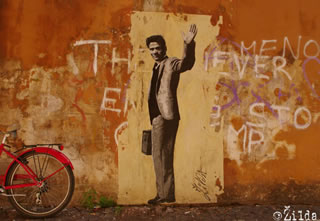
De Italiaans filmregisseur, dichter en schrijver Pier Paolo Pasolini werd geboren in Bologna op 5 maart 1922. Zie ook mijn blog van 5 maart 2007 en ook mijn blog van 5 maart 2008 en ook mijn blog van 5 maart 2009 en ook mijn blog van 5 maart 2010.


The Best of Youth

Lord, we are alone you call on us no more.
Year after year, day after day You look on us no more!
Darkness on our side and splendor on your side,
for our sins you feel neither anger nor compassion.
for thirty centuries, nothing, nothing has changed:
nations have united so, united, they wage wars
but our misery's the same as everybody's misery
and only You know how to sort out good from bad!
Work days, dead days! She pushes the wheel barrow
by the railroad tracks then towards the quiet square
and stops in front of the almost-finished staircase
where it crunches the stones baked by the sun.
The gates are shut, two trucks are parked
near the cement slag, flanked by dead bushes
and the old lady pushes the wheel barrow
while holding the tips of a scarf with her teeth.
A young man sits down to blow on his harmonica,
another younger one with horse whip in his hand
feeds hay to his charge then follows his friends
who are dancing carefree by the stands.
They sing, a bit drunk, by early morning
and wear their red hankies around the neck.
Hoarsely they order four liters of wine
and coffee for the girls who are silent and sad.
Come on, trains, take these singing youths
dressed in white shirt and English blazers.
Come on, trains, take them so very far away
roaming the earth to see what they have lost here.
Trains everywhere scatter these once happy men,
They will not laugh when leaving home forever.


Vertaald door Adeodato Piazza Nicolai


 866266-6ee818b1ed64f11256290e7e722042cd.jpg

Pier Paolo Pasolini (5 maart 1922 – 2 november 1975)

Straatkunst in Rome


De Nederlandse schrijver Arthur van Schendel werd geboren op 5 maart 1874 in Batavia. Zie ook mijn blog van 5 maart 2007 en ook mijn blog van 5 maart 2008 en ook mijn blog van 5 maart 2009 en ook mijn blog van 5 maart 2010.


Uit: Angiolino en de lente


“Een zondig mensch is nooit geheel zondig, zooals een arme, hoe arm ook, nooit geheel en al niets bezit. Hoe zouden er anders heiligen kunnen zijn, die toch ook toen zij klein waren schreeuwden als zij honger hadden en speelden in de modder van de straat en misschien dingen deden die niemand dan de engelen weet. Maar zij hadden één plekje dat wit was gebleven en toen daar de gouden stralen op vielen ging van den een tot den anderen dag de slechtheid van hen weg, de drift, de ergernis, de neiging om te stelen of te vloeken. En als zij dan van binnen geheel blank waren geworden konden zij de wonderlijke daden doen, zoodat de andere heiligen het zagen en er van spraken voor den troon waar de Gezegende zit. En dan zond hij er een met de lieve boodschap dat er weder een in de zaligheid mocht komen. Ik zeg dit niet omdat ik het beter meen te weten dan de vaders, maar omdat ik zelf heb gezien hoe het ons menschen gaat. Wij worden allen arm geboren, maar de een vindt zoodra hij de oogen opent al wat noodig is, en voor den ander kan de moeder geen behoorlijk doekje vinden om hem in te wikkelen. En de wisselvalligheden die dan volgen. Beppe verkwist niet zooveel of hij ontvangt altijd meer, Felice is nu rijk dan arm, Buonavontura kan nog zoo vriendelijk lachen of nog zoo bitter klagen, het helpt hem niets, hij telt de keeren niet dat hij zonder brood moet gaan. En toch weet Beppe niet van wat Buonavontura meer bezit dan hij, of Felice niet wat het beste is dat hij heeft. Maar Buonavontura begrijpt zeker meer, omdat hij de armste is. Dat is het witte plekje van den arme, dat hij meer begrijpt dan een ander. Hij weet dat de heer die langs loopt en doet of hij de uitgestrekte hand niet ziet niet meer of minder is dan hij zelf.”


 866266-f0e3d72f43e80ca68104c123d6a2a514.jpg

Arthur van Schendel (5 maart 1874 – 11 september 1946)

Portret door Jan Poortenaar, 1955


De Nederlandse schrijver, columnist en dichter Koos van Zomeren werd geboren in Velp op 5 maart 1946. Zie ook mijn blog van 5 maart 2007  en ook mijn blog van 5 maart 2008 en ook mijn blog van 5 maart 2009 en ook mijn blog van 5 maart 2010.


Uit: Nog in morgens gemeten


„Voor mij kan de polder in die tijd niet meer hebben behelsd dan het uitzicht. Hij was er altijd, je kwam er nooit. Een kind had er domweg niets te zoeken. Behalve die ene keer dus. Toen mocht ik met Lin mee.

Lin was op zijn oude dag op het Witte Huis gaan werken, de trotse boerderij van de Van Arendonken. Maar ik denk niet dat een Van Arendonk daar toen nog de baas was. Ik weet wel zeker dat de paarden die dag werden gemend door Maarten Bok. Maarten Bok was niet van Herwijnen, die was van Poederoijen. Een prachtige vent. Die kwam op visite als Lin jarig was. Hij voelde zich niets te goed voor de borrels die dan geschonken en de verhalen die dan verteld werden. Nou, dat was wat, een boer die bij zijn knecht op de verjaardag kwam. En sterk als een paard, en wérken dat-ie kon! Ik

herinner me het spannen van de spieren onder de huid van zijn onderarmen.

Vorig jaar heb ik Appie Bok nog eens gesproken. Hij vertelde toen dat zijn vader er een was uit een gezin van tien kinderen, die allemaal aanspraak maakten op een deel van het goed dat door de laatste Van Arendonk was nagelaten. Maarten was in feite als knecht van dat gezin begonnen. Hij moest zijn broers en zusters een voor een uitkopen en had niets dan zijn eigen arbeid om mee te betalen.

Goed, zij hadden land aan de Mert. Hooiland, verder deugde het nergens voor. En dat hooi werd dan pas diep in de zomer gewonnen. Het zou me niet verbazen als het een dag in augustus is geweest. Wij kwamen in ieder geval altijd pas half juli, net even voor de verjaardag van Tante, op Herwijnen.

Een kamp aan de Mert. Nu is dat een afstand van niets. Je gaat bij de Waaijensteinsestoep de dijk af, je steekt de provinciale weg over, je geeft gas en je bent er. Maar met paardenpassen was het nog een knap eind. Ach, het gelaten geklop van beslagen hoeven op ’s Heeren wegen.

‘De ingespannen paarden stapvoets zij aan zij, zo raadselachtig aan elkaar gehecht.’

Ja, als kind neem je aan dat de paarden van een tweespan, zozeer elkaars lotgenoten, met elkaar bevriend zijn. Het was Lin die me uit de droom hielp. Hem waren gevallen bekend waarin het ene paard zich geweldig moest uitsloven omdat het andere maar deed alsof.“


 866266-99fcd92f226196e673ad922f58d1ccaa.jpg

Koos van Zomeren (Velp,  5 maart 1946)


De Britse schrijver Danny King werd geboren op 5 maart 1969 in Slough, Berkshire. Zie ook mijn blog van 5 maart 2009 en ook mijn blog van 5 maart 2010.


Uit: The Pornographer Diaries


“Ow!’ I yelped.

‘What’s up?’ Barry asked from the track.

‘I got a thorn stuck in me,’ I told him, pulling my hand out of the brambles and sucking at the little black dot that had buried itself into my palm. The thorn showed enough of itself so that I could get my teeth on the end of it and yank it out, which brought a couple of tears to my eyes and made my lip wobble a bit. Luckily, I had my back to Barry so the rest of the school never got to hear about it. I wiped the blood onto my jeans and began crawling through the bush again.

‘Haven’t you got it yet?’ he whined again.

'You ask me that one more time and I’ll smack you in the fucking mouth!’ I hissed back at him, meaning, ‘you ask me that one more time and I’ll chuck your bike in the river while you’re in the shops and pretend it was Neil Barratt who came along and did it.’

I caught hold of a few more muddy and tattered pages that had been torn from the rest of the mag and gazed upon them in awe. The colours were dark from the damp and the dirt and some of them showed only fragments of pictures – but there was enough. Curvy, voluptuous ladies stared back at me wearing nothing but vacant expressions and an unidentifiable sludge you find under bushes in Berkshire – er, thorny bushes that is, not lady’s bushes.

This was my first ever glimpse of a nudey mag, and I liked what I saw. Sure I was no stranger to the Great Universal catalogue underwear and shower curtain sections, and if you took mine and every other lad in my geography class’s text books and hurled them across the playground, they’d all fall open on one particular page, but this was different.

This was a nudey mag.”


 866266-498a087f386c25971d0207df3d7b6f84.jpg

Danny King (Slough, 5 maart 1969)


De Canadese (Franstalige) schrijfster Nelly Arcan - pseudoniem van Isabelle Fortier – werd geboren in Lac-Mégantic op 5 maart 1973. Arcan was afkomstig uit Québec. Met haar eerste roman Putain (Hoer) uit 2001, kreeg zij veel bijval bij de kritiek en bij het grote publiek. In dat boek beschrijft Arcan haar verleden als escortdame. Zij werd genomineerd voor de Prix Médicis en de Prix Femina. Arcan schreef verschillende korte verhalen, opiniestukken en columns voor diverse kranten en literaire magazines van Québec. Zij schreef ook mee aan de dialogen van de film Nathalie... van Anne Fontaine. Arcan werd in september 2009 dood aangetroffen in Montréal, vermoedelijk na zelfmoord.


Uit: Whore


“When I speak, it’s usually not to others, which is why there’s nothing to hold me back, and so I can say without terrifying you that I was born in a country village near the Canadian border with Maine, that my education was religious, and that my teachers were all dried-up nuns, fanatic about the sacrifice they were making of their lives, women I had to call mothers and who’d had to choose fake names, like Sister Jeanne for Julie or Sister Anne for Andrée, sister-mothers who taught me that parents were powerless when it came to naming their children, that they were inadequate at defining them in relation to God, and what else would you like to know, that I was altogether normal, rather a gifted student, that in this fervently Catholic country where I grew up they sent schizophrenics to be exorcised by the priests, that life here could be quite beautiful if you didn’t want much, had faith. And what else? My studying twelve years of piano and like everybody else wanting to leave the country for the city, and then after I stopped touching the piano ending up as a barmaid, then a whore, to escape every shred of my past identity, so I could prove to others that you really could pursue your studies, dream about being a writer, hope for a future and throw your life away here and there all at the same time, sacrifice yourself just like the sisters in my elementary school did to serve their congregation.“


 866266-9c29f96f248ec701f52e84670ab57ae7.jpg

Nelly Arcan (5 maart 1973 –24 september 2009)


De Franse dichter en schrijver Jean Orizet werd geboren in Marseille op 5 maart 1937. Zijn vader, Louis Orizet, was een landbouwkundig ingenieur, zijn moeder leerde wiskunde en zijn grootvader werkte in de scheepsbouw. Een oudoom leraar leerde hem lezen voordat hij naar school ging.Toen de oorlog uitbrak werd  zijn vader benoemd tot tweede luitenant van de cavalerie, en zijn moeder verhuisde naar Dijon en vervolgens naar Macon. Daar bezocht hij de middelbare school, waar een van zijn leraren hem de brieven van Gerard de Nerval liet lezen die diepe sporen bij hem achter lieten.Zijn eigen werk is vertaald in twintig talen en bekroond met talloze prijzen.


L’eau dormante


L’eau dormante ne dort pas;
Elle rêve, j’en suis sûr,
Car son rêve,
Elle le murmure,
Doucement,
Pour ceux qui comprennent,
Ceux qui aiment
Son frissonnement.
Son rêve est bien apaisant;
Il lui donne un aspect tranquille
Immobile et changeant;
L’eau dormante sourit,
Elle est heureuse;
C’est l’eau rêveuse.


L'or sous le givre


Grise et blanche

une froide alchimie nocturne

brise l'instant


Au matin

c'est le couperet du soleil

qui tranche


Une pie cherche de l'or

sous le givre

de la branche.


 866266-be43794a76de3e75c407e8f93ae8c00e.jpg

Jean Orizet (Marseille, 5 maart 1937)


De Indiaans-Amerikaanse schrijfster Leslie Marmon Silko werd geboren op 5 maart 1948 in Albuquerque, New Mexico. Zie ook mijn blog van 5 maart 2007 en ook mijn blog van 5 maart 2009 en ook mijn blog van 5 maart 2010.


Uit: Gardens in the dunes


“They lay side by side with their mouths open and swallowed raindrops until the storm passed. All around them were old garden terraces in the dunes.

Sister Salt remembers everything. The morning the soldiers and the Indian police came to arrest the Messiah, Grandma Fleet told Sister Salt to run. Run! Run get your little sister! You girls go back to the old gardens! Sister Salt was big and strong. She carried Indigo piggyback whenever her little sister got tired. Indigo doesn't remember much about that morning except for the shouts and screams.

Indigo remembers they used to sell baskets at the depot in Needles while their mother washed linens in tubs of boiling water behind the hotel; Grandma Fleet searched the town dump for valuables and discarded seeds. They slept in a lean-to made of old crates and tin, near the river. They learned to talk English while selling baskets to tourists at the train station.

Now, at the old gardens, the girls live alone in Grandma Fleet's house. Grandma had returned a day after they did. Grandma saw Mama escape and run north with the other dancers ahead of the Indian police, who grabbed all the Indians they could, while the soldiers arrested the white people, mostly Mormons, who came to dance for the Messiah. The United States government was afraid of the Messiah’s dance”


.

 866266-311092fbcf1418ee6cdc62db3b6fcaa1.jpg

Leslie Marmon Silko (Albuquerque, 5 maart 1948)


Zie voor nog meer schrijvers van de 5e maart ook mijn vorige blog van vandaag.
Geschreven door Romenu om 18:58 Reageer op dit bericht

Frank Norris, Fritz Usinger, Friedrich Schnack, Ennio Flaiano, Moritz Carrière, Karl August Timotheus Kahlert

De Amerikaanse schrijver Frank Norris werd geboren op 5 maart 1870 in Chicago. Zie voor onderstaande schrijver ook mijn blog van 5 maart 2007 en ook mijn blog van 5 maart 2009 en ook mijn blog van 5 maart 2010.


Uit: The Pit


„Chicago, the great grey city, interested her at every instant and under every condition. As yet she was not sure that she liked it; she could not forgive its dirty streets, the unspeakable squalor of some of its poorer neighbourhoods that sometimes developed, like cancerous growths, in the very heart of fine residence districts. The black murk that closed every vista of the business streets oppressed her, and the soot that stained linen and gloves each time she stirred abroad was a never-ending distress.

    But the life was tremendous.  All around, on every side, in every direction the vast machinery of Commonwealth clashed and thundered from dawn to dark and from dark till dawn.  Even now, as the car carried her farther into the business quarter, she could hear it, see it, and feel in her every fibre the trepidation of its motion.  The blackened waters of the river, seen an instant between stanchions as the car trundled across the State Street bridge, disappeared under fleets of tugs, of lake steamers, of lumber barges from Sheboygan and Mackinac, of grain boats from Duluth, of coal scows that filled the air with impalpable dust, of cumbersome schooners laden with produce, of grimy rowboats dodging the prows and paddles of the larger craft, while on all sides, blocking the horizon, red in color and designated by Brobdignag letters, towered the hump-shouldered grain elevators.

    Just before crossing the bridge on the north side of the river she had caught a glimpse of a great railway terminus.  Down below there, rectilinear, scientifically paralleled and squared, the Yard disclosed itself.  A system of grey rails beyond words complicated opened out and spread immeasurably. Switches, semaphores, and signal towers stood here and there.  A dozen trains, freight and passenger, puffed and steamed, waiting the word to depart.  Detached engines hurried in and out of sheds and roundhouses, seeking their trains, or bunted the ponderous freight cars into switches; trundling up and down, clanking, shrieking, their bells filling the air with the clangour of tocsins.  Men in visored caps shouted hoarsely, waving their arms or red flags; drays, their big dappled horses, feeding in their nose bags, stood backed up to the open doors of freight cars and received their loads.“


866260-86f9f659832a05593f1fb30e6a517edd.jpg
Frank Norris (5 maart 1870 – 25 oktober 1902)


De Duitse dichter, schrijver en vertaler Fritz Usinger werd geboren op 5 maart 1895 in Friedberg, Hessen. Zie ook mijn blog van 5 maart 2009 en ook mijn blog van 5 maart 2010.


BLAU-GEDICHT


Nicht nur in einem Kleid aus Ewigkeit,

Auch innen ganz zur Ewigkeit befreit,

Ewiger Liebe voll, doch ungeliebt,

Der nie empfängt und dennoch immer gibt,


Aus oberen Wurzeln himmelstill gespeist,

Auch wenn die Erde keinen Trost verheisst,

Dem Tartaros-Gedröhn noch abgrundfern,

Im Lichte dienend einem oberen Herrn:


Dem Licht-Geist Christ-Apollon zugewandt,

Der Eines ist in zwiefachem Verband,

Schaff ich das Blau-Gedicht aus Form und Licht,

Da deren keines sich am andern bricht,


Das Liebe-Licht, den hellen Tempel-Geist,

Der sich im Gang der Verse wahr erweist,

Das Irdisch-Schöne, liebend ganz durchdrungen,

Von höchsten Chören unsichtbar durchsungen,


Das Helle und das Heilige geeint,

Dass jedes ganz den Grund des andern meint,

Das eine selig in des andern Armen,

Vom Wort der Schönheit bis zum Wort Erbarmen.


Ein Himmel von Ideen ganz durchlichtet

Und durch ihr Dasein nimmermehr vernichtet.

Idee ist auch den höchsten Welten teuer,

Denn sie ist nichts als göttlich reines Feuer,


Urfeuer, das schon vor den Welten glühte,

Das in der Liebe wie im Schönen blühte

Und der Vollendung Form zur Über-Zeit

Aus untrem Feuerdrang heraus befreit.


 866260-76d149e6a703df073105db10fdd82a05.jpg

Fritz Usinger (5 maart 1895 – 9 december 1982)

Friedberg


De Duitse dichter en schrijver Friedrich Schnack werd geboren op 5 maart 1888 in Rieneck, Unterfranken. Zie ook mijn blog van 5 maart 2009 en ook mijn blog van 5 maart 2010.


Kleine Hand in meiner Hand


Kleine Hand in meiner Hand
Ich und du im jungen Grase
Ich und du, im Kinderland
Gehn wir auf der langen Strasse
Kleine Hand in meiner Hand.

Kleine Hand in meiner Hand
die einander zärtlich fassen:
Ich und du, nichts hat Bestand,
einmal, ach! muß ich dich lassen
Kleine Hand aus meiner Hand.

Kleine Hand in meiner Hand
Kleiner Schritt bei meinem Schritt
Kleiner Fuß im weiten Land:
Einmal geh ich nicht mehr mit
Einmal gehst du ohne mich
Wie ein Traum mein Bild verblich.


 866260-ee8eaf67e026b525892a15730fe1beec.jpg

Friedrich Schnack (5 maart 1888 – 6 maart 1977)

Rieneck, burcht


De Italiaanse schrijver Ennio Flaiano werd op 5 maart 1910 in Pescara geboren. Zie ook mijn blog van 5 maart 2009 en ook mijn blog van 5 maart 2010.


Uit: Alles hat seine Zeit (Tempo di uccidere, Vertaald door Susanne Hurni)


“Und, jenseits des Randes, das ruhige Leben der Etappenlager. Noch weiter, und das Wort «Sonntag» würde wieder seinen Wert bekommen. Ich würde das erste Bett mit Leintüchern finden, den ersten Zeitungsverkäufer.Und einen Zahnarzt. Der Soldat wollte nicht nachgeben. «Warten Sie», sagte er, «irgendwer wird schon vorbeikommen.

» Ich betrachtete das Lastauto, das mit den Rädern gegen die Böschung lag, und schüttelte den Kopf: Es würde niemand vorbeikommen. Nur ein Oberst war vorübergefahren, gelangweilt wie ein General. Die vorlaute Art des Soldaten wurde mir allmählich lästig. Sich gemeinsam gerettet zu haben, schien mir kein rechter Grund mehr zu sein, uns Fotografien zu zeigen, uns unsere Angelegenheiten zu erzählen, die üblichen Vermutungen über unsere Rückkehr nach Italien anzustellen. Und doch tat es mir leid, ihn im Stich zu lassen.

«Sie lassen mich also allein?»

Ich fing an, meine Sachen zusammenzusuchen, den Tornister, das Koppel mit der Pistole. Um meine

Flucht zu beschönigen, suchte ich einen Vorwand, allerdings einen schlechten: Ich sagte zu ihm, wenn ich unten am Fluss einen Lastwagen fände (oft hielten die Fahrer dort an, um ein Bad zu nehmen), käme ich zurück, um ihm zu helfen. Der Soldat tat so, als glaube er daran, und seine plötzliche und feindselige Nachgiebigkeit ließ mich erröten. Er drückte mir die Hand ohne Wärme, wirklich enttäuscht. Nach fünfzig Schritten verdeckte mir eine Straßenbiegung die Sicht auf ihn und sein Lastauto. Seitdem habe ich ihn nicht wiedergesehen.

War es noch sehr weit bis zur Brücke? “


 866260-24414cf0bca6dd960f3510283254d586.jpg

Ennio Flaiano (5 maart 1910 – 20 november 1972)


De Duitse schrijver en filosoof
Moritz Carrière werd geboren op 5 maart 1817 in Griedel, Hessen. Zie ook mijn blog van 5 maart 2009  en ook mijn blog van 5 maart 2010.


Geheimnis

Worte, die dein Mund gesprochen, sonnenwarm und sonnenhell,
Küsse, die dein Mund gespendet, unversiegter Wonne Quell,
Wie so selig deine Seele, und ich preis' es immerdar,
Doch das Süßeste, das Tiefste, zeigt kein Bild und faßt kein Reim,
Und es bleibt unausgesprochen zwischen Gott und uns geheim.


 866260-b9d3f21107a2bef5cbc6d65c86f07dd0.jpg

Moritz Carrière (5 maart 1817 – 19 januari 1895)


De Duitse schrijver, literatuurhistoricus en muziekcriticus Karl August Timotheus Kahlert werd geboren op 5 maart 1807 in Breslau. Kahlert studeerde vanaf 1826 aan de universiteit van Breslau, daarna in Berlijn. Hij was actief als dichter en schrijver. Gebaseerd op de Hegeliaanse principes publiceerde hij in 1846 zijn " System der Aesthetik " en in 1853 een monografie over Angelus Silesius. Een serie artikelen over Silezische dichters en schrijvers publiceerde hij in Robert Prutz’ Literarisches Taschenbuch (1844), in Hennebergs Jahrbuch (1854) en in het Weimarische Jahrbuch. Over de Breslauer opera schreef hij vier jaar voor de „Schlesische Zeitung“. Een aantal studies met theoretische en kritische reflecties over muziek schreef hij voor de "Leipziger Neue Zeitschrift für Musik (1834-1843) en (1842-1850) voor de Allgemeine musikalische Zeiting.


Uit: System der Aesthetik


“Die geheimnißvolle Wirkung, welche auf das rnenschliche Gemüth Werke der schönen Kunst ausüben, ist eines jener ewigen Räthsel, zu deren Lösung die Wissenschaft immer wieder aufs Neue aufgefordert wird. Von zwei Seiten her, in der Erkenntniß der dem Künstler dienstbaren Naturstoffe, und der von den Gesetzen ihrer Anwendung werden an der Hand der Erfahrung manche sichtbare Fortschritte gemacht; dem scharfen Blicke des Naturforschers enthüllt sich eine Beziehung der ewig schaffenden Kräfte nach der andern; öffentlichen Lehranstalten für angehende Kunstjünger wird überall immer sorgfältige« Pflege. Solchen Bemühungen zum Trotze sind die Schwankungen des Geschmacks unter den Genießenden, und die harte Begegnung widersprechender Grundsätze unter den Schaffenden unvermindert geblieben, so daß nur ein einziger Gewinn, nämlich der, daß man allmählich die streitenden Ansichten schärfer auszuprägen, den Widerspruch also in seiner ganzen Bedeutung zu erkennen sich bemüht hat, daraus hervorgegangen ist. Ein Gewinn ist dies zu nennen, weil es den Drang verräth, den Streit zu entscheiden, und weil es durch die Beziehung alles des im Zwiefpel begriffenen Einzelnen auf ein Allgemeines, welches ihm zum Grunde liegen müsse,Schritte, die dieser Entscheidung entgegenführen, erzeugt.”


866260-faaefd61c2d7fa1dd540a8d756b59669.jpg
Karl August Timotheus Kahlert (5 maart 1807 – 29 maart 1864)

Breslau rond 1900 (Geen portret beschikbaar)

Geschreven door Romenu om 18:51 Reageer op dit bericht

Jurre van den Berg

De Nederlandse dichter Jurre van den Berg werd geboren in Thesinge op 5 maart 1986. Hij debuteerde officieel als dichter in het voorjaar van 2009 met de bundel Binnenvaart.  In 2007 ontving hij het Hendrik de Vriesstipendium van de gemeente Groningen voor zijn poëzieproject ‘Ter verlichting van een naam’, een areligieuze, hedendaagse beschouwing op de taal en thematiek van het bijbelboek Job. Ook de gedichten die hier uit voortkwamen zijn in de reeks ‘Wij zijn hier pas sinds gisteren’ in Binnenvaart opgenomen. Tijdens het collegejaar 2005-2006 was Jurre van den Berg huisdichter van de Rijksuniversiteit Groningen. De gedichten die hij in deze functie schreef werden samen met andere verzen gebundeld in Avondkikkers.


HERFST

Ik was vergeten hoe de regen
de straten kon spoelen.

Naar boven kijken en grijs goud
zien eten, het land ligt reeds
begraven onder verwaaide paraplu's.

Ik was vergeten hoe de regen.

Wat geweest is, dat het terug komt
en niet los laat, storm niet uitraast.
Het land ligt reeds begraven.

Als ik denk dat het voorbij is zoals
onder herfstkastanjes na de regen.

Het is droog maar de wind
waait druppels van het blad.


 939262-604b5df65376fad080749ddf27c492d5.jpg

Jurre van den Berg (Thesinge, 5 maart 1986)

Geschreven door Romenu om 00:00 Reageer op dit bericht

Kristof Magnusson, Khaled Hosseini, Robert Kleindienst, Irina Ratushinskaya, J. Rabearivelo

De Duitse schrijver Kristof Magnusson werd geboren op 4 maart 1976 in Hamburg. Zie ook mijn blog van 4 maart 2007 en ook mijn blog van 4 maart 2008 en ook mijn blog van 4 maart 2009 en ook mijn blog van 4 maart 2010.


Uit: Summer of Love (Vertaald door Mike Mitchell)


“Outside my window a lemon tree is steaming in the rising heat. Eyes closed, I feel all over the large mattress, although I know there’s no one else there. I’m lying in bed in a hotel room in California reading about Australia in a guidebook. The trip round the world was the idea of the head of personnel who appointed me. For the first three months, he said, my position was free, after all the stress of the examinations I could take time out to live a little, to see something of life. The next day I paid three thousand marks for an air ticket with the words ‘Hamburg — London — New York — San Francisco — Hong Kong — Bombay — Hamburg’ printed on it in slightly smudged red ink. I’d already ticked off London, New York and San Francisco, I hadn’t seen anything of life there. To me the red double-decker buses, yellow taxis and cable cars looked like poor, dirty copies of the double-deckers, taxis and cable cars I knew from films. In each place I stayed one night and flew on, only in San Francisco did I stay two nights, because I had a hotel room with cable TV. I began to get accustomed to things, bought a second deodorant, a rather sweet-smelling one by Jean Paul Gaultier, which I used for my left armpit. For the right one I continued to use the Hugo by Boss which I’d bought for my job interview. It was fun being able to distinguish left and right, port and starboard, the two halves of this body that was to carry me through the world, by smell. On the fifth day of my trip round the world I hired a bicycle and rode across the red bridge and out of the city. Soon I had no idea where I was any more. I was riding through pinewoods along a country road with no markings and which wasn’t on my map. Coming round a curve, a village suddenly leapt out at me. It was simply there; without there having been any signposts or a board with the name, there were wooden houses in front of me with blue scraps of sea hung between them. I rode past a filling station with Save the Rainforest banners hanging out of the windows. Shortly after that I stopped and asked a man, who was sitting in the sun outside a house with paintings on the walls, where I could buy something to drink. The man had long grey hair and his beard was spattered with flecks of colour. He asked me how I liked his wall painting and pointed over his shoulder: animals, naked people and pink clouds, with flowers in all the colours of the rainbow twined round them. Above it was written: 30 Years Summer of Love 1967-1997.”


 865733-4e402d34a41778a8d5455ee7792ec249.jpg

Kristof Magnusson (Hamburg, 4 maart 1976)


De Afghaanse schrijver Khaled Hosseini is geboren op 4 maart 1965 in Kabul. Zie ook mijn blog van 4 maart 2007 en ook mijn blog van 4 maart 2008 en ook mijn blog van 4 maart 2009 en ook mijn blog van 4 maart 2010.


Uit: De vliegeraar van Kabul (Vertaald door Miebeth van Horn)


„Ik herinner me hoofdzakelijk dit: zijn boksbeugel die in de middagzon flitst, hoe koud het ding bij de eerste klappen aanvoelt en hoe snel het warmer wordt van mijn bloed. Tegen de muur aan gegooid worden waar een spijker, waar misschien een schilderij aan gehangen heeft, in mijn rug prikt. Sohrab die gilt. Tabla, harmonium, een del-roba. Tegen de muur aan gekwakt worden. De boksbeugel die mijn kaak versplintert. In mijn eigen tanden stikken, ze doorslikken, met de gedachte aan die talloze uren die ik flossend en poetsend heb doorgebracht. Tegen de muur aan gekwakt worden. Op de grond liggen, waar bloed van mijn gesprongen bovenlip het mauve kleed kleurt, pijn die door mijn buik trekt, en me afvragen wanneer ik weer kan ademhalen. Het geluid van mijn knappende riben, dat net zo klinkt als de takken die Hassan en ik vroeger afbraken om te zwaardvechten, zoals Sindbad in die oude films. Sohrab die gilt. De zijkant van mijn gezicht die tegen de hoek van de televisietafel aan slaat. Weer dat knappende geluid, deze keer onder mijn linkeroog. Muziek. Sohrab die gilt. Vingers die mijn haar vastgrijpen, mijn hoofd naar achteren trekken, het geglinster van roestvrij staal. Daar komt hij. Alweer dat knappend geluid, nu mijn neus. Ik zet van pijn mijn tanden op elkaar en merk dat ze niet meer netjes gerangschikt staan. Geschopt worden. Sohrab gilt.
Ik weet niet op welk punt ik begon te lachen, maar ik deed het wel.“


865733-4804ced710399b6e8d2de70ead46f5b4.jpg
Khaled Hosseini (Kabul, 4 maart 1965)


De Oostenrijkse dichter en schrijver Robert Kleindienst werd geboren op 4 maart 1975 in Salzburg. Hij studeerde germanistiek, pedagogie en politicologie. Kleindienst schrijft gedichten, proza en drama. Zie ook mijn blog van 4 maart 2009 en ook mijn blog van 4 maart 2010.


festfahren

ob das gewitter niedergeht
wer weiß ob
sich die wolken verziehn
solang niemand fragt
wird nichts passiern

rostfreie viadukte
rollende räder wie gewohnt
sprungbildung auf den schienen

der zug rollt
aus dem morgen
überrollt dörfer
und menschen

in den vorderen zugabteilen
zelebriert man bereits
die sonnenfinsternis
der zugführer spielt schach
an der endstation


Wendekreis


geh komm mit uns im vorhof
schlachten wir dein mondkalb
aus dort können wir bleiben
bis sich das morgenrot bricht


was horchst du auf das sind nur
schritte komm bleib wir schlagen
dir fenster in deinen rücken


frag nicht
frag nicht nach dem letzten
tag er verglüht im aschenbecher
und die hände wischen
haarreste weg wie immer
morgenrot
unauffindbar


Stillstand, jetzt.
Stillstand.


 865733-0075b8e05b815b59dc747d2aca4fcbd7.jpg

Robert Kleindienst (Salzburg, 4 maart 1975)


De Russische dichteres en dissidente Irina Ratushinskaya werd geboren op 4 maart 1954 in Odessa. Zie ook mijn blog van 4 maart 2007  en ook mijn blog van 4 maart 2009 en ook mijn blog van 4 maart 2010.


Uit: Two Poems from Prison (Vertaald door Frances Padorr Brent en Carol Avins)


I’ll live through this, survive, and they’ll ask me:
how they beat my head on the prison cot,
how it froze during the nights,
how the first wisps of gray hair broke through.
I’ll smile and say some joke,
wave away the shadow that comes quickly,
and I’ll honor the dry September
that’s become my second birth.
And they’ll ask: doesn’t it hurt to remember?
without being deceived by the lightness around?
But names from the past burst in my memory—
beautiful—like old weapons.
And I’ll tell about the best in all the world,
the most tender, who don’t break,
how they accompanied us, how they went to torture,
awaited letters from those they loved.
And they’ll ask: what helped us live,
without letters or news—just walls
and coldness in the cell, stupidity of official lies,
nauseating promises for betrayal.
And I’ll tell about the first beauty which I saw in this captivity:
window in the frost! No spy holes, nor walls,
nor grating—no long suffering—
only bluish light in the smallest glass.
Whirling pattern—you can’t dream of anything more enchanted!
Look close, you’ll see it begin to blossom even more:
forests of thieves, fires, birds!
and how many times there was coldness
and how many windows glistened from that time on.
But it hasn’t happened again …


 865733-6daa8a7375fd2534a195f382f7dc7985.jpg

Irina Ratushinskaya (Odessa, 4 maart 1954)


De Madagassische dichter en schrijver Jean-Joseph Rabearivelo werd geboren op 4 maart 1901 in Antananarivo. Zie ook mijn blog van 4 maart 2007  en ook mijn blog van 4 maart 2009 en ook mijn blog van 4 maart 2010.


Farewell Poem


Is the age old of Guérin,

At the age of Deubel,

a little older than you,

Rimbaud anté-nothingness,

Because this life is for us too rebel

And because the bee dried up any pollen,

to compete for nothing more

and to wait for nothing more,

And, slept on the sand or the stone,

Under the herb, to fix a soft glance

To all which will become some days the sheaves.


Vertaald door Ramanatantara


 865733-0bbf22899154c63a17751584f7548129.jpg

Jean-Joseph Rabearivelo (4 maart 1901 – 22 juni 1937)


Zie voor nog meer schrijvers van de 4e maart ook mijn vorige blog van vandaag en eveneens mijn eerste blog van vandaag.
Geschreven door Romenu om 20:49 Reageer op dit bericht

Alan Sillitoe, Annette Seemann, F. W. Bernstein, Giorgio Bassani, Bernardo Ashetu

De Engelse schrijver Alan Sillitoe werd geboren op 4 maart 1928 in Nottingham. Zie ook mijn blog van 4 maart 2007  en ook mijn blog van 4 maart 2008 en ook mijn blog van 4 maart 2009 en ook mijn blog van 4 maart 2010.


Uit: The Loneliness of the Long-Distance Runner


„As soon as I got to Borstal they made me a long-distance cross-country runner. I suppose they thought I was just the build for it because I was long and skinny for my age (and still am) and in any case I didn't mind it much, to tell you the truth, because running had always been made much of in our family, especially running away from the police. I've always been a good runner, quick and with a big stride as well, the only trouble being that no matter how fast I run, and I did a very fair lick even though I do say so myself, it didn't stop me getting caught by the cops after that bakery job.
You might think it a bit rare, having long-distance cross-country runners in Borstal, thinking that the first thing a long-distance cross-country runner would do when they set him loose at them fields and woods would be to run as far away from the place as he could get on a bellyful of Borstal slumgullion-but you're wrong, and I'll tell you why. The first thing is that them bastards over us aren't as daft as they most of the time look, and for another thing I'm not so daft as I would look if I tried to make a break for it on my long-distance running, because to abscond and then get caught is nothing but a mug's game, and I'm not falling for it. Cunning is what counts in this life, and even that you've got to use in the slyest way you can; I'm telling you straight: they're cunning, and I'm cunning. If only 'them' and 'us' had the same ideas we'd get on like a house on fire, but they don't see eye to eye with us and we don't see eye to eye with them, so that's how it stands and how it will always stand. The one fact is that all of us are cunning, and because of this there's no love lost between us. So the thing is that they know I won't try to get away from them: they sit there like spiders in that crumbly manor house, perched like jumped-up jackdaws on the roof, watching out over the drives and fields like German generals from the tops of tanks.“


865730-21d20d4d8a88303b1c1addeaa29a25b0.jpg
Alan Sillitoe (Nottingham, 4 maart 1928)

Hier in 1973 


De Duitse schrijfster en vertaalster Annette Seemann werd geboren op 4 maart 1959 in Frankfurt am Main. Zie ook mijn blog van 4 maart 2009 en ook mijn blog van 4 maart 2010.


Uit: Anna Amalia - Herzogin von Weimar


“Sie wandelte sich von der charmanten jungen Rokokoprinzessin mit hohem Haarturmbau zur klassizistisch vor antiken Ruinen posierenden »Pallas Athene«, also entsprechend der Mode unterschiedlichster und für die europäische Geschichte wichtiger Epochen. Sie lebte in Zeiten des Übergangs zur bürgerlichen Gesellschaft, hielt an ständisch orien­tierten Hofzeremoniell fest, entwickelte aber gleichzeitig ein hohes Freundschaftsideal über die Standesgrenzen hinaus. Sie ignorierte die Französische Revolution soweit wie möglich und erlebte schmerzhaft 1806 den Einzug und die Plünderungen der napoleonischen Soldaten in Weimar.
Entscheidend für ihr Leben waren die menschlichen, kulturellen und politischen Beziehungen, die sie als junge Prinzessin und später als Her­zogin auch nach ihrer Übersiedlung nach Weimar und bis zum letzten Lebensjahr zu Braunschweig-Wolfenbüttel, ihrem Herkunftshof, pfleg­te. Dieser Aspekt wurde in der bislang erschienenen biographischen Literatur zu Anna Amalia nie in seiner wahren Bedeutung gewürdigt. Es sind der Braunschweiger Hof und seine kulturell orientierte, offene At­mosphäre, die Anna Amalia geprägt haben. Die Liebe zum Buch, zur Gelehrsamkeit wie zur Unterhaltung, zum Theater, zur Musik und zu den Fremdsprachen wurden in ihrer Kindheit gefördert und trugen die Herzogin lebenslang..“


 865730-a4c6492d674b5ee3fbdd2839aff193c9.jpg

Annette Seemann (Frankfurt am Main, 4 maart 1959)

De Rokokozaal in de Anna Amalia Bibliotheek


De Duitse dichter, graficus, karikaturist en satiricus F. W. Bernstein (eig. Fritz Weigle) werd geboren op 4 maart 1938 in Göppingen. Zie ook mijn blog van 4 maart 2009 en ook mijn blog van 4 maart 2010.


Wachtel Weltmacht?


Schaut Euch nur die Wachtel an!
Trippelt aus dem dunklen Tann;
tut grad so, als sei sie wer.
Wachtel Wachtel täuscht sich sehr.


Wär sie hunderttausend Russen,
hätt den Vatikan zerschussen
und vom Papst befreit ja dann:
Wachtel Wachtel Dschingis Khan!


Doch die Wachtel ist nur friedlich,
rundlich und unendlich niedlich;
sie erweckt nur Sympathie.
Weltmacht Wachtel wird sie nie!


865730-31d5abc153ea9e7d07aafcc97bc90991.jpg
F. W. Bernstein (Göppingen, 4 maart 1938)


De Italiaanse schrijver Giorgio Bassani werd geboren op 4 maart 1916 in Bologna. Zie ook mijn blog van 4 maart 2007  en ook mijn blog van 4 maart 2009 en ook mijn blog van 4 maart 2010.


Uit: Die Brille mit dem Goldrand (Vertaald door Herbert Schlüter)


„Der Nebel war so dicht, dass ich die Stimme Fadigatis hörte, bevor ich ihn selbst sah.
"Mein dummes Schmutzlieschen, wenn du nichts Schlimmeres bist!" fuhr er mit klagendem Tonfall, in dem eine manierierte Zärtlichkeit lag, fort.
"Du musst wissen, dass ich auch rein gar nichts für dich habe!"
Mit wem sprach er? Endlich sah ich ihn. In dem gelben Schein der einzigen Straßenlaterne tauchte plötzlich seine massige Gestalt auf. Ein wenig zur Seite geneigt, bewegte er sich nur langsam vorwärts, wobei er fortwährend sprach – zu einem Hund, wie ich nun feststellte.
Ein paar Meter von mir entfernt blieb er stehen.
"Also, willst du mich nun in Ruhe lassen oder nicht?"
Er sah dem Hund in die Augen und erhob den Zeigefinger zu einer drohenden Gebärde. Das Tier, eine Bastardhündin mit weißem, braungeflecktem Fell (wahrscheinlich war sie das Produkt einer Kreuzung zwischen einer Bracke und einem Foxterrier) erwiderte mit einem feuchten, angsterfüllten Blick von unten, während sie verzweifelt mit dem Schweif wedelte. Sie kroch dabei über den Kies dem Arzt vor die Füße. Im nächsten Moment würde sie sich auf den Rücken wälzen, den Bauch und die Pfoten in der Luft und sich so ganz seiner Gnade anheimgeben.“


865730-349584e4658201103175d1caf47a8854.jpg
Giorgio Bassani (4 maart 1916 – 13 april 2000)


De Surinaamse dichter Bernardo Ashetu (Eig. Hendrik George van Ommeren) werd geboren in Kasabaholo op 4 maart 1929. Zie en ook mijn blog van 4 maart 2009 en ook mijn blog van 4 maart 2010.


Uit goud


Neem de zachte blâren
die hangen tussen bloemen
in glorierijke vazen
en sla de koude haak vast.

Hang 't kale touw op
en overtrek je laatste gedachte
met draden gesponnen uit goud.


Anders


Anir strandde

op een

drooggelopen zee.


Twee uitgebeten

ogen in een

omgeslagen sloep

troffen hem en

hij werd anders

naast een broze

schelp op een

drooggelopen zee

vol roepende vogels.


865730-c98e257ccb014b08e357fc961a1a082d.jpg
Bernardo Ashetu (4 maart 1929  - 3 augustus 1982)

Geschreven door Romenu om 20:41 Reageer op dit bericht

Ryszard Kapuściński, Léon-Paul Fargue, Kito Lorenc, Jacques Dupin, Thomas S. Stribling

De Poolse schrijver dichter en journalist Ryszard Kapuściński werd geboren in Pinsk, Polen (thans Wit-Rusland), op 4 maart 1932. Zie ook mijn blog van 4 maart 2009 en ook mijn blog van 4 maart 2010.


Uit: The Shadow of the Sun (Vertaald door Klara Glowczewska)


„People of the North. Have we sufficiently considered the fact that northerners constitute a distinct minority on our planet? Canadians and Poles, Lithuanians and Scandinavians, some Americans and Germans, Russians and Scots, Laplanders and Eskimos, Evenkis and Yakuts--the list is not very long. It may amount to no more than 500 million people: less than 10 percent of the earth's population. The overwhelming majority live in hot climates, their days spent in the warmth of the sun. Mankind first came into being in the sun; the oldest traces of his existence have been found in warm climes. What was the weather like in the biblical paradise? It was eternally warm, hot even, so that Adam and Eve could go about naked and not feel chilled even in the shade of a tree.

Something else strikes the new arrival even as he descends the steps of the airplane: the smell of the tropics. Perhaps he's had intimations of it. It is the scent that permeated Mr. Kanzman's little shop, Colonial and Other Goods, on Perec Street in my hometown of Pinsk. Almonds, cloves, dates, and cocoa. Vanilla and laurel leaves, oranges and bananas, cardamom and saffron. And Drohobych. The interiors of Bruno Schulz's cinammon shops? Didn't their "dimly lit, dark, and solemn interiors" smell intensely of paints, lacquer, incense, the aroma of faraway countries and rare substances? Yet the actual smell of the tropics is somewhat different. We instantly recognize its weight, its sticky materiality. The smell makes us at once aware that we are at that point on earth where an exuberant and indefatigable nature labors, incessantly reproducing itself, spreading and blooming, even as it sickens, disintegrates, festers, and decays.“


 865724-84ffdfc4f3852eb8f1056ec933f7b8b8.jpg

Ryszard Kapuściński (4 maart 1932 - 23 januari 2007)


De Franse dichter en essayist Léon-Paul Fargue werd geboren op 4 maart 1876 in Parijs. Zie ook mijn blog van 4 maart 2007 en ook mijn blog van 4 maart 2008 en ook mijn blog van 4 maart 2009 en ook mijn blog van 4 maart 2010.


Uit: D'après Paris


„J’ai découvert la mer, enfant, rue de Sèvres, un matin plein de courses, au seuil des vacances, en pleine fièvre de départ. Mon père me pressait la mains sans rien dire et se hâtait, de son pas carré. De temps en temps, je regardais d’en bas le doux souci de son profil, et le tournant de son chapeau à haute forme où le ciel d’été défilait. Les maisons s’écartaient et glissaient peu à peu devant un estuaire, que les passants bordaient de sillons mâchurés, comme nous en tracions, le crayon à plat, pour les côtes et pour les montagnes, quand nous faisions une carte de géographie.

(...)

Nous arrivions au Bon Marché: "Tu vois...", commença mon père. En effet. J’aperçus un port fermé de grilles, un môle, un vaisseau immense, aux vitres brillantes, aux cheminées bleues, comme j'en avais vu l’image en couleurs dans un vieux livre, et qui me fit penser à l’Astrolabe, à la Zélée ou au Vengeur, des dames de proue coiffées de fanaux, des hublots laiteux, des lampes qui brûlaient dans le plein jour, des battements d’ailes blanches et jaunes, des claquements de pavillons, des fumées coupées de cris chantants et de cloches, et je compris que c'était la Mer.“


 865724-b12e10d5da3e3402768f5704ae9d3cb2.jpg

Léon-Paul Fargue (4 maart 1876 – 24 november 1947)


De Duits-sorbische dichter, schrijver en vertaler Kito Lorenc werd geboren op 4 maart 1938 in Schleife (Oost-Sachsen). Zie ook mijn blog van 4 maart 2007  en ook mijn blog van 4 maart 2009 en ook mijn blog van 4 maart 2010.


Uit: Die wendische Schiffahrt


„Alfons (rumpelt auf einer Art hölzernem Anti-Fahrrad zur Flurtür herein): Tanten, ich hab wieder was erfunden: das Fahrrad!
Wurscha (unwirsch wegen der Störung): Ach was, das Veloziped ist längst erfunden - schon 1865 wurden in Frankreich 400 Stück verkauft! Und in wenigen Jahren, 1898, wird es von der Firma Waltham Manufacturing in England sogar ein zehnsitziges Fahrrad geben!
Alfons (fährt, wie im folgenden mehrfach, mutwillig im Kreis herum):
Nein, ich hab das Pulver nicht erfunden,
und doch hat es geknallt!
(Da der Gendarm aufmerkt, harmloser weiter:)
Ja, das Fahrrad ist zwar schon erfunden,
aber gerade das Fahrrad, das Fahrrad!
kann man bekanntlich zum zweiten Mal erfinden!
Und schon erfinde ich die Klingel
und da erfinde ich auch das Katzenauge
und ganz beiläufig die Hosenklammer
und die Querstange für den Herrn
und keine Querstange für die Dame
und so weiter wie ich grad Lust hab
und überhaupt macht Fahrrad-Erfinden
erst beim zweiten Mal richtig Spaß!
(Hält, nachdem er einen weiteren Kreis gezogen, knapp vor dem Gendarmen.) Herr Wockatz, ich hab draußen Ihr Fahrrad gesehen. Warum haben Sie keine Schneekette drauf - soll ich Ihnen die Schneekette erfinden? (Fährt, ohne eine Antwort abzuwarten, wieder im Kreis.)“


 865724-022d5daff8f72e92c90c4723bb041b16.jpg

Kito Lorenc (Schleife, 4 maart 1938)

De kerk in Schleife


De Franse dichter Jacques Dupin werd geboren in Privas, Ardèche, op 4 maart 1927. Zie ook mijn blog van 4 maart 2009 en ook mijn blog van 4 maart 2010.


Uit: Écart


„Ce que nous nommons l'impalpable, dans un poème, est pour moi toujours très dur, pas du tout nébuleux. Il s'agit de laisser l'écriture, qui m'est propre quand même!, venir à la langue qui en sera l'expression, et ceci presque sans moi, comme si j'étais traversé, que l'écriture se servait de moi comme d'un médium. Ce qui m'intéresse, c'est d'aller vers quelque chose qui n'existe pas et qui ne commence à être que dans l'élaboration de l'écriture.
Il y a une sorte de consistance qui vient, qui est susceptible de venir à la lumière du fait même que l'on est dans un chantier perpétuel. Ce processus implique un rapport à un magma informe de concrétions mentales et un fonds de langue qui est celui que je puise en moi et dans mon dictionnaire. Écrire n'est que l'émancipation de cette rencontre, comme lorsque deux êtres se rencontrent : ce n'est ni lui ni elle, mais le mouvement qui vient les réunir. Il n'y a pas d'artisanat dans l'écriture. Je ne suis jamais face à ce que je fais comme si j'étais face à un corpus. Un livre s'écrit, s'oublie. Un autre vient, je passe à autre chose. C'est peut-être une grande faiblesse, mais dans tous les cas ça procède chez moi par des saccades, des coups. Je ne reviens pas en arrière, du moins j'essaye de faire que le coup me déporte en avant. J'essaye de parer au plus pressé. On écrit peut-être comme on est. Il n'y a pas de stratégie
."


865724-180520af6d10439ff2036ed3dfda7c67.jpg
Jacques Dupin (Privas, 4 maart 1927)


De Amerikaanse schrijver Thomas S. Stribling werd geboren op 4 maart 1881 in Clifton, Tennessee. Zie ook mijn blog van 4 maart 2009 en ook mijn blog van 4 maart 2010.


Uit: Laughing Stock


„Louella and I drove back in the evening to Shiloh Battlefield, and we intended to stay overnight in the big, log tourist hotel in the park. We did indeed eat supper there, but the feeling of being married was so strange and unnatural to us that we decided to drive after supper back to Clifton, and she would stay at her home and I in mine, which we did.
Nobody knew we were married. We continued like that for a day or two, and then we decided that we would go on the honeymoon we had originally planned.“

We left Clifton early one morning, and we learned afterwards that we were hardly out of town before all the villagers knew that we were married. However, we did not learn that until months later. We motored up through the Carolinas and Virginia, and stopped at Harper's Ferry, which was then one of the quaintest old towns in the United States, but which unhappily the WPA painted up and furbished up, until now it is about like any other old town. We also saw with amazement Copper City,
Tennessee....
...Louella and I drove on to New York....They were delighted with Louella, a Southern girl. All Northern people are delighted with Southern girls. They love to listen to them talk and see if they can understand anything they say. What they say makes no difference; just to comprehend the actual words themselves, that's their pleasure....“


 865724-1436437f1c90efe1acd0d0c8e959e917.jpg

Thomas S. Stribling (4 maart 1881 – 8 juli 1965)

Geschreven door Romenu om 20:36 Reageer op dit bericht

Meer van Romenu

↑ Terug naar de berichten