Naar de inhoud

Romenu

Over literatuur, gedichten, kunst en cultuur
akke.beakke.be

Berichten van 16 oktober 2012 tot 17 oktober 2012

Booker Prize voor Hilary Mantel

Booker Prize voor Hilary Mantel


De Britse schrijfster Hilary Mantel heeft dinsdag voor de tweede keer de literaire Booker Prize gewonnen. Zij krijgt de prijs voor Bring Up the Bodies. Hilary Mary Mantel werd op 6 juli 1952 als Hilary Mary Thompson in Glossop, Derbyshire, geboren. Zie ook alle tags voor Hilary Mantel op dit blog.


Uit: Bring Up the Bodies


“His children are falling from the sky. He watches from horse-back, acres of England stretching behind him; they drop, gilt-winged, each with a blood-filled gaze. Grace Cromwell hovers in thin air. She is silent when she takes her prey, silent as she glides to his fist. But the sounds she makes then, the rustle of feathers and the creak, the sigh and riffle of pinion, the small cluck-cluck from her throat, these are sounds of recognition, intimate, daughterly, almost disapproving. Her breast is gore-streaked and flesh clings to her claws.

Later, Henry will say, 'Your girls flew well today'. The hawk Anne Cromwell bounces on the glove of Rafe Sadler, who rides by the king in easy conversation. They are tired; the sun is declining, and they ride back to Wolf Hall with the reins slack on the necks of their mounts. Tomorrow his wife and two sisters will go out. These dead women, their bones long sunk in London clay, are now transmigrated. Weightless, they glide on the upper currents of the air. They pity no one. They answer to no one.

Their lives are simple. When they look down they see nothing but their prey, and the borrowed plumes of the hunters: they see a flittering, flinching universe, a universe filled with their dinner. All summer has been like this, a riot of dismemberment, fur and feather flying; the beating off and the whipping in of hounds, coddling of tired horses, the nursing, by the gentlemen, of contusions, sprains and blisters. And for a few days at least, the sun has shone on Henry. Sometime before noon, clouds scudded in from the west and rain fell in big scented drops; but the sun re-emerged with a scorching heat, and now the sky is so clear you can see into Heaven and spy on what the saints are doing.”


 1257355-7fbcd28ff7e4ae0f8ab6794987950020.jpg

Hilary Mantel (Glossop, 6 juli 1952)

Geschreven door Romenu om 09:24 Reageer op dit bericht

Simon Vestdijk, Miguel Delibes, Georg Büchner, Arthur Miller, Nel Noordzij

De Nederlandse schrijver Simon Vestdijk werd geboren in Harlingen op 17 oktober 1898. Zie ook mijn blog van 17 oktober 2010 en eveneens alle tags voor Simon Vestdijk op dit blog.


Uit: De kellner en de levenden


‘Gezichtsbedrog,’ glimlachte de tandarts, ‘een knappe truc. De moderne techniek staat voor niets. Later stonden ze weer op de gewone plaats, herinnert u zich maar... Misschien heeft u aan de Openbaring gedacht; maar daarin staat wèl geschreven, dat er geen nacht meer zal zijn, maar niets over de tijd. Ik ben natuurlijk geen autoriteit, al beschouw ik mezelf als tamelijk bijbelvast... Dominee, kunt u ons ook zeggen of er in de Openbaring iets over de tijd staat: dat die er niet meer zijn zal, of stilgezet is, of iets van dien aard?’

‘Maar wat ik zeggen wou; dat-er-geen-tijd-meer-zal-zijn, - waar staat dat beschreven, meneer Veenstra?’

‘In de Bijbel toch zeker?’

 ‘Mij niets van bekend. We zouden dit aan onze dominee moeten vragen, het is niet mijn bedoeling om eh... Hm... U doelt waarschijnlijk op Mattheüs 24, maar daarin staat niets over de tijd; wel over de voleinding der wereld, en oorlogen, en verduistering der zon, en de sterren die van de hemel zullen vallen, en een bazuin met groot geluid, en natuurlijk de komst van Christus...’

 ‘En hebben we die sterren soms niet gezien? In die grote zaal met al die boeken?’

 ‘Gezichtsbedrog,’ glimlachte de tandarts, ‘een knappe truc. De moderne techniek staat voor niets. Later stonden ze weer op de gewone plaats, herinnert u zich maar... Misschien heeft u aan de Openbaring gedacht; maar daarin staat wèl geschreven, dat er geen nacht meer zal zijn, maar niets over de tijd. Ik ben natuurlijk geen autoriteit, al beschouw ik mezelf als tamelijk bijbelvast... Dominee, kunt u ons ook zeggen of er in de Openbaring iets over de tijd staat: dat die er niet meer zijn zal, of stilgezet is, of iets van dien aard?’

Met inspanning van al zijn krachten richtte dominee Van der Woght zich op uit de dodelijke vermoeidheid, die hem nog steeds gekluisterd hield. Werktuiglijk glimlachte hij zijn mooie oude-mannenglimlach, en wijd sperden zijn fletsblauwe ogen zich open, als om te zien, te weten, zich te herinneren wat hij vroeger geweten had. Voor ieder was het duidelijk, dat op dit moment de Openbaring voor hem een boek was met evenveel zegelen gesloten als het boek, waarvan in de Openbaring wordt gerept”.
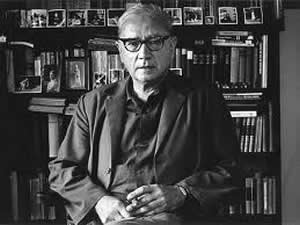


Simon Vestdijk (17 oktober 1898 – 23 maart 1971)


De Spaanse schrijver
Miguel Delibes werd op 17 oktober 1920 in Valladolid geboren. Zie
ookmijn blog van 17 oktober 2010 en eveneens alle tags voor Miguel Delibes op dit blog.


Uit: Les Rats (Vertaald door
Rudy Chaulet)


“Peu après le lever du jour, le Nini apparut à l’entrée de la grotte et contempla la nuée de corbeaux réunis en conseil. Les trois peupliers écimés de la rive, couverts de ces gros volatiles, ressemblaient à trois parapluies fermés, la pointe dirigée vers le ciel. Les terres basses de don Antero, le Puissant, tiraient sur le noir dans le lointain, comme un immense champ de cendres.
     La chienne se blottit contre les jambes de l’enfant et il lui caressa l’échine à rebrousse-poil de son pied nu et crasseux, sans la regarder, puis il bâilla, s’étira et leva les yeux vers le ciel lointain et satiné :
     « Le temps est à la gelée, Fa. Dimanche, on ira chasser les rats », dit-il.
     La chienne agita nerveusement sa queue tronquée et fixa sur l’enfant ses prunelles vivaces et jaunâtres. Les paupières de la chienne étaient gonflées et dépourvues de poils ; les chiens de son espèce arrivaient rarement à l’âge adulte les yeux intacts ; ils les perdaient souvent aux broussailles des ruisseaux, criblés par les herses, la renouée et le chiendent.
     Le père Ratier s’agita à l’intérieur, dans la paille, et la chienne, en l’entendant, aboya deux fois ; alors, la bande de corbeaux s’éleva péniblement au-dessus du sol d’un vol paisible et profond, rythmé par un brouhaha de croassements sinistres. Seule une corneille resta immobile sur les mottes sombres et l’enfant, en l’apercevant, courut vers elle en zigzaguant dans les sillons lourds d’humidité, évitant la chienne qui le poursuivait et aboyait à côté de lui. Lorsqu’il ouvrit le piège pour libérer le cadavre de l’oiseau, le Nini observa l’épi d’avoine intact, il le broya alors entre ses petits doigts nerveux et les grains s’éparpillèrent sur le sol.
     Élevant la voix par-dessus les croassements des corbeaux qui battaient lourdement des ailes, très haut, au-dessus de lui, il dit :
     « Il n’a pas réussi à y goûter, Fa ; il n’en a même pas mangé un grain. »


Miguel Delibes (Valladolid, 17 oktober 1920)


De Duitse schrijver
Georg Büchner werd geboren op 17 oktober 1813 in Goddelau. Zie ook mijn blog van 17 oktober 2010 en eveneens alle tags voor Georg Büchner op dit blog.


Uit: Dantons Tod


„(Camille Desmoulins und Philippeau treten ein.)

Hérault. Philippeau, welch trübe Augen! Hast du dir ein Loch in die rote Mütze gerissen? Hat der heilige Jakob ein böses Gesicht gemacht? Hat es während des Guillotinierens geregnet? Oder hast du einen schlechten Platz bekommen und nichts sehen können?

Camille. Du parodierst den Sokrates. Weißt du auch, was der Göttliche den Alcibiades fragte, als er ihn eines Tages finster und niedergeschlagen fand: »Hast du deinen Schild auf dem Schlachtfeld verloren? Bist du im Wettlauf oder im Schwertkampf besiegt worden? Hat ein andrer besser gesungen oder besser die Zither geschlagen?« Welche klassischen Republikaner! Nimm einmal unsere Guillotinenromantik dagegen!

Philippeau. Heute sind wieder zwanzig Opfer gefallen. Wir waren im Irrtum, man hat die Hebertisten nur aufs Schafott geschickt, weil sie nicht systematisch genug verfuhren, vielleicht auch, weil die Dezemvirn sich verloren glaubten, wenn es nur eine Woche Männer gegeben hätte, die man mehr fürchtete als sie.

Hérault. Sie möchten uns zu Antediluvianern machen. St. Just säh' es nicht ungern, wenn wir wieder auf allen vieren kröchen, damit uns der Advokat von Arras nach der Mechanik des Genfer Uhrmachers Fallhütchen, Schulbänke und einen Herrgott erfände.

Philippeau. Sie würden sich nicht scheuen, zu dem Behuf an Marats Rechnung noch einige Nullen zu hängen. Wie lange sollen wir noch schmutzig und blutig sein wie neugeborne Kinder, Särge zur Wiege haben und mit Köpfen spielen? Wir müssen vorwärts: der Gnadenausschuß muß durchgesetzt, die ausgestoßnen Deputierten müssen wieder aufgenommen werden!

Hérault. Die Revolution ist in das Stadium der Reorganisation gelangt. – Die Revolution muß aufhören, und die Republik muß anfangen. – In unsern Staatsgrundsätzen muß das Recht an die Stelle der Pflicht, das Wohlbefinden an die der Tugend und die Notwehr an die der Strafe treten. Jeder muß sich geltend machen und seine Natur durchsetzen können. Er mag nun vernünftig oder unvernünftig, gebildet oder ungebildet, gut oder böse sein, das geht den Staat nichts an. Wir alle sind Narren, es hat keiner das Recht, einem andern seine eigentümliche Narrheit aufzudrängen. – Jeder muß in seiner Art genießen können, jedoch so, daß keiner auf Unkosten eines andern genießen oder ihn in seinem eigentümlichen Genuß stören darf.”


Georg Büchner (17 oktober 1813 - 19 februari 1837)

Scene uit een opvoering van Dantons Tod in Wiehl, 2009


De Amerikaanse toneelschrijver
Arthur Miller werd geboren in New York op 17 oktober 1915. Zie ook mijn blog van 17 oktober 2010 en eveneens alle tags voor Arthur Miller op dit blog.


Uit:
Timebends: A Life


“Already in the sixties I was surprised by the common tendency to think of the late forties and early fifties as some sort of renaissance in the New York theatre. If that was so, I was unaware of it. I thought the theatre a temple being rotted out with commercialized junk, where mostly by accident an occasional good piece of work appeared, usually under some disguise of popular cultural coloration such as a movie star in a leading role.

That said, it now needs correction; it was also a time when the audience was basically the same for musicals and light entertainment as for the ambitious stuff and had not yet been atomized, as it would be by the mid-fifties, into young and old, hip and square, or even political left and middle and right. So the playwright’s challenge was to please not a small sensitized supporting clique but an audience representing, more or less, all of America. With ticket prices within reason, this meant that an author was writing for his peers, and if such was really not the case statistically, it was sufficiently so to support an illusion that had a basis in reality. After all, it was not thought particularly daring to present T.S. Eliot’s The Cocktail Party on Broadway, or Laurence Olivier in a Greek tragedy, or Giraudoux’s The Madwomen of Chaillot, or any number of other ambitious works. To be sure, such shows had much shorter lives than the trash, but that was to be expected, for most people would much rather laugh than cry, rather watch an actor being hit on the head by a pig bladder than by some painful truth.

The net of it all was that serious writers could reasonably assume they were addressing the whole American mix, and so their plays, whether successfully or not, stretched toward a wholeness of experience that would not require specialists or a coterie to be understood. As alienated a spirit as he was, O’Neill tried for the big audience, and Clifford Odets no less so, along with every other writer longing to prophesy to America, from Whitman and Melville to Dreiser and Hemingway and so on.”


Arthur Miller (17 oktober 1915 – 10 februari 2005)


De Nederlandse schrijfster en dichteres
Nel Noordzij (Eig. Pieternella Margaretha Breevoort-Noordzij) werd geboren in Rotterdam op 17 oktober 1923. Zie ook mijn blog van 17 oktober 2010 en eveneens alle tags voor Nel Noordzij op dit blog.


Uit:
Nel Noordzij en het desillusionerende proza (Bespreking door Marianne Vogel)


„Dat Nel Noordzij met haar roman de regels voor een fatsoenlijke beschrijving van de werkelijkheid en tevens die voor een fatsoenlijke beschrijving van de vrouw overtrad, doordat ze beschrijft hoe Renée naar de w.c. gaat, overgeeft, haar onthaarde oksels bekijkt, slechts zelden een ‘aardige’ opmerking tegen iemand maakt en als arts een tot het lichamelijke gereduceerd beeld van haar medemensen heeft, demonstreren de recensies over haar roman. Er wordt weliswaar beweerd dat de kritiek ‘over het algemeen positief [reageerde], omdat iedereen doorzag dat Renée's moedwillige cynisme de keerzijde vormde van een grote kwetsbaarheid.’ Maar alleen al de recensies van de belangrijkste critici geven een tegenstrijdiger beeld. Waar Jan Greshoff en H.A. Gomperts de modieuze, ja pubertaire woordenschat en het overdreven realisme bekritiseren, wijst Pierre Dubois deze bezwaren in twee recensies af en benadrukt de functionaliteit van de stijl van Noordzij, die zijns inziens niet overdreven is, maar juist de eerlijkheid en geloofwaardigheid van de roman ten goede komt. Waar Gomperts de roman alleen als glad cliché beschrijft, prijst Greshoff de overtuigingskracht en buitengewone helderheid van het boek, en besluit zijn recensie met de woorden: als Noordzij zich ‘losmaakt van de gril van de dag, wordt zij een van de allerbelangrijkste schrijvers van ons land. En misschien is zij dat al, in weerwil van haar kinderachtig te koop lopen met de verboden woorden uit de dictionnaire onzer schooljaren.’

Een dergelijk lovend oordeel komt echter maar een keer voor, en ongeveer twee derde van de recensies over Het kan me niet schelen is ronduit afkeurend. De argumenten die daarbij opduiken zijn in twee categorien te verdelen. De ene soort valt onder dezelfde kritiek die ook op het desillusionerend proza van de mannen gegeven werd: saai, naar, pijnlijk, moreel verwerpelijk, getuigt van een monomaan interesse voor bepaalde lichamelijke functies, maakt bezorgd over het effect op jeugdige lezers etc. etc. Dergelijke bezwaren wekken geen verbazing; pas de volgende generatie zou aan het eind van de jaren vijftig enthousiast zijn over deze nihilistisch-onverbloemde literatuur."


Nel Noordzij (17 oktober 1923 – 7 september 2003)

Cover


Zie voor nog meer schrijvers van de 17e oktober ook
mijn blog van 17 oktober 2011 deel 1 en eveneens deel 2.

Geschreven door Romenu om 00:00 Reageer op dit bericht

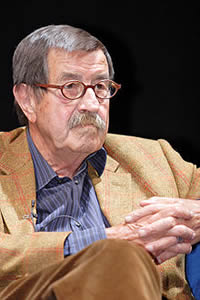
85 Jaar Günter Grass, Oscar Wilde, Guðbergur Bergsson, Eugene O’Neill, Gustaaf Peek


85 Jaar Günther Grass


De Duitse dichter en schrijver Günter Grass werd geboren in Danzig (tegenwoordig Gdansk, Polen) op 16 oktober 1927. Günther Grass viert vandaag zijn 85e verjaardag. Zie ook mijn blog van 16 oktober 2010 en eveneens alle tags voor Günter Grass op dit blog.


Uit: Die Blechtrommel


“Zugegeben: ich bin Insasse einer Heil- und Pflegeanstalt, mein Pfleger beobachtet mich, läßt mich kaum aus dem Auge; denn in der Tür ist ein Guckloch, und meines Pflegers Auge ist von jenem Braun, welches mich, den Blauäugigen, nicht durchschauen kann.

Mein Pfleger kann also gar nicht mein Feind sein. Liebgewonnen habe ich ihn, erzähle dem Gucker hinter der Tür, sobald er mein Zimmer betritt, Begebenheiten aus meinem Leben damit er mich trotz des ihn hindernden Guckloches kennenlernt. Der Gute scheint meine Erzählungen zu schätzen, denn sobald ich ihm etwas vorgelegen habe, zeigt er mir, um sich erkenntlich zu geben, sein neuestes Knotengebilde. Ob er ein Künstler ist, bleibe dahingestellt. Eine Ausstellung seiner Kreationen würde

jedoch von der Presse gut aufgenommen werden, auch einige Käufer herbeilocken. Er knotet ordinäre Bindfäden, die er nach den Besuchsstunden in den Zimmern seiner Patienten sammelt und entwirrt, zu vielschichtig verknorpelten Gespenstern, taucht diese dann in Gips, läßt sie erstarren und spießt

sie mit Stricknadeln, die auf Holzsöckelchen befestigt sind.

Oft spielt er mit dem Gedanken, seine Werke farbig zu gestalten. Ich rate davon ab, weise auf mein weißlackiertes Metallbett hin und bitte ihn, sich dieses vollkommenste Bett bunt bemalt vorzustellen. Entsetzt schlägt er dann seine Pflegerhände über dem Kopf zusammen, versucht in etwas zu starrem Gesicht allen Schrecken gleichzeitig Ausdruck zu geben und nimmt Abstand von seinen farbigen Plänen.

Mein weißlackiertes metallenes Anstaltsbett ist also ein Maßstab. Mir ist es sogar mehr: mein Bett ist das endlich erreichte Ziel, mein Trost ist es und könnte mein Glaube werden, wenn mir die Anstaltsleitung erlaubte, einige Änderungen vorzunehmen: das Bettgitter möchte ich erhöhen lassen,

damit mir niemand mehr zu nahe tritt...”


 1257109-becd352ba4c8f7b732350de10825445f.jpg

Günter Grass (Danzig, 16 oktober 1927)


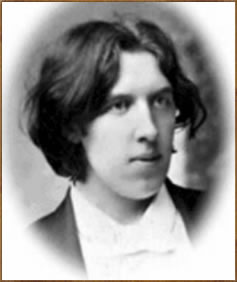
De Iers-Engelse schrijver Oscar Wilde werd geboren op 16 oktober 1854 in Dublin. Zie ook mijn blog van 16 oktober 2010 en eveneens alle tags voor Oscar Wilde op dit blog.


Ballad of Reading Gaol - I  (Fragment)


Some love too little, some too long,
Some sell, and others buy;
Some do the deed with many tears,
And some without a sigh:
For each man kills the thing he loves,
Yet each man does not die.


He does not die a death of shame
On a day of dark disgrace,
Nor have a noose about his neck,
Nor a cloth upon his face,
Nor drop feet foremost through the floor
Into an empty space.


He does not sit with silent men
Who watch him night and day;
Who watch him when he tries to weep,
And when he tries to pray;
Who watch him lest himself should rob
The prison of its prey.


He does not wake at dawn to see
Dread figures throng his room,
The shivering Chaplain robed in white,
The Sheriff stern with gloom,
And the Governor all in shiny black,
With the yellow face of Doom.


He does not rise in piteous haste
To put on convict-clothes,
While some coarse-mouthed Doctor gloats, and notes
Each new and nerve-twitched pose,
Fingering a watch whose little ticks
Are like horrible hammer-blows.


He does not feel that sickening thirst
That sands one's throat, before
The hangman with his gardener's gloves
Comes through the padded door,
And binds one with three leathern thongs,
That the throat may thirst no more.


He does not bend his head to hear
The Burial Office read,
Nor, while the anguish of his soul
Tells him he is not dead,
Cross his own coffin, as he moves
Into the hideous shed.


He does not stare upon the air
Through a little roof of glass:
He does not pray with lips of clay
For his agony to pass;
Nor feel upon his shuddering cheek
The kiss of Caiaphas.


 1257109-7ed412bd21207acbc04254700d2a170e.jpg

Oscar Wilde (16 oktober 1854 – 30 november 1900)


De IJslandse schrijver
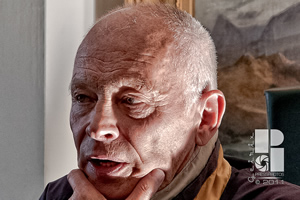
Guðbergur Bergsson werd geboren op 16 oktober 1932 in Grindavik. Zie ook mijn blog van 16 oktober 2010 en eveneens alle tags voor Guðbergur Bergsson op dit blog.


Uit: Blue Eyes in a Pool of Sharks


“But in reality nature was damaged and many Russian cities became because of that ghost dwellings like American radio stations in this country left by the so called NATO defence force. They were not only in Keflavik but all over Iceland. And something similar might happen to places now willingly accepting Alcoa factories. Their directors and owners only aim at making benefits. That is their nature and aim they defend better than we protect ours. Having done what they can and having emptied their possibilities they simply move to another region that has quickly entered the competition offering still better conditions and facilities concerning taxes and prices of electricity. Capitalism in America is that way and it is too well known in all the United States.
To me this is felt as a question of knowledge. I have not suffered it in the flesh. In reality it is remote, something like a sad memory, a frustration, a sign of lack of believe in human dignity. It is like a feeling that a tourist might have, a tourist entering Human history. But to see in the future similar destruction in my fatherland where my hands can feel things and my feet walk brings anger, even in the vain of hateful sense of justice when it is absurd and based on frustration.”


 1257109-60fa1639583cb2321fbc9d4088550bd9.jpg

Guðbergur Bergsson (Grindavik, 16 oktober 1932)


De Amerikaanse schrijver
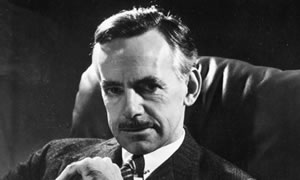
Eugene Gladstone O’Neill werd op 16 oktober 1888 in New York City geboren. Zie en ook mijn blog van 16 oktober 2010 en eveneens alle tags voor Eugene O’Neill op dit blog.


Uit: The Iceman Cometh


“LARRY--(grins) Yes, it's my bad luck to be cursed with an iron constitution that even Harry's booze can't corrode.

ROCKY--De old anarchist wise guy dat knows all de answers! Dat's you, huh?

LARRY--(frowns) Forget the anarchist part of it. I'm through with the Movement long since. I saw men didn't want to be saved from themselves, for that would mean they'd have to give up greed, and they'll never pay that price for liberty. So I said to the world, God bless all here, and may the best man win and die of gluttony! And I took a seat in the grandstand of philosophical detachment to fall asleep observing the cannibals do their death dance. (He chuckles at his own fancy--reaches over and shakes Hugo's shoulder.) Ain't I telling him the truth, Comrade Hugo?

ROCKY--Aw, fer Chris' sake, don't get dat bughouse bum started!

HUGO--(raises his head and peers at Rocky blearily through his thick spectacles--in a guttural declamatory tone) Capitalist swine! Bourgeois stool pigeons! Have the slaves no right to sleep even? (Then he grins at Rocky and his manner changes to a giggling, wheedling playfulness, as though he were talking to a child.) Hello, leedle Rocky! Leedle monkey-face! Vere is your leedle slave girls? (with an abrupt change to a bullying tone) Don't be a fool! Loan me a dollar! Damned bourgeois Wop! The great Malatesta is my good friend! Buy me a trink! (He seems to run down, and is overcome by drowsiness. His head sinks to the table again and he is at once fast asleep.)

ROCKY--He's out again. (more exasperated than angry) He's lucky no one don't take his cracks serious or he'd wake up every mornin' in a hospital.

LARRY--(regarding Hugo with pity) No. No one takes him seriously. That's his epitaph. Not even the comrades any more. If I've been through with the Movement long since, it's been through with him, and, thanks to whiskey, he's the only one doesn't know it.

ROCKY--I've let him get by wid too much. He's goin' to pull dat slave-girl stuff on me once too often. (His manner changes to defensive argument.) Hell, yuh'd tink I wuz a pimp or somethin'. Everybody knows me knows I ain't. A pimp don't hold no job. I'm a bartender. Dem tarts, Margie and Poil, dey're just a side line to pick up some extra dough. Strictly business, like dey was fighters and I was deir manager, see? I fix the cops for dem so's dey can hustle widout gettin' pinched. Hell, dey'd be on de Island most of de time if it wasn't fer me. And I don't beat dem up like a pimp would. I treat dem fine. Dey like me. We're pals, see? What if I do take deir dough? Dey'd on'y trow it away. Tarts can't hang on to dough. But I'm a bartender and I work hard for my livin' in dis dump. You know dat, Larry”.


 1257109-817094c971a9ffd5b383beff249ec775.jpg

Eugene O’Neill (16 oktober 1888 – 27 november 1953)


Onafhankelijk van geboortedata:

De Nederlandse schrijver Gustaaf Peek werd geboren in Haarlem in 1975. Peek studeerde Engelse Taal- en Letterkunde aan de Universiteit Leiden. Zie ook alle tags voor Gustaaf Peek op dit blog.


Uit: Dover (Vertaald door Davbid Colmer)


“In the second town he couldn’t find a parking space. He’d found the right street, but there were cars wedged in on both sides. Tony drove round and round waiting for someone to leave. He felt cold and clammy and realised it was a long time since he’d had anything to eat or drink. He ran out of patience and stopped right in front of the building. He jumped out, rushed up to the door, rang the bell. Nothing happened, so he banged on the door. Back to the van. Key in the lock, doors open – a car stopped behind him – he slammed them shut. The driver, a man, made a show of looking at his watch. The door of the house opened. A woman, drying her hands on what looked like a tea towel. Tony waited for some kind of signal. The woman said something he didn’t understand, but just stood there, the tea towel in her hands. Tony opened the doors and saw startled faces.

– Everything OK. Who’s next? Go, go!

Another three stood up, holding their bin bags, and got out. The car behind started hooting. Tony kept his back to it. The woman said something, the men answered. Doors shut. The clutch slipped, the van lurched, but didn’t stall. Two left. Rotterdam. Home.

He’d been driving non-stop for almost five hours. The old man and the fat guy would probably have done it faster. He was starting to feel faint. Five hours without food or drink. No breaks. Bladder about to burst. His city was close now. He had to get to the centre. Thuds from the back. He looked over his shoulder and saw fingers pressed against the window. A flushed face made Tony jump. Suddenly the man threw up against the glass. Tony’s hands stumbled over the wheel and the van swerved. Tony looked back at the road and regained control. A quick glance over his shoulder. The retching man’s face against the vomit-smeared window, the other man stretched out on the floor. He had to stop. Three hundred metres further on: clattering flags, garish signs advertising petrol and fast food. Tony took the exit.”


 1257109-aa11e98aeaede9ea078a9615d3539d65.jpg

Gustaaf Peek (Haarlem, 1975)


Zie voor nog meer schrijvers van de 16e oktober ook mijn blog van 16 oktober 2011 deel 1 en eveneens deel 2.

Geschreven door Romenu om 19:21 Reageer op dit bericht

Meer van Romenu

↑ Terug naar de berichten