Naar de inhoud

Romenu

Over literatuur, gedichten, kunst en cultuur
akke.beakke.be

Berichten van 15 juli 2019 tot 16 juli 2019

Thijs Zonneveld, Reinaldo Arenas, Georges Rodenbach, Tony Kushner, Anita Brookner, Jörg Fauser, William Irwin Thompson, Andrea Wolfmayr
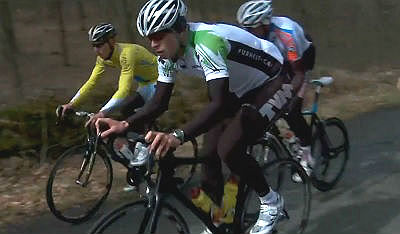
 

Bij de Tour de France


 2253488-6481d9655c4730d8a8d6e7c17526cdd5.jpg
Sven Kramer bij een training op de fiets


Uit: Wilco Kelderman bestaat niet: en andere wielerverhalen (Sven de wielrenner)

“Mijn dijbenen stonden in de fik. Mijn kuiten ontploften. En ik zweer dat ik mijn longblaasjes hoorde knappen, één voor één. Als ik nog adem had gehad, dan zou ik hebben gehuild om mijn moeder. Van de Milka-koeien en de klaterende beekjes om me heen kreeg ik niets mee: het enige wat ik zag waren de malende benen en de enorme reet voor me. Het leek zo'n goed idee, een keertje met Sven Kramer meetrainen in de aanloop naar de Olympische Spelen van Vancouver. Maar toen ik eenmaal in Zwitserland achter hem aan tegen een berg op fietste, wist ik niet meer waarom. En mijn lichaam al helemaal niet. Eenmaal terug in het hotel vroeg ik hem waarom hij in godsnaam niet ging wielrennen. Al was het maar om te bewijzen dat hij meer kon zijn dan koning van een sport die alleen groot is in Nederland. Hij moest erom lachen. Nou ja, een beetje dan. Want zo'n gek plan was het ook weer niet. 'Misschien stop ik wel met schaatsen als ik straks drie gouden medailles win in Vancouver. En áls ik ooit stop met schaatsen,' zei hij, 'dan ga ik wielrennen.' Het is nu vier jaar later. Sven Kramer heeft geen drie gouden medailles gewonnen in Vancouver. Hij bleef steken op één - dankzij een mislukte ploegenachtervolging en een verkeerde wissel. En Kramer is in de afgelopen vier jaar geen wielrenner geworden. Hij kwakkelde in het na-olympisch jaar met zijn rug en een dijbeenblessure, nam een sabbatical en besteedde de jaren daarna aan zijn comeback op het ijs. Een overstap naar de fiets is er nooit gekomen. Het had ook anders gekund. Hij heeft talent zat - óók als wielrenner. Er bestaat een foto uit 2004 met daarop het podium van het NK Tijdrijden voor junioren. Op het hoogste treetje staat Robert Gesink. Links naast hem staat de zeventienjarige Sven Kramer, die is gestrand op een paar seconden van Gesink. Later zou Kramer daarover zeggen:

 

 2253488-10ec75e1d7ac295ab5cd05fb1e7657bc.jpg
Thijs Zonneveld (Sassenheim, 28 september 1980)


De Cubaanse dichter en schrijver Reinaldo Arenas werd geboren op 16 juli 1943 in Holguin. Zie ook alle tags voor Reinaldo Arenas op dit blog.

Uit: The Color of Summer (Vertaald door Andrew Hurley)

“Delfín Proust:
Where it should be you that grows
a mahogany tree spreads its wide boughs ...
I grow old ...
No longer am I the master of my fear and of the city;
I do as I am told.
Conquered are we all; a baleful light claims victory.
And we all grow old.
Of course, to console me there's always this:
all that you are giving up, I can enjoy on the Hill of the Cross
where it should be you that grows.
Come back, and I'll take you personally to Tina Parecía Mirruz.
Delfín Proust tosses a mahogany-tree seed to Avellaneda, and it falls between her breasts. Avellaneda picks out the seed, gazes upon it sadly, and throws it into the sea. Immediately she becomes animated again.
Avellaneda:
From Betis harbor
along the shore
my little ship
sails free.
Rotten eggs
and mahogany seeds
shall never, ever
deflect me
from my chosen course.
So row, row, kindly oarsman,
for the morning
sun doth rise.
And I hie me to other shores.
The sound of barking is heard. A bulldog appears, walking on its two hind legs with the aid of a huge walking stick. This is the famous Nicolás Guillotina, poet laureate of Cuba, who flaps his enormous ears and shakes his walking stick threateningly at the fleeing poetess.

Nicolas Guillotina: (to a tune from Gilbert and Sullivan)
Flee this Island thou shalt not!
The Party, Miss Smarty, calls the shots,
and the Party has decided
that here with us thou shalt abide!
Ta-ra-ra, thou shalt not!
For the Party calls the shots.
Flee this land thou surely shalt not.
Here with us thou must remain.
Thou'rt a woman old and vain
and death on the high seas surely fear,
so let me whisper in thy ear:
Ta-ra-ra, thou shalt not!
For the Party calls the shots.
Flee this land thou surely shalt not.
If I must bide here and flee not
because the Party calls the shots,
what makes you think that you're so grand, eh?
What's sauce for the goose is sauce for the gander!
Ta-ra-ra, thou shalt not!
For the Party calls the shots!
Flee this !and thou most surely, most su-u-u-re-ly—shalt NOT!
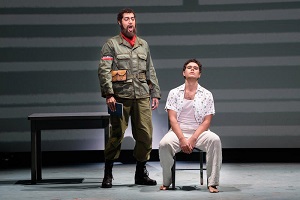
 

 2253488-e64a36090f41dce1818aea60eff2b09b.jpg
Reinaldo Arenas (16 juli 1943 – 7 december 1990)
Calvin Griffin (l) als revolutionaire ambtenaar Victor and Elliot Madore (r) als Reinaldo Arenas in de opera “Before Night Falls“, 2017


De Belgische dichter en schrijver Georges Rodenbach werd geboren in Doornik op 16 juli 1855. Zie ook alle tags voor Georges Rodenbach op dit blog.


Dans l'air fraîchi, venant d'où...

Dans l'air fraîchi, venant d'où, déclose comment ?
Vers moi, par la fenêtre ouverte, une musique
Déferle à petites vagues si tristement.
Elle me fait à l'âme un mal presque physique.

Confuse comme un songe... est-ce d'un piano,
Est-ce d'un violon méconnu qui s'afflige
Ou d'une voix humaine en élans comme une eau
D'un jet d'eau qui s'effeuille en larmes sur sa tige.

Ah ! La musique triste en route dans le soir,
Qui voyage en fumée, en rubans, qui sinue
En forme de ruisseaux pauvres dans l'ombre nue,
Et trace de muets signes sur le ciel noir

Où l'on peut suivre et lire un peu sa destinée
Dont les lignes du son tracent la preuve innée,
Chiromancie éparse, oracle instrumental !

Puis s'embrouille dans l'air la musique en partance,
Eteignant peu à peu ses plaintes de cristal
Qu'on s'obstine à poursuivre aux confins du silence.


Dans le silence et dans le soir de la maison

Dans le silence et dans le soir de la maison
A retenti le carillon de la pendule.
On ne sait si joyeux ou triste, un air ondule :
Tantôt le chapelet de l'heure en oraison ;

Puis ce semble un oiseau si peu viable et frêle
Qui se baigne et qui joue avec des perles d'eau ;
Puis du verre qui pleut mêlé de fer qui grêle ;
Etincelles de bruit sous un vague marteau,

Musique d'une noce au retour, clopinante
Qui monte un escalier tournant, et disparaît ;
Bruit de verres choqués, cristal qui se lamente,
Grelots de la folie - oh ! Valses, vin clairet,

Carnaval fatigué de danses enragées
Qui s'en revient vidé d'argent et de raison
Et qui laisse dégringoler dans la maison
Ses derniers confetti, des sous et des dragées.
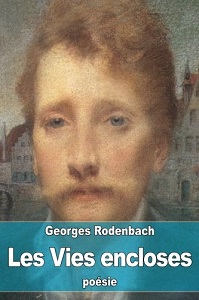
 

 2253488-314c6b7b2a73e4f82e20643e9af2eab0.jpg
Georges Rodenbach (16 juli 1855 – 25 december 1898)
Cover


De Amerikaanse schrijver Tony Kushner werd geboren op 16 juli 1956 in New York. Zie ook alle tags voor Tony Kushner op dit blog.

Uit: Angels in America

“The next day. Joe in his office at the courthouse in Brooklyn. He sits dejectedly at his desk. Prior and Belize enter the corridor outside.
PRIOR (Whisper): That's his office.
BELIZE (Whisper): This is stupid.
PRIOR (Whisper): Go home if you're chicken.
BELIZE: You're the one who should be home.
PRIOR: I have a hobby now: haunting people. Fuck home. You wait here. I want to meet my replacement.
(Prior goes to Joe's door, opens it, steps in.)
PRIOR: Oh.
JOE: Yes, can I—
PRIOR: You look just like the dummy. She's right.
JOE: Who's right?
PRIOR: Your wife.
(Pause.)
JOE: What? Do you know my—
PRIOR: NO.
JOE: You said my wife.
PRIOR: No I didn't.
JOE: Yes you did.
PRIOR: You misheard. I'm a Prophet.
JOE: What?
PRIOR: PROPHET PROPHET I PROPHESY I HAVE SIGHT I SEE.
What do you do?
(Joe comes out of his office.)
BELIZE: Run! Run!
JOE: Wait!
(They're cornered by Joe. Belize averts his face, masking his mouth and chin with his scalf)
JOE: What game are you playing, this is a federal courthouse. You said . . . something about my wife. Now what .. . How do you know my—
PRIOR: I'm ... Nothing. I'm a mental patient. He's my nurse.
BELIZE: Not his nurse, I'm not a n—
PRIOR: We're here because my will is being contested. Um, what is that called, when they challenge your will?
JOE: Competency? But this is an appellate court.
PRIOR: And I am appealing to anyone, anyone in the universe, who will listen to me for some . . . Charity . . . Some people are so ... greedy, such pigs, they have everything, health, everything, and still they want more.”
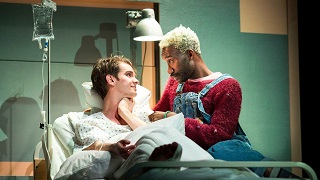
 

 2253488-4ac761e80066cfb72d31e230c6450b0f.jpg
Tony Kushner (New York, 16 juli 1956)
Scene uit een opvoering in New York, 2018


De Engelse schrijfster en historica Anita Brookner werd geboren op 16 juli 1928 in Herne Hill, een voorstad van Londen. Zie ook alle tags voor Anita Brookner op dit blog.

Uit: The Next Big Thing

“Herz had a dream which, when he awoke into a night that was still black, left him excited and impressed. He dreamed that he had received a call from his cousin, Fanny Bauer, the love of his life. He was to take her to the cinema, she ordained. Eager to conform to her wishes, as he always had been, he shrugged on his coat, and within seconds was elsewhere, as was the norm in dreams of wish-fulfilment. Although it was a weekday afternoon the cinema was so crowded that they had to stand at the back of the auditorium. Fanny was as he had always known her and still remembered her: petulant, with the petulance of a spoilt pretty woman, demanding and discontented. Shortly after the beginning of the film she had clutched his arm and declared that she felt unwell. Again, without transition, they found themselves in the vast café that was part of the cinema complex. Fanny had recovered somewhat but looked uncharacteristically dishevelled, with a large camel-hair coat slung over her shoulders. He was conscious of retaining his eager smile, but felt discomfited. This feeling had something to do with the coat, which he recognized as his own, the coat he should have been wearing. He had no memory of having offered it to her. The coat, and Fanny's malaise, remained closely associated in his mind. It was only when he understood that it was he who had been taken ill that the dream attained its peak of significance. Ailing, smiling, he had offered her his remaining health and strength, and she, not in the least grateful, had carelessly dispossessed him, not noticing that she had done so. This was so akin to their real life association that, if anything, his newly-awakened self was conscious of its reality. Brought back to himself he was aware of the smile — of complicity, of acquiescence — directed to the corners of the dark bedroom. Only the relentless ticking of his clock informed him that he had woken up, that this would soon be a new day, all too closely resembling the others, the normal days of his present existence, in which nothing happened nor could be expected to happen.
He had not seen her for thirty years. In the dream they were both young and she was still unmarried, before Nyon, before Mellerio, before his own family had come to England. It was his longing that had made him feel close to her, since he thought about her so often and so much that there seemed to be no distance between them. This longing extended to her parents, whom he preferred to his own. He knew that his own parents were socially inferior, although he suspected that morally they had the upper hand. His mother had never forgiven her sister for marrying out, though by no means observant in her own right. His father, a modest man, deferred to his brother-in-law without ever feeling entirely comfortable in his presence. Yet it was this brother-in-law, Hubertus, who had guaranteed them safe passage out of Berlin. Their house, one of those chic villas that Hubertus was so good at constructing, had all the charm of a more carefree establishment, an hotel, for example, or some kind of resort.”
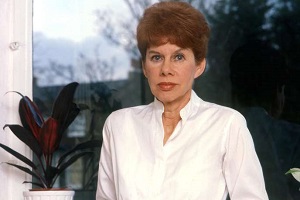
 

 2253488-57c1f6c46eae0b574e3e5906e0683bf0.jpg
Anita Brookner (16 juli 1928 – 10 maart 2016)


De Duitse schrijver en journalist Jörg Fauser werd geboren op 16 juli 1944 in Bad Schwalbach. Zie ook alle tags voor Jörg Fauser op dit blog.

Uit: Rohstoff

„Er hielt mir einen kurzen Vortrag über die Wirkungen von Rohopium. Was er sagte, stimmte im großen und ganzen, auch wenn er es nicht aus eigener Erfahrung wußte. Er hatte immer die sauberen Sachen gehabt, aber er war natürlich dabeigewesen, wenn den Opiumfans die Leber aus dem Mund geflatscht kam. Es wurde allmählich dunkel im Zimmer, aber er machte noch kein Licht. Er erzählte mir in Kurzform, was er über Apomorphin wußte, mit dem er es unter der Aufsicht eines englischen Arztes namens Dent nach fünfzehn Jahren geschafft hatte, die Stoffwechselkrankheit Sucht zu besiegen. »Der gute Doktor weilt ja leider nicht mehr unter den Lebenden«, sagte Burroughs, stand auf und machte frischen Nescaf6, »aber seine beiden Nurses praktizieren noch. Wenn Sie wollen, kann ich Ihnen die Adressen geben. Und dann haben wir noch einen Doktor in Frankreich, der die Apomorphin-Kur macht, und einen in der Schweiz.« Er suchte mir die Adressen raus und bemerkte, daß ich das einzige Bild im Zimmer fasziniert betrachtete. Auf den ersten Blick war es nur eine wilde Farbanordnung um einen Schriftzug, aber wenn man länger hinsah, entdeckte man seltsame Rhythmen und Strukturen, die alle den Schriftzug variierten. »Das ist von Brion Gysin, dem Maler und Cut-up-Kollaborateur«, erklärte Burroughs. »Sie sollten das mal ansehen, wenn Sie ein psychedelisches Mittel eingenommen haben — obwohl ich manchem auch davon abraten muß. Für viele Zeitgenossen ist es besser, wenn die Türen geschlossen bleiben.« »Dann würden Sie auch nicht jedem Cut-up empfehlen?« Er schenkte mir wieder ein sparsames wölfisches Lächeln. »Nun, junger Mann, der eine verträgt einen Löffel Rohopium, und der andere fällt um, wenn er gegen Pocken geimpft wird. Sind Sie Schriftsteller? Ich will ja nicht indiskret sein, aber wie ein Reporter sehen Sie für mich nicht aus.« Ich erklärte ihm, daß ich hoffte, bald zu veröffentlichen, und zwar in dem Verlag, für den Lou Schneider arbeitete. »Ach ja? Interessant.« Er verschwand im Nebenzimmer, kam aber im nächsten Moment wieder und drückte mir eine in braunes Packpapier gebundene Broschüre im Zeitschriftenformat in die Hand: William S. Burroughs: APO-33 Bulletin. Der Untertitel lautete: A Report On The Synthesis Of The Apomorphine Formula.
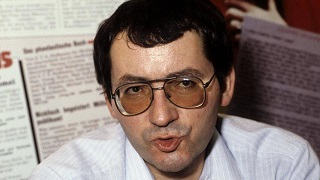
 

 2253488-48cbc2fdf337c597c145c86185d85a10.jpg
Jörg Fauser (16 juli 1944 – 17 juli 1987)


De Amerikaanse dichter, sociaal filosoof en cultuurcriticus William Irwin Thompson werd geboren op 16 juli 1938 in Chicago, Illinois. Zie ook alle tags voor William Irwin Thompson op dit blog.


Nightwatch

Call this night catacomb,
this chosen work,
broken sacrament.
Babel's gift of tongues,
poetry breaks the sky apart.

So to Hell with art,
tomorrow I will start
undamnably to Him alone.
(Can I make the tongue bend
dumbly as knees
and make an altar rail of brutal teeth?)

Once
with broken open mouth
blundering like his eyes,
Saul crumbled from his beast,
re-covering light.


Childbirth

Over the bones were the nerves
Brittle six years ago stretched
On strings of the Ninth Quartet.
The still room hardly began
When space intruded with stars
As viciously beautiful eyes
Mocked what I thought was myself.

Now it is five in the morning
Of years and a continent crossed.
Becoming whatever I am
Involves still the labor of time.
But tonight my wife and a child
Labor their equal becoming.
Wife, bearing mortality, child.
Into this darkness you have come
Like the face undiminished by stars.
Lessened of weight. you grow light
As the morning windows succumb.
Evan. as you fall into life.
Remember your name is a rhyme.
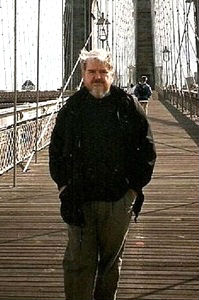
 

 2253488-312e6885b311bec3ef9fc0a4e816e87f.jpg
William Irwin Thompson (Chicago, 16 juli 1938)


De Oostenrijkse schrijfster en politica Andrea Wolfmayr werd geboren op 16 juli 1953 in Gleisdorf. Zie ook alle tags voor Andrea Wolfmayr op dit blog.

Uit: Spielräume

„Ich les einen Roman von Knut Hamsun, einen Roman über die Ehe einer jungen Frau, die nicht zu Haus bei den Kindern bleiben will, die sich selbstverständlich alle Freiheit nimmt, die sie braucht, die einen Mann hat, der still und stark und Geschäftsmann ist und ihr alle Freiheit läßt, weil er sie liebt und weil er hofft, daß sie einmal zu ihm zurückkehren wird. Aber die Ehe zerbricht, und ihr hilft ihre Freiheit nicht mehr, weil der andere Mann, den sie liebt, sie verläßt, und sie hat alle Sicherheit verloren und will zurück zu ihrem Mann, aber der will sie nun auch nicht mehr. Doch sie finden einander wieder, und ihre Beziehung wird zu einer «richtigen» Ehe, sie will nichts mehr von ihren früheren Künstlerfreunden wissen, sie lebt nur mehr für ihren Mann und ihre Kinder, und alle sind sie glücklich.
Und ich les das und weiß: Es geht nicht, es stimmt nicht, so kann ich nicht leben, ich kann nicht nur für Mann und Kinder dasein. Aber etwas wird spürbar von so großer Liebe und starker Zuneigung, daß ich weiß, er hat recht, der Hamsun, er hat ja so recht, ich brauch das, jeder braucht das, und ich bekomm solche Sehnsucht, daß ich gleich nach Hause laufen möchte zu meinem Mann, daß ich bei ihm sein und ihn festhalten mischte und ihm sagen, daß ich nie wieder weggehen will. Er ist doch mein Mann, denk ich, wir sind verheiratet, ich möcht mein Leben lang immer nur mit ihm zusammen sein, ich hab nie etwas anderes erwartet; wir werden immer zusammen sein, das glaub ich auch jetzt noch, aber ich denk, daß es unmöglich geworden ist, durch meine Schuld ist es unmöglich geworden. Ich hab doch gewußt, was ich tu, ich hab doch gewußt, daß ich alles aufs Spiel setz. Ich hab ihn geheiratet, und ich hab gewußt, was ich tu, ein Leben lang, hab ich gedacht, mein Mann, ich bin seine Frau, nur seine Frau, hab ich gedacht. Ich wein bei jeder Gelegenheit, ich kann nicht anders. Ich hab geträumt, daß meine Tante aufgetreten ist in einem Flamencorock und mit gestepptem Chinesenjackerl, in einem deprimierenden Rotlilaviolett und großblumig, alles weit und häßlich und faltig, und etwas ist da wie von schwarzen Vögeln und dunklen Wolken, und dann wach ich auf ... Im Hintergrund meines Traums andauernd Werbung, der Ö 3-Wecker ist eingeschaltet, wie immer, wenn ich bei Hans schlaf. Ich hör ihn telefonieren, er redet über die Sitzung, an der wir gestern teilgenommen haben, über die weiter zu unternehmenden Schritte; es macht mich müde, ich will nichts hören, ich verkriech mich in die Decke.“
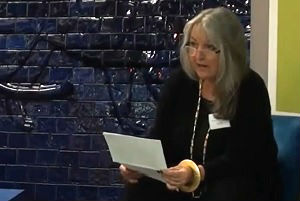
 2253488-4e8f51ca82afd52bc08600c2d5dbd0ee.jpg
Andrea Wolfmayr (Gleisdorf, 16 juli 1953)


Zie voor nog meer schrijvers van de 16e juli ook mijn blog van 16 juli 2017 deel 2.
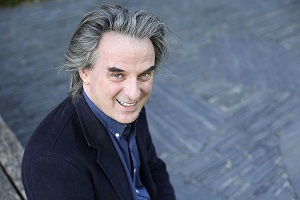
 

Geschreven door Romenu om 18:32 Reageer op dit bericht

Jean Christophe Grangé, Driss Chraïbi, Iris Murdoch, Richard Russo, Jacques Rivière, Heinrich Peuckmann, Robert Wohlleben, Hammond Innes, Rira Abbasim

De Franse schrijver Jean Christophe Grangé werd geboren op 15 juli 1961 in Parijs. Zie ook alle tags voor Jean Christophe Grangé op dit blog.

Uit: De passagier (Vertaald door Floor Bosboom)

“Het gerinkel boorde zich als een gloeiende naald door zijn bewustzijn. I Iij droomde van een zonovergoten muur. Hij volgde zijn schaduw op de witte wand, die begin noch eind had. De muur was het universum. Strak, verblindend, onverschillig ... Weer dat gerinkel ... Hij opende zijn ogen. Zag de oplichtende cijfers van de kwartswekker die naast hem stond. 4:oz. Hij hees zich op een elleboog. Zocht op de tast naar de hoorn. Zijn hand tastte in het niets. Hij herinnerde zich dat hij in de rustkamer was. Hij voelde aan de zakken van zijn witte jas, vond zijn mobiel. Keek op het schermpje. Hij kende het nummer niet. Hij nam op zonder zijn naam te noemen. Een stem klonk op in het donkere vertrek. `Dokter Freire?' Hij gaf geen antwoord. `Bent u dokter Mathias Freire, de dienstdoende psychiater?' De stem leek van heel ver te komen. Nog steeds die droom. De muur, het witte licht, de schaduw ... Ja, dat ben ik', zei hij eindelijk. `Ik ben dokter Fillon. Ik heb nachtdienst in de wijk Saint-Jean Belcier.' `Waarom belt u me op dit nummer?' `Dat hebben ze me opgegeven. Ik stoor u toch niet?' Zijn ogen raakten gewend aan het donker. De lichtbak. Het metalen bureau. De afgesloten medicijnkast. De rustkamer was gewoon een spreekkamer met het licht uit. Hij sliep op de behandeltafel. `Wat is er aan de hand?' gromde hij terwijl hij overeind kwam. `Een vreemde toestand bij station Saint-Jean. Bewakers hebben er tegen middernacht een man aangetroffen. Een zwerver die zich had verstopt in een loods langs het spoor.' De dokter klonk gespannen. Freire keek nog eens naar de wekker: 4:05. `Ze hebben hem naar de eerstehulppost gebracht en het politiebureau op de place des Capucins gebeld. De politie heeft hem meegenomen en mij gebeld. Ik heb hem op het bureau onderzocht.' `Is hij gewond?' `Nee. Maar hij weet helemaal niets meer. Complete amnesie.' Freire gaapte: 'Doet hij niet alsof?' `13. bent de specialist. Maar ik geloof van niet, nee. Het is net alsof hij van een andere planeet komt. Of eigenlijk uit het niets.' `Gaat de politie me bellen?' `Nee. Ze brengen die vent naar u toe.' `Bedankt', zei hij op ironische toon. `Ik meen het. U kunt hem helpen. Ik weet het zeker.' `Hebt u een doktersattest opgesteld?' `Dat heeft hij bij zich. Succes ermee.' De man hing snel op. Mathias Freire bleef bewegingloos zitten. De ingesprektoon boorde zich in het donker door zijn trommelvlies. Het was beslist zijn nacht niet. Het feest was om zr.00 uur begonnen. Op de afdeling Gedwongen Opnames had een nieuweling in zijn kamer gescheten, zijn uitwerpselen opgegeten en toen de pols gebroken van een verpleger. Een half uur later had een schizofrene patiënt zich op de afdeling West met stukjes linoleum de aderen doorgesneden.”


 2253231-f9780963639f813ab01554bc9ea2d3b2.jpg
Jean Christophe Grangé (Parijs, 15 juli 1961)


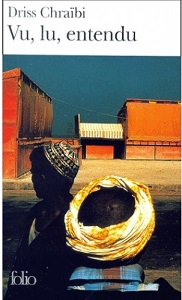
De Marokkaanse schrijver Driss Chraïbi werd geboren in El Jadida op 15 juli 1926. Zie ook alle tags voor Driss Chraïbi op dit blog.

Uit: Vu, lu, entendu

« Je remercie la vie. Elle m'a comblé. En regard d'elle, tout le reste est littérature, pour ne pas dire solitude. A mon âge — soixante et onze ans déjà —je remonte à pas paisibles le chemin parcouru, sans notion de temps ou d'espace. Je nie tourne vers mon passé. J'essaie tout au moins. À George Bernard Shaw, mon regretté confrère d'outre-Manche, une dame d'un âge certain avouait, le rose aux joues, qu'elle avait trente ans. « Ah bon ! répondit le vieux pince-sans-rire, mais à quel âge êtes-vous née ? Toutes proportions gardées, c'est la question qu'il aurait pu me poser. Non que je sois une femme : vous me connaksei Mais il subsiste un léger doute quant à la date de ma naissance, un certain décalage entre l'oral et l'écrit. On ne récuse pas l'écrit, surtout s'il est officiel. Quant à l'oral...
Considérons la version officielle. J'ai vu le jour au Maroc, à El-Jadida (Mazagan à l'époque du Protec-torat), au bord de la mer. Le lieu de naissance ainsi précisé, reste à déterminer la date. Chez nous, les « indigènes », il n'y avait pas d'état civil. Et, comme on l'a écrit et affirmé souvent depuis les Croisades, dans le monde arabo-musulman le temps ne compte guère, en dépit de la passion des Marocains pour les montres de haute précision. Mais il nous fallait nous « civiliser », selon le manuel français d'Histoire, celui-là même qui vantait mes ancêtres gaulois. Pour entrer au lycée Lyautey de Casablanca, je devais avoir une carte d'identité — et donc un âge légal. Vêtu d'une djellaba blanche et accompagné de deux témoins dignes de foi qui lui devaient de l'argent, mon père me conduisit par la main au commissariat dc police. C'était un après-midi torride, au début de la Seconde Guerre mondiale. Gravement, il déclara au commissaire que je m'appelais Driss avec deux « s » s'il vous plaît, Idriss en arabe mais on prononce Driss, que j'étais bien son fils et qu'il était content de moi, oui, monsieur, sage, obéissant, stu-dieux... — Son âge, dites-vous ? Oh ! c'était l'époque des
Vu, lu, entendu 11 moissons quand, avec l'aide de Dieu, il est venu au monde. — Quelles moissons ? demanda le commissaire qui transpirait à grosses gouttes. Orge, avoine, maïs, blé dur ? — Blé dur, dit mon père."


 2253231-707c0fef4477fcefc42bc52934718384.jpg
Driss Chraïbi (15 juli 1926 – 1 april 2007)
Cover


De Iers-Britse schrijfster en filosofe Iris Murdoch werd geboren in Dublin op 15 juli 1919. Zie ook alle tags voor Iris Murdoch op dit blog.

Uit: Living on Paper: Letters from Iris Murdoch 1934-1995

“To David Hicks, who had abandoned his Diploma of Education course in order to work for the British Council in Egypt.
Somerville College 29 April 1940
Dear David, My greetings. How is it with you? I think of you decorating the skyline on a camel and taking your well-earned siesta in the shade of a pyramid. Or is Egypt not romantic? Yes, I know. I had an aunt once who used to teach the young Egyptians to love God. What do you teach them? I hope it's something with an equally good moral. And altogether, how wags the world in your region of it? You and your pyramids seem almost as fabulous and mythical to me as Oxford and I must seem to you now I expect an act of faith is necessary to persuade yourself you ever were here. (But you were, I remember you quite distinctly) Everything here seems curiously the same — and yet I don't know why it should, for every month batches of men fade away into khaki, and Balliol is full of glossy civil servants from Whitehall. Worcester is still largely academic — I go there twice a week to hear Pickard-Cambridge' talking about moral philosophy. Lectures and all the clubs proceed as before, and the only difference it all makes to me is that I have ten times as much organisational work to do as I would normally, owing to the increasing man-shortage. I have just done Mods, and got the distinguished second which you once so kindly predicted for me. (Damn you. I held that against you for a long time. I suppose it would be unreasonable to bear the grudge any longer) and now I am doing Greats. The philosophy is not as philosophical as one would wish, but the ancient history is very ancient (especially in the matter of the dons appertaining thereto) and I find them both pretty good mental exercise.
The personelle of the university has changed tremendously. Freeling and Lucy are vanished as though they had never been. Carol I hear of spas-modically achieving great things in the Ministry of Economic Warfare. A few old-timers like Jack Dawes and Denis Healey are still here and active. Peter Shinnie is in the air force and getting incredibly tough — others of them are in the artillery and fleet air arm. None of the women whom you knew, I'm glad to say, has joined the ATS.° Myself, I am incredibly busy this term with committees . J and with acting. You see I have achieved one of my ambitions, to play the chorus leader in Murder in the Cathedral.' Christ Church dramatic society is doing it and our stage is the cloister quad at Christ Church with the cathedral as a backcloth. Also I am bringing out a revised version — an editio maioe rather — of your song sheet. (Remember?) The world — yes. It's a pretty interesting and fast-moving little world these days. There's a lot to be depressed about certainly, but I can't say I feel very fundamentally downhearted. In fact I've never felt so full of hope and new life as I do now. We're not doing so badly. Meanwhile this place is raving wild with spring. I met a calf this morning that looked like Michelangelo's Moses' — and the calf's mother was like Epstein's Madonna.' I won't tell you about the cherry trees or how green the Cherwell banks are, or you'll be homesick.”


 2253231-06523b872602ca8c8d089a46b2f0672f.jpg
Iris Murdoch (15 juli 1919 – 8 februari 1999)
Cover


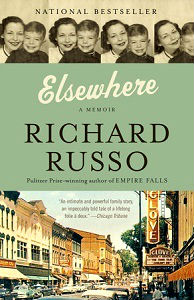
De Amerikaanse schrijver Richard Russo werd geboren op 15 juli 1949 in Johnstown, New York. Zie ook alle tags voor Richard Russo op dit blog.

Uit: Elsewhere. A Memoir

“A few years ago, passing the sign on the New York State Thruway for the Central Leatherstocking Region, a friend of mine misread it as saying laughingstock and thought, That must be where Russo’s from. She was right. I’m from Gloversville, just a few miles north in the foothills of the Adirondacks, a place that’s easy to joke about unless you live there, as some of my family still do.
The town wasn’t always a joke. In its heyday, nine out of ten dress gloves in the United States were manufactured there. By the end of the nineteenth century, craftsmen from all over Europe had flocked in, for decades producing gloves on a par with the finest made anywhere in the world. Back then glove-cutting was governed by a guild, and you typically apprenticed, as my maternal grandfather did, for two or three years. The primary tools of a trained glove-cutter’s trade were his eye, his experience of animal skins, and his imagination. It was my grandfather who gave me my first lessons in art—though I doubt he would’ve worded it like that—when he explained the challenge of making something truly fine and beautiful from an imperfect hide. After they’re tanned but before they go to the cutter, skins are rolled and brushed and finished to ensure smooth uniformity, but inevitably they retain some of nature’s imperfections. The true craftsman, he gave me to understand, works around these flaws or figures out how to incorporate them into the glove’s natural folds or stitching. Each skin posed problems whose resolution required creativity. The glove-cutter’s job wasn’t just to get as many gloves as possible out of a hide but to do so while minimizing its flaws.
Leather had been tanned in Fulton County, using the bark of hemlock trees, since before the American Revolution. Gloversville and neighboring Johnstown were home not only to gloves but to all things leather: shoes and coats and handbags and upholstery. My paternal grandfather, from Salerno, Italy, having heard about this place where so many artisans had gathered, journeyed to upstate New York in hopes of making a living there as a shoemaker. From New York City he took the train north to Albany, then west as far as the Barge Canal hamlet of Fonda, where he followed the freight tracks north up to Johnstown, where I was born decades later. Did he have any real idea of where he was headed, or what his new life would be like? You tell me. Among the few material possessions he brought with him from the old country was an opera cape.
Both men had wretched timing. My father’s father soon learned that Fulton County wasn’t Manhattan or even Salerno, and that few men in his new home would buy expensive custom-made shoes instead of cheaper machine-made ones, so he had little choice but to become a shoe repairman. And by the time my mother’s father arrived in Gloversville from Vermont, the real craft of glove-cutting was already under assault. By the end of World War I, many gloves were being “pattern cut.” (For a size 6 glove, a size 6 pattern was affixed to the skin and cut around with shears.) Once he returned from World War II, the process was largely mechanized by “clicker-cutting” machines that quickly stamped out presized gloves, requiring the operator only to position the tanned skin under the machine’s lethal blades and pull down on its mechanical arm.”


 2253231-88085b9afd1182a1746b61b8be7f29cf.jpg
Richard Russo (Johnstown, 15 juli 1949)
Cover


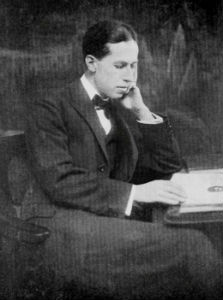
De Franse schrijver Jacques Rivière werd geboren op 15 juli 1886 in Bordeaux. Zie ook alle tags voorJacques Rivière op dit blog.

Uit: Études

"Baudelaire : Il est au milieu de nous. Il ne se retire pas dans les solitudes pour en revenir
poète et prophète ; je l’aperçois dans la rue ; il est préoccupé de ses dettes. Mais il avait une âme. Elle était prête à tout ressentir ; non pas avec dilettantisme, mais comme une pauvresse faite pour la peine et la besogne. L’âme est cette chose inconnue et malheureuse en nous et qui nous épie dans toutes nos aventures. Rentré chez lui, il la laisse se délivrer. Elle parlait sagement, elle racontait ses épreuves sans déchaînement, sans éclat. Et voici que ce n’est plus elle seulement qui s’accuse, mais notre âme à tous, que nous ne savions pas capable de toutes ces passions.
Elle chante, cette âme, et renaissent tous les adorables sourires et secrets du
regret… Cette poésie ne cherche que la confession. Mais ce ne sont pas des épanchements.
Ce n’est pas une sincérité bavarde Elle est multiple, sévère, souriante.
Chaque poème est le doux corps précis d’un sentiment unique. Les vers se posent sur lui comme un vêtement qui le ferait vivre. C’est toute notre âme, avec la violence insoupçonnée de ses amours diverses, que Baudelaire nous a rendue à nous-mêmes sensible. Il est possible que le don soit lourd et qu’il faille du courage pour le supporter. Cette poésie ne rassure
pas ; elle ne verse pas d’illusions. Elle ne prêche pas non plus. Mais elle s’adresse à
ceux pour qui rien n’est plus beau que de connaître son coeur, et de le sentir pesé sur soi."


 2253231-b252b74f910b7997f7ff5f5dae16c22f.jpg
Jacques Rivière (15 juli 1886 – 14 februari 1925)


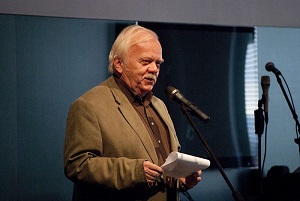
De Duitse dichter en schrijver Heinrich Peuckmann werd geboren op 15 juli 1949 in Kamen. Zie ook alle tags voor Heinrich Peuckmann op dit blog.

Uit: Nach Abpfiff Mord

„Die Bürgersteige waren wie leer gefegt an diesem bewölkten Sonntagmorgen. Auch auf den Straßen fuhr kaum einmal ein Auto vorbei, so dass die Stadt still war. So still, wie er sie noch nie erlebt hatte. Es war schon ein paar Minuten her, seit ihm ein paar Leute entgegengekommen waren. Eine Familie mit zwei Kindern, dazu drei ältere Frauen. Er hatte grinsen müssen, denn sie waren in Richtung der nahe gelegenen Kirche abgebogen. Die Kirchen hatten genauso mit Zuschauermangel zu kämpfen wie sein Fußballverein. Seither hatten ihm nur zwei übernächtigte junge Männer, die auf einem Blumenkübel am Rand des Bürgersteiges saßen, lallend etwas nachgerufen. Im ersten Moment hatte er sich gefragt, ob sie ihn erkannt hatten und beschimpfen wollten, aber was sie riefen, hatte nichts mit Fußball zu tun. Und schon gar nichts mit dem, weshalb er unterwegs war. Also hatte er sich abgewendet. Sollten sie grölen, was sie wollten, er fühlte sich nicht angesprochen. Nach der Nacht, die hinter ihnen lag, würden sie noch Stunden brauchen, bis sie zurechnungsfähig waren.
An der nächsten Kreuzung musste er die Straße überqueren. Sie war frei, er brauchte sich nicht einmal zu beeilen. Jetzt musste er noch an ein paar Häusern entlang laufen, dann breitete sich zu seiner Linken eine Grünanlage aus, in dessen Mitte das Fußballstadion lag. Das Stadion seines Vereins, für den er seit gut einem Jahr spielte.
Ob es gut gewesen war, hierher zu wechseln? Als er hergekommen war, hatte er sich das öfter gefragt, aber dann war er zum Stammspieler aufgestiegen, zum Schlüsselspieler, der im Mittelfeld die Bälle verteilte. Da hatte er geglaubt, alles richtig gemacht zu haben, und die Frage vergessen. Erst als er vor einer Woche in diesen Schlamassel geraten war, weil er wieder mal die Klappe nicht halten konnte, weil er wieder mal geglaubt hatte, seine Meinung sagen zu müssen, war die Frage erneut aufgetaucht. Warum ausgerechnet hierher, hätte es keine andere Möglichkeit gegeben? Die andere Frage, warum er auch diesmal wieder seine Meinung hatte sagen müssen, obwohl er doch wusste, dass es Ärger geben würde, hatte er sich gar nicht erst gestellt. Er war eben so. Es war seine Art, er konnte nicht dagegen an, selbst wenn er es gewollt hätte. Schuld daran trug sein Vater. „Du musst immer ehrlich sein“, hatte der ihm von Kindheit an gepredigt, „du musst sagen, was du für richtig hältst. Man ist kein richtiger Mensch, wenn man feige seine Meinung unterdrückt.“
Seine Mutter hatte bei diesen Sätzen stets die Stirn gerunzelt. „Aber du musst aufpassen, dass du dir nicht selber schadest“, hatte sie hinzugefügt. „Wenn du Nachteile in Kauf nehmen musst, sei lieber vorsichtig!“


 2253231-87d2201ec46dcddac9d1e68300fcc0a2.jpg
Heinrich Peuckmann (Kamen, 15 juli 1949)


De Duitse dichter, schrijver, vertaler, essayist en uitgever Robert Wohlleben werd geboren op 15 juli 1937 in Rahlstedt. Zie ook alle tags voor Robert Wohlleben op dit blog.


Kino

Genau genommen, hätts so kommen sollen,
wie Lichterspiel vorm dunklen Raum sich staut:
Von weither schwingt die Welle an und baut
sich auf zum Brecher, weithin auszurollen.

Da widersteht die Schattenhand im vollen
Remake und sucht sich im Gesicht die Haut,
sie mählich zu verschatten, bis sie graut
und kontrahiert, als würd sie schaudern wollen.

Im Maskentrick verbacken sich Modelle,
zu Haut und Haar verschwimmt das virtuelle
Gestade, grad als wäre da ein Meer.

Und Bild um Bild treckt an den Strand die Welle
und rührt sich nicht und niemals von der Stelle,
denn aus der Rückpro schwallt die Brandung her.


Vater und Sohn

Grad kreischt vom Thorens, der sich prima hält,
der Eisenschmetterling im Garten Eden.
Die Klingel gellt: Mein Sohn möcht mit mir reden.
Moment … ich hör nichts. So … ist ausgestellt.

Es geht verworren: das Gemüt geprellt,
ein Irren hin durch ungewollte Fehden.
Ach … weiß ichs doch! Ist alles, was noch jeden
ins Schleudern bringt in unsrer tollen Welt.

Erzählen werd ich von Geschichten, die
das Leben besser nicht geschrieben hätte.
Er geht. Es wird ein unerlöster Gang.

Einst wars ein Kettcar, doch nun hat er sie,
geht zu ihr, löst sie sanft von ihrer Kette:
die Tausender mit ihrem satten Klang.


Die Welt ist schlecht

Konstante fünf vor zwölfe weist die Klock:
Die Schlechtigkeit der Welt ist hochverläßlich
und unentrinnbar, wie längst unvergeßlich
besiegelt mit Sonetten des Barock.

Prinzip ist klar: Es gärtnert jeder Bock,
schützt beste Absicht vor, beträgt sich gräßlich,
weiß nichts von Schuld, bis sich am Ende häßlich
die Fratze zeigt: ein immer neuer Schock.

Beliebter Irrtum: Eine Satanshaxe
sei Merkmal all der bösen Schandgesellen
und ihrer rastlos regen Schlangenbrut.

Nee, nee! sind Menschen, die die Seelenachse
justieren, dann auf Dauerfeuer stellen:
aus altem Erbe ewig Tunichtgut.


 2253231-1c34b4fe9e3f52a08fa1cf986ccf05a3.jpg
Robert Wohlleben (Rahlstedt, 15 juli 1937)


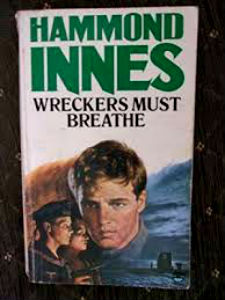
De Britse schrijver Hammond Innes werd op 15 juli 1913 in Horsham geboren als zoon van een bankdirecteur. Zie ook alle tags voor Hammond Innes op dit blog,

Uit: Wreckers Must Breathe

“Then Thursday dawned, and with it the shock of a newspaper placard at the Lizard—Soviet-German Non-Aggression Pact. I stopped the car and stared at it unbelievingly. Groups of holidaymakers stood about outside the newsagents' reading the papers and talking in low tones. Europe, Hitler, the whole world-fear of Nazism seemed suddenly to have enveloped the place like a sea mist. I jumped out of the car and bought a copy of my own paper, the Daily Recorder. It was true enough, and, what was more, Britain was calling up reserves and there were reports of mobilisation in France. I tossed the paper into the back of the car and drove on to Gunwalloe Church Cove, the other side of Mullion. What was the use of spoiling a holiday by getting upset about the international situation? Wasn't this what I had expected—the usual autumn crisis? But I had not expected a Soviet-German Non-Aggression Pact and I knew that it might well throw all calculations out of gear. The fear of a war on two fronts removed, the German High Command might well decide to make a lightning thrust against Poland and then, if necessary, fight it out with the democracies on the Western Front. I thought it all out as I drove across the Goonhilly Downs with the warm heavy scent of sun after rain in my nostrils, and by the time I had convinced myself that the pact was not as serious as it had at first seemed, it was twelve o'clock, and I was at Gunwalloe Church Cove. Two days ago there had been at least three hundred cars in the park. I counted a bare fifty. The beach seemed empty.Yet it was a glorious day. I had a bathe and then strolled along the beach.A tubby little man in grey flannels with a panama stuck squarely on his head nodded to me:Things look pretty bad this morning, don't they?' he said. `Not too good: I replied. 'But it's a fine day: `Aye: he said, 'that's might, it is. And we'd best make the most of 'em.Two men in our hotel have been called oop.Wired for last night: Five minutes' conversation with this gentleman left me with a feeling of utter depression. I had lunch and tried to settle down to read, but my mind would not concentrate and I was conscious all the time of the emptiness of the beach. I had my third bathe of the day and went home to tea to find the cottage empty of visitors.”


 2253231-3352803f29b791bd83a88755b465e991.jpg
Hammond Innes (15 juli 1913 – 10 juni 1998)
Cover


Onafhankelijk van geboortedata

De Iraanse dichteres, schrijfster en vredesactiviste Rira Abbasi werd geboren in 1962 in Khorramabad, Iran. Zie ook alle tags voor Rira Abbasi op dit blog.


Poets of Peace (Fragment)

Their flags has a color, has a shape,
has a star, has a moon.
With smiling orange sun
Watch the cartoons!
Watch the animals in jungles!
The mouse and the cat are kind,
They love their children.
Shame on you!
Getting a piece of bread is not hard.
It needs no gun and no fight.
Every house has a door and window.
Daddy, mommy and their kids,

They need peace and comfort,
Children need to study, to be happy,
Watch football games, pretty flowers, and swim.
They want to grow up,
They hate bad dreams,
They want to think,
They like to fly like swallows,
Having a green branch in their mouth.
Fly high and plant olives on the moon.
Let’s be kind to each other,
No matter how much bread, how many children
Appreciate each other,
Sing with a healthy soul:
We need no more bread, not a big belly.
We need no guns, no wounded men in fights,
Hostility is meaningless.
If we are friends,
If we are good neighbors
We can borrow; we can lend water and bread
We need no war!
Why are rockets expensive?


Vertaald door M. Alexandrian


 2253231-72eb9f7c95a686dd841aaa73a4d337b5.jpg
Rira Abbasi (Khorramabad, 1962)
Khorramabad


Zie voor nog meer schrijvers van de 15e juli ook mijn blog van 15 juli 2017 deel 2.

Geschreven door Romenu om 18:23 Reageer op dit bericht

Meer van Romenu

↑ Terug naar de berichten