Naar de inhoud

Romenu

Over literatuur, gedichten, kunst en cultuur
akke.beakke.be

Berichten van 27 februari 2011 tot 28 februari 2011

Stephen Spender, Luc Dellisse, Marcel Pagnol, Raphaële Billetdoux
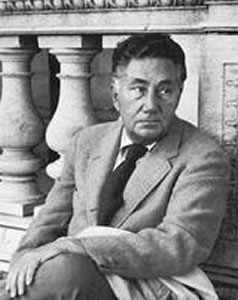
De Engelse dichter, essayist en schrijver Stephen Spender werd geboren op 28 februari 1909 in Londen. Zie ook mijn blog van 28 februari 2007 en ook mijn blog van 28 februari 2008 en ook mijn blog van 28 februari 2009 en ook mijn blog van 28 februari 2010.


Uit: World within world


“It was a sign of this submission of human beings to the mechanical forces they had called into being and put into motion against one another that I was no longer interested in the personality of Hitler, since, having begun the war, he had not the power to make it stop.
Everyone had shrunk in his own mind as well as in the minds of his fellow-beings, because his attention was diverted to events dwarfing individuals. These events could only lead to more battles and a victory catastrophic for the winning, as for the losing side. Personal misfortunes seemed of minor importance compared with the universal nature of the disaster overtaking civilization. So that in the summer of 1940, when invasion seemed imminent, a friend could say to me: "Within six weeks from now, if I blow out my brains and they spatter all over the carpet, in my own home and with my family in the room, no one will think it worth noticing."
We lived in a trance-like condition in which, from our fixed positions in our island-fortress-prison, we witnessed, as in a dream, not only armies, but whole populations controlled by the magnetic force of power. Even in the minds of those who knew them well, France and other continental countries had become mental concepts only, areas in our minds where incredible things happened; there, puppet dictators transmitted orders received from Germany, and Germany, a vast arsenal of mechanical power, added to its resources the industries of other nations and the slave labour of their peoples. Even today, France under the Occupation remains to me an idea only, to which I can attach little reality, a hallucinated vision of folly, betrayal, and despairing courage. So that, if some French friend begins to speak of his life during those years, I stare at him as though expecting to see him change into a different person.“


 862934-5e495e057264301adef13ea0f273cf1b.jpg

Stephen Spender (28 februari 1909 – 16 juli 1995)

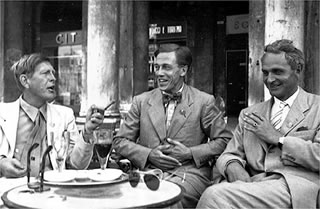
WH Auden, Cecil Day Lewis en Stephen Spender op een conferencie in Venetië, 1949.


De Belgische-Franse dichter, schrijver, essayist, dramaturg en scenarioschrijver Luc Dellisse werd geboren op 28 februari 1953 in Brussel. Zie ook mijn blog van 28 februari 2009 en ook mijn blog van 28 februari 2010.


Uit: La poésie pense à autre chose… » 


„1. La poésie ne connaît ni le temps, ni l’espace. Elle procède par gouttes de lumière. Elle ne sert pas à dire, mais à donner à voir. Elle n’a pas de mots pour penser. 

Elle cherche à capter, non pas le flux du temps, mais sa dynamique invisible, son grand mouvement exponentiel, après l’explosion secrète du monde – feu et glace, mort et vie. Elle permet de suivre, à la pointe de l’œil, toutes les météorites décrivant leur course, et chaque éclat. 

Comme une sonde spatiale de retour d’Alpha du centaure, elle ramène à nous des cailloux de différentes formes et de différentes couleurs, sur lesquels s’exercera, jusqu’à l’extinction des feux, notre ingéniosité géologique. 

Ce rêve a plus de force et plus de durée que l’objet réel de la pensée. 

La poésie, qui cherche et qui trouve là où il n’y a rien à trouver, est évidemment une aventure de l’esprit. En ce sens, elle appartient en propre au mouvement alternatif et prospectif de la pensée, qui s’empare des objets du monde, transitoires et mortels, et les transforme en vivants souvenirs. 

Parce qu’elle s’approprie des moments rougeoyants du monde, la poésie est le bonheur. Non pas la reconstitution du bonheur, mais l’expérience du bonheur en soi. Moment d’intensité rejouable, dans les mêmes termes, car ce qui est parfait revient deux fois. 


Quand je sciais la mort sur mon bûcher de verre

Tour de cristal dont les éclairs étaient des aigles

Des staccatos tirés au vol par la panique

Poudre de la main droite au piano

Fumée d’océans calcinés

Passage du vide en flocons de pollen

Porte des bras tordus sur la fresque des falaises

 Son bel œil de forêt mâchée par les hiboux

L’âge réel du froid, l’ascenseur humide

Dans la peau du sommeil »


 862934-450170a398ae73e48c52a408b9aaa359.jpg

 Luc Dellisse (Brussel, 28 februari 1953)


De Franse dichter, schrijver, dramaturg en regisseur Marcel Pagnol werd geboren op 28 februari 1895 in Aubagne, Bouches-du-Rhône. Zie ook mijn blog van 28 februari 2007 en ook mijn blog van 28 februari 2009 en ook mijn blog van 28 februari 2010.


ŒUFS DE PAQUES


Voici venir Pâques fleuries,
Et devant les confiseries
Les petits vagabonds s'arrêtent, envieux.
Ils lèchent leurs lèvres de rose
Tout en contemplant quelque chose
Qui met de la flamme à leurs yeux.


Leurs regards avides attaquent
Les magnifiques œufs de Pâques
Qui trônent, orgueilleux, dans les grands magasins,
Magnifiques, fermes et lisses,
Et que regardent en coulisse
Les poissons d'avril, leurs voisins.


Les uns sont blancs comme la neige.
Des copeaux soyeux les protègent.
Leurs flancs sont faits de sucre. Et l'on voit, à côté,
D'autres, montrant sur leurs flancs sombres
De chocolat brillant dans l'ombre,
De tout petits anges sculptés.


Les uns sont petits et graciles,
Il semble qu'il serait facile
D'en croquer plus d'un à la fois ;
Et d'autres, prenant bien leurs aises,
Unis, simples, pansus, obèses,
S'étalent comme des bourgeois.


Tous sont noués de faveurs roses.
On sent que mille bonnes choses
Logent dans leurs flancs spacieux
L'estomac et la poche vides,
Les pauvres petits, l'œil avide,
Semblent les savourer des yeux.


 862934-0e636b916d5e9ddcbce1394183c2001c.jpg

Marcel Pagnol (28 februari 1895 – 18 april 1974)

Hier met Jacqueline Bouvier


De Franse schrijfster Raphaële Billetdoux werd geboren op 28 februari 1951 in Neuilly sur Seine. Zie ook mijn blog van 28 februari 2009 en ook mijn blog van 28 februari 2010.


Uit: C'est encore moi qui vous écris


„Paris, janvier 1968, 

Papa, 

Je te le demande à l'avance, mais toujours maintenant je me sens coupable. Je cherche, je m'interroge par rapport à qui, à quoi, est-ce vous, est-ce moi, est-ce le seul fait d'avoir à demander une permission ou bien de devoir lutter pour l'obtenir.  

Trop souvent je me suis trouvée dans le sentiment d'impuissance, à vouloir dire les vérités que je crois cachées sous les choses et j'ai terminé cette aventure d'une journée devant la télévision, en pensant que j'aurais mieux fait d'aller m'égayer avec les autres.  J'ai des élans de tendresse pour les gens, pour des beautés dont ils n'ont pas conscience, pour ce professeur qui parle comme s'il avait du nougat collé aux dents, pour cet autre qui crie à chaque cours : « La foire, zéro ! Zéro, la foire ! », en agitant tristement les bras.  

J'ai envie de tout définir dans de petits traités, de m'exprimer par théorèmes pour mettre de l'ordre dans ma vie. Pour cela je préfère la société des adultes car je suis sûre, au moins, qu'ils entendent ce qu'il faut comprendre dans ce que je dis, que je ne sais pas dire...  

Ce merveilleux que me promettait maman vers les quatorze, quinze ans, je commence seulement, à dix-sept ans, à le voir un peu s'allumer. Il ne me paraît plus que j'appartiens à la vie, mais bien que la vie m'appartient, et dans chaque peine j'ai une force de bonheur. Bientôt je vous soumettrai quelque chose pour m'aider qui sera bien dans le fond, quoique décevant dans la forme. 

Papa, sache que ma gaieté n'est jamais oublieuse : même dans l'amusement je travaille, pense à vous, à vos regards... Je note, je juge, je reste lucide, je vous raconte tout sans cesse et sans arrêt dans ma tête, je sais ce que vous aimeriez ou n'aimeriez pas, je suis votre fille et le reste à l'extérieur, j'ai à coeur, toujours, de vous prolonger. »


 862934-ca856d1d5ccfe7fe7e3cbf545b0a8e3a.jpg

Raphaële Billetdoux (Neuilly sur Seine, 28 februari 1951)


Zie voor nog meer schrijvers van de 28e februari ook mijn vorige blog van vandaag en eveneens mijn eerste blog van vandaag. 
 

Zie voor nog de schrijvers van de 29e februari ook mijn derde blog van vandaag.
Geschreven door Romenu om 19:56 Reageer op dit bericht

Bodo Morshäuser, John Montague, Dee Brown, Daniel Handler

De Duitse dichter en schrijver Bodo Morshäuser werd geboren op 28 februari 1953 in Berlijn. Zie ook mijn blog van 28 februari 2007 en ook mijn blog van 28 februari 2008 en ook mijn blog van 28 februari 2009 en ook mijn blog van 28 februari 2010.


HERBST (1978)


Angelangt bei der Verteidigung der Verfassung.
Keine Metapher jetzt zum Winter der kommt!
Letzte Sonne auf betonierter Erde:
nicht zu beschreiben. Mit diesem Wahnsinn
sind wir verwandt ohne Frage.


Wald nun, und Bäume, ein Fest der Zynik.
Leises Grollen hinter den Bergen, vor der Stadt.
Funken sprühen dort, wo geschweißt wird,
mit Maske, aus Not, für kein Wunschkind mehr.
Krieg ist nur ein anderes Wort.


Und wie viele Blätter fallen erst gar nicht mehr!
Wieviel Papier an den Litfaßsäulen:
prophetische Hinweise auf die zwanziger Jahre.
Nach welchem Knochen springst du, Enkelkind,
sind sie nicht vergeben?


Wie viele alte Männer, denen ich nicht verzeih,
daß ich sie nicht verstehen soll,
Trümmerväter, Trümmermütter, endlich satt
und mitverschluckt alle Erinnerung an morgen.


Die letzten der Geschichte ziehen das Holzbein an,
stemmen sich mit Stöcken von der Weltbank hoch,
legen die Binde um den Arm.
Erzähl mir was vom Krieg!“


 862926-276d8fda99316e678dea6d1b3692762d.jpg

Bodo Morshäuser (Berlijn, 28 februari 1953)


De Ierse dichter John Montague werd geboren in New York op 28 februari 1929. Zie ook mijn blog van 28 februari 2007 en ook mijn blog van 28 februari 2008 en ook mijn blog van 28 februari 2009 en ook mijn blog van 28 februari 2010.


A Grafted Tongue


(Dumb,

bloodied, the severed

head now chokes to

speak another tongue -


As in

a long suppressed dream,

some stuttering garb -

led ordeal of my own)


An Irish

child weeps at school

repeating its English.

After each mistake


The master

gouges another mark

on the tally stick

hung about its neck


Like a bell

on a cow, a hobble

on a straying goat.

To slur and stumble


In shame

the altered syllables

of your own name:

to stray sadly home


And find

the turf-cured width

of your parents' hearth

growing slowly alien:


In cabin

and field, they still

speak the old tongue.

You may greet no one.


To grow

a second tongue, as

harsh a humiliation

as twice to be born.


Decades later

that child's grandchild's

speech stumbles over lost

syllables of an old order.


 862926-d581a9e6375572b61a1c72cc93ecd6f2.jpg

John Montague (New York, 28 februari 1929)


De Amerikaanse schrijver en historicus Dee Brown werd geboren op 28 februari 1908 in Alberta, Louisiana. Zie ook mijn blog van 28 februari 2009 en ook mijn blog van 28 februari 2010.


Uit: The Way To Bright Star


„Thinking about the circus coming to town led me to pull out this shoe box full of faded photographs that I keep in the bottom drawer of Old Man Fagerhalt’s desk. I have not looked at them for a long time, maybe a year or more. I just now found my favorite, the one of Queen Elizabeth Jones, of course, and there she is—in her white riding tights, her golden hair done up halo style, her lips parted in that joyful smile that is like none I’ve ever seen on any other human being’s face.

In the picture she is standing in front of those two damned camels. Those poor cursed evil-smelling beasts! Detest them I did, but it was they that brought me to Queen Elizabeth Jones, placing me in debt to them forever.

I would like to brood over the picture and dream again of the time and place where it was made and the life I led then. But I hear Hilda Fagerhalt out in the hardware store chattering with a customer, and I know that any minute now she will be traipsing down the hall, her slippers slapping on the hard boards, thrusting her Swedish head through the open door to remind me sharply to prepare an order for that keg of ten-penny nails I forgot about. “Remember the post office closes at six o’clock, Ben, and don’t forget the horse collars for Jack Bilbrew’s dray teams, either.”

I call her Fagerhalt, but she’s used my name, Butterfield, since Old Man Fagerhalt caught her in bed with me. And me at the time with a leg so badly shattered I knew I’d never ride in the circus again with Queen Elizabeth Jones. When Hilda crawled into my bed, she was only trying to comfort me and ease the cruel pain of mending bones. She is a great comforter, I’ll allow that. But Old Man Fagerhalt saw me as the spoiler of his daughter’s virtue, although she was the one who came into the bed. Maybe he just wanted to get her married and off his hands.

The desk before which I sit—this handmade oaken desk with its innumerable cubbyholes filled with useless papers and trinkets—Hilda now refers to as mine, although I will always think of it as Old Man Fagerhalt’s desk even though he has long been interred in Mount Holly cemetery out on Broadway.“


 862926-4b02eea327f7f2d69dba641cccfe3d10.jpg

Dee Brown (28 februari 1908 – 12 december 2002)


De Amerikaanse schrijver Daniel Handler werd geboren op 28 februari 1970 in San Francisco, Californië. Zie ook mijn blog van 28 februari 2007 en ook mijn blog van 28 februari 2009 en ook mijn blog van 28 februari 2010.


Uit: Watch Your Mouth


„Because this is, you know, an opera. Fiction, like all operas: a lie, but a lie is sort of a myth, and a myth is sort of a truth. All summer long I was watching things happen with Cynthia Glass and her family that were melodramatic, heart-wrenching, and absurdly — truly — tragic. Dire consequences lurked around their house like the growl of cellos when the jealous fiance´, or the enraged father, or the Old Spirit of the Mountains descends on the lovers, flushed with horniness and the effort of singing over a fifty-piece orchestra: La Forza Dei Glasses. Le Nozze Di Incest. Cyn. They were an opera and now the lights are lowering and here we are, reader or readers. No need to stress. An opera in book form is more convenient than the real thing, because you can eat when you want and wear whatever pleases you. Nothing, maybe. Read it alone in bed, the sheets lingering on your bare belly, your hips. Read it when no one's watching. Go ahead.

I know there are some operas that start right up, but this isn't one of them. Like Beethoven, whose only opera clears its throat with not one but four possible overtures, I've written a bunch of openings, all introducing the subject matters and what surrounds them. As somebody said in a book I've since lost, all behavior exists within a social and cultural context, so I hope these overtures will not exactly influence you, but tap you on the shoulder to get you looking in the right direction. Their purpose is similar to those hyphened taxonomies you can find clinging to the back of the title page like mold on a shower curtain, infecting your naked and vulnerable skin. You know the words I mean. I know that deep down you know what I'm talking about. Those Library of Congress things:

Pittsburgh, Pennsylvania — Fiction

Our story begins in Pittsburgh, Pennsylvania, where, the guidebooks would have it, ?geography demanded a city.? As if rich river-soaked land wanted nothing better than a bunch of greyed-out buildings dumped on it. The Ohio River is born where the Allegheny and the Monongahela meet in a wet intersection of sludgy vowels..“


 862926-ba49b75168694dd3eed7b3674425a03a.jpg

Daniel Handler (San Francisco, 28 februari 1970)

Geschreven door Romenu om 19:43 Reageer op dit bericht

Bart Koubaa, Berthold Auerbach, Sophie Tieck, Michel de Montaigne, Ernest Renan

De Vlaamse schrijver Bart Koubaa (pseudoniem van Bart van den Bossche) werd geboren op 28 februari 1968 in Eeklo. Zie ook mijn blog van 28 februari 2009 en ook mijn blog van 28 februari 2010.


Uit: De Belgen en hun breinen


„Mijn grootvader, geboren in Ana Paulowna, is daarvan de oorzaak. Waarschijnlijk was het door zijn toedoen dat mijn ouders een caravan in Cadzand hadden en niet in Blankenberge, dat we cassis dronken in plaats van cola en we geen mayonaise maar frietsaus op onze weliswaar Vlaamse frieten kwakten. Ik maak me sterk dat ik de frikandel speciaal in België geïntroduceerd heb; ik zie nog het gezicht van de frietkotuitbater toen ik hem beschreef wat ik precies wilde.

Mijn grootvader was er ook de oorzaak van dat tijdens legendarische voetbalwedstrijden Nederland-België mijn vader een kalmeringspil diende te slikken en dat de televisie op die avonden niet op BRT maar op Nederland 2 stond. Toch was er één dag in de week dat mijn vader altijd de Nederlandse televisie verkoos: zondagavond, VPRO. Ik ben deels opgevoed met Koot en Bie, met Van Dis in de IJsbreker, met eigenzinnige film- en documentaireavonden en tot op heden met het werk van Wim Kayzer; zijn gasten waren mijn leermeesters. Hij is er rechtstreeks de oorzaak van dat ik vandaag meewerk met wiskundigen, cognitieve neurowetenschappers en filosofen aan de neurologische lokalisatie van het geweten en het creatieve centrum. Mijn argumenten voor vanavond zijn zonder twijfel door zijn televisiewerk gekleurd. Op de trein hierheen voegde ik eraan toe dat mijn argumenten ook bepaald worden door wat mij drijft, en door de nachten sinds de geboorte van mijn zoon, vandaag precies vijf weken geleden.“


 862868-ea5f258ad48a2df96c475e169dbd8ce1.jpg

Bart Koubaa (Eeklo, 28 februari 1968)


De Duitse schrijver Berthold Auerbach (eig. Moyses Baruch) werd geboren op 28 februari 1812 in Nordstetten in het Zwarte Woud. Zie ook mijn blog van 28 februari 2009 en ook mijn blog van 28 februari 2010.


Uit: Der Lautenbacher


„Die Glocke läutete hell, ihre Töne zerflossen sanft in dem lichten Mittag; die Menschen kehrten von ihrer Arbeit heim. Die Männer gingen mit der Mütze in der Hand von den Feldern auf die Straße, die Stimme Gottes hatte sie gerufen, das harte Feldgeräthe aus der Hand zu legen, heimzukehren und sich zu stärken am Gebete und an irdischer Speise. Ein junger, schlank gewachsener Mann war die Straße von der Stadt heraufgekommen. Er war städtisch gekleidet und hatte einen braun marmorirten Ziegenhainer Stock, in den viele Namen eingeschnitten waren, in der Hand. Als er nun das Dorf so vor sich ausgebreitet sah, blieb er stehen, horchte hin nach dem Geläute und schaute umher in den Wald der blühenden Obstbäume, die das Dorf umdrängten. Er grüßte die Leute, die vom Felde herüber kamen, mit einer besondern Freundlichkeit, ja, als ob er sie kenne. Die Leute dankten herzlich und schauten sich Alle nochmals nach ihm um, sie meinten, das müsse Einer aus [106] dem Dorfe sein, der aus der Fremde heimkehre; er hatte sie ja so durchdringend angeschaut, und doch kannten sie ihn nicht.

Als die letzten Töne der Glocke verklungen waren, als Alles auf dem Felde stille, kein Mensch mehr zu sehen war und nur die Lerchen hoch in der Luft jubelten, da setzte sich der Fremdling an den Wegrain, schaute noch lange hinüber nach dem Dorfe, zog endlich eine Brieftasche heraus und oft wieder um sich blickend schrieb er hinein:

»Griechen und Römer! Wie hoch schallten eure Triumphe, wie schmetterten eure Kriegstrompeten, aber nur das Christenthum grub das Erz aus den dunkeln Schachten der Erde, ließ es hoch in den Lüften schweben und weithin seinen Klang ausgießen, zur Anbetung, zur Freude und zur Trauer. Wie herrlich mögen die Harfen und Pauken im Tempel zu Jerusalem geklungen haben; aber nicht mehr Ein Tempel steht auf der Erde, tausende hieß das Christenthum erstehen aller Orten ...“


 862868-0f009f042037db521d5e870f5caaee52.jpg

Berthold Auerbach (28 februari 1812 - 8 februari 1882)


De Duitse dichteres en schrijfster Sophie Tieck werd geboren op 28 februari 1775 in Berlijn. Zie ook mijn blog van 28 februari 2009 en ook mijn blog van 28 februari 2010.


Uit: Der Einsiedler und die Nonne


„In einer mondhellen Nacht stand Rinaldo unter dem Fenster seiner geliebten Lucinde; er hatte ein zärtliches Lied geendigt, und blickte schweigend auf zu den verschlossenen Gittern. Willst du, Grausame, sagte er endlich, denn nimmer meine Seufzer erhören? wird sich niemals dies Gitter öffnen, und du wie eine glänzende Sonne hervortreten? O richte deine Augen nach mir hin, laß mich in ihren Sternen Hoffnung lesen!

Rinaldo! rief eine ernste Stimme, und der Jüngling erschrack, er fürchtete das Geheimniß seiner Liebe verrathen.

Ein alter Mann näherte sich ihm und sagte: Dir leuchtet kein günstiger Stern der [110] Liebe, laß ab, einem Glücke nachzujagen, welches du niemals erreichen wirst.

So wird sie mich ewig verschmähen? rief Rinaldo aus.

O Thor! sagte der Alte, bedarf es nur ihrer Liebe, um dich zu beglücken?

Ach nur ihrer! seufzte der Jüngling. Laß nur sie auf mich hernieder lächeln, so will ich dreist mit des Schicksals Stürmen kämpfen.

Folge mir in meine Wohnung, sagte der Alte, und faßte Rinaldo's Hand, dort soll sich dein Schicksal deinen Augen enthüllen! Der Jüngling stand noch zweifelnd, als eine süße Stimme: Rinaldo! rief. Schnell wendete er sich um, es war Lucinde, die das Gitter ihres Fensters geöffnet hatte, und in aller Pracht der Schönheit stand, und auf den entzückten Jüngling herunter blickte.

Folge mir in meine stille Wohnung, sagte der Alte. Rinaldo ließ seine Hand fahren: O niemals rief er aus, werde ich deine arme Wohnung suchen, siehe dort öffnet sich mir der Himmel, und ich sollte mich ungläubig von ihm wenden?“


862868-4db8f6a554faee8f5e3c4181a64277f7.jpg
Sophie Tieck (28 februari 1775 – 1 oktober 1833)


De Franse filosoof, schrijver en politicus Michel Eyquem de Montaigne werd geboren in Bordeaux op 28 februari 1533. Zie ook mijn blog van 28 februari 2007 en ook mijn blog van 28 februari 2008 en ook mijn blog van 28 februari 2009 en ook mijn blog van 28 februari 2010.


Uit: Les essais: De l’institution des enfants


„Comme les pas que nous employons à nous promener dans une galerie, quoi qu’il y en ait trois fois autant, ne nous lassent pas comme ceux que nous mettons à quelque chemin desseigné1, aussi notre leçon, se passant comme par rencontre2, sans obligation de temps et de lieu, et se mêlant à toutes nos actions, se coulera sans se faire sentir. Les jeux mêmes et les exercices seront une bonne partie de l’étude : la course, la lutte, la musique, la danse, la chasse, le maniement des chevaux et des armes. Je veux que la bienséance extérieure, et l’entregent3, et la disposition de la personne, se façonne quant et quant4 l’âme. Ce n’est pas une âme, ce n’est pas un corps qu’on dresse : c’est un homme ; il n’en faut pas faire à deux5. Et, comme dit Platon, il ne faut pas les dresser l’un sans l’autre, mais les conduire également, comme un couple de chevaux attelés à même timon6. Et, à l’ouïr, semble-t-il pas prêter plus de temps et de sollicitude aux exercices du corps, et estimer que l’esprit s’en exerce quant et quant4, et non au rebours.

Au demeurant, cette institution se doit conduire par une sévère douceur, non comme il se fait. Au lieu de convier les enfants aux lettres, on ne leur présente, à la vérité, que horreur et cruauté. Otez-moi la violence et la force : il n’est rien à mon avis qui abâtardisse7 et étourdisse si fort une nature bien née. Si vous avez envie qu’il craigne la honte et le châtiment, ne l’y endurcissez pas.“


 862868-4760efa8bcb221f72301f3e653214777.jpg

Michel de Montaigne (28 februari 1533 – 13 september 1592)

Standbeeld in Parijs


De Franse schrijver en filosoof Ernest Renan werd op 28 februari 1823 geboren in Tréguier in Bretagne uit een vissersfamilie. Zie ook mijn blog van 28 februari 2010.


Uit: Des religions de l’antiquité et de leurs derniers historiens


"La religion d'un peuple, étant l'expression la plus complète de son individualité, est, en un sens, plus instructive que son histoire. L'histoire d'un peuple, en effet, ne lui appartient pas tout entière : elle renferme une part fortuite ou fatale qui ne dépend pas de la nation, qui parfois même la contrarie dans son déploiement naturel; mais la légende religieuse est bien l'œuvre propre et exclusive du génie de chaque race. L’Inde, par exemple, ne nous a pas laissé une ligne d'histoire proprement dite : les érudits parfois le regrettent, et paieraient au poids de l'or quelque chronique, quelque série de rois; mais, en vérité, nous avons mieux que tout cela : nous avons les poèmes, la mythologie, les livres sacrés du peuple indou; nous avons son âme. Dans l'histoire, nous eussions trouvé quelques faits sèchement racontés, dont la critique eut à grand'peine réussi à saisir le vrai caractère : la fable nous donne, comme dans l'empreinte d'un sceau, l'image fidèle de la manière de sentir et de penser propre à cette nation, son portrait moral tracé par elle-même. Ce que le XVIIIe siècle regardait comme un amas de superstitions et de puérilités est ainsi devenu, aux yeux d'une philosophie de l'histoire plus complète, le centre du développement humain. Des études qui autrefois semblaient l'apanage des esprits frivoles se sont élevées au niveau des plus hautes spéculations, et un livre consacré à l'interprétation de ces fables que Bayle déclarait bonnes tout au plus pour amuser les enfans a pris place parmi les œuvres les plus sérieuses de ce siècle“.


 862868-ea79d6ef7a4a2a6866636b9405e532f0.jpg

Ernest Renan (28 februari 1823 – 12 oktober 1892)

Geschreven door Romenu om 19:06 Reageer op dit bericht

Martin Suter, Yórgos Seféris, Marin Sorescu, Howard Nemerov, José Vasconcelos

De Zwitserse schrijver Martin Suter werd geboren op 29 februari 1948 in Zürich. Zie ook mijn blog van 29 februari 2008 en ook mijn blog van 28 februari 2009 en ook mijn blog van 28 februari 2010.


Uit: Unter Freunden und andere Geschichten aus der Business Class (Der neue Mann )

“Das also ist Meuli, denkt Haberstich, als er Brachingers Büro betritt. Der neue Mann sitzt auf dem Besprechungs­sofa und steht jetzt auf, um ihm die Hand zu schütteln. Brachinger bleibt sitzen. Zwei leere Kaffeetassen und ein paar zerknüllte Schokopapierchen verraten, dass die beiden schon länger zusammensitzen. Aha, ich bin also nachträg­lich dazugebeten worden. Wahrscheinlich nachdem die ver­traulichen Themen besprochen waren, fährt es Haberstich durch den Kopf.
So sieht er also aus, der Mann, der ihm gefährlich werden könnte. Grösser, als er ihn sich vorgestellt hat. Und jünger. Und mit mehr Haaren. Im ersten Vergleich mit sich selbst schneidet der andere, ehrlich gesagt, etwas besser ab. Äu­sserlich. Obwohl: Auf der rechten Schulter scheinen ein paar Schuppen zu liegen. Das ist die Kehrseite von dichtem Haarwuchs - Schuppen.
Von seinem Sessel aus verfolgt Brachinger die Begrü­ssungsszene. Haberstich spürt, wie auch er vergleicht. Da­mit wird er jetzt leben müssen: Mit Meuli verglichen zu werden. Nun, ihm soll's recht sein. Er hat keine Vergleiche zu fürchten. Wenigstens keine fachlichen. Und was die äu­ssere Erscheinung angeht: So übel sieht er auch nicht aus. Er hat einfach keine Zeit für Bodyshaping und Hairstudios. Wichtig ist einfach, dass er schon bei der ersten direkten Begegnung gut abschneidet. Er muss Brachinger alerter, re­aktionsschneller, informierter und schlagfertiger vorkom­men als der Neue. Er muss von Anfang an die Diskrepanz in allen Belangen (ausser vielleicht den äusserlichen) deutlich machen.“


862853-736f1de1f58d8248174d4f8abdc38696.jpg
Martin Suter (Zürich 29 februari 1948)


De Griekse dichter Yórgos Seféris werd geboren in Smyrna (nu Izmir, in Turkije) op 29 februari 1900. . Zie ook mijn blog van 28 februari 2007 en ook mijn blog van 28 februari 2008 en ook mijn blog van 28 februari 2009 en ook mijn blog van 28 februari 2010.


Interval of Joy 


We were happy all that morning

Ο God how happy.

First the stones the leaves and the flowers shone

and then the sun

a huge sun all thorns but so very high in the heavens.

Α Nymph was gathering our cares and hanging them on the trees

a forest of Judas trees.

Cupids and satyrs were singing and playing

and rosy limbs could be glimpsed amid black laurel

the flesh of young children.

We were happy all that morning;

the abyss was a closed well

ο n which the tender foot of a young faun stamped

do γ ο υ remember its laughter: how happy we were!

And then clouds rain and the damp earth;

you stopped laughing when you reclined in the hut,

and opened your large eyes and gazed

on the archangel wielding a fiery sword


'Ι cannot explain it, ' you said, 'Ι cannot explain it, '

Ι find people impossible to understand

however much they may play with colors

they are all black.


Vertaald door Kimon Friar


Just a little more 


Just a little more

And we shall see the almond trees in blossom

The marbles shining in the sun

The sea, the curling waves.

Just a little more

Let us rise just a little higher.


862853-48f03fed46ca7516207455fab22349bb.jpg
Yórgos Seféris (29 februari 1900 - 20 september 1971)


De Roemeense dichter Marin Sorescu werd geboren op 29 februari 1936 in Bulzeşti. Zie ook mijn blog van 28 februari 2009 en ook mijn blog van 28 februari 2010.


The house


Marin Sorescu

I want to build myself a house

As far away as possible

From all the things

I know.


As far away as possible from the mountains

Out of which squirrels leap in the morning

Like apostles in a clock

Naive beyond belief.


And I don’t want it on the shore

Of that white tiredness

Where I could see through every window

An enamelled scale.


And I know all the tricks

Of the plain.

What else can you expect from her

If at night she frees the grass and wheat

To grow through your ribs and temples?


In any place at all

I’d get so fearfully bored

I couldn’t even

Hang

On my wall

Pictures

The doorway would look too familiar

I’d be feeling I had to move on.


If only I could build myself a house

As far away as possible from

Myself.


Vertaald door Ted Hughes en Ioanna Russell-Gebbett


862853-ff12ae96700ce86078b399f39ea684e8.jpg
Marin Sorescu (29 februari 1936 – 8 december 1996)


De Amerikaanse dichter en literatuurdocent Howard Nemerov werd geboren op 29 februari 1920 in New York. Zie ook mijn blog van 29 februari 2008 en ook mijn blog van 28 februari 2009 en ook mijn blog van 28 februari 2010.


A Primer of the Daily Round    


A peels an apple, while B kneels to God,

C telephones to D, who has a hand

On E’s knee, F coughs, G turns up the sod

For H’s grave, I do not understand

But J is bringing one clay pigeon down

While K brings down a nightstick on L’s head,

And M takes mustard, N drives to town,

O goes to bed with P, and Q drops dead,

R lies to S, but happens to be heard

By T, who tells U not to fire V

For having to give W the word

That X is now deceiving Y with Z,

     Who happens, just now to remember A

      Peeling an apple somewhere far away.


Found Poem    

after information received in The St. Louis Post-Dispatch, 4 v 86


The population center of the USA

Has shifted to Potosi, in Missouri.


The calculation employed by authorities

In arriving at this dislocation assumes


That the country is a geometric plane,

Perfectly flat, and that every citizen,


Including those in Alaska and Hawaii

And the District of Columbia, weighs the same;


So that, given these simple presuppositions,

The entire bulk and spread of all the people


Should theoretically balance on the point

Of a needle under Potosi in Missouri


Where no one is residing nowadays

But the watchman over an abandoned mine


Whence the company got the lead out and left.

"It gets pretty lonely here," he says, "at night."


 862853-dacc73cae5feef178d50a4f8fa7d0cff.jpg

Howard Nemerov (29 februari 1920 – 5 juli 1991)


De Mexicaanse schrijver, filosoof en politicus José Vasconcelos Calderón werd geboren in Oaxaca op 28 februari 1882. Zie ook mijn blog van 28 februari 2009.


Uit: The Cosmic Race (Vertaald door J. Manuel Urrutia)


„Authoritative geologists opine that the American continent has some of the oldest parts of the world. The Andean mass is, without doubt, as old as any other in the planet. And if the land is ancient, then the traces of human life and culture go back to where calculations cannot reach. The architectural ruins of the legendary Maya, Quechua, and Toltec are proof of civilized life that precedes the oldest foundation of the Orient and Europe. As the investigations progress, the hypothesis of Atlantis is affirmed, as the craddle of a civilization that thousands of years ago flourished in the vanished continent and in part of what is now America. To think of Atlantis evoques the memory of its mysterious entecedents. The disappeared hyperboreous continent, that left few clues other than the traces of life and culture that sometimes are found under the snows of Greenland; the lemurian or black race of the South; the Atlantis civilization of the red men; next the appearance of the yellow, and at last, the civilization of the whites. This profound legendary hypothesis is a better explanation for the development of the races than the beliefs of geologists like Ameghino, who place the origin of Man in Patagonia, a land that is well known to be of recent geologic formation. On the other hand, this idea of the Ethnic Empires of prehistory is in extraordinary agreement with Wegener theory of the translation of continents.“


862853-a448d0bd19499e2c30b0dd1ceb3465b2.jpg
José Vasconcelos (28 februari 1882 – 30 juni 1959)

Geschreven door Romenu om 19:06 Reageer op dit bericht

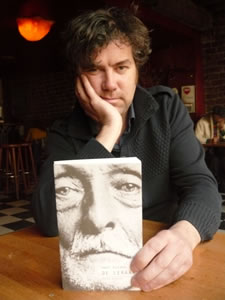
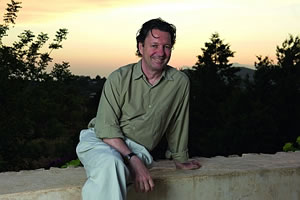
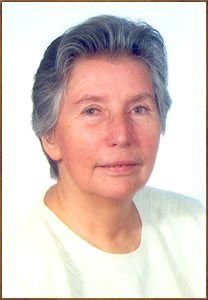
John Steinbeck, André Roy, Lawrence Durrell, Henry Longfellow, Elisabeth Borchers

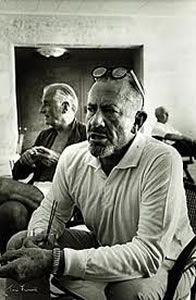
De Amerikaanse schrijver John Steinbeck werd geboren in Salinas, Californië, op 27 februari 1902. Zie ook mijn blog van 27 februari 2007 en ook mijn blog van 27 februari 2008 en ook mijn blog van 27 februari 2009 en ook mijn blog van 27 februari 2010.


Uit: East of Eden


“The Salinas Valley is in Northern California. It is a long narrow swale between two ranges of mountains, and the Salinas River winds and twists up the center until it falls at last into Monterey Bay.

I remember my childhood names for grasses and secret flowers. I remember where a toad may live and what time the birds awaken in the summer-and what trees and seasons smelled like-how people looked and walked and smelled even. The memory of odors is very rich.

I remember that the Gabilan Mountains to the east of the valley were light gay mountains full of sun and loveliness and a kind of invitation, so that you wanted to climb into their warm foothills almost as you want to climb into the lap of a beloved mother. They were beckoning mountains with a brown grass love. The Santa Lucias stood up against the sky to the west and kept the valley from the open sea, and they were dark and brooding-unfriendly and dangerous. I always found in myself a dread of west and a love of east. Where I ever got such an idea I cannot say, unless it could be that the morning came over the peaks of the Gabilans and the night drifted back from the ridges of the Santa Lucias. It may be that the birth and death of the day had some part in my feeling about the two ranges of mountains.

From both sides of the valley little streams slipped out of the hill canyons and fell into the bed of the Salinas River. In the winter of wet years the streams ran full-freshet, and they swelled the river until sometimes it raged and boiled, bank full, and then it was a destroyer. The river tore the edges of the farm lands and washed whole acres down; it toppled barns and houses into itself, to go floating and bobbing away. It trapped cows and pigs and sheep and drowned them in its muddy brown water and carried them to the sea. Then when the late spring came, the river drew in from its edges and the sand banks appeared. And in the summer the river didn't run at all above ground. Some pools would be left in the deep swirl places under a high bank. The tules and grasses grew back, and willows straightened up with the flood debris in their upper branches. The Salinas was only a part-time river.”


 862098-4f805b0fb95cf02f2a0b6b2674a9ed43.jpg

John Steinbeck (27 februari 1902 - 20 december 1968)


De Britse dichter en schrijver Lawrence George Durrell werd geboren op 27 februari 1912 in Jalandhar in India. Zie ook mijn blog van 27 februari 2007 en ook mijn blog van 27 februari 2008 en ook mijn blog van 27 februari 2009 en ook mijn blog van 27 februari 2010.


Uit: Justine


„I have escaped to this island with the child, Melissa's child. As the night is snatched from darkness by Arcturus, I think of my friends and of my beloved Alexandria, with its iodine-coloured meidan of Mazarita, where the open petal of Melissa's mouth fell upon mine like unslaked summer. Ah Melissa!

The child and I are alone. I have not named it yet, though it will, of course, be Justine. I am neither happy nor unhappy: just poetically distrait. At the time I met Justine, I was a happy man. A door had opened on an intimacy with Melissa and, like all solipsistic egotists, I could not resist. I do not judge myself or others. That is far too common for a tired aesthete. I merely comment. And what of Justine? Was she trapped in a projection of a will too powerful which Alexandria threw down? And ought I to get out more?

I had lost the will to live, gazing in a desultory, yet artistically languid, manner into my vacant subconscious and whiling away the taedium vitae with stray girls. This was the unpromising material on which Melissa poured her shimmering nectar. For a week, her former lover, a bestial furrier, stalked the streets, intending to shoot me. But this was Alexandria, where everything was over-analysed under the sun's burning zenith and nothing really happened. Unfortunately.

Of Justine? She was exigent, yet we shared a flirtation so profound it went beyond sexual attraction. "It can come to nothing, this passion between a poor schoolteacher and a married society beauty," I said. "The city gives us no choice," she replied in all seriousness.“


 862098-65b2622824f4915f43b4a12644c7e911.jpg

Lawrence Durrell (27 februari 1912 – 7 november 1990)


De Canadese dichter, schrijver en essayist André Roy werd geboren op 27 februari 1944 in Montréal. Zie ook mijn blog van 27 februari 2010.


Uit: POÈMES INÉDITS


Dans le sombre, j’ai lu la poésie
(pour Paul-Marie, Nicole, Denis, Roger)

Je suis le sombreur qui,
au moment des éclats,
vous apporte les poèmes
qu’il rêvait d’écrire en arrêtant de fumer,
les poèmes du néant tordu;
le chasseur des étoiles qui crient,
de ce qui a été et ne sera plus
en ces temps si courts
où nous fuyons ce qui nous fait mal.

J’écris là où Dieu ne me veut plus,
Lui-Même si triste de ne plus être éternel
et de nous avoir abandonnés en croyant
que nos poèmes nageaient et volaient comme Lui.

Paradis, Purgatoire, Enfer
quand, après avoir trop marché,
nous tomberons enfin dans le ciel,
dans la nuit de la pensée sainte.


862098-4379ebca66b63a2fcdda0261958f911e.jpg
André Roy (Montréal, 27 februari 1944)


De Amerikaanse dichter Henry Wadsworth Longfellow werd geboren in Portland, Maine, op 27 februari 1807. Zie ook mijn blog van 27 februari 2007 en ook mijn blog van 27 februari 2008 en ook mijn blog van 27 februari 2009 en ook mijn blog van 27 februari 2010.


The  Bridge


I stood on the bridge at midnight,

As the clocks were striking the hour,

And the moon rose o'er the city,

Behind the dark church-tower.


I saw her bright reflection

In the waters under me,

Like a golden goblet falling

And sinking into the sea.


And far in the hazy distance

Of that lovely night in June,

The blaze of the flaming furnace

Gleamed redder than the moon.


Among the long, black rafters

The wavering shadows lay,

And the current that came from the ocean

Seemed to lift and bear them away;


As, sweeping and eddying through them,

Rose the belated tide,

And, streaming into the moonlight,

The seaweed floated wide.


And like those waters rushing

Among the wooden piers,

A flood of thoughts came o'er me

That filled my eyes with tears.


How often, oh, how often,

In the days that had gone by,

I had stood on that bridge at midnight

And gazed on that wave and sky!


How often, oh, how often,

I had wished that the ebbing tide

Would bear me away on its bosom

O'er the ocean wild and wide!


For my heart was hot and restless,

And my life was full of care,

And the burden laid upon me

Seemed greater than I could bear.


But now it has fallen from me,

It is buried in the sea;

And only the sorrow of others

Throws its shadow over me.


Yet whenever I cross the river

On its bridge with wooden piers,

Like the odor of brine from the ocean

Comes the thought of other years.


And I think how many thousands

Of care-encumbered men,

Each bearing his burden of sorrow,

Have crossed the bridge since then.


I see the long procession

Still passing to and fro,

The young heart hot and restless,

And the old subdued and slow!


And forever and forever,

As long as the river flows,

As long as the heart has passions,

As long as life has woes;


The moon and its broken reflection

And its shadows shall appear,

As the symbol of love in heaven,

And its wavering image here.


862098-0caf99bd4f1ddfacb4f721f4647ce8e1.jpg
Henry Longfellow (27 februari 1807 - 24 maart 1882)

Portret door Charles Loring Elliott, ca 1842-1846


De Duitse schrijfster en dichteres Elisabeth Borchers werd geboren in Homberg op 27 februari 1926. . Zie ook mijn blog van 27 februari 2007 en ook mijn blog van 27 februari 2008 en ook mijn blog van 27 februari 2009 en ook mijn blog van 27 februari 2010.


zukünftiges
 
als alles vorbei war
krieg und frieden
mann und frau
form und inhalt

als die sonne auf-
und untergegangen war
samt mond und stern und
den musikalien des himmels
und der erde

setzten wir uns
und warteten
auf das
was kommt.


Oktober


Es kommt eine Zeit

Da fragen wir uns:

Was soll denn nur werden?

Die Luft schmeckt

So bitter

Die Vögel sind

Über alle Berge

Der Nebel macht

Die Häuser bleich

Aufs Dach trommeln

Kastanien

Die kleinen Tiere gehen

Unter der Erde spazieren

Wir müssen ins Haus zurück

Da hält uns der Regen gefangen.


862098-97a155f40625366bfae5577965e3add1.jpg
Elisabeth Borchers (Homberg, 27 februari 1926)


Zie voor nog meer schrijvers van de 27e februari ook mijn vorige blog van vandaag en eveneens mijn eerste blog van vandaag.
Geschreven door Romenu om 19:04 Reageer op dit bericht

Vera Friedlander, Irwin Shaw, James T. Farrell, N. Scott Momaday

De Duitse schrijfster Vera Friedlander (eig. Veronika Schmidt) werd geboren op 27 februari 1928 in Woltersdorf. Friedlander werd tijdens de nazi-periode vervolgd als een zogenaamde half-joodse en werd het slachtoffer van dwangarbeid. Veel leden van haar familie werden gedeporteerd en vermoord in Auschwitz, Theresienstadt en andere plaatsen. Na haar afstuderen aan de Arbeiter-und-Bauern-Fakultät studeerde Friedlander germanistiek en behaalde haar doctoraat en habilitatie aan de Humboldt Universiteit in Berlijn. Zij kreeg drie kinderen en werkte als lector bij een uitgeverij. In 1976 gingen zij en haar man naar Warschau, waar ze doceerde aan de universiteit. In 1981 ontving ze de Jacob en Wilhelm Grimm Prijs. Van 1981 tot 1986 was zij hoogleraar Duits aan de Humboldt-universiteit.


Uit: Meine Freundin Luise


„Meine Freundin Luise ist ein Pechvogel, ein dummer Pechvogel, aber eine liebenswerte Person.

Ihr letzter Partner fand eine andere Frau liebenswerter und verließ Luise. Sie wollte nicht allein bleiben. »Dafür bin ich nicht alt genug«, sagte sie.

Ich nahm mir vor, auf Luise in dieser Situation ein bisschen aufzupassen. Sie hatte sich schon öfter geirrt, wenn es um Männer ging. Das kostete sie einmal ihren fast neuen Clio, sonst wäre ihr Partner nicht ausgezogen, einmal war nach einer Trennung ihr Konto abgeräumt und einer hatte beim Abschied den Hund mitgenommen, an dem sie sehr hing. Dieses Mal sollte sie vom Pech verschont bleiben, das schwor ich ihr.

Ich brachte ihr drei Zeitungen, in denen allein lebende Männer aller Altersgruppen mit guten Berufen und unterschiedlichen Interessen vorgestellt wurden, Tennisspieler, Nichtraucher, Hundebesitzer, Briefmarkensammler, Weinkenner, Heimwerker – und von allen wurde geschrieben, dass sie lebensfrohe Optimisten seien.

Die Anzeigen stammten in der einen Zeitung von einer Frau Barbara aus Pankow, in einer anderen Zeitung von einer Frau Ursula aus dem Prenzlauer Berg und in der dritten Zeitung von einer Frau Monika aus Hellersdorf und alle klangen sehr seriös. Luise suchte sich aus jeder der drei Anzeigen einen Mann heraus, den sie kennen lernen wollte, und rief die Partnerschaftsagentinnen an.

Ich warnte sie. »Das gibt Stress. Was machst du, wenn dir alle drei Männer gefallen?«

»Damit werde ich fertig«, versicherte sie.

Die Damen Barbara, Ursula und Monika, luden sie zu einem Besuch ein, um sie mit dem Herrn, für den sie sich interessiere, bekannt zu machen. Und sie möge 100 Euro Vermittlungsgebühr mitbringen.

Um nicht dreimal 100 Euro zu zahlen, nahm sie zunächst nur den Termin bei der Dame Barbara in Pankow wahr.“


 862091-c45c2b06c400f6ecec48cf048595f2f0.jpg

Vera Friedlander (Woltersdorf, 27 februari 1928)


De Amerikaanse schrijver Irwin Shaw werd geboren op 27 februari 1913 als Irwin Gilbert Shamforoff in New York. Zie ook  ook mijn blog van 27 februari 2009 en ook mijn blog van 27 februari 2010.


Uit: Two Weeks in Another Town


"That is," Jack read, "an American, starting at any given point, believes that his career must go from success to success. In the American artist, of any kind, it is the equivalent of the optimistic businessman's greed of the continually expanding economy. The intermittent failure, the cadenced rise and fall of the level of a man's work, which is accepted and understood by the European artist, is fiercely rejected as a normal picture of the process of creation. A dip is not a dip to an American artist, it is a descent into an abyss, an offence against his native moeurs and his compatriots' most dearly held beliefs. In America, the normal incidence of failure, either real or imagined, private or public, which must be expected in such a chancy and elusive endeavor as writing novels or putting on plays or directing motion pictures in regarded, even by the artist himself, as evidence of guilt, as self-betrayal."


 862091-78767d7ce9c115e7909acce9adb126c5.jpg

Irwin Shaw (27 februari 1913 – 16 mei 1984)


De Amerikaanse schrijver James Thomas Farrell werd geboren op 27 februari 1904 in Chicago. Zie ook mijn blog van 27 februari 2007 en ook mijn blog van 27 februari 2009 en ook mijn blog van 27 februari 2010.


Uit: Judgment Day (Studs Lonigan)


"This is the first sign I've seen of the depression that's encouraging," Studs said.

"How come?" asked Ike.

"No lineup outside the ticket window," Studs smiled.

"A couple of years ago, there'd have been a line a block long waiting to get in," Pat said as they purchased their tickets.

"Nice-looking place," Studs said, walking along the glittering foyer.

"Sure, these shows are swell dumps. Fit for a palace. Look at those draperies. They cost dough. Dough!" Ike said.

"Seats on the main floor. Aisle two. This way, please," a shiny, powdered attendant, in a maroon and gray uniform with many brass buttons, braided gold, and a long coat, announced formally.

"Jesus, that's a job for a pansy to have. Dressed up in a monkey suit like that," Studs said.

"Ike, you'd look the nuts with an usher's monkey suit on."

"The broads would give you the eye, too, Ike. They'd call you General Dugan," Studs said.

"I don't need that job."

"Sure, Ike's going to be a big shot out of the commissions he makes, selling shares of stock in the Jackson Park golf course," Pat said.

"Boy, anybody in that outfit standing there and speaking his funny little piece, must feel like a clown if he isn't a damn pansy."

"Studs, a lot of the ushers in these shows went to college," Ike said.

"They look it," Pat said.

"Hell, I hate news reels," Pat whispered to Studs as an usher preceded them quickly along an aisle on the main floor, past many vacant seats.

The usher halted near the center, turned his flashlight on a row of unfilled seats, and they moved in to the middle of the rows.

"I hope we see something exciting in these damn news reels," Ike whispered.

"The thing I like best about news reels is that they're short," Studs whispered.“


 862091-c7a15a2b97f67e1aa28ecc6fa3227d77.jpg

James T. Farrell (27 februari 1904 – 22 augustus 1979)


De Amerikaanse (native, Kiowa) schrijver N(avarre) Scott Momaday werd geboren op 27 februari 1934 in Lawton, Oklahoma. Zie ook mijn blog van 27 februari 2007 en ook mijn blog van 27 februari 2009 en ook mijn blog van 27 februari 2010.


Eagle Feather Fan


The eagle is my power,
And my fan is an eagle.
It is strong and beautiful
In my hand. And it is real.
My fingers hold upon it
As if the beaded handle
Were the twist of bristlecone.
The bones of my hand are fine
And hollow; the fan bears them.
My hand veers in the thin air
Of the summits. All morning
It scuds on the cold currents;
All afternoon it circles
To the singing, to the drums.


862091-7bc5a602eec72b85bd00ca54e7d08125.jpg
N. Scott Momaday (Lawton, 27 februari 1934)

Geschreven door Romenu om 18:56 Reageer op dit bericht

Peter De Vries, Jules Lemaître, Albert Kuyle, Johannes Meinhold, Traugott Vogel

De Amerikaanse schrijver Peter de Vries werd geboren op 27 februari 1910 in Chicago als zoon van Nederlandse immigranten. Zie eook mijn blog van 27 februari 2010.


Uit: The Last Hurrah


„Wednesday morning, 8.40 a.m. Tom has his overnight bag packed. He has on suit and tie.

“I'll miss you,” Kirralyn says, kissing him on the lips. “We'll miss you.” She places Tom's right hand on her protruding belly. “Kiss our baby good bye.”

Tom kneels down and kisses her tummy. “Bye bye little baby,” he sing-songs.

“I wish you didn't have to go.”

“I know,” Tom says. “But I do. This is an important client. He's insisting on a face-to-face, he likes to meet the people he's going to work with. And Derrick insisted I go.”

“Because you're the best,” Kirralyn says. Tom smiles. She has this unwavering faith in him. “You are going to be the best father in the world,” she says. “And husband.”

“You bet,” he says, and makes a concerted effort to look her in the eye.

A horn blasts outside. It's his taxi.

“See you tomorrow night then,” she says, kissing him on the cheek.

“You bet,” he says. “Love you.” And he's out the front door. She watches the taxi driver place his suitcase in the boot of the car. Then Tom's in the taxi and they're off.

“The airport, right?” says the driver.

“Change of plan,” Tom says. “The Cross.”

“The Cross?” says the driver, frowning, then raising his eyebrows, smiling. “Bit early, isn't it?”

Tom takes offence. “What do you mean? I'm going to work.”

“Whatever,” says the driver, turning his attention to the traffic.“


862085-3f1892a862c6904a6ea37b9573491e4d.jpg
Peter De Vries (27 februari 1910 – 28 september 1993)


De Franse schrijver en dichter Jules Lemaître werd geboren op 27 februari 1853 in Vennecy, Loiret. Zie ook mijn blog van 27 februari 2007 en ook mijn blog van 27 februari 2008 en ook mijn blog van 27 februari 2009 en ook mijn blog van 27 februari 2010.


Uit: Les Rois


„Quand la cour se fut rangée des deux côtés du trône, le roi Christian, très vieux, d'une pâleur de cire, sa barbe blanche étalée sur sa tunique militaire et cachant à moitié le grand cordon de l'Aigle-Bleu, dit, d'une voix forte de commandement, chevrotante à peine:

--Monsieur le grand chancelier, quand il vous plaira.

Le grand chancelier, comte de Moellnitz, debout au pied de l'estrade, devant une table carrée couverte d'un tapis de pourpre à crépines d'or—la table royale des mélodrames historiques--déroula un parchemin d'où pendait un sceau rouge plus large qu'une hostie, et, scandant les phrases d'un hochement de sa petite tête d'oiseau déplumé, il lut avec une lenteur et des intonations d'archevêque officiant:

«Nous, Christian XVI, par la grâce de Dieu roi d'Alfanie, à tous présents et à venir salut.

»Considérant que l'âge et la maladie, sans diminuer notre zèle pour le bien de notre peuple, ne nous permettent plus d'y travailler selon notre désir et nous rendent désormais difficile le gouvernement de nos États;

»Déléguons généralement tous nos pouvoirs à notre fils aîné et héritier présomptif, Hermann, prince de Marbourg, duc de Fridagne, et ce pour une année à dater du présent jour;

»Ordonnons à tous nos sujets, à tous les officiers des armées de terre et de mer, à tous les magistrats, administrateurs et fonctionnaires constitués d'obéir au prince de Marbourg comme à nous-même;

»Appelons les bénédictions de Dieu sur le prince Hermann, afin qu'il exerce avec sagesse et prudence et pour le plus grand avantage de nos sujets la puissance que nous lui déléguons.“


862085-52ce2c34aa5082a0a0b4ff2786dac4ed.jpg
Jules Lemaître (27 februari 1853 – 5 augustus 1914)


De Nederlandse schrijver Albert Kuyle werd geboren in Utrecht op 17 februari 1904. Zie ook mijn blog van 27 februari 2010.


Uit: Harten en Brood


„De heele wereld is vol met meisjes als juffrouw Willy. Drie jaar van hun leven zijn ze als alle kindertjes, ze spuwen op hun truitje en morsen al wat ze eten of drinken. Dan neemt de maatschappij hen behoedzaam op uit de bonte veelheid, en begint ze zoetjes-aan af te wennen wat ze gewend zijn geraakt. Ze leeren spelend op het belletje drukken dat boven de tafel hangt, en als een van de meiden hen een tik geeft omdat ze onmenschelijk lastig zijn, dan wordt haar onder oogen gebracht dat het niet aangaat om deze kinderen te slaan. Tot hun zevende jaar blijven ze thuis, en de vier eerste jaren na hun kleurloozen tijd dienen alleen om het beginsel van de uitverkiezing zoetjes-aan in hen wakker te roepen. Ze dragen andere kleeren dan de kinderen waarmee ze niet mogen spelen, en bemerken dat je een hoop, bijna alle dingen, machtig kunt worden als je er maar voldoende lang om blijft vragen. Vader of moeder hebben ronde stukken geld in hun zak of papieren en daarvoor kun je alles krijgen wat er in de wereld achter de ruiten ligt. Na hun zevende jaar gaan ze naar school, soort bij soort en stand bij stand. Er zijn scholen waar allemaal van dezelfde kwaliteit kindertjes in de banken zitten. Ze dragen mooie jurken en goed gemaakte pakjes en worden tweemaal per dag door de kinderjuffrouw gehaald, of door een moeder die ergens taartjes met ze gaat eten.“


 862085-bdc0f5d6cb2bd538bc3a230f84c51906.jpg

Albert Kuyle (17 februari 1904 - 4 maart 1958)


De Duitse schrijver Johannes Wilhelm Meinhold werd geboren op 27 februari 1797 in Netzelkow op Usedom. Zie ook  ook mijn blog van 27 februari 2009 en ook mijn blog van 27 februari 2010.


Uit: Die Bernsteinhexe


„Und hätten wir jetzunder wohl zufrieden sein und Gotte Tag und Nacht auf unsern Knien danken mögen. Denn unangesehen, dass er uns so gnädiglich aus so grosser Trübsal erlöset, hatte er auch das Herze meiner lieben Beichtkinder also umbgekehret, dass sie nicht wussten, was sie uns Gutes tun söllten. Brachten alle Tage Fische, Fleisch, Eier, Würste und was sie mir sonsten bescheren täten und ich wieder vergessen hab. Kamen auch den nächsten Sonntag alle zur Kirchen, gross und klein (ausser der Klienschen in Zempin, so unterdessen einen kleinen Jungen gekriegt und annoch ihre Wochen hielt), allwo ich über Hiob 5, Verse 17, 18, 19, meine Dankpredigt hielte: »Siehe, selig ist der Mensche, den Gott strafet, darum weigere dich der Züchtigung des Allmächtigen nicht. Denn er verletzet und verbindet, er zerschmeisset, und seine Hand heilet. Aus sechs Trübsalen wird er dich erretten, und in der siebenten wird dich kein Übel rühren.« Wobei ich oftermalen von wegen dem Heulen ein wenig innehalten musste, dass sie sich verpusten könnten. Und hätt ich mich in Wahrheit anjetzo mit dem Hiob, nachdeme ihn der Herr wiederumb gnädig aus seinen Trübsalen erlöset, wohl mügen in Vergleichung stellen, wenn nit mein Töchterlein gewesen wäre, so mir abereins viel Herzeleid bereitete.“


862085-9297df3498635c4a95074b21900f7945.jpg
Wilhelm Meinhold (27 februari 1797 – 30 november 1851)

Netzelkow, Marienkirche


Zie voor onderstaande schrijver ook
mijn blog van 27 februari 2007


De Zwitserse schrijver Traugott Vogel werd op 27 februari 1894 als zoon van een groentehandelaar in Zürich geboren.

Geschreven door Romenu om 18:52 Reageer op dit bericht

Meer van Romenu

↑ Terug naar de berichten