

Naar de inhoud

Romenu

Over literatuur, gedichten, kunst en cultuur
akke.beakke.be

Berichten van 21 september 2012 tot 22 september 2012

Dannie Abse, Lodewijk van Deyssel, Fay Weldon, György Faludy
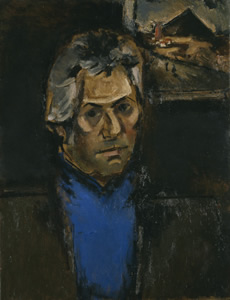
De Britse dichter en schrijver Dannie Abse werd geboren op 22 september 1923 in Cardiff, Wales. Zie ook mijn blog van 22 september 2010 en eveneens alle tags voor Dannie Abse op dit blog.


The Water Diviner


Late, I have come to a parched land   

doubting my gift, if gift I have,   

the inspiration of water

spilt, swallowed in the sand.


To hear once more water trickle,   

to stand in a stretch of silence

the divining pen twisting in the hand:   

sign of depths alluvial.


Water owns no permanent shape,   

sags, is most itself descending;

now, under the shadow of the idol,   

dry mouth and dry landscape.


No rain falls with a refreshing sound   

to settle tubular in a well,

elliptical in a bowl. No grape

lusciously moulds it round.


Clouds have no constant resemblance   

to anything, blown by a hot wind,   

flying mirages; the blue background,   

light constructions of chance.


To hold back chaos I transformed   

amorphous mass—and fire and cloud—   

so that the agèd gods might dance   

and golden structures form.


I should have built, plain brick on brick,   

a water tower. The sun flies on

arid wastes, barren hells too warm   

and me with a hazel stick!


Rivulets vanished in the dust

long ago, great compositions

vaporized, salt on the tongue so thick   

that drinking, still I thirst.


Repeated desert, recurring drought,   

sometimes hearing water trickle,   

sometimes not, I, by doubting first,   

believe; believing, doubt.


The Uninvited, by Dannie Abse


They came into our lives unasked for.
there was light momentarily, a flicker of wings,
a dance, a voice, and then they went out
again, like a light, leaving us not so much
in darkness, but in a different place
and alone as never before

so we have been changed.
and our vision no longer what it was,
and our hopes no longer what they were;
so a piece of us has gone out with them also,
a cold dream subtracted without malice,

the weight of another world added also,
and we did not ask, we did not ask ever
for those who stood smiling
and with flowers before the open door.

We did not beckon them in, they came in uninvited,
the sunset pouring from their shoulders;
so they walked through us as they would through water,
and we are here, in a different place,
changed and incredibly alone,
and we did not know, we do not know ever.


1241160-84fa3fd65ad3b51bf7b73d3e67c268e2.jpg
Dannie Abse (Cardiff, 22 september 1923)

Portret door Josef Herman, rond 1973


De Nederlandse schrijver Lodewijk van Deyssel werd geboren op 22 september 1864 in Amsterdam. Zie ook mijn blog van 22 september 2010 en eveneens alle tags voor Lodewijk van Deyssel op dit blog.


Uit: Gedenkschriften


“Maar Rolduc was véél mooier! Rolduc was een pracht-oord. Voor iemand, die zelden of nooit bergen gezien had - ik kende toen alleen die van Theux en die van Luik, waar wij mijne zuster in haar kloosters bezochten -, een voortdurend verblijf in een oude abdij, afzonderlijk gelegen in een gebergte. Zelfs de gewone manieren van huizen-bouwen, met steensoorten, metselspecie en metselwijze, geschiedde te Rolduc anders dan in Holland, zoo dat ook nieuw aangebouwde gedeelten van het gesticht iets aan zich hadden, waardoor zij ook vreemd en als uit ouden tijd schenen te zijn. Een oude abdij in een gebergte, met de schoonste kerk van het geheele land, een dertiende-eeuwsche. Een oude abdij in een gebergte, met Limburgsche geestelijken, Limburgsche jongens, en Limburgsche knechts, die elk voor een derde Duitscher, voor een derde Belg, en voor een derde Nederlanders uit een ver gewest waren. Een pachtige in zich zelf volledige gemeenschap, aan welks leden men ter nauwer nood bespeurde, dat zij soms verbindingen met dorpen of andere gemeenschappen in de, overigens óók vreemde, streek hadden.           

Iets moois, iets om te beminnen, lijkt mij de positie van Directeur van zulk eene instelling. Al die jongens, bij het Bestuur van wier opvoeding hij vóor-zit, zullen over tien, over twintig jaar de mannen zijn, die het menschen-leven uitmaken, aanvoeren, voort-planten in de verschillende streken van Nederland. Al die innerlijke en uiterlijke, bewegelijke en onbewegelijke, levensvormen, door welke in en om de dorpen en steden, dit leven ons zoo veel beter lijkt dan waar vooral het afkeurenswaardige en beklagenswaardige te zien is en de geheele stand van het leven dus lager of valsch is, - zullen de leeraren der opvoedingsgestichten, met hun Directeur aan het hoofd, hebben voorbereid en dus mede veroorzaakt.”


 1241160-e1f42fc428fa05ec2aa3a5a2211df673.jpg

Lodewijk van Deyssel (22 september 1864 - 26 januari 1952)

Rolduc, Kerkrade 


De Britse schrijfster Fay Weldon werd geboren op 22 september 1931 in Alvechurch, Engeland. Zie ook mijn blog van 22 september 2010 en eveneens alle tags voor Fay Weldon op dit blog


Uit: Run Daddy And Ask If He Has Any More Money

“Well now! It was Easter and my friend David was helping his wife Milly Frood in the shop when he heard a voice he recognised crying loud and clear across the crowded room, "Run and ask Daddy if he has any more money," and his blood ran cold.

Easter is upon us now. It is a season when we should reflect upon our sins and consider the pain we cause others, especially those who have no choice but to put up with us; this trauma of self-knowledge, self-revelation, culminating on Easter Friday, leaving us Saturday to shop and recover, so that on Sunday we can wake exhilarated to our new selves--and then have Monday to calm down a bit and prepare to get back to work. Should, should! Mostly we just give each other cards and Easter eggs and are grateful for the holiday.

David is in his early forties. He has not very much reddish hair and an abundant, very red beard. He wears a tweed jacket. He is now a professor. He used to be a mere lecturer but his Polytechnic turned into a University and voila! there he was, Professor Frood, a pillar of society: looked up to and trusted: a family man.

A really nice guy, too: the trustful kind, prone to loving not wisely but too well, as the best people are. But that is all in the past, of course. Professors can't muck about. There's too much at stake. All that a man can do is hope that the past, burrowing away like some mole through the pleasant green fields of his present, doesn't surface and spoil everything in an explosion of mud and dirt.

This particular Thursday before Easter, at two minutes past four in the afternoon, it seemed as if it very well might.

Milly Frood is sometimes spoken of by friends as Frilly Mood. They're being ironic. She's a really un-frilly, serious, nice, good woman. She has straight hair and a fringe and a plump, rather expressionless, round face and a body well draped in unnoticeable clothes. The Frood children, Sherry and Baf, now in their teenage years, have never wittingly eaten sugar or meat under their own roof: Frilly Mood has seen to that. The kids are healthy if a little thin, and very polite. Frilly Mood's done well by them. It is no crime to be serious.”


 1241160-2c6b6ca8b9bbd9908af90afca31ff16c.jpg

Fay Weldon (Alvechurch, 22 september 1931)


De Hongaarse dichter en schrijver György Faludy werd geboren op 22 september 1910 in Boedapest. Zie ook mijn blog van 22 september 2010 en eveneens alle tags voor György Faludy op dit blog.


LOVE POEM
            (To F. K.)

She was far from the first. We lay there naked
and, with one arm, I lightly caressed her body.
I hoped it should be quite agreeable
with just a touch of customary boredom.

It turned out to be more. I leaned above
her small left nipple musing what to compare
it with: a speck of coral? or a wild strawberry?
a tiny tulip still in bud perhaps?    

Only an instant had passed and I entered a different
reality. Had I fainted or just awoken?
Around us stillness prevailed and blue, insane
wildflowers began to whirl behind my forehead.    

It was the taste and fragrance of your skin,
not your perfume, that utterly triumphed. They thrust
away my troubles, cares and fears and sorrows,
my past and memories, leaving only this love.

Packed into one another, we two alone
inhabit the earth, our shoulders spliced in stages.
We lose our way in one another’s hair.
We meditate on one another’s navel.

You can go away but will remain with me holding
between my teeth a single strand of your hair.
I use your body’s shadow for my cover.
Say not a word, for all our secrets are shared.

Many people are never touched by such passion
and many would never dare to risk it, even
though this is all that I recognize as love:
soaring all the way from our bedsheets to heaven. 


Vertaald door Thomas Ország-Land


 1241160-cbeca3bd8a09cf8fe058d19884e6f405.jpg

György Faludy (22 september 1910 – 1 september 2006)


Zie voor nog meer schrijvers van de 22e september ook
mijn blog van 22 september 2012 deel 2.

Geschreven door Romenu om 14:57 Reageer op dit bericht

Peter Drehmanns

De Nederlandse dichter en schrijver Peter Drehmanns werd op 22 september 1960 in Roermond geboren. Hij recenseerde jarenlang Italiaanse literatuur voor NRC Handelsblad en maakt korte films, die de afgelopen jaren op literaire festivals als Crossing Border zijn vertoond. In 2009 verscheen zijn veelgeprezen roman De begeleider. Van hem verschenen o.a. vier romans en een verhalenbundel:
De blindganger (roman, 1999), Gemaskerd land (roman, 2002), Schaduwboksen (verhalen, 2003), Erfsmet (roman, 2004),  Blackpool (roman, 2005), De begeleider (roman, 2009), De schrijver en zijn meisjes (roman, 2012). In 2011 debuteerde hij als dichter met de bundel Hedendaags reisadvies. Afgelopen jaar volgde de bundel Onder nog onopgehelderde omstandigheden.


Voor het aangezicht van Ezechiël


Een rood ski-jack

lag in de berm

en het waaide en al het gras –

er was iets met de rits

en het rook naar lachgas,

nee naar oud papier.


Een rood ski-jack zonder mens

lag in het gras.

Het had geregend

en de feiten spraken voor zich uit

en de auto’s reden

zwart en bijziend voorbij


alsof de graven niet

kalm op ons lagen te wachten

alsof geen slotsom ooit

wordt getrokken

zoals een gezonde kies wordt getrokken


Te bestemder tijd


Laten we naar de parken gaan

daar liggen gaan

met opengeknoopte hawaïhemden

tussen de onthoofde beelden

en het wiegelied van de schommels horen

en de wolken zich zien vergissen

in de hemel

totdat de nacht

de nacht die naar paardenzweet ruikt komt

en zich leeggrijnst


Incasso


In de ochtend ontkom je niet

langer aan je tam geknarste tanden

aan de scherprechterlijke oogopslag

het natgeregende uitzicht

in de ochtend ontkom je

niet aan het lostrekken van de hechtingen

het openvouwen van de bouwplannen

niet aan het meisje dat naast je ligt

vermalen zaad tussen haar benen

de dood in haar mond

niet ontkom je in de ochtend

aan de optelsom

van de vervaldagen

aan de aandacht

van het grondpersoneel

aan de maalboezem van de brievenbus

en de mierendans rond wat je vergat

weg te gooien

in de avond


1288019-ebca2d8665715aa01e03dac999aefdea.jpg 

Peter Drehmanns (Roermond,  22 september 1960)

Geschreven door Romenu om 00:00 Reageer op dit bericht

Leonard Cohen, Stephen King, Frédéric Beigbeder, Fannie Flag, H.G. Wells, Johann Peter Eckermann

De Canadese dichter, folk singer-songwriter en schrijver Leonard Cohen werd geboren op 21 september 1934 te Montréal. Zie ook mijn blog van 21 september 2010 en eveneens alle tags voor Leonard Cohen op dit blog..


I Have Not Lingered In European Monosteries

I Have Not Lingered In European Monosteries
and discovered among the tall grasses tombs of knights
who fell as beautifully as their ballads tell;
I have not parted the grasses
or purposefully left them thatched.

I have not held my breath
so that I might hear the breathing of God
or tamed my heartbeat with an exercise,
or starved for visions.
Although I have watched him often
I have not become the heron,
leaving my body on the shore,
and I have not become the luminous trout,
leaving my body in the air.

I have not worshipped wounds and relics,
or combs of iron,
or bodies wrapped and burnt in scrolls.

I have not been unhappy for ten thousands years.
During the day I laugh and during the night I sleep.
My favourite cooks prepare my meals,
my body cleans and repairs itself,
and all my work goes well.


The only tourist in Havana turns his thoughts homeward


let us govern Canada,
let us find our serious heads,
let us dump asbestos on the White House,
let us make the French talk English,

not only here but everywhere,
let us torture the Senate individually

until they confess,
let us purge the New Party,
let us encourage the dark races

so they'll be lenient

when they take over,
let us make the CBC talk English,
let us all lean in one direction

and float down

to the coast of Florida,
let us have tourism,
let us flirt with the enemy,
let us smelt pig-iron in our back yards,
let us sell snow

to under-developed nations,
(It is true one of our national leaders
was a Roman Catholic?)
let us terrorize Alaska,
let us unite

Church and State,
let us not take it lying down,
let us have two Governor Generals

at the same time,
let us have another official language,
let us determine what it will be,
let us give a Canada Council Fellowship

to the most original suggestion,
let us teach sex in the home

to parents,
let us threaten to join the U.S.A.

and pull out at the last moment,
my brothers, come,
our serious heads are waiting for us somewhere

like Gladstone bags abandoned

after a coup d'état,
let us put them on very quickly,
let us maintain a stony silence

on the St. Lawrence Seaway.


1240755-f1da112e20d83f38979d061f0778d198.jpg
Leonard Cohen (Montréal, 21 september 1934)


De Amerikaanse schrijver
Stephen Edwin King werd geboren in Portland, Maine, op 21 september 1947. Zie ook mijn blog van 21 september 2010 en eveneens alle tags voor Stephen King op dit blog.


Uit: The Wind Through The Keyhole


“During the days after they left the Green Palace that wasn’t Oz after all—but which was now the tomb of the unpleas- ant fellow Roland’s ka-tet had known as the Tick-Tock Man—the boy Jake began to range farther and farther ahead of Roland, Eddie, and Susannah.

“Don’t you worry about him?” Susannah asked Roland. “Out there on his own?”

“He’s got Oy with him,” Eddie said, referring to the billy-bumbler who had adopted Jake as his special friend. “Mr. Oy gets along with nice folks all right, but he’s got a mouthful of sharp teeth for those who aren’t so nice. As that guy Gasher found out to his sorrow.”

“Jake also has his father’s gun,” Roland said. “And he knows how to use it. That he knows very well. And he won’t leave the Path of the Beam.” He pointed overhead with his reduced hand. The low-hanging sky was mostly still, but a single corridor of clouds moved steadily southeast. Toward the land of Thunderclap, if the note left behind for them by the man who styled himself RF had told the truth.

Toward the Dark Tower.

“But why—” Susannah began, and then her wheelchair hit a bump. She turned to Eddie. “Watch where you’re pushin me, sugar.”

“Sorry,” Eddie said. “Public Works hasn’t been doing any maintenance along this stretch of the turnpike lately. Must be dealing with budget cuts.”

It wasn’t a turnpike, but it was a road . . . or had been: two ghostly ruts with an occasional tumbledown shack to mark the way. Earlier that morning they had even passed an abandoned store with a barely readable sign: TOOK’S OUT- LAND MERCANTILE. They investigated inside for supplies—Jake and Oy had still been with them then—and had found nothing but dust, ancient cobwebs, and the skeleton of what had been either a large raccoon, a small dog, or a billy-bumbler. Oy had taken a cursory sniff and then pissed on the bones before leaving the store to sit on the hump in the middle of the old road with his squiggle of a tail curled around him. He faced back the way they had come, sniffing the air”.


1240755-e6b3c540930bf635d1ca10ae4b945767.jpg
Stephen King (Portland, 21 september 1947)


De Franse schrijver
Frédéric Beigbeder werd geboren op 21 september 1965 in Neuilly-sur-Seine. Zie ook mijn blog van 21 september 2010 en eveneens alle tags voor Frédéric Beigbeder op dit blog.


Uit: L'Amour dure trois ans


" Au début, tout est beau, même vous. Vous n'en revenez pas d'être aussi amoureux. Pendant un an, la vie n'est qu'une succession de matins ensoleillés, même l'après-midi quand il neige. Vous écrivez des livres là-dessus. Vous vous mariez, le plus vite possible - pourquoi réfléchir quand on est heureux ? La deuxième année, les choses commencent à changer. Vous êtes devenu tendre. Vous faites l'amour de moins en moins souvent et vous croyez que ce n'est pas grave. Vous défendez le mariage devant vos copains célibataires qui ne vous reconnaissent plus. Vous-même, êtes-vous sûr de bien vous reconnaître, quand vous récitez la leçon apprise par coeur, en vous retenant de regarder les demoiselles fraîches qui éclairent la rue ? La troisième année, vous ne vous retenez plus de regarder les demoiselles fraîches qui éclairent la rue. Vous sortez de plus en plus souvent : ça vous donne une excuse pour ne plus parler. Vient bientôt le moment où vous ne pouvez plus supporter votre épouse une seconde de plus, puisque vous êtes tombé amoureux, d'une autre. La troisième année, il y a une bonne et une mauvaise nouvelle. La bonne nouvelle : dégoûtée, votre femme vous quitte. La mauvaise nouvelle : vous commencez un nouveau livre. " --


1240755-a231390495ebe0b923698ca9edd4f21b.jpg
Frédéric Beigbeder (Neuilly-sur-Seine, 21 september 1965)


De Amerikaanse schrijfster en actrice Fannie Flag (eig. Patricia Neal) werd geboren op 21 september in Birmingham (Alabama). Zie ook mijn blog van 21 september 2010 en evenneens alle tags voor Fannie Flag op dit blog.


Uit: Welcome To The World, Baby Girl

““In the late forties Elmwood Springs, in southern Missouri, seems more or less like a thousand other small towns scattered across America.
Downtown is only a block long with a Rexall drugstore on one end and the Elmwood Springs Masonic Hall on the other. If you walk from the Masonic Hall to the Rexall, you will go by the Blue Ribbon cleaners, a Cat's Paw shoe repair shop with a pink neon shoe in the window, the Morgan Brothers department store, the bank, and a little alley with stairs on one side of a building leading up to the second floor, where the Dixie Cahill School of Tap and Twirl is located. If it is a Saturday morning you'll hear a lot of heavy tapping and dropping of batons upstairs by the Tappettes, a troop of blue-spangled Elmwood Springs beauties, or at least their parents think so. Past the alley is the Trolley Car diner, where you can get the world's best chili dog and an orange drink for 15 cents. Just beyond the diner is the New Empress movie theater, and on Saturday afternoons you will see a group of kids lined up outside waiting to go in and see a Western, some cartoons, and a chapter in the Buck Rogers weekly serial. Next is the barber shop and then the Rexall on the corner. Walk down on the other side of the street and you'll come to the First Methodist Church and then Nordstrom's Swedish bakery and luncheonette, with the gold star still in the window in honor of their son. Farther on is Miss Alma's Tea Room, Haygood's photographic studio, the Western Union, and the post office, the telephone company, and Victor's florist shop. A narrow set of stairs leads up to Dr. Orr's "painless" dentist's office. Warren and Son hardware is next. The son is eighteen-year-old Macky Warren, who is getting ready to marry his girlfriend, Norma, and is nervous about it. Then comes the A & P and the VFW Hall on the corner.”


1240755-bd7da160f20136d5c360c1c9e4fb74ba.jpg
Fannie Flag (Birmingham, 21 september 1944)


De Britse schrijver Herbert George Wells werd geboren op 21 september 1866 in Bromley, Kent. Zie ook mijn blog van 21 september 2010 en eveneens alle tags voor H. G. Wells op dit blog.


Uit:The Outline Of History

“For centuries Assyria was restrained from expansion towards Egypt by a fresh northward thrust and settlement of another group of Semitic peoples, the Arameans, whose chief citiy was Damascus, and whose descendants are the Syrians of to-day.  (There is, we may not, no connection whatever between the words Assyrian and Syrian.  It is an accidental similarity.)  Across these Syrians the Assyrian kings fought for power and expansion south-westward.  In 745 B.C. arose another Tiglath Pileser, Tiglath Pileser III, the Tiglath Pileser of the Bible (II Kings sv.29 & xvi.7 et seq.).  He not only directed the transfer of the Israelites to Media (the 'Lost Ten Tribes' whose ultimate fate has exercised so many curious minds) but he conquered and ruled Babylon, so founding what historians know as the New Assyrian Empire.  His son, Shalmaneser IV (II Kings xvii.3), died during the siege of Samaria, and was succeeded by a usurper, who, no doubt to flatter Babylonian susceptibilities, took the ancient Akkadian Sumerian name of Sargon, Sargon II.  He seems to have armed the Assyrian forces for the first time with iron weapons.  It was probably Sargon II who actually carried out the deportation of the Ten Tribes.Such shiftings about of population became a very distinctive part of the political methods of the Assyrian new empire.  Whole nations wh owere difficult to control in theri native country would be shifted en masse to unaccustomed regions and amidst strange neighbours, where their only hope of survival would lie in obedience to the supreme power.”


1240755-e263ab8a3e096982663ca1cd05718237.jpg
H. G. Wells (21 september 1866 - 13 augustus 1946)


De Duitse dichter Johann Peter Eckermann werd geboren op 21 september 1792 in Winsen (Luhe). Hij was bovenal de medewerker en vriend van Johann Wolfgang von Goethe.Zie ook mijn blog van 21 september 2010 en eveneens alle tags voor Johann Peter Eckermann op dit blog.


Uit: Gespräche mit Goethe


WEIMAR, DIENSTAG DEN 10. Juni 1823.

Vor wenigen Tagen bin ich hier angekommen, heute war ich zuerst bei Goethe. Der Empfang seinerseits war überaus herzlich und der Eindruck seiner Person auf mich der Art, dass ich diesen Tag zu den glücklichsten meines Lebens rechne.

Er hatte mir gestern, als ich anfragen ließ, diesen Mittag zwölf Uhr als die Zeit bestimmt, wo ich ihm willkommen sein würde. Ich ging also zur gedachten Stunde hin und fand den Bedienten auch bereits meiner wartend und sich anschickend mich hinaufzuführen.

Das Innere des Hauses machte auf mich einen sehr angenehmen Eindruck; ohne glänzend zu sein war alles höchst edel und einfach; auch deuteten verschiedene an der Treppe stehende Abgüsse antiker Statuen auf Goethes besondere Neigung zur bildenden Kunst und dem griechischen Altertum. Ich sah verschiedene Frauenzimmer, die unten im Hause geschäftig hin und wieder gingen; auch einen der schönen Knaben Ottiliens, der zutraulich zu mir herankam und mich mit großen Augen anblickte.

Nachdem ich mich ein wenig umgesehen, ging ich sodann mit dem sehr gesprächigen Bedienten die Treppe hinauf zur ersten Etage. Er öffnete ein Zimmer, vor dessen Schwelle man die Zeichen SALVE als gute Vorbedeutung eines freundlichen Willkommenseins überschritt. Er führte mich durch dieses Zimmer hindurch und öffnete ein zweites, etwas geräumigeres, wo er mich zu verweilen bat, indem er ging, mich seinem Herrn zu melden. Hier war die kühlste erquicklichste Luft, auf dem Boden lag ein Teppich gebreitet, auch war es durch ein rotes Kanapee und Stühle von gleicher Farbe überaus heiter möbliert; gleich zur Seite stand ein Flügel, und an den Wänden sah man Handzeichnungen und Gemälde verschiedener Art und Größe”.

 
1240755-bf11c575e76ed019bf6803784b7f7dc6.jpg
Johann Peter Eckermann (21 september 1792 - 3 december 1854)
Eckermann en Goethe (l), krijttekening door Johann Joseph Schmeller, 1828

Geschreven door Romenu om 20:21 Reageer op dit bericht

Meer van Romenu

↑ Terug naar de berichten