Naar de inhoud

Romenu

Over literatuur, gedichten, kunst en cultuur
akke.beakke.be

Berichten van 13 januari 2018 tot 14 januari 2018

Gouden Ganzenveer 2018 voor Antjie Krog


Gouden Ganzenveer 2018 voor Antjie Krog

De Zuid-Afrikaanse dichteres, schrijfster en hoogleraar Antjie Krog krijgt de Gouden Ganzenveer 2018. Voorzitter Gerdi Verbeet van de Academie De Gouden Ganzenveer maakte dat bekend in het radioprogramma “De Taalstaat”. De Gouden Ganzenveer is een culturele prijs.De prijs wordt - zo mogelijk jaarlijks - toegekend aan een persoon of instituut vanwege zijn of haar grote betekenis voor het geschreven en gedrukte woord in de Nederlandse taal. Antjie Krog werd geboren in Kroonstad op 23 oktober 1952. Zie ook alle tags voor Antjie Krog op dit blog.


Visioen van een natie

hoe lang denken we het hier uit te houden?
wij die gestrand zijn tegen dit rijke continent
zonder ooit onloochenbaar in Afrika te landen
wij in huizen in Amerikaans-koloniale stijl
die wij omringen met parken en tuinen
om aan de aanspraak van het landschap te ontsnappen
die op kelims lopen, in Nederlands dialect praten
naar Duitse liederen luisteren en Engelse poëzie lezen
die 's ochtends eieren met spek eten
onze lijven in westerse mode hijsen
met vakantie over het continent naar het noorden vliegen
om ons in stamlanden te laven aan muziek en kunstgalerijen
en na terugkeer onder het Pruisische schilderij van Domsaitis
uit Fins glas Glenfiddich drinken

waarom ook niet? hier zijn we na drie eeuwen nog niets anders
dan een stukje westers curiosum.


Het is waar

het is waar dat het landschap zonder
mij zal voortbestaan dat de bomen die
voor mij de aarde vormen de vlak-
ten beminnen die mij bijeenvegen in vaandels los-
lippig licht dat het water het
dichtsbijzijnde geluid van aanraking weer-
spiegelt dat de maan achterover stort in
een struikgewas van pasgeboren
sterren het is waar dat het zal doorgaan

het is waar dat ik drie vrouwen naakt
op het strand van Marseille heb gezien
hun lijven drie geplooide zakken
hun haartjes waaiend als tissues in
de wind met korte pasjes liepen ze
het water in, hun boezem
ongerimpeld een stralenkrans van dampende
amechtige borsten blozend tot
in de tepels het is waar dat ik
mijn ogen er niet van af kon houden

het is waar dat ik in een etalage
drie soorten wegwerpluiers voor
bejaarden heb gezien, een onder-
steek, antischimmelspul, doorligzalf en
iets dat op een aardappelschiller
leek het is waar dat ik oude mensen
steeds nauwkeuriger gadesla
hoe ze hun voeten neerzetten hun
haren kammen dat ik mijn ogen hon-
gerend laat rusten op rimpelloze jonge huid het
is waar dat ik voor een afgrond sta


 2111197-300fce61c6815ff1ec24f0b7697f16e5.jpg
Antjie Krog (Kroonstad, 23 oktober 1952)

Geschreven door Romenu om 18:52 Reageer op dit bericht

J. Bernlef, Chris de Stoop, Edward St Aubyn, Anchee Min, Yukio Mishima, Martin Auer, Andreas Steinhöfel, John Dos Passos

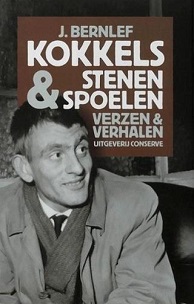
De Nederlandse schrijver en dichter J. Bernlef werd geboren op 14 januari 1937 in Sint Pancras. Zie ook alle tags voor J. Bernlef en alle tags voor Bernlef op dit blog.

Uit: De drie vrienden

“Zenuwachtig naar buiten turend iedere keer als de trein vaart minderde, zag ik ten slotte in een flits het verlichte bord met de naam van het dorpje erop. De trein stopte en ik stapte uit.
Niels had niet te veel gezegd om dit een woestenij te noemen. Vóór mij stond een verlicht stenen gebouwtje, dat voor de helft als wachtkamer diende en voor de andere helft als bureau voor de stationschef die net naar buiten stapte, het spiegelei onder zijn arm geklemd, het rechterbeen stijf naar voren zwaaiend, toen ik de trein uitkwam. In de wachtkamer zat een oude man met een grote pet op. Hij zat zeer rechtop. Op een afstand leek het of hij tegen iemand praatte, zijn hoofd daarbij lichtjes heen en weer bewegend, maar toen ik een paar passen dichterbij was gekomen zag ik dat hij tegen niemand praatte, ook niet tegen het vuile keeshondje dat aan zijn voeten lag te slapen. Zijn lippen bewogen niet, alleen zijn hoofd wiegde zachtjes heen en weer alsof het op water dobberde. Hij scheen niet met de trein mee te moeten, want hij reageerde in het geheel niet op het fluitsignaal van de stationschef en het daarna brommend wegschieten van de verlichte coupés in het donker. Toen de trein weg was draaide ik mij om. Aan de overzijde van de rails tegenover het perronnetje waarop ik stond, lag een lange houten loods. Boven de deur van de loods brandde een lampje. Rechts waren de spoorbomen. Daar brandde een lantaren. Voor de rest was alles donker en stil, op de geluiden van het avondlijke dorp, achter de bomen ergens, na; een voetstap, wat ver verwijderd hondegeblaf, geruis in een paar bomen, het gekakel van een opschrikkende kip. Nee, Niels had gelijk. Het was hier een uitgestorven gat.
Ik liep het perronnetje af, stak de spoorlijn over en begon de weg af te lopen die van het dorp het bos inging, zo Niels' aanwijzingen volgend die hij mij in zijn laatste brief gegeven had waarmee hij mij had uitgenodigd nu eindelijk eens langs te komen. Ik had hem lang niet gezien. Twee jaar. Toen hij nog in de stad woonde ging ik vaak bij hem langs. Maar nadat hij na zijn artsexamen hier dat doktersbaantje aangenomen had, had ik hem niet meer gezien. Geen tijd? Of wel? Ik was ook een poosje op reis geweest, dacht ik. Maar geschreven hadden we elkaar wel en soms foto's gestuurd."


 2111099-9a0fa479c96ae85691febd6637b8b1aa.jpg
J. Bernlef (14 januari 1937 - 29 oktober 2012)
Cover


De Vlaamse schrijver en journalist Chris De Stoop werd geboren op 14 januari 1958 in Sint-Gillis-Waas. Zie ook alle tags voor Chris de Stoop op dit blog.

Uit: Ex-reporter

“Komt een man in de krantenwinkel. Hij koopt een weekblad met de schreeuwende titel 'Klanten opgelicht!' Hij doorbladert het blad en zoekt tevergeefs het artikel. 'Er is hier niemand die opgelicht is,' zegt hij. 'Nu wel,' antwoordt de krantenverkoper. Die grap ging al rond toen ik ruim dertig jaar geleden begon te werken voor het weekblad Knack. In die lange periode heb ik het hoogtij en de neergang van de klassieke journalistiek mogen meemaken. Nu ik terugblader in mijn eigen werk, zie ik me weer als jonge reporter in landen als Sri Lanka, Burkina Faso of Cuba, die zo tot mijn verbeelding spraken wanneer ik ze vroeger op de kaart zag. Ik jakker weer door Bombay, Lima, Nairobi, miljoenensteden waarvoor de term 'smeltkroes' werd uitgevonden. Ik zie vooral mensen opduiken. Daar is Jean-Pierre, met een geruite jas over zijn bebloede kop tijdens de genocide in Kigali. Daar is Sister Michelle, tijdens haar les Engels aan de hoertjes in Pattaya. Daar is Momo, de jihadist met het afgeschoten been in Brussel. En daar Grote Neger, met een bol cocaïne onder zijn arm in Sáo Paulo. Ik zie me nog begin 1982 het statige herenhuis aan het Montgomeryplein in Brussel binnengaan, waar Knack lang kantoor hield. Ik moest er voor het triumviraat op de bel-etage verschijnen: de toen al legendarische hoofdredacteur Frans 'Sus' Verleyen, adjunct-hoofdredacteur Hubert Van Humbeeck en uitgever Rik De NOW Ik had al wekenlange selecties en examens achter de rug, want er waren honderden gegadigden voor de vacature bij Knack, het gewichtige nieuwsmagazine 'voor mensen die denken'. Ik was 23. Het triumviraat begon prompt een reeks trefwoorden uit de wereld van het nieuws op me af te vuren, waarvan ik er bijna geen enkel bleek te kunnen duiden. Dat overtuigde hen ervan dat ik de geschikte kandidaat was om bij Knack te beginnen. En zo rolde ik in de journalistiek. Ik wilde al langer schrijven en reizen, zij het niet noodzakelijk als journalist. Maar de crisis van de jaren tachtig woedde. Op hetzelfde moment had ik ook gesolliciteerd voor een baan als redacteur in de abdij van Averbode, die een reeks kinderbladen uitgaf, waarvan Nonkel Fons de bekende en bejaarde chef was. Maar ik tekende dus bij Knack, het blad dat in 1971 gestart werd door een bevlogen uitgever van streekbladen in Roeselare.”


 2111099-20ef07a81213dc2e703bd01f07a5ace5.jpg
Chris De Stoop (Sint-Gillis-Waas, 14 januari 1958)


De Britse schrijver en journalist Edward St Aubyn werd geboren op 14 januari 1960 in Cornwall. Zie ook alle tags voor Edward St Aubyn op dit blog.

Uit: Eindelijk (Vertaald door Nicolette Hoekmeijer)

“Nee, serieus. Het is een lot waartegen ik me met mijn laatste beetje verstand zal verzetten, tenzij Herr Doktor Alzheimer de boel overneemt, in welk geval ik een boek zal moeten schrijven over islamitische kunst om aan te tonen dat die hoofddoeken altijd al beschaafder zijn geweest dan wij, of een lijvig werk over hoe weinig we weten over de moeder van Shakespeare en haar strikt geheime katholicisme. Het moet wel ergens over gaan. Hoe dan ook, ik ben bang dat het een fiasco was, tante Nancy bij de Blands. Het lijkt me lastig om zo naar gezelschap te hunkeren terwijl je bent verstoken van vrienden. Het arme schaap. Maar weet je wat mij trof, afgezien van Nancy's intense zelfmedelijden dat ze ook nog eens schaamteloos wilde laten doorgaan voor verdriet, nee, wat mij vooral trof aan die twee meisjes, je moeder en je tante, was dat ze zo door en door Amerikaans zijn, waren — ik doe tegenwoordig weinig anders meer dan heen en weer zwalken tussen heden en verleden. En laten we er geen doekjes om winden, hun vader had niet zo'n sterke band met de Highlands, dus nadat je grootmoeder hem aan de kant had gezet, was hij er nauwelijks nog te vinden. Hij bracht de oorlog door met die onbenullen van Windsor, in Nassau; na de oorlog was het Monte Carlo, en tot slot is hij aan lagerwal geraakt in de bar van White's. Van de volksstammen mannen die elke dag stomdronken zijn, van de lunch tot het moment dat ze naar bed gaan, was hij zonder meer de innemendste, maar onmogelijk als vader, lijkt me. Bij die mate van dronkenschap komt het er feitelijk op neer dat je iemand probeert te omhelzen die bezig is te verdrinken. De sporadische sentimentele buien, gedurende de twintig minuten dat de drank hem daartoe aanzette, wogen niet op tegen de constante vriendelijkheid en het voortdurend jezelf wegcijferen waarop mijn eigen vaderschap stoelde. Met gemengde resultaten, moet ik eerlijk toegeven. Ik heb Amanda al vijftien jaar niet meer gesproken, zoals je ongetwijfeld zult weten. Ik wijt het aan haar therapeut, die haar toch al niet zo schrandere hoofdje heeft gevuld met freudiaanse ideeën over haar liefhebbende papa.' Nicholas' bombastische manier van spreken ging langzaam over in een steeds indringender gefluister en de knokkels van zijn blauwdooraderde handen werden wit van de inspanning die het hem kostte zichzelf staande te houden.”


 2111099-6ac88fd3bf028cbd1348bd349636cc15.jpg
Edward St Aubyn (Cornwall, 14 januari 1960)


De Chinese schrijfster Anchee Min werd geboren in Shanghai op 14 januari 1957. Zie ook alle tags voor Anchee Min op dit blog.

Uit:The Cooked Seed

„The flight captain's voice came through the speakers. I didn't understand what he was saying. I looked around and saw the passengers on my right and left buckling their seat belts. I copied them.
The plane began to descend. I saw a sea of lights outside the window.
The beauty stunned me. "Capitalism rots and socialism thrives" was the phrase passing through my mind. Was this the result of rotting?
The plane rattled as it touched the ground. The passengers cheered when we finally came to a stop. One after another, everyone stood, picked up their belongings, and exited.
"Chicago?" I asked the flight attendant.
"No," she smiled.
"Not Chicago?" I took out my ticket.
"This is Seattle." She signaled me not to block the way. The rest of her words I couldn't understand.
I followed the passengers moving toward a big hall. My growing nervousness began to choke me. The hand that held my passport became damp with sweat.
I didn't feel like I was walking on my own legs. The sound inside my head was louder than the sound outside. It was the noise of a tractor with loose screws going over a bumpy road.
I feared getting caught. I was not the person I had claimed to be— a student ready for an American college. But what choice had I had? I wouldn't have been issued a passport if I hadn't lied through my teeth and claimed undying loyalty to the Communist Party. The American consulate in Shanghai wouldn't have granted me a visa if I hadn't cheated and sang my self-introduction in English like a song. I had charged forward like a bleeding bull. I had not had the time to get scared until that moment.
My father was scared to death for me. He didn't think that I would make it. No one with common sense, or who had anything to lose, would do what I was doing. But I didn't have anything to lose. I was a caught frog, kicking my last kicks. I jumped the hurdles in front of me.
Off the plane, I went in search of the ladies' room. All the signs in English confused me. I followed a woman into a room with a sign showing a lady in a skirt. I was glad that it was the right place. There was no waiting line. I looked around to make sure that I was where I thought I was."


 2111099-9a1ebcb32e33dd573d988b4aa6108d74.jpg
Anchee Min (Shanghai, 14 januari 1957)


De Japanse schrijver Yukio Mishima werd geboren op 14 januari 1925 in Tokyo. Zie ook ook alle tags voor Yukio Mishima op dit blog.

Uit: Spring Snow (Vertaald door Michael Gallagher)

“Kiyoaki was eighteen. Nothing in the household where he had been born would account for his being so sensitive, so prone to melancholy. One would have been hard pressed to find, in that rambling house built on high ground near Shi-buya, anyone who in anv way shared his sensibilities. It was an old samurai family, but Kiyoaki's father, Marquis Mat-sugae, embarrassed by the humble position his forebears had occupied as recently as the end of the shogunate fifty years before, had sent the boy, still a very small child, to be brought up in the household of a court nobleman. Had he not done so, Kiyoaki would probably not have developed into so sensitive a young man. Marquis Matsugae's residence occupied a large tract of land beyond Shibuya, on the outskirts of Tokyo. The many buildings spread out over a hundred acres, their roofs rising in an exciting counterpoise. The main house was of Japanese architecture, but in the corner of the park stood an imposing Western-style house designed by an Englishman. It was said to be one of four residences in Japan—Marshal Oyama's was the first—that one might enter without removing one's out-door shoes. In the middle of the park a large pond spread out against the backdrop of a hill covered with maples. The pond was big enough to boat on; it had an island in the middle, water lilies in flower, and even water shields that could be picked for the kitchen. The drawing-room of the main house faced the pond, as did the banqueting room of the Western house. Some two hundred stone lanterns were scattered at random along the banks and on the island, which also boasted three cranes made out of cast-iron, two stretching their long necks to the sky and the other with its head bent low.
Water sprang from its source at the crest of the maple hill and descended the slopes in several falls; the stream then passed beneath a stone bridge and dropped into a pool that was shaded by red rocks from the island of Sado, before flow-ing into the pond at a spot where, in season, a patch of lovely irises bloomed. The pond was stocked both with carp and winter crucian. Twice a year, the Marquis allowed school-children to come there on picnics. When Kiyoaki was a child, the servants had frightened him with stories about the snapping turtles. Long ago, when his grandfather was ill, a friend had presented him with a hundred of these turtles in the hope that their meat would rebuild his strength.”


 2111099-f33b724aed28e152cfceb6aff84e9253.jpg
Yukio Mishima (14 januari 1925 - 25 november 1970)


De Oostenrijkse dichter en schrijver, musicus en cabaretier Martin Auer werd geboren op 14 januari 1951 in Wenen. Zie ook alle tags voor Martin Auer op dit blog.

Uit:Hurentaxi: Aus dem Leben der Callgirls

“- Kaugummi habe ich auch gehabt -
Ich bin Fahrer gewesen für eine Callgirl-Agentur.
Ich habe die Mädchen zu ihrem Job gebracht und sie wieder nach Hause gefahren. Ich habe das Geld von ihnen kassiert und es mit der Agentur abgerechnet. Im Auto habe ich immer Kondome gehabt, 5 Stück für einen Euro, für den Fall, dass sie einem Mädchen ausgehen. Und halterlose Strümpfe, braune und schwarze. Das wird häufig verlangt, und dann ist oft keine Zeit, dass ein Mädchen zwischen zwei Jobs nach Hause fährt und sich umzieht. Ich habe auch immer Marlboro Light im Auto gehabt, dabei rauche ich gar nicht.
Die Mädchen waren dankbar dafür, wenn ihnen die Zigaretten ausgegangen sind, die meisten rauchen viel zu viel, und ich war froh, wenn ich es eilig gehabt habe, dass ich nicht wegen Zigaretten habe halten müssen. Kaugummi habe ich auch gehabt für die Mädchen, oder Pfefferminzzuckerln. Heutzutage wird von den Mädchen erwartet, dass sie küssen. Das hat es früher nicht gegeben, eine Hure küsst nicht, hat es geheißen. Und Schmerztabletten, Dolofort. Wenn ein Mädchen den dritten Tag Zahnweh hat und noch immer nicht zum Zahnarzt will, dann sind Aspirin zu schwach.
Für einen Job habe ich 20 Euro bekommen.
- Gute Wienkenntnisse Voraussetzung -
Während ich das schreibe, sitzt Gosia mit ihrer Freundin Elzbieta draußen in meiner Küche. Die Mädchen trinken Kaffee, rauchen und tratschen. Ich bin der dritte Kunde gewesen, den Gosia in Wien gehabt hat. Dann bin ich ihr Fahrer gewesen. Und jetzt schläft sie in meinem Wohnzimmer auf der Couch, weil sie aufgehört hat und ohne Geld ist. Und alle sagen, haha, auf der Couch! Aber so ist das. Gosia spricht man Goscha aus. Es ist ein polnischer Name.“


 2111099-424f74f1c35dfc06d85531085993e0ab.jpg
Martin Auer (Wenen, 14 januari 1951)


De Duitse schrijver en vertaler Andreas Steinhöfel werd geboren op 14 januari 1962 in Battenberg. Zie ook alle tags voor Andreas Steinhöfel op dit blog.

Uit: Anders

„Die braune Stricklacke nicht geschlossen, trotz der Kälte, es war ja Herbstanfang. Nebelnasse, in der Stirn klebende schwarze Haare, die Hände zu Fäusten geballt und keuchender, stoßweiser Atem aus geöffnetem Mund... Aber dennoch, wie der Felix gegangen war, so forsch .and so fest: Allein eieser trotzig entschlossene Schrie, wo dach delungesonst so schlurftet Frau Heinsel war ihn auf Höhe des Nahtaufs begegnet — dieses schuhkartonfdrmigen neuen Flachbaus, über die Flussbrücke bequem zu erreichen von der Ulmenstraße her, der ihrer Ansicht nach dort nicht hätte gebaut werden sollen, aber wer fragte sie schon? — und im Hineingehen hatte sie siva nochmals verwundert umgedreht (und fast ihren Einkaufsroller umgerissen dabei), denn normalerweise grüßte der Felix Immer, er war ja gut erzogen, In letzter Zelt wohl ein wenig In sich gekehrt, aber gegrüßt trate er bisher Immer! Diesmal aber hatte er die Nachbarin gar nicht wahrgenommen, überhaupt nichts schien er gesehen zu haben, nicht in der Welt vor sich. Aber in ihm drin, hinter den hellgrauen Augen, da hatte, nun, wie sollte man das sagen ... An dieser Stelle Ihrer Erzählung pflegte Frau Heinsel eine kleine Effektpause einzulegen and den Kopf um ein paar Vertraulichkeitszentimeter vorzustrecker, bevor sie mit gesenkter Stimme weitersprach: Da hatte etwas getobtt. Doch, ja. Ein Ringen und ein unhörbares Brüllen war da im Felix gewesen, an einen gefangenen Tiger oder Löwen habe man unwillkürlich denken müssen, der sich wieder und wieder gegen die stählernen Gitterstäbe seines Käfigs warf, und wenn man überlegte, dass heute sein Geburtstag gewesen war, ausgerechnet ... Gott, der arme Junge! Dann das Ganze wieder von vorn, gern auch ein drittes Mal, und falls ein ungeduldiger Zuhörer signalisierte, dass er auf von vorn keine Lust hatte, wartete Frau Heinsel einfach geduldig ab, bis sie des nächsten Nachbarn habhaft werden konnte. Ihr Haus lag nahezu mittig in der Ulmenstraße, das breite Küchenfenster bot einen großzügigen Blick in jede Richtung, und wenn sie mit ihren knapp sechzig Jahren auch nicht mehr so flink war wie mit dreißig, trugen ihre Schritte sie doch schnell genug hinaus, sobald jemand die Mülltonnen zum Gehsteig schob, den Briefkasten leerte, den kurzen Fußweg in die Stadt oder zum Einkaufen antrat. Selbstverständlich versäumte sie bei solchen Gelegenheiten nie darauf hinzuweisen dass sie wohl die Letzte gewesen war, die den Felix gesehen hatte, bevor ... bevor diese…diese fürchterliche Sache passierte.“


 2111099-2521363b6071e629eb91c0e8dea76872.jpg
Andreas Steinhöfel (Battenberg, 14 januari 1962)


De Amerikaanse schrijver John Dos Passos werd geboren op 14 januari 1896 in Chicago. Zie ook alle tags voor John Dos Passos op dit blog.

Uit: The 42nd Parallel

“By Thanksgiving Mac had beaten his way to Sacramento, where he got a job smashing crates in a dried fruit warehouse. By the first of the year he'd saved up enough to buy a suit of dark clothes and take the steamboat down the river to San Francisco. It was around eight in the evening when he got in. With his suitcase in his hand, he walked up Market Street from the dock. The streets were full of lights. Young men and pretty girls in brightcolored dresses were walking fast through a big yanking wind that fluttered dresses and scarfs, slapped color into cheeks, blew grit and papers into the air. There were Chinamen, Wops, Portuguese, Japs in the streets. People were hustling to shows and restaurants. Music came out of the doors of bars, frying, buttery foodsmells from restaurants, smells of winecasks and beer. Mac wanted to go on a party but he only had four dollars so he went and got a room at the Y and ate some soggy pie and coffee in the deserted cafeteria downstairs. When he got up in the bare bedroom like something in a hospital he opened the window, but it only gave on an airshaft. The room smelt of some sort of cleaning fluid and when he lay down on the bed the blanket smelt of formaldehyde. He felt too well. He could feel the prancing blood steam all through him. He wanted to talk to some-body, to go to a dance or have a drink with a fellow he knew or kid a girl somewhere. The smell of rouge and musky facepowder in the room of those girls in Seattle came back to him. He got up and sat on the edge of the bed swinging his legs. Then he decided to go out, but before he went he put his money in his suitcase and locked it up. Lonely as a ghost he walked up and down the streets until he was deadtired; he walked fast not looking to the right or left, brushing past painted girls at streetcorners, touts that tried to put addresscards into his hand, drunks that tried to pick fights with him, panhandlers whining for a handout. Then, bitter and cold and tired, he went back to his room and fell into bed. Next day he went out and got a job in a small printshop run and owned by a baldheaded Italian with big whiskers and a flowing black tie, named Bonello. Bonello told him he had been a redshirt with Garibaldi and was now an anarchist.“


 2111099-dd03d996b034cf282b1fb1a6389d8abc.jpg
John Dos Passos (14 januari 1896 – 28 september 1970)


Zie voor nog meer schrijvers van de 14e januari ook mijn vorige blog van vandaag.

Zie voor bovenstaande schrijvers ook mijn blog van 14 januari 2007 en ook mijn blog van 14 januari 2008 en eveneens mijn blog van 14 januari 2009.

Geschreven door Romenu om 12:31 Reageer op dit bericht

Isaäc da Costa, Tillie Olsen, Marek Hlasko, Rudolf Hagelstange, Anatoli Rybakov, Werner Helwig, Zacharias Topelius, Ida Dehmel

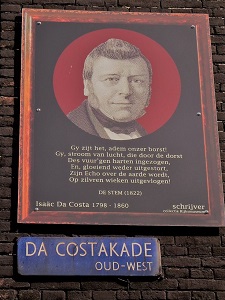
De Nederlandse dichter en schrijver Isaäc da Costa werd geboren in Amsterdam op 14 januari 1798. Zie ook alle tags voor Isaäc da Costa op dit blog.


Aan mijn vader
(Opdracht van de bundel ,Poezy’)

Gunt gij 't, hoog vereerde Vader!
dat een zoon U hulde bied'
met de eerstling van een ader,
die nog ruwe zangen schiet?
Dat bij drie en twintig jaren,
in uw weldaan doorgebracht,
met de galmen van zijn snaren
(ach! hoe min!) te erkennen tracht?

Voor het sterflijk oog verborgen,
richt de Koning van 't Heelal
met in al voorziende zorgen
heel de loop van 't Lotgeval!
Door Zijn ondoorzienbre wegen
worden wij hier rondgeleid!
De aardse beeldtnis van die zegen
is eens Vaders tederheid!

Wat die teerheid kan omvatten,
o mijn Vader! toondet Gij!
'k Loonde met geen aardse schatten,
met geen wereldheerschappij,
al uw zwoegen, al uw pogen
in de vorming van mijn jeugd,
immer zwevend voor mijn ogen,
met het voorbeeld van uw deugd.

't Bloed vooral, dat in mijn aderen
met een deel uws aanzijns vloeit;
kostbaar erfdeel onzer Vaderen,
die, met Oosters vuur doorgloeid,
daar, waar Taag en Ibex vlieten,
eenmaal schitterden op de aard,
en wier grootheên ons verlieten;
doch - hun eer bleef nog bewaard!

God beschouwt het uit den hogen,
wat Gij voor mij waart en zijt!
Ik, ik bloos van ’t onvermoge
der erkentnis, U gewijd.
Ik bied vruchten aan, voor danken,
in der Muzen hof geplukt:
klanken, ja! maar in die klanken
heeft mijn ziel zich afgedrukt!

0 mijn Vader! 'k leg dan heden
met een diep geroerd gemoed,
(stell' mijn zucht uw recht te vreden!)
hart en dichtlier aan uw voet!
Wil die van elkaar niet scheiden,
neem ze beiden gunstig aan,
schenk uw zegening aan beiden,
en mijn wensen zijn voldaan!


 2111094-4db515396628f5a03ca37f822b628290.jpg
Isaäc da Costa (14 januari 1798 – 28 april 1860)
Portret en gedicht aan de Da Costakade in Amsterdam


De Joods-Amerikaanse schrijfster, dichteres en feministe Tillie Lerner Olsen werd geboren in Omaha (Nebraska) op 14 januari 1912. Zie ook alle tags voor Tillie Olsen op dit blog.

Uit: I Stand Here Ironing

“Why do I put that first? I do not even know if it matters, or if it explains anything.
She was a beautiful baby. She blew shining bubbles of sound. She loved motion, loved light, loved color and music and textures. She would lie on the floor in her blue overalls patting the surface so hard in ecstasy her hands and feet would blur. She was a miracle to me, but when she was eight months old I had to leave her daytimes with the woman downstairs to whom she was no miracle at all, for I worked or looked for work and for Emily's father, who "could no longer endure" (he wrote in his goodbye note) "sharing want with us.
I was nineteen. It was the pre-relief, pre-WPA world of the depression. I would start running as soon as I got off the streetcar, running up the stairs, the place smelling sour, and awake or asleep to startle awake, when she saw me she would break into a clogged weeping that could not be comforted, a weeping I can hear yet.
After a while I found a job hashing at night so I could be with her days, and it was better. But it came to where I had to bring her to his family and leave her.
It took a long time to raise the money for her fare back. Then she got chicken pox and I had to wait longer. When she finally came, I hardly knew her, walking quick and nervous like her father, looking like her father, thin, and dressed in a shoddy red that yellowed her skin and glared at the pockmarks. All the baby loveliness gone.
She was two. Old enough for nursery school they said, and I did not know then what I know now -- the fatigue of the long day, and the lacerations of group life in the kinds of nurseries that are only parking places for children.
Except that it would have made no difference if I had known. It was the only place there was. It was the only way we could be together, the only way I could hold a job.
And even without knowing, I knew. I knew the teacher that was evil because all these years it has curdled into my memory, the little boy hunched in the corner, her rasp, "why aren't you outside, because Alvin hits you? that's no reason, go out, scaredy." I knew Emily hated it even if she did not clutch and implore "don't go Mommy" like the other children, mornings.”

 2111094-a2825194abe5e018d92bb189643df950.jpg
Tillie Olsen (14 januari 1912 – 1 januari 2007)
Cover


De Poolse schrijver Marek Hlasko werd geboren op 14 januari 1934 in Warschau. Zie ook alle tags voor Marek Hlasko op dit blog.

Uit:Killing the Second Dog (Vertaald door Tomasz Mirkowicz)

“Our host was sitting on the terrace, reading a newspaper. His girlfriend was sitting next to him. When she saw us, she adjusted herself in her deck chair and lowered her gaze to the floor. It was meant to show her contempt. She was putting on an act. Men look only for peace and deliverance; women have to have something churning and shifting in their lives. They’re always very serious about how they feel and genuinely convinced that all those fleeting emotions they take for anger, love, or contempt are going to last forever.
“It’s us, Mr. Azderbal,” Robert said.
“Again?” Azderbal said.
“Didn’t it work out very well last time?”
“Sure. All it took to save my neck was two top lawyers and a doctor who testified that I happen to be partially insane. I don’t suppose you’ve come here to tell me of some new deal we could make together, huh?”
“That was an accident,” Robert said. “Somebody squealed on us.”
“Bullshit,” Azderbal said. “I’m not interested in any more shaky deals.”
I moved away and sat down on a deck chair next to the girl. She glanced at me in a brief, detached way. I could swear she’d been practicing that look in front of a mirror for the past three months, certain I was going to show up at any moment. But I hadn’t shown up; I had only come now with Robert because we were short of cash. I sat next to her, staring out at the dark garden, while behind our backs the two men continued their loud conversation.
“I need money,” Robert was saying. “I have to pay for his hotel, food, and all the rest.”
“And for the doctor,” the other added.
“Yeah, for the doctor, too. We need money for at least two, three weeks. He’s got to have a room and three meals a day; breakfast, lunch, and dinner. He’s got to be able to afford cigarettes, coffee, a deck chair at the beach, and a haircut and shave once in a while for him to look all right. And our dog, too. Our dog costs a pretty penny.”
“What does it eat?”
“Two pounds of pork a day,” Robert said. “Or do you expect me to cook it grits in my hotel room and mix that with canned kosher meat? Do you really? Well, maybe you’d eat that mush, but not this dog.”
“It’s too big. You should have bought a smaller dog, a poodle or a Pekingese; this one’s not a dog, it’s a monster, a fiend. No wonder it’s so expensive to feed.”


 2111094-ab84cb21ed0f72dcee15ba76d8ad706a.jpg
Marek Hlasko (14 januari 1934 – 14 juni 1969)
Borstbeeld in Kielce 


De Duitse dichter en schrijver Rudolf Hagelstange werd geboren op 14 januari 1912 in Nordhausen. Zie ook alle tags voor Rudolf Hagelstange op dit blog.


Ich will dich haben wie mein eigen Blut

Ich will dich haben wie mein eigen Blut,
Wie meinen Atem, wie mein Angesicht,
Wie meine Wünsche, meinen stillen Mut,
Wie meine Freude, wie mein Augenlicht,
Wie alles, das in mir zur Wohnung ruht
Und zu mir kommt und aus mir bricht.
Ich will, du sollst fortan ich selber sein:
Wein in der Traube, Traube in dem Wein.

Ich liebe dich, wie es mein Herz vermag.
Es würde springen, liebt' es dich noch mehr,
Und krank sein ohne dich an jedem Tag
Und niemals müde werden im Begehr,
Dich so zu lieben — sag es selber, sag,
Wie ich dich lieben soll. Wie jemand, der
Nicht mehr sein eigen ist, nie mehr allein?
Wein in der Traube, Traube in dem Wein?

Es sei kein Ding fortan, das an mich rührt,
Und hätte nicht von dir den Hauch,
Und keine Lust, die ich verspürt,
Und du verspürtest sie nicht auch,
Und kein Begehren, das nicht du geschürt.
So sei von nun an dieses unser Brauch:
Meins ist das deine, deins ist also mein,
Wein in der Traube, Traube in dem Wein.

So soll es sein. Denn alles Lieben dünkt
Mich nur wie Licht und Lichtes Widerschein.
Kein Herz soll wissen, wo der Funke springt,
Der Feuer wirft, so wie's der Stein dem Stein
Entschlägt. Kein Mund, von wem er trinkt.
Und kein Umarmen, das da bleibt allein.
O Wunder, so zu lieben, so geliebt zu sein:
Wein in der Traube, Traube in dem Wein.


 2111094-85d0ee41ee0b7058e34937ba43eedf76.jpg
Rudolf Hagelstange (14 januari 1912 – 5 augustus 1984)
Cover


De Russische schrijver Anatoli Rybakov werd geboren op 14 januari 1911 in Tsjernihiv. Zie ook alle tags voor Anatoli Rybakov op dit blog.

Uit:Dust and Ashes (Vertaald door Antonina W. Bouis)

“...For all the profound human modesty of Comrade Stalin,he will have to tolerate our outpourings of love and loyalty to him[applause],because not only we,who live and work under his direction,but all the working people in our land,tie their hopes for a radiant future for mankind to his name.[Applause] 'Listen,why should I read this? Let's go' Gleb repeated. All right.All right. But what do you think?
-He's flunky!
-But he wrote The Quiet Don,a great novel.
In the twenties there was doubt about his authorship.They even had a special commission to investigate.
I heard something about that.
Akimov told me.The read author was some White officer.But no one would acknowledge that...If The Quiet Don is a work of genius,the author cannot be flunky.As your beloved Pushkin said,dearie,genius and evil are incompatible.
Not every genius can overcome fear. And Sholokhov is no genius.”
(...)

“And Eisenstein was doing it,too!As a young boy Sasha had seen his Battleship Potemkin in the Khudoshestvennyi Theater on the Arbat Sqaure.The cashiers,ticket-takers,cloak room attendants, all were dressed in sailors' uniforms;it looked just grand,it set the mood.The world had acknowledged BATTLESHIP POTEMKIN as the best film and Eisenstein as the greatest director.Now the 'greatest' was loyally serving the tyrant and executioner.Here was an example for his argument with Gleb about genius and villainy. Gleb also read the paper and gave Sasha a meaningful glance. 'Well then one more sycophant.”


 2111094-c0c30288c53d2ae24dda0984623c8074.jpg
Anatoli Rybakov (14 januari 1911 – 23 december 1998)


De Duitse dichter en schrijver Werner Helwig werd op 14 januari 1905 in Berlijn geboren. Zie ook alle tags voor Werner Helwig op dit blog.

Uit: Die Parabel vom gestörten Kristall

"Zum erstenmal begriff ich völlig, daß Henny tot sei. Und der Verdacht setzte sich in mir durch, daß der schreibende Mensch immer eigentlich ein wenig Bajazzo ist. Jedem Schriftsteller steht seine Witwe bevor, oder diejenige, die sich dafür hält.
Wieviele kenne ich jetzt schon. Mein Alter wird mir darin bewußt. Die Witwe Hamsun, die Witwe Derleth, die Witwe Musil, Niebelschütz, Diettrich. Jede hat ein Eheleben lang ein ganz klein wenig an der Goethefähigkeit Ihres Gespons gezweifelt. Mit dem Tod ändert sich das. Sie haben einen lebenslangen Konflikt beerdigt. Das Idol kann geboren werden. Die Entscheidung ist gefallen. Er war einer jener Großen. Und jetzt beginnt die Nachlaßbewirtschaftung. Da beugen sie sich mütterlich über den Verewigten. Endlich ist er Sohn, Wiegenkind wieder geworden. Absehbar. Unentrinnbar. Eigentum. Wehrlos. Man beendet seine halbfertig liegengebliebenen Schulaufgaben.
Und alle seine Ausscheidungen, sofern sie auf Papier festzustellen sind, werden gesammelt. Papierkorbinhalte katalogisiert. Briefe kartothekisiert. Es ist eine Witwenlust, zu überleben und in Staatsbibliotheken Platz zu erkämpfen für wohlgeordnete Konvolute. Sie organisieren das Nachleben, die Nachwelt.
Sie sammeln Vereine um das auf Wachstum angelegte Monument, veranstalten Gedächtnisfeiern, publizieren (auf Bütten, mit rauhem Rand) die Reden, die gehalten wurden, werfen sich jedem, der etwas wissen will, mit überschwenglicher Auskunft ans Herz. Und sind schließlich - kommt ihre Stunde - selber noch eine die Nachwelt berührende Berühmtheit geworden. Und - wiederum - was sollten sie anderes tun? Es ist nicht jeder Frau gegeben, hinter dem Gestorbenen her zurückzutreten. Allzusehr haben sie sich auf seine Welt eingelassen, haben sich in sie hinein aufgegeben. Jetzt schwingt das noch nach, will auspendeln.
Die sich unauffällig machen konnten, waren wahrscheinlich die wirklich Glücklichen. Wo nicht jeder offenbar werdende Charaktermangel auf Werk hin entschuldigt werden mußte. Wo geliebt und gelebt wurde. Wo nicht das Phantom "Genie" blutsaugerisch dazwischentrat. Wo nicht von Dämonie usw. geredet wurde, wenns einfacher und genauer gewesen wäre, zu bekennen: "Entschuldigung, ich habe mich vertan".


 2111094-c7007483287fad379735bc2803fb915c.jpg
Werner Helwig (14 januari 1905 – 4 februari 1985)
Helwig met echtgenote Yvonne en zoon Gerhard in 1950


De Finse dichter en schrijver Zacharias Topelius werd geboren in Nykarleby op 14 januari 1818. Zie ook alle tags voor Zacharias Topelius op dit blog.

Uit: Times of Gustaf Adolf (Vertaald door Selma Borg en Marie A. Brown)

„Early in the morning, the united Swedish and Saxon armies crossed the Loder, *and marched toward the village of Breitenfeld, where they placed themselves in battle order. It was some new military tactics invented by the king: the foot-soldiers in brigades, the cavalry in small squadrons, between them the musketeers, and the whole in two lines; but the Saxons were b
The king rode along the lines, inspected everything with his keen glance, and spoke encouraging words. His eye rested with delight upon these brave men. There stood Gustaf Horn, with his troop of cavalry, on the left wing; in the centre the valiant Teuifel, and in front of him Torstenson, with his light but formidable leather cannon; Baner with his Livonians, and Hepburn with his Scots, occupied the second line.
Last of all, the king approached the right wing, which he himself commanded. There stood five regiments of cavalry: Tott, with his regiment; Soop, with his Westgoths; Stenbock, with his Smalanders; and, farthest of all, Stalhandske, with the Finns. The king's look brightened more and more as he slowly passed the saluting ranks.
" Stalhandske," said he, checking his colossal dark-brown steed at the last Finnish division, " I suppose you understand why T have placed you on the 'flank. Opposite us stands Pappenheim with his Wallachians. He longs to make my acquaint ance," remarked the king, smiling; "and I expect that we will have a hard tussle if he throws the whole swarm upon us from this side. I rely upon you and your Finns to receive him energetically."
The king then raised his voice so as to be heard by the whole cavalry force, and added:
"See to it, boys, that you do not dull your swords on those iron-clad fellows; but rather beat down the horses first, and then you will have easy work with the heavy rider."
The Finnish cavalry realized full well both the danger and the honor of their position, and were proud of it. The king's confidence inspired all witli courage and self-reliance."


 2111094-648a791e2ea2edda50b47d43906a876c.jpg
Zacharias Topelius (14 januari 1818 – 12 maart 1898)
Portret door Albert Edelfelt, 1889


De Duitse dichteres en strijdster voor vrouwenrechten Ida Dehmel werd geboren op 14 januari 1870 in Bingen. Zie ook alle tags voor Isa Dehmel op dit blog.

Uit: Ida und Richard Dehmel - Harry Graf Kessler. Briefwechsel 1898-1935

„Ida Dehmel an Harry Graf Kessler – Blankenese, den 10. August 1928

Lieber Herr Graf! Nur sehr zögernd schreibe ich Ihnen diesen Brief, denn wenn ich annehmen müsste, dass ich mir damit Ihren Besuch verscherze, so liesse ich ihn natürlich ungeschrieben. Andererseits lockt mich der Wunsch, diese an sich gewiss nebensächliche, für Rathenaus Gedächtnis aber doch charakteristische kleine Episode einmal niederzuschreiben. Ich tue es also in der Hoffnung, dass ich mir damit Ihren Besuch erst recht verdiene! Im Winter 1890, als Zwanzigjährige, hatte ich einen Tischnachbar auf den die Tante, bei der ich zu Besuch war, mich schon vorher aufmerksam machte; ich war nämlich verschrien wegen der geistigen Ansprüche, die ich damals an die Menschen stellte. Vom Standpunkt meiner Berliner Verwandten, war das zu verstehen, penn ich kam ja aus der Kleinstadt. Kurz: meine Tante sagte morgens zu mir: heute abend wirst Du einen Tischherrn haben, der selbst Deinen Anspüchen genügen dürfte! Rathenau und ich waren an jenem Abend die einzigen Jüngeren unter lauter Aelteren, das brachte uns schnell zusammen. Ich weiss noch, dass aus seinem Mund das Wort "mein Vater" mit einem Ausdruck fiel, der mich ausserordentlich frappierte, weil ich selbst von meinem Vater nicht hätte anders sprechen können. Es ergab sich in blitzschnellem Verständnis eine Schicksalsgemeinschaft in den äusserst schmerzlichen Beziehungen zum Vater: Verachtung des Vaters zum Kind, und trotzdem Bewunderung des Kindes für den Vater. — Von allen Gesprächen mit Rathenau ist mir von diesem Abend nur dieses im Gedächtnis geblieben, ich erinnere mich aber noch mancher [2] Einzelheiten daraus. Der alte R. muß maaßlos auf dem Sohn gelastet hab[en]. Genau 20 Jahre später (ich habe heute aus den Briefen die Daten festgestellt) trafen wir Walter Rathenau in einem Kreis von etwa 12 Personen bei Peter Behrens. Ich hatte in der Zwischenzeit zuweilen überlegt, ob der inzwischen bekannt gewordene Walter Rathenau mit meinem Tischherrn von damals, dessen Vornamen ich nie gehört hatte, identisch sei.“


 2111094-4a4bd9ec214ac5a6b29a1c1544df416e.jpg
Ida Dehmel (14 januar 1870 - 29 september 1942)


Zie voor bovenstaande schrijvers ook mijn blog van 14 januari 2007 en ook mijn blog van 14 januari 2008 en eveneens mijn blog van 14 januari 2009.

Geschreven door Romenu om 12:29 Reageer op dit bericht

Edmund White, Daniel Kehlmann, Jay McInerney, Lorrie Moore, Jan de Bas, Edgardo Cozarinsky, Mohammad- Ali Jamālzādeh, Clark Ashton Smith, Michael Carroll

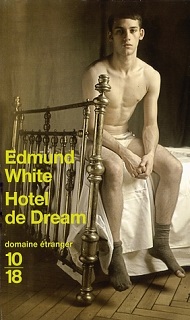
De Amerikaanse schrijver en essayist Edmund White werd geboren op 13 januari 1940 in Cincinnati. Zie ook alle tags voor Edmund White op dit blog.

Uit: Hotel de Dream

“This little room above the massive front oak door was his study, where now he was wheezing, listless and half-asleep, on the daybed. The whole room smelled of dogs and mud. At one end, under the couch and Stephen's table, there lay a threadbare Persian carpet, pale and silky but discolored on one side with a large tea-stain the shape of Borneo.At the other end of the room it had amused Stephen to throw rushes on the floor as if he were a merry old soul living in crude, medieval splendor. There were reeds and rushes and grass everywhere downstairs, which confused two of the three dogs, Tolstoi and Spongie, into thinking they were outdoors: they weren't always mindful of their best housebroken comportment.
The maid, a superstitious old thing, had placed a small jar of tar under Stephen's bed. Did she think it would absorb the evil spirits, or hold off the ghosts that were supposed to haunt Brede Place?
Yes, Stephen had all the symptoms, what the doctors called the "diathesis," or look of consumption: nearly transparent skin, through which blue veins could be seen ticking, and a haggard face and a cavernous, wheezing chest. His hair was as lank and breakable as old lamp fringe. His voice was hoarse from so much coughing and sometimes he sounded as if he were an owl hooting in the innermost chamber of a deep cave. He complained of a buzzing in the ears and even temporary deafness, which terrified a "socialist" like him, the friendliest man on earth (it was Cora's companion, the blameless but dim Mrs. Ruedy, who had worked up this very special, facetious, meaning of socialist). Cora wondered idly if Mrs. Ruedy was back in America yet—another rat deserting the sinking ship.
Cora glimpsed something bright yellow and pushed back Stephen's shirt—oh! the doctor had painted the right side of his torso with iodine. At least they weren't blistering him. She remembered how one of the "girls" in her house, the Hotel de Dream, in Jacksonville, had had those hot jars applied to her back and bust in order to raise painful blisters, all to no avail. She'd already been a goner.
"Hey, Imogene," Stephen murmured, his pink-lidded eyes fluttering open. He smiled, a faint echo of his usual playfulness. He liked to call her "Imogene Carter," the nom de plume she'd made up for herself when she was a war correspondent in Greece and which she still used for the gossip columns and fashion notes she sent to American newspapers."
 2110861-8f60effa6ee6d834066aa46a2a42db62.jpg
Edmund White (Cincinnati, 13 januari 1940)
Cover


De Duitse schrijver Daniel Kehlmann werd op 13 januari 1975 in München geboren. Zie ook alle tags voor Daniel Kehlmann op dit blog.

Uit:Tyll

„Der Krieg war bisher nicht zu uns gekommen. Wir lebten in Furcht und Hoffnung und versuchten, Gottes Zorn nicht auf unsere fest von Mauern umschlossene Stadt zu ziehen, mit ihren hundertfünf Häusern und der Kirche und dem Friedhof, wo unsere Vorfahren auf den Tag der Auferstehung warteten.
Wir beteten viel, um den Krieg fernzuhalten. Zum Allmächtigen beteten wir und zur gütigen Jungfrau, wir beteten zur Herrin des Waldes und zu den kleinen Leuten der Mitternacht, zum heiligen Gerwin, zu Petrus dem Torwächter, zum Evangelisten Johannes, und sicherheitshalber betetenwir auch zur Alten Mela, die in den rauen Nächten, wenn die Dämonen frei wandeln dürfen, vor ihrem Gefolge her durch die Himmel streift. Wir beteten zu den Gehörnten der alten Tage und zum Bischof Martin, der seinen Mantel mit dem Bettler geteilt hatte, als es diesen fror, sodass sie danach beide froren und beide gottgefällig waren, denn was nützt ein halber Mantel im Winter, und natürlich beteten wir zum heiligen Moritz, der mit einer ganzen Legion den Tod gewählt hatte, um nicht seinen Glauben an den einen und gerechten Gott zu verraten.
Zweimal im Jahr kam der Steuereintreiber und schien immer überrascht, dass wir noch da waren. Hin und wieder kamen Händler, aber da wir nicht viel kauften, zogen sie schnell ihrer Wege, und so war es uns recht. Wir brauchten nichts aus der weiten Welt und dachten nicht an sie, bis eines Morgens ein Planwagen, gezogen von einem Esel, über unsere Hauptstraße rollte. Es war ein Samstag und seit kurzem auch Frühling, der Bach schwoll vom Schmelzwasser an, und auf den Feldern, die gerade nicht brachlagen, hatten wir die Saat ausgebracht.“

 

 2110861-33a8bd6af873b60654369be755566168.jpg
Daniel Kehlmann (München, 13 januari 1975)


De Amerikaanse schrijver Jay McInerney werd geboren op 13 januari 1955 in Hartford, Connecticut. Zie ook alle tags voor Jay McInerney op dit blog.

Uit: The Last Bachelor (Sleeping with Pigs)

"Wait a minute," my shrink says. "Stop. Go back. Did you say in the bed?" I nod cautiously. Actually, my mind was drifting off on a tangent. Even as I was droning on about my failed marriage, I was wondering, not for the first time, why she had a picture of John Lennon in her office and whether it was an Annie Liebowitz. You know, the one where he's in a sleeveless New York City T-shirt with his arms crossed. "The pig was sleeping in the bed. With you. In the marital bed. With you and your wife." "Well, yes," I say. "You've been coming to me for more than a year, trying to come to terms with your guilt about the breakup of your marriage, and this is the first time it's occurred to you to mention that the pig was sleeping with you in the bed?" I can see her point. I don't know why I didn't mention it before. It was actually a big point of contention at the time. On the other hand, I was behaving so badly by then that I didn't really feel I was in a position to make demands. Blythe used to have all kinds of jokes about sleeping with two pigs. No, actually, it was the same joke over and over. Plus, McSweeney's my surname and she liked to call me McSwine. "Was this a nightly occurrence? How long did it go on?" "Pretty much every night for a year or so. Two years maybe. Mostly at the end." "And where did the pig sleep?" "Between us." "Between you. In the bed." Apparently, she wants to make sure she's clear on this point. "Sometimes it would burrow under the covers and sleep down at the foot." "Didn't you think this was relevant to our enterprise here? To the whole question of the fate of the marriage? That you were being asked to sleep with a pig between you? Am I safe in assuming this wasn't your idea?" "Of course not." About this at least, I can be emphatic. "It was hers." "And you didn't object?" "Well, yeah, sometimes. In the beginning."
"And then?" "Well, you get used to things." She sighs and shakes her head. "I think we need to talk about this." I can see her point. In retrospect, here, on the Upper West Side of New York, sitting in this book-lined office across from my shrink, who is literally and figuratively framed within a constellation of diplomas and portraits of Carl Jung, Hannah Arendt and Anna Freud, I can imagine how bizarre this sounds. Now that it's come up, I'm kind of amazed myself that I let my ex-wife talk me into sharing the bed with her potbellied pig. Over time almost anything can come to seem normal in the course of a marriage: food fetishes, sexual kinks, even in-laws. First you get talked into a pet pig, and the next thing you know it's sleeping with you. "How did it get up on the bed?" "She built a ramp. With carpeted steps." "And you didn't think this was ... unusual? And, in terms of your marriage, unhealthy? How did you manage to have sexual relations with a— How big was the pig?" "By then? Hard to say, really. Too big to lift anyway. I threw my back out the last time I tried. Hundred and sixty, hundred and seventy pounds. About my weight. Plus, the shape's kind of awkward and it's not like they're going to hold still and stay quiet when you try to pick them up."

 2110861-b4a17c9a92dae0246d91f9a5c5d680f0.jpg
Jay McInerney (Hartford, 13 januari 1955)


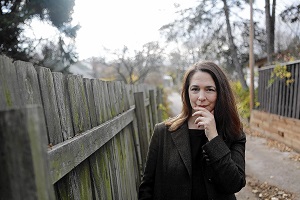
De Amerikaanse schrijfster Lorrie Moore werd geboren op 13 januari 1957 in Glens Falls, New York. Zie ook alle tags voor Lorrie Moore op dit blog.

Uit: Self-Help

« Meet in expensive beige raincoats, on a pea-soupy night. Like a detective movie. First, stand in front of Florsheim's Fifty-seventh Street window, press your face close to the glass, watch the fake velvet Hummels inside revolving around the wing tips; some white shoes, like your father wears, are propped up with garlands on a small mound of chemical snow. All the stores have closed. You can see your breath on the glass. Draw a peace sign. You are waiting for a bus.He emerges from nowhere, looks like Robert Culp, the fog rolling, then parting, then sort of closing up again behind him. He asks you for a light and you jump a bit, startled, but you give him your "Lucky's Lounge--Where Leisure Is a Suit" matches. He has a nice chuckle, nice fingernails. He lights the cigarette, cupping his hands around the end, and drags deeply, like a starving man. He smiles as he exhales, returns you the matches, looks at your face, says: "Thanks."He then stands not far from you, waiting. Perhaps for the same bus. The two of you glance furtively at each other, shifting feet. Pretend to contemplate the chemical snow. You are two spies glancing quickly at watches, necks disappearing in the hunch of your shoulders, collars upturned and slowly razoring the cab and store-lit fog like sharkfins. You begin to circle, gauging each other in primordial sniffs, eyeing, sidling, keen as Basil Rathbone.A bus arrives. It is crowded, everyone looking laughlessly into one another's underarms. A blonde woman in barrettes steps off, holding her shoes in one hand.You climb on together, grab adjacent chrome posts, and when the bus hisses and rumbles forward, you take out a book. A minute goes by and he asks what you're reading. It is Madame Bovary in a Doris Day biography jacket. Try to explain about binding warpage. He smiles, interested.Return to your book. Emma is opening her window, thinking of Rouen."What weather," you hear him sigh, faintly British or uppercrust Delaware.Glance up. Say: "It is fit for neither beast nor vegetable."It sounds dumb. It makes no sense.But it is how you meet.At the movies he is tender, caressing your hand beneath the seat.At concerts he is sweet and attentive, buying cocktails, locating the ladies' lounge when you can't find it.At museums he is wise and loving, leading you slowly through the Etruscan cinerary urns with affectionate gestures and an art history minor from Columbia. He is kind; he laughs at your jokes.After four movies, three concerts, and two-and-a-half museums, you sleep with him. It seems the right number of cultural events. On the stereo you play your favorite harp and oboe music. He tells you his wife's name. It is Patricia.”
 

 2110861-01550674d88514cae211321527f3da8a.jpg
Lorrie Moore (Glens Falls, 13 januari 1957)


De Nederlandse historicus en dichter Jan de Bas werd geboren op 13 januari 1964 in Waddinxveen. Zie ook alle tags voor Jan de Bas op dit blog.


De tweede Noach

Ik reed rond op mijn gemak,
in mijn gele regenpak,
onder zon en wolken droog,
't leek wel of de hemel loog.

Mensen lachten achter mij,
maar niet meer van angsten vrij,
zagen ze de regenboog,
ook al was de hemel droog.

Plots, viel recht de regen neer,
niemand voor me lachte meer,
toen de hemel openbrak,
op mijn gele regenpak.


Zo is het leven
Prediker 3: 21

Hond. Vier poten in de mand.
Kijken. Blaffen. Hijgen. Vier
poten uit de mand. Lopen.
Stilstaan. Lopen naar de mand.

Hond. Vier poten in de mand.
Kijken. Blaffen. Hijgen. Vier poten
uit de mand. Lopen. Blaffen.
Hijgen. Hond. Vier poten

in de mand. Kijken. Blaffen.
Hijgen. Zitten. Blaffen. Hijgen.
Liggen. Blaffen. Hijgen. Hond.
Vier poten in de mand.

 

 2110861-745b23024fa5ca24bcf6f2b8049cf4e0.jpg
Jan de Bas (Waddinxveen, 13 januari 1964)


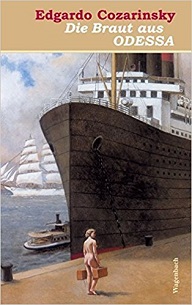
De Argentijnse schrijver en regisseur Edgardo Cozarinsky werd geboren 13 januari 1939 in Buenos Aires. Zie ook alle tags voor Edgardo Cozarinsky op dit blog.

Uit: Die Braut aus Odessa: Erzählungen (Vertaald door Sabine Giersberg)

„Auf dem rosa Granit der Potemkin-Treppe ein paar Meter weiter unten entdeckte er ein Mädchen, das gedankenverloren in die Landschaft starrte, ihr Blick war nicht weniger traurig als seiner. Sie hatte sich auf eine Stufe gesetzt und zwei große runde Schachteln übereinander neben sich abgestellt, um jede war ein blaues Atlasband gebunden, sie wurden von einer einfachen Klemme zusammengehalten, und auf dem Schild konnte man in lateinischen Buchstaben lesen: »Madame Yvonne. Paris – Wien – Odessa«.
Eine Brise erfrischte die Luft und schob in der Ferne über dem Meer launische Wolkengebilde von Osten nach Westen, Drachen und Erzengel, die eine glückliche Begegnung vorauszusagen schienen. Der junge Mann, wir wollen ihn Daniel Aisenson nennen, wusste nicht, mit welchen Worten man eine Fremde ansprach. Er ging zu dem Mädchen hin, stellte sich neben sie und lächelte. Als es ihr unangenehm wurde, so zu tun, als würde sie ihn nicht bemerken, warf sie ihm einen strengen Blick zu, der sofort sanft wurde. Etwas an ihm bezeugte seine Unschuld, etwas, das den unflätigen oder schmeichlerischen Verführern abging, die sie in der großen Stadt sofort zu erkennen gelernt hatte.
Wir werden nie erfahren, welches die ersten Worte waren, die sie austauschten, und auch nicht, wer sie sprach, aber es ist nicht abwegig, dass sie die Schüchternheit des Jungen besiegten. Daniel war in einem Schtetl geboren; als er fünf Jahre war, zogen seine Eltern in einen Randbezirk der Stadt, die heilige unter den heiligen, Kiew, von der er wenig mehr kannte als den Besarabia genannten Markt und das Posamentengeschäft der Familie. Mehr als einmal hatte er als Jugendlicher das Gold und die Voluten der Sophien-Kirche, die fünf leuchtenden Kuppeln der Andreas-Kirche und den noch höheren Glockenturm des Percherska-Klosters bestaunt.
Er konnte nicht verhindern, dass er diesen Glanz mit der bescheidenen Synagoge verglich, die seine Eltern ohne große Hingabe besuchten und in die er sie begleiten musste. Und dieser Vergleich machte, dass er sich schuldig fühlte. „
 

 2110861-853d1cdc5d0914398f3f5696121ab82f.jpg
Edgardo Cozarinsky (Buenos Aires, 13 januari 1939)
Cover 


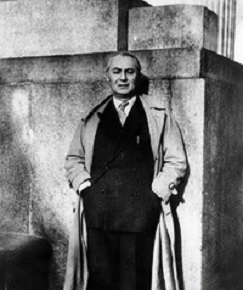
De Iraanse schrijver Mohammad- Ali Jamālzādeh Esfahani werd geboren op 13 januari 1892 in Isfahan. Zie ook alle tags voor Mohammad- Ali Jamālzādeh op dit blog.

Uit: Persian Is Sugar (Vertaald door Heshmat Moayyad en Paul Sprachman)

“I was entertaining the thought of going ahead and proferring a bonjour monsieur, just to let him know that I, too, belonged, when a hissing sound from the other end of the cell attracted my attention. Looking in that direction, I could make out something shiny and white that resembled a cat curled over a bag of coals. In reality, however, I was looking at a Mullah who sat in the manner of school children, with his arms wrapped around his knees. His entire body was covered by his cloak. What I had mistaken for a shiny, white cat was his turban the tail end of which, dangling over his shoulder, looked like the tail of a cat. The hissing sound, of course, was the sound of his Arabic prayers.
It was now apparent that three guests shared the same cell. Considering number three as a good omen, I was about to inquire from my friends who they were and what circumstance had landed them in this cell; I even entertained the possibility of our collectively discovering a way out of our predicament, when the cell door flung wide open, and amid the commotion, a poor young boy, wearing a felt cap, was thrown into the cell. Then as quickly as the boy was thrown in, the door was shut again. It turned out that the same newly-appointed official from Rasht, had thrown this innocent, poor child into this cell to intimidate the population. Some time earlier, during the altercations of the Constitutional Revolution, it turned out, this little boy had been employed by a Cossack as a servant.
Recognizing that crying was absolutely useless, the new comer dried his eyes using the tail of his dirty shirt. At the same time, knowing that there were no guards around, he directed a volley of special Iranian curses toward almost everyone who came to his mind, all the time kicking the door and the walls of the cell with his bare feet. Once he realized that the door, flimsy as it looked, was not about to fall apart, he spat on the floor, looked around, and found out that there were other people present in the cell..
He considered me to be a European and, therefore, of no help to him. The Europeanized fellow, too, did not seem to inspire much confidence in him. Walking gingerly, he approached the Mullah. Then, after staring a while at him, in a trembling voice, said, "Excellency, in the name of the holiest of the holies, what have I done to deserve this? Wouldn't it be appropriate for us all to commit suicide and free ourselves from this oppression?"
 

 2110861-25707f4edf289a941c133235f504e8e7.jpg
Mohammad- Ali Jamālzādeh (13 januari 1892 - 8 november 1997)


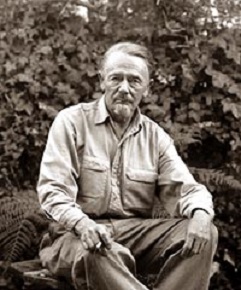
De Amerikaanse dichter, schrijver en beeldhouwer Clark Ashton Smith werd geboren in Long Valley (Californië) op 13 januari 1893. Zie ook alle tags voor Clark Ashton Smith op dit blog.


Fire Of Snow

Pale fire of snow had lit the dusk for me:
Astray with mind half-consciously intent
I had not thought the wood so imminent—
Pregnant with pine and sombre cypress-tree.
Darker than sleep, and mute with mystery
Like far-off death, where questing dreams are spent,
Their winding caverns deepened as I went
Therein, and paused in old expectancy.

Pale fire of snow had lit the dusk for me....
But the black stillness held where once the wind
Had parted boughs in music, that the gleam
Of stars might enter; all was strangely blind,
Like midnight thickening 'neath the middle sea—
Filled with the silence of a time-slain dream.


February

Gossamer-frail, the moon
Goes down the skies of days;
Vague winds are on the noon,
Blown from the wandering vales
of cloudland far away.

They come, and hardly stir
The dell-grown grasses high;
But in the pine and fir,
As in my musing heart,
I hear a tender sigh.

Fragile as dreams, afloat
Between the earth and skies,
Beyond serene, remote,
Blue-folded hills the fair
And moon-white mountains rise.

In woodland shadows deep
The firstling flowers blow;
And in my heart I keep
A love that also came
After the frost and snow.


Foggy Night

Hastening I strode
Past the drunkard lying
Beside the moonless road.
 

 2110861-b9c460870a104eb80b1479519780ae85.jpg
Clark Ashton Smith (13 januari 1893 – 14 augustus 1961)


Onafhankelijk van geboortedata

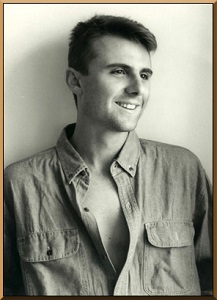
De Amerikaanse schrijver Michael Carroll werd geboren in 1965 en groeide op in een wijk van Fort Caroline (nu Jacksonville), Florida. Zie ook alle tags voor Michael Carroll op dit blog.

Uit: Little Reef and Other Stories (Little Reef)

“He was a tad older than Wes, gainfully employed, something of a father figure, and very sensible with money—in short, a male role model. Shouldn't be any harder than hooking a bride, and yet meeting your grandson habitually in bars on Friday nights hardened you not just about gays. Her only husband, all that time ago—well, people were people. She liked the salt crystals around the cool sweaty rim of the curvaceous glass. The first few sips, like breaths drawn in the cool depths of a cavernous rainforest. She wanted to go to Brazil someday alone, ensconced in a tour group. The electric-blue and uncannily gilt fish flicked bigly with their self-possessed dignity off to one side of the tank, hovering unblinking. Buster's hemorrhoids were killing him. He'd done a sugar reading just before and it topped off at 80, a triumph. Everything was medical. Get after the age of thirty in life and it was just numbers, stats you filed with medical authorities. He lived alone. Buster wanted a lover, but not as much as he needed tips. To live, he served. He turned and wiped the counter, and Alison straightened up from her slump. His slump. Alison was becoming Alex and so now Alex said, "Shit, I forgot to bring my STP." Stand To Pee: a plastic funnel and little hose gadget Buster hoped he'd soon not have to hear about again. He hummed, saying, "I'll watch your drink. You want to run home and get it?" He'd been sipping beer and went to the register to make Mrs. Blake's change, thinking of Wes. Have Wesley Blake and he'd be calm like sipping watery Jack, intoxicated. But he'd never have Wesley, not with Mrs. Blake as gatekeeper. Life got you in its tickling reaches and laughed. Alison/Alex slumped again and Buster felt a certain love for her, wild beaten-down thing. "No:' Alison/Alex said, touch of the drama queen, "I'm fine," tittering to herself. "Fine:' Kid was a quiz, messed up some at home then shoved out the door to hang out in bars. Buster came around with three and a half dollars' change, thinking, nice lady, you do not know. How I'm on the edge, how we're all on the edge, and I need affection as much as you do. »
 

 2110861-68204b98b6da222c590b2cbc1912b9f4.jpg
Michael Carroll (Fort Caroline, 1965)


Zie voor nog meer schrijvers van de 13e januari ook mijn vorige blog van vandaag.

Geschreven door Romenu om 14:10 Reageer op dit bericht

Jurgis Kunčinas, Kostís Palamás, Karl Bleibtreu, Victor de Laprade, Eduard von Bauernfeld, Maler Müller, Mark Alexander Boyd

De Litouwse schrijver en vertaler Jurgis Kunčinas werd geboren op 13 januari 1947 in Alytus. Zie ook alle tags voor Jurgis Kunčinas op dit blog.

Uit: Mobile Röntgenstationen (Vertaald door Klaus Berthel)

“Für den Beginn des Kommunismus war das Jahr 1980 angesetzt. Da bist du dreiundvierzig, dachte ich mir, und kannst noch dreißig Jahre oder länger ganz prima im Kommunismus leben. Ohne jede Ironie erwog ich diese Möglichkeit. Ich war damals vierzehn. Ich trank nicht, rauchte nicht.
Jeden Morgen trieb ich Gymnastik und härtete mich mit kaltem Wasser ab. Auf dem Weg zur Schule passierte ich zweimal eine Wandtafel, auf der in Großbuchstaben der Moralische Kodex der Erbauer des Kommunismus prangte. Der Erste, der sich über meine Überlegungen lustig machte, war mein aus Sibirien zurückgekehrter Onkel. Nein, er sagte nichts, er kicherte nur in sich hinein, dass es mir kalt den Rücken herunterlief. Ich war beleidigt und begann, ihm aus dem Weg zu gehen, obwohl er ein gutmütiger Mensch war, auch wenn er, na wenn schon, früher Polizist gewesen war. Überhaupt, von heute her die Dinge zu betrachten ist billig; wer Lust hat, amüsiert sich über diesen Chruščëv-Plan oder nicht mal das, dieses Thema langweilt nur noch. An den Abenden saßen wir Halbwüchsigen an einem Hang unten am Fluss und unterhielten uns. Die Älteren ließen schon Zigaretten herumgehen. Wie gesagt, ich rauchte nicht. Und da gab es einen, Stasys hieß er, sein Vater war Offizier bei Smetona gewesen und während des Krieges irgendwohin verschwunden, und der hatte uns einiges mitzuteilen.
Wisst ihr, Männer, so begann er, was Churchill über Chruščëvs Plan gesagt hat? Die ganze Truppe horchte auf. Nun, was denn? Also Churchill, Winston übrigens, hat Folgendes gesagt: Die ganze Zeit habe ich gedacht, an Altersschwäche zu sterben, aber jetzt gibt es auch die Möglichkeit sich totzulachen. Alle johlten vor Begeisterung, aber mir schlug das, was ich da gerade gehört hatte, dermaßen auf den Magen, dass mir auf der Stelle schlecht wurde, fast hätte ich hinter die Büsche gemusst.“


 2110854-58cf6dee380cf29301c8efb80e6251a9.jpg
Jurgis Kunčinas (13 januari 1947 – 13 december 2002)


De Nieuwgrieks dichter Kostís Palamás werd geboren op 13 januari 1859 in Patra. Zie ook alle tags voor Kostís Palamás op dit blog.


Ruins

I returned to my golden playgrounds,
I returned to my white boyhood trail,
I returned to see the wondrous palace,
Built just for me by love’s divine ways.
Blackberry bushes now cover the boyhood trail,
And the midday suns have burned the playgrounds,
And a tremor has destroyed my palace so rare,
And in the midst of fallen walls and burned Timbers,
I remain lifeless; lizards and snakes
With me now live the sorrows and the hates;
And of my palace a broken mass now remains.


Vertaald door Alex Moskios


Fatherlands

I

Where with its many ships the harbor moans,
The land spreads beaten by the billows wild,
Remembering not even as a dream
Her ancient silkworks, carriers of wealth.

The vineyards, filled with fruit, now make her rich;
And on her brow, an aged crown she wears,
A castle that the strangers, Franks or Turks,
Thirst for, since Venice founded it with might.

O'er her a mountain stands, a sleepless watch;
And white like dawn, Parnassus shimmers far
Aloft with midland Zygos at his side.

Here I first opened to the day mine eyes;
And here my memory weaves a dream dream-born,
An image faint, half-vanished, fair—a mother.


II

Upon the lake, the island-studded, where
The breeze of May, grown strong with sea-brine, stirs
The seashore strewn with seaweed far away,
The Fates cast me a little child thrice orphan.

'Tis there the northwind battles mightily
Upon the southwind; and the high tide on
The low; and far into the main's abyss
The dazzling coral of the sun is sinking.

There stands Varassova, the triple-headed;
And from her heights, a lady from her tower,
The moon bends o'er the waters lying still.

But innocent peace, the peace that is a child's,
Not even there I knew; but only sorrow
And, what is now a fire, the spirit's spark.


Vertaald door Aristides E. Phoutrides


 2110854-8fbf513647372d3c7844ae54236e5ffb.jpg
Kostís Palamás (13 januari 1859 - 27 februari 1943)
Borstbeeld in Athene


De Duitse schrijver en criticus Karl August Bleibtreu werd geboren op 13 januari 1859 in Berlijn. Zie ook alle tags voor Karl Bleibtreu op dit blog.


Schnellzug

Das Dampfroß dröhnend schnaubte
Voran in tiefer Nacht.
Und ich, der Schlafberaubte,
Hielt mit mir selber Wacht.

Die Räder rastlos rollten
Wohl über Berg und Tal,
Als ob erklimmen wollten
Sie dort den Morgenstrahl.
Die Finsternis durchgellten
Die Pfiffe laut genug –
Doch wenn wir nun zerschellten
An einem andern Zug?

Dampfsäulen uns umqualmen.
Im nächsten Augenblick
Mag uns der Tod zermalmen
Das trotzige Geschick.
Ein Wort, zu früh gegeben,
Zu spät ein Zeichen nur –
Von unser aller Leben
Verweht dann leicht die Spur.

Da ich so sinnend lauschte,
Da plötzlich däuchte mir,
Daß mit uns weiterrauschte
Die Weltgeschichte hier.
Dem Eisenwagen gleichen
Die Räder auch der Zeit –
Mit nimmermüden Speichen
Fortrollend weit und breit.

Doch weiter, weiter! heischen
Wir alle ruhelos –
Wann wird der Notpfiff kreischen:
Weh uns, Zusammenstoß?


 2110854-703929e42fc2b226c78bdf51531570da.jpg
Karl Bleibtreu (13 januari 1859 – 30 januari 1928)
Het Berlijnse stadspaleis op een gravure van J. M. Kolb naar L. Rohbock. 1860 


De Franse dichter en criticus Victor Richard de Laprade werd geboren op 13 januari 1812 in Montbrison. Zie ook alle tags voor Victor de Laprade op dit blog.


Fleurs des près

Viens consulter les marguerites,
Oracles des fraîches amours.
Toutes les pages de vos jours
Dans les fleurs des prés sont écrites.
Viens consulter les marguerites.

Viens nous cueillir comme autrefois,
Et tresser de blanches couronnes

Pour parer le front des Madones,
Assise encore au bord des bois,
Viens nous cueillir comme autrefois.

À nos prés nous restons fidèles,
Sans folle envie et sans dédains ;
Nous ne rêvons pas les jardins
Où nos fleurs deviendraient plus belles.
À nos prés nous restons fidèles.


Vents d’automne

Tenez la porte close et gardez votre cœur !
Je sens un souffle aigu, j’écoute un bruit moqueur ;
Voici les vents d’automne.
Les feuilles devant moi volent en tourbillons ;
Un brouillard glacial étend sur les sillons
Sa blancheur monotone.

Adieu, tièdes zéphyrs aux murmures discrets !
C’est la bise insolente ; elle arrache aux forêts
Des cris de mille sortes.
Je l’entends qui nous raille en ses longs sifflements…
Et j’ai fait, sous mes pieds, comme des ossements,
Craquer les branches mortes.


Les corbeaux

Voici l’hiver lugubre et son affreux cortège
D’oiseaux noirs répandus sur son linceul de neige.
Les corbeaux ont senti le parfum de la mort.
Ils viennent, enhardis en leurs instincts funestes ;
De nos belles saisons ils dévorent les restes,
Croassants et rongeurs, et pareils au remords.

Là, les débris sanglants du coursier plein d’audace
Dont le vol idéal nous portait dans l’espace ;
Ici, le chien fidèle à son maître oublieux ;
Là, le cygne plaintif et la tendre colombe…
Bien, corbeau ! fais rouler sur cette fraîche tombe
Ce crâne chauve et blanc dont tu crevas les yeux.


 2110854-953297877cc00e68ad7d7be37d0ada52.jpg
Victor de Laprade (13 januari 1812 – 13 december 1883)
Anoniem portret


De Oostenrijkse dichter en schrijver Eduard von Bauernfeld werd geboren op 13 januari 1802 in Wenen. Zie ook alle tags voor Eduard von Bauernfeld op dit blog.

Uit:Aus Alt- und Neu-Wien

„Als ich in die zweite Humanitätsclasse, in die »Rhetorik« vorrückte, bekamen wir einen Professor, dessen Persönlichkeit und ganzes Wesen nicht ohne mächtigen Einfluß auf uns werdende Jünglinge bleiben konnte. Leander König war zwar kein grundgelehrter Specialist, auch kein eigentliches philologisches Genie, wie der oben genannte Araber und Syrier, jedoch ein wissenschaftlich genugsam ausgebildeter Mann, dabei voll Eifer und Glut für sein Lieblingsfach, für griechische und römische Literatur und Poesie, für Poesie überhaupt. Er hielt überdies nicht wenig auf guten rhythmischen, zugleich richtig empfundenen Vortrag des Verses. Mit seinen besseren Schülern, die er bald herausbekam, las er die Iliade in Extrastunden. Einer meiner Schulkameraden, der mich noch zuweilen besucht, der wackere Schulrath Anton Kral, wird sich erinnern, wie uns der unermüdliche Lehrer sowohl im Interpretiren, wie im Recitiren rastlos herumhetzte. Die Uebrigen durften zuhören, weiter gab er sich aber mit dem »Troß« – sein eigener Ausdruck – nicht ab, sondern wendete sich ausschließlich an das halbe Dutzend seiner homerischen Akolythen. Der Troß horchte übrigens nicht ungern zu, da unser begeisterter, geistreicher, auch witziger Lehrer nicht selten auf Abwege gerieth, dabei Ausfälle machte, die bisweilen ihr Bedenkliches hatten. So wurde der Studien-Hofcommission nicht immer mit dem größten Respecte Erwähnung gethan. »Es ist der Troß, der hinauf kommt!« hieß es. – Ein neuer Studienplan lag eben im Werke. Wenn ein jeder Professor bisher sein specielles Fach pflegte und tradirte, so wurde diese geistige Theilung der Arbeit plötzlich verworfen. Ein und derselbe Lehrer sollte in Zukunft sämmtliche Gegenstände oder Wissenschaften vertreten – das heißt, der Grieche oder Lateiner sollte sich zugleich in einen Historiker umwandeln, in einen Natur-Historiker und Mathematiker. Der sarkastische Pater Leander erzählte uns von diesen didaskalischen Metamorphosen par ordre du Mufti: »Fragen Sie Ihre Mama zu Hause,« – setzte er hinzu, – »ob sie ihrer Kammerjungfer zumuthen wird, zu kochen, oder ihrer Köchin, sie von heute auf morgen zu frisiren?«


 2110854-dcf3bf6887a10c73646b2f051a9d046c.jpg
Eduard von Bauernfeld (13 januari 1802 – 9 augustus 1890)
Portret door Franz Dobiaschofsky, 1850


De Duitse dichter en schilder Maler (Friedrich) Müller werd geboren op 13 januari 1749 in Kreuznach. Zie ook alle tags voor Maler Müller op dit blog.


Lied

Dein holdes Bild schwebt immer mir vor Augen,
Durch Thal und Wälder folgt's mir nach;
Bald schlummernd auf der Au, umscherzt von Zephirs Hauchen
Und Liebesgöttern, jung und wach.

Bald, wie am Wasserfall du unter Blütenbüschen
Auf frischem Moos die Glieder reckst;
Und nun den linden West, dich sanfter zu erfrischen,
Von Rosenknospen zu dir neckst.

Vom Myrtenstrauch, um den die Liebesgötter gaukeln,
Schwingt Amor sich auf deinen Schooß;
Ihm flattern alle nach voll hoher Lust und schaukeln
Sich in dem schwellend weichen Moos.

Bald seh' ich dich am Bach die heiße Wange kühlen,
Am Bach, wo jüngst ich zu dir schlich;
Ich kann, o Herrliche, seit ich dich sah, nichts fühlen,
Nichts denken, träumen, als nur dich.


Mystik

Ja doch, das Mystische schätz' ich; das Brautlied von Amor und Psyche,
Wenn sich der irdischen Form neu vermälet der Geist.
Aus dem hohen Naturwerk, in den Bildern der Künste
Spricht es erfreulich mich an, reicht mit der Blüte die Frucht.
Nur das Mystische haß' ich, deß sich der Gaukler zum Spielchen
Pfiffig bedienet, sammt dem, was aus den Ställen man fegt.


 2110854-4926047b153727a7838a5083aabad7b0.jpg
Maler Müller (13 januari 1749 - 23 april 1825)
Maler Müller: Grasbeladenes Fuhrwerk auf einer Wiese, im Hintergrund ein Dorf, 1776


De Schotse dichter Mark Alexander Boyd werd geboren op 13 januarri 1562 in Ayrshire, Schotland. Zie ook alle tags voor Mark Alexander Boyd op dit blog.

Uit  Epistolae Heroides et Hymni


AD JACOBVM SEXTVM REGEM

Sideris Arctoi nitor auree, lumen auorum
Nobile, venturae posteritatis amor.
Primus in orbe Deus, qui iungis Pallada Marti,
Et facis ut titulis cedat uterque tuis.
Adspice, ni pigeat, teneri pigmenta poetae.
Difficilem facili carmine falle diem.
Nec mirere mei si frons macilenta libelli,
Agricolae tenui debile prodit olus.
At tu si fundum clementi afflaveris aura,
Agricolae domino nobile surget opus.


 2110854-25e8cae7a3be118e77655a5e31786c5d.jpg
Mark Alexander Boyd (13 januari 1562 – 10 april 1601)
Ayr in Ayrshire


Zie voor bovenstaande schrijvers ook mijn blog van 13 januari 2007 en ook mijn blog van 13 januari 2008 en eveneens mijn blog van 13 januari 2009.

Geschreven door Romenu om 14:08 Reageer op dit bericht

Meer van Romenu

↑ Terug naar de berichten