Naar de inhoud

Romenu

Over literatuur, gedichten, kunst en cultuur
akke.beakke.be

Berichten van 26 juni 2016 tot 27 juni 2016

Lucille Clifton, Rafael Chirbes, E. J. Potgieter, Kees Ouwens, Dawud Wharnsby, Zsuzsanna Gahse, João Guimarães Rosa
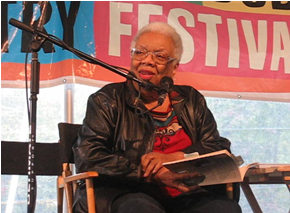
De Amerikaanse dichteres en schrijfster Lucille Clifton werd geboren in New York op 27 juni 1936. Zie ook alle tags voor Lucille Clifton op dit blog.


Miss Rosie

when I watch you
wrapped up like garbage
sitting, surrounded by the smell
of too old potato peels
or
when I watch you
in your old man's shoes
with the little toe cut out
sitting, waiting for your mind
like next week's grocery
I say
when I watch you
you wet brown bag of a woman
who used to be the best looking gal in Georgia
used to be called the Georgia Rose
I stand up
through your destruction
I stand up


Wishes For Sons

i wish them cramps.
i wish them a strange town
and the last tampon.
I wish them no 7-11.

i wish them one week early
and wearing a white skirt.
i wish them one week late.

later i wish them hot flashes
and clots like you
wouldn't believe. let the
flashes come when they
meet someone special.
let the clots come
when they want to.

let them think they have accepted
arrogance in the universe,
then bring them to gynecologists
not unlike themselves.


 1930101-bf0f1470a4b9209ad55be6e4099f30a8.jpg
Lucille Clifton (27 juni 1936 – 13 februari 2010)


De Spaanse schrijver Rafael Chirbes werd geboren op 27 juni 1949 in Tabernes de Valldigna bij Valencia. Zie ook alle tags voor Rafael Chirbes op dit blog

Uit: Aan de oever (Vertaald door Eugenie Schoolderman en Arie van der Wal)

“Zolang ik me kan heugen kom ik al op de paden in het moeras. Toen ik amper elf of twaalf was, liet mijn oom me zien hoe ik het geweer moest hanteren, kinderen waren in die tijd al vroeg volwassen, op je negende of tiende hielp je mee op het land, in de bouw, in de werkplaatsen. Aan de terugslag van mijn eerste schot hield ik een blauwe plek op mijn schouder over, ik was bijna tegen de grond gesmakt. Zoals te verwachten was schoot ik mis, waardoor ik me doodschaamde toen ik me naar hem omdraaide. Ik dacht dat hij de spot met me zou drijven en was bang dat hij me uit zou lachen, maar nee, hij streek met zijn hand over mijn hoofd, woelde door mijn haar en zei: Je hebt nu net de macht gekregen om iets levends te laten sterven, eigenlijk een nogal miserabel soort macht, want ware macht – en die heeft niemand, ook God niet, dat verhaal van Lazarus gelooft geen hond – is dat wat dood is weer tot leven wekken. Iets of iemand het leven benemen is makkelijk, dat kan iedereen. Dat wordt dagelijks in de halve wereld gedaan. Sla de kranten er maar op na. Zelfs jij kunt het, iets of iemand het leven benemen, mits je natuurlijk een beetje beter richt (hier glimlachte hij wél en kneep spottend zijn levendige grijze ogen tot spleetjes, waar zijn goede humeur een web van kleine rimpeltjes omheen legde). De mens, die in staat is geweest immense gebouwen op te trekken, hele bergen te laten verdwijnen, kanalen te graven en bruggen over de zee te bouwen, is er niet in geslaagd een kind dat net is gestorven zijn ogen weer op te laten slaan. Soms is het meest volumineuze en allerzwaarste het makkelijkst te verplaatsen. Reusachtige stenen in de laadbak van een vrachtwagen, lorries vol zware metalen. Maar moet je je voorstellen, er is geen krachtpatser in staat om dat wat je in je draagt, je gedachten, je verlangens, wat niets lijkt te wegen, op zijn schouders te tillen en het ergens anders naartoe te brengen. Er is geen vrachtwagen die het kan verplaatsen. Het voor elkaar krijgen dat iemand die zijn neus voor jou ophaalt of lak aan je heeft je uiteindelijk gaat mogen, is heel wat moeilijker dan die persoon met een paar klappen tegen de grond werken. Mensen slaan uit onmacht. Ze denken dat ze met geweld kunnen bereiken wat hun niet lukt met tederheid, met intelligentie.”


 1930101-bb42521aa5fb8c043412a2958ac4fa30.jpg
Rafael Chirbes (Tabernes de Valldigna, 27 juni 1949)


De Nederlandse schrijver Everhardus Johannes Potgieter werd geboren in Zwolle op 27 juni 1808. Zie ook alle tags voor Potgieter op dit blog.

Uit: Jan, Jannetje en hun jongste kind

“Een portret van JANNETJE te leveren, zou een lust wezen, zoo het geene meesterhand eischte. Om er echter niet schaakmat af te komen, moet men de gaven van REMBRANDT aan die van RUBBENS paren; ik wil wel gelooven, dat er zulke witte raven vliegen; maar ik vrees niet, dat iemand zal ontkennen, dat zij zeldzaam zijn. Immers, louter met het gloeijend koloriet, louter door de tot overdaad toe weelderige vormen van den Vlaamschen Meester, treft men JANNETJE niet. Als ze gelijkend zal worden voorgesteld, mag de nadenkende ernst van den Hollandschen Schilder bij uitnemendheid, mag de rustige zielskracht, waardoor zijne beelden de duisternis om hen heen verlichten, er niet aan ontbreken. Eene moeder wordt echter het liefst in hare kinderen geprezen, en die hadden de kloeke echtelingen bij de vleet; JAN genoot onder al zijne ellende den zegen van ROEMER VISSCHER:

Een vrolijck wijf en eerbaer bij desen,
Slapen dat de nacht schijnt kort te wesen.

En kijk hare dochteren maar eens aan, als gij weten wilt, hoe de deftige matrone er in den bloei van vrolijk- en jolijkheid uitzag. ”Mijne kinders vallen tengerder dan ik plagt te wezen”, moge zij klagen; smeltend noch smachtend hebben de oolijken niets van het teringzieke, dat uit vreemde poëzij in de onze is overgewaaid, maar dat wij toch niet mooi vinden dan in verzen! Wat goedronde gezigtjes, – blank als de sneeuw, welke ook de kleur der geestige kijkers moge zijn, – wat gulgaauwen lach, – als we regt kennis hebben gemaakt, en zij ons wild woelwater schelden, schoon zij stouten schalk meenen. Welke ronde, mollige armen – welk een zeebarichen boezem, zoo als een dichter harer jonkheid zeide; – een mooi woord, VENUS zelf rees immers uit het blanke schuim der golven op?”


 1930101-69ebfa3b72708b62f67ea1ec2917fb4c.jpg
Potgieter (27 juni 1808 – 3 februari 1875)
Borstbeeld uit 1908 door Charles van Wyk op de Potgietersingel in Zwolle


De Nederlandse dichter Kees Ouwens werd geboren op 27 juni 1944 in Zeist. Zie ook alle tags voor Kees Ouwens op dit blog.


Achter een dikke boom

Het was acht uur.
Ik ging van huis en begaf mij buiten het dorp.
Het was koud. Een scherpe wind deed mijn
ogen tranen.
De grond waarop ik liep was hard als steen.
 
Ik volgde een bochtig pad.
Toen ik moe werd, ontkleedde ik mij
achter een dikke boom.
Maar ik bleef alleen, dat maakte
mij radeloos.
Want in mijn oor lag nog haar stem
en ik zag haar voor me, al hield ik de
ogen gesloten.


Uit gewoonte

Toen ik mij in de vrije natuur bevond
met in mijn hand een uitgedoofde sigaret
en ergens in mijn achterhoofd een hoer
die achter een boom zou staan om mij
te foppen en dan plotseling te voorschijn
Over dit hoofdstuk/artikelauteurs

kwam om mij te dwingen haar
te bezitten in laag maar ondoordringbaar struikgewas
en daarna op de achterkant van een
gebruikte ansichtkaart mijn adres opschreef...
 
en ik voor de zoveelste keer een pad afliep
met God halverwege mijn hersenen
en het hiernamaals als een diploma in mijn binnenzak,
begaf ik mij naar een boom om te urineren
maar in werkelijkheid trok ik mij af, uit gewoonte.
 
Waarnaar verlangde ik toch?


 1930101-261ee98e1cfbe96ae02e0b6dab47ce21.jpg
Kees Ouwens (27 juni 1944 – 24 augustus 2004)


De Canadese dichter, singer-songwriter, performer en sociale activist. Dawud (David) Wharnsby Ali werd geboren op 27 juni 1972 in Kitchener, Ontario. Zie ook alle tags voor Dawud Wharnsby op dit blog.


Color of Islam

Allah made us all a different shade and colour.
Nations and tribes recognize one another!
’cause every single person is your sister or brother.
So many different colours of Islam.

Fill the world with colour, paint it everywhere you go.
Paint everything you see, and tell everyone you know.
Qur’an will be your paint, and your brush will be iman,
So fill the world with colour, every colour of Islam.

Truth as clear and blue as the sky we walk under.
Love as bright and loud as the lightening and thunder.
Peace as pure and white as the moon, so full of wonder.
So many different colours of Islam!

Fill the world with colour, paint it everywhere you go.
Paint everything you see, and tell everyone you know.
Qur’an will be your paint, and your brush will be iman,
So fill the world with colour, every colour of Islam.

Smiles, warm and shining, like the sun upon our faces.
Hope as rich and green as the trees of an oasis.
The colours of our faith bloom in so many places.
So many different colours of Islam

Fill the world with colour, paint it everywhere you go.
Paint everything you see, and tell everyone you know.
Qur’an will be your paint, and your brush will be iman,
So fill the world with colour, every colour of Islam.


 1930101-f7d5f7dc3670357b9a43efbfa3963e5d.jpg
Dawud Wharnsby (Kitchener, 27 juni 1972)


De Duitse schrijfster en vertaalster Zsuzsanna Gahse werd op 27 juni 1946 in Boedapest geboren. Zie ook alle tags voor Zsuzsanna Gahse op dit blog.

Uit: Südsudelbuch

„Eine Frau geht durch den Mittelgang in Richtung Speisewagen, ihr folgt ein erwachsener jüngerer Mann, er schwingt die Hüften wie sie, schwingt etwas unbeholfen rechts aus, links nicht, der
Sohn, er hat bei ihr gehen gelernt.
Es wäre gut, niemanden sehen zu müssen.
Hinter mir schwärmt eine Frau von den Wäldern in der Berglandschaft. Zauberhaft, berückend sei die Natur. Eines der wackligen Wörter ist Natur. Orkane oder Überflutungen fände die Schwärmerin nicht beglückend, und ich müsste sie fragen, was sie mit dem Wort Natur meint.
Zwischendurch kreuzt der Schaffner auf, er dreht sich, kann den Oberkörper nach links und rechts schwenken, er geht wie ein europäischer Südländer, wie ein Italiener. Gut wäre es, hinter ihm hergehen zu können. Er stakst nicht, hat keine Bergbeine, obwohl auch die Italiener Berge haben.
Schräg gegenüber von mir hat eine junge Frau in Shorts die Füße auf den Sitz hochgezogen, jetzt hockt sie mit leicht geöffneten Beinen und liest eine Zeitung.“


 1930101-a8134e04ebe3588d19f1cb6da28fa9c0.jpg
Zsuzsanna Gahse (Boedapest, 27 juni 1946)


De Braziliaanse schrijver João Guimarães Rosa werd geboren op 27 juni 1908 in Cordisburgo, Minas Gerais. Zie ook alle tags voor João Guimarães Rosa op dit blog.

Uit: The Devil To Pay In The Backlands (Vertaald door James L. Taylor en Harriet de Onís)

“It’s nothing.
Those shots you heard were not men fighting, God be praised. It was just me there in the back yard, target-shooting down by the creek, to keep in practice. I do it every day, because I enjoy it; have ever since I was a boy. Afterwards, they came to me about a calf, a stray white one, with the queerest eyes, and a muzzle like a dog. They told me about it but I didn’t want to see it. On account of the deformity it was born with, with lips drawn back, it looked like somebody laughing. Man-face or dogfaoe: that settled it for them; it was the devil. Foolish folk. They killed it. Don‘t know who it belonged to. They came to borrow my gun and I let them have it.
You are smiling, amused-like. Listen, when it is a real gunfight, all the dogs start barking, immediately-then when it’s over you go to see if anybody got killed. You will have to excuse it, air, but this is the sertao. Some say it’s not-that the real senao is way out yonder, on the high plains, beyond the Urucuiia River. Nonsense. For those of Corinto and Curvelo, then, isn’t right here the sertao? Ah, but there’s more to it than that! The sertao describes itself: it is where the grazing lands have no fences; where you can keep going ten, fifteen leagues without coming upon a single house; where a criminal can safely hide out, beyond the reach of the authorities. The Urucuia rises in the mountains to the west. But today, on its banks, you find everything: huge ranches bordering rich lowlands, the flood plains; farms that stretch from woods to woods; thick trees in virgin forests-some are still standing. The surrounding lands are the gerais. These gerais are endless. Anyway, the gentleman knows how it is: each one believes what he likes: hog, pig, or swine, it’s as you opine. The sertao is everywhere.
About the devil? I have nothing to say. Ask the others around here. Like fools, they’re afraid even to mention his name; instead they say the Que-Diga, the What-You-May-Call-liim. Bah!
Not me. Over-avoiding a thing is a way of living with it. Take Aristides, who lives in that palm grove there on the right, on the creek called Vereda-da-Vaca-Mansa-de-Santa-Rita.”


 1930101-bc3cd17335775bb561b14d2ec001c3b3.jpg
João Guimarães Rosa (27 juni 1908 – 19 november 1967)


Zie voor nog meer schrijvers van de 27e juni ook mijn blog van 27 juni 2015 deel 2.
Geschreven door Romenu om 17:57 Reageer op dit bericht

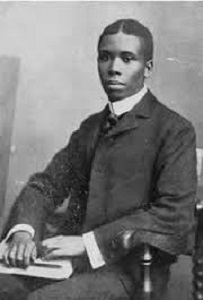
Paul Laurence Dunbar

De Amerikaanse dichter en schrijver Paul Laurence Dunbar werd geboren op 27 juni 1872 in Dayton, Ohio. Dunbar was de zoon van voormalige slaven uit Kentucky. Hij volgde de middelbare school in Dayton; daar was hij de enige Afro-Amerikaan in zijn klas. Een van zijn klasgenoten was Orville Wright, voor wiens familie Pauls moeder werkte. Al tijdens zijn schooltijd gaf hij voor het eerst blijk van zijn literaire talent. Hij was lid van de literaire kring en uitgever van de schoolkrant. Met de steun van de gebroeders Wright was hij in staat om zijn eerste krant “The Dayton Tattler” te publiceren. Na de middelbare school werkte hij, gedwongen door zijn financiële situatie, als liftboy. Op een bijeenkomst van de westerse Vereniging van Schrijvers in 1892 werd hij uitgenodigd door een vroegere leraar om gedichten voor te dragen en hij maakte daarmee zoveel indruk dat hij een aanbevelingsbrief van de beroemde dichter James Whitcomb Riley ontving. In hetzelfde jaar publiceerde hij zijn eerste dichtbundel “Oak and Ivy”. Nadat hij verhuisd was naar Chicago, ontmoette hij Frederick Douglass, die hem omschreef als "the most promising young colored man in America." Dunbars gedichten verschenen in bekende kranten als The New York Times. Met zijn tweede dichtbundel “Majors and Minors” - Majors staat voor tekst in het standaard Engels en Minors voor teksten in dialect - was hij zo succesvol dat hij uitgenodigd werd voor een ​​zes maanden durende lezingentour door Engeland. Na zijn terugkeer in Amerika kreeg hij een baan bij de Library of Congress in Washington. Daar ontmoette hij en trouwde hij met de schrijfster Alice Ruth Moore. In Washington ontstond een roman en twee dichtbundels. Ook schreef hij in deze tijd enkele libretti. Toen bij Dunbar in 1898 tuberculose geconstateerd werd keerde hij terug naar Dayton en wijdde zich uitsluitend aan het schrijven en aan lezingen. In 1902 scheidde hij van zijn vrouw. Dunbar was een van de eerste zwarte dichter die in de Verenigde Staten erkenning gekregen.


The Corn-Stalk Fiddle

When the corn’s all cut and the bright stalks shine
Like the burnished spears of a field of gold;
When the field-mice rich on the nubbins dine,
And the frost comes white and the wind blows cold;
Then its heigho fellows and hi-diddle-diddle,
For the time is ripe for the corn-stalk fiddle.

And you take a stalk that is straight and long,
With an expert eye to its worthy points,
And you think of the bubbling strains of song
That are bound between its pithy joints—
Then you cut out strings, with a bridge in the middle,
With a corn-stalk bow for a corn-stalk fiddle.

Then the strains that grow as you draw the bow
O’er the yielding strings with a practiced hand!
And the music’s flow never loud but low
Is the concert note of a fairy band.
Oh, your dainty songs are a misty riddle
To the simple sweets of the corn-stalk fiddle.

When the eve comes on and our work is done
And the sun drops down with a tender glance,
With their hearts all prime for the harmless fun,
Come the neighbor girls for the evening’s dance,
And they wait for the well-known twist and twiddle,
More time than tune—from the corn-stalk fiddle.

Then brother Jabez takes the bow,
While Ned stands off with Susan Bland,
Then Henry stops by Milly Snow
And John takes Nellie Jones’s hand,
While I pair off with Mandy Biddle,
And scrape, scrape, scrape goes the corn-stalk fiddle.

“Salute your partners,” comes the call,
“All join hands and circle round,”
“Grand train back,” and “Balance all,”
Footsteps lightly spurn the ground,
“Take your lady and balance down the middle”
To the merry strains of the corn-stalk fiddle.

So the night goes on and the dance is o’er,
And the merry girls are homeward gone,
But I see it all in my sleep once more,
And I dream till the very break of dawn
Of an impish dance on a red-hot griddle
To the screech and scrape of a corn-stalk fiddle.

 2042231-37f6d6ccb4b6f78d865b195456020cc9.jpg
Paul Laurence Dunbar (27 juni 1872 - 9 februari 1906)

Geschreven door Romenu om 00:00 Reageer op dit bericht

Teju Cole

De Nigeriaans-Amerikaanse schrijver, fotograaf en kunsthistoricus Teju Cole werd geboren op 27 juni 1975 in Kalamazoo, Michigan. Cole en zijn moeder keerden kort na zijn geboorte terug naar Lagos, Nigeria, waar zijn vader zich na het behalen van zijn MBA aan de Western Michigan University bij hen voegde. Cole ging op 17-jarige leeftijd terug naar de VS om een jaar lang te studeren aan de Western Michigan University, waarna hij overstapte naar Kalamazoo College, waar hij in 1996 zijn bachelor behaalde. Een studie medicijnen aan de Universiteit van Michigan gaf hij op om zichin te schrijven voor een programma Afrikaanse kunstgeschiedenis aan de School of Oriental and African Studies en uiteindelijk behaalde hij een doctoraat in de kunstgeschiedenis aan de Columbia University. Cole schreef drie boeken: een novelle: “Every Day is for the Thief”, een roman, Open City en een verzameling van meer dan 40 essays: “Known and Strange Things”, gepubliceerd in 2016. Van juni tot november 2014 was hij 'writer in residence' van de Literaturhaus Zürich en de PWG Foundation in Zurich. “Open City” werd vertaald in tien talen en over het algemeen door de critici positief ontvangen. Cole levert regelmatig bijdragen aan The New York Times, Qarrtsiluni, Granta, The New Yorker, Transition, The New Inquiry, en A Public Space en hij is fotografie criticus van New York Times Magazine.

Uit: Open City

“And so when I began to go on evening walks last fall, I found Morningside Heights an easy place from which to set out into the city. The path that drops down from the Cathedral of St. John the Divine and crosses Morningside Park is only fifteen minutes from Central Park. In the other direction, going west, it is some ten minutes to Sakura Park, and walking northward from there brings you toward Harlem, along the Hudson, though traffic makes the river on the other side of the trees inaudible. These walks, a counterpoint to my busy days at the hospital, steadily lengthened, taking me farther and farther afield each time, so that I often found myself at quite a distance from home late at night, and was compelled to return home by subway. In this way, at the beginning of the final year of my psychiatry fellowship, New York City worked itself into my life at walking pace.
Not long before this aimless wandering began, I had fallen into the habit of watching bird migrations from my apartment, and I wonder now if the two are connected. On the days when I was home early enough from the hospital, I used to look out the window like someone taking auspices, hoping to see the miracle of natural immigration. Each time I caught sight of geese swooping in formation across the sky, I wondered how our life below might look from their perspective, and imagined that, were they ever to indulge in such speculation, the high-rises might seem to them like firs massed in a grove. Often, as I searched the sky, all I saw was rain, or the faint contrail of an airplane bisecting the window, and I doubted in some part of myself whether these birds, with their dark wings and throats, their pale bodies and tireless little hearts, really did exist. So amazed was I by them that I couldn’t trust my memory when they weren’t there.
Pigeons flew by from time to time, as did sparrows, wrens, orioles, tanagers, and swifts, though it was almost impossible to identify the birds from the tiny, solitary, and mostly colorless specks I saw fizzing across the sky. While I waited for the rare squadrons of geese, I would sometimes listen to the radio. I generally avoided American stations, which had too many commercials for my taste — Beethoven followed by ski jackets, Wagner after artisanal cheese — instead tuning to Internet stations from Canada, Germany, or the Netherlands. And though I often couldn’t understand the announcers, my comprehension of their languages being poor, the programming always met my evening mood with great exactness. Much of the music was familiar, as I had by this point been an avid listener to classical radio for more than fourteen years, but some of it was new. There were also rare moments of astonishment, like the first time I heard, on a station broadcasting from Hamburg, a bewitching piece for orchestra and alto solo by Shchedrin (or perhaps it was Ysaÿe) which, to this day, I have been unable to identify.


 1974069-082eb1c5aa6f8da1d398effd1a0fbedc.JPG
Teju Cole (Kalamazoo, 27 juni 1975)


Geschreven door Romenu om 00:00 Reageer op dit bericht

Frank O'Hara

De Amerikaanse dichter, schrijver en kunstcriticus Francis Russell "Frank" O'Hara werd geboren op 27 juni 1926 in Baltimore als zoon van Russell Joseph O'Hara en Katherine (née Broderick) en groeide op in Grafton, Massachusetts. Hij bezocht de St. John's High School. Eigenlijk was hij geboren maart, maar zijn ouders hadden zijn ware geboortedatum veranderd omdat hij verwekt werd buiten het huwelijk. Hij studeerde piano aan het New England Conservatory in Boston in de jaren 1941-1944 en diende in de Stille Zuidzee en Japan op de destroyer USS Nicholas tijdens WO II. Met de financiële middelen die voor veteranen ter beschikking werden gesteld ging hij naar Harvard University, waar de kunstenaar en schrijver Edward Gorey zijn kamergenoot was. O'Hara werd sterk beïnvloed door de beeldende kunst en hedendaagse muziek, die zijn eerste liefde was (hij bleef zijn hele leven een goede pianist). Zijn favoriete dichters waren Pierre Reverdy, Arthur Rimbaud, Stéphane Mallarmé, Boris Pasternak en Vladimir Majakovski. Op Harvard ontmoette O'Hara John Ashbery en begon hij met het publiceren van gedichten in de Harvard Advocate. Ondanks zijn liefde voor muziek veranderde O'Hara zijn hoofdvak en hij studeerde af in 1950 met een graad in Engels. Daarna bezocht hij de Universiteit van Michigan in Ann Arbor. In Michigan won hij een Hopwood Award en behaalde hij zijn MA in Engelse literatuur in 1951. In de herfst verhuisde O'Hara naar een appartement in New York City met Joe LeSueur, die zijn kamergenoot en soms minnaar zou zijn voor de komende 11 jaar. Het was in deze tijd dat hij begon les te geven aanThe New School. O'Hara was actief in de kunstwereld, werkte als recensent voor ARTnews, en in 1960 was hij assistent-conservator expositie schilderijen en beeldhouwwerken van het Museum of Modern Art. Hij was ook bevriend met de kunstenaars Willem de Kooning, Norman Bluhm, Larry Rivers en Joan Mitchell. In de vroege ochtenduren van 24 juli 1966, werd O'Hara aangereden door een jeep op het strand Fire Island. Hij stierf de volgende dag aan een gescheurde lever. Zijn poëzie toont de invloed van abstract expressionisme, surrealisme, de Russische poëzie en dichters van het Franse symbolisme en door William Carlos Williams. O’Hara wordt beschouwd als een leidende figuur in de New York School-een informele groep van kunstenaars, schrijvers en muzikanten die inspiratie putte uit jazz, surrealisme, abstract expressionisme, action painting en hedendaagse avant-gardistische kunststromingen.


Why I Am Not A Painter

I am not a painter, I am a poet.
Why? I think I would rather be
a painter, but I am not. Well,

for instance, Mike Goldberg
is starting a painting. I drop in.
"Sit down and have a drink" he
says. I drink; we drink. I look
up. "You have SARDINES in it."
"Yes, it needed something there."
"Oh." I go and the days go by
and I drop in again. The painting
is going on, and I go, and the days
go by. I drop in. The painting is
finished. "Where's SARDINES?"
All that's left is just
letters, "It was too much," Mike says.

But me? One day I am thinking of
a color: orange. I write a line
about orange. Pretty soon it is a
whole page of words, not lines.
Then another page. There should be
so much more, not of orange, of
words, of how terrible orange is
and life. Days go by. It is even in
prose, I am a real poet. My poem
is finished and I haven't mentioned
orange yet. It's twelve poems, I call
it ORANGES. And one day in a gallery
I see Mike's painting, called SARDINES.


Homosexuality

So we are taking off our masks, are we, and keeping
our mouths shut? as if we'd been pierced by a glance!

The song of an old cow is not more full of judgment
than the vapors which escape one's soul when one is sick;

so I pull the shadows around me like a puff
and crinkle my eyes as if at the most exquisite moment

of a very long opera, and then we are off!
without reproach and without hope that our delicate feet

will touch the earth again, let alone "very soon."
It is the law of my own voice I shall investigate.

I start like ice, my finger to my ear, my ear
to my heart, that proud cur at the garbage can

in the rain. It's wonderful to admire oneself
with complete candor, tallying up the merits of each

of the latrines. 14th Street is drunken and credulous,
53 rd tries to tremble but is too at rest. The good

love a park and the inept a railway station,
and there are the divine ones who drag themselves up

and down the lengthening shadow of an Abyssinian head
in the dust, trailing their long elegant heels of hot air

crying to confuse the brave "It's a summer day,
and I want to be wanted more than anything else in the world."


 1949219-b040db40fcc416155976a6ae9609cb3c.jpg
Frank O'Hara (27 juni 1926 - 25 juli 1966)

Geschreven door Romenu om 00:00 Reageer op dit bericht

Aimé Césaire, Jacqueline van der Waals, Yves Beauchemin, Elisabeth Büchle, Laurie Lee, Pearl S. Buck

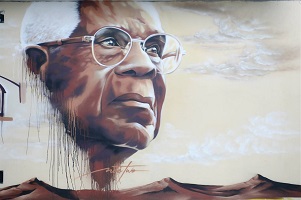
De Afrocaraïbische schrijver en politicus Aimé Césaire werd geboren op 26 juni 1913 in Basse-Pointe, Martinique. Zie ook alle tags voor Aimé Césaire op dit blog.


The Woman and the Flame

A bit of light that descends the springhead of a gaze
twin shadow of the eyelash and the rainbow on a face
and round about
who goes there angelically
ambling
Woman the current weather
the current weather matters little to me
my life is always ahead of a hurricane
you are the morning that swoops down on the lamp a night stone
   between its teeth
you are the passage of seabirds as well
you who are the wind through the salty ipomeas of consciousness
insinuating yourself from another world
Woman
you are a dragon whose lovely color is dispersed and darkens so
   as to constitute the
inevitable tenor of things
I am used to brush fires
I am used to ashen bush rats and the bronze ibis of the flame
Woman binder of the foresail gorgeous ghost
helmet of algae of eucalyptus
                             dawn isn’t it
                             and in the abandon of the ribbands
                             very savory swimmer

Vertaald door Clayton Eshleman


Mississipi

Too bad for you men who don’t notice that my eyes remember
slings and black flags
which murder with each blink of my Mississipi lashes

Too bad for you men who do not see who do not see anything
not even the gorgeous railway signals formed under my eyelids by the black and red discs
of the coral snake that my munificence coils in my Mississipi tears

Too bad for you men who do not see that in the depth of the reticule where chance has
deposited our Mississipi eyes

there waits a buffalo sunk to the very hilt of the swamp’s eyes
Too bad for you men who do not see that you cannot stop me from building to his fill

egg-headed islands of flagrant sky
under the calm ferocity of the immense geranium of our sun.

Vertaald door Clayton Eshleman en A. James Arnold


 1929692-1529b1974ed52e3393d315e19c8a1265.jpg
Aimé Césaire (26 juni 1913 – 17 april 2008)
Muurschildering in Bagnolet, Frankrijk


De Nederlandse dichteres Jacqueline Elisabeth van der Waals werd geboren op 26 juni 1868 in Den Haag. Zie ook alle tags voor Jacqueline van der Waals op dit blog.


Afscheid

Eén ogenblik van het voorbije leven
Als voor 't bewogen spiegelvlak te staan
Van rimplend water, dat met stadig beven,
Het beeld, eer het tot stand komt, doet vergaan.
De vorm te zien, die in het water drijft,
Onzuiver zo van kleuren als contouren,
Die, vluchtig bij het allerlichtst beroeren,
Geen wezen heeft, dat in zichzelf beklijft...

En heen te gaan - en niets dat achter blijft
Dan dingen, die wij meenden te bezitten,
En niet ons eigen waren, die als klitten
Nog hechten in de plooien van ons kleed,
Maar die wij van ons doen, zoals we leed
En bitterheid en zorgen van ons deden,
Als niet van ons, als dingen van 't verleden...

Een oogwenk voor het vlottend watervlak te staan
En naar 't verwarde spiegelbeeld te staren,
Dat nog de trekken draagt, die de onze waren,
En stil en eenzaam heen te gaan.


Avondnevel

O, die blinkend witte nevel over de venen! de uitgestrekte,
Grote, stille nevelzee, wier waatren de aarde bedekten!

Wij liepen des avonds tegen
De tijd, dat de zon onderging,
Samen op stille wegen
Door het moeras en zwegen
Van verwondering.
Slechts hoopjes turf en daken
Van donkere huisjes staken
Zwart uit de nevel omhoog.
Ze was zo stil, zo zonderling,
Die zee, waar niets bewoog.

O, die zwarte, grillige heuvelkust,
Die met haar brede lijn,
Scheidde de blinkende nevelrust
Van 't gloeiende karmijn!
Want boven de donkere landen
Stond vuurrood de hemel te branden
Met onheilspellende schijn.

Ik werd onrustig en ik zocht
Een woord, dat de stilte verbreken mocht.
Ik keek in de zon, in het nevelmeer....
Het zwijgen werd pijnlijk.
De avond, de aarde, mijn leven werd zeer,
zeer onwaarschijnlijk.


 1929692-3d5d3a688d02239c87fa670e447b81f8.jpg
Jacqueline van der Waals (26 juni 1868 – 29 april 1922)
Cover 


De Canadese schrijver Yves Beauchemin werd geboren op 26 juni 1941 in Rouyn-Noranda, Quebec. Zie ook alle tags voor Yves Beauchemin op dit blog.

Uit: Le Matou

“-Qu'est-ce que je vais faire de tout cet alphabet? se demandait Florent, de plus en plus intrigué.
- Va la vendre dans un magasin d'antiques, lui suggéra Slipskin et il lui fournit sur-le-champ l'adresse de l'établissement de son père.
Deux jours passèrent. la générosité de son bienfaiteur ne donnait pas de signes de fatigue. Florent résolut d'aller au fond de l'affaire et de recevoir lui-même son prochain colis. Il se leva à l'aube et s'installa à son bureau devant une tasse de café.
À six heures vingt, il entendit une auto stopper devant Musipop. Bondissant de sa chaise, il courut ouvrir la porte et se retrouva nez à nez avec un infirme loqueteux, à la barbe hirsute, au visage creusé, qui le regardait d'un air stupide, la bouche béante.
- Mo... mo... mossieu Bwazono, bafouilla-t-il en lui tendant un colis, pendant que l'auto démarrait avec fracas.
Florent le considéra un instant, puis se retira dans le bureau. L'infirme déposa le colis par terre et s'avança au milieu de la rue, tournant la tête de tous côtés, complètement désemparé.
(…)

- Votre père sur la deuxième ligne, fit mademoiselle Relique dont la voix, aggravée par le récepteur, avait la douceur de la broche piquante.
- Salut, lança Florent, je m'achète un restaurant.
- Hein ? Quoi ? Que c'est que tu me dis là ?
- Oui, je m'achète une restaurant. La Binerie, sur la rue Mont-Royal.
- Es-tu sérieux ? La Binerie ? C'est un très bon spot, ça. J'allais manger là durant la guerre. Mais tu veux rire. Jamais je ne croirai…
- Je te raconterai. Pour l'instant, je suis un peu pressé. Dis donc, tu connais un peu le milieu des affaires, toi… As-tu déjà entendu parler d'un bonhomme du nom d'Egon Ratablavasky ?
- Egon quoi ? Minute! Laisse-moi prendre un crayon et répète-moi ça lentement, mon blond. Je vais m'informer, fit-il après avoir noté. Fie-toi sur moi, j'ai le nez long et le bras sans fin. Ah oui! Pendant que j'y pense : ta mère fait demander si vous venez souper dimanche? "


 1929692-fbfd545097d7ea63eec80e8f6d975f84.jpg
Yves Beauchemin (Rouyn-Noranda, 26 juni 1941)


De Duitse schrijfster Elisabeth Büchle werd geboren op 26 juni 1969 in Trossingen, Baden-Württemberg. Zie ook alle tags voor Elisabeth Büchle op dit blog.

Uit: Unter dem Polarlicht

„Die künstliche Beleuchtung des Büros im Bankgebäude surrte leise vor sich hin, während Chiara Kilians Finger der Tastatur ein schnelles Stakkato an Klackgeräuschen abverlangte. Die Frau auf dem Stuhl gegeniiber rutschte unruhig umher. Sie hatte ihr Anliegen geschäftsmäßig und detailliert vorgetragen, doch nun verriet ihre Körpersprache ihre innere Aufregung.
Chiara lächelte die Eingabemaske mehr traurig als fröhlich an.
Sie fand Noa Schochs Idee von einem Blumen-Geschenk-Bücher-Café in einem reinen Wohngebiet in Freiburg interessant, ahnte jedoch, dass die Finanzierung durch die Bank, bei der Chiara morgen genau ein halbes Jahr angestellt war, nicht zustande kommen würde. Mit ihren 22 Jahren war Noa noch ein Jahr jünger als Chiara und hatte bis auf eine gut durchdachte und bezaubernde Geschäftsidee keine Sicherheiten vorzuweisen.
Sie wollte der hübschen Rothaarigen gerade mitteilen, wie gering ihre Chancen waren. als es an der Tür klopfte. Einer der neuen Auszubildenden - ihr Namensgedächtnis verweigerte wieder einmal seinen Dienst - kam herein und sagte, ohne die Kundin zu beachten: „Frau Kilian, Sie werden von Herrn Meier erwartet.“
„Zwei Minuten, bitte“, erwiderte Chiara Freundlich und warf Noa einen cntschulcligenden Blick zu.
„Er sagte aber sofort!“, widersprach der jugendliche und trat neben sie, als plane er, ihr den Drehstuhl unter dem Hintern wegzuziehen. „Ich kümmere mich so lange um „Frau Schoch“. brummte Chiara und stand auf. Dieser junge Mann würde es weit bringen, dessen war sie sich gewiss. „Entschuldigen Sie mich bitte. Ich bin gleich wieder für Sie da.“


 1929692-486ddef52e8ba34b0a4da83577f522a1.JPG
Elisabeth Büchle (Trossingen, 26 juni 1969)


De Engelse dichter en schrijver Laurence Edward Alan "Laurie" Lee werd geboren in Stroud, Gloucestershire op 26 juni 1914. Zie ook alle tags voor Laurie Lee op dit blog.


Day of These Days

Such a morning it is when love
leans through geranium windows
and calls with a cockerel's tongue.

When red-haired girls scamper like roses
over the rain-green grass;
and the sun drips honey.

When hedgerows grow venerable,
berries dry black as blood,
and holes suck in their bees.

Such a morning it is when mice
run whispering from the church,
dragging dropped ears of harvest.

When the partridge draws back his spring
and shoots like a buzzing arrow
over grained and mahogany fields.

When no table is bare,
and no beast dry,
and the tramp feeds on ribs of rabbit.


 1929692-4d1fdf25fb35a060de90c56eb829fa16.jpg
Laurie Lee (26 juni 1914 – 13 mei 1997)


De Amerikaanse schrijfster Pearl S. Buck werd geboren in Hillsboro West-Virginia, op 26 juni 1892. Zie ook alle tags voor Pearl S. Buck op dit blog en eveneens alle tags voor P. S. Buck.

Uit: The good earth

“And out of his heaviness there stood out strangely but one clear thought and it was a pain to him, and it was this, that he wished he had not taken the two pearls from O-lan that day when she was washing his clothes at the pool, and he would never bear to see Lotus put them in her ears again.”
(…)

“When the rich are too rich there are ways, and when the poor are too poor there are ways. Last winter we sold two girls and endured, and this winter, if this one my woman bears is a girl, we will sell again. One slave I have kept—the first. The others it is better to sell than to kill, although there are those who prefer to kill them before they draw breath. This is one of the ways when the poor are too poor. When the rich are too rich there is a way, and if I am not mistaken, that way will come soon.”
(…)

“Spring passed and summer passed into harvest and in the hot autumn sun before winter comes Wang Lung sat where his father had sat against the wall. And he thought no more about anything now except his food and his drink and his land. But of his land he thought no more what harvest it would bring or what seed would be planted or of anything except of the land itself, and he stooped sometimes and gathered some of the earth up in his hand and he sat thus and held it in his hand, and it seemed full of life between his fingers. And he was content, holding it thus, and he thought of it fitfully and of his good coffin that was there; and the kind earth waited without haste until he came to it.”


 1929692-90dbbcaa0fbf52cdf15549df991f3fc8.jpg
Pearl S. Buck (26 juni 1892 – 6 maart 1973) 


Zie voor nog meer schrijvers van de 26e juni ook mijn vorige blog van vandaag.


Geschreven door Romenu om 11:37 Reageer op dit bericht

Stefan Andres, Martin Andersen-Nexø, Branwell Brontë, Bankim Chandra Chatterjee, Sunthorn Phu, Sidney Howard

Duitse schrijver Stefan Andres werd geboren op 26 juni 1906 in Breitwies bij Trier. Zie ook alle tags voor Stefan Andres op dit blog.

Uit: Wir sind Utopia

“Die enge, düstere Gassenrinne fuhr der Wagen langsam dahin, wiewohl kein Mensch, weder Zivilist noch Soldat, ihm begegnete. Auf dem weiten, gleißenden Platz nahm er die Kehre, und im Schatten vor der Freitreppe der in ihrem starrenden Prunk unfreudig wirkenden Barockfassade des Karmeliterklosters stand er dann still.
Unter der Pforte erschien auf das groblässige Signal des Wagens hin ein Offizier, von einem Sergeanten und einem Soldaten begleitet, welche die Ankömmlinge mit düster gleichmütigen Blicken empfingen.
Die sechs Bajonette sprangen sofort auf das Pflaster, ein Kommando schnarrte, und die Lehmgestalten erhoben sich mühsam, traten ein paarmal hin und her und sprangen ebenfalls, nachdem sie die eingeschlafenen Füße zuvor möglichst tief hatten herabkommen lassen, vorsichtig auf das Pflaster.
Es waren über zwanzig Gefangene, die im Karmeliterkloster untergebracht werden sollten. Seine Geräumigkeit und vergitterten Fenster machten den Bau für seine neue Bestimmung noch geeigneter; zudem lag das Kloster mit der Hinterfront an der Stadtmauer, und da ging es aus den Fenstern des ersten Stockes über fünfzehn Meter tief jäh hinunter. Das war ein weiterer Vorteil für die Wachhabenden, denn das etwa zweihundert Gefangene beherbergende Lager konnte so mit einer schwachen Besatzung auskommen, die in der Tat nur aus einem Leutnant, einem Sergeanten und zwei Soldaten bestand.
Freilich lagen in der Stadt noch einige Fliegerabwehrbatterien und leichte Kraftfahrverbände, die auf den Einsatz warteten.“


 1929688-022f7d88c01513629c2f466a0ec97ae3.jpg
Stefan Andres (26 juni 1906 - 29 juni 1970)


De Deense schrijver Martin Andersen-Nexø werd geboren op 26 juni 1869 in Kopenhagen. Zie ook alle tags voor Martin Andersen-Nexø op dit blog.

Uit:Die Passagiere der leeren Plätze (Vertaald door Ellen Schou en Karl Schodder)

„Aber eines Tages hielt ich dann doch eine gewaltige Summe Geldes in der Hand: vierhundert Kronen, für die ich nach Italien fahren sollte; die unfassbar gutherzige Frau hatte sie herangeschafft. Es ist nicht zu sagen, wie mir zumute war; dem Tode war ich entschlüpft, und dem noch Schlimmeren — der Sklaverei — ebenfalls! Wie ein Sperling, der durch wunderbaren Zufall aus dem Rachen der Katze entkommt, flatterte ich davon, halbtot, aber froh und warm im Herzen. Ich war — im letzten Augenblick — auf die Sonnenseite des Daseins versetzt worden; jetzt war ich an der Reihe, Sonne zu schlecken!
Aber war da Platz für mich? Und würden jene, die dort schon saßen, mit mir zu tun haben wollen — oder würden sie mich hetzen wie einen fremden Köter, der dort nichts zu suchen hätte?
Es war ganz merkwürdig, ins Lager der Auserwählten versetzt zu werden, zu denen, deren Leben so viel mehr galt, dass Reisen in den Süden dafür aufgewendet wurden. Wenn ich auch nur dritter Klasse fuhr, so nahm sich vor dem Hintergrund des Zwecks der Reise doch alles ganz anders aus. Mein Leben sollte gerettet werden, während alle die anderen, meine Leidensgefährten, in ihrem Elend stecken blieben! Ich empfand zugleich ein Gefühl des Auserwähltseins und der Fahnenflucht — der Treulosigkeit gegenüber allen jenen, mit denen ich ein Schicksal gemeinsam hatte.
Und ich war aus meiner Arme-Leute-Ergebenheit herausgerissen worden. Ich entdeckte rasch, dass es auf der Sonnenseite des Daseins Platz genug gab, für mich und viele andere; überall fuhren die Züge halbleer, während jene, die hätten mit dabei sein sollen, irgendwo im Dunkel saßen und verkamen. Warum wagten sie sich nicht hervor und machten ihr Recht geltend? Und warum war ich selber so geniert und verschüchtert, als ob ich ein Schmarotzer wäre?
Schon die erste Nacht der Reise von der schleswigschen Grenze bis zur Hauptstadt wurde mir zu einer unvergesslichen Lektion, mich nicht deshalb als auserwählt zu betrachten, weil ich zufällig einem Menschen begegnet war, der in mein Schicksal eingegriffen und mich aus meinem Zusammenhang, aus dem Zusammenhang des Elends herausgerissen hatte.“


 1929688-ff195503e6dc105c30df478555030e50.jpg
Martin Andersen-Nexø (26 juni 1869 – 1 juni 1954)
Portret door Knud Aage Larsen, 1934.


De Engelse dichter en schilder Branwell Brontë werd op 26 juni 1817 geboren in Thornton, Yorkshire. Zie ook alle tags voor Branwell Brontë op dit blog.


Epistle To The Labouring Poor (Fragment)

Your mean attire and scanty fare
Are, doubtless, springs of bitter care,
Expose you blushing, trembling, bare,
To haughty scorn;
Yet murmur not in black despair,
Nor weep forlorn.

You see that lordling glittering ride
In all the pomp of wealth and pride,
With lady lolling at his side,
And train attendant:
'Tis all, when felt and fairly tried,
But care resplendent.

As riches grow his wants increase,
His passions burn and gnaw his peace,
Ambition foams like raging seas
And breaks the rein,
Excess produces pale disease
And racking pain.

Compared with him thrice happy you;
Though small your stock your wants are few,
Each wild desire your toils subdue,
And sweeten rest,
Remove all fancied ills from view,
And calm your breast.


 1929688-5d350f79692871652a7e965a616074b0.jpg
Branwell Brontë (26 juni 1817 – 24 september 1848)


De Bengaals – Indische dichter, schrijver, essayiste en journalist Bankim Chandra Chatterjee werd geboren op 26 juni 1838 in Kanthalpura. Zie ook alle tags voor Bankim Chandra Chatterjee op dit blog.

Uit: The Poison Tree (Vertaald door Miriam S. Knight)

“It was not quite an ordinary house, but it had no sign of prosperity. The door-frames were broken and dirty; there was no trace of human occupation—only owls, mice, reptiles, and insects gathered there. The light came only from one side. Nagendra saw some articles of furniture for human use; but everything indicated poverty. One or two cooking vessels, a broken oven, three or four brass dishes—these were the sole ornaments of the place. The walls were black; spiders' webs hung in the corners; cockroaches, spiders, lizards, and mice, scampered about everywhere. On a dilapidated bedstead lay an old man who seemed to be at death's door; his eyes were sunk, his breath hurried, his lips trembling. By the side of his bed stood an earthen lamp upon a fragment of brick taken from the ruins of the house. In it the oil was deficient; so also was it in the body of the man. Another lamp shone by the bedside—a girl of faultlessly fair face, of soft, starry beauty.
Whether because the light from the oil-less lamp was dim, or because the two occupants of the house were absorbed in thinking of their approaching separation, Nagendra's entrance was unseen. Standing in the doorway, he heard the last sorrowful words that issued from the mouth of the old man. These two, the old man and the young girl, were friendless in this densely-peopled world. Once they had had wealth, relatives, men and maid servants—abundance of all kinds; but by the fickleness of fortune, one after another, all had gone. The mother of the family, seeing the faces of her son and daughter daily fading like the dew-drenched lotus from the pinch of poverty, had early sunk upon the bed of death. All the other stars had been extinguished with that moon. The support of the race, the jewel of his mother's eye, the hope of his father's age, even he had been laid on the pyre before his father's eyes. No one remained save the old man and this enchanting girl. They dwelt in this ruined, deserted house in the midst of the forest. Each was to the other the only helper.”


 1929688-f6cc571363ce990a43076b5d23fc9153.jpg
Bankim Chandra Chatterjee (26 juni 1838 – 8 april 1894)
Cover 


De Thaise dichter Sunthorn Phu werd geboren op 26 juni 1786 in Bangkok. Zie ook alle tags voor Sunthorn Phu op dit blog.

Uit: Phra Aphai Mani (Vertaald door Prince Prem Burachat)

“The two pupils made rapid advance in their studies. The professor of music took Phra Abhai Mani to the top of a mountain to play his flute, and what he learned was no common kind of flute-playing.
When he played, all the wild animals in the forest - even tigers and elephants - forgot to eat and came to listen, enraptured by the magic notes that came out of the musical instrument. Within seven months, Phra Abhai Mani had completely mastered the art of music, with which he could charm the hearts of men and lull them to sleep or make them fall in with his desires. His instruction finished, the professor handed him back his ring : he desired no payment from a pupil such as Phra Abhai Mani. So Phra Abhai Mani, full of gratitude, took leave of him and rejoined his brother, who had likewise completed his course. Sri Suvarna now knew all there was to be known about military tactics and could handle any weapon with infinite skill. He had als o been handed back his ring on completing his studies. There was nothing to prevent the two brothers from returning to their father's palace with all due speed.
On their arrival, they went straight to the hall where Sudasna was giving audience. As soon as the Prince saw his sons, he beamed with pleasure, and called them to his side. At once he began to ask how they had fared. But when he heard how his elder son has been learning to play the flute, and his younger son had spent his time wielding common weapons, his pleasure turned to anger, and, stamping his royal foot, said in his rage
"I do not wish to hear an not wish to hear any more! Music! Music is fit only for hired minstrels and entertainers. Why, even the women in my palace can learn to play music. And a knowledge of common weapons is suitable only for common soldiers. What have the sons of princes to do with such things? You have both put me to shame. I cannot let you stay in my palace. I ought to drive you out. You have been away a whole year, wasting your time, and then you come to annoy me with your foolish talk.”


 1929688-dbe4e3d5fc22846730197be103e02a92.jpg
Sunthorn Phu (26 juni 1786 - ? 1855)
Beeld in het wassenbeelden museum in Nakhon Pathom


De Amerikaanse toneel- en draaiboekschrijver Sidney Howard werd geboren op 26 juni 1891 in Oakland, Californië. Zie ook alle tags voor Sidney Howard op dit blog.

Uit: The Story Gets a Treatment

“The talking picture should, if possible, never pause to talk about itself. This is a lesson which many directors and writers in Hollywood have still to learn. One still sees too many picture scenes which are no more than photographed play scenes. By this I mean scenes in which the director has deluded himself into the belief that he is satisfying the action demands of the picture medium by moving his camera round and about a theater stage and cutting from close-up of A to close-up of B.
Dialogue scenes of talking pictures should be written as though each were a full-rate cable, for every word of which the writer has to pay out of his own pocket.
Length hangs like doom over any picture. All producers and directors seem to have one weakness in common. They are unwilling to face the fact that their scripts are too long, and proceed in the delusion that they will not need cutting after the film has been shot and put together. The picture which is cut to length in script can be smoothly cut and the cuts blended over so that they will not afterwards be apparent. The picture which is shot from an over-length script and cut after it has been put together will always show the bad joints of crude carpentry.
The day of important original screenplays is near, when our O'Neills and Kaufmans will be writing for the screen as independently as they now write for the stage and arranging for their productions, not out of deference to the higher weekly salary, but with the same greed for the best artistic conditions of cast and direction which they now impose upon the theater. This is inevitable because the best talents for producing, directing and acting have already been drawn to the screen. In the screen drama that is to come, the director will continue his domination, at least until the screen has welded director and screenwriter into a single individual. But the writer's side of this superman will still play second fiddle and screen drama will not be literature but something else, something new. It is always a sound idea in art, as in life, to welcome anything new when it is good, and motion pictures seem bent on growing better and better."


 1929688-f63d200d4f66a4fb4a9f3e09fdb242dd.jpg
Sidney Howard (26 juni 1891 – 23 augustus 1939)

Geschreven door Romenu om 11:36 Reageer op dit bericht

Meer van Romenu

↑ Terug naar de berichten