Naar de inhoud

Romenu

Over literatuur, gedichten, kunst en cultuur
akke.beakke.be

Berichten van 1 maart 2017 tot 2 maart 2017

Godfried Bomans, Multatuli, Frank Albers, John Irving, Thom Wolfe, Michael Salinger, János Arany, Olivia Manning, Rinske Kegel
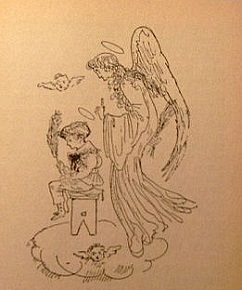
De Nederlandse schrijver Godfried Bomans werd geboren in Den Haag op 2 maart 1913. Zie ook alle tags voor Godfried Bomans op dit blog.

Uit: Pieter Bas

“Doch mijn moeder keek hem stralend aan en noemde hem een malle.

Ik heb later meermalen de gelegenheid gehad op te merken hoe gering de belangstelling van vrouwen is in zaken van politieke strekking. Zelfs mijn eigen lieve Catharina kende het verschil niet tussen de Eerste en Tweede Kamer, en wanneer het gesprek die kant opging werd zij onrustig en trachtte de aandacht te vestigen op de jampot of op andere voorwerpen welke in generlei verband stonden met het besprokene. Misschien is dit te verklaren uit een zekere vrees voor de ernst van het leven. In elk geval is het beter terug te keren tot de loop der gebeurtenissen, waarvan mijn geboorte het begin was.
Ik moet die eerste dag geweldig geschreeuwd hebben; doch daar het juist de verjaardag van koning Willem III was, stak hierin niets opvallends. Van dat eerste levensjaar kan ik mij, hetgeen te verontschuldigen is, niets herinneren. Het is het noodlot van memoires dat zij haperen op de twee belangrijkste punten: het einde en het begin, de dood en de geboorte. Omtrent het eerste kan de schrijver niets mededelen zonder met zichzelf in tegenspraak te geraken en omtrent het laatste is hij letterlijk genoodzaakt zich naar bakerpraatjes te richten. De bijzonderheden, die ik nochtans weet, zijn mij overgeleverd bij monde van Anna, een grote dikke vrouw, waarvan ik mij alleen haar twee blinkende zwarte ogen herinner. Ik moet dan een bijzonder groot hoofd gehad hebben, dat ik reeds toen gewoon was een weinig schuin te houden, een gewoonte waarvan, zoals ge weet, duur mijn politieke tegenstanders zulk een laaghartig gebruik is gemaakt.
Naar aanleiding hiervan schijnt mijn oom Jozef in scherts gezegd te hebben dat er nog een minister uit mij Zou groeien. Deze voorspelling kwam mij echter pas ter ore toen ik minister was, hetgeen de betrouwbaarheid aanzienlijk vermindert. Een neiging tot spelen schijn ik niet gehad te hebben; gewoonlijk lag ik stil op mijn rug naar boven te kijken ‘alsof ik over iets nadacht’. Ik groeide snel op en reeds in mijn eerste jaar kon ik lopen. Ook mijn bevattingsvermogen was al vroeg rijp; zo zal ik wel de enige in Holland zijn die zich de begrafenis van burgemeester Sanders weet te herinneren. Hij stierf toen ik drie jaar was en ik kan mij de stoet nog zeer goed voorstellen.”


 2013640-0bdbe21cf016f6c1fc66aeec3379ff24.jpg
Godfried Bomans (2 maart 1913 - 22 december 1971)
Ilustratie uit Pieter Bas door Harry Prenen


De Nederlandse schrijver Multatuli (pseudoniem van Eduard Douwes Dekker werd geboren in Amsterdam op 2 maart 1820. Zie ook alle tags voor Multatuli op dit blog.

Uit: Max Havelaar

“Een meisje wier vader bankroet maakte, werkt om de familie te onderhouden. Heel goed. Daar zit ze dan te naaien, te breien of te borduren. Maar tel nu eens de steken die ze doet gedurende het hele bedrijf. Ze praat, ze zucht, ze loopt naar 't venster, maar werken doet ze niet. De familie die van deze arbeid leven kan, heeft weinig nodig. Zo'n meisje is natuurlijk de heldin. Ze heeft enige verleiders de trappen afgeworpen, ze roept gedurig: `O mijne moeder, o, mijne moeder!' en stelt dus de deugd voor. Wat is dat voor een deugd, die een vol jaar nodig heeft voor een paar wollen kousen? Geeft dit alles niet valse denkbeelden van deugd, en `werken voor de kost'? Alles gekheid en leugens!
Dan komt haar eerste minnaar -- die vroeger klerk was aan 't kopieboek, maar nu schatrijk -- opeens terug, en trouwt haar. Ook weer leugens. Wie geld heeft, trouwt geen meisje uit een gefailleerd huis. En als ge meent, dat dit op het toneel er door kan als uitzondering, blijft toch mijn aanmerking bestaan, dat men de zin voor waarheid bederft bij het volk, dat de uitzondering als regel aanneemt, en dat men de publieke zedelijkheid ondermijnt, door het te gewennen iets toe te juichen op het toneel, wat door elk fatsoenlijk makelaar of koopman voor een bespottelijke krankzinnigheid wordt gehouden in de wereld Toen ik trouwde, waren wij op 't kantoor van mijn schoonvader -- Last & Co. -- met ons dertienen, en er ging wat om!
En nog meer leugens op het toneel. Als de held met zijn stijve komediestap weggaat om 't verdrukte vaderland te redden, waarom gaat dan de dubbele achterdeur altijd vanzelf open? En verder, hoe kan de persoon die in verzen spreekt, voorzien wat de ander te antwoorden heeft, om hem 't rijm gemakkelijk te maken? Als de veldheer tot de prinses zegt: `Mevrouw, het is te laat, de poorten zijn gesloten', hoe kan hij dan voor uit weten, dat zij zeggen wil: `Welaan dan, onversaagd, men doe het zwaard ontbloten'? Want als zij nu eens, horende dat de poort toe was, antwoordde dat ze dan wat wachten zou tot er geopend werd, of dat zij een andermaal eens terug zou komen, waar bleef dan maat en rijm Is het dus niet een pure leugen, als de veldheer de prinses vragend aanziet, om te weten wat ze doen wil na 't poortsluiten? Nogeens: als 't mens nu eens lust had gehad te gaan slapen, in plaats van iets te ontbloten? Alles leugens!”


 2013640-a457af9ca4114d401cb20f49d8202574.jpg
Multatuli (2 maart 1820 - 19 februari 1887)
Peter Faber als Max Havelaar in de film van Fons Rademakers uit 1976.


De Vlaamse schrijver Frank Albers werd geboren op 2 maart 1960 in Schoten. Zie ook alle tags voor Frank Albers op dit blog.

Uit:Caravantis

“Hi!
Noem mij Faust. Benjamin Faust. Ik ben briljant. Luister.
Gooi uw leven aan de kant. Uw uitgeteerde dromen, uw afgetrapte gedachten, uw voorspelbare verwachtingen, uw banale driften, uw brochureverlangens, uw mediameningen, uw huisdierengeluk. Dat hele miezerige bestaan van u: weg ermee. Wie niet leeg is kan niet lezen.
Neem koffie. Sluit de ramen. Zet uw televisie uit. ZET UW TELEVISIE UIT.
Daar zit u dan, nieuwsgierig en sterfelijk, in uw lkeastoel. Aan uw lkeatafel. Op uw Ikeabed. Tussen uw planten in uw wanstaltige veranda, tussen uw pockets en uw laptop, op uw trimfiets, in uw peperdure pergola. In uw overvolle forenzentrein. Op een bankje in het park, op een handdoek in de duinen. Tussen de andere zieken in de wachtkamer. Op een caféterras.
Huisvrouwen, onderwijzers, copywriters, moordenaars, autohandelaars, hartchirurgen, sopranen, senatoren, matrozen, nonnen, bloggers, priesters, joggers, narren, hardlopers, filosofen, astronomen, soldaten, straathoekwerkers, business development managers, vertalers, varkenskwekers, software engineers, polderboeren, piloten – gipsen tuinkabouters altegader, verenigd in uw ten hemel schreiende nietigheid: allemaal welkom! Wees ongerust: ik Wil niet vermaken. Ik wil verminken. In naam van de schepper, de wreker en het scheermesscherpe intellect: Halleluja! Welkom in Penulthima Thule.
Ik ben een Ámerican scholar. Ik moet er niet aan denken dat ik als Europeaan ter wereld was gekomen. Of als Afrikaan. Of als vrouw. Of als homoseksueel. Ik heb geluk gehad. Ik ben een blanke, onsentimentele man. Fate. La puta! (Gelezen, ergens.) Verwekt tussen glas en ijs op de bovenste verdieping van het Brigham and Women’s Hospital in Boston, Massachusetts, was ik vanaf mijn geboorte een fenomeen. Ofschoon de professoren die mij aan de Harvard Medical School hebben samengesteld nee, nee, lettere gretto, dit is niet wat u denkt - hun minder verlichte collega’s elders in het land wel vaker met genetische huzarenstukjes tot ontredderende bewondering dwongen, was mijn geboorte zelfs voor de wetenschappers die mijn bestaan hadden bedacht weinig minder dan een mirakel. Kloeke zin.
Of noem mij despoot.”


 2013640-fcb3e00aca34713bea34a0b778ac14b0.jpg
Frank Albers (Schoten, 2 maart 1960)


De Amerikaanse schrijver John Irving werd geboren op 2 maart 1942 in Exeter, New Hampshire. Zie ook alle tags voor John Irving op dit blog.

Uit: The World According to Garp

“If Vienna had been dying, or already dead, in his time there with his mother, Garp felt that something ew but common had grown in the old city's place.
At the same time, Carp liked showing Duncan and Helen around. He enjoyed his personal history tour, mixed with the guidebook history of Vienna. 'And this is where llitler stood when he first addressed the city. And this is where I used to shop on Saturday mornings.
“This is the fourth district, a Russian zone of occupation; the famous Karlskirche is here, and the Lower and Upper Belvedere. And between the Prinz-Eugen-Strasse, on your left, and the Argentinierstrasse is the little street where Mom and l…”
They rented some rooms in a nice pension in the fourth district. They discussed enrolling Duncan in an English-speaking school, but it was a long drive, or a long Strassenbahn ride every morning, and they didn’t really plan on staying even half the year. Vaguely, they imagined Christmas at Dog's Head Harbor with Jenny and Roberta and Ernie Holm.
John Wolf finally sent the book, complete book Jacket and all, and Carp’s sense of the Under Toad grew unbearably for a few days, then kicked deeper, beneath the surface. It appeared to be gone. Garp managed a restrained letter to his editor; he expressed his sense of personal hurt, his understanding that this had been done with the best, businesswise. But . . . and so forth. How angry could he really be - at Wolf? Carp had provided the package; Wolfhad only promoted it.
Carp heard from his mother that the first reviews were ‘not nice,’ but Jenny - on John Wolf’s advice - did not enclose any reviews with her letter. John Wolf clipped the first rave from among the important New York reviews: The women's movement has at last exhibited a significant influence on a significant male writer,’ wrote the reviewer, who was an associate professor of women’s studies somewhere. She went on to say that The World According to Bensenhaver was the first in-depth study, by a man, of the peculiarly male neurotic pressure many women are made to suffer.’ And soforth.“


 2013640-0b88e54663f8b0238374ca05012b1fd1.jpg
John Irving (Exeter, 2 maart 1942)
Robin Williams als Garp en John Lithgow als Roberta in de gelijknamige film uit 1982


De Amerikaanse schrijver en journalist Tom Wolfe werd geboren op 2 maart 1930 in Richmond, Virginia. Zie ook alle tags voor Thomas Wolfe op dit blog.

Uit: The Bonfire of the Vanities

“Sherman was startled, bowled over. Campbell was looking up at, him with a perfectly ordinary expression, as if she had just asked what those yellow flowers were called.
"Who said there isn't any God?"
"But what if there isn't?"
"What makes you think—did somebody tell you there wasn't any God?"
What insidious little troublemaker in her class bad been spreading this poison? So far as Sherman knew, Campbell still believed in Santa Claus, and here she was, beginning to question the existence of God! And yet . . . it was a precocious question for a six-year-old, wasn't it? No two ways about that. To think that such a speculation—
"But what if there isn't!" She was annoyed. Asking her about the history of the question was no answer.
"But there is a God, sweetie. So I can't tell you about if there isn't.' " Sherman tried never to lie to her. But this time he felt it the prudent course. He had hoped he would never have to discuss religion with her. They had begun sending her to Sunday school at St. James' Episcopal Church, at Madison and Seventy-first. That was the way you took care of religion. You enrolled them at St. James', and you avoided talking or thinking about religion again.
"Oh," said Campbell. She stared out into the distance. Sherman felt guilty. She had brought up a difficult question, and he had ducked it. And here she was, at the age of six, trying to piece together the greatest puzzle of life.
"Daddy?"
"Yes, darling?" He held his breath.
"You know Mrs. Winston's bicycle?"


 2013640-12ceef4ac468d4501e2347312dabadd4.jpg
Tom Wolfe (Richmond, 2 maart 1930)


De Amerikaanse dichter en performer Michael Salinger werd geboren op 2 maart 1962 in Cleveland, Ohio. Zie ook alle tags voor Michael Salinger op dit blog.


Stingray (Fragment)

rolling near the surface
like a king sized sheet
flashing by
in a washing machine
filled with dark green ink
the white underside
of a 150 lb. sting ray
slicing by for a fraction of etern
ity
then diving as if sucked down a drain
fiberglass composite rod
broomstick thick
arches downward
toward the moon’s reflected
static scribbled across the waves
twenty feet below the pier
a catapult
the instant before sword
slices rope
and
our guy is hanging tight
and time stops
and solidifies
like the briny residue of sea spray
crystallizing in the corner of one’s mouth
while we wait
seconds tick tick ticking away
each of us expecting
the line to snap

but he’s hanging tight
when most wou
ld have cut it loose by now
a sting ray is a garbage fish after all
not fit for food
too expensive for taxidermist’s bench
but it’s become a matter of principle
to the kid
and finally
the rod slowly unbends
like an arching dinosaur’s neck
the fish breaks
the surface
and surrenders


 2013640-fdc7c71987f5bfcf5fefc6d353dd899e.jpg
Michael Salinger (Cleveland, 2 maart 1962)
Portret door  Larry Zuzik, 2009


De Hongaarse dichter János Arany werd geboren op 2 maart 1817 in Nagyszalonta. Zie ook alle tags voor János Arany op dit blog.


The Bard Of Wales (Fragment)

"Though game and fish and ev'ry dish
 That lures the taste and sight
 Your hand supplies, your mood defies
 My person with a slight.

 
"You rascal lords, you dogs of Wales,
 Will none for Edward cheer?
 To serve my needs and chant my deeds
 Then let a bard appear!"

 The nobles gaze in fierce amaze,
 Their cheeks grow deadly pale;
 Not fear but rage their looks engage,
 They blanch but do not quail.

 All voices cease in soundless peace,
 All breathe in silent pain;
 Then at the door a harper hoar
 Comes in with grave disdain:

 "Lo, here I stand, at your command,
 To chant your deeds, O king!"
 And weapons clash and hauberks crash
 Responsive to his string.

 "Harsh weapons clash and hauberks crash,
 And sunset sees us bleed,
 The crow and wolf our dead engulf -
 This, Edward, is your deed!


 2013640-239c198bf2ee2caff299762e293cef05.jpg
János Arany (2 maart 1817 – 22 oktober 1882)
Standbeeld in Salonta


De Britse schrijfster Olivia Manning werd geboren op 2 maart 1908 in Portsmouth. Zie ook alle tags voor Olivia Manning op dit blog.

Uit: The Balkan Trilogy (The spoilt city)

« And, I can tell you, the Germans don’t want trouble on this front. They would not attempt to hold down an unwilling Rumania. As it is, the country has fallen to pieces, the Iron Guard is in power and the Germans have been invited to walk in at their convenience. In short, our policy has played straight into enemy hands.”
Sir Brian jerked up his head. He briskly asked: “So it’s now too late?”
“Too late,” David agreed.
The chairman gave Wheeler a glance, no longer mischievous. He had asked for facts but clearly felt the facts were getting out of hand. Wheeler, too, was losing patience. “I really think ...” he began.
“Dear me, yes.” Sir Brian shot out his hand to David, to Guy to Harriet, concluding the discussion. “It’s all been very interesting. Very interesting, indeed!” The charm was well sustained, but something had gone wrong with it. He led the way round the side of the house, the others followed. He was talking, affable again, but his affability was for Wheeler.
It was almost dark. There was no sign of light or life about the house, but the front door still stood open and through it Harriet glimpsed the white jacket of a servant whose keys clinked in his hand. He was waiting to lock up when they, the last of the British, had taken their departure.
While Wheeler opened his car-door, Sir Brian looked back at the three young people and lifted his umbrella-handle to his hatbrim before getting into the car. He did not smile. Wheeler said nothing at all but slammed the door furiously and made off. Watching the red tail-light draw away, Guy said: “We’re all in it together, are we? The bastard!”
David remained indulgent. “The duplicity of office! And Wheeler is a prize ass. He once said to me: ‘If diplomacy were as simple as it appears to the outsider, my dear Boyd, we’d never have wars at all.’”


 2013640-947cbaf5d87d486d9f8c20f56306215f.jpg
Olivia Manning (2 maart 1908 - 23 juli 1980)
Cover luisterboek


Onafhankelijk van geboortedata

De Nederlandse dichteres, schrijfster en illustratrice Rinske Kegel werd geboren in Haren in 1973. Zie ook alle tags voor Rinske Kegel op dit blog.


Decor

De flamingo's strekken potsierlijk
hun poten als meetinstrumenten

als ze vergeten suikerspinnen
te eten verliezen ze aan gratie
worden ze wit als een spatie in
een aangeklede zin

suikerspinnen vreten
het mooie plaatje niet vergeten
hun zoetige adem kleeft aan het decor
het spiegelende water de ogen
van de bezoekers

maar iedereen kijkt
naar de witte flamingo


 2013640-eee37dc800d34fd28f69bd65d20fc707.jpg
Rinske Kegel (Haren, 1973)


Zie voor nog meer schrijvers van de 2e maart ook mijn blog van 2 maart 2014 deel 2.

Geschreven door Romenu om 18:36 Reageer op dit bericht

John Taggart

Onafhankelijk van geboortedata

De Amerikaanse dichter en criticus John Taggart werd geboren in 1942 in Guthrie Center, Iowa. Hij studeerde cum laude af in 1965 aan het Earlham College in Indiana, met een B.A. in Engelse literatuur en filosofie. In 1966 ontving hij een M.A. in Engelse literatuur en creatief schrijven aan de Universiteit van Chicago, en in 1974 voltooide hij een Ph.D. In het Humanities Interdisciplinary Studies programma aan de Universiteit van Syracuse. Tijdens de late jaren 1960 en begin jaren 70 was Taggart de redacteur en uitgever van Maps, een bekend literaire tijdschrift. In 1978 redigeerde hij een aflevering van "Truck" gewijd aan het werk van Theodore Enslin. Zijn werk is wijd verspreid en gebloemleesd, en vanaf 1978 had zijn unieke stijl invloed op zijn collega's, en dichters zoals Rachel Blau DuPlessis en Gil Ott. Gedurende vele jaren was hij hoogleraar Engels en directeur van het Interdisciplinary Arts programma aan de universiteit van Shippensburg; In 2001 ging hij met pensioen. Taggart's benadering van het gedicht is sterk geworteld in de objectivistische poëzie, met name het werk van Louis Zukofsky en George Oppen.


Orange Berries Dark Green Leaves

Darkened not completely dark let us walk in the darkened field
trees in the field outlined against that which is less dark
under the trees are bushes with orange berries dark green leaves
not poetry’s mixing of yellow light blue sky darker than that
darkness of the leaves a modulation of the accumulated darkness
orange of the berries another modulation spreading out toward us
it is like the reverberation of a bell rung three times
like the call of a voice the call of a voice that is not there.

We will not look up how they got their name in a book of names
we will not trace the name’s root conjecture its first murmuring
the root of the berries their leaves is succoured by darkness
darkness like a large block of stone hauled on a wooden sled
like stone formed and reformed by a dark sea rolling in turmoil.


Precious Lord

1
Not sweet sixteen not even sweet sixteen and she’s moaning
not even sixteen years old and she’s moaning
not even sweet sixteen and she’s moaning the words
moaning out the words to “Precious Lord”
she says “ain’t no harm to moan” and she’s moaning
it’s Aretha in the New Bethel Baptist Church in Detroit in 1956
words moaned out so that she becomes denuded
no more little black dress she has nothing to hide
no more little black dress she has nothing left to hide.

Thomas Dorsey wrote the words wrote the words and the music
Thomas Dorsey wrote the words and the music for “Precious Lord”
Thomas Dorsey aka Georgia Tom wrote other songs
one of the other songs “Deep Moaning Blues”
Thomas Dorsey: “I like the long moaning groaning tone”
Georgia Tom moaned “Deep Moaning Blues” with Ma Rainey
Georgia Tom and Ma Rainey moan they moan and groan
their moaning and groaning make you see
moaning and groaning you’re made to see they have nothing.

 2046360-fd20580477f10a5035c18f86fca5a554.jpg
John Taggart (Guthrie Center, 1942)

Geschreven door Romenu om 00:00 Reageer op dit bericht

Ash Wednesday (T. S. Eliot)


Bij Aswoensdag


 2013193-0da6a5d056762032a81f36a4e1dadb71.jpg
Aswoensdag door Julian Fałat, 1881


Ash Wednesday

I
Because I do not hope to turn again
Because I do not hope
Because I do not hope to turn
Desiring this man’s gift and that man’s scope
I no longer strive to strive towards such things
(Why should the agèd eagle stretch its wings?)
Why should I mourn
The vanished power of the usual reign?

Because I do not hope to know
The infirm glory of the positive hour
Because I do not think
Because I know I shall not know
The one veritable transitory power
Because I cannot drink
There, where trees flower, and springs flow, for there is
nothing again

Because I know that time is always time
And place is always and only place
And what is actual is actual only for one time
And only for one place
I rejoice that things are as they are and
I renounce the blessèd face
And renounce the voice
Because I cannot hope to turn again
Consequently I rejoice, having to construct something
Upon which to rejoice

And pray to God to have mercy upon us
And pray that I may forget
These matters that with myself I too much discuss
Too much explain
Because I do not hope to turn again
Let these words answer
For what is done, not to be done again
May the judgement not be too heavy upon us

Because these wings are no longer wings to fly
But merely vans to beat the air
The air which is now thoroughly small and dry
Smaller and dryer than the will
Teach us to care and not to care Teach us to sit still.

Pray for us sinners now and at the hour of our death
Pray for us now and at the hour of our death.


 2013193-0e74973fae56396b47b5a575990de444.jpg
T. S. Eliot (26 september 1888 – 4 januari 1965)
De kathedraal van St Louis, Missouri, de geboorteplaats van T. S. Eliot


Zie voor de schrijvers van de 1e maart ook mijn vorige blog van vanddaag.

Geschreven door Romenu om 11:06 Reageer op dit bericht

Jan Eijkelboom, Jim Crace, Delphine de Vigan, Franz Hohler, Lytton Strachey, Robert Lowell, Myrthe van der Meer, Franzobel, Steven Barnes

De Nederlandse dichter, vertaler en journalist Jan Eijkelboom werd op 1 maart 1926 in Ridderkerk geboren. Zie ook alle tags voor Jan Eijkelboom op dit blog.


Camping, Frankrijk

Voor het eerst dat ik sliep in een tent,
voor het eerst naar een ruisen geluisterd
dat voor het ruisen van regen,
het vallen van regen te zacht was
en ook voor de wind te gelijk, te gelijk aan zichzelf.

En 's ochtends gezien hoe water
bijna rechtstandig,
toch zonder te breken, naar lager
water kan gaan, onzichtbaar verschietend.

Hadden wij zo kunnen leven,
zo blijven leven als toen
in die tent, in dat gras

Geen woede, geen andere hartstocht,
geen weten wie zo stil overstroomt
in wie.


Ik liep in een straat

Ik liep in een straat
die doodliep,
op het spoor van iemand
die hier gelopen had
maar die nu dood was.
In kieren tussen de keien
groeide fris gras
want doodlopende straten
bieden meer levenskans
dan straten die doorlopen
naar mensen die
nog volop leven.


Een ijzersterke mist

Eerste najaarsnevel boven de sloot
tussen spoorbaan en snelweg
en heel dat doen alsof
wordt nu het zwijgen opgelegd.

Het lijkt blijvend door afwezigheid
van wind. Het is ijl en standvastig.
Waarom trekt dit versterven meer
dan bloesemtak of eerste sneeuw?

Alle begin verheldert, roept beelden op
van eerdere aanvang die te snel verliep
om dicht te slibben, tijdstippen
met de gedegen zwaarte van een eeuw.

Maar deze nevel laat geen modder na,
wekt geen verwachting, lost slechts op
en laat toch in 't voorbijgaan weten
dat wij nog niet, nog lange niet
zijn uitgekeken.


 2013189-61636a06deafd8eec168bbf62763e4ef.jpg
Jan Eijkelboom (1 maart 1926 – 28 februari 2008)


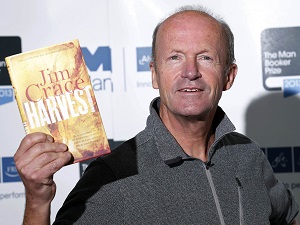
De Engelse schrijver Jim Crace werd geboren op 1 maart 1946 in St. Albans, Hertfordshire. Zie ook alle tags voor Jim Crace op dit blog.

Uit: Harvest

“Now that we have reached our master's paddocks and his garths, we can smell and taste the straw. The smoke and flames are coming not from his home but from his hay lofts and his stable roofs. His pretty, painted dovecote has already gone. We expect to spot his home- birds' snowy wings against the smoke- gray sky. But there are none.
I know at once whom we should blame. When Christopher and Thomas Derby, our only twins, and Brooker Higgs came back from wooding last evening, they seemed a little too well satisfied, but they weren't bringing with them any fowl or rabbit for the pot, or even any fuel.
Their only spoils, so far as I could tell, were a bulky, almost weightless sack and immodest fits of laughter. They'd been mushrooming. And by the looks of them they had already eaten raw some of the fairy caps they'd found. I did the same myself in my first summer of settlement here, a dozen or so years ago, when I was greener and less timid, though not young. I remember eating them. They are beyond forgetting. Just as yesterday, the last sheaf of that year's harvest had been cut and stood. And, just as today, we'd faced a break from labor, which meant that I could sleep my mischief off. So in the company of John Carr, my new neighbor then, my neighbor still, I went off that afternoon to Thank the Lord for His Munificence by hunting fairy caps in these same woods. I'll not forget the dancing lights, the rippling and the merriment, the halos and the melting trails that followed anything that moved, the enormous fearlessness I felt, the lasting fear (yes, even now), or how darkly blue the moon became that night, and then how red. I wish I'd had the courage since to try to find that moon again.
Last evening, when the twins and Brooker Higgs jaunted past our cottages and waved at us with gill stains on their fingertips, I asked these merry men, "Had any luck?" They bared their sack of spoils at once, because they were too foxed and stupefied to conceal them, even though they understood my ancient closeness to the manor house. I pulled aside the dampening of leaves and inspected their few remaining fairy caps, saved for later revels, I suppose, plus a good number of golden shawls, which, stewed in milk and placed inside a dead man's mouth, are meant to taste so good they'll jolt him back to life. Accounting for the bulk of their sack was a giant moonball, its soft, kid- leather skin already smoking spores, and far too yellowy and dry to cook. Why had they picked it, then? Why hadn't they just given it a satisfying kick? What kind of wayward lads were these?”


 2013189-a8bb976a6800c29d23106bba9b0660ee.jpg
Jim Crace (St. Albans, 1 maart 1946)


De Franse schrijfster en filmmaakster Delphine de Vigan werd geboren op 1 maart 1966 in Boulogne-Billancourt. Zie ook alle tags voor Delphine de Vigan op dit blog.

Uit:No et moi

“Je donnerais tout, mes livres, mes encyclopédies, mes vêtements, mon ordinateur, pour qu'elle ait une vraie vie, avec un lit, une maison et des parents pour l'attendre. Je pense à l'égalité, à la fraternité, à tous ces trucs qu'on apprend à l'école et qui n'existent pas. On ne devrait pas faire croire aux gens qu'ils peuvent être égaux ni ici ni ailleurs. Ma mère a raison. C'est la vie qui est injuste et il n'y a rien à ajouter. Ma mère sait quelque chose qu'on ne devrait pas savoir. C'est pour ça qu'elle est inapte pour son travail, c'est marqué sur ses papiers de sécurité sociale, elle sait quelque chose qui l'empêche de vivre, quelque chose qu'on devrait savoir seulement quand on est très vieux. On apprend à trouver des inconnues dans les équations, tracer des droites équidistantes et démontrer des théorèmes, mais dans la vraie vie, il n'y a rien à poser, à calculer, à deviner. C'est comme la mort des bébés. C'est du chagrin et puis c'est tout. Un grand chagrin qui ne se dissout pas dans l'eau, ni dans l'air, un genre de composant solide qui résiste à tout. »
(…)

" ... Il y a cette ville invisible, au coeur même de la ville. Cette femme qui dort chaque nuit au même endroit, avec son duvet et des sacs. À même le trottoir. Ces hommes sous les ponts, dans les gares, ces gens allongés sur des cartons ou recroquevillés sur un banc. Un jour, on commence à les voir. Dans la rue, dans le métro. Pas seulement ceux qui font la manche. Ceux qui se cachent. On repère leur démarche, leur veste déformée, leur pull troué. Un jour on s'attache à une silhouette, à une personne, on pose des questions, on essaie de trouver des raisons, des explications, et puis on compte. Les autres, des milliers. Comme le symptôme de notre monde de malade. Les choses sont ce qu'elle sont. Mais moi je crois qu'il faut garder les yeux grand ouverts. Pour commencer.”


 2013189-3985a34e77b3068551f2e6db56edc334.jpg
Delphine de Vigan (Boulogne-Billancourt, 1 maart 1966)


De Zwitserse dichter, schrijver, cabaretier en liedjesmaker Franz Hohler werd geboren op 1 maart 1943 in Biel. Zie ook alle tags voor Franz Hohler op dit blog.


Weiss noch jemand

Weiss noch jemand
wo das Denkmal stand
für die Prinzessin
aus dem Morgenland
die mit dem Sternenmantel
durch die Wälder ritt
bevor der grosse Krieg
darüber schritt?

Weiss noch jemand
wo der Garten war
mit den Sommergästen
und der Kinderschar
auf den der Mond
in verzauberten Nächten schien
und den die Eule besuchte
und der Hermelin?

Weiss noch jemand
wo der Geiger blieb
der uns zu ausgelassenen
Tänzen trieb
mit seinen kühnen Läufen
und der schmelzenden Terz?
Er weckte die Sehnsucht
und brach uns das Herz.

Weiss noch jemand
wo der Grabstein ist
auf dem der Todesengel
den König küsst
und ihn so fest
in seinen Armen hält
dass ihm die Krone
vor die Füsse fällt?

Weiss noch jemand
wo der Wildbach floss
im Bergwald mit dem
Raubritterschloss
aus dessen Wasser
die weisse Schlange trank
bevor sie im eisigen
Stausee versank?

Weiss noch jemand
wie die Inschrift hiess
die man fand
im dunklen Kellerverlies
in dem der Zar so schmählich
zu Tode kam
und man der ganzen Familie
das Leben nahm?

Weiss noch jemand
wie das Volkslied geht
in dem das Mädchen am Morgen
am Fenster steht
und die Fahne in der Ferne
flattern sieht
hinter der sein Liebster
zum Kampfe zieht?

Prinzessin und Geiger
König und Zar
Schloss und Schlange
und Kinderschar
die Gärten – was ist nur
mit ihnen geschehn
und dem Burschen und dem Mädchen
die sich nie wieder sehn?


 2013189-f5f98a8a77822c35121eeca7a5fb8f59.jpg
Franz Hohler (Biel, 1 maart 1943)


De Britse schrijver Giles Lytton Strachey werd geboren op 1 maart 1880 in Londen. Zie ook alle tags voor Lytton Strachey op dit blog. 

Uit: Queen Victoria

“Victoria understood very well the meaning and the attractions of power and property, and in such learning the English nation, too, had grown to be more and more proficient. During the last fifteen years of the reign — for the short Liberal Administration of 1892 was a mere interlude imperialism was the dominant creed of the country. It was Victoria's as well. In this direction, if in no other, she had allowed her mind to develop. Under Disraeli’s tutelage the British Dominions over the seas had come to mean much more to her than ever before, and, in particular, she had grown enamoured of the East. The thought of India fascinated her; she set to, and learnt a little Hindustani; she engaged some Indian servants, who became her inseparable attendants, and one of whom, Munshi Abdul Karim, eventually almost succeeded to the position which had once been John Brown's. At the same time, the imperialist temper of the nation invested her office with a new significance exactly harmonising with her own inmost proclivities. The English polity was in the main a common-sense structure, but there was always a corner in it where common-sense could not enter — where, somehow or other, the ordinary measurements were not applicable and the ordinary rules did not apply. So our ancestors had laid it down, giving scope, in their wisdom, to that mystical element which, as it seems, can never quite be eradicated from the affairs of men. Naturally it was in the Crown that the mysticism of the English polity was concentrated — the Crown,with its venerable antiquity, its sacred associations, its imposing spectacular array. But, for nearly two centuries, common-sense had been predominant in the great building, and the little, unexplored, inexplicable corner had attracted small attention. Then, with the rise of imperialism,there was a change. For imperialism is a faith as well as a business; as it grew, the mysticism in English public life grew with it; and simultaneously a new importance began to attach to the Crown. The need for a symbol — a symbol of England's might, of England's worth, of England's extraordinary and mysterious destiny — became felt more urgently than ever before. The Crown was that symbol: and the Crown rested upon the head of Victoria. Thus it happened that while by the end of the reign the power of the sovereign had appreciably diminished, the prestige of the sovereign had enormously grown.”


 2013189-757693795ac03fcc93028efc88516e52.png
Lytton Strachey (1 maart 1880 – 21 januari 1932)
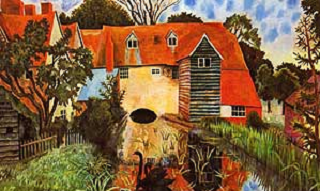
The Mill at Tidmarsh, 1918. Een schilderij van Dora Carrington van de "Mill House", Tidmarsh, Pangbourne, op de Upper Thames, waar veel van “Queen Victoria”werd geschreven.


De Amerikaanse dichter Robert Traill Spence Lowell werd geboren op 1 maart 1917 in Boston. Zie ook alle tags voor Robert Lowell op dit blog.


Water

It was a Maine lobster town—
each morning boatloads of hands
pushed off for granite
quarries on the islands,

and left dozens of bleak
white frame houses stuck
like oyster shells
on a hill of rock,

and below us, the sea lapped
the raw little match-stick
mazes of a weir,
where the fish for bait were trapped.

Remember? We sat on a slab of rock.
From this distance in time
it seems the color
of iris, rotting and turning purpler,

but it was only
the usual gray rock
turning the usual green
when drenched by the sea.

The sea drenched the rock
at our feet all day,
and kept tearing away
flake after flake.

One night you dreamed
you were a mermaid clinging to a wharf-pile,
and trying to pull
off the barnacles with your hands.

We wished our two souls
might return like gulls
to the rock. In the end,
the water was too cold for us.


 2013189-0ee9b587d97f9998afa35f2ba4c6ce96.jpg
Robert Lowell (1 maart 1917 - 12 September 1977) 


De Nederlandse schrijfster Myrthe van der Meer (pseudoniem) werd geboren op 1 maart 1983 in Den Bosch. Zie ook alle tags voor Myrthe van der Meer op dit blog.

Uit: PAAZ

“Ik staar naar de witte muur tegenover me en probeer mijn hoofd met dezelfde leegte te vullen, maar de gedachten beginnen door mijn hersens te krioelen en veranderen de wereld in een verontrustend grijs. Als ik mijn vingers op het toetsenbord leg, voelt het alsof iedere molecuul in mijn lichaam krijsend zo ver mogelijk bij de computer vandaan probeert te kruipen. Ik klem mijn kiezen op elkaar en mijn vingers kruipen over de toetsen, maar dan is de mail af.
Niet in staat om te werken, ha! Grimmig sluit ik het mailprogramma af. Warrige gedachten beginnen over elkaar heen te buitelen maar ik duw ze weer terug op hun plek. Niet nadenken – vooral niet nadenken! – gewoon doen. Iets doen. Naar het toilet. Als ik de gang in wil lopen, verandert die in een moeras waar ik steeds verder in wegzak. Ik weet met veel moeite langs de muur vooruit te waden, maar als de uitgeefster van het geschiedenisfonds de hoek om komt, spring ik weer in het gelid.
‘Hé, Emma, nog hier? Ik dacht dat je allang weg zou zijn.’
‘Nog drie uur, dan begint de vakantie!’ zeg ik met een schrille lach.
Is dit mijn stem?
‘Volgens mij kun je die wel gebruiken. Ga je nog iets leuks doen?’
‘Helemaal niets,’ antwoord ik met een bravoure die ik niet voel. ‘Slapen, luieren, in de zon liggen en alleen een boek lezen als ik dat zelf wil. Heel saai dus.’
‘Klinkt hemels. Als je maar niet aan de uitgeverij denkt, want het wordt weer een gekkenhuis met de nieuwe aanbiedingscatalogus. Ik zie je hier over vier weken weer – geen moment eerder!’


 2013189-c3bfa88358f1f2b06bd489fe09a3e453.jpg
Myrthe van der Meer (Den Bosch, 1 maart 1983)


De Oostenrijkse schrijver, dichter en schilder Franzobel werd geboren op 1 maart 1967 in Vöcklabruck. Zie ook alle tags voor Franznbel op dit blog

Uit:Groschens Grab

“Eines sage ich Ihnen gleich, schrie die Frau ins Telefon, mit der Polizei will ich nichts zu tun haben. Nichts! Nur damit das klar ist. Sie müssen dieses Gespräch auch nicht zurückverfolgen, weil ich stehe in einer öffentlichen Telefonzelle ... Ja, so etwas gibt es noch!
– Woher haben Sie meine Nummer? Warum rufen Sie nicht im Kommissariat an? Groschen sah auf die Uhr, es war sieben Uhr morgens. Die weibliche Stimme am anderen Ende der Leitung klang heiser und überdreht, so, als ob die Frau nachts nichts geschlafen und sich Mut für diesen Anruf angetrunken hätte.
– Um als Aktennotiz zu landen? Glauben Sie, ich weiß nicht,wie es bei Ihnen zugeht? Die kleinen Beamten würden das als lächerlich abtun. Aber Sie als Kommissar, Sie werden sich darum kümmern. Sie nehmen das ernst.
– Worum geht es denn?
– Entführung! Menschenraub! Am helllichten Tag, gestern um halb fünf in der Klagbaumgasse, sagte die verrauchte, leicht hysterisch klingende Stimme. Ich bin im Rubenspark gesessen ... Kennen Sie? Vierter Bezirk, Wirtschaftskammer, Mittersteig, Caritas ...
– Ist mir bekannt.
– Da sehe ich eine alte Dame, ich denke mir noch, die ist aber elegant, eine richtige Lady. Plötzlich kommt ein Auto, bremst, bleibt stehen, einer springt heraus und zerrt sie in den Wagen. Sie will schreien, aber der hält ihr den Mund zu.
Sie will sich wehren, aber der ist stärker. Während ich noch überlege, um Hilfe schreien will, rauscht das Auto schon davon. Und das in Wien, wo es immer heißt, hier passiert nichts,
Wien ist sicher. Pha! Da sieht man ja, wie sicher Wien ist.
Sie werden mich jetzt für verrückt halten, aber ich habe die Gewalt gespürt, die Verzweiflung. Das war Kidnapping!“


 2013189-dba51734884103970be03602356e8dbd.jpg
Franzobel (Vöcklabruck, 1 maart 1967)


De Amerikaanse schrijver Steven Barnes werd geboren op 1 maart 1952 in Los Angeles. Zie ook alle tags voor Steven Barnes op dit blog.

Uit: Lion's Blood

“This didn't happen. It was the work of moments to locate the source of the glittering he had glimpsed from above.
Aidan's heart quickened as his hands closed around his prize. For a moment he floated there, suspended like some strange river creature, the Lady's strong arms tugging at him, his bare feet clinging to a rock for ballast.
The object that had caught his attention was a knife. Not just any knife, though. Not some fisherman's blade tumbled overboard, but something wholly alien to his experience.
It was gold, wreathed with gems about its handle, its two-hand length of blade as gently curved as a shark's tooth.
Young Aidan found it so beautiful that he almost forgot the need for breath.
His aching lungs would no longer be denied. Gripping his prize tightly, Aidan released the rock and kicked back toward the sun. Sound and scent and taste inundated him as he held the blade high.
His father's strong arm clasped his, lifting Aidan from the river with effortless ease. "What have you, boy?"
Aidan panted. His breathlessness owed more to excitement than lack of air. "A knife, Da." He smoothed his fingers over its surface, tracing every knob and etching. "A golden knife!"
Shadows flitted over Mahon O'Dere's face. The expression was darker than mere curiosity, but before Aidan could put a name to the shade it was gone. His father stretched out his arm. Reluctantly, Aidan placed the blade in Mahon's calloused hand.”


 2013189-09e8f20215c75e4c9eb0b643f174653c.jpg
Steven Barnes (Los Angeles, 1 maart 1952)


Zie voor nog meer schrijvers van de 1e maart ook mijn blog van 1 maart 2015 deel 1 en ook deel 2 en eveneens deel 3.

Geschreven door Romenu om 11:04 Reageer op dit bericht

Meer van Romenu

↑ Terug naar de berichten