Naar de inhoud

Romenu

Over literatuur, gedichten, kunst en cultuur
akke.beakke.be

Berichten van 7 april 2011 tot 8 april 2011

Herinnering aan Gerard Reve, Hanz Mirck, Christoph Hein, Nnedi Okorafor, Barbara Kingsolver

Herinnering aan Gerard Reve


Vandaag is het precies 5 jaar geleden dat de Nederlandse dichter en schrijver Gerard Reve overleed. Zie over Reve o.a. ook mijn blog van 14 december 2006. en mijn blog van 9 april 2006 en ook mijn blog van 10 april 2006 en mijn blog van 14 december 2009 en mijn blog van 8 april 2010. Alle bijdragen over Reve zijn te vinden via de tag Gerard Reve.


In uw handen


Niemand die zeggen kan, wanneer en hoe.

Misschien wel met geheven glas,

terwijl hij proestend poogt iets uit te leggen

dat wordt weggespoeld

op bulderende branding van gelach.

Dan piept opeens zijn stem, als uit het stof,

en klauwt zijn lege hand naar ’t arme hart,

waar nu het mes in staat van God.

Een flits, van droevig speelgoed, droeve sneeuw

en droef lantarenlicht. Meer niet.

Ziezo, het is volbracht.

‘Zoals hij heeft geleefd, zo is hij ook gestorven.’


(1965)


 889692-928fcfda79c1689842cd20e6c3502889.jpg

Gerard Reve (14 december 1923 -  8 april 2006)

Jaren 1960


De Nederlandse dichter Hanz Mirck werd geboren op 8 april 1970 te Zutphen. Zie ook mijn blog van 8 april 2007 en mijn blog van 3 april 2007  en ook mijn blog van 8 april 2008 en ook mijn blog van 8 april 2009 en mijn blog van 8 april 2010


Aan het water


Steeds weer komt boven zij verdrinkt
in een droom. Aan haar navelstreng onder water
een steen. Aan de oever met een liefde die geen kinderen wil
een man die niet helpt. Die lacht. Die mijn gezicht heeft

Je vertelt het, je ogen vertellen het, je wimpers vechten
tegen opkomend tij. Ik koud en klein als een kiezel,
nooit groter vijand van hem met mijn gezicht
in jouw droom

die steeds bovenkomt, mij onderduwt
Blijven verdrinken, blijven lachen
terwijl ik niet lach. De steen malend

Geluidloos lied dat zinkt in mijn hoofd
Blijven roepen onder water
zonder dat er ochtend kwam


Take me to the river


Laat me je dragen uit het donker van de binnenplaats achter
je huis zo koel en stil waar nooit de zon komt waar je zachte stem
zo schor gezwegen op me heeft gewacht, laat me je door je keuken
en door de smalle gang langs het bed waar je slaapt en de tafel

waar je werkt en eet en laat me je door de voordeur naar licht en
uiterwaarden om diep te kunnen ademhalen ik zal voorzichtig
met je knieën en de muren, net niet het knopje van het licht
in je slaap, je ademt regelmatig, ligt zo licht met natte haren

in mijn armen, het gaat zo wonderbaarlijk goed terwijl ik zo onhandig
en de gang oneindig, je laat je door me dragen in het donker
terwijl ik alles zie, waar je fiets staat en het kastje voor de post

die nog wel wachten kan en pas zoveel later buiten waar de nacht is
zal ik merken: je laat je en het licht is toch al om je en ik laat je vallen maar
je valt niet terwijl hoor ik hoe jij me in de keuken deze droom voorleest


 889692-172db51f9aafcc0612ae6b08e3f7c292.jpg

Hanz Mirck (Zutphen, 8 april 1970)


De Duitse schrijver, essayist en vertaler Christoph Hein werd geboren op 8 april 1944 in Heinzendorf in Silezié. Zie ook mijn blog van 8 april 2007 en ook mijn blog van 8 april 2008.en ook mijn blog van 8 april 2009 en mijn blog van 8 april 2010
 

Uit: Willenbrock


“Er kauerte vor dem kleinen, gusseisernen Ofen und hielt ein Streichholz an das zusammengeknüllte Papier und die darüber geschichteten Holzspäne. Dann schloss er die Klappe und wartete. Als er das Knistern der Flamme hörte, öffnete er die obere Klappe und warf ein paar Scheite hinein. Er wischte sich die Finger an einem Lappen ab, der neben dem Schreibtisch lag, und setzte sich. Aus einem Schubfach holte er ein Magazin heraus und blätterte darin, während er sich mit einer Hand eine einzelne Zigarette aus seiner Jackettasche angelte und sie entzündete. In der Nacht hatte er geträumt, dass er auf einer eisernen Fußgängerbrücke, die über Eisenbahngleise führte, entlangrannte. Während er jetzt die nackten Mädchen betrachtete, überlegte er, wo er die endlos lange Brücke schon einmal gesehen haben könnte. Im Traum war er einem Mann gefolgt, der vor ihm herlief, ohne dass er ihn erreichen konnte. Er war ihm immerzu nur hinterhergelaufen, in einem sich nicht veränderndem Abstand. Er wusste nicht, warum er ihn verfolgte, er wuste nicht, ob sie sich kannten, ob sie einander verpflichtet waren, was ihn mit diesem Mann verband. Er wusste nicht einmal, wer dieser Mann war. Alles, woran er sich erinnerte, waren diese endlos lange Brücke und die diagonalen Verstrebungen, an denen er entlanglief, das metallene Klappern ihrer Schritte, der eigenen und der des Mannes, dem er hinterherlief. Die Brücke schien ihm vertraut zu sein. Im war, als wäre er irgendwann schon einmal auf ihr entlanggegangen, aber die undeutlichen, verschwommenen Bilder in seinem Kopf klärten sich nicht, so sehr er sich auch bemühte.

Nur ein dummer Traum, sagte er sich und betrachtete müde und enttäuscht die Mädchen, die ihm ihre Brüste entegegenstreckten und ihn einladend anlächelten. Er schlug das Magazin zu und verstaute es wieder in seinem Schreibtisch, in einem Fach, in dem ein Stapel der gleichen Hefte lag.“


 889692-12cec9cd01b58a68813cd28d0d651600.jpg

Christoph Hein (Heinzendorf, 8 april 1944)


De Afrikaanse-Amerikaanse schrijfster Nnedi Okorafor werd geboren op 8 april 1974 in Cincinnati, Ohio. Zie ook mijn blog van 8 april 2009 en mijn blog van 8 april 2010 

Uit: Who Fears Death


„My life fell apart when I was sixteen. Papa died. He had such a strong heart. Yet he died. Was it the heat and smoke from his blacksmithing shop? It’s true that nothing could take him from his work, his art. He loved to make the metal bend and obey him. But his work only seemed to strengthen him; he was so happy in his shop. So what was it that killed him? To this day I can’t be sure. I hope it had nothing to do with me or what I did back then.
Immediately after he died, my mother came running out of their bedroom sobbing and throwing herself against the wall. I knew then that I would be different. I knew in that moment that I would never again be able to fully control the fire inside me. I became a different creature that day, not so human. Everything that happened later, I now understand started then.
The ceremony was held on the outskirt of town, before the sand dunes. It was the middle of the day and terribly hot. His body lay on thick white cloth, surrounded by a garland of braided palm fronds. I knelt there in the sand before his body, saying my last goodbye. I’ll never forget his face. It didn’t look like Papa’s anymore. Papa’s skin was dark brown, his lips were full. This face had sunken cheeks, deflated lips and skin like grey brown paper. Papa’s spirit had gone elsewhere.

The back of my neck prickled. My white veil was a poor protection from people’s ignorant and fearful eyes. By this time, everyone was always watching me. I clenched my jaw. Around me, women were on their knees weeping and wailing. Papa was dearly loved, despite the fact that he’d married my mother, a woman with a daughter like me- an Ewu daughter. That had long been excused as one of those mistakes even the greatest man can make. Over the wailing, I heard my mother’s soft whimper. She had suffered the greatest loss.“


 889692-ef39fa7885cc2d07c3ad98c1c801e21e.jpg

Nnedi Okorafor (Cincinnati, 8 april 1974)


De Amerikaanse schrijfster Barbara Kingsolver werd geboren op 8 april 1955 in Annapolis, Maryland. Zie ook mijn blog van 8 april 2007 en ook mijn blog van 8 april 2008 en ook mijn blog van 8 april 2009 en mijn blog van 8 april 2010
 

Uit: The Lacuna


„Isla Pixol, Mexico, 1929

In the beginning were the howlers. They always commenced their bellowing in the first hour of dawn, just as the hem of the sky began to whiten. It would start with just one: his forced, rhythmic groaning, like a saw blade. That aroused others near him, nudging them to bawl along with his monstrous tune. Soon the maroon-throated howls would echo back from other trees, farther down the beach, until the whole jungle filled with roaring trees. As it was in the beginning, so it is every morning of the world.

The boy and his mother believed it was saucer-eyed devils screaming in those trees, fighting over the territorial right to consume human flesh. The first year after moving to Mexico to stay at Enrique’s house, they woke up terrified at every day’s dawn to the howling. Sometimes she ran down the tiled hallway to her son’s bedroom, appearing in the doorway with her hair loose, her feet like iced fish in the bed, pulling the crocheted bedspread tight as a web around the two of them, listening.

It should have been like a storybook here. That is what she’d promised him, back in the cold little bedroom in Virginia North America: if they ran away to Mexico with Enrique she could be the bride of a wealthy man and her son would be the young squire, in a hacienda surrounded by pineapple fields. The island would be encircled with a shiny band of sea like a wedding ring, and somewhere on the mainland was its gem, the oil fields where Enrique made his fortune.“


 889692-e0712afc0d7d50cd04faec49b76c5a5e.jpg

Barbara Kingsolver (Annapolis, 8 april 1955)


Zie voor nog meer schrijvers van de 8e april ook mijn vorige blog van vandaag.
Geschreven door Romenu om 17:32 Reageer op dit bericht

John Fante, Glendon Swarthout, Martin Grzimek, Hégésippe Moreau, Johann Christian Günther

De Amerikaanse schrijver John Fante werd geboren in Colorado op 8 april 1909. Zie ook mijn blog van 8 april 2007 en ook mijn blog van 8 april 2009 en ook mijn blog van 8 april 2010


Uit: The Road to Los Angeles


„I became a flunkie on a truck. All we did was move boxes of toilet tissue from the warehouse to the harbor grocery stores in San Pedro and Wilmington. Big boxes, three feet square and weighing fifty pounds apiece. At night I lay in bed thinking about it and tossing.
        My boss drove the truck. His arms were tattooed. He wore tight yellow polo shirts. His muscles bulged. He caressed them like a girl's hair. I wanted to say things that would make him writhe. The boxes were piled in the warehouse, fifty feet to the ceiling. The boss folded his arms and had me bring boxes down to the truck. He stacked them. Arturo, I said, you've got to make a decision; he looks tough, but what do you care?
        That day I fell down and a box bashed me in the stomach. The boss grunted and shook his head. He made me think of a college football player, and lying on the ground I wondered why he didn't wear a monogram on his chest. I got up smiling. At noon I ate lunch slowly, with a pain where the box bashed me. It was cool under the trailer and I was lying there. The lunch hour passed quickly. The boss came out of the warehouse and saw my teeth inside a sandwich, the peach for dessert untouched at my side.
        "I ain't paying you to sit in the shade," he said.
        I crawled out and stood up. The words were there, ready. "I'm quitting," I said. "You and your stupid muscles can go to hell. I'm through."
        "Good," he said. "I hope so."
        "I'm through."
        "Thank God for that."
        "There's one other thing."
        "What?"
        "In my opinion you're an overgrown sonofabitch."
        He didn't catch me.
        After that I wondered what had happened to the peach. I wondered if he had stepped on it with his heel. Three days passed and I went down to find out. The peach lay untouched at the side of the road, a hundred ants feasting upon it.“


 889686-64e9b0f682207d3f2991499e2909a75b.jpg

John Fante (8 april 1909 – 8 mei 1983)


De Amerikaanse schrijver
Glendon Fred Swarthout werd geboren op 8 april 1818 in Pinckney, Michigan. Zie ook mijn blog van 8 april 2007 en ook mijn blog van 8 april 2009 en ook mijn blog van 8 april 2010
 

Uit: The Shootist


„He thought: When I get there nobody will believe I could have managed a ride like this and neither by God will I. 

          It was noon of a bodeful day. The sun was an eye bloodshot by dust. His horse was fistulowed. Some friction saddle and hide, of thorn or stone or knot of thread, had created an abscess on the withers, deep and festering, the cure for which he knew was to cauterize and let the air heal by staying off the animal, but he could not stop. If the horse had suffered, he had suffered more. This was the ninth day of his ride, and the last. 

          He wore a gray Stetson, a black Prince Albert coat, gray vest and trousers, white shirt, gray bow tie, and boots of black lizard. 

          Between his backside and the saddle throat was stuffed a soft pillow of crimson velvet trimmed with golden tassels. He could not have endured the journey without the pillow. He had stolen it in Creede, Colorado, from a whorehouse.

          He rode below the Organs, a bleak range trending south and east, over sand flats wrinkled with dry washes. Tied on behind his saddle were a black valise and a porcelain coffeepot. The lid of the pot had clanked monotonously all morning. He stopped and turning slowly, untied the coffeepot, turned again and hurled it as high into the air as he was able. He meant to draw and fire and riddle it before it hit the ground, but the effort of hurling roused such pain in his groins that he could not draw. He slumped, gripped the pommel, as the pot hit the ground and tumbled down the side of a dry wash, clanking, clanking.

          There were many bosques, or thickets, now and he detoured them. But the trail required him to pass between two, and as he did, a man jumped from the brush and leveled an antiquated cap-and-ball pistol and croaked at him to throw down his wallet. The man was thin and elderly and reminded the horseman of his grandfather, who had been driven occasionally to desperate undertakings. He had a claw hand for a left hand, cocked perpetually at the wrist, the fingers stiff and splayed. Reining up, the rider reached inside his coat.“


 889686-42811cd6aa25b804a0582ff172044c69.jpg

Glendon Swarthout (8 april 1918 – 23 september 1992)

Affiche voor de film (1976) met John Wayne 


De Duitse schrijver Martin Grzimek werd geboren op 8 april 1950 in Trutzhain, Hessen. Zie ook mijn blog van 8 april 2009 en ook mijn blog van 8 april 2010
 

Uit: Die unendliche Straße


»Hagen?«

Das war meine Mutter. Ich nahm meine Sporttasche, ließ Malte w 2iter durch die Luft sausen, hörte sein Schreien und Jammern und ging durch die Terrassentür ins Haus.

Ich wusste schon, was mich meine Mutter fragen würde. Und es kam prompt.

»Na, hast du heute ein paar Körbe geworfen?«

»Drei«, log ich.

Meine Mutter hatte damals ein ganz spitzes Gesicht. Sie hatte eine Diät gemacht und 'ne Menge

Kilos abgenommen. Sie war richtig zierlich, und ich war schon einen Kopf größer als sie. Immer trug sie Hosen, ich habe sie nie in einem Rock oder einem Kleid gesehen. Eigentlich sah sie aus wie ein

Junge, oder sie wollte zumindest einer sein, glaube ich heute.

Malte schrie immer weiter. Meine Mutter, die Maria hieß, von uns Kindern aber Mam genannt wurde, stand mit einem Messer in der Hand vor mir. Sie hatte Zwiebeln geschnitten und ihre Augen waren gerötet.

»Super — drei Körben«, sagte sie und sah mich an.

Ich blickte weg und wusste schon, dass sie mich durchschaut hatte.

Trotzdem log ich weiter: »Wir haben gewonnen.«


889686-687e09ef322ef86f6443cc242d5a95d2.jpg
Martin Grzimek (Trutzhain, 8 april 1950)


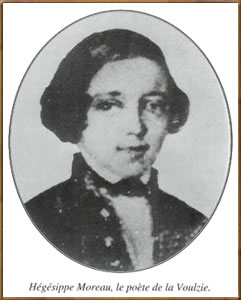
De Franse dichter en schrijver Hégésippe Moreau (eig. Pierre-Jacques Roulliot) werd geboren op 8 april 1810 in Parijs. Zie ook mijn blog van 8 april 2007 en ook mijn blog van 8 april 2009 en ook mijn blog van 8 april 2010


Si vous m'aimiez


Ménestrel, qui vais par le monde,

N'ayant rien que mon gai savoir,

Si vous m'aimiez, ô belle blonde,

Je me croirais un riche avoir ;

Comme Pétrarque aux pieds de son idole,

A vos genoux courbé bien bas, bien bas,

J'oublierais tout, voire le Capitole,

Si vous m'aimiez… mais vous ne m'aimez pas.


Si vous m'aimiez, ô belle blonde,

De vos baisers seuls j'aurais faim,

Et, sourd à son voisin qui gronde,

Mon cœur s'enivrerait enfin ;

Cœur mendiant, il va, de femme en femme,

Criant misère, et sans secours, hélas !

Le pauvret meurt : il renaîtrait, madame,

Si vous m'aimiez… mais vous ne m'aimez pas.


Et mes chansons fraîches écloses,

Au vent du matin et du soir,

Iraient à vous, comme les roses

Qui pleuvent devant l'ostensoir.

Purifiant l'air de Paris, madame,

Où vous iriez j'irais, et, sur vos pas,

Comme un parfum je brûlerais mon âme,

Si vous m'aimiez… mais vous ne m'aimez pas.


Sur vous, grand' dame que l'on flatte,

Un lorgnon d'or s'est promené,

Et par le nœud d'une cravate

Voilà votre cœur enchaîné.

D'un plus heureux que l'hommage vous plaise

Souriez-lui, marchez fière à son bras ;

Son bras ! demain je saurais ce qu'il pèse,

Si vous m'aimiez… mais vous ne m'aimez pas.


 889686-a89c0f8d8d7656b842b9e137d8e941a0.jpg

Hégésippe Moreau (8 april 1810 – 20 december 1838)


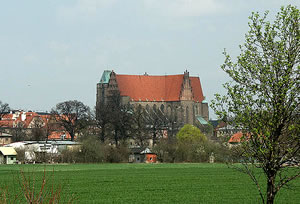
De Duitse dichter Johann Christian Günther werd geboren op 8 april 1695 in Striegau. Zie ook mijn blog van 8 april 2007. Zie ook mijn blog van 8 april 2007 en ook mijn blog van 8 april 2009 en ook mijn blog van 8 april 2010


Brüder, laßt uns lustig sein  


Brüder, laßt uns lustig sein,

Weil der Frühling währet

Und der Jugend Sonnenschein

Unser Laub verkläret.

Grab und Bahre warten nicht;

Wer die Rosen jetzo bricht,

Dem ist der Kranz bescheret.

Unsers Lebens schnelle Flucht

Leidet keinen Zügel,

Und des Schicksals Eifersucht

Macht ihr stetig Flügel.

Zeit und Jahre fliehn davon,

Und vielleichte schnitzt man schon

An unsers Grabes Riegel.


Wo sind diese, sagt es mir,

Die vor wenig Jahren

Eben also, gleich wie wir,

Jung und fröhlich waren?

Ihre Leiber deckt der Sand,

Sie sind in ein ander Land

Aus dieser Welt gefahren.


Wer nach unsern Vätern forscht,

Mag den Kirchhof fragen;

Ihr Gebein, so längst vermorscht,

Wird ihm Antwort sagen.

Kann uns doch der Himmel bald,

Eh die Morgenglocke schallt,

In unsre Gräber tragen.


Unterdessen seid vergnügt,

Laßt den Himmel walten,

Trinkt, bis euch das Bier besiegt,

Nach Manier der Alten!

Fort! Mir wässert schon das Maul,

Und, ihr andern, seid nicht faul,

Die Mode zu erhalten.


Dieses Gläschen bring ich dir,

Daß die Liebste lebe

Und der Nachwelt bald von dir

Einen Abriss gebe.

Setzt ihr andern gleichfalls an,

Und wenn dieses ist getan,

So lebt der edlen Rebe.


889686-3747010b19367ac50ad4833256664764.jpg
Johann Christian Günther (8 april 1695 – 15 maart 1723)

Striegau (tegenwoordig Pools Strzegom)

Geschreven door Romenu om 17:25 Reageer op dit bericht

William Wordsworth, Victoria Ocampo, Gabriela Mistral, Donald Barthelme, Johannes Mario Simmel

De Engelse dichter William Wordsworth werd geboren op 7 april 1770 in Cumberland. Zie ook mijn blog van 7 april 2007 en ook mijn blog van 7 april 2008 en ook mijn blog van 7 april 2009 en ook mijn blog van 7 april 2010.


Evening On Calais Beach


It is a beauteous evening, calm and free,

The holy time is quiet as a Nun

Breathless with adoration; the broad sun

Is sinking down in its tranquility;

The gentleness of heaven broods o'er the sea:

Listen! the mighty Being is awake,

And doth with his eternal motion make

A sound like thunder -- everlastingly.

Dear Child! dear Girl! that walkest with me here,

If thou appear untouch'd by solemn thought,

Thy nature is not therefore less divine:

Thou liest in Abraham's bosom all the year;

And worshipp'st at the Temple's inner shrine,

God being with thee when we know it not.


London, 1802


Milton! thou shouldst be living at this hour:

England hath need of thee: she is a fen

Of stagnant waters: altar, sword, and pen,

Fireside, the heroic wealth of hall and bower,

Have forfeited their ancient English dower

Of inward happiness. We are selfish men;

Oh! raise us up, return to us again;

And give us manners, virtue, freedom, power.

Thy soul was like a Star, and dwelt apart:

Thou hadst a voice whose sound was like the sea:

Pure as the naked heavens, majestic, free,

So didst thou travel on life's common way,

In cheerful godliness; and yet thy heart

The lowliest duties on herself did lay.


Mutability


From low to high doth dissolution climb,

And sink from high to low, along a scale

Of awful notes, whose concord shall not fail;

A musical but melancholy chime,

Which they can hear who meddle not with crime,

Nor avarice, nor over-anxious care.

Truth fails not; but her outward forms that bear

The longest date do melt like frosty rime,

That in the morning whiten'd hill and plain

And is no more; drop like the tower sublime

Of yesterday, which royally did wear

His crown of weeds, but could not even sustain

Some casual shout that broke the silent air,

Or the unimaginable touch of Time.


 888998-fa793843a3482dd954358ea694e8c22c.jpg

William Wordsworth (7 april 1770 – 23 april 1850)

Portret door Benjamin Robert Haydon, 1842. National Portrait Gallery Londen


De Argentijnse schrijjfster Victoria Ocampo werd geboren op 7 april 1890 in Buenos Aires. Zie ook mijn blog van 7 april 2009 en ook mijn blog van 7 april 2010.


Uit: Fiona G. Parrot: Friendship, Letters and Butterflies: Victoria Ocampo and Virginia Woolf


„Much of Ocampo’s writings are peppered with commentary on Woolf’s work. In both Carta a Virginia Woolf and Virginia Woolf en su diario, she explores Woolf’s fiction, drawing comparisons with English and Argentine culture through Three Guineas: ‘The maid, Virginia observes in Three Guineas, had an important role in the life of the English upper classes (and the same was true in Argentina) until the onset of the war in 1914’ (Steiner 159). Ocampo writes directly to her audience, linking the class systems of Argentina and England. By analysing the texts and drawing comparisons to her own culture, Ocampo made Woolf’s writings more accessible to South American readers. In the same essay, she connects South America’s patriarchal fathers to A Room of One’s Own and Three Guineas, explaining how both novels ‘are the true history of the Victorian struggle between the victims of the patriarchal system and the patriarchs, between the daughters and the fathers and brothers. Virginia ended up by telling these despots: Consider, reason, reflect for a moment’ (Steiner 160). In discussing the topic of ‘the patriarchal system and the patriarchs,’ Ocampo not only enables her own culture to experience the work of Woolf but exposes it to her corresponding ideas with the hope of progressive change for all women. Because both writers’ backgrounds involved domineering fathers and patriarchal cultures, which expected them to uphold repressive social rules, Ocampo believed strongly in these issues and it was yet another connection she experienced with Woolf, a connection she cherished and wished to share with her readers.“


 888998-5f8431107783f7749c9a902c2ecc493e.jpg

Victoria Ocampo (7 april 1890 – 27 januari 1979)


De Chileense dichteres en diplomate Gabriela Mistral werd geboren in Vicuña, Chili op  7 april 1889. Zie ook mijn blog van 7 april 2007 en ook mijn blog van 7 april 2008 en ook mijn blog van 7 april 2009 en ook mijn blog van 7 april 2010.


Anniversary 


And we go on and on,

Neither sleeping nor awake,

Towards the meeting, unaware

That we are already there.

That the silence is perfect,

And that the flesh is gone.

The call still is not heard

Nor does the Caller reveal his face.


But perhaps this might be

Oh, my love, the gift

Of the eternal Face without gestures

And of the kingdom without form!


Those Who Do Not Dance 


A crippled child

Said, “How shall I dance?”

Let your heart dance

We said.


Then the invalid said:

“How shall I sing?”

Let your heart sing

We said


Then spoke the poor dead thistle,

But I, how shall I dance?”

Let your heart fly to the wind

We said.


Then God spoke from above

“How shall I descend from the blue?”

Come dance for us here in the light

We said.


All the valley is dancing

Together under the sun,

And the heart of him who joins us not

Is turned to dust, to dust.


 888998-d6ed1410a8e93abe62d8796bcae97604.jpg

Gabriela Mistral (7 april 1889 – 10 januari 1957)


De Amerikaanse schrijver Donald Barthelme werd geboren op 7 april 1931 in Philadelphia. Zie ook mijn blog van 7 april 2007 en ook mijn blog van 7 april 2008.en ook mijn blog van 7 april 2009 en ook mijn blog van 7 april 2010.


Uit: King of Jazz


“Well I'm the king of jazz now, thought Hokie Mokie to himself as he oiled the slide on his trombone. Hasn't been a 'bone man been king of jazz for many years. But now that Spicy MacLammermoor, the old king, is dead, I guess I'm it. Maybe I better play a few notes out of this window here, to reassure myself.

"Wow!" said somebody standing on the sidewalk. "Did you hear that?"

"I did," said his companion.

"Can you distinguish our great homemade American jazz performers, each from the other?"

"Used to could."

"Then who was that playing?"

"Sounds like Hokie Mokie to me. Those few but perfectly selected notes have the real epiphanic glow."

"The what?"

"The real epiphanic glow, such as is obtained only by artists of the caliber of Hokie Mokie, who's from Pass Christian, Mississippi. He's the king of jazz, now that Spicy MacLammermoor is gone."

Hokie Mokie put his trombone in its trombone case and went to a gig. At the gig everyone fell back before him, bowing.

"Hi Bucky! Hi Zoot! Hi Freddie! Hi George! Hi Thad! Hi Roy! Hi Dexter! Hi Jo! Hi Willie! Hi Greens!"

"What we gonna play, Hokie? You the king of jazz now, you gotta decide."

"How 'bout `Smoke'?"

"Wow!" everybody said. "Did you hear that? Hokie Mokie can just knock a fella out, just the way he pronounces a word. What a intonation on that boy! God Almighty!"

"I don't want to play `Smoke,' " somebody said.

"Would you repeat that stranger?"

"I don't want to play `Smoke.' `Smoke' is dull. I don't like the changes. I refuse to play `Smoke.' "

"He refuses to play `Smoke'! But Hokie Mokie is the king of jazz and he says `Smoke'!"


 888998-c8bf16c231893130739bdbef9805b598.jpg

Donald Barthelme (7 april 1931 – 23 juli 1989)


De Oostenrijkse schrijver
Johannes Mario Simmel werd op 7 april 1924 in Wenen geboren. Zie ook mijn blog van 7 april 2007,  mijn blog van 5 januari 2009 en ook mijn blog van 7 april 2008 en ook mijn blog van 7 april 2009 en ook mijn blog van 7 april 2010.


Uit: Liebe ist die letzte Brücke


„Irene sah zu ihm auf und lächelte, ohne ihr Spiel zu unterbrechen. Gleich darauf sah sie wieder weg. Sie trug einen Hausmantel aus schwarzem Samt, ein zarter Duft umgab sie. Fleurs de Rocaille ist das, dachte Sorel. Irene benützt dieses Parfüm, seit ich sie kenne.
Eine schöne Frau war Irene. Das Gesicht mit der reinen, sehr hellen Haut war oval, die Augen hatten stets den gleichen seltsam entrückten Ausdruck, sanft geschwungen war der Mund, der Körper schlank und wohlgeformt und für ihre achtundvierzig Jahre geradezu mädchenhaft. Auf leicht beklemmende Weise entsprach Irene Sorel genau der Einrichtung, die sie für die Villa gewählt hatte, beide waren von erdrückender Kultiviertheit. Sie hatten sich arrangiert, Irene und Philip, von Anfang an waren sich beide über die Art ihrer Beziehung im klaren gewesen.
"Wunderbar, dieser Scarlatti", sagte sie. Ihre Stimme klang wie stets beherrscht und kühl.
"Wunderbar, ja", sagte Sorel. "Wann essen wir?"
"Wie immer um acht", sagte sie, weiterspielend, "wird Henriette bereit sein zum Servieren."
"Ich gehe unter die Dusche."
"Ja, Liebster, tu das", sagte Irene. "Wir haben genügend Zeit, uns umzuziehen." Wenn sie spielte, bedeckte zarte Röte die weiße Haut ihrer Wangen. Sich plötzlich erinnernd, rief sie Sorel nach: "Oh, ein Mann hat angerufen!"
"Wer?" fragte er und blieb auf einem besonders großen handgeknüpften Karamani-Teppich stehen.
"Ein gewisser Jakob Fenner." Immer weiter spielte sie, den Blick in zweifellos wundervolle Fernen gerichtet. "Viermal seit heute mittag."


 888998-83e33dc5e59b7fc378506d0f85fcf5c4.jpg

Johannes Mario Simmel (7 april 1924 – 1 januari 2009)


Zie voor nog meer schrijvers van de 7e april ook mijn vorige blog van vandaag.

Geschreven door Romenu om 19:27 Reageer op dit bericht

Jens Peter Jacobsen, Gustav Landauer, Roger Lemelin, Hervé Bazin, Flora Tristan

De Deense dichter en schrijver Jens Peter Jacobsen werd geboren op 7 april 1847 in Thisted. Zie ook mijn blog van 7 april 2007 en ook mijn blog van 7 april 2009 en ook mijn blog van 7 april 2010.


Uit: Niels Lyhne (Vertaald door Hanna Astrup Larsen)


“SHE had the black, luminous eyes of the Blid family, with delicate, straight eyebrows; she had their boldly shaped nose, their strong chin, and full lips. The curious line of mingled pain and sensuousness about the corners of her mouth was likewise an inheritance from them, and so were the restless movements of her head. But her cheek was pale, her hair was soft as silk and was wound smoothly around her head.

Not so the Blids; their coloring was of roses and bronze. Their hair was rough and curly, heavy as a mane, and their full, deep, resonant voices bore out the tales told of their forefathers, whose noisy hunting parties, solemn morning prayers, and thousand and one amorous adventures were matters of family tradition.

Her voice was languid and colorless. I am describing her as she was at seventeen. A few years later, after she had been married, her voice gained fullness, her cheek took on a fresher tint, and her eye lost some of its luster, but seemed even larger and more intensely black.

At seventeen she did not at all resemble her brothers and sisters; nor was there any great intimacy between herself and her parents. The Blid family were practical folk who accepted things as they were; they did their work, slept their sleep, and never thought of demanding any diversions beyond the harvest home and three or four Christmas parties. They never passed through any religious experiences, but they would no more have dreamed of not rendering unto God what was God's than they would have neglected to pay their taxes. Therefore they said their evening prayers, went to church at Easter and Whitsun, sang their hymns on Christmas Eve, and partook of the Lord's Supper twice a year.“


888991-e2579d3830323bde448e0f79fac9bc4f.jpg 

Jens Peter Jacobsen (7 april 1847 – 30 april 1885)

Portret door E. Josephson, 1879


De Duitse schrijver, vertaler, anarchistisch politicus en joods denker  Gustav Landauer werd geboren in Karlsruhe op 7 april 1870. Zie ook mijn blog van 7 april 2009 en ook mijn blog van 7 april 2010.


Uit: Arnold Himmelheber


"Sie haben meine Frage noch nicht beantwortet, Fräulein Suse. Wie geht es Ihnen?"

"Oh - mir - fehlt nichts. Und Vater ist sehr, sehr wohl."

"Na, was sollte dem Alten fehlen? Aber auch Sie haben eine sehr gesunde Farbe. Blühend, rot. So kannte ich Sie gar nicht."

"Sie täuschen sich leider. Es ist nur - es ist so heiss hier. Das wechselt sehr bei mir. Doch meist bin ich blass. Sie wissen ja - das Herz. Es ist - wohl nicht besser."

Sie sagte das alles zaghaft, schüchtern, mit Pausen der Verlegenheit. Sie tat ihm leid. Er war nie klug aus ihr geworden; aber er merkte jetzt bald, sie musste dumm sein. Anders konnte er sich's nicht erklären.

Unterdessen fand sie, dass sie wieder etwas äussern müsse.

"Sind denn jetzt schon - Ferien?"

"Nein. Aber ich habe eine Überraschung für unsern Alten. Ich bin mit dem Examen fertig."

Sie stand steil auf, als ob es ihr einen Stoss gebe. Doch sagte sie ruhig und freundlich: "Da wünsche ich Ihnen schönstens Glück. Dann - bleiben Sie jetzt wohl hier?"

Er blickte sie etwas erstaunt an. Ihm schien doch auf dem Grunde ihrer Frage etwas Banges zu lauern.

"Wäre Ihnen das wirklich so unangenehm?"

"Ich glaube, ich habe das nicht gesagt. Aber - wenn auch - "

Sie verstummte. Die Situation war ihr schrecklich.

"Sie meinen? Fräulein Suse?"

Nun überwand sie sich und sagte in freundlich aufrichtigem Tone:

"Herr Prinz, Sie wissen, das kann nicht gegen Sie gemeint sein. Wir haben uns ja auch als Kinder vertragen. Es ist nur, weil Sie mir den Vater so viel entziehen werden."

"Aber bestes Fräulein, Sie werden ihn doch nicht einschliessen wollen? Wir reden ja nur zusammen. Wenn unsere Gespräche Sie interessieren würden, können Sie ja immer dabei sein. Nicht?"

Sie starrte in ihren Schoss und antwortete nicht. Endlich fragte sie leise, indem sie aufblickte:

"Sie glauben nicht, dass mich Ihre Gespräche interessieren?"


 888991-dab3eebf8755564414746852209724ea.jpg

Gustav Landauer (7 april 1870 – 2 mei 1919)


De Franse schrijver Hervé Bazin werd geboren in Angers op 7 april 1911. Zie ook mijn blog van 7 april 2009 en ook mijn blog van 7 april 2010.
 

Uit: La mort du petit cheval


“Plus fleur que tige, Monique prenait racine devant moi. muette aussi, pour ne pas changer, en m'offrant en fait de geste ce palpitement que tout plante peut mettre au compte du vent.
Rouge, corsetée comme une écrevisse et comme elle hérissée d'appendices bizarres, naturels ou rapportés, l'oeil proéminant et jaillissant à bout de regard hors de l'orbite, la tante Catherine m'entourait de petites méfiances, sautillait, reculait dans sa jupe, avançait de biais, m'offrait une pince, grignotait des phrases de bienvenue. la petite allée était blanche, à croire qu'on avait savonné le gravier. Une vigne vierge d'automne tapissait la maisonnette et rougissait pour tout le monde.
- Bien contente...On ne vous attendait pas...Mon Dieu quelle surprise!...Entrez donc...Ne faites pas attention au désordre...C'est que je suis sa mère, en somme.
Les deux dernières phrases étaient superflues parce que toutes deux étaient conventionnelles.
(...) Je savais que Mlle Arbin s'épancherait, volubile, en mon sein et me préciserait les mérites câlins, les mérites domestiques de sa nièce- un peu sa fille, on ne le répètera jamais assez, voyons!- avant de me transformer en pelote à épingles sous une avalanches de menues questions. je savais que je serai contracté, embusqué derrière mon chapeau et mes engageants sourires, embarrassé par mes regards incapables de monter plus haut que les frais genoux de Monique.”


888991-2913feb2efdc5a40bd391a1b4062a568.jpg
Hervé Bazin (7 april 1911 – 17 februari 1996)


De Canadese schrijver en essayist Roger Lemelin werd geboren op 7 april 1919 in Quebec. Zie ook mijn blog van 7 april 2009 en ook mijn blog van 7 april 2010.
 

Uit: Au pied de la pente douce


„Flora compta les cartes mortuaires qui envahissaient le cercueil. Elle cacha son dépit de les voir plus nombreuses que pour Gaston. La bande chez Bédarovitch s'était cotisée et avait offert une couronne démesurée qui contenait la liste de tous les membres du club qui avaient fourni leur obole.
Puis ce fut la cérémonie funèbre. Un vrai triomphe de noir strié de flammèches dorées. L'abbé Charton, qui avait manœuvré pour célébrer, portait une chasuble qu'il déployait en éventail quand il ouvrait les bras. Le bedeau, guéri de sa jambe, courait comme un lapin, ajustait sans relâche ses bannières. Il y eut aussi beaucoup de commérages de jaloux. Le fils du Colin au pétard avait pour $30 un service qui valait $200. Et par-dessus tout, il sortait par la porte centrale.
Quand le cortège se mit en marche, le temps tourna à la brume. Tit-Blanc se traînait derrière le charriot, abattu par une vieillesse précoce. Suivaient quelques oncles, puis Denis, qui, après l'inhumation, commencerait son premier cours de lettres d'un professeur privé. Il y avait aussi les Langevin et toute la bande Bédarovitch. On croisa Chaton qui avait attelé son chien St-Bernard à sa voiturette. Sa clientèle augmentait tellement qu'il devait cueillir ses vers le jour, en creusant la terre. Au pied du cap, comme on passait, un coup de sifflet coupa l'air. Le cortège s'immobilisa comme au guet. Des gamins dégringolaient la pente, poursuivis par les policiers. Les rangs du cortège s'ouvrirent, complices, laissant passer les fugitifs, pour se refermer devant les poursuivants.
On s'engagea ensuite dans la côte. Denis se retourna et contempla le quartier. Les bicoques pointaient comme des pieux calcinés sur une terre qu'on désespère d'avance de labourer. Il se dégageait des habitations tassées une odeur de vie tenace, rétive au progrès; et tout cela, malgré sa honte, refusait avec obstination tout changement, parce que tout changement est opéré par les autres. Des hommes étrangers s'étaient brûlés pour avoir voulu remuer le quartier et l'embellir. Seuls les prêtres y étaient écoutés. C'est vers eux que les yeux se tournaient.“


 888991-3eae0601ad83236c1397662d1e472737.jpg

Roger Lemelin (7 april 1919 – 16 maart 1992)


De Franse schrijfster en strijdster voor vrouwenrechten Flora Tristan werd geboren op 7 april 1803 in Parijs. Zie ook mijn blog van 7 april 2009 en ook mijn blog van 7 april 2010. 


Uit : Nécessité de faire un bon accueil aux femmes étrangères


“
Seule et étrangère...
Nous voulons simplement nous occuper du sort des femmes étrangères, sans jamais nous écarter de cette spécialité.
C'est aux femmes qui ne connaissent pas, par leur propre expérience, le malheur de cette position ; aux hommes qui, malgré tous les efforts qu'ils pourront faire, ne sauraient comprendre combien il est affreux de se trouver femme seule, et étrangère ; c'est à tous que nous adressons nos paroles et notre appel. Nos idées nous sont dictées par la philanthropie la mieux sentie, notre but est saint ; aussi, nous l'espérons, Dieu nous donnera des paroles qui auront jusqu'au fond de tous les cœurs sensibles, de toutes les âmes nobles et généreuses.
Longtemps nous avons voyagé seule, et étrangère ; nous connaissons, par conséquent, tout le malheur de cette cruelle situation. Nous nous sommes trouvée étrangère à Paris, dans des villes de province, dans des villages, aux eaux. Nous avons parcouru aussi plusieurs contrées d'Angleterre et son immense capitale. Nous avons visité une grande partie de l'Amérique, et nos paroles ne seront que le retentissement de notre âme ; car nous ne savons parler que des choses que nous avons éprouvé nous-même.“


888991-edac360da487d23bfea23f39b5271fb6.jpg
Flora Tristan (7 april 1803 – 14 november 1844)

Geschreven door Romenu om 19:08 Reageer op dit bericht

Meer van Romenu

↑ Terug naar de berichten