Naar de inhoud

Romenu

Over literatuur, gedichten, kunst en cultuur
akke.beakke.be

Berichten van 11 januari 2018 tot 12 januari 2018

Cees van der Pluijm, David Mitchell, Jacques Hamelink, Haruki Murakami, Kamiel Verwer, Jakob Lenz, Fatos Kongoli, Jack London, Ferenc Molnár

De Nederlandse dichter, schrijver en columnist Cees van der Pluijm werd geboren op 12 januari 1954 te Radio Kootwijk (Gld.). Zie ook alle tags voor Cees van der Pluijm op dit blog.


Castanea sativa

Hij, die als vreemdeling hier binnenkwam
Als gast in dit ons koude Nederland
Uit streken rond de Middellandse Zee –
Die zich gehandhaafd heeft in weer en wind

Die eeuwen overziet – een fiere stam
Zijn rechte rug – hij werpt met gulle hand
Zijn bitterzoete vruchten naar beneê
Een herfstgeschenk voor wie zijn bolsters vindt

Die aangeplant door Kelten en Romeinen
Gekweekt voor hongerige legioenen
Soms stil verlangt naar Griekenland of Spanje –

Hij kwam en bleef om nooit meer te verdwijnen
Een allochtoon met wortels in zijn schoenen
Wel tam, maar trots en trouw; hij heet kastanje


De expositie
Sonsbeek 2008

Kijk, een tuinhuis waaruit harken, schoffels, spades, schepjes groeien
En waar binnenin de mooiste roze woekerschimmels bloeien
En wie ligt daar voor de Villa blinkend in het licht te zonnen?
’t Is de vadsig luie koning starend naar wat lome koeien

Als een luchtschip hangt organisch in het bos een tros ballonnen
Oude flessendoppen zijn tot rododendrondek gesponnen
En de Afrikaanse grijsaards zien hoe wij met afval knoeien
Waaruit zij zijn opgetrokken: roestig wijze dorpsbaronnen

Sonsbeek voert ons naar de wortels van ons alledagstheater
Waarin alles wat van waarde is, verzand lijkt in de sleur
Brengt ons weer naar de essentie tussen bomen, gras en water

Sonsbeek trekt in ons verstarde denken, voelen, zien een scheur:
Waar je loopt en om je heenkijkt, tot in elke uithoek staat er
Iets wat aanzet tot gepeinzen, tot verrukking en grandeur


Uit: Momenten

1966

Er trouwde iemand met een Duitse man
En in de hoofdstad brak het oproer uit
Een rookbom legde alle vreugde lam

Het was misschien wel zielig voor de bruid
Maar Nieuwe Tijden hè, dat krijg je dan
De hippies bleven slapen op de Dam

We waren hoopvol, opgetogen, blij
De jaren vijftig waren echt voorbij

Het rook naar anarchie, verlossing, mei
Kabouters preekten stoned de revolutie
Van flower power, hasj en popmuziek

Van afbraak van haast elke institutie –
Aquarius breekt aan en maakt ons vrij –
Maar toch werd Van het Reve katholiek


 2110601-8893359606f4c567e48046290b25aa5a.jpg
Cees van der Pluijm (12 januari 1954 – 14 december 2014)


De Britse schrijver David Mitchell werd geboren in Southport op 12 januari 1969. Zie ook alle tags voor David Mitchell op dit blog.

Uit:The Thousand Autumns of Jacob de Zoet

“The House of Kawasemi the Concubine, above Nagasaki
The ninth night of the fifth month
"Miss kawasemi?" orito kneels on a stale and sticky futon. "Can you hear me?"
In the rice paddy beyond the garden, a cacophony of frogs detonates.
Orito dabs the concubine's sweat-drenched face with a damp cloth.
"She's barely spoken"- the maid holds the lamp - "for hours and hours...."
"Miss Kawasemi, I'm Aibagawa. I'm a midwife. I want to help."
Kawasemi's eyes flicker open. She manages a frail sigh. Her eyes shut.
She is too exhausted, Orito thinks, even to fear dying tonight.
Dr. Maeno whispers through the muslin curtain. "I wanted to examine the child's presentation myself, but..." The elderly scholar chooses his words with care. "But this is prohibited, it seems."
"My orders are clear," states the chamberlain. "No man may touch her."
Orito lifts the bloodied sheet and finds, as warned, the fetus's limp arm, up to the shoulder, protruding from Kawasemi's vagina.
"Have you ever seen such a presentation?" asks Dr. Maeno.
"Yes: in an engraving, from the Dutch text Father was translating."
"This is what I prayed to hear! The Observations of William Smellie?"
"Yes: Dr. Smellie terms it," Orito uses the Dutch, " 'Prolapse of the Arm.' "
Orito clasps the fetus's mucus-smeared wrist to search for a pulse.
Maeno now asks her in Dutch, "What are your opinions?"
There is no pulse. "The baby is dead," Orito answers, in the same language, "and the mother will die soon, if the child is not delivered." She places her fingertips on Kawasemi's distended belly and probes the bulge around the inverted navel. "It was a boy." She kneels between Kawasemi's parted legs, noting the narrow pelvis, and sniffs the bulging labia: she detects the malty mixture of grumous blood and excrement, but not the stench of a rotted fetus. "He died one or two hours ago."
Orito asks the maid, "When did the waters break?"
The maid is still mute with astonishment at hearing a foreign language.“


 2110601-8c7d7280d848ec42f05a2caaf19bf8c9.JPG
David Mitchell (Southport, 12 januari 1969)


De Nederlandse dichter en schrijver Jacques Hamelink werd geboren op 12 januari 1939 in Driewegen, bij Terneuzen. Zie ook alle tags voor Jacques Hamelink op dit blog.


Voorbereidende schrijfles

De penhouder wordt magnetisch uit mijn
grof onbehendige rechterhand vandaan
aangetrokken door de me verboden linker,

daarmee zet ik tussen horizontale lijnen
alle diagonale beginnersstreepjes als regen
de verkeerde kant uit. Juffrouw Koster, choco

ladebruin kleed, solide schoenen, mepmeetlat,
stapt hoogrood van achter haar lessenaar, maakt
me van ruikvlakbij haar gegriefdheid kenbaar,

troggelt me de pen uit de onwijze inktige linker
en poot hem tussen drie vingers van de vereiste
rechterhand. En nu geen enkele vergissing meer

vat ik. Zet me in met rechts de regenkeepjes te doen
vallen in de nieuwe richting. Gered van het onheil
van de lat. Maar pal naast me in de val klem zit nog

de kleinzoon van de kolenboer, na nog een week en na
nog een op van de zenuwen, hopeloos snotterend, ik mee
gekweld Billetje de pen in de bevolen hand voorhoudend.

Maar daar is de kosteres al die links met die lat raakt.


Aardverschuiving

Een kille warmte en het gezang van kinderen
warm en koud schuiven
geruisloos
ineen

grond glijdt onder de voeten uit
dampend kruid kruipt de weg op
ik huiver
door ieder huis kijk ik heen

in een holle boomstam komt het vuur de stroom af
het is volbracht geen zege
de moerassen verbloeden

ik vouw mijn vleugels toe
een eindeloze dag.


Equilibrium

Nacht roert geheimtaal aan.
Mijn slijmmond heeft de smaak van pepermunt.
Hees bloedgroepgevoel: ik ben mijn eigen kind.

De huid sluit nauw om het vlees.
Ononderbroken klokken uren met droge keel.
In holten van kalmoes tovert de wind.

Ik ben geheel één met mijn lichaam,
Een koortsvrome gezindte. Ergens in huis is schik
Omdat de kerkdienst nog niet begint.


 2110601-77a662fefb61838f7e7525c1e7e4ae05.png
Jacques Hamelink (Terneuzen, 12 januari 1939)
Cover 


De Japanse schrijver en vertaler Haruki Murakami werd geboren op 12 januari 1949 in Kyoto. Zie ook alle tags voor Haruki Murakami op dit blog.

Uit: Mannen zonder vrouw (Vertaald door Jacques Westerhoven)

“Kafuku had al veel vrouwelijke chauffeurs meegemaakt, en wat hem betreft kon je vrouwen achter het stuur grofweg indelen in twee types: ze reden net iets te wild, of net iets te voorzichtig. En van dat laatste type waren er veel meer dan van het eerste – iets waar wij waarschijnlijk dankbaar voor mogen zijn. In het algemeen rijden vrouwelijke chauffeurs oplettender dan mannelijke, en ook voorzichtiger. Natuurlijk is het onzin om je over een oplettende, voorzichtige chauffeur te beklagen. Toch kan het voorkomen dat zo’n rijstijl andere weggebruikers irriteert. Aan de andere kant hebben vrouwelijke chauffeurs van het wilde type meestal een hoge dunk van hun eigen rijvaardigheid.
In veel gevallen kijken ze op hun voorzichtige zusters neer en zijn ze er trots op dat zij niet zo zijn. Maar terwijl ze driest van de ene rijstrook naar de andere flitsen, lijken ze niet in de gaten te hebben dat andere automobilisten zuchtend, en soms verwensingen uitend, stevig op de rem trappen.
Natuurlijk heb je er ook die tot geen van beide types behoren – vrouwen die niet te voorzichtig of te wild rijden, maar heel normaal. Daaronder zijn er zelfs bijzonder goede chauffeurs. Maar ook van zulke voelde Kafuku toch altijd een soort spanning uitgaan. Hij kon niet precies zeggen waarom, maar zodra hij naast de bestuurder ging zitten, werd hij zich bewust van een geladen sfeer, en dan kon hij zich niet meer ontspannen. Dan kreeg hij een droge keel, of hij begon een kletspraatje om de stilte te vullen.
Onder mannen heb je natuurlijk ook goede en minder goede chauffeurs, maar hun manier van rijden bezorgde hem die spanning meestal niet. Niet dat mannen meer ontspannen zijn dan vrouwen. In feite zijn ze ongetwijfeld net zo gespannen. Het lijkt er echter op dat zij in staat zijn om – waarschijnlijk onbewust – hun spanning op natuurlijke wijze van zichzelf gescheiden te houden. Ze zijn in staat om hun aandacht bij het rijden te houden en tegelijkertijd een normale conversatie te voeren en andere dingen te doen. Zo van: dit is dit, en dat is dat. Waar dat verschil vandaan kwam, wist Kafuku niet.”

 2110601-2530bcf0502d5f4ceca7b25476874247.jpg
Haruki Murakami (Kioto, 12 januari 1949)


De Nederlandse dichter en schrijver Kamiel Verwer werd op 12 januari 1979 in Tilburg geboren. Zie ook alle tags voor Kamiel Verwer op dit blog.

Uit: Plezier met het CJIB

“Naar aanleiding van een mij opgelegde boete voor het lopen langs de rijksweg bij Delfzijl, telefoneerde ik met het Centraal Justitieel Incassobureau. Dit is een door mijzelf aangepaste weergave van dat gesprek.
“Goedemiddag, u spreekt met Kamiel Verwer.”
– “Waarmee kan ik u van dienst zijn, meneer Verwer?”
“Ik wil graag informeren naar een openstaande boete. De boete is in de patrouillewagen uitgeschreven door agenten van de politie te Delfzijl, omdat ik daar langs de Rijksweg heb gelopen.”
– “Heeft u het CJIB-nummer?”
“Ze hebben me helaas geen nummer gegeven. Ik heb alleen mijn naam.”
– “Uw naam?”
“Ja. Die heb ik ook aan de agenten opgegeven. Kamiel V-e-r-w-e-r. Zo staat het op mijn paspoort.”
– “Ik zal kijken wat ik voor u kan dan. Blijft u even aan de lijn.”
“Dank u wel. Het is erg prettig door een menselijke assistent te worden geholpen. Ik stel het zeer op prijs dat…”
– “…all my troubles seemed so far away…”
“Dat is zoveel fijner dan een antwoordautomaat met een keuzemenu, waar je cijfers in moet toetsen.”
– “Now it looks as though they’re here to stay”
“Waar je het gevoel hebt dat je een nummertje bent.”
– “oh, I believe in yesterday”
“Mooi. Heeft u iets kunnen vinden?”
– “Nee meneer, ik heb helaas geen openstaande bekeuringen voor u kunnen vinden.”


 2110601-9b92b17f9f2ce4787366c5ac238d0db0.jpg
Kamiel Verwer (Tilburg, 12 januari 1979)


De Duitse dichter en schrijver Jakob Michael Reinho;d Lenz werd geboren op 12 januari 1751 in Seßwegen. Zie ook alle tags voor Jakob Lenz en eveneens alle tags voor Jakob Michael Reinhold Lenz op dit blog.

Uit:Der Landprediger

„Johannes Mannheim gab seine Empfehlungsschreiben ab, aber ach! er fand die Männer, an welche sie gerichtet waren, sehr unterschieden von dem Bilde, das ihm seine Einbildungskraft zu Hause mit so feierlichem Heiligenschein um sie her von ihnen vorgezaubert. Ein Umstand kam dazu, den ich als Geschichtschreiber nicht aus den Augen lassen darf, weil in der Knospe des menschlichen Lebens jeder Keim, jedes Zäserchen oft von unendlichen Folgen bei seiner Entwickelung werden kann. Und so wird die Abweichung einer halben Sekunde von dem vorgezeichneten Wege in der Kindheit oft im Alter eine Entfernung von mehr als 90 Graden, und die Entscheidung der aus den übrigen Voraussetzungen der Erziehung und der Umstände unerklärbarsten Phänomene.
Damit ich also meinen Kollegen, den Philosophen über menschliche Natur und Wesen, manches Kopfbrechen über meinen Helden erspare, muß ich ihnen hier zum Vorschub sagen, daß einer von den Freunden des alten Mannheim nicht allein ein großer Landwirt im kleinen war, sondern auch gar zu gern von der Verbesserung seiner Haushaltung und Einkünfte allgemeine Schlüsse machte, die sich auf das Gebiet seines Landesherrn, und, wenn er warm ward, auf das ganze Heilige Römische Reich ausdehnten. Er las dannenhero zu seiner Gemütsergötzung alles, was jemals über Staatswirtschaft geschrieben worden war, schickte auch oft Verbesserungsprojekte ohne Namen, bald an den Premierminister, bald an den Präsidenten von der Kammer, auf welche er noch niemals Antwort erhalten hatte. Indessen schmeichelte er sich doch in heitern Stunden mit der angenehmen Hoffnung, daß sie für beide nicht könnten ohne Nutzen gewesen sein und daß unbemerkt zum Wohl des Ganzen mitzuwirken der größte Triumph des Weisen wäre. Dabei befand er sich um nichts desto übler. Das ewige Anspornen des allgemeinen Wohls machte ihn desto aufmerksamer auf sein Privatwohl, welches er als den verjüngten Maßstab ansah, nach welchem er jenes allein übersehen und beurteilen konnte.“


 2110601-45cfbde9ab3226ed64a21a3d1b3874e9.jpg
Jakob Michael Reinhold Lenz (12 januari 1751- 24 mei 1792)
Portret door Friedrich Wocher, rond 1778


De Albanese schrijver Fatos Kongoli werd geboren op 12 januari 1944 in Elbasan. Zie ook alle tags voor Fatos Kongoli op dit blog.

Uit: The Loser (Vertaald door Robert Elsie en Janice Mathie-Heck)

“Vilma was the apple of Xhoda’s eye. The lap dog was the apple of Vilma’s eye. I decided to poison Vilma’s dog.
I poisoned Vilma’s white lap dog to take revenge. There wasn’t any other reason for doing it. As a child, I considered myself equal to all the other kids in the sense of social equality, or rather, to the extent a twelveyear- old can understand the concept of social equality. I’m sure that I had no complexes and didn’t see myself as descending from a race of mongrels – as belonging to a species of wretches – and I didn’t see Vilma as stemming from a race of lap dogs – a species of the chosen few. It was only later that I’d learn that Vilma and I belonged to different species. This was to be my second trauma. But at the time, I was still under the influence of the first trauma when, after the beating, I lost all respect for my father. Vilma’s puppy would have to pay, even if it meant that Vilma would be in tears for days and nights on end and that Xhoda would rage and lose his mind.
It was a beautiful lap dog, and like all others of its kind it would rush out and bark wildly, sticking its nose through the pickets of the fence whenever anyone walked by. It barked at me that way, too. It was a warm afternoon and Vilma was sitting in her little chair near the stairs, concentrating on her book. She didn’t look up when the barking started. But since I didn’t budge, it started lunging at me furiously, yelping loud enough to wake up the whole neighbourhood.
I’d counted on this. Annoyed, Vilma finally raised her head. Her eyes caught mine… and mine caught hers. They were azure blue like the ocean. We recognised one another, but we’d never spoken because we’d always been in different classes at school. And, to tell the truth, I really had no desire to speak to Vilma right then.

First she frowned and then shouted something like ‘Max, be quiet, get back here!’ As Max had no intention of obeying, she got up, tossed her book on the chair, and ran towards us. I stood there bewildered. Max only calmed down when his mistress picked him up. I blushed and attempted a smile. I told her she had a beautiful dog. ‘Don’t say that,’ replied Vilma. ‘He’ll get all stuck-up if he hears you and he’ll start biting everyone who walks past the house.’


 2110601-7227f5c68edd99271d38d117069d1007.jpg
Fatos Kongoli (Elbasan, 12 januari 1944)


De Amerikaanse schrijver Jack London (eig. John Griffith Chaney) werd geboren op 12 januari 1876 in San Francisco, Californië. Zie ook alle tags voor Jack London op dit blog.

Uit: War of the Classes

“Unfortunately or otherwise, people are prone to believe in the reality of the things they think ought to be so. This comes of the cheery optimism which is innate with life itself; and, while it may sometimes be deplored, it must never be censured, for, as a rule, it is productive of more good than harm, and of about all the achievement there is in the world. There are cases where this optimism has been disastrous, as with the people who lived in Pompeii during its last quivering days; or with the aristocrats of the time of Louis XVI, who confidently expected the Deluge to overwhelm their children, or their children's children, but never themselves. But there is small likelihood that the case of perverse optimism here to be considered will end in such disaster, while there is every reason to believe that the great change now manifesting itself in society will be as peaceful and orderly in its culmination as it is in its present development.
Out of their constitutional optimism, and because a class struggle is an abhorred and dangerous thing, the great American people are unanimous in asserting that there is no class struggle. And by "American people" is meant the recognized and authoritative mouth- pieces of the American people, which are the press, the pulpit, and the university. The journalists, the preachers, and the professors are practically of one voice in declaring that there is no such thing as a class struggle now going on, much less that a class struggle will ever go on, in the United States. And this declaration they continually make in the face of a multitude of facts which impeach, not so much their sincerity, as affirm, rather, their optimism.
There are two ways of approaching the subject of the class struggle. The existence of this struggle can be shown theoretically, and it can be shown actually. For a class struggle to exist in society there must be, first, a class inequality, a superior class and an inferior class (as measured by power); and, second, the outlets must be closed whereby the strength and ferment of the inferior class have been permitted to escape”.

 2110601-e3ffad0ecf8313440f121b34089b5e11.jpg
Jack London (12 januari 1876 - 22 november 1916)
Cover


De Hongaarse schrijver Ferenc Molnár werd op 12 januari 1878 in een burgerlijk-joods gezin van Duitse afkomst geboren. Zie ook alle tags voor Ferenc Molnár op dit blog.

Uit: Liliom

„JULIE He put his arm around my waist—just the same as he does to all the girls. He always does that.
MRS. MUSKAT I’ll teach him not to do it any more, my dear. No carryings on in my carousel! If you are looking for that sort of thing, you’d better go to the circus! You’ll find lots of soldiers there to carry on with!
JULIE You keep your soldiers for yourself!
MARIE Soldiers! As if we wanted soldiers!
MRS. MUSKAT Well, I only want to tell you this, my dear, so that we understand each other perfectly. If you ever stick your nose in my carousel again, you’ll wish you hadn’t! I’m not going to lose my license on account of the likes of you! People who don’t know how to behave, have got to stay out!
JULIE You’re wasting your breath. If I feel like riding on your carousel I’ll pay my ten heller and I’ll ride. I’d like to see anyone try to stop me!
MRS. MUSKAT Just come and try it, my dear—just come and try it.
MARIE We’ll see what’ll happen.
MRS. MUSKAT Yes, you will see something happen that never happened before in this park.
JULIE Perhaps you think you could throw me out!
MRS. MUSKAT I’m sure of it, my dear.
JULIE And suppose I’m stronger than you?
MRS. MUSKAT I’d think twice before I’d dirty my hands on a common servant girl. I’ll have Liliom throw you out. He knows how to handle your kind.
JULIE You think Liliom would throw me out.
MRS. MUSKAT Yes, my dear, so fast that you won’t know what happened to you!."


 2110601-d32e8388fb9f102c3d2bc7db95cefb0f.jpg
Ferenc Molnár (12 januari 1878 – 1 april 1952)
Kim Rogers als Mrs. Muskat en Gerrard Lobo als Liliom in een uitvoering in New York, 2014


Zie voor nog meer schrijvers van de 12e januari ook mijn blog van 12 januari 2015 en ook mijn blog van 12 januari 2014 deel 2.

Zie voor bovenstaande schrijvers ook mijn blog van 12 januari 2007 en ook mijn blog van 12 januari 2008 en eveneens mijn blog van 12 januari 2009.

 

Geschreven door Romenu om 18:16 Reageer op dit bericht

BNG Bank Literatuurprijs 2017 voor Marjolijn van Heemstra

BNG Bank Literatuurprijs 2017 voor Marjolijn van Heemstra

De Nederlandse dichteres, schrijfster, columniste en theatermaakster Marjolijn van Heemstra heeft de BNG Bank Literatuurprijs 2017 gewonnen. Zij ontving donderdag in de Amstelkerk in Amsterdam een geldbedrag van 15.000 euro en een sculptuur van kunstenaar Theo van Eldik. Marjolijn (barones) van Heemstra werd geboren in Amsterdam op 10 februari 1981. Zie ook alle tags voor Marjolijn van Heemstra op dit blog.

Uit: En we noemen hem

“‘We noemen hem Frans,’ zeg ik, ‘Frans Julius Johan.’
Ik schrik van het volume van mijn stem.
D lacht. ‘Je hoeft niet te schreeuwen, ik sta naast je.’
Hij opent het portier van de auto. ‘Moet ik je helpen?’
‘Ik ben zwanger, niet gehandicapt.’
Grinnikend loopt hij naar de bestuurderskant. Voordat hij instapt klopt hij twee keer op het dak van de auto. Bijgeloof. D denkt dat je bij te veel geluk het ongeluk moet bezweren. Ik probeer me opgelucht te voelen. De onzekere weken zijn voorbij, er klopt een hart, er groeit een kind. Maar met de opluchting nestelt zich ook een angst in mijn borst, de angst die door mijn lichaam sluipt sinds het helderblauwe kruis op de zwangerschapstest verscheen. Het is een dreigende leegte die met de baby lijkt mee te groeien. Groot en wit als de kaart van Antarctica die een vriend mij vorig jaar voor mijn verjaardag gaf. Een gigantisch vlak met de naam van het gebied linksboven, de schaal rechtsonder en verder niks. Geen pad, geen meer, geen dorp. De vriend vond het de mooiste kaart die hij ooit gezien had, maar ik kreeg er kippenvel van. Sinds we de weken aftellen spookt dat witte vel door mijn hoofd, die angstaanjagende combinatie van iets en niets.
Ik laat me in de stoel zakken, de stekende pijn in mijn heupen verbijtend. Dertien weken zwanger en nu al een instabiel bekken. Als D naast me neerploft wijst hij naar het fotomapje dat ik tussen mijn handen klem. ‘Laat nog één keer zien.’ Samen bekijken we de beelden die de echoscopist voor ons printte (‘Nieuwe kiekjes van jullie kindje!’) nadat ze de lichte vlekken op het scherm had benoemd. Een arm, een maag, een pompend hart, ons kind dat zich in stralende delen openbaarde. Ik knikte braaf bij alles wat ze opsomde maar kon niets menselijks ontdekken in de vormen die door het duister zweefden. Het leken primitieve wezens in de oersoep. De foto’s in het mapje doen me denken aan een nachtelijk mistlandschap. D bladert erdoorheen, ik weet welke afbeelding hij zoekt, die met twee lange vlekken (benen) en een kleine uitstulping daartussenin. De foto waarbij de echoscopist ‘Overduidelijk een zoon!’ riep.”


 2110464-72c9ad14b936ffa2d2dc5d3603e1b008.jpg
Marjolijn van Heemstra (Amsterdam, 10 februari 1981)

Geschreven door Romenu om 08:10 Reageer op dit bericht

Katharina Hacker, Jasper Fforde, W. C. Heinz, Nikos Kavvadias, Mart Smeets, Oswald de Andrade, Eduardo Mendoza, Diana Gabaldon, Slavko Janevski

De Duitse dichteres en schrijfster Katharina Hacker werd geboren op 11 januari 1967 in Frankfurt am Main. Zie ook alle tags voor Katharina Hacker op dit blog.

Uit:Die Erdbeeren von Antons Mutter

„Sie war so unglücklich, sagte Anton. Sie kennen doch meine Mutter. Immer gefaßt. Aber diesmal hat sie geweint am Telefon, weil sie vergessen hat, die Erdbeeren zu pflanzen.
Und was wollen Sie ihr weismachen? Daß es nicht zu spät ist. Daß sie es nicht vergessen hat.
Ob es richtig war, mit einer Lüge jemanden zu trösten oder glücklich machen zu wollen? Er würde seiner Mutter vorschlagen, in den Garten zu gehen, um nach den Erdbeeren zu schauen. Ihre Angst spürte er, eine Unruhe, die sich verbarg, immer wieder aufbrach, mit einem erschrockenen Reflex.
Er hatte sich zu Bett gelegt, als sie in sein Zimmer kam.
Anton?
Er sah im unregelmäßigen Licht der Straßenlaterne, die, von einer Weide halb verdeckt, vor dem Fenster stand, ihr Gesicht. Es sah männlich aus. Grobe, obenhin zusammengesetzte Flächen, scharf voneinander abgesetzt, nur die Augenpartie war verschwollen.
Mein Kind, sagte sie. Er kam sich groß vor. Da er schnell gewachsen war (mit dreizehn war er schon einen Meter achtzig groß), hatten seine Eltern ihm zum zwölften Geburtstag ein Erwachsenen-Bett geschenkt, auf das er stolz gewesen war.
Das erste Jahr, bis zu seinem dreizehnten Geburtstag, war großartig, sein Zimmer war das Zimmer nicht eines großen Jungen, sondern eines jungen Mannes. Er hatte sich so danach gesehnt, ein junger Mann zu sein. Er war ein guter Sportler, ein Schwimmer und Basketballspieler, von seiner Schwester verehrt. Von ihren Mitschülerinnen, zwei Jahre jünger als er, verehrt. Sein Haar war hell, im Nacken und an den Schläfen gelockt. Wenn er Fotos von damals sah, staunte er selbst, was für ein hübscher Junge er gewesen war.
Dann wurde er dick. Keiner konnte sich erklären, was geschah. Seine Mutter war verzweifelt.
Die Kleider paßten in der Länge, denn er wuchs nicht mehr so rasch, sie waren aber alle eng und bald zu eng.
Sie nahm ihn mit einkaufen, sie fuhren zusammen nach Braunschweig. Sie nahm ihn mit, während sie all die Jahre zuvor für ihn ohne weiteres ausgesucht hatte, was ihm gefiel.
Sein Bund mit der Welt war zerfallen.“


 2110365-9e32fd5eb93d0766e32d9e33cc3ef2d5.jpg
Katharina Hacker (Frankfurt am Main, 11 januari 1967)


De Britse schrijver en cameraman Jasper Fforde werd geboren op 11 januari 1961 in Londen. Zie ook alle tags voor Jasper Fforde op dit blog.

Uit: The Song of the Quarkbeast

“Pretty?' I said, swivelling in the driver's seat to face him, 'you want to ask me out because I'm pretty?' 'Is there a problem with asking you out because you're pretty?' 'I think you blew it,' said Tiger with a grin. 'You should be asking her out because she's smart, witty, mature beyond her years and every moment in her company makes you want to be a better person - pretty of face should be at the bottom of the list.' 'Oh, blast,' said Perkins despondently. 'It should, shouldn't it?”
(...)

“After almost two hours, the phone rang. I could guess who it was.
"Hello, Blix," I said before he could say anything. "Adding kidnapping to your long list of felonies?"
"We prefer to think of it as 'vacationing at the specific invitation of His Majesty," replied Blix. "Open the top drawer of the bureau."
I did so, and found a contract for Kazam to concede the competition, with all the details that Blix had already outlined. The document had been prepared by a law firm in Financia and registered with the Ununited Kingdoms Supreme Court, so even if King Snodd had wanted to reverse the deal, he couldn't.
"It's all there," said Blix. "I knew my or the King's word wouldn't be good enough, so I made it official. Sign it and your vacation in the North Tower is over."
"And if I don't?"
"Then you'll stay there until six Mondays from now, and we'll have Kazam for nothing."
"Blix?"
"Yes?"
"Are you in the castle watching the top of the North Tower at the moment?"
"I might be."
I ripped the phone from the wall and tossed it out the open window. The telephone took almost five seconds to hit the ground. It was a pointless gesture, but very satisfying.”


 2110365-96ffcbf0ac4a40effbca5d8654a47292.jpg
Jasper Fforde (Londen, 11 januari 1961)


De Amerikaanse schrijver, sportjournalist en oorlogscorrespondent W. C. Heinz werd geboren op 11 januari 1915 in Mount Vernon, New York. Zie ook alle tags voor W. C. Heinz op dit blog.

Uit: Death of a Racehorse

"When will you do it?" one of them said.
"Right as soon as I can," the doctor said. "As soon as I get confirmation. If it was an ordinary horse I'd done it right there."
He walked across the road and around another barn to where they had the horse. The horse was still in the van, about twenty stable hands in dungarees and sweat-stained shirts, bare-headed or wearing old caps, standing around quietly and watching with Dr. M.A. Gilman, the assistant veterinarian.
"We might as well get him out of the van," Catlett said, "before we give him the novocaine. It'll be a little better out in the air."
The boy in the van with the colt led him out then, the colt limping, tossing his head a little, the blood running down and covering his left foreleg. When they saw him, standing there outside the van now, the boy holding him, they started talking softly.
"Full brother of Assault." ... "It don't make no difference now. He's done." ... "But damn, what a grand little horse." ... "Aint he a horse?"
"It's a funny thing," Catlett said. "All the cripples that go out, they never break a leg. It always happens to a good-legged horse."
A man, gray-haired and rather stout, wearing brown slacks and a blue shirt, walked up.
"Then I better not send for the wagon yet?" the man said.
"No," Catlett said. "Of course, you might just as well. Max Hirsch may say no, but I doubt it."
"I don't know," the man said.
"There'd be time in the morning," Catlett said.
"But in this hot weather—" the man said.
They had sponged off the colt, after they had given him the shot to deaden the pain, and now he stood, feeding quietly from some hay they had placed at his feet. In the distance you could hear the roar of the crowd in the grandstand, but beyond it and above it you could hear thunder and see the occasional flash of lightning."


 2110365-ec1cd40f96fbb19d03fd917af49e7622.jpg
W. C. Heinz (11 januari 1915 - 27 februari 2008)


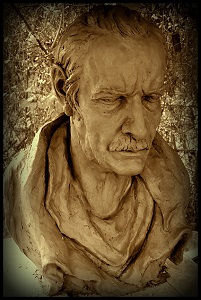
De Griekse dichter, schrijver en zeeman Nikos Kavvadias werd geboren op 11 januari 1910 in Nikolski Ousouriski. Zie ook alle tags voor Nikos Kavvadias op dit blog..


Bitterness

I’d forgotten her, the little girl from Amoi
and the mulatto who stank of wine in Tenerif.
Love that’s reckoned in a wooden hut
and the old woman who tots up the bill in inches.

The purple of Titian and permanganate.
I forgot all about the ramshackle beds
with their dirty sheets used a hundred times,
for your body that banished the fear of death.

I denied what I loved for your bitter lips:
the trembling I felt as I climbed the mast,
the compass, my watch, the course on the map,
for a small, elusive shell from the sea.

The fever in the tropics, the clap in Rio,
the fire we started one day in Manao,
the Magyar who stabbed me that time in Constanza
and “Do you ache in the Southerly?” No, somewhere else.

The pain of the fisherman, loneliness of the sailor,
the broken bow of a boat gone aground.
The faded tattoos I took such pride in,
for you, who weighed anchor, a fully-rigged schooner.

How can I hold you, intractable child?
My kit-bag is my comfort’s my comfort in Asia, America.
A wire cut in two and how can I splice it?
Miserable wretch, the sea hates betrayal.

Polygyros came down and became a harbor,
a dark, narrow harbour without any lights,
tonight when the Jews and Muslims embraced
and the Canary Islands sailed the ocean.

You ‘re only fit for weights on your feet
old man. Two meters of sail, wheel left.
A medusa eyed you, it’s drawing near
and a sea-bed where rays and octopus graze.


 2110365-737ebc7c94bcd4c47fc288831a07897f.jpg
Nikos Kavvadias (11 januari 1910 – 10 februari 1975)
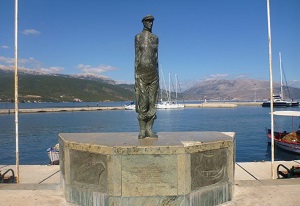
Standbeeld bij de haven van Sami


De Nederlandse (sport)journalist, schrijver en radio- en televisiepresentator Martinus Jan (Mart) Smeets werd geboren in Arnhem op 11 januari 1947. Zie ook alle tags voor Mart Smeets op dit blog.

Uit:For the record - Het boek

“Het antwoord is makkelijk: ja. Hoe kom je erbij om een geluidje uit 1947 (Young was toen ruim een jaar oud) in 2014 te gebruiken voor songs uit de jaren 50, 60 en 70? Hoe kan je, als bedenker van het audioproduct Pono, dat sublieme techniek voorstaat, ineens met een krakend product van A Letter Home naar voren komen? Omdat het 'kunst' is? Of omdat Neil Young doet wat hij altijd gedaan heeft: zijn eigen gang gaan? Voor diegenen die de laatste cd's van Young gekocht hebben (en dan heb ik het over Le Noise, Americana en Psychedelic Pill en een serie live concerten van eeuwen oud) is dit weer een i8o graden wending. Young zelf noemde het, in een kort persbericht, een 'retro tech pro-ject'. De muziekwereld kan, als het zo doorgaat, binnen een halfjaar weer iets anders verwachten. In de tussen-tijd reist hij in Europa rond en jaagt hij met de gierende klanken van The Crazy Horse over al onze podia. Omdat hij het leuk vindt te doen wat in hem opkomt. Het belangrijkste begrip dat me blijft beheersen is verbazing. De man die een paar jaar geleden bijna dood in New York op straat lag, verbaast ons nog steeds met zijn muziek. Als je hem nu het Willie Nelson-nummer 'On the road again' hoort zingen, trekt een lange, trage glimlach over je gezicht, dat kan toch niet anders. Maar een goed luisterbaar album? Neen!”


 2110365-88600090f8021529aea103e4926df102.jpg
Mart Smeets (Arnhem, 11 januari 1947) 
De cover van Neil Youngs “A Letter Home” op YouTube


De Braziliaanse schrijver Oswald de Andrade werd geboren op 11 januari 1890 in São Paulo. Zie ook alle tags voor Oswald de Andrade op dit blog.


Frontier

I want to study philosophy in Paris.
That can't happen
Only if your godfather Antunes pays your way
But life is good anyhow
Godfather Antunes went bankrupt
Life is good
Godfather Antunes died
Mute old church-bell,
you slow your rhythm in a panic
and speed up your ringing
in a rebellion

The seed sprouts with no announcement
The man in the mask will fill your table with joys
That's not going to happen
But life is good anyhow
Poet, you were born destined for liberty;
what a waste to meet the Shepherd? Christmas Star.


Hierofant

It's impossible to live
with these people
or with anybody at all
Suspicion surrounds you like an escutcheon
Dye the scarab
red
and paint the dawn's directions
Sighing multitudes will come from far away
to attend the plangent calf


Vertaald door Flavia Vidal


 2110365-f157923f440437f001b96ce70fa61e42.jpg
Oswald de Andrade (11 januari 1890 – 22 oktober 1954)
Affiche


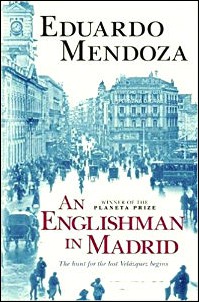
De Spaanse schrijver Eduardo Mendoza werd geboren in Barcelona op 11 januari 1943. Zie ook alle tags voor Eduardo de Mendoza op dit blog.

Uit: An Englishman in Madrid (Vertaald door Nick Caistor)

“The art collection belongs to the wealthy Duke of Igualada, but the paintings Anthony values turn out to be worthless. The duke's beautiful, bewitching daughter Paquita, however, shows him the real treasure which is hidden in the basement: a hitherto unknown Velasquez, and what's more it appears to be the artist's own personal – and more revealing – version of the Rokeby Venus. Anthony believes it to be genuine, which not only means that it is worth a fortune, but it will also guarantee his renown as an art historian for its discovery.
At first Anthony is led to believe the money raised by its sale will finance the family's relocation to the safety of England, then he learns that it may be to buy arms for the quasi-fascist group the Falange, led by Jose Antonio Primo de Rivera, a handsome and charismatic lawyer and a close friend of the duke's family. He is also Paquita's suitor, and Whitelands is drawn into vying for her favours with him.
The Spanish civil guard put Anthony under surveillance, as do Soviet spies, the Falange and the British Embassy. Anthony becomes the lens through which opposing factions can keep an eye on each other, and he is caught in a web of spying, rumour and deception. Mendoza skilfully weaves the changing allegiances and political complexities of the time throughout the narrative to create an atmosphere of distrust and paranoia, with the mounting threat of civil war dominating everyone's motives and actions. This atmosphere of foreboding in a country on the brink of civil war is superbly realised, though at times the narrative is burdened with overlong accounts of one political figure or another.
Nevertheless, this is an engaging comic novel in which our rather ridiculously naive innocent abroad, manipulated by others, finds himself in one predicament after another until his life comes under threat. For all his protestations that as an Englishman he has no opinion about the future of Spain and wishes to take no side, circumstances won't let him sit on the fence. Though the historic elements of the story are certainly authentic, some turns of the plot seem like unnecessary and unbelievable complications, as when Anthony becomes involved with La Tonina, a child prostitute, and the narrative develops farcical overtones, with Anthony at one point having to hide her in the wardrobe in his hotel room.”


 2110365-d53c7eb12f750ab539d938e202d6d047.jpg
Eduardo Mendoza (Barcelona, 11 januari 1943)
Cover


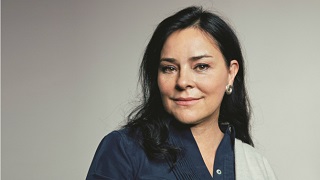
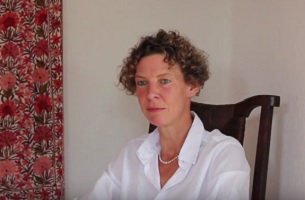
De Amerikaanse schrijfster Diana Gabaldon werd op 11 januari 1952 geboren in Williams, Arizona. Zie ook alle tags voor Diana Gabaldon op dit blog.

Uit: Written In My Own Heart's Blood

“Ian Murray stood with a stone in his hand, eyeing the ground he'd chosen. A small clearing, out of the way, up among a scatter of great lichened boulders, under the shadow of firs and at the foot of a big red cedar; a place where no casual passerby would go, but not inaccessible. He meant to bring them up here — the family.
Fergus, to begin with. Maybe just Fergus, by himself. Mam had raised Fergus from the time he was ten, and he'd had no mother before that. Fergus had known Mam longer than Ian had, and loved her as much. Maybe more, he thought, his grief aggravated by guilt. Fergus had stayed with her at Lallybroch, helped to take care of her and the place; he hadn't. He swallowed hard and, walking into the small clear space, set his stone in the middle, then stood back to look.
Even as he did so, he found himself shaking his head. No, it had to be two cairns. His mam and Uncle Jamie were brother and sister, and the family could mourn them here together — but there were others he might bring, maybe, to remember and pay their respects. And those were the folk who would have known Jamie Fraser and loved him well but wouldn't ken Jenny Murray from a hole in the —
The image of his mother in a hole in the ground stabbed him like a fork, retreated with the recollection that she wasn't after all in a grave, and stabbed again all the harder for that. He really couldn't bear the vision of them drowning, maybe clinging to each other, struggling to keep —
"A Dhia!" he said violently, and dropped the stone, turning back at once to find more. He'd seen people drown.
Tears ran down his face with the sweat of the summer day; he didn't mind it, only stopping now and then to wipe his nose on his sleeve. He'd tied a rolled kerchief round his head to keep the hair and the stinging sweat out of his eyes; it was sopping before he'd added more than twenty stones to each of the cairns.
He and his brothers had built a fine cairn for their father before he died, at the head of the carved stone that bore his name — all his names, in spite of the expense — in the burying ground at Lallybroch. And then later, at the funeral, members of the family, followed by the tenants and then the servants, had come one by one to add a stone each to the weight of remembrance.”

 2110365-424e655afc2b5bab33a8acddba66c5a4.jpg
Diana Gabaldon (Williams,11 januari 1952)


De Macedonische dichter en schrijver Slavko Janevski werd geboren op 11 januari 1920 in Skopje. Zie ook alle tags voor Slavko Janevski op dit blog.


Markings

This race,
this wonderful race!

Here it kisses the hangman
with a golden noose round its neck;
here for a fistful of mulberries
it fights to the blood with a brother;
here it gets drunk with rage,
foaming at the mouth,
here it plucks the live heart
from a dove.

This race,
this wonderful race!

In its furrows
under the sun awakens
a flower with a biblical name:
Mother-of-God's-heart.


 2110365-f2adb59b3153a9c66b57190f53ca8843.jpg
Slavko Janevski (11 januari 1920 – 20 januari 2000)
Borstbeeld door Nataša Bozarova


Zie voor nog meer schrijvers van de 11e januari ook mijn blog van 11 januari 2017 en ook mijn blog van 11 januari 2015 en ook mijn blog van 11 januari 2016 deel 2.

Zie voor bovenstaande schrijvers ook mijn blog van 11 januari 2007 en ook mijn blog van 11 januari 2008 en eveneens mijn blog van 11 januari 2009.

Geschreven door Romenu om 18:23 Reageer op dit bericht

Meer van Romenu

↑ Terug naar de berichten