Naar de inhoud

Romenu

Over literatuur, gedichten, kunst en cultuur
akke.beakke.be

Berichten van 9 mei 2015 tot 10 mei 2015

An meine Mutter (Annette von Droste-Hülshoff)


Bij Moederdag


 1762481-e38e1c04b5d35e97c0f233f9ca773f76.jpg
Moeder met kinderen bij een raam tijdens de schemer door Viggo Pedersen (1854 - 1926)


An meine Mutter

So gern hätt' ich ein schönes Lied gemacht
Von Deiner Liebe, deiner treuen Weise;
Die Gabe, die für andre immer wacht,
Hätt' ich so gern geweckt zu deinem Preise.

Doch wie ich auch gesonnen mehr und mehr,
Und wie ich auch die Reime mochte stellen,
Des Herzens Fluten wallten darüber her,
Zerstörten mir des Liedes zarte Wellen.

So nimm die einfach schlichte Gabe hin,
Von einfach ungeschmücktem Wort getragen,
Und meine ganze Seele nimm darin:
Wo man am meisten fühlt, weiß man nicht viel zu sagen.


 1762481-c6f809abba70bf32e156c5f8f5417fd5.jpg
Annette von Droste-Hülshoff (10 januari 1797 – 24 mei 1848)
Therese von Droste-Hülshoff, geb. von Haxthausen, moeder van de dichteres, rond 1830


Zie voor de schrijvers van de 10e mei ook mijn vorige drie blogs van vandaag.

Geschreven door Romenu om 13:36 Reageer op dit bericht

J.C. Bloem, Herman Leenders, Didi de Paris, Ralf Rothmann, Jeremy Gable, Petra Hammesfahr

De Nederlandse dichter J. C. Bloem werd geboren op 10 mei 1887 in Oudshoorn. Zie ook alle tags voor J. C. Bloem op dit blog en ook mijn blog van 10 mei 2013 en ook deze tags voor J. C. Bloem.


Het huisje in de duinen

Muurbloemen bloeiden voor het lage raam.
Het late middaglicht was warm en bronzen,
en de ongerepte stilte klonk als gonzen
van vele kleine vleugelen te zaam.

En achter het beschutte, kleine huis
verhieven zich de wit-geblaakte duinen:
een strakke hemel stond boven hun kruinen;
haast niet te horen was het zeegeruuis.

Hier scheen de macht van 't onheil te vergaan,
één ogenblik. Hier scheen 't geluk bereikbaar,
de lome druk der daaglijksheid ontwijkbaar
binnen de grens van een beperkt bestaan.

Welke is die mensen ingeschapen drang,
die geen vervulling duldt van het begeerde,
maar altijd van hun zwakke harten weerde,
waarnaar zij joegen, heel hun leven lang ?


Feestavond

Roode lantarens hangen in het loover
Der boomenrijen langs de gracht en over
Het water liggen plekken rooden schijn,
Als uitgestorte, vurig-lichte wijn.

Onder de boomen gaan gearmde paren;
Zacht klinkt hun spreken als 't geruisch der blaren,
Zacht is hun lachen — de avond is zoo zwoel. —
Heel in de verte juicht kermisgejoel.

Ik loop alleen langs die geluk' ge menschen,
Verlangend, maar ik weet niet wat te wenschen...
Ach ja: óok lachend en gearmd te gaan
Door de avondstilte in deze luwe laan.


Futura

Als eens de hooge vloed der jeugd gaat dalen,
Dan vloeit mijn leven kalm en toch zoo schoon
'Lijk 't water in de Hollandsche kanalen:
Doodstil, maar spieglend lucht en boom en woon.

Dan leef ik in een wit huis, weggedoken
Ter zij van de' allen winden open dijk,
Temidden van de honinglijke roken
Van linden en van rozelaars in prijk.

De kamers groot en laag, en lange gangen,
Waarin de steenen vochtig zijn als mos,
En bieden wien de hitte heeft bevangen
Heraadming als na verre heide een bosch.

Achter den tuin zijn diepe, groene weiden,
Waardoor het staal der slooten lijnrecht snijdt,
En slechts van vogels, die hun wieken breiden
Of wolken een doorzichten schaduw glijdt.

Ik zie den hemel daags in vele verven,
Alle schakeeringen der teerheid, staan,
En sluit, wanneer het land den dag gaat derven,
Mijn luiken niet voor 't loutre licht der maan.

Als dan mijn lijf, het raam —nachtschouw —verlaten,
Gelijk het dorpje in vroege rust verzinkt,
Hoor ik in halven slaap nog hoe een late,
IJzeren hoefslag langs de klinkers klinkt.


 1762474-bbb0829b3fc0b4ba212fff4d2293ffc5.gif
J.C. Bloem (10 mei 1887 – 10 augustus 1966)
Portret door W. Schuhmacher, 1948


De Vlaamse dichter en schrijver Herman Leenders werd geboren te Brugge op 10 mei 1960. Zie ook alle tags voor Herman Leenders op dit blog.


Kleermaker

Hij meet de afstand tussen mijn kruis en de grond.
Hij legt zijn centimeter om mijn hals als een strop.
Zijn vingers betasten de stof.

Ik hou mijn armen stijf uiteen:
een vogelschrik in de binnenkant van kleren.
De naalden prikken door de voering heen.

Ik word opgemeten als een partij land.
Zijn vrouw stelt mij te boek.
Hij dicteert haar

-de spelden in zijn mond-
drie rijden getallen
die nooit zullen krimpen bij het wassen.


Naar Remigius

Vroeger waren het grootouders, groottantes
Dan nonkels, moeders, vaders
Nu wij: wees, weduwe, weduwnaar

Altijd minder broers
Altijd minder zussen
Zodat wij slobberen in ons vel

Wij waren bakker, wever, timmerman
Landsman, stikster, duivenmelker
Wij hadden macht, verstand, kloten, geld

Rouwden en wrochten
Naaiden, koersten, dronken
Werden begeerd, omarmd, hadden lief

Wij hebben de tijd gedood
En de tijd die wij fêteerden
Doodde ons

Zoals later veraf lijkt
Zo onvoorstelbaar
Alsof het gisteren was


 1762474-41b18286214230b99c26ff5f1b133262.jpg
Herman Leenders (Brugge, 10 mei 1960)


De Vlaamse dichter en schrijver Didi de Paris werd geboren op 10 mei 1957 in Leuven. Zie ook alle tags voor Didi de Paris op dit blog.

Uit: Blake

« Er hing onweder in de lucht. Het was de koning zijn verjaardag en de regering had net een nieuwe wet uitgevaardigd. Voortaan moest iedereen om het kwartier enkele danspasjes uitvoeren.
Typisch een besluit voor een marionettenregering, hoorde men knarsetanden. Gelukkig zijn er nog geen richtlijnen uitgevaardigd over de dansstijl, riepen de geboren optimisten luidkeels. Toch keek iedereen voorzichtig om zich heen alvorens de eigen mening te geven.
Men was bang; voor meningitis.
Het uiten van opinies was verplicht, jaren geleden vervat in de assertiviteitswet. Op de uitvoering van nieuwe wetten kijkt men het strengst toe. Het regende zware boetes.
Zoals steeds werd de nieuwe richtlijn door de massa slaafs opgevolgd. Een minderheid hield in de mate van het mogelijke halsstarrig het been stijf. Een nog kleinere groep van fanatieke wetsopvolgers, onder hen veel goeroes, sjamanen en bidsprinkhanen, zag in de geest van de wet een heropleving van het spiritueel leven. Zij gooiden zich vier keer per uur vol overgave ter aarde, rolden vloekend, scheldend en schuimbekkend over het tapijt, kreten slakend zoals 'Rock My Religion!' en 'Yeah, man!'.
Hemelse gezangen daalden neder, vurige tongen en spreekkoren op tv. Op alle netten waren er debatten en panelgesprekken. Het zou de bloedsomloop stimuleren, de mensen zouden ouder worden. De contra's sisten dat de sociale zekerheidskas al leeg was. De voorstanders wezen er op dat in China het werkvolk, alvorens in de fabriek aan de slag te gaan, toch ook verplicht werd eerst in de ochtendlijke straten Tai Chi oefeningen te doen. Hierop zou een westerse variant gevonden worden: alle vrouwen komen een half uurtje eerder naar kantoor, en geven zich over aan Slender You Programms, overal zet men giant screens met Jane Fonda die haar Aerobics lipt. Als beloning mag de disco voor de rest van de dag aanblijven; een beat die hoger ligt dan de menselijke hartslag kan het Bruto Nationaal Product alleen maar opdrijven.”


 1762474-3a3b1ca0bd15a7a82c688e5e3e7f4735.jpg
Didi de Paris (Leuven, 10 mei 1957)


De Duitse dichter en schrijver Ralf Rothmann werd op 10 mei 1953 geboren in Schleswig. Zie ook alle tags voor Ralf Rothmann op dit blog.

Uit: Milch und Kohle

"Die Lohntüte lag noch auf dem Tisch. Meine Mutter hatte die Arme um die Taille meines Vaters geschlungen, den Kopf an seine Schulter gelegt. Sonnenschein."Sonnenschein? Nein, 'Milch und Kohle' erzählt von einer anderen Welt Ende der sechziger Jahre. Der Vater, ein Hauer unter Tage: "Nur eine Stunde müßtet ihr mal da runter. Gestern bis zum Bauch im Wasser. Nie ein Stück Himmel." Doch pflichtbewußt fährt er zur Zeche - und trauert dem Leben als Melker in Norddeutschland nach, das er seiner Frau zuliebe aufgegeben hat. "Und warum?" fragt der fünfzehnjährige Simon seine Mutter. "Was ist besser hier, im Ruhrpott?" Die Antwort: "Hier ist Stadt: Asphaltierte Straßen, ein Fernseher, jeden Samstag Tanz bei 'Maus'..." Und eines Tages bringt der Vater ein paar Kumpel mit nach Hause, die dem Arbeitsalltag so etwas wie Glanz geben mit ausgelassenen Festen. Die Mutter verliebt sich in Gino, den Italiener. Vor dem drohenden Unheil flieht Simon, indem er mit seinem Freund Pavel die Gegend auf der Zündapp durchstreift, pubertäre Abenteuer sucht. Bei seinem jüngeren Bruder Thomas, genannt Traska, verursacht die Sache mit der Mutter dagegen eine schreckliche, ja haarsträubende Reaktion...“


 1762474-7205186205b235d43089e19f417419fb.jpg
Ralf Rothmann (Schleswig, 10 mei 1953)


De Amerikaanse toneelschrijver Jeremy Gable werd geboren op 10 mei 1982 in Lakenheath, Suffolk, in Engeland. Zie ook alle tags voor Jeremy Gable op dit blog. 

Uit: The 15th Line

„JANUARY 30TH

PATRICK: @angiannini89  So, did you like the interview?
SETH: I need to do something heroic.  To make up for my cowardice.  Any damsels in distress out there?
ANGELA: @pattycitypress Yep.  It was cool.  Thanks!
ANGELA: Someone just called me a hero.  I’m guessing because I didn’t die.  The definition of hero is pretty broad, huh?
ANGELA: Aaaand someone just called me a prostitute.  It all comes around.  Thanks, Tiff!
PATRICK: @angiannini89 Glad you enjoyed it.  And you are a hero, not a prostitute.  :-)
DUSTIN: A quiet house. »


 1762474-6a14865e5ee8d8a599631b1b915d732e.jpg
Jeremy Gable (Lakenheath, 10 mei 1982)


De Duitse schrijfster Petra Hammesfahr werd geboren in Immerrath op 10 mei 1951. Zie ook alle tags voor Petra Hammesfahr op dit blog.

Uit: An einem Tag im November

„Es war ein nettes Wochenende mit Freunden und hätte nicht in einer Tragödie enden müssen, wenn sie aufgebrochen wären, als Holger Notkötter seine Frau Elke das erste Mal daran erinnerte, dass er am nächsten Morgen um sechs aus den Federn musste und sie noch vierhundertachtzig Kilometer Heimfahrt vor sich hatten.
Das war am Sonntagnachmittag um vier.
Angekommen waren sie am Freitagabend, zu spät und zu müde, um noch lange mit Biggi und Bob beisammenzusitzen und sich zu unterhalten. Aber dafür hatten Elke und ihre Freundin den ganzen Samstag und den halben Sonntag Zeit. Der ursprünglich geplante Ausflug nach Hamburg fiel ins Wasser. Wer lief denn freiwillig bei Nieselregen und Kühlschranktemperaturen über die Reeperbahn?
Holger wäre gerne gelaufen, wenigstens mal gucken, wenn man schon in der Nähe war. Er war noch nie in Hamburg gewesen und hatte seine Wetterjacke dabei. Bob hätte sich wohl ebenfalls lieber auf den Weg gemacht, statt sich den ganzen Samstagabend das Geplapper der Frauen anzuhören. Aber da Bob den beiden nicht widersprach, hielt Holger um des lieben Friedens willen ebenfalls den Mund.
Holger Notkötter war dreiundvierzig, Elke achtunddreißig. Sie waren erst seit elf Monaten miteinander verheiratet. Für beide war es die zweite Ehe. Und Holger war fest entschlossen, es diesmal besser zu machen. Seine Ex hatte ihm oft vorgeworfen, er nähme zu wenig Rücksicht auf ihre Bedürfnisse, ehe sie ihre Sachen packte und zu ihrem neuen Freund zog.
Sohn und Tochter nahm sie mit.
Holger behielt die Vierzimmerwohnung in Hüppesweiler, einem Gutshof, der zwischen der Kreisstadt Bergheim und der Kleinstadt Herten im nördlichen Rhein-Erft-Kreis lag. Außer dem imposanten Gutshaus und einigen landwirtschaftlichen Nebengebäuden gab es dort drei gepflegte Mietshäuser mit je sechs Wohnungen, die großzügig geschnitten und dennoch erschwinglich waren. In den meisten lebten Familien. Für Kinder war Hüppesweiler ein Paradies.“


 1762474-3bdeec4395c97a8a861d07e2c62f6802.jpg
Petra Hammesfahr (Immerrath, 10 mei 1951)


Zie voor nog meer schrijvers van de 10e mei ook mijn vorige twee blogs van vandaag.

Geschreven door Romenu om 13:19 Reageer op dit bericht

Jayne Cortez, Roberto Cotroneo, Barbara Taylor, Benito Pérez Galdós, Johann Peter Hebel

De Amerikaanse dichteres en performster Jayne Cortez werd geboren op 10 mei 1936 in Fort Huachuca, Arizona. Zie ook alle tags voor Jayne Cortez op dit blog.


Poetry

In fact
poetry
will not
strike
lightning
through
any
convoy of chickens

Today poems are like flags
flying on liquor store roof
poems are like baboons
waiting to be fed by tourists

& does it matter
how many metaphors
reach out to you
when the sun
goes down like
a stuffed bird in
tropical forest
of your solitude

In fact
poetry
will not
sing jazz
through
constricted mouth
of an anteater
no matter how many
symbols survive
to see the moon
dying in saw dust
of your toenail


 1762472-46e6979da84a6d9aec25da9ef3a91aa1.jpg
Jayne Cortez (Fort Huachuca, 10 mei 1936)


De Italiaanse schrijver Roberto Cotroneo werd op 10 mei 1961 geboren in Alessandria. Zie ook alle tags voor Roberto Cotroneo op dit blog.

Uit: Letters to my son on the love of books (Vertaald door N. S. Thompson)

“The Captain's presence disturbs the everyday life of this English family living at the beginning of the eighteenth century: he drinks too much, doesn't pay his bills, and has a violent nature. It is in these early pages, Francesco, that the lines are made unclear. The terrible Bill announces himself in all his loud and conceited banality, but he is simply a joke of a pirate or—to be more precise—he is made to appear so. One evening when he tries to go too far, the rum having made more than its usual mark, he is first threatened, then silenced by Dr. Livesey. Billy Bones is nothing more than Stevenson's means to force Jim on a journey that will take him from adolescence, with its inevitable pain and damage, into adulthood. With Billy's arrival, Jim's father falls ill, then after some time, dies, and everything at the inn becomes more difficult. Jim and his mother find it an increasing effort to look after so troublesome a guest as the captain, especially when he starts to receive visits from Black Dog and Blind Pew.
Some pages back I spoke to you about good and evil and about why this novel is a kind of journey of initiation into life. It is a complex journey where many characters come into play: main characters who appear minor, and vice versa. It is a novel that has none of the linearity or apparent simplicity of certain oriental tales of initiation. When you are grown up, you will read books like René Daumal's Mount Analogue and understand that there are many ways of overcoming the obstacles that life places in your path: sometimes they are linear, with progressive steps; but they can also take a different course and follow a more shifting, circuitous path, where it seems that you slide about, taking two steps forward and one step back. Books are also like that, Francesco, they digress and speak of other things, before returning to the main subject with an added something. Treasure Island is a novel about a journey that is very different from what it first announces itself to be. It is about the end of innocence: it is true that it is a book for children, but once they read it, and read it carefully (although perhaps a single reading won't suffice), then they can only grow."


 1762472-a228fe09233c4059b44da21ab0e4624f.jpg
Roberto Cotroneo (Alessandria, 10 mei 1961)


De Engelse schrijfster Barbara Taylor Bradford werd geboren in Leeds, West Yorkshire op 10 mei 1933. Zie ook alle tags voor Barbara Taylor Bradford op dit blog.

Uit: An Altar in the World: A Geography of Faith

“To make bread or love, to dig in the earth, to feed an animal or cook for a stranger—these activities require no extensive commentary, no lucid theology. All they require is someone willing to bend, reach, chop, stir. Most of these tasks are so full of pleasure that there is no need to complicate things by calling them holy. And yet these are the same activities that change lives, sometimes all at once and sometimes more slowly, the way dripping water changes stone. In a world where faith is often construed as a way of thinking, bodily practices remind the willing that faith is a way of life.”
(…)

“People encounter God under shady oak trees, on riverbanks, at the tops of mountains, and in long stretches of barren wilderness. God shows up in whirlwinds, starry skies, burning bushes, and perfect strangers. When people want to know more about God, the son of God tells them to pay attention to the lilies of the field and the birds of the air, to women kneading bread and workers lining up for their pay. Whoever wrote this stuff believed that people could learn as much about the ways of God from paying attention to the world as they could from paying attention to scripture. What is true is what happens, even if what happens is not always right. People can learn as much about the ways of God from business deals gone bad or sparrows falling to the ground as they can from reciting the books of the Bible in order. They can learn as much from a love affair or a wildflower as they can from knowing the Ten Commandments by heart.”


 1762472-088ddd003a1c641d96ea66c68129113c.jpg
Barbara Taylor Bradford (Leeds, 10 mei 1933)


De Spaanse schrijver Benito Pérez Galdós werd geboren in Las Palmas op 10 mei 1843. Zie ook alle tags voor Benito Pérez Galdós op dit blog. 

Uit: Our friend Manso (Vertaald door Robert Russell)

“What had happened to that repose and marvelous equilibrium of the North European woman I had seen in her? In those fine qualities, as in others, I had got the notion that she was, among all the creatures I had seen on earth, the most perfect. Oh, those perfections were in my books, they were the product of my penchant for thinking and synthesizing, and of my too-frequent dealings with an idea of unity and with the great laws of that deadly gift for perceiving archetypes and not persons.”
(…)

“My new affliction consisted of having a vision of her bereft of all the perfections in which my ideas had clothed her, and in realizing I found her more interesting and loved her more this new way. In a word, I reached the point of feeling a burning idolization of her. A strange contradiction! When she was perfect, I loved her in a Petrachan way, with cold sentimental feeling that might have inspired me to write sonnets. Now that she was imperfect, I adored her with a new and tumultuous affection, stronger than I and all my philosophizing.“


 1762472-c73af12c467839c5168d694f776014e5.jpg
Benito Pérez Galdós (10 mei 1843 - 4 januari 1920)
In 1863 


De Duitse dichter,schrijver, pedagoog en theoloog  Johann Peter Hebel werd geboren op 10 mei 1760 in Basel. Zie ook alle tags voor Johann Peter Hebel op dit blog.

Uit: Der Zundelheiner

„Der geneigte Leser wird ermahnt, nicht alles für wahr zu halten, was in dieser Erzählung vorkommt. Doch ist sie in einem schönen Buch beschrieben, und zu Vers gebracht.
Der Zundelheiner und der Zundelfrieder trieben von Jugend auf das Handwerk ihres Vaters, der bereits am Auerbacher Galgen mit des Seilers Tochter kopuliert war, nämlich mit dem Strick; und ein Schulkamerad, der rote Dieter, hielt's auch mit, und war der jüngste. Doch mordeten sie nicht, und griffen keine Menschen an, sondern visitierten nur so bei Nacht in den Hühnerställen, und wenn's Gelegenheit gab, in den Küchen, Kellern und Speichern, allenfalls auch in den Geldtrögen, und auf den Märkten kauften sie immer am wohlfeilsten ein.
Wenn's aber nichts zu stehlen gab, so übten sie sich untereinander mit allerlei Aufgaben und Wagstücken, um im Handwerk weiter zu kommen. Einmal im Wald sieht der Heiner auf einem hohen Baum einen Vogel auf dem Nest sitzen, denkt, er hat Eier, und fragt die andern: «Wer ist imstande und holt dem Vogel dort oben die Eier aus dem Nest, ohne daß es der Vogel merkt?» Der Frieder, wie eine Katze, klettert hinauf, naht sich leise dem Nest, bohrt langsam ein Löchlein unten drein, läßt ein Eilein nach dem andern in die Hand fallen, flickt das Nest wieder zu mit Moos, und bringt die Eier. «Aber wer dem Vogel die Eier wieder unterlegen kann», sagte jetzt der Frieder, «ohne daß es der Vogel merkt?» Da kletterte der Heiner den Baum hinan, aber der Frieder kletterte ihm nach, und während der Heiner dem Vogel langsam die Eier unterschob, ohne daß es der Vogel merkte, zog der Frieder dem Heiner langsam die Hosen ab, ohne daß es der Heiner merkte. Da gab es ein groß Gelächter, und die beiden andern sagten: «Der Frieder ist der Meister.»
Der rote Dieter aber sagte: «Ich sehe schon, mit euch kann ich's nicht zugleich tun, und wenn's einmal zu bösen Häusern geht, und der Unrechte kommt über uns, so ist's mir nimmer angst für euch, aber für mich.» Also ging er fort, wurde wieder ehrlich, und lebte mit seiner Frau arbeitsam und häuslich.“


 1762472-0422cedec2f8341d1a4be387d04fb1d5.jpg
Johann Peter Hebel (10 mei 1760 – 22 september 1826)
Portret door Adolf Glattacker, 1925


Zie voor nog meer schrijvers van de 10e mei ook mijn vorige blog van vandaag.

Geschreven door Romenu om 13:18 Reageer op dit bericht

Antonine Maillet, Ivan Cankar, Martin Boelitz, Ariel Durant, Fritz von Unruh, Leonard Buyst

De Canadese schrijfster Antonine Maillet werd geboren op 10 mei1929 in Bouctouche, New Brunswick. Zie ook alle tags voor Antonine Maillet op dit blog.

Uit: Bearsaga (L’Oursiade, vertaald door david L. Koral)

“They say his mother fed him on bear’s milk as she went through the terminal stage of tuberculosis. No doubt about it: once every two years, when the conditions are right, the black she-bear drops a litter, and for five months she nurses her two or three cubs. One more infant at her breast wouldn’t make her run dry. But no one could say how a woman who had just given birth, consumptive to boot, managed to draw milk from a six-hundred-pound sow and be left unscathed. Not a single scratch. These were lean times for everyone, they say, while the bears, on the other hand, abounded in the woods, glutted and fat. Believe what you like. In any case, a mother whose breasts are empty and knows she’s a goner won’t be too picky, and builds up her resolve. It’s true. Under similar circumstances, the weathervane’s been known to beat back the wind. But to go rummaging through the belly fur of a mother bear as she stepped out of her winter quarters with a yawn and two woolly balls of fur rolling by her sides and tumbling between her paws. To elbow newborn cubs out of the way to make room for her own: a pink, hairless little man…no, there’s no way Simon the Halfbreed could have suckled milk from a bear, as it’s been told; he must have been fed by one of those few, kindhearted wet-nurses untouched by the Spanish flu or the times of tuberculosis. Anyway, even the most fanatical hunter would never kill his nurse, anyone could tell you that. That’s a whole different matter. For this outlaw, the law of blood was the same as any other. A law is a law. Simon was born outside.”


 1762468-4e7875218f2152e07e6cea290e513182.jpg
Antonine Maillet (Bouctouche, 10 mei 1929)


De Sloveense schrijver, dichter en toneelschrijver. Ivan Cankar werd geboren in Vrhnika op 10 mei 1876. Zie ook alle tags voor Ivan Cankar op dit blog.

Uit: A Cup of Coffee (Vertaald door Louis Adamie)

“One day I craved black coffee. I don't know how it came to my mind; I simply wanted some black coffee. Perhaps because I knew that there was not even a slice of bread in the house and that much less coffee. Sometimes a person is merciless, cruel.
Mother looked at me with her meek, surprised eyes but would not speak. After I informed her that I wanted some black coffee, I returned to the attic to continue my love story, to write how Milan and Breda loved each other, how noble, divine, happy and joyful they were.—"Hand in hand, both young and fully alive, bathed in morning dew-drops, swaying—"
Then I heard light steps on the stairs. It was mother, ascending carefully, carrying a cup of steaming coffee. Now I recall how beautiful she was at that moment. A single ray of sun shone directly into her eyes through a crack in the wall. A divine light of heaven, love and goodness were there in her face. Her lips held a smile as those of a child bringing one a gift. But—
"Leave me alone!" I said harshly. "Don't bother me now! I don't want any coffee!"
She had not yet reached the top of the stairs. I saw her only from her waist up. As she heard my words, she stopped and stood there motionless, only the hand holding the cup shook. She stared at me in terror and the light in her face died.
Blood rushed to my head, from shame, and I stepped toward her as quickly as I could.
"Give it to me, mother."
But it was too late. The light in her face had died. The smile on her lips had vanished.
As I drank the coffee, I said to myself:
"Tonight I shall speak tenderly to her and make up for what I have done."
In the evening I could not speak to her kindly, nor the next day.
* * *

Three or four months later a strange woman brought a cup of coffee to my room. Suddenly I felt a sting in my heart. I wanted to cry out from pain. I shivered, my whole being trembling in stark agony.—For a man's heart is a just judge; a man's heart does not concern itself with paragraphs in statute books or trifles.”


 1762468-d721c55e6d07c46c501a25e143254ca1.jpg
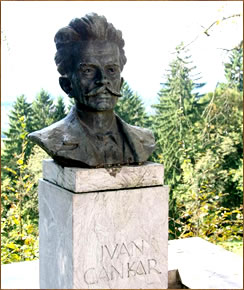
Ivan Cankar (10 mei 1876 - 11 december 1918)
Borst beeld in Ljubljana


De Duitse dichter Martin Boelitz werd geboren op 10 mei 1874 in Wesel. Vanaf 1902 leidde hij de uitgeverij Nieter in Nürnberg. Zie ook alle tags voor Martin Boelitz op dit blog.


Spielmannslied

Herr Nachbar, riegelt die Thüren fest,
Ein Dieb steht auf der Lauer,
Herr Nachbar, dass Ihr nicht vergesst,
Euer Zeisig lockt im Bauer,
Steckt schon das krause Köpfchen raus,
Herr Nachbar, hütet Euer Haus!
Ting ting, pinkperingping,
Ein Zeisig ist ein loses Ding
Zrrrr …

Im Schützenzelt ist Tanzmusik,
Hei, wie die Aeuglein blinken!
Der Spielmann geigt sein Meisterstück,
Vergisst sogar das Trinken,
Muss immer nach der Dirne schaun,
Stünd’ lieber mit ihr am Gartenzaun –
Ting ting, pinkperingping,
Ein Zeisig ist ein loses Ding
Zrrrr …

»He Jungfer!« – aber die Jungfer lacht,
Schlüpft kichernd durchs Gedränge,
Durch’s Hofthor in die Sommernacht,
Ins blühende Gehänge,
Das Köpfchen ward ihr gar zu warm,
Nun träumt’s in einem Spielmannsarm –
Ting ting, pinkperingping,
Ein Zeisig ist ein loses Ding
Zrrrr ziu!


 1762468-37910e0cba2add2b00dc6bbdcd7fe6e3.jpg
Martin Boelitz (10 mei 1874 – 5 december 1918)
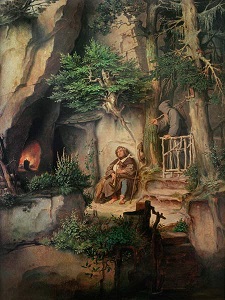
Moritz von Schwind - Ein Spielmann bei einem Einsiedler, 1846


De Amerikaanse schrijfster Ariel Durant (eig, Chaya Kaufman) werd geboren op 10 mei 1898 in Proskoeriv, tegenwoordigChmelnytsky in de Oekraïne. Zie ook alle tags voor Ariel Durant op dit blog..

Uit: Napoleon (Samen met Will Durant)

“He was “scrupulously neat in his person.” He had a passion for warm baths, sometimes lingering in them for two hours; probably he found in them some relief from nervous tensions, muscular pains, and an itching skin disease that he had contracted at Toulon. He used eau-de-cologne on his neck and torso as well as on his face. He was “exceedingly temperate” in food and drink; diluted his wine with water, like the ancient Greeks; and usually gave only ten or fifteen minutes to his lunch. On campaigns he ate as chance allowed, and often hurriedly; sometimes this led to indigestion, and at the most critical moments, as at the battles of Borodino and Leipzig. He suffered from constipation; in 1797 he added hemorrhoids, which he claimed to have cured with leeches. “I never saw him ill,” said Meneval, but he added: “He was only occasionally subject to vomiting bile, which never left any aftereffects....He had feared, for some time, that he was affected with a diseases of the bladder, because the keen air of the mountains caused him a kind of dysuria; but this fear was found to be without foundation.” However, there is considerable evidence that in his later life Napoleon was afflicted with inflammation of the urinary tract, sometimes leading to painful and inconveniently frequent urination. His overstrung nerves sometimes (as at Mainz in 1806) collapsed into convulsions partly resembling epileptic seizures; but it is now generally agreed that he was not subject to epilepsy. »


 1762468-037f5c47738a5d79882403f5183b83fd.jpg
Ariel Durant (10 mei 1898 – 25 oktober 1981)


De Duitse schrijver Fritz von Unruh werd geboren op 10 mei 1885 in Koblenz. Zie ook alle tags voor Fritz von Unruh op dit blog.

Uit: Opfergang

„Sergeant Hillbrand wandte sich: „Herrgott, warum diese verzweifelte Heimatsliebe? Gleicher Mond, Nebel — und Wiesenglanz; Wälder wie daheim! Brüder, warum hat man die Heimat so lieb?" — Leiser Gesang um des Zuges Gepolter. Funkelnde Augen, Kopf an Kopf sahen Kameraden sternenweit. Es wurde still. Vize Clemens flüsterte: „Eisen rollt über Eisen. So hart, so weh!" Die anderen waren eingeschlafen.
Ruck schüttelte alle übereinander. „Sedan!" Der Kriegsfreiwillige sprang auf: „Was ist hier? Sedan? Dieser Ort ist Sedan?" — „Vorhang zu! Aufs Ohr gelegt," brummte der Trommler. „Sedan!" klang es aus tiefer, träumender Brust. „Weiß der Kuckuck, heulst Du, Heinz?" — Ungestüm drückte der Freiwillige des Gefreiten Hand: „Es ist so seltsam, so viel, zuviel für mich!" Preis streichelte ihn: „Quatsch! Wird ja erst kommen, nur Geduld, Kerlchen. Geduld ist mehr als alle Weisheit!" — Unter dem Vorhang kam ein dünner Soldat hereingebückt, „Kellner" genannt. Der Trommler richtete sich auf: „Nun, von Latrine?"
„Jawohl, und aus sicherer Quelle; vor uns soll schon ein Korps durchgekommen sein!" — Clemens pustete in erfrorene Hände: „Was ich gesagt habe, Jungens!" — Spott und Scherz gingen im Lärm des Weiterfahrens unter. Man schlief wieder ein.
Räder auf Schienen! Schienen unter Rädern! Drängender Dampf in Röhren und Kolben. Stöhnen und Jauchzen!
Dem Clemens trat Schweiß auf die Stirne. Er zog die Beine zur Brust und horchte: Wollende Flucht von Millionen Atomen! Bändigende Zucht, befehlender Geist! Eisen auf Eisen, fliegende Kraft! Der Lehrer fuhr zusammen, immer wenn es über eine Weiche ging. Er hörte Granaten und Einschlagriß und krümmte die Zehen. „Wofür lernte ich, wofür lehrte ich?"


 1762468-d94367f97702dcca6aa3c7e0861b6a7f.jpg
Fritz von Unruh (10 mei 1885 – 29 november 1970)


De Vlaamse schrijver en dichter Leonard Buyst (ook wel Léonard) werd geboren in Lokeren op 10 mei 1847. Zie ook alle tags voor Leonard Buyst op dit blog.

Uit: Carel Scharten: De stand onzer hedendaagsche dichtkunst (De Gids, 1909)

“Vooreerst, dat, waar het Vlaamsche verhalend proza, met Streuvels, Buysse en Vermeylen, wellicht door het Nederlandsche niet geëvenaard wordt, de poëzie echter, sinds Gezelle's dood, bij die van Holland achterstaat.
Naast een enkelen ouderwetschen poëet als Buyst, over wiens hoofd het geheele tijdperk der laatste kwart-eeuw ongemerkt schijnt heen gegaan, en een aantal Nieuwe-Gids-decadenten, van wie wij hier Nijlen en Van den Oever als de vertegenwoordigers zien, - heeft Vlaanderen eigenlijk alleen zijn Boutens in den dichter Karel van de Woestijne.
(…)

Wat zal ik ook over vader Leonard Buyst nog in den breede spreken, Buyst, den schrijver van poëzie als:

‘Laat me 't nijdig lot vergeten
 op uw fraaie, albasten borst’;

- poëzie, die heusch frisch is, gehouden naast Van den Oever's zeverige klachten.
Maar zelfs over den hoog boven zijn mededichters ‘planenden’ Karel van de Woestijne heb ik weinig op het hart.”


 1762468-086709189ab4ee8645adcb69b7ba156e.jpg
Leonard Buyst (10 mei 1847 -20 december 1918)

Geschreven door Romenu om 13:17 Reageer op dit bericht

Pieter Boskma, Jotie T'Hooft, Charles Simic, Jan Drees, Leopold Andrian, Alan Bennett, Lucian Blaga

De Nederlandse dichter en schrijver Pieter Boskma werd geboren in Leeuwarden op 9 mei 1956. Zie ook alle tags voor Pieter Boskma op dit blog.


Nostalgische priëlen

I
‘ga niet ruggelings in nostalgische priëlen.
alles verjongt zich, behalve de ziel,
groter de kloof met wie je al was -
ga niet ruggelings in nostalgische priëlen.
 
de zon zal een onbetrouwbare gloed in het daglicht leggen
en een voorspelde profetie uit de hanen geselen
de doden zullen er slijpen de zeisen en
wankelen naar het vruchtbare veld, en moeders
zullen hoeren zijn als zij dragen de vrucht van je vlees.
 
nee, ga niet ruggelings in nostalgische priëlen.
een kim verheft zich uit het gras en noemt zich
levensdoel; daarachter dansen duizend zwarte
kimmen op een rij. er zal geen vrijgesproken oog
opnieuw details vergulden met een milde tong van binnen.
 
en wat er torent heeft naam en schaduw.
bestrijkt met grote macht de aanzet tot gedachten
die vervagen achter de gestalten van de zo even
nog klinkende dingen, dus nee:
ga niet ruggelings in nostalgische priëlen...’


II
‘... of in de violette winter waar de jeugd patent op heeft,
waar portieken fonkelen van blozende omhelzingen,
achter ouderwetse vensters, in de schemerende serres,
beosnavels glanzen als een bloeddoorlopen oog,
waar lantarenlicht zich uitrekt als een majesteit,
stiller dan de jaren vijftig weer de jonge vrouwen lachen
en zich statig weten in hun drachtige heelal,
waar lopers op de sloten passen met een zucht
van heimwee, houtrook uit een woonboot een moment
een meeuw verbijstert en hem verbrande veren geeft
waar de zolders gloeien voor een redeloze toekomst
en gipsen cherubijnen tegen de beroete gevels
geen wolkjes adem zuchten, maar verdomd: van goud.’


 1762049-0ec5ce4e322b502d93f3b11fa9d4f06c.jpg
Pieter Boskma (Leeuwarden, 9 mei 1956)


De Amerikaanse dichter Charles Simic werd geboren in Belgrado op 9 mei 1938. Zie ook alle tags voor Charles Simic op dit blog.


Errata

Where it says snow
read teeth-marks of a virgin
Where it says knife read
you passed through my bones
like a police-whistle
Where it says table read horse
Where it says horse read my migrant's bundle
Apples are to remain apples
Each time a hat appears
think of Isaac Newton
reading the Old Testament
Remove all periods
They are scars made by words
I couldn't bring myself to say
Put a finger over each sunrise
it will blind you otherwise
That damn ant is still stirring
Will there be time left to list
all errors to replace
all hands guns owls plates
all cigars ponds woods and reach
that beer-bottle my greatest mistake
the word I allowed to be written
when I should have shouted
her name


Wherein Obscurely

On the road with billowing poplars,
In a country flat and desolate
To the far-off gray horizon, wherein obscurely,
A man and a woman went on foot,

Each carrying a small suitcase.
They were tired and had taken off
Their shoes and were walking on
Their toes, staring straight ahead.

Every time a car passed fast,
As they're wont to on such a stretch of
Road, empty as the crow flies,
How quickly they were gone--

The cars, I mean, and then the drizzle
That brought on the early evening,
Little by little, and hardly a light
Anywhere, and then not even that.


 1762049-8fdb650e903dd1d099d2c81fc6336e7f.jpg
Charles Simic (Belgrado, 9 mei 1938)


De Vlaamse dichter en schrijver Jotie T'Hooft werd geboren in Oudenaarde op 9 mei 1956. Zie ook alle tags voor Jotie T’Hooft op dit blog.


Namen

Ik draag ze als een doem.
Mijn stofnaam mens
Een mager woord, een woeker,
Een overschrijden van de grens.
Mijn eigen naam, die niemand kent
De som van al mijn trilling
Van mijn lot equivalent
Tegelijk mijn warmte en verkilling.
Plaatsnamen, zaaknamen. Liefdesnamen
Die nooit voorbij zouden gaan,
Waarvan sommige al vergeten zijn
Terwijl wij andere beramen.
Dat alles binnen de taal,
Keelklank, eeuwenoude kwaal:
Slechts één naam legt iets bloot
De eeuwenoude roepnaam Dood.


Aan mijn prinses

Liefste, hart en woorden
Houden voor jou stil,
Jij blinde vlek in mijn vermoorden
Van wat ik vergeten wil.

Kleine vink, lieve kleine kinkel
-De liefde speelt mij parten-
Baby-face, bijou, scharminkel
Voor wie ik alles weer wil tarten

Tot ik, als vroeger, blind van pijn
Weer neerlig, eenzaam in het laken
Het gaat niet om het zijn
Maar om wat wij er van maken,

ENVOI:
Prinses, ik beschrijf wat ik bewonder,
Wat ik vrees, bemin of haat
Prinses, nu ik u ken kan ik niet zonder,
Gedoog niet dat ik u verlaat.


 1762049-51f15c61db6ef3d373e7b95ff06deea0.jpg
Jotie T'Hooft (9 mei 1956 – 6 oktober 1977)
Cover 


De Duitse schrijver Jan Drees werd geboren op 9 mei 1979 in Haan. Zie ook alle tags voor Jan Drees op dit blog.

Uit: Letzte Tage, jetzt

"Weil wir schrecklich jung waren, flüsterten Nebil und ich nachts von Springbrunnenrändern im Park über Zitronenkerzen hinweg Cocktail-Neckisches. Mit Nebil ist es wunderbar, liebtrunken ein Bald, ein Später, ein Irgendwann anzutasten, wankend, kaum Karabiner gesichert, Steilwände hinab.
Wir beobachteten irritiert glücklich sirrende Fledermäuse, die aus Tannenwaldgrotten flappten, unseren Hügel (über der schimmernden Stadt) umrundeten, die kleine Öllaterne, im Sommer: Gänsehautarme, Benjamin-Biolay-Chansons, und während schwüler Augustabende manchmal stilles Gewitterblitzen am fernen Horizont.
Später, um Viertel nach drei, duschten Nebil und ich Nachthitze aus unseren verliebt erwärmten Teeniekörpern, siriusgeleitet, während Sonnenwindfeuer, Elfen, Kobolde vor dem Bleiglas-Badfenster tanzten. Danach lagen wir perlschaumweinsüchtig erschöpft, verschwitzt, im moskitonetzgefälschten Himmelbett. Über uns funkelten angeklebte Plastiksterne mit Phosphorschimmer.
Inzwischen geht alles vorbei, im Junimond. Wenn Mond ist und keine Regenwolken durch die kühlkalten Nächte ziehen und unsere Sternenbilder verhängen, wenn Schauer schon morgens auf das Giebeldach schlagen und Wasser durch die Holzdecke in unsere Zimmer tropft, von Ziegeln gewaschenen Ruß über eilig aufgestellte Suppenterrinen, Putzeimer, Bonbonnieren spült.
Wir verleben (abschließend) Tage, die wie ein Schlüssellochbild an uns vorübernebeln. João Gilberto singt "The Girl from Ipanema".
Während sporadischer Off-Theater-Besuche wird deutlich, daß ein zeitgeistiges Bühnenkreischen eher Edvard-Munch-Pop sein will (im Gegensatz zu klassischen Pornographiefilmschreien). - Wenn wir uns streiten, werde ich Großstadt-Actrice und imitiere moderne René-Pollesch-Szenen."


 1762049-39e1b49907927c6005cdf0626fb5892b.jpg
Jan Drees (Haan, 9 mei 1979)


De Oostenrijkse dichter, schrijver en diplomaat Leopold Andrian werd op 9 mei 1875 in Berlijn geboren. Zie ook alle tags voor Leopold Andrian op dit blog.

Uit: Erwin und Elmire. Fragmente


DIE SONNE WAR SCHON LANCE ZEIT HINABGESUNKEN
Und nut ein blasser, gelber Streif verkündet ihre Pracht
Von Blumendüften trunken
Senkt sich langsam die Nacht.

In weichen Gruppen einen sich die Bäume
Von lila Schatten halb und halb vcrhüllt,
Die wie Erinnerung an längst vergessne Träume
Des Abendwindes Hauch erfüllt

Sein Wehen ist so krankhaft weich und lau
Wie wenn die zarte, schmale, blasse Hand von einer kranken Frau
In ihrem Schatz von Spitzen, kosend wühlt
Und eine halbe Stunde lang sich glücklich fühlt.

Blassgrün fast wird das Firmament
Und leuchtend zwischen langen, schmalen, grauen Wolkenreihn
Zerflossen, in blassem und doch durchdringend süßem Schein
Des Mondes volle Scheibe brennt,

Und blickt verzweifelt, schmerzensübermannt
Wie an jenem Abend da allein,
Der Herr der Welt am Kreuz lag ausgespannt

Ich dünke mich so weltentrückt, so weit
Und niederdrückend zieht durch meine Seele
Der große Hymnus der Traurigkeit.


 1762049-2281d7c698692996198b8e048898bfa3.jpg
Leopold Andrian (9 mei 1875 – 19 november 1951)


De Britse schrijver en acteur Alan Bennett werd geboren op 9 mei 1934 in Armley in Leeds, Yorkshire. Zie ook alle tags voor Alan Bennett op dit blo

Uit: The Uncommon Reader

'And you are . . . ?'
'Norman, ma'am. Seakins.'
'And where do you work?'
'In the kitchens, ma'am.'
'Oh. Do you have much time for reading?'
'Not really, ma'am.'
'I'm the same. Though now that one is here I suppose one ought to borrow a book.'
Mr Hutchings smiled helpfully.
'Is there anything you would recommend?'
'What does Your Majesty like?'
The Queen hesitated, because to tell the truth she wasn't sure. She'd never taken much interest in reading. She read, of course, as one did, but liking books was something she left to other people. It was a hobby and it was in the nature of her job that she didn't have hobbies. Jogging, growing roses, chess or rock climbing, cake decoration, model aeroplanes. No. Hobbies involved preferences and preferences had to be avoided; preferences excluded people. One had no preferences. Her job was to take an interest, not to be interested herself. And besides, reading wasn't doing. She was a doer. So she gazed round the book-lined van and played for time. 'Is one allowed to borrow a book? One doesn't have a ticket?'


 1762049-70751720bf751cac0ed4a4245076c632.jpg
Alan Bennett (Armley, 9 mei 1934)


De Roemeense dichter, schrijver en filosoof Lucian Blaga werd geboren op 9 mei 1895 in Lancrăm, bij Alba Iulia. Zie ook alle tags voor Lucian Blaga op dit blog.


The Oak

Clear, distant, from
the breast of a tower
I can hear a bell's heartbeat,
and in its sweet echoes
it seems that my veins flow
with drops of silence.

Oak tree at the forest's edge
why does this soft winged peace
overcome me, defeat me
when I lie in your shadow
while you caress me
with your playful leaves?

Oh, who can tell
Perhaps the time will soon come
when from your trunk
they will make my coffin
and I am feeling now the peace
I will taste between its boards:

I feel the peace dropping with your leaves
in my soul - and, silenced
with each passing moment
I listen to the sound of my coffin
steadily growing in your trunk,
oak at the forest's edge.


 1762049-24ce13bbff3147c43119216e69b828c4.jpg
Lucian Blaga (9 mei 1895 – 6 mei 1961)
Borstbeeld in de Laan der Klassieken n Chișinău


Zie voor nog meer schrijvers van de 9e mei ook mijn vorige blog van vandaag.

Geschreven door Romenu om 13:42 Reageer op dit bericht

Bulat Okudzhava, Mona Van Duyn, Gamal al-Ghitani, Richard Adams, James Barrie, Pitigrilli

De Russische schrijver, dichter en zanger Bulat Shalvovich Okudzhava werd geboren in Moskou op 9 mei 1924. Zie ook alle tags voor Bulat Okudzhava op dit blog.


The Song Of The Trampling Jackboots

Now do hear the sound of trampling boots?
And do you see the birds fly off like mad
and women stare scrutinising routes?
I think you know what they are staring at.

Now do hear the sound of drum-beat bass?
The soldiers have to say their good-byes...
The squadron leaves to vanish in the haze...
The past appears clearly in the eyes.

What happens to your soldier's fortitude
when you return to your old neighbourhood?
It's women's trick who steal it from your chest
and keep it like a birdie in the nest.

What happens to your women, man of war,
when you come home and open the front door?
They welcome you and kindly let you in
but in the house there's a smell of sin.

The past is gone -- who cares about that!
We look into the future, for the light!
And in the fields the carrion-crows are fat,
the roaring war pursues us like a plight.

Again you hear the sound of trampling boots
and see the frenzied birds fly off like mad,
and women stare scrutinising routes...
It's our napes that they are staring at.


 1762046-0d9df095f1be2127518d1be191ddef64.jpg
Bulat Okudzhava (9 mei 1924 – 12 juni 1997)
Monument in Moskou


De Amerikaanse dichteres Mona Van Duyn werd geboren op 9 mei 1921 in Waterloo, Iowa. Zie ook alle tags voor Mona Van Duyn op dit blog.


Three Valentines to the Wide World

II

I have never enjoyed those roadside overlooks from which
you can see the mountains of two states. The view keeps generating
a kind of pure, meaningless exaltation
that I can't find a use for. It drifts away from things.

And it seems to me also that the truckdriver's waste of the world
is sobering. When he rolls round it on a callus of macadam,
think how all those limping puppydogs, girls
thumbing rides under the hot sun, or under the white moon

how all those couples kissing at the side of the road,
bad hills, cat eyes, and horses asleep on their feet
must run together into a statement so abstract
that it's tiresome. Nothing in particular holds still in it.

Perhaps he does learn that the planet can still support life,
though with some difficulty. Or even that there is injustice,
since he rolls round and round and may be able to feel
the slight but measurable wobble of the earth on its axis.

But what I find most useful is the poem. To find some spot
on the surface and then bear down until the skin can't stand
the tension and breaks under it, breaks under that half-demented
"pressure of speech" the psychiatrists saw in Pound,

is a discreetness of consumption that I value. Only the poem
is strong enough to make the initial rupture,
at least for me. Its view is simultaneous
discovery and reminiscence. It starts with the creature

and stays there, assuming creation is worth the time
it takes, from the first day down to the last line on the last page.
And I've never seen anything like it for making you think
that to spend your life on such old premises is a privilege.


 1762046-7891e9edf2d970cd9f34890054bd0c1b.jpg
Mona Van Duyn (9 mei 1921 - 2 december 2004)
Portret door  Marion Miller, 1993


De Egyptische schrijver Gamal al-Ghitani werd geboren op 9 mei 1945 in Guhaina, maar groeide op in Caïro. Zie ook alle tags Gamal al-Ghitani op dit blog.

Uit: Le Livre des Illuminations (Vertaald door Khaled Osman)

« ILLUMINATION DE LA PLENITUDE
Après quarante révolutions des astres, j’ai eu la vision de mon père: il s’est manifesté spirituellement à moi dans le néant du lieu, dans l’étrangeté du temps, dans un horizon ramassé et non étalé, dans des dimensions perçues faute d’être vues, entre des murs bâtis de matières inconnues de nous, qui n’étaient ni le bois ni la pierre; quant au toit, il était taillé dans une lueur écarlate dont la couleur était singulière, sans rapport avec notre spectre coutumier. Mon père était assis en face de moi, je le voyais de profil, dans une pose où je n’avais pas eu l’habitude de le voir. Je me suis avancé vers lui, le cœur battant, mû par un élan d’enthousiasme, mais au bout de quelques pas je me suis arrêté, incapable d’avancer davantage; du reste, toute velléité de mouvement m’a bientôt abandonné et je me suis résigné à l’immobilité.
Mon père m’est apparu dans des vêtements terrestres, une chemise en laine noire et un pantalon noir, ses cheveux étaient lisses, bien coiffés, d’une bonne longueur, ses traits étaient jeunes, détendus, sereins. À son visage encore dénué de toute ride, encore clair de tout souci, je lui ai attribué — dans cette apparition — une vingtaine d’années. Il m’a observé et je l’ai observé, mais alors qu’il a pu se rassasier de ma vue, je n’ai pas eu le temps de me combler de la sienne. Comme l’éternité s’approchait, j’ai sollicité la permission de dialoguer, et tout d’un coup mon père s’est mis à parler, sa voix est parvenue à mon ouïe, une voix monocorde, au timbre égal, il m’a parlé comme on parle à la radio, comme s’il adressait ses propos à des auditeurs inconnus, absents de son champ de vision; il s’est exprimé et j’ai bu ses paroles, il a parlé et j’ai consigné…
— Ne t’inquiète pas pour moi, Gamal, ne sois pas triste, ma mort s’est faite si tranquillement que je n’ai pas souffert, le passé et le présent se sont consumés en l’espace de sept minutes; les propos que t’a tenus ta mère, les récits que t’ont rapportés tes frères, tout est véridique, alors libère-toi de ce poids qui oppresse ta poitrine… Mais laissons cela. Dis-moi plutôt : à quoi vous occupez-vous?
Là-dessus, mon père a disparu."


 1762046-ed5bdd15dde2fc9bbad3228678ea6597.jpg
Gamal al-Ghitani (Guhaina, 9 mei 1945)


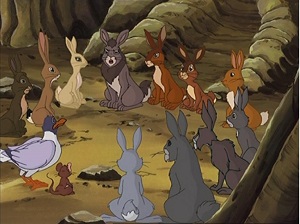
De Engelse schrijver Richard Adams werd geboren in Newbury op 9 mei 1920. Zie ook alle tags voor Richard Adams op dit blog.

Uit Watership Down

“They ran over the culvert. The grass was wet and thick near the stream and they made their way up the opposite slope, looking for drier ground. Part of the slope was in shadow, for the sun was sinking ahead of them, and Hazel, who wanted a warm, sunny spot, went on until they were quite near the lane. As they approached the gate he stopped, staring.
"Fiver, what's that? Look!"
A little way in front of them, the ground had been freshly disturbed. Two piles of earth lay on the grass. Heavy posts, reeking of creosote and paint, towered up as high as the holly trees in the hedge, and the board they carried threw a long shadow across the top of the field. Near one of the posts, a hammer and a few nails had been left behind.
The two rabbits went up to the board at a hopping run and crouched in a patch of nettles on the far side, wrinkling their noses at the smell of a dead cigarette end somewhere in the grass. Suddenly Fiver shivered and cowered down.
"Oh, Hazel! This is where it comes from! I know now -- something very bad! Some terrible thing -- coming closer and closer."
He began to whimper with fear.
"What sort of thing -- what do you mean? I thought you said there was no danger?"


 1762046-736d65c264f8c5c53c58bdbf2b9481de.jpg
Richard Adams (Newbury, 9 mei 1920)
Scene uit de Britse animatiefilm uit 1978 


De Schotse schrijver James Barrie werd op 9 mei 1860 in Kirriemuir nabij Dundee geborenZie ook alle tags voor James Barrie op dit blog.

Uit: The Adventures of Peter Pan

"Don't go," they called in pity.
"I must," he answered, shaking; "I am so afraid of Peter."
It was at this tragic moment that they heard a sound which made the heart of every one of them rise to his mouth. They heard Peter crow.
"Peter!" they cried, for it was always thus that he signalled his return.
"Hide her," they whispered, and gathered hastily around Wendy. But Tootles stood aloof.
Again came that ringing crow, and Peter dropped in front of them. "Greetings, boys," he cried, and mechanically they saluted, and then again was silence.
He frowned.
"I am back," he said hotly, "why do you not cheer?"
They opened their mouths, but the cheers would not come. He overlooked it in his haste to tell the glorious tidings.
"Great news, boys," he cried, "I have brought at last a mother for you all."
Still no sound, except a little thud from Tootles as he dropped on his knees.
"Have you not seen her?" asked Peter, becoming troubled. "She flew this way."
"Ah me!" once voice said, and another said, "Oh, mournful day."
Tootles rose. "Peter," he said quietly, "I will show her to you," and when the others would still have hidden her he said, "Back, twins, let Peter see."
So they all stood back, and let him see, and after he had looked for a little time he did not know what to do next.“


 1762046-2e3828a0b2e45c6a4b9fa55a6816279a.jpg
James Barrie (9 mei 1860 – 19 juni 1937)
Scene uit de  Amerikaanse animatiefilm uit 1953


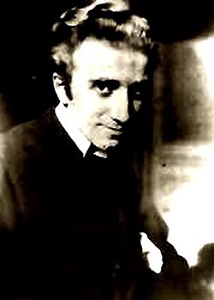
De Italiaanse schrijver Pitigrilli (pseudoniem voor Dino Serge) werd geboren te Turijn op 9 mei 1893. Zie ook alle tags voor Pitigrilli op dit blog.

Uit:Cocaine (vertaald door Eric Mosbacher)

“There’s still hope for you…. You haven’t yet got to the stage of tremendous depression, of insuperable melancholy. Now you smile when you have the powder in your blood. You’re at the early stage in which you go back to childhood.”
She spoke to him as to a child, though they were both of the same age. Cocaine achieves the cruel miracle of distorting time.”
(…)

“It’s comfortable and delightful. When I die they’ll shut me up in it forever, and all the happiest memories of my life will be in it…. It also offers another advantage. When it’s over I’m left alone, all alone; it’s the man who has to go away. Afterwards I find the man disgusting. Forgive me for saying so, but afterwards men are always disgusting. Either they follow the satisfied male’s impulse and get up as quickly as they do from a dentist’s chair, or they stay close to me out of politeness or delicacy of feeling; and that revolts me, because there’s something in them that is no longer male.”


 1762046-f1b9fd8727e8cebe245a88b0b4008760.jpg
Pitigrilli (9 mei 1893 – 8 mei 1975)
In 1930

Geschreven door Romenu om 13:27 Reageer op dit bericht

Meer van Romenu

↑ Terug naar de berichten