Romenu is een blog over gedichten, literatuur en kunst Maar Romenu is ook een professionele freelance vertaler Du-Ne en Ne-Du http://www.roumen-vertalingen.nl/
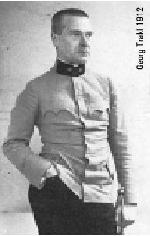
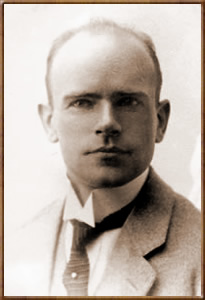
Georg Trakl werd op 3 februari 1887 in het conducteurshuis aan de Waagplatz 2 in Salzburg geboren. Zijn vader, Tobias Trakl, was een handelaar in ijzerwaren en zijn moeder, die ook psychische problemen had, was Maria Catharina Trakl, (meisjesnaam Halik). Voorts had hij nog drie broers en drie zussen. Margarethe (doorgaans Grethe genoemd) stond hem het naast, zelfs zodanig dat sommigen een incestueuze verhouding vermoeden. Zijn jeugd bracht hij door in Salzburg. Vervolgens bezocht hij van 1897 tot 1905 het humanistische gymnasium. Om toch een academische opleiding te kunnen volgen, werkte hij tot 1908 in de praktijk bij een apotheker. Sommigen vermoedden dat hij dit vooral deed om zichzelf opiaten te kunnen verschaffen. Bij het uitbreken van WO I werd Trakl als medicus naar het front in Galicië (heden ten dage in Oekraïne en Polen) gestuurd. Zijn gemoedsschommelingen leidden tot geregelde uitbraken van depressie, die verergerd werden door de afschuw die hij voelde voor de verzorging van de ernstig verwonde soldaten. De spanning en druk dreven hem ertoe een suïcidepoging te ondernemen, welke zijn kameraden nochtans verhinderden. Hij werd in een militair ziekenhuis opgenomen in Kraków, alwaar hij onder strikt toezicht geplaatst werd.Trakl verzonk daar in nog zwaardere depressies en schreef Ficker om advies. Ficker overtuigde hem ervan dat hij contact moest opnemen met Wittgenstein, die inderdaad op weg ging na Trakls bericht te hebben ontvangen. Op 4 november 1914, drie dagen voordat Wittgenstein aan zou komen, overleed hij echter aan een overdosis cocaïne
Paul Celan
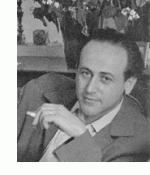
Paul Celan werd onder de naam Paul Antschel op 23 november 1920 geboren in Czernowitz, toentertijd de hoofdstad van de Roemeense Boekovina, nu behorend bij de Oekraïne. Paul Celans ouders waren Duitssprekende joden die hun zoon joods opvoedden en hem naar Duitse christelijke scholen stuurden. In 1942 werden Celans ouders door de Duitse bezetter naar een werkkamp gedeporteerd en daar vermoord. Hijzelf wist aanvankelijk onder te duiken, maar moest vanaf juli 1942 in een werkkamp dwangarbeid verrichten. Celan overleefde de oorlog. Via Boekarest en Wenen vestigde Celan zich in 1948 in Parijs. Daar was hij werkzaam als dichter, vertaler en doceerde hij aan de prestigieuze Ecole Normale Supérieure. Vermoedelijk op 20 april 1970 beëindigde hij zijn leven zelf door in de Seine te springen.
Gerard Reve
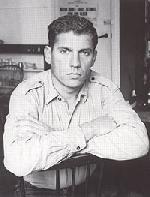
Gerard Reve over: Medearbeiders ”God is in de mensen, de dieren, de planten en alle dingen - in de schepping, die verlost moet worden of waaruit God verlost moet worden, door onze arbeid, aangezien wij medearbeiders van God zijn.” Openbaring ”Tja, waar berust elk godsbegrip op, elke vorm van religie? Op een openbaring, dat wil zeggen op een psychische ervaring van zulk een dwingende en onverbiddelijke kracht, dat de betrokkene het gevoel heeft, niet dat hij een gedachte of een visioen heeft, maar dat een gedachte gedachte of visioen hem bezit en overweldigt.”
Simon Vestdijk
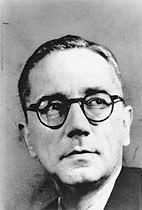
Simon Vestdijk (Harlingen, 17 oktober 1898 – Utrecht, 23 maart 1971) was een Nederlands romancier, dichter, essayist en vertaler. Zijn jeugd te Harlingen en Leeuwarden beschreef hij later in de Anton Wachter-cyclus. Van jongs af aan logeerde hij regelmatig bij zijn grootouders in Amsterdam, waar hij zich in 1917 aan de Universiteit van Amsterdam inschrijft als student in de medicijnen. Tijdens zijn studie die van 1917 tot 1927 duurde, leerde hij Jan Slauerhoff kennen.Tot 1932 is hij als arts in praktijken door heel Nederland werkzaam. In 1932 volgt zijn officiële schrijversdebuut met de uitgave van de bundel Verzen in De Vrije Bladen. Doorslaggevend voor Vestdijks uiteindelijke keuze voor de literatuur is zijn ontmoeting in 1932 met Eddy Du Perron en Menno ter Braak. Deze ontmoeting had tot resultaat dat hij redactielid werd van het tijdschrift Forum Kort daarop, in 1933, wordt zijn eerste novelle, De oubliette, uitgegeven. In hetzelfde jaar schrijft hij Kind tussen vier vrouwen, dat, eerst geweigerd door de uitgever, later de basis zal vormen voor de eerste drie delen van de Anton Wachter-romans. In 1951 ontvangt Vestdijk de P.C. Hooftprijs voor zijn in 1947 verschenen roman De vuuraanbidders. In 1957 wordt hij voor het eerst door het PEN-centrum voor Nederland voorgedragen voor de Nobelprijs voor de Literatuur, die hij echter nooit zal krijgen. Op 20 maart 1971 wordt hem de Prijs der Nederlandse Letteren toegekend, maar voor hij deze kan ontvangen overlijdt hij op 23 maart te Utrecht op 72-jarige leeftijd. Vestdijk was auteur van ca. 200 boeken. Vanwege deze enorme productie noemde de dichter Adriaan Roland Holst hem 'de man die sneller schrijft dan God kan lezen'. Andere belangrijke boeken van Simon Vestdijk zijn: "Kind van stad en land" (1936), "Meneer Visser's hellevaart" (1936), "Ierse nachten" (1946), "De toekomst de religie" (1947), "Pastorale 1943" (1948), "De koperen tuin" (1950), "Ivoren wachters" (1951), "Essays in duodecimo" (1952) en "Het genadeschot" (1964).
K.P. Kavafis K.P. Kavafis werd als kind van Griekse ouders, afkomstig uit Konstantinopel, geboren in 1863 in Alexandrië (tot vandaag een Griekse enclave) waar hij ook het grootste deel van zijn leven woonde en werkte. Twee jaar na de dood van zijn vader verhuist het gezin in 1872 naar Engeland om na een verblijf van vijf jaar naar Alexandrië terug te keren. Vanwege ongeregeldheden in Egypte vlucht het gezin in 1882 naar Konstantinopel, om na drie jaar opnieuw naar Alexandrië terug te gaan. In de jaren die volgen maakt Kavafis reizen naar Parijs, Londen en in 1901 zijn eerste reis naar Griekenland, in latere jaren gevolgd door nog enkele bezoeken. Op de dag van zijn zeventigste verjaardag, in 1933 sterft Kavafis in Alexandrië. De roem kwam voor Kavafis pas na zijn dood, dus postuum. Deels is dat toe te schrijven aan zijn eigen handelswijze. Hij was uiterst terughoudend met de publicatie van zijn gedichten, liet af en toe een enkel gedicht afdrukken in een literair tijdschrift, gaf in eigen beheer enkele bundels met een stuk of twintig gedichten uit en het merendeel van zijn poëzie schonk hij op losse bladen aan zijn beste vrienden.
Thomas Mann
Thomas Mann, de jongere broer van Heinrich Mann, werd geboren op 6 juni 1875 in Lübeck. Hij was de tweede zoon van de graankoopman Thomas Johann Heinrich Mann welke later één van de senatoren van Lübreck werd. Zijn moeder Julia (geboren da Silva-Bruhns) was Duits-Braziliaans van Portugees Kreoolse afkomst. In 1894 debuteerde Thomas Mann met de novelle "Gefallen". Toen Thomas Mann met 21 jaar eindelijk volwassen was en hem dus geld van zijn vaders erfenis toestond - hij kreeg ongeveer 160 tot 180 goldmark per jaar - besloot hij dat hij genoeg had van al die scholen en instituties en werd onafhankelijk schrijver. Kenmerkend voor zijn stijl zijn de ironie, de fenomenale taalbeheersing en de minutieuze detailschildering. Manns reputatie in Duitsland was sterk wisselend. Met zijn eerste roman, Buddenbrooks (1901), had hij een enorm succes, maar door zijn sceptische houding tegenover Duitsland na de Eerste Wereldoorlog veranderde dit volledig. Stelde hij zich tot aan de jaren twintig apolitiek op (Betrachtungen eines Unpolitischen, 1918), meer en meer raakte hij bij het Politiek gebeuren betrokken. Zijn afkeer van het nationaal socialisme groeide, zijn waarschuwingen werden veelvuldiger en heftiger. In 1944 accepteerde hij het Amerikaanse staatsburgerschap. Tussen 1943 en 1947 schreef Mann Doktor Faustus (zie Faust), de roman van de 'Duitse ziel' in de gecamoufleerd geschilderde omstandigheden van de 20ste eeuw. In 1947 bezocht hij voor het eerst sinds de Oorlog Europa, twee jaar later pas Duitsland. In 1952 vertrok hij naar Zwitserland. Op 12 augustus 1955 stierf hij in Zürich. Twintig jaar na zijn dood, in aug. 1975, is zijn literaire nalatenschap geopend: dagboekaantekeningen van 15 maart 1933 tot 29 juli 1955, alsmede notities uit de jaren 1918 tot en met 1921.Belangrijke werken zijn: Der Zauberberg, Der Tod in Venedig, Dokter Faustus , Joseph und seine Brüder en Die Bekenntnisse des Hochstaplers Felix Krull.
Rainer Maria Rilke
Rilke werd op 4 december 1875 geboren in Praag. Hij had al naam gemaakt als dichter met zijn bundels Das Stundenbuch en Das Buch der Bilder, toen hij de literaire wereld versteld deed staan en wereldfaam verwierf met de publicatie van zijn twee delen Neue Gedichte in 1907 en 1908. Hij verzamelde daarin het beste werk uit een van zijn vruchtbaarste periodes, die hij grotendeels doorbracht in Parijs. Rilke was daar diep onder de indruk gekomen van Rodin, bij wie hij een tijdlang in dienst was als particulier secretaris. Rodin, zei hij later, had hem leren kijken. Dit kijken kwam neer op intense concentratie, om het mysterie te kunnen zien ‘achter de schijnbare werkelijkheid'. Latere en rijpere werken als Duineser Elegien (1912-1923) en het ronduit schitterende Die Sonette an Orfeus (1924) illustreren Rilkes metafysische visie op het onzegbare, dat haar verwoording vindt in een hermetische muzikale taal. Op 29 december 1926 overlijdt Rilke in het sanatorium in Val-Mont aan de gevolgen van leukemie. Enkele dagen later wordt hij, overeenkomstig zijn wens, begraven op het kerkhof van Raron.
* * * * * * * * * * * * * * * *
Romenu
Over literatuur, gedichten, kunst en cultuur
08-06-2017
Nino Haratischwili
De Georgische schrijfster en regisseuse Nino Haratischwiliwerd geboren op 8 juni 1983 in Tbilisi. Als tiener richtte Nino Haratischwili het "Seringen Theater" op, een Duits-Georgische theatergroep waarvoor zij in de periode 1998-2003 regelmatig toneelstukken schreef en regisseerde. Na de studie filmregie aan de school voor film en theater in Tbilisi studeerde Haratischwili van 2000 tot 2007 theaterregie aan de Toneelacademie in Hamburg. Als regisseuse is Nino Haratischwili verantwoordelijk voor talloze wereldpremières, o.a. in het Duitse theater Göttingen, Kampnagel Hamburg en in het Thalia Theater. Haar dramatische teksten hebben verschillende prijzen gewonnen. In 2008 ontving ze een van de auteursprijzen van de Heidelberger Stückemarkt. In 2010 ontving zij de Adelbert von Chamisso-prijs. Met haar debuutroman “Juja” (2010) was Haratischwili op de lange lijst van de Duitse Buchpreis en was zij genomineerd voor de ZDF-aspekte-Literaturpreis en won zij in 2011 de debuutprijs van Buddenbrookhaus Lübeck. Haar tweede roman “ Mein sanfter Zwilling” verscheen ook in 2011. In 2014 werd Haratischwilis derde roman gepubliceerd: “Das achte Leben (Für Brilka)”, waarvoor zijvan de Robert Bosch Stiftung een beurs kreeg voot onderzoek in Rusland en Georgië.
Uit Juja
„Warum man sie Olga genannt hatte, hatte sie vergessen. Bis zu dem Tag, an dem Olgas Leben sich katastrophal ändern sollte, war nichts Gravierendes passiert. Olga hatte ihre Vorlesungen besucht und war dann mit ihrem Hund spazieren gegangen, einem goldenen Spaniel, Lydia. Olga war 23 Jahre alt und ein nettes Mädchen, hatte russische Vorfahren, konnte aber kein Wort Russisch und hieß auch nicht Olga, hatte einen noch durchschnittlicheren Namen, einen westeuropäischen, doch das ist jetzt egal. Sie war früh aufgestanden, hatte schlecht geschlafen und war zur Uni geradelt, wie immer. Hatte auch ihre Bekannten – richtige Freunde hatte sie kaum, wenn man von einer Freundin absah – nicht sehen können (sie besuchten andere Kurse) und war eher etwas gelangweilt mit Lydia spazieren gegangen. Dann hatte sie in ihrem Lieblingsimbiss gegessen, das hatte sie sich gegönnt, da ja sonst nichts Schönes geschehen war, und war ein bisschen durch die Straßen geschlendert. So kam es, dass sie das Buch fand. Es war ein netter Nachmittag, und es gab nichts Besseres zu tun. Der Antiquar hatte neu eröffnet und sie ging aus purer Langeweile in seinen Laden hinein. Zwei ältere Damen standen in der Ecke und plauderten miteinander; vor den Regalen stand ein junger Mann, vertieft in ein Buch. Er sah ganz gut aus und Olga ging instinktiv in seine Richtung, doch als sie sich neben ihn stellte und so tat, als suche sie etwas, legte er das Buch aus der Hand und rannte wie verrückt aus dem Laden. An der Kasse saß keiner, und niemand schien sein abruptes Verschwinden bemerkt zu haben, niemand außer Olga. Aus irgendeinem Grund versetzte seine Handlung sie in großen Aufruhr, am liebsten wäre sie ihm nachgelaufen, doch fehlte ihr die Portion Mut, die sie dazu gebraucht hätte. So ergriff sie das Buch, das er so erschrocken zurückgestellt hatte, und begann darin zu blättern. Klar, es hätte sein können, dass er nur zu einer Verabredung musste und deshalb so schnell aus dem Laden gestürmt war, doch Olga wollte an Abenteuer glauben. Noch lieber wollte sie sich eine unglückliche Liebesgeschichte zusammenreimen. Es hätte ja sein können, dass er unglücklich verliebt war, und nun hatte er das Buch aufgeschlagen und ihre Initialen darin entdeckt. Und so war er zu ihr gerannt, um ihr alles zu beichten, sein Leid, seine Liebe. Olga nahm das Buch in die Hand. Die alten Damen schienen nichts bemerkt zu haben. Olga schlug das dünne, alte Buch auf und begutachtete die ersten Seiten, doch sie entdeckte keine Initialen. Absolut nichts. Keine getrockneten Rosenblätter, keine handschriftlichen Anmerkungen.“
“I read a book one day and my whole life was changed. Even on the first page I was so affected by the book's intensity I felt my body sever itself and pull away from the chair where I sat reading the book that lay before me on the table. But even though I felt my body dissociating, my entire being remained so concertedly at the table that the book worked its influence not only on my soul but on every aspect of my identity. It was such a powerful influence that the light surging from the pages illumined my face; its incandescence dazzled my intellect but also endowed it with brilliant lucidity. This was the kind of light within which I could recast myself; I could lose my way in this light; I already sensed in the light the shadows of an existence I had yet to know and embrace. I sat at the table, turning the pages, my mind barely aware that I was reading, and my whole life was changing as I read the new words on each new page. I felt so unprepared for everything that was to befall me, and so helpless, that after a while I moved my face away instinctively as if to protect myself from the power that surged from the pages. It was with dread that I became aware of the complete transformation of the world around me, and I was overtaken by a feeling of loneliness I had never before experienced—as if I had been stranded in a country where I knew neither the lay of the land nor the language and the customs. I fastened onto the book even more intensely in the face of the helplessness brought on by that feeling of isolation. Nothing besides the book could reveal to me what was my necessary course of action, what it was that I might believe in, or observe, and what path my life was to take in the new country in which I found myself. I read on, turning the pages now as if I were reading a guidebook which would lead me through a strange and savage land. Help me, I felt like saying, help me find the new life, safe and unscathed by any mishap. Yet I knew the new life was built on words in the guidebook. I read it word for word, trying to find my path, but at the same time I was also imagining, to my own amazement, wonders upon wonders which would surely lead me astray. The book lay on my table reflecting its light on my face, yet it seemed similar to the other familiar objects in the room. While I accepted with joy and wonder the possibility of a new life in the new world that lay before me, I was aware that the book which had changed my life so intensely was in fact something quite ordinary. My mind gradually opened its doors and windows to the wonders of the new world the words promised me, and yet I seemed to recall a chance encounter that had led me to the book. But the memory was no more than a superficial image, one that hadn't completely impressed itself on my consciousness. As I read on, a certain dread prompted me to reflect on the image: the new world the book revealed was so alien, so odd and astonishing that, in order to escape being totally immersed in this universe, I was anxious to sense anything related to the present ».
Orhan Pamuk (Istanbul, 7 juni 1952)
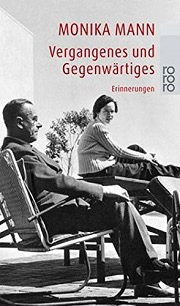
De Duitse schrijfster Monika Mann werd als vierde kind van Thomas Mann geboren op 7 juni 1910 in München. Zie ook alle tags voor Monika Mann op dit blog.
Uit:Das fahrende Haus
„Während wir schon bei der nächsten Frage waren, dachte ich blitzschnell – wenn einer übel von meinem Bruder redet, mag ich ihm einen Nasenstüber versetzen ; wenn einer übel von China, Norwegen, Rumänien oder Amerika redet, so ist mir’s einerlei. Denn das sind Begriffe, während mein Bruder ein Individuum, eine Tatsache ist. Ich mag nur für das Individuum den Nasenstüber austeilen ! – Ich zählte langsam, stockend, ich glaub’ ein wenig singend die Staaten auf, nebenher dachte ich wieder blitzschnell – und doch, jene Begriffe mögen Tatsache sein. Der Begriff eines Landes, einer Nation, eines Kontinents, der Begriff « Amerika » wird individuell, verteidigungswert in diesem Menschen, der da als Richter vor mir sitzt. – Kentucky, Tennessee, Georgia, Florida – summte ich, und ich stockte. – In diesem Menschen, der als Richter vor mir sitzt. – Alabama, Mississippi, Louisiana, Ohio, Indiana, Michigan, Wisconsin, Minnesota, Kansas, Nebraska, Colorado, New Mexico, seine Fahne hat 48 Sterne, aber Texas hat nur einen Stern (improvisierte ich), Idaho, Utah, Kalifornien, Oregon, Washington. – In diesem Menschen, der als Richter vor mir sitzt . . . Mir schwindelte. [. . .] Und was man sich erworben hat, kann man sich bewahren ! Ich bewahre es mir. Nicht äußerlich – ich bin dabei, das amerikanische Staatsbürgerrecht niederzulegen –, aber innerlich : Ich bewahre mir das Recht, Amerika zu lieben, ihm dankbar zu sein.“
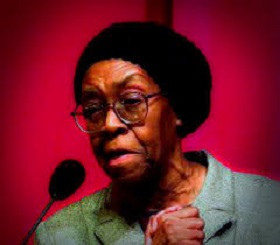
there will be children in the heat of day there will be children in the cold of winter
children like a quilted blanket are welcomed in our old age
children like a block of ice to a desert sheik are signs of status in our youth
we feed the children with our culture that they might understand our travail
we nourish the children on our gods that they may understand respect
we urge the children on the tracks that our race will not fall short
but our children are not ours nor we theirs they are future we are past
how do we welcome the future not with the colonialism of the past for that is our problem not with the racism of the past for that is their problem not with the fears of our own status for history is lived not dictated
we welcome the young of all groups as our own with the solid nourishment of food and warmth
we prepare the way with the solid nourishment of self-actualization
we implore all the young to prepare for the young because always there will be children.
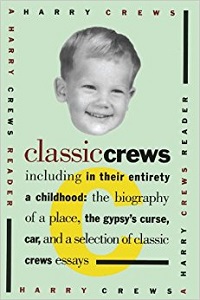
“I picked up a magazine not long ago in which a man was writing about his children. In the very beginning of the piece, he said, “The storms of childhood and adolescence had faded into the past.” He would be the poorer for it if that were true. But it is not true, not for him or for any father. The storms don’t fade into the past, nor do all the moments that are beautiful and full of happiness, the moments that quicken our hearts with pride. In early July of the summer Byron would turn 12, we were sitting on the top of Springer Mountain in Georgia. It was raining and we were soaked and exhausted to the bone, having made the long steep climb of the approach to the Appalachian Trail, which winds its way across the Eastern united States and finally ends on Mount Katahdin in Maine. Between us, embedded in the boulder on which we were sitting, was the metal image of a young hiker. Byron put his hand on the stone and said, “Well, we made it to the beginning.” And so we had, but a hell of a beginning it had been. It hadn’t stopped raining all day as we’d climbed steadily over broken rock. He was carrying a 20-pound pack and mine weighed 45, both probably too heavy, but we’d decided to pack enough with us so that we could hike for as long as we wanted to without getting out of the mountains to restock our supplies. I had put him in the lead to set the pace. “Remember, we’re not in a hurry,” I called after we’d been going awhile. “This is not a goddamn contest.” I was forced to say it because he’d taken off over the brutally uneven trail like a young goat. He’d looked back at me for only an instant and kept climbing. Then, as the mud and rock made the footing more and more unsure, I said, “You think we ought to find a place to wait out this rain.” He stopped and turned for just an instant to look at me. “Did we come to by God hike or did we come to hike?”
Home's the place we head for in our sleep. Boxcars stumbling north in dreams don't wait for us. We catch them on the run. The rails, old lacerations that we love, shoot parallel across the face and break just under Turtle Mountains. Riding scars you can't get lost. Home is the place they cross.
The lame guard strikes a match and makes the dark less tolerant. We watch through cracks in boards as the land starts rolling, rolling till it hurts to be here, cold in regulation clothes. We know the sheriff's waiting at midrun to take us back. His car is dumb and warm. The highway doesn't rock, it only hums like a wing of long insults. The worn-down welts of ancient punishments lead back and forth.
All runaways wear dresses, long green ones, the color you would think shame was. We scrub the sidewalks down because it's shameful work. Our brushes cut the stone in watered arcs and in the soak frail outlines shiver clear a moment, things us kids pressed on the dark face before it hardened, pale, remembering delicate old injuries, the spines of names and leaves.
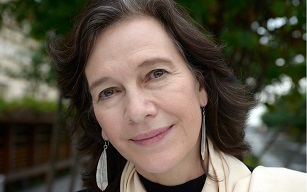
Louise Erdrich (Little Falls, 7 juni 1954)
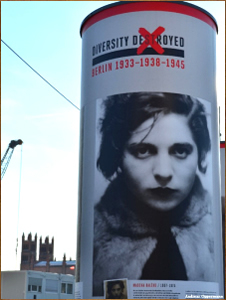
De Duitstalige dichteres Mascha Kaléko(eig. Golda Malka Aufen) werd geboren op 7 juni 1907 in Krenau of Schidlow in Galicië in het toenmalige Oostenrijk-Hongarije, nu Polen. Zie ook alle tags voor Mascha Kaléko op dit blog.
Die frühen Jahm
Ausgesetzt In einer Barke von Nacht Trieb ich Und trieb an ein Ufer. An Wolken lehnte ich gegen den Regen. An Sandhügel gegen den wütenden Wind. Auf nichts war Verlaß. Nur auf Wunder. Ich aß die grünenden Früchte der Sehnsucht, Trank von dem Wasser das dürsten macht Ein Fremdling, stumm vor unerschlossenen Zonen, Fror ich mich durch die finsteren Jahre. Zur Heimat erkor ich mir die Liebe.
Der kleine Unterschied
Es sprach zum Mister Goodwill ein deutscher Emigrant ,,Gewiß, es bleibt dasselbe, sag ich nun land statt Land, sag ich für Heimat homeland und poem für Gedicht Gewiss, ich bin sehr happy: Doch glücklich bin ich nicht'
Mijn kleine, kleine Annabel zij zong zo zuiver en zo schel als fluiten op een glansrivier, zij was geluk en leefde hier
mijn kleine, kleine Annabel ik wist uw prille leden wel, de trilling van die bloemenmond wanneer een hand uw haren vond
mijn kleine, kleine Annabel de geest is lang, maar wij gaan snel: op 't koude laken ligt uw lijf en ik vind nergens meer verblijf
mijn kleine, kleine Annabel als ik in hemel of in hel moet varen met mijn lichte lied, verloochen, maar vergeet mij niet
Orgelpunt
De man die uwe weelden mint is weerloos als het kleine kind: de wereld ging hem vreemd voorbij als aan zijn borst uw hartslag lei. Maar wat ons saamgedreven heeft is wat in kleine bloemen beeft en gonzend draagt het groot heelal: 't is twee-in-een, en dat is al.
Jan Engelman (Utrecht 7 juni 1900 ;Amsterdam 20 maart 1972) Begin jaren 1930
1 People who have no children can be hard: Attain a mail of ice and insolence: Need not pause in the fire, and in no sense Hesitate in the hurricane to guard. And when wide world is bitten and bewarred They perish purely, waving their spirits hence Without a trace of grace or of offense To laugh or fail, diffident, wonder-starred. While through a throttling dark we others hear The little lifting helplessness, the queer Whimper-whine; whose unridiculous Lost softness softly makes a trap for us. And makes a curse. And makes a sugar of The malocclusions, the inconditions of love.
2 What shall I give my children? who are poor, Who are adjudged the leastwise of the land, Who are my sweetest lepers, who demand No velvet and no velvety velour; But who have begged me for a brisk contour, Crying that they are quasi, contraband Because unfinished, graven by a hand Less than angelic, admirable or sure. My hand is stuffed with mode, design, device. But I lack access to my proper stone. And plenitude of plan shall not suffice Nor grief nor love shall be enough alone To ratify my little halves who bear Across an autumn freezing everywhere.
“The morning of the Tilney–Studdart wedding rain fell steadily from before daylight, veiling trees and garden and darkening the canvas of the marquee that should have caught the earliest sun in happy augury. The bride's relations frowned in sleep and were roused with a sense of doom by rain's inauspicious mutter on roofs and windowsills. Clouds with their reinforcements came rolling over the Malvern hills. Till quite late, the rooms at Corunna Lodge were dusky as though the morning had been delayed. Laurel Studdart herself was not concerned with weather and gave the windows hardly a glance. She and Colonel Studdart, both embarrassed by idleness, frequently met throughout the morning as, straying from room to room, they attempted to efface themselves. Her father had the afternoon on his mind – he had not yet given away a daughter – for her, these hours before her wedding were like a too long wait on the platform of some familiar station from which, virtually, one has already departed, where the very associations become irksome. Her clothes were all packed; she was buttoned into an old blazer of Janet's and did not look like today's bride. From half-past ten till noon she and Colonel Studdart, shut into the morning-room, played demon patience. Her life here was over, his at a standstill; there was nothing for them to do. The morning-room flowers had been 'arranged'; freesia banked the fireplace; Colonel Studdart, from nervousness and a tendency to hay-fever, frequently sneezed. Pollen dashed Laurel's cheek where she had leant excitedly forward across a lily. The rain stopped before lunch. Later, during the ceremony, the sun came out, parting the clouds widely; so that Laurel's married way down the aisle was gold from successive windows. When she uncertainly smiled in the porch, against strong blasts from the organ rolling out from behind, the umbrellas were finally down; the graves glittered. It was early-closing day, friends from the Cheltenham shops were among the onlookers. The sweet bride, trailing light in her veil, was nodded and smiled to the car where the chauffeur compromised with his impassivity”.
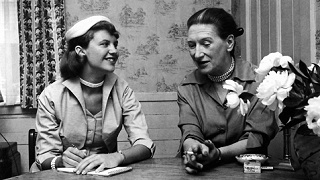
Elizabeth Bowen (7 juni 1899 – 22 februari 1973) Hier met een jonge Sylvia Plath (links) tijdens een interview
„Tief ist der Brunnen der Vergangenheit. Sollte man ihn nicht unergründlich nennen? Dies nämlich dann sogar und vielleicht eben dann, wenn nur und allein das Menschenwesen es ist, dessen Vergangenheit in Rede und Frage steht: dies Rätselwesen, das unser eigenes natürlich-lusthaftes und übernatürlich-elendes Dasein in sich schließt und dessen Geheimnis sehr begreiflicherweise das A und das 0 all unseres Redens und Fragens bildet, allem Reden Gedrängtheit und Feuer, allem Fragen seine Inständigkeit verleiht. Da denn nun gerade geschieht es, daß, je tiefer man schürft, je weiter hinab in die Unterwelt des Vergangenen man dringt und tastet, die Anfangsgründe des Menschlichen, seiner Geschichte, seiner Gesittung. sich als gänzlich unerlotbar erweisen und vor unserem Senkblei, zu welcher abenteuerlichen Zeitenlänge wir seine Schnur auch abspulen, immer wieder und weiter ins Bodenlose zurückweichen. Zutreffend aber heißt es hier: wieder und weiter.; denn mit unserer Forscherangelegendichkeit treibt das Unerforschliche eine Art von foppendem Spiel: es bietet ihr Scheinhalte und Wegesziele, hinter denen, wenn sie erreicht sind, neue Vergangenheitsstrecken sich auftun, wie es dem Küstengänger ergeht, der des Wanderns kein Ende findet, weil hinter jeder lehmigen Dünenkulisse, die er erstrebte, neue Weiiten zu neuen Vorgebirgen vorwärtslocken. So gibt es Anfänge bedingter Art, welche den Ur-Beginn der besonderen Überlieferung einer bestimmten Gemeinschaft, Volkheit oder Glaubensfamilie praktisch-tatsächlich bilden, so daß die Erinnerung, wenn auch wohl belehrt darüber, daß die Brunnenteufe damit keineswegs ernstlich als ausgepeilt gelten kann, sich bei solchem Ur denn auch national beruhigen und zum persönlich-geschichtlichen Stillstande kommen mag.
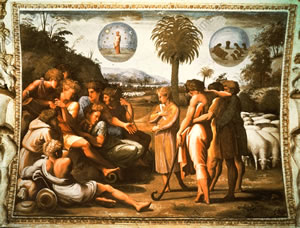
Jozef vertelt de droom aan zijn broers door Rafaël, fresco in het Vaticaan, ca. 1515/18.
Der junge Joseph zum Beispiel, Jaakobs Sohn und der lieblichen, zu früh gen Westen gegangenen Rahel, loseph zu seiner Zeit, als Kurigalzu, der Kossäer, zu Babel saß, Herr der vier Gegenden, König von Schumir und Akkad, höchst wohltuend dem Herzen Bel-Marudugs, ein zugleich strenger und üppiger Gebieter, dessen Bartlöckchen so künstlich gereiht erschienen, daß sie einer Abteilung gut ausgerichteter Schildträger glichen;— zu Theben aber, in dem Unterlande, das Joseph »Mizraime oder euch »Kerne, das Schwarze«, zu nennen gewohnt war, seine Heiligkeit der gute Gott, genannt .Antun ist zufrieden« und dieses Namens der dritte, der Sonne leiblicher Sohn, zum geblendeten Entzücken der Staubgeborenen im Horizont seines Palastes strahlte; als Assur zunahm durch die Kraft seiner Götter und auf der großen Straße am Meere, von Gaza hinauf zu den Pässen des Zederngebirges, königliche Karawanen Höflichkeitskontributionen in Lapislazuli und gestempeltem Golde zwischen den Höfen des Landes der Ströme und dem Pharaos hin und her führten; als man in den Städten der Amoriter zu Beth-San, AjaInn, Ta'anek, Urusalini der Aschtarti diente, zu Sichern und Beth-Lahama das siebentägige Klagen um den Kehrhaften Sohn, den Zerrissenen, erscholl und zu Gebal, der Buchstadt, El angebetet ward, der keines Tempels und Kultus bedurfte: Joseph also, wohnhaft im Distrikte Kenana des Landes, das ägyptisch das Obere Retenu hieß, in seines Vaters von Terebinthen und immergrünen Steineichen beschattetem Familienlager bei Hebron, ein berühmt angenehmer Jüngling, angenehm namentlich in erblicher Nachfolge seiner Mutter, die hübsch und schön gewesen war, wie der Mond. wenn er voll ist, und wie lschtars Stern, wenn er milde im Reinen schwimmt, außerdem aber, vom Vater her, ausgestattet mit Geistesgaben, durch welche er diesen wohl gar in gewissem Sinne noch übertraf, - Joseph denn schließlich (zum fünften- und sechstenmal nennen wir seinen Namen und mit Befriedigung; denn um den Namen steht es geheimnisvoll, und uns ist, als gäbe sein Besitz uns Beschwörerkraft über des Knaben zeitversunkene, doch einst so gesprächig-lebensvolle Person) - Joseph für sein Teil erblickte in einer südbabylonischen Stadt namens Uru, die er in seiner Mundart »Ur Kaschdim«, »Ur der Chaldäer« zu nennen pflegte, den Anfang aller, das heißt: seiner persönlichen Dinge.“
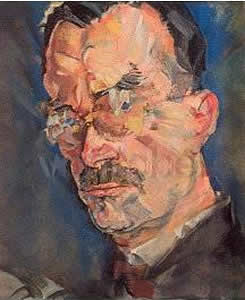
Thomas Mann (6 juni 1875 - 12 augustus 1955) Portret door Max Oppenheimer, 1926
Ich liebte Dich: vielleicht ist dieses Feuer In meinem Herzen noch nicht ganz verglüht; Doch Deine Ruh ist mir vor Allem theuer, Durch nichts betrüben will ich Dein Gemüth. Ich liebte Dich, stumm, hoffnungslos und schmerzlich, In aller Qual, die solche Liebe giebt — Ich liebte Dich so wahrhaft und so herzlich, Gott geb', daß Dich ein Andrer je so liebt!
Vertaald door Friedrich Martin Bodenstedt
Das Vöglein
Den alten Brauch, den gibt es ewig, dem ich in Fremde folgen mag: Ich lass ein Vöglein aus dem Käfig an fröhlich heitrem Frühlingstag.
Nun meine Seele wird genesen; Gibt's einen Grund zum Traurigsein, wo ich nur einem Lebewesen bescher' den freien Sonnenschein?
Vertaald door Alexander Besel
Die Blume
Im Buch seh ich ein Blümchen liegen, Welk, duftlos, mutterseelenallein … In wundersames Sinnen wiegen Mein Geist und mein Gemüt sich ein.
Wie lange blühtest du? Was schmückte Dein Reiz im Lenze hold und zart? Kenn ich die Hand, die fromm dich pflückte? Warum wardst hier du aufbewahrt?
Mahnst du an seliges Wiederfinden, An namenloses Trennungsleid? An Träumerein in Thalesgrüden Und stummer Waldeseinsamkeit?
Und lebt er noch, lebt sie zur Stunde? Errangen sie des Friedens Port? Ging ihrer Jugend Glück zu Grunde, Gleich dir, o Blume, früh verdorrt?
Vertaald door Friedrich Fiedler
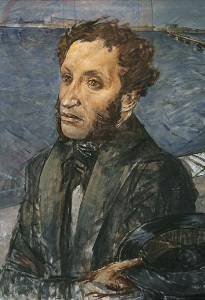
Aleksandr Poesjkin (6 juni 1799- 10 februari 1837) Portret door Koezma Petrov-Vodkin, 1934
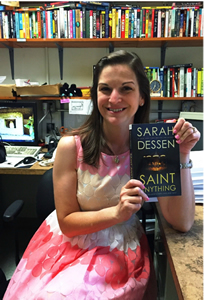
"I have to go to the ladies' room," I said. My mom, her eyes red, just looked at me. As if this, after all that had happened, was the thing that she simply could not bear. "It's okay," Ames said. "I'll take her." My father nodded, clapping him on the shoulder as we passed. Out in the courthouse lobby, I could see people pushing the doors open, out into the light outside, and I wished more than anything that I was among them. Ames put his arm around me as we walked. "I'll wait for you here," he said when we reached the ladies' room. "Okay?" Inside, the light was bright, unforgiving, as I walked to the sinks and looked at myself in the mirror there. My face was pale, my eyes dark, flat, and empty. A stall door behind me opened and a girl came out. She was about my height, but smaller, slighter. As she stepped up beside me, I saw she had blonde hair, plaited in a messy braid that hung over one shoulder, a few wisps framing her face, and she wore a summer dress, cowboy boots, and a denim jacket. I felt her look at me as I washed my hands once, then twice, before grabbing a towel and turning to the door. I pushed it open, and there was Ames, directly across the hallway, leaning against the wall with his arms folded over his chest. When he saw me, he stood up taller, taking a step forward. I hesitated, stopping, and the girl, also leaving, bumped into my back. "Oh! Sorry!" she said. "No," I told her, turning around. "It was . . . my fault." She looked at me for a second, then past my shoulder, at Ames. I watched her green eyes take him in, this stranger, for a long moment before turning her attention back to me. I had never seen her before.”
Sarah Dessen (Evanston, 6 juni 1970)
De Nederlandse dichter en publicist Frank Gericke (pseudoniem van Derk Gerhardus Hoek) werd geboren in Hoogvliet op 6 juni 1887. Zie ook alle tags voor Frank Gerickeop dit blog.
De eik
De eikeboom, rijzig geplant In het land, Stuwde zijn bloeikracht in 't wijde, Rondde zijn weemlend getak Tot een dak, Dekte met schaduw de weide.
Diep uit de voedende schacht Van den nacht Bracht hij de sappen aan 't streven, Ademde uitbundige won In de zon, Glanzende jonkheid en leven.
Tvogeltjesvolkje ter woon In zijn kroon Teelde er zijn twinklende wereld, Schoon als een bloeiende tuin Was zijn kruin Rondom met eikels bepereld:
Over de velden gespreid Op hun tijd, Sproot, door de wuivende jaren, Tzwellende en bottende hout Tot een woud Waar hij als vorst zou gebaren.
Merk hoe de ruimte ter helft Om hem welft, Hoor hoe de winden hem streelen - Willig staan wolken en weer In hun keer Onder zijn blinde bevelen.
“Acte 1 , Scène 6 Don Rodrigue ... Il vaut mieux courir au trépas. Je dois à ma maitresse aussi bien qu'à mon père ; J'attire en me vengeant sa haine et sa colère ; J'attire ses mépris en ne me vengeant pas. À mon plus doux espoir l'un me rend infidèle, Et l'autre indigne d'elle. Mon mal augmente à le vouloir guérir ; Tout redouble ma peine. Allons, mon âme ; et puisqu'il faut mourir, Mourons du moins sans offenser Chimène.
Mourir sans tirer ma raison ! Rechercher un trépas si mortel à ma gloire ! Endurer que l'Espagne impute à ma mémoire D'avoir mal soutenu l'honneur de ma maison ! Respecter un amour dont mon âme égarée Voit la perte assurée ! N'écoutons plus ce penser suborneur, Qui ne sert qu'à ma peine. Allons, mon bras, sauvons du moins l'honneur, Puisqu'après tout il faut perdre Chimène.
Oui, mon esprit s'était déçu. Je dois tout à mon père avant qu'à ma maitresse : Que je meure au combat, ou meure de tristesse, Je rendrai mon sang pur comme je l'ai reçu. Je m'accuse déjà de trop de négligence ; Courons à la vengeance ; Et tout honteux d'avoir tant balancé, Ne soyons plus en peine, Puisqu'aujourd'hui mon père est l'offensé, Si l'offenseur est le père de Chimène.
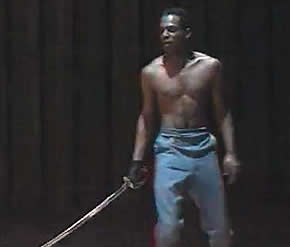
Pierre Corneille (6 juni 1606 – 1 oktober 1684) William Nadylam als Rodrigue in een uitvoering tijdens het Festival d’Avignon, 1998
"Where are you going today, Dad'?" I asked. It was Saturday, and he hadn't mentioned any new construction job. I had come out of the kitchen, where I had just finished the breakfast dishes, and I saw him in the entryway pulling on his reluctant knee-high rubber boots, the muscles in his neck and face looking like rubber bands ready to snap. He already had his khaki "aged like wine" leather coat and faded U.S. Navy cap on. His tool belt lay beside him on the oak wood bench he had built, its heavy leather belt curled on itself like some sleeping snake. It had been a birthday present from my mother nearly ten years ago, but with the tender loving care he gave it, it looked like it had been bought yesterday. I wasn't surprised to see him dressing like this. It was October, and we were having weird weather. Some days were cooler than usual, and then suddenly, some days were much warmer, and we also had more rainy ones in Charlottesville for this time of the year. Whenever anyone complained about the unusual changes in the weather, Dad loved to resurrect an old '50s expression, "Blame it on the Russians," rather than just saying "Climate change." Most people had no idea what "Blame it on the Russians" meant, least of all any of my friends, and few had the patience to listen to any explanation he might have. Dad wasn't old enough to personally remember, of course, but he told me his father had said it so often that it became second nature for him, too. "Oh. Didn't I say anything about it at breakfast?" "You didn't say much about anything this morning, Dad. You had your nose in the newspaper most of the time, sniffing the words instead of reading them," I reminded him. He said that was something my mother would complain about, too. She used the exact same evression. She told him that eating breakfast with him was like sleepwalking through a meal. My reliance on any of my mother's expressions, whether vaguely remembered or coming from my dad's descriptions, always brought a broad smile to his face. As if he had tiny dimmer switches behind them, his hazel eyes would brighten.”
V. C. Andrews (6 juni 1923 - 19 december 1986) Cover
In the branches of the laurel tree I saw two dark doves One was the sun and one the moon Little neighbors I said where is my grave — In my tail said the sun On my throat said the moon And I who was walking with the land around my waist saw two snow eagles and a naked girl One was the other and the girl was none Little eagles I said where is my grave — In my tail said the sun On my throat said the moon In the branches of the laurel tree I saw two naked doves One was the other and both were none.
Vertaald door Sarah Arvio
Sonnet of the Wreath of Roses
The wreath, quick, I am dying! Weave it quick now! Sing, and moan, sing! Now the shadow is darkening my throat, and January’s light returns, a thousand and one times.
Between what needs me, and my needing you, starry air, and a trembling tree. A thickness of windflowers lifts a whole year, with hidden groaning.
Take joy from the fresh landscape of my wound, break out the reeds, and the delicate streams, and taste the blood, spilt, on thighs of sweetness.
But quick! So that joined together, and one, time will find us ruined, with bitten souls, and mouths bruised with love.
Paso (The Images of the Passion)
Virgin in a crinoline, Virgin of Solitude, spreading immensely like a tulip-flower. In your boat of light, go - through the high seas of the city. through turbulent singing, through crystalline stars. Virgin in a crinoline through the roadway’s river you go, down to the sea!
Vertaald door A. S. Kline
Federico García Lorca (5 juni 1898 – 19 augustus 1936) “Federico García Lorca” door Alice Wellinger, 2011
“Hij zat vol invallen en plannen. Hij verlangde naar Amerika waar hij biologie had gestudeerd, vrienden had gemaakt en voor het eerst echt vrij was geweest. Hij leek op een Amerikaanse student, maar met de nerveuse gevoeligheid van het oude Europa bij de hand. Hij had reeds velerlei mensen ontmoet: filmspelers, regisseurs, zakenlieden, schrijvers, geleerden, miljonnairs, oude verwende vrouwen, jonge onberekenbare meisjes: een lift vol mensen die langzaam van boven naar beneden gaat, vol levens, vol herinneringen, een zware lift vol ellende en plezier, zoals het ergens in zijn gedichten staat. Hij hield van dieren en planten en wist er alles van. Hij had iets ontdekt in de samenleving van de mieren waarover hij een verslag had geschreven en waarvoor hij, als knaap nog, lid van een Brits biologisch genootschap was geworden. Hij leek zelf een beetje op een hond, een wijze fijngevoelige hond die nooit voor een kar is gespannen, maar veel in kamers heeft gezeten, door tuinen is gewandeld, mee op reis genomen, die muziek van Strawinsky heeft aangehoord en heeft gezien hoe mensen plezier vinden in boeken, wijn, mooie toiletten, gesprekken en in het willoze stilzitten. Een hond met meer wijsheid dan zijn meester en met een groter gemak om er afstand van te doen wanneer dat onder andere honden nodig is. Ik heb hem slechts kort gekend, van het voorjaar 1949 tot aan zijn dood, de afgelopen zomer. Maar het laatste half jaar zag ik hem nauwelijks. Hij overleed in Zwitserland en enkele weken voor zijn dood zond hij mij een ansicht van een Zwitserse boer die op een manslange hoorn de midzomer inblaast; of uitblaast. Over zijn ziekte geen woord. Het was een grap die ik na zijn dood als een terechtwijzing heb opgevat omdat ik hem nog altijd niet geschreven had. Zo gaan al mijn verre vrienden dood, zonder een brief van mij. Op deze wijze, dacht ik, zou ik zelf een vriend willen terechtwijzen en als een goed speler willen scheiden. Hij herinnerde mij door allerlei reacties aan mijn eigen manier van doen toen ik zo oud was als hij en ik nog de tijd had omdat ik werkeloos was. Ook hij was werkeloos maar op een andere manier. Hij had zijn studie afgebroken en verzette zich tegen een maatschappelijke bezigheid die hij toch als iets onafwendbaars op zich zag afkomen. Hij had de tijd, al was het slechts voor een achtermiddag.”
“In the staff room she checked the emergency timetable on the notice board. Most of her classes were doubled today, two groups of pupils crammed into one room. Her subject was Russian, but she also had to teach an English class. She did not speak English, though she had picked up a smattering from her British grandmother, Maud, still feisty at seventy. This was the second time Rebecca had been asked to teach an English class, and she began to think about a text. The first time, she had used a leaflet handed out to American soldiers, telling them how to get on with Germans: the pupils had found it hilarious, and they had learned a lot too. Today perhaps she would write on the blackboard the words of a song they knew, such as “The Twist” — played all the time on American Forces Network radio — and get them to translate it into German. It would not be a conventional lesson, but it was the best she could do. The school was desperately short of teachers because half the staff had emigrated to West Germany, where salaries were three hundred marks a month higher and people were free. The story was the same in most schools in East Germany. And it was not just teachers. Doctors could double their earnings by moving west. Rebecca’s mother, Carla, was head of nursing at a large East Berlin hospital, and she was tearing her hair out at the scarcity of both nurses and doctors. The story was the same in industry and even the armed forces. It was a national crisis. As Rebecca was scribbling the lyrics of “The Twist” in a notebook, trying to remember the line about “my little sis”, the deputy head came into the staff room. Bernd Held was probably Rebecca’s best friend outside her family. He was a slim, dark-haired man of forty, with a livid scar across his forehead where a shard of flying shrapnel had struck him while defending the Seelow Heights in the last days of the war. He taught physics, but he shared Rebecca’s interest in Russian literature, and they ate their lunchtime sandwiches together a couple of times a week. “Listen, everybody,” Bernd said. “Bad news, I’m afraid. Anselm has left us.”
“I played well, out of the surprise of her not minding. I couldn’t’ve played better. I heard everyone else being surprised, too, at the end of those tunes, that they must’ve all known too, too well from all my practising. I sat down, very hungry. Mumma passed me the water-cup and a damp-roll. I’m stuck now, said Ik, and it was true—the tar had her by the feet, closed in a gleaming line like that pair of zipper-slippers I saw once in the shoe-master’s vitrina. Oh yeah, well and truly stuck, said Mumma. But then, you knew when you picked up that axe-handle you were sticking yourself. I know. No coming unstuck from this one. You could’ve let that handle lie. That was some serious teasing. No, I couldn’t, Mumma, and you know. I do, baby chicken. I always knew you’d be too angry, once the wedding-glitter rubbed off your skin. It was a good party, though, wasn’t it? And they laughed at each other, Mumma having to steady Ikky or her ankles would’ve snapped over. And when their laughter started going strange Mumma said, Well, this party’s going to be almost as good, ’cause it’s got children. And look what else! And she reached for the next ice-basket. And so the whole long day went, in treats and songs, in ice and stink and joke-stories and gossip and party-pieces. On the banks, people came and went, and the chief sat in his chair and was fanned and fed, and the family of Ikky’s husband sat around the chief, being served too, all in purple-cloth with flashing edging, very prideful.“
Uit: Kan het licht aanblijven? (Over Frans Kellendonk)
“Aangezien Kellendonk niet in God gelooft is het onduidelijk welke metafysische ideeën hij aanhangt; maar in de discussie naar aanleiding van de opmerkingen van kardinaal Simonis over de tegennatuurlijkheid van homoseksualiteit mag hij de kardinaal graag in bescherming nemen, ook al vindt hij de uitspraken van de kardinaal met een curieuze kwalificatie ‘overbodig’. De charme van die uitspraken schijnt te schuilen in hun theologische schoonheid: ‘De katholieke visie op het geslachtsleven is een wonder van theoretische schoonheid, die echter nog maar weinig in praktijk gebracht wordt. De seksuele revolutie heeft daar geen samenhangende visie tegenover kunnen stellen. Vrijheid blijheid, is steeds de leus geweest.’ Kennelijk is er iets mis met de leus ‘vrijheid, blijheid’. Daar kan volgens mij nooit iets mee mis zijn, omdat de logica wil dat waar vrijheid is ook de vrijheid bestaat zichzelf beperkingen op te leggen. Dat dit niet altijd gedaan wordt, en dat men dan op de koffie komt, doet niets af aan de waarde van het principe. Wie nooit zijn hoofd gestoten heeft weet niet hoe hard het is. Kellendonk is echter van mening dat die vrijheid op een of andere manier ‘metafysisch’ beperkt moet worden. Het is wel uiterst wrang dat hij als bewijs daarvoor aids aanvoert en zelfs schrijft dat aids ‘het zoveelste echec van de Verlichting’ laat zien. Is er dan verband tussen aids en de Verlichting? Dat verband is er in zoverre dat de Verlichting er (in een langdurig proces) mede voor heeft gezorgd dat een grote seksuele vrijheid ontstond. Van seksuele vrijheden gebruikmaken is echter niet een exclusief voorrecht van de twintigste eeuw. Degenen die zich in dit opzicht in de negentiende eeuw weinig beperkingen oplegden konden gemakkelijk syfilis oplopen, dat risico was eraan verbonden. Het verschil tussen syfilis en aids is gradueel: aids doet zich op grotere schaal voor. Wie zulke grote, maar even dunne verbanden legt tussen aids en de Verlichting als Kellendonk is met een kruistocht bezig, zo omvangrijk dat het niet anders kan dan dat de versimpelmachine aan het werk is.”
“Beelden tuimelen door me heen. Het rugbeeld van Carla. Wat is herinnering? Waar houdt de werkelijkheid van Carla op en waar begint de onwerkelijkheid van de nostalgie? Welke dokter kan haar meten? Ik ben vannacht over het staketsel geklommen, de fles die in mijn polsader steekt achter me aan slepend. Ze hebben me met handen en voeten aan het verchroomde bed vastgesnoerd. De ochtendverpleegster treft me zo aan. Ik herinner me in de nevelige zone het watergrijs van haar blik. Haar gelaat komt af en toe opdoemen. Ik herinner me nu ook haar stem. Vóór de laatste operatie zei ze: ‘ze doet geen pijn, ze is alleen maar vermoeiend.’ In de gevangenis van de geheime politie, waar we werden afgetuigd op allerlei manieren, zei ik tot mezelf: ‘pijn is een begrensd iets, wanneer ze zo hevig is dat je ze niet meer verdraagt verlies je het bewustzijn.’ Ik tast naar mijn kaalgeschoren schedel. De luiken zijn weer dicht. Verdwenen onder de schedelhuid. Carla is niet gekomen. Ze komt nooit meer. Ik heb haar eens gezegd dat ik voor één nacht met haar een jaar politiegevangenis wil overdoen. En nu nog wil ik voor een teder woord heel dit proces van lichamelijke uitmergeling, gebrokenheid, vernedering opnieuw ondergaan. Waanzin. Maar zonder die waanzin is het leven als een ketting van leeggelopen dagen. Hoe ben ik hier op de operatietafel terecht gekomen? Ik weet er niets meer van. Prof Guylot heeft gezegd: ‘indien ik hem niet opereer heeft hij nog twee jaar.’ Wanneer ik chemisch ben ontleed begint de meetkunde in de ruimte. Elektroniek. Radar en ultrasone straal. Minizender. Radiografische maten. Komputer. Ik hoor rekenen in frakties van millimeters en in mikrons die de afstanden van de kernen onder elkaar, van de cellen in het grijze merg aangeven. Atomen. Zelfs de punt van een operatienaald is te grof voor deze precisie.”
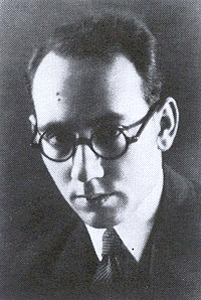
Robert Franquinet (5 juni 1915 - 30 mei 1979) Amby
“She has often suspected that her last words to herself and in this world will prove to be 'You bloody old fool' or, perhaps, depending on the mood of the day or the time of the night, 'you fucking idiot'. As the speeding car hits the tree, or the unserviced boiler explodes, or the smoke and flames fill the hallway, or the grip on the high guttering gives way, those will be her last words. She isn't to know for sure that it will be so, but she suspects it. In her latter years, she's become deeply interested in the phrase 'Call no man happy until he is dead.' Or no woman, come to that. 'Call no woman happy until she is dead.' Fair enough, and the ancient world had known women as well as men who had met unfortunate ends: Clytemnestra, Dido, Hecuba, Antigone. Though of course Antigone, one must remember, had rejoiced to die young, and in a good (if to us pointless) cause, thereby avoiding all the inconveniences of old age. Fran herself is already too old to die young, and too old to avoid bunions and arthritis, moles and blebs, weakening wrists, incipient but not yet treatable cataracts, and encroaching weariness. She can see that in time (and perhaps in not a very long time) all these annoyances will become so annoying that she will be willing to embark on one of those acts of reckless folly that will bring the whole thing to a rapid, perhaps a sensational ending. But would the rapid ending cancel out and negate the intermittent happiness of the earlier years, the long struggle towards some kind of maturity, the modest successes, the hard work? What would the balance sheet look like, at the last reckoning?”
“Had we been as eager to whine to the press, we might have garnered comparable support, but we weren't the same breed of tattletales. And even taking pride in that was immature. The whole embarrassing rivalry gave me flashbacks to junior high. Which, frankly, didn't seem all that long ago. I was twenty-eight now and working as a health care advisor to the White House, but I still often felt as awkward and unsure of myself as I had during those halcyon days of orthodontic headgear and New Kids on the Block fan clubs. Though I'd spent a few fascinating years as a Capitol Hill staffer to then Senator Robert Gary (RG to his staff), the White House was an entirely different universe. The stakes, the pressure, the perpetual potential for both extraordinary progress and crippling failure-everything was ratcheted up to a spectacular intensity now that I worked for the president and vice president of the United States. More than ever before, I felt like I needed to constantly prove myself in a new world full of gossip and cliques and all sorts of social politics. So in some ways, the junior high flashbacks were apropos. Though perhaps I had slightly more of a shot at a date with New Kid heartthrob Jordan Knight now. Slightly. Amid the fear and anxiety, I also felt a certain wide-eyed wonder at everything I was witnessing. At the inauguration of Wye and RG, I'd been awed by the sight of democracy in action. After a hard-fought, nasty election cycle, it had been thrilling and refreshing to observe the peaceful transfer of power. I'd watched everything from the sidelines, humbled by the remarkable nature of such an event, and grateful to be on the happier end of it. Granted, a week later I'd felt considerably less idealistic about the whole thing when I'd had to wear a surgical mask at my desk to filter the rancid fumes of decomposing mice. And now those same clever saboteurs had disrupted our year-and-a-half-late victory cruise by paying a woman to take her clothes off. They were classy, classy folks.”
inzwischn: 1499. luftbilder, -spiegel, spiegelungn ausm engadinerkrieg. ein sommerlicher brückenkopp (gesprengt) so nimmt das wasser andre farbe an.
di gute geschoßverschraubte luft! im luftzug NAPALMHEIDE / das in den fluß zischt, nähte zwischen leib und panzern zieht (»da ist ja keine landschaft mehr«, TONLOS / »hättns sollen fahren lassn«). darüber geht di kamera, ho- lpernd; kamerafahrt heiser, angekro- chenes aug. vorm ortler. vor schi- mmerndn 3000ern: demolirte sand- sackberge (...)
und sorgnfaltn, kummer- volles redaktörsgesic’t: ICH HÖRE EBEN!, ICH RUFE WILLIBALD PIRKHEIMER (sonst in Nürnberg stationiert)!, am sattel, AM HU- MANISTISCHEN SATTELLITTNTELEPHON:
PIRKHEIMER: ja, hier pirkheimer. humanitär- sanitäre verhältnisse ... mit grawenvollen bildern zu tun ... habn hohe-luste zu zeichnen ... di geiselerschießung von meran ... (FADING), obwohl bevölkerun’ dagegn ... (RAUSCH- RAUSCH), im -iegesrausch, durchrau- schende flüchtlinge ... strom weg, alles weg ... KAISER MAXIMILIAN SOLL GEWEINT HABN ALS / FADING /DI KINDER ESSENZ / BROTKLEE VON DEN WIESN da br- icht di leitun’ zamm, damundherrn, in weißm rau- schn, klappt zusamm das bilderwelt in riesen OH- NELÖSCHLÖSCH. romanisch di bandnwerbun’ Gottes, tonlos di engel vorm himml. jerusalem, wei- ße bänder spruchbänder in händn. ohne text.
Thomas Kling (5 juni 1957 - 1 april 2005)
De Franse feministische schrijfster, dichteres, professor, filosoof, literair criticus en historica Hélène Cixous werd geboren in Oran, Algerije, op 5 juni 1937. Zie ook alle tags voor Hélène Cixous op dit blog.
Uit: Gare d'Osnabrück à Jérusalem
« Quand j’étais à Osnabrück je n’ai pas demandé où était la maison-à-Juifs, ça ne m’est pas venu à l’esprit, je suivais la rue je cherchais l’immeuble de la famille Jonas, je remontais la Schwedenstrasse, je passai devant le monumental immeuble Macdonald, je vis que le Macdo avait avalé le magasin Jonas, je n’y ai pas pensé, je ne sais pas combien de personnes elle pouvait contenir, donc six fois plus si on entasse, parmi lesquelles je ne sais pas pendant combien de temps Andreas et Else Jonas attendirent la suite, je ne sais pas ce qu’ils pensaient enfermés serrés dans la maison-à-Juifs, je ne sais pas s’ils pensaient je ne sais pas si penser pensait ou fuyait et se jetait dans le hurlement muet, selon ma mère on ne pense pas, on se répète un mot, on le halète, on le mâche, sans arrêt pour ne pas crier pour ne pas être seul avec le silence, quel mot ? dis-je, tu penses à dieu ? dis-je, non, non bien sûr que non, non, chacun le sien, le premier qui vient, qui passe, un mot qui répond, qui dit oui, je suis là, je te donne la main, on ne pense pas, je connais quelqu’un qui se récitait un poème de Baudelaire, un tas de motsau lieu de pense, sent, et que sent-on entassé dans la boîte-à-Juifs, on sent des distances des distances, inconnues, vertigineuses, des distances surnaturelles entre ici et hier, des sortes de siècles de murs aplatis d’océans d’eaux noires gonflées de rochers, entre ici et la maison où j’étais je et c’était moi et tout d’un coup il n’y a plus de près, des loins monstrueux environnent l’esprit et quelques dizaines de mètres-hier signifient plus-jamais-maman-ne-reviendra-plus-jamais. »
“What did we talk about — we talked about the art critic Robert Hughes's car accident that he'd had in Australia, and how difficult that would be, to have a car accident in a foreign country like that. Then there was this discussion about who would drive home. We'd all been drinking, not a lot, but Kathie had only had one glass of wine so she was the designated driver. So we're off and she says, "Buckle up," and no one in the back seat pays any attention to her. Tara Newman says, "Yes, Mom," very condescendingly, and I — God, I didn't hear her; Kathie says it's because I don't listen. I just didn't buckle up. I think I was taking a pee in the bushes, a last-minute pee, and I got in and so we're off on a backcountry road. I didn't think anything could possibly happen on a backcountry road. We'd come on a main highway and the speeding was terrific, but on the country road I thought it would be... Just about one mile from the mansion — and they say these things happen within a mile of your destination, that's why my friend Donald says that he drives like crazy to get out of that radius — I look up and I see in Kathie's window what looks like a cartoon of a van. It looks like a video game. I can't take it in. We had stopped to turn right, we were still, and the road was a narrow country road, there were no lanes, just a road, and coming at me, at us, was this yellow van. It must have been coming very fast, because all I got was one glimpse of it, its headlights. It was dusk, it was ten-fifteen, and there was this enormous crash that I remember as the most violent moment of my life. It was equal to an earthquake that I'd gone through in California, which had sounded like a bomb. Our car spun around three times, that's how hard he hit, and he drove the engine right into the front seat of the car, where Kathie burned her arm. Somehow she got out. I thought Kim, who was next to her, was dead. His forehead was down on the dashboard. Tara Newman was yelling, "The car's going to explode. Everyone get out!" I don't remember getting out, but the next I knew I was lying in the road next to Kathie, and she's saying, "I'm dying! I'm dying!" and I'm saying, solipsist that I am, "But I can't straighten out my leg!" And I couldn't.”
« That was a momentous decision as far as my future life was concerned. It meant that I would always have my mother on my side to help me fight all the battles that were to come, and to inspire me with new strength when I was almost beaten. But it wasn't easy for her because now the relatives and friends had decided otherwise. They contended that I should be taken kindly, sympathetically, but not seriously. That would be a mistake. "For your own sake," they told her, "don't look to this boy as you would to the others; it would only break your heart in the end." Luckily for me, Mother and Father held out against the lot of them. But Mother wasn't content just to say that I was not an idiot: she set out to prove it, not because of any rigid sense of duty, but out of love. That is why she was so successful. At this time she had the five other children to look after besides the "difficult one," though as yet it was not by any means a full house. They were my brothers, Jim, Tony, and Paddy, and my two sisters, Lily and Mona, all of them very young, just a year or so between each of them, so that they were almost exactly like steps of stairs. Four years rolled by and I was now five, and still as helpless as a newly born baby. While my father was out at bricklaying, earning our bread and butter for us, Mother was slowly, patiently pulling down the wall, brick by brick, that seemed to thrust itself between me and the other children, slowly, patiently penetrating beyond the thick curtain that hung over my mind, separating it from theirs. It was hard, heartbreaking work, for often all she got from me in return was a vague smile and perhaps a faint gurgle. I could not speak or even mumble, nor could I sit up without support on my own, let alone take steps. But I wasn't inert or motionless. I seemed, indeed, to be convulsed with movement, wild, stiff, snakelike movement that never left me, except in sleep. My fingers twisted and twitched continually, my arms twined backwards and would often shoot out suddenly this way and that, and my head lolled and sagged sideways. I was a queer, crooked little fellow.”
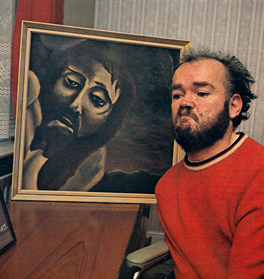
Christy Brown (5 juni 1932 – 6 september 1981) Hier bij een van zijn eigen schilderijen
De Britse schrijver, dramaturg en regisseur David Hare werd geboren op 5 juni 1947 in Sussex. Zie ook alle tags voor David Hare op dit blog.
Uit:Wall: A Monologue
“From the start the exact route has been controversial. The most obvious path for it to have followed would have been along the international border, established in 1949 between Israel and Jordan, and known to all parties as the Green Line. But in fact, 85 percent of its intended route is inside the West Bank. The fence snakes and coils, departing eastward from the Green Line in places by just two hundred meters, but in other places by as much as twenty-two kilometers where it goes inland to collect up and protect Israeli settlements established far inside the occupied territory. Sometimes it takes in fertile Palestinian agricultural land and water wells, leaving Palestinian farmers without access to their own fields. Some 140,200 Israeli settlers will be living between the fence and the Green Line. 93,000 Palestinians will be caught on the wrong side of the wall. For that reason the fence is seen by its opponents not as what it claims to be—a security measure—but more as a land grab, the delineation of a de facto claim, an attempt, like the steady expansion of the Israeli-controlled parts of Jerusalem, to do what is known as “change the facts on the ground.” At the outset of the campaign, supporters of Fence for Life insisted that the wall should be a barrier, not a border. It was not to be used as a bargaining tactic in any future negotiation for a final status agreement. But even Israelis have found this intention hard to credit. Before he left office, Israeli Prime Minister Ehud Olmert admitted that had he survived in the job he would have sought to set Israeli permanent borders by 2010—and that the border “would run along or close to the barrier.”
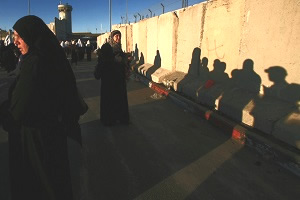
David Hare (Sussex, 5 juni 1947) Palestijnen bij een checkpoint op weg naar Jeruzalem
'You're a lucky girl,' her mother had told her. 'He's a real find. Any girl would he happy to have him. He's an Inspector of Irrigation though he's not yet forty. He earns a big salary and gets a fully furnished government house wherever he's posted, which will save us the expense of setting up a house - and I don't have to tell you what our situation is - and that's besides the house he owns in Alexandria where you'll be spending your holidays.' Samia had wondered to herself how such a splendid suitor had found his way to her door. Who had told him that Mr Mahmoud Barakat, a mere clerk at the Court of Appeal, had a beautiful daughter of good reputation? The days were then taken up with going the rounds of Cairo's shops and choosing clothes for the new grand life she would be living. This was made possible by her father borrowing on the security of his government pension. Abboud Bey, on his part, never visited her without bringing a present. For her birthday, just before they were married, he bought her an emerald ring that came in a plush box hearing the name of a well-known jeweller in Kasr el-Nil Street. On her wedding night, as he put a diamond bracelet round her wrist, he had reminded her that she was marrying someone with a brilliant career in front of him and that one of the most important things in life was the opinion of others, particularly one's equals and seniors. Though she was still only a young girl she must try to act with suitable dignity. `Tell people you're from the well-known Barakat family and that your father was a judge,' and he went up to her and gently patted her cheeks in a fatherly, reassuring gesture that he was often to repeat during their times together. Then, yesterday evening, she had returned from the club somewhat light-headed from the bottle of beer she had been required to drink on the occasion of someone's birthday. Her husband, noting the state she was in, hurriedly took her back home. She had undressed and put on her nightgown, leaving her jewellery on the dressing-table, and was fast asleep seconds after getting into bed. The following morning, fully recovered, she slept late, then rang the bell as usual and had breakfast brought to her. It was only as she was putting her jewellery away in the wooden and mother-of-pearl box that she realized her emerald ring was missing.”
“Ich möchte für den Augenblick darauf näher nicht eingehen, auf jeden Fall bin ich in bestem Einvernehmen und auf eigenen Wunsch aus der Firma Zoller ausgetreten. Das war ziemlich genau vor einem Jahr. Am 5. Juni des letzten Jahres. Vier Tage vor meinem Geburtstag. Ich hatte die Absicht, mich für eine gewisse Zeit hier in Jammers, in der Stadt meiner frühen Kindheit, niederzulassen. Das habe ich denn auch getan. Ich habe gleich da vorn Quartier bezogen, an der Tripolisstraße, keine vierhundert Meter von hier entfernt, dem Zementwerk gegenüber im Haus von Immanuel Kupper, Südfrüchte Großhandel. Vom 6. Juni an blieb ich im Tripolisquartier, blieb da bis zum 8. November des letzten Jahres. Gewisse Vorkommnisse bewogen mich, die Stadt meiner frühen Kindheit zum zweitenmal zu verlassen. Das war vor sieben Monaten. Mein Unglück, mein Schicksal oder was immer führte mich gestern, nach einer Reise von sieben Monaten durch die ganze Juragegend, hierher zurück. Ich bin unschuldig, und ich betone hiermit, die über mich ausgestreuten Gerüchte sind mir nicht unbekannt. Ich werde an zuständiger Stelle meine Beschwerden vorbringen. Die Urheber werden zur Verantwortung gezogen werden, und ich werde nicht zögern, die Wahrheit zu sagen.“
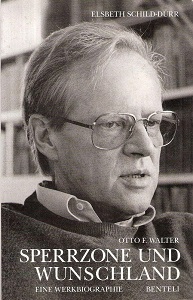
Otto F. Walter (5 juni 1928 – 24 september 1994) Cover
"Agnes first, Hengist second, Leah third!" said Lavinia Middleton, as her sisters and brother contested the access to the cloakroom in the hall. "And don't be too long. Miss Starkie is waiting for you." "She told us to stay in the garden." "Only for half-an-hour. How long have you been?" "Only three-quarters," said Hengist, as if this was a reasonable difference. "And we are to have the dining-room luncheon. So we don't have to go upstairs." "Well, one of you should tell Miss Starkie," said their sister, leaning back on the hall bench. "I don't want to, because I am the boy," said Hengist. "It is not a real reason." "No one could want to for any reason," said Leah. "Miss Starkie may not want to wait for her luncheon," said Agnes. "She ought not to mind," said Hengist. "She should be thinking of higher things." "Nothing could be higher than food," said Leah. "Perhaps it is too high for her." They broke into mirth and continued their talk, a short, sturdy pair of eleven and ten, with broad, sallow faces, dark, deep-set eyes and an almost saturnine aspect. Something about them, when together, suggested the sympathy between them. Agnes was a mild-looking girl of fourteen, with blue eyes, narrower features and a placid but resolute expression. "What is the jest?" said their elder brother, coming up to his sister on the bench. "Miss Starkie. Something about her thinking of food." "I used to be surprised that she did. It seemed to reduce her to our level." "Or to raise her to it," said Leah. "Food is on the heights." "Well, I feel just about on a line with it at the moment," said Miss Starkie's voice. "So I have come down to pursue it, as no one came up to me. I suppose you are to have your share downstairs today." "We were just going to tell you," said Agnes. "I have had to take the will for the deed. It is already later than usual." "Were you assailed by pangs of hunger?" said Hengist. "Well, by something milder than those. But I did feel Nature's reminder."
Ivy Compton-Burnett (5 juni 1884 - 27 augustus 1969)
De Britse dichter en schrijver Paul Farleywerd geboren op 5 juni 1965 in Liverpool. Hij studeerde schilderkunst aan de Chelsea School of Art en woonde in Londen, Brighton en Cumbria. Voor zijn eerste poëzie bundel “The Boy from the Chemist is Here to See You” (1998) en won een Forward Poetry Prize (Best First Collection) en werd op de shortlist geplaatst voor de Whitbread Prize. Het boek bezorgde hem ook de Somerset Maugham Award en in 1999 won hij de Sunday Times Young Writer of the Year Award. Van 2000-2002 was hij de dichter-in-residence bij de Wordsworth Trust in Grasmere. Voor zijn tweede bundel “The Ice Age” (2002), ontving hij de Whitbread Poetry Award. Zijn derde bundel “Tramp in Flames” verscheen in 2006. Voor het gedicht ‘Liverpool Disappears for a Billionth of a Second’ ' kreeg hij de Forward Prize voor Best Individual Poem. In hetzelfde jaar publiceerde hij ook een studie over Terence Davies film “Distant Voices, Still Lives”. In 2007 bewerkte hij een selectie van John Clare voor de dichtersreeks van Faber “Poet to Poet”. Farley heeft ook veel geschreven voor radio en televisie, en schrijft vaak over kunst en literatuur. Hij woont momenteel in Lancashire en is hoogleraar poëzie aan de universiteit van Lancaster.
Liverpool Disappears for a Billionth of a Second
Shorter than the blink inside a blink the National Grid will sometimes make, when you’ll turn to a room and say: Was that just me?
People sitting down for dinner don’t feel their chairs taken away/put back again much faster that that trick with tablecloths.
A train entering the Olive Mount cutting shudders, but not a single passenger complains when it pulls in almost on time.
The birds feel it, though, and if you see starlings in shoal, seagulls abandoning cathedral ledges, or a mob of pigeons
lifting from a square as at gunfire, be warned it may be happening, but then those sensitive to bat-squeak in the backs
of necks, who claim to hear the distant roar of comets on the turn – these may well smile at a world restored, in one piece; though each place
where mineral Liverpool goes wouldn’t believe what hit it: all that sandstone out to sea or meshed into the quarters of Cologne.
I’ve felt it a few times when I’ve gone home, if anything, more often now I’m old and the gaps between get shorter all the time.
Dependants
How good we are for each other, walking through a land of silence and darkness. You open doors for me, I answer the phone for you.
I play jungle loud. You read with the light on. Beautiful. The curve of your cheekbone, explosive vowels, exact use of cologne.
What are you thinking? I ask in a language of touch unique to us. You tap my palm nothing much. At stations we compete senses, see which
comes first—light in the tunnel, whiplash down the rail. I kick your shins when we go out for meals. You dab my lips. I finger yours like Braille.
De Engelse schrijver Geoff Dyer werd op geboren 5 juni 1958 in Cheltenham als enig kind van een plaatwerker vader en een schooldiner dame moeder. Hij ging naar school in zijn geboorteplaats en kreeg een beurs om Engels te studeren aan het Corpus Christi College in Oxford. Dyer is de auteur van vier romans: “The Colour of Memory”, “The Search”, “Paris Trance”, en “Jeff in Venice, Death in Varanasi”, een kritische studie over John Berger, “Ways of Telling”; drie bundels essays “Anglo-English Attitudes”, “Working the Room” en “Otherwise Known as the Human Condition” en zes andere titels die niet direct tot een specifiek genre behoren: “But Beautiful” (over jazz), “The Missing of the Somme” (over de herdenking van WO I), “Out of Sheer Rage” (over D. H. Lawrence), “Yoga For People Who Can’t Be Bothered To Do It”, “The Ongoing Moment” (over fotografie), en Zona (over Andrei Tarkovsky’s film Stalker uit 1979). Hij is de redacteur van “John Berger: Selected Essays” en mede-redacteur, met Margaret Sartor, van “What Was True: The Photographs and Notebooks of William Gedney”. In 2014 verscheen “Another Great Day at Sea” (2014), waarin Dyer vertelt over zijn ervaringen op de USS George H.W. Bush, waarop hij twee weken meevoer als writer-in-residence. In 2005 werd Dyer Fellow van de Royal Society of Literature. In 2014 werd hij verkozen tot Honorary Fellow of Corpus Christi College, Oxford. In 2013 werd hij benoemd in het prestigieuze ambt van Bedell Distinguished Visiting Professor, verbonden aan het Nonfiction Writing Program van de Universiteit van Iowa. Hij doceert tegenwoordig aan de Universiteit van Zuid-Californië.
Uit: Jeff in Venice, Death in Varanasi
“On an afternoon in June 2003, when, for a brief moment, it looked as if the invasion of Iraq had not been such a bad idea after all, Jeffrey Atman set out from his flat to take a walk. He had to get out of the flat because now that the initial relief about the big picture had worn off - relief that Saddam had not turned his non-existent WMD on London, that the whole world had not been plunged into a conflagration - the myriad irritations and frustrations of the little picture were back with a vengeance. The morning's work had bored the crap out of him. He was supposed to be writing a twelve-hundred-word so-called 'think piece' (intended to require zero thought on the part of the reader and scarcely more from the writer but still, somehow, beyond him) that had reached such a pitch of tedium that he'd spent half an hour staring at the one-line email to the editor who'd commissioned it: 'I just can't do this shit any more. Yrs J.A.' The screen offered a stark choice: Send or Delete. Simple as that. Click Send and it was all over with. Click Delete and he was back where he started. If taking your own life were this easy, there'd be thousands of suicides every day. Stub your toe on the way to the bathroom. Click. Get marmalade on your cuff while eating toast. Click. It starts raining as soon as you leave the house and your brolly's upstairs. What to do? Go back up and get it, leave without it and get soaked, or ... Click. Even as he stared at the message, as he sat there on the very brink of sending it, he knew that he would not. The thought of sending it was enough to deter him from doing so. So instead of sending the message or getting on with this article about a 'controversial' new art installation at the Serpentine he sat there, paralysed, doing neither. To break the spell he clicked Delete and left the house as if fleeing the scene of some dreary, as yet uncommitted crime. Hopefully fresh air (if you could call it that) and movement would revive him, enable him to spend the evening finishing this stupid article and getting ready to fly to Venice the following afternoon. And when he got to Venice? More shit to set up and churn out. He was meant to be covering the opening of the Biennale - that was fine, that was a doddle - but then this interview with Julia Berman had come up (or at least a probable interview with Julia Berman) and now, in addition to writing about the Biennale, he was supposed to persuade her - to beg, plead and generally demean himself - to do an interview that would guarantee even more publicity for her daughter's forthcoming album and further inflate the bloated reputation of Steven Morison, the dad, the famously overrated artist.”