Romenu is een blog over gedichten, literatuur en kunst Maar Romenu is ook een professionele freelance vertaler Du-Ne en Ne-Du http://www.roumen-vertalingen.nl/
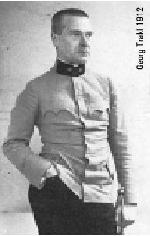
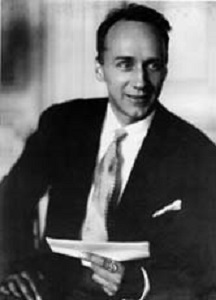
Georg Trakl werd op 3 februari 1887 in het conducteurshuis aan de Waagplatz 2 in Salzburg geboren. Zijn vader, Tobias Trakl, was een handelaar in ijzerwaren en zijn moeder, die ook psychische problemen had, was Maria Catharina Trakl, (meisjesnaam Halik). Voorts had hij nog drie broers en drie zussen. Margarethe (doorgaans Grethe genoemd) stond hem het naast, zelfs zodanig dat sommigen een incestueuze verhouding vermoeden. Zijn jeugd bracht hij door in Salzburg. Vervolgens bezocht hij van 1897 tot 1905 het humanistische gymnasium. Om toch een academische opleiding te kunnen volgen, werkte hij tot 1908 in de praktijk bij een apotheker. Sommigen vermoedden dat hij dit vooral deed om zichzelf opiaten te kunnen verschaffen. Bij het uitbreken van WO I werd Trakl als medicus naar het front in Galicië (heden ten dage in Oekraïne en Polen) gestuurd. Zijn gemoedsschommelingen leidden tot geregelde uitbraken van depressie, die verergerd werden door de afschuw die hij voelde voor de verzorging van de ernstig verwonde soldaten. De spanning en druk dreven hem ertoe een suïcidepoging te ondernemen, welke zijn kameraden nochtans verhinderden. Hij werd in een militair ziekenhuis opgenomen in Kraków, alwaar hij onder strikt toezicht geplaatst werd.Trakl verzonk daar in nog zwaardere depressies en schreef Ficker om advies. Ficker overtuigde hem ervan dat hij contact moest opnemen met Wittgenstein, die inderdaad op weg ging na Trakls bericht te hebben ontvangen. Op 4 november 1914, drie dagen voordat Wittgenstein aan zou komen, overleed hij echter aan een overdosis cocaïne
Paul Celan
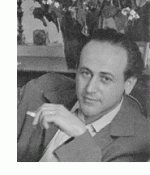
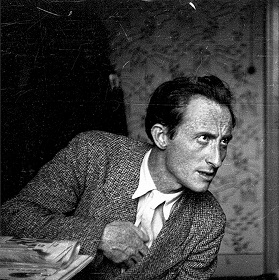
Paul Celan werd onder de naam Paul Antschel op 23 november 1920 geboren in Czernowitz, toentertijd de hoofdstad van de Roemeense Boekovina, nu behorend bij de Oekraïne. Paul Celans ouders waren Duitssprekende joden die hun zoon joods opvoedden en hem naar Duitse christelijke scholen stuurden. In 1942 werden Celans ouders door de Duitse bezetter naar een werkkamp gedeporteerd en daar vermoord. Hijzelf wist aanvankelijk onder te duiken, maar moest vanaf juli 1942 in een werkkamp dwangarbeid verrichten. Celan overleefde de oorlog. Via Boekarest en Wenen vestigde Celan zich in 1948 in Parijs. Daar was hij werkzaam als dichter, vertaler en doceerde hij aan de prestigieuze Ecole Normale Supérieure. Vermoedelijk op 20 april 1970 beëindigde hij zijn leven zelf door in de Seine te springen.
Gerard Reve
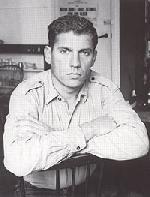
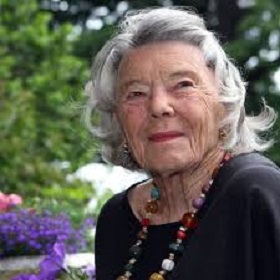
Gerard Reve over: Medearbeiders ”God is in de mensen, de dieren, de planten en alle dingen - in de schepping, die verlost moet worden of waaruit God verlost moet worden, door onze arbeid, aangezien wij medearbeiders van God zijn.” Openbaring ”Tja, waar berust elk godsbegrip op, elke vorm van religie? Op een openbaring, dat wil zeggen op een psychische ervaring van zulk een dwingende en onverbiddelijke kracht, dat de betrokkene het gevoel heeft, niet dat hij een gedachte of een visioen heeft, maar dat een gedachte gedachte of visioen hem bezit en overweldigt.”
Simon Vestdijk
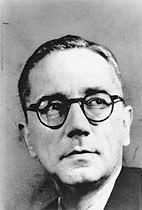
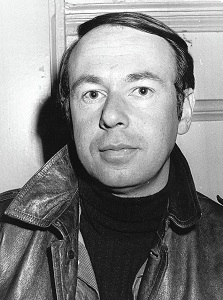
Simon Vestdijk (Harlingen, 17 oktober 1898 – Utrecht, 23 maart 1971) was een Nederlands romancier, dichter, essayist en vertaler. Zijn jeugd te Harlingen en Leeuwarden beschreef hij later in de Anton Wachter-cyclus. Van jongs af aan logeerde hij regelmatig bij zijn grootouders in Amsterdam, waar hij zich in 1917 aan de Universiteit van Amsterdam inschrijft als student in de medicijnen. Tijdens zijn studie die van 1917 tot 1927 duurde, leerde hij Jan Slauerhoff kennen.Tot 1932 is hij als arts in praktijken door heel Nederland werkzaam. In 1932 volgt zijn officiële schrijversdebuut met de uitgave van de bundel Verzen in De Vrije Bladen. Doorslaggevend voor Vestdijks uiteindelijke keuze voor de literatuur is zijn ontmoeting in 1932 met Eddy Du Perron en Menno ter Braak. Deze ontmoeting had tot resultaat dat hij redactielid werd van het tijdschrift Forum Kort daarop, in 1933, wordt zijn eerste novelle, De oubliette, uitgegeven. In hetzelfde jaar schrijft hij Kind tussen vier vrouwen, dat, eerst geweigerd door de uitgever, later de basis zal vormen voor de eerste drie delen van de Anton Wachter-romans. In 1951 ontvangt Vestdijk de P.C. Hooftprijs voor zijn in 1947 verschenen roman De vuuraanbidders. In 1957 wordt hij voor het eerst door het PEN-centrum voor Nederland voorgedragen voor de Nobelprijs voor de Literatuur, die hij echter nooit zal krijgen. Op 20 maart 1971 wordt hem de Prijs der Nederlandse Letteren toegekend, maar voor hij deze kan ontvangen overlijdt hij op 23 maart te Utrecht op 72-jarige leeftijd. Vestdijk was auteur van ca. 200 boeken. Vanwege deze enorme productie noemde de dichter Adriaan Roland Holst hem 'de man die sneller schrijft dan God kan lezen'. Andere belangrijke boeken van Simon Vestdijk zijn: "Kind van stad en land" (1936), "Meneer Visser's hellevaart" (1936), "Ierse nachten" (1946), "De toekomst de religie" (1947), "Pastorale 1943" (1948), "De koperen tuin" (1950), "Ivoren wachters" (1951), "Essays in duodecimo" (1952) en "Het genadeschot" (1964).
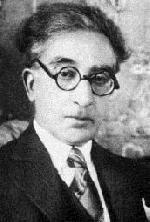
K.P. Kavafis K.P. Kavafis werd als kind van Griekse ouders, afkomstig uit Konstantinopel, geboren in 1863 in Alexandrië (tot vandaag een Griekse enclave) waar hij ook het grootste deel van zijn leven woonde en werkte. Twee jaar na de dood van zijn vader verhuist het gezin in 1872 naar Engeland om na een verblijf van vijf jaar naar Alexandrië terug te keren. Vanwege ongeregeldheden in Egypte vlucht het gezin in 1882 naar Konstantinopel, om na drie jaar opnieuw naar Alexandrië terug te gaan. In de jaren die volgen maakt Kavafis reizen naar Parijs, Londen en in 1901 zijn eerste reis naar Griekenland, in latere jaren gevolgd door nog enkele bezoeken. Op de dag van zijn zeventigste verjaardag, in 1933 sterft Kavafis in Alexandrië. De roem kwam voor Kavafis pas na zijn dood, dus postuum. Deels is dat toe te schrijven aan zijn eigen handelswijze. Hij was uiterst terughoudend met de publicatie van zijn gedichten, liet af en toe een enkel gedicht afdrukken in een literair tijdschrift, gaf in eigen beheer enkele bundels met een stuk of twintig gedichten uit en het merendeel van zijn poëzie schonk hij op losse bladen aan zijn beste vrienden.
Thomas Mann
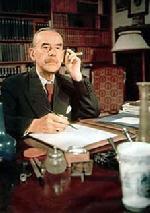
Thomas Mann, de jongere broer van Heinrich Mann, werd geboren op 6 juni 1875 in Lübeck. Hij was de tweede zoon van de graankoopman Thomas Johann Heinrich Mann welke later één van de senatoren van Lübreck werd. Zijn moeder Julia (geboren da Silva-Bruhns) was Duits-Braziliaans van Portugees Kreoolse afkomst. In 1894 debuteerde Thomas Mann met de novelle "Gefallen". Toen Thomas Mann met 21 jaar eindelijk volwassen was en hem dus geld van zijn vaders erfenis toestond - hij kreeg ongeveer 160 tot 180 goldmark per jaar - besloot hij dat hij genoeg had van al die scholen en instituties en werd onafhankelijk schrijver. Kenmerkend voor zijn stijl zijn de ironie, de fenomenale taalbeheersing en de minutieuze detailschildering. Manns reputatie in Duitsland was sterk wisselend. Met zijn eerste roman, Buddenbrooks (1901), had hij een enorm succes, maar door zijn sceptische houding tegenover Duitsland na de Eerste Wereldoorlog veranderde dit volledig. Stelde hij zich tot aan de jaren twintig apolitiek op (Betrachtungen eines Unpolitischen, 1918), meer en meer raakte hij bij het Politiek gebeuren betrokken. Zijn afkeer van het nationaal socialisme groeide, zijn waarschuwingen werden veelvuldiger en heftiger. In 1944 accepteerde hij het Amerikaanse staatsburgerschap. Tussen 1943 en 1947 schreef Mann Doktor Faustus (zie Faust), de roman van de 'Duitse ziel' in de gecamoufleerd geschilderde omstandigheden van de 20ste eeuw. In 1947 bezocht hij voor het eerst sinds de Oorlog Europa, twee jaar later pas Duitsland. In 1952 vertrok hij naar Zwitserland. Op 12 augustus 1955 stierf hij in Zürich. Twintig jaar na zijn dood, in aug. 1975, is zijn literaire nalatenschap geopend: dagboekaantekeningen van 15 maart 1933 tot 29 juli 1955, alsmede notities uit de jaren 1918 tot en met 1921.Belangrijke werken zijn: Der Zauberberg, Der Tod in Venedig, Dokter Faustus , Joseph und seine Brüder en Die Bekenntnisse des Hochstaplers Felix Krull.
Rainer Maria Rilke
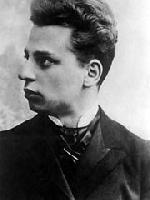
Rilke werd op 4 december 1875 geboren in Praag. Hij had al naam gemaakt als dichter met zijn bundels Das Stundenbuch en Das Buch der Bilder, toen hij de literaire wereld versteld deed staan en wereldfaam verwierf met de publicatie van zijn twee delen Neue Gedichte in 1907 en 1908. Hij verzamelde daarin het beste werk uit een van zijn vruchtbaarste periodes, die hij grotendeels doorbracht in Parijs. Rilke was daar diep onder de indruk gekomen van Rodin, bij wie hij een tijdlang in dienst was als particulier secretaris. Rodin, zei hij later, had hem leren kijken. Dit kijken kwam neer op intense concentratie, om het mysterie te kunnen zien ‘achter de schijnbare werkelijkheid'. Latere en rijpere werken als Duineser Elegien (1912-1923) en het ronduit schitterende Die Sonette an Orfeus (1924) illustreren Rilkes metafysische visie op het onzegbare, dat haar verwoording vindt in een hermetische muzikale taal. Op 29 december 1926 overlijdt Rilke in het sanatorium in Val-Mont aan de gevolgen van leukemie. Enkele dagen later wordt hij, overeenkomstig zijn wens, begraven op het kerkhof van Raron.
* * * * * * * * * * * * * * * *
Romenu
Over literatuur, gedichten, kunst en cultuur
24-09-2017
Frances Harper
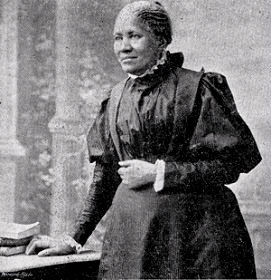
De Amerikaanse dichteres, schrijfster,suffragette en abolitioniste Frances Ellen Watkins Harperwerd geboren in Baltimore op 24 september 1825 als enig kind van twee vrije zwarte ouders. Veel zwarte mensen waren in die tijd slaaf. Haar moeder overleed in 1828 toen Frances pas drie jaar oud was en ze werd opgevoed door haar moeders tante en oom, dominee William Watkins, een burgerrechtenactivist. Ze werd opgeleid in zijn Academy for Negro Youth en hij zou een belangrijke invloed hebben op haar leven en werk. Op 14-jarige leeftijd begon ze te werken als naaister. Haar eerste dichtbundel “Forest Leaves” werd gepubliceerd in 1845, haar tweede “Poems on Miscellaneous Subjects” (1854), was heel populair en werd in de loop van de volgende jaren verscheidene malen herdrukt. In 1859 werd haar kort verhaal “The Two Offers” gepubliceerd in Anglo-African Magazine, waardoor ze de eerste Afro-Amerikaanse vrouw was die een kort verhaal publiceerde.Drie van haar romans werden van 1868 tot 1888 als serie uitgebracht in het christelijk tijdschrift Christian Recorder. Haar bekendste werk “Iola Leroy” (alternatieve titel Shadows Uplifted) werd als roman in 1892 gepubliceerd, toen Harper 67 jaar oud was. Het werd lang beschouwd als de eerste roman, uitgebracht door een Afro-Amerikaanse auteur (latere onderzoeken vonden nog vroegere werken van Harriet E. Wilson en William Wells Brown). Naar de conventies van die tijd behandelde ze ernstige sociale kwesties zoals onderwijs voor vrouwen, rassenvermenging, passing, afschaffing van de slavernij, wederopbouw, matigheid met alcohol en sociale verantwoordelijkheid. In 1850 verhuisde Watkins naar Ohio waar ze de eerste vrouwelijke docent werd aan het Union Seminary. Frances Harper was een groot voorvechter van het abolitionisme en het vrouwenkiesrecht. Ze was ook actief in de Unitarian Church, die de afschaffing van de slavernij ondersteunde. Samen met Mary Church Terrell hielp Harper met de oprichting van de National Association of Colored Women (Nationale vereniging van gekleurde vrouwen) in 1896 en ze werd in 1897 verkozen tot vicepresident.
The Slave Auction
The sale began—young girls were there, Defenseless in their wretchedness, Whose stifled sobs of deep despair Revealed their anguish and distress.
And mothers stood, with streaming eyes, And saw their dearest children sold; Unheeded rose their bitter cries, While tyrants bartered them for gold.
And woman, with her love and truth— For these in sable forms may dwell— Gazed on the husband of her youth, With anguish none may paint or tell.
And men, whose sole crime was their hue, The impress of their Maker's hand, And frail and shrinking children too, Were gathered in that mournful band.
Ye who have laid your loved to rest, And wept above their lifeless clay, Know not the anguish of that breast, Whose loved are rudely torn away.
Ye may not know how desolate Are bosoms rudely forced to part, And how a dull and heavy weight Will press the life-drops from the heart.
Learning to Read
Very soon the Yankee teachers Came down and set up school; But, oh! how the Rebs did hate it,— It was agin’ their rule.
Our masters always tried to hide Book learning from our eyes; Knowledge did’nt agree with slavery— ’Twould make us all too wise.
But some of us would try to steal A little from the book. And put the words together, And learn by hook or crook.
I remember Uncle Caldwell, Who took pot liquor fat And greased the pages of his book, And hid it in his hat.
And had his master ever seen The leaves upon his head, He’d have thought them greasy papers, But nothing to be read.
And there was Mr. Turner’s Ben, Who heard the children spell, And picked the words right up by heart, And learned to read ’em well.
Well, the Northern folks kept sending The Yankee teachers down; And they stood right up and helped us, Though Rebs did sneer and frown.
And I longed to read my Bible, For precious words it said; But when I begun to learn it, Folks just shook their heads,
And said there is no use trying, Oh! Chloe, you’re too late; But as I was rising sixty, I had no time to wait.
So I got a pair of glasses, And straight to work I went, And never stopped till I could read The hymns and Testament.
Then I got a little cabin A place to call my own— And I felt independent As the queen upon her throne.
Frances Harper (24 september 1825 - 25 februari 1911)
Hij heet Victor en zijn plasser ziet eruit als een verfrommeld kotszakje. In plaats van een ritslipje heeft zijn jas een paperclip. En als hij zijn bril afzet wil de wereld niets meer met hem te maken hebben. Maar dat maakt hem nog niet kansloos. Hij is jong genoeg om het leven aan te kunnen en oud genoeg om het aan zijn laars te lappen. Of andersom. Op een heldere winterochtend van het jaar 19.. klapte Victor de kleppen van zijn pet naar beneden en ging op het zadel zitten. Een vliegenier op een fiets - het moet een belachelijk gezicht zijn geweest. Maar zijn oren, zijn vleermuisdunne oren eisten respect en mochten niet worden blootgesteld aan polaire geselingen. Hij begaf zich op weg naar het postkantoor. Hoewel hij zeker wist dat de brief het standaardgewicht niet overschreed, liet hij hem wegen door de postbeambte. Niets mocht aan het toeval worden overgelaten. Op de envelop had hij haar naam en adres met de Parker 51 geschreven, die hij uitsluitend gebruikte voor liefdesbrieven. Hij wachtte tot hij de brief in de postzak zag verdwijnen. De hele dag had hij jeuk aan zijn ogen. Men zei dat het kwam door de barbaarse kou. Hij geloofde er geen woord van. Hij wreef zo hard en zo vaak in zijn ogen dat hij vreesde dat ze zouden verpulveren. In de vroege avond, toen de dag rood aan de randen werd (als een in brand gestoken vel papier dat langzaam naar het midden toe krult en ten slotte in zwarte slierten uiteenvalt), metselde Victor zijn brievenbus dicht. Hij verstevigde het cement met zijn collectie Bic-pennen, die nu als speerpunten de postbode opwachtten. Tussen hen in troonde de Parker 51, de veldmaarschalk. Zijn gouden bajonet glom van trots.
Het is het niet bedoelde. De huisspin bungeejumpend tussen zijn vier poten. Het schonkig hoofd gevuld met roes, ronkend op zijn blad. Het is de vlieg
die zich kwiek in de poten wrijft na een gigasnelle landing. De wellustige voet die zonder erg zijn poot streelt en niet het ademende been van een ander.
De zachte schuierharen zijn het bij het wegvegen van kruimels evenals de kleine vingers die een toekomst van papieren bootjes vouwen op de vlakste zee.
Maar het is vooral het kind dat zonder kik onder hem zit, daar vanouds een schuilplaats vindt, dàt is het geluk van een tafel –
Fake facts
Er komt een yoghurtdrank voor hoger opgeleiden Pastoor die over water loopt, geeft plots een gil En wordt, hoe triest, verslonden door een krokodil Verdomd, op dertien juni is het eind der tijden
Snif, ‘k heb van nepnieuws een sonnettenkrans geschreven Voor dat juweel wou men mij hier géén ruimte geven!
„The garden lane was deserted. The old Chinese gatekeeper wore a cap with The Grotto of Camões written on the plastic brim. We’re closing, the gatekeeper said, I’m about to close the gates. I don’t need much time, I tried with a smile, just a quick trip to the Grotto of Camões. He answered, reasonably: Why go at this late hour? Come back tomorrow morning, sir, the garden will be cool, the cave will be cool, tomorrow morning you can enjoy the cool air, now all you’ll find are sleeping bats. Yes, I understand, I said, but it just so happens that I really do need to visit the cave tonight: I’ve had an inspiration. The gatekeeper removed his cap and scratched his head. I don’t understand, he said. What’s your name? I asked. He gave me a timid smile. In the registry office, my name is Manuel, he answered, because in the registry office here, we have Portuguese names, but my real name, my Chinese name, is something else. He uttered a Chinese name and smiled again. And what does your name mean in Chinese? I asked. It means Light Shining Upon Water, he said. This seemed like the perfect opportunity, and I slipped my arm into his. Listen, Light Shining Upon Water, I said, I have a shining light as well, and it’s this light that made me think to visit the cave this very night, look, see up there? I pointed to a bright star, the brightest in the sky. It’s from there, I said, that I get my inspiration, or my idea, call it what you will. He raised his arm as I did and pointed. The stars are guides, he said, they guide everything, and we pitiful humans just don’t know it. My friend, you comfort me, I said, because you understand me, you know, I got a message from that shining light, it’s called Sirius. He brought his raised arm alongside mine and looked at me doubtfully. You’re not familiar with the Macao sky, he said, his voice apologetic, sorry, but you’re really not familiar with our sky, that star has a different name in Chinese, in Latin, it’s something else, if I’m saying it correctly in your language, it’s called Canopus, that star is Canopus, you’re a bit confused, my friend: from these latitudes your star can’t be seen; I know the sky, I’ve studied it. Now I, too, scratched my head. All right, I said, I’ll give you that; still, I did receive a message—from Sirius or Canopus, I couldn’t say—but I have to get inside that cave where that great, half-blind poet praised Christianity in the sixteenth century, and I have to get in there tonight.”
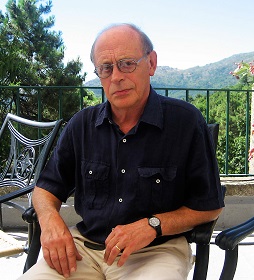
Antonio Tabucchi (23 september 1943 – 25 maart 2012)
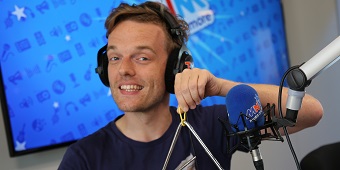
De Vlaamse schrijver en radio-dj Tom De Cockwerd geboren in Rotselaar op 23 september 1983. Hij woont in Borgerhout. Zie ook alle tags voor Tom de Cock op dit blog.
Uit:En toen kwam jij
“Ik werk tegenwoordig als eindredacteur voor Weekend Knack. Binnenkort is het Vaderdag, zoals je weet. We laten bekende vaders een brief aan hun zoon of dochter schrijven. En ik dacht daarbij aan jou.’ Ik probeerde uit te rekenen hoe groot de kans was dat Ellen een verkeerd nummer had gebeld. Zo goed als nihil. ‘Je weet dat ik geen kind heb. Toch?’ ‘Ja, maar je wilt er wel een.’ ‘Dat kan nog jaren duren.’ ‘Het is een originele invalshoek. Denk er eens over na. De deadline is dinsdag.’ Ik kon Ellen, gezien mijn historische schuld, niets weigeren. Bovendien leek het me een leuke gelegenheid om in alle luwte weer eens wat creatiefs te schrijven, want dat was alweer even geleden. Dus een week later in Weekend Knack: Hey Lieverd! Gek zeg. Dit is waarschijnlijk mijn min-tweede Vaderdag. Of kom, misschien de min-derde. We gaan daar niet lastig over doen, de tijd dringt niet. Ik weet dat je komt, ergens tussen nu en twee, drie jaar. Je zult geboren worden. Tenminste, dat lijkt me toch praktisch. Ik heb het ook ooit gedaan; nog nooit spijt van gehad. Jouw buikmama zal om één grote of duizend kleine redenen niet voor je kunnen of willen zorgen. Te jong, te oud, te verslaafd, te gelovig, te illegaal, te onmogelijk. De gynaecoloog haalt er specialisten bij, die samen met je biomama naar een oplossing zullen zoeken, want bij haar blijven zou gewoon lekker logisch en makkelijk zijn. In afwachting mag jij aan het leven wennen bij een leuke familie waar je niets tekortkomt. En een maand of drie later, wanneer alles gezegd en geprobeerd en uitgevlooid is, zal er iemand de telefoon nemen en mij bellen. Midden op een werkdag, misschien wel twee minuten voor mijn radioprogramma begint. Ik laat alles vallen waar ik mee bezig ben. En dan komt het moment waarop we elkaar in de warme schoot van een astronomisch groot toeval tegenkomen: je papa en ik bellen aan bij je pleeggezin.”
Tom De Cock (Rotselaar, 23 september 1983)
De Nederlandse dichteres en schrijfster Ellen Warmond(pseudoniem van Pietronella Cornelia van Yperen) werd geboren in Rotterdam op 23 september 1930. Zie ook alle tags voor Ellen Warmondop dit blog.
Bij dag uitzicht op zee en op het hospitaal -twee oceanen onrust op andere schaal-
als het stil is 's nachts kun je ze horen worstelen - zonder onderling verband -
de zieken met hun dromen de golven met het strand.
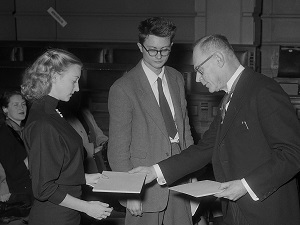
Ellen Warmond (23 september 1930 – 28 juni 2011) Ellen Warmond en Remco Campert ontvangen de Reina Prinsen Geerligs Prijs in 1953.
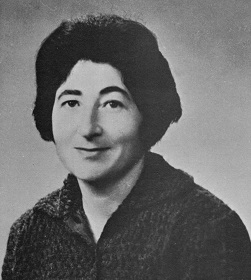
De Zuid-Afrikaanse / Israëlische dichteres Olga Kirschwerd geboren in Koppies in de Oranje Vrijstaat op 23 september 1924. Zie ook alle tags voor Olga Kirschop dit blog.
Wanneer jy weg is
Wanneer jy weg is, is ek soos ’n tuin in die winter waarin al wat leef hom klein
vou om die sap se warmte te bewaar. Jy is my donker wortels in die swaar-
deurdringbare grond van ’n aangenome land. Sonder jou is ek ’n uitheemse plant
wat nêrens meer kan aard nie. Daarom rig ek teen die ysige dae tot jou terug-
koms – son deur ’n brandglas – gedagtes aan jou hier waar boeke my stom geselskap hou
want jy is die enigste aan wie ek vertel wat mens vertel. Jy’s minnaar, vriend, metgesel.
I have walked a great while over the snow, And I am not tall nor strong. My clothes are wet, and my teeth are set, And the way was hard and long. I have wandered over the fruitful earth, But I never came here before. Oh, lift me over the threshold, and let me in at the door!
The cutting wind is a cruel foe. I dare not stand in the blast. My hands are stone, and my voice a groan, And the worst of death is past. I am but a little maiden still, My little white feet are sore. Oh, lift me over the threshold, and let me in at the door!
Her voice was the voice that women have, Who plead for their heart’s desire. She came—she came—and the quivering flame Sunk and died in the fire. It never was lit again on my hearth Since I hurried across the floor, To lift her over the threshold, and let her in at the door.
To Memory
Strange Power, I know not what thou art, Murderer or mistress of my heart. I know I'd rather meet the blow Of my most unrelenting foe Than live---as now I live---to be Slain twenty times a day by thee.
Yet, when I would command thee hence, Thou mockest at the vain pretence, Murmuring in mine ear a song Once loved, alas! forgotten long; And on my brow I feel a kiss That I would rather die than miss.
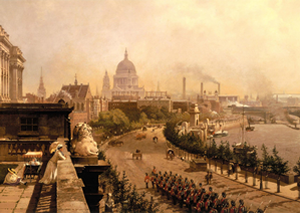
Mary Coleridge (23 september 1861 – 25 augustus 1907) Londen. The Embankment door John O'Connor, 1874
“Dorrith en Maxi Sunderman waren in de omgeving minder bekend om het feit dat ze tweelingen waren, als door het feit dat ze in de gekste verwikkelingen verzeild raakten. Dat wilde zeggen, dat Maxi de moeilijkheden veroorzaakte en Dorrith, meestal met succes, probeerde haar eruit te halen. Uiterlijk leken ze verwarrend op elkaar, maar innerlijk waren ze zo verschillend als twee mensen maar kunnen zijn. Maxi was vrolijk, voortvarend en wild. Ze dacht wel degelijk, maar meestal te laat. Dorrith, veel kalmer, was ook vrolijk, maar ze dacht na voor ze iets deed, en ze gaf niet op als ze zich eenmaal iets in het hoofd had gezet. Dat betekende dat ze in haar kleuterjaren vocht voor Maxi als ze het niet anders kon winnen. Maxi deed weinig voor Dorrith, want die kwam nooit in moeilijkheden, tenzij door het beroep dat haar zusje op haar deed. Toch waren ze niet de verknochte tweeling die geen stap zonder elkaar kan doen. Ze hadden hun eigen vrienden en vriendinnen en gingen zo veel mogelijk hun eigen weg. Hun ouders waren er blij mee en mevrouw Sunderman had de meisjes, hoe vreemd iedereen het ook vond, na hun kleuterperiode nooit meer in dezelfde kleren en kleuren gestoken. Dorothea had zichzelf kortweg Dorrith genoemd en Maria Xenia was voor het gemak Maxi geworden. En als mevrouw Sunderman een enkele maal heel moe was, zuchtte ze diep en zei meer dan eens: ‘En dan zeggen ze nog dat een naam er niets toe doet! Maxi… ze is inderdaad in alles Maxi. Zou ze anders zijn geweest als we haar Mini hadden genoemd? Ik word dol van dat kind!’ Dat zei ze niet vaak. Maar wel op de beruchte middag die Maxi enkele ontvellingen opleverde wegens een conflict met een grotere jongen die haar bal had afgepakt, en Dorrith een compleet regenboog-oog, omdat ze gevochten had om de gillende zuster uit de handen van het zeer hardhandig exemplaar van het andere geslacht te halen. „Ik kon er niets aan doen!” loeide Maxi. „Het was een gemene jongen!” „Vecht dan voor jezelf,” stelde haar vader vermoeid voor. „Gil niet altijd om je zus. Vertel me nou eens of jij voor haar hetzelfde zou doen, hè?” „Dat weet ik niet,” bekende Maxi eerlijk. Ze veegde over haar betraande gezicht.”
Leni Saris (23 september 1915 – 9 december 1999) Cover
God knows who first thought up that gloomy image and spoke of the dead as living shades straying about amongst us.
And yet those shades are really here -- you can’t miss them. Over the years I’ve gathered around me a numerous cluster. But it is I amidst them all who is straying.
They’re dark and their muteness keeps time with my muteness when the evening’s closing in and I’m alone. Now and again they stay my writing hand when I’m not right, and blow away an evil thought that’s painful.
Some of them are so dim and faded I’m losing sight of them in the distance. One of the shades, however, is rose-red and weeps. In every person’s life there comes a moment when everything suddenly goes black before his eyes and he longs passionately to take in his hands a smiling head. His heart wants to be tied to another heart, even by deep stitches, while his lips desire nothing more than to touch down on the spots where the midnight raven settled on Pallas Athene when uninvited it flew in to visit a melancholy poet.
It is called love. All right, perhaps that’s what it is! But only rarely does it last for long, let alone unto death as in the case of swans. Often loves succeed each other like suits of cards in your hand.
Vertaald door Ewald Osers
Jaroslav Seifert ( 23 september 1901 – 10 januari 1986)
“Schandau, den 1. Juni Ich versprach, Liebster, bald Nachricht von mir zu geben. Kaum bin ich vierundzwanzig Stunden von Dir entfernt, und schon erfülle ich meine Zusage. Du musst gestehn, das heißt pünktlich sein. Diese Tugend der Solidität kommt aber mir, als baldigem Ehemanne, von Rechtswegen zu, deswegen will ich weiter kein Lobens davon machen. Ich glaube, es gibt im ganzen menschlichen Leben keinen gewagtern und weitern Sprung, als mitten aus dem freien, fröhlichen Stundentenleben heraus in das Staatsgefängnis der Ehe. Dieser salto mortale soll manchem schon den Hals gebrochen haben; ich hoffe aber, ich werde glücklich sein. Frisch gewagt ist halb gewonnen. – Du bewunderst, wie Du mir so oft gesagt hast, meinen leichten Sinn bei diesem wichtigen Schritte. Der, wie Du Dich ausdrückst, das Glück meiner Zukunft bestimmen muss. Ich begreife nicht, wie ich anders sein sollte. Du weißt ja, wie es Familienverhältnisse durchaus verlangen, dass ich die junge Gräfin Stellnitz heiraten muss, wenn ich nicht eine bedeutende Erbschaft einbüßen will, die mir nur unter dieser Bedingung zufällt. Die Herren Väter haben die Sache abgemacht, und der meinige hat mir vor kurzem erst alle meine lustigen Burschenstreiche, mit Einschluss einiger tausend Tälerchen Schulden, vergeben, ohne eine saure Miene zu machen, ich kann ihm also diesen Gefallen wieder tun; übrigens soll ja meine Braut ein Engel sein, wie sich mein Vater ausdrückt, sittsam, fromm, gebildet, liebenswürdig und nota bene reich; kurz, wenn ich seinen Beschreibungen trauen darf, so erwartet mich ein paradiesisch Leben. Dass ich mir meine Zukunft nicht mit den zauberischen Farben einer glühenden Leidenschaft ausmale, glaubst Du mir wohl. Ich lasse es nun so über mich ergehen. Bis jetzt hab' ich die Liebe nie für etwas anders als für eine momentane Belustigung angesehen. Was man mir von ewiger Treue, von häuslicher Glückseligkeit etc. etc. erzählt hat, hab' ich nur für schöne Träume gehalten. Die Liebe, die das Herz mit ewiger Sehnsucht füllen soll, fühlt' ich noch nie, und ich bin überzeugt, dass mich weibliche Reize nicht so leicht aus der schönen Ruhe bringen und mir die fröhliche leichte Ansicht, die ich der Welt abgewonnen habe, rauben können.“
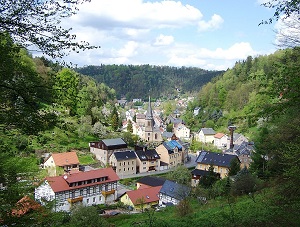
Theodor Körner (23 september 1791 - 26 augustus 1813) Stadsdeel Krippen, Schandau
“Medea: Wee mij, rampzaal´ge in waan vergaan; Dood, maak een eind aan mijn bestaan. Voedster: Ach, kind´renlief, uw moeders smart jaagt weer haar toorn, jaagt weer heur hart. Spoedt u van hier, gaat fluks in huis, en komt uw moeder niet voor oogen; genaakt haar niet; neemt u in acht, want huiv´ren doet d´ onstuim´ge aard van haar trotschen geest. Een nieuwe wolk van smart komt op en dreigt in feller klacht dan ooit zich uit te storten. Wat daden zal zij nog begaan, zij zoo hooghartig en toomeloos, zoo diep in haar eer beleedigd. Medea: O smaad, o duldelooze smaad, die schreit tenhemel. Ach, kind´ren, vloek, vloek over u en uw vader; zijn huis, geheel zijn ras ga te gronde. Voedster: Ach, waarom deelt uw kroost in de schuld van hun vader? Waarom haat gij hen? Ai mij, gij kleinen, ik ben zoo bang voor uw lot. Hartstocht in een vorst is een vreeselijk iets, ter nauw zich beheerschend, almachtig in veel, verkeert hij zijn stemming niet licht. Wel hem, die in ´t leven het evenwicht houdt; want duurzame vreê tot het eind mijner dagen zou liever mij zijn dan in grootheid te leven. Houd maat: een woord als geen ander zoo goed, en een kostelijk iets, als de mensch ernaar doet. Het buitenspoorge houdt geen stand, en wee, wanneer een godheid toornt; dan is ´t nog grooter ellende.”
Vertaald door Dr. Chr. Deknatel
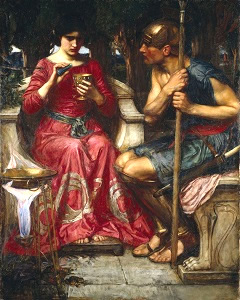
Euripides (484 v. Chr – 406 v. Chr) Jason and Medea door John William Waterhouse, 1907
« A murmur of wrath and contempt went round the group of ill-clad wretches, who crowded round Citoyen Bibot. "Half an hour later," continued the sergeant, "up comes a captain of the guard with a squad of some dozen soldiers with him. `Has a car gone through?' he asks of Grospierre, breathlessly. `Yes,' says Grospierre, `not half an hour ago.' `And you have let them escape,' shouts the captain furiously. `You'll go to the guillotine for this, citoyen sergeant! that cart held concealed the CI-DEVANT Duc de Chalis and all his family!' `What!' thunders Grospierre, aghast. `Aye! and the driver was none other than that cursed Englishman, the Scarlet Pimpernel.'" A howl of execration greeted this tale. Citoyen Grospierre had paid for his blunder on the guillotine, but what a fool! oh! what a fool! Bibot was laughing so much at his own tale that it was some time before he could continue. "`After them, my men,' shouts the captain," he said after a while, "`remember the reward; after them, they cannot have gone far!' And with that he rushes through the gate followed by his dozen soldiers." "But it was too late!" shouted the crowd, excitedly. "They never got them!" "Curse that Grospierre for his folly!" "He deserved his fate!" "Fancy not examining those casks properly!" But these sallies seemed to amuse Citoyen Bibot exceedingly; he laughed until his sides ached, and the tears streamed down his cheeks. "Nay, nay!" he said at last, "those aristos weren't in the cart; the driver was not the Scarlet Pimpernel!" "What?" "No! The captain of the guard was that damned Englishman in disguise, and everyone of his soldiers aristos!" The crowd this time said nothing: the story certainly savoured of the supernatural, and though the Republic had abolished God, it had not quite succeeded in killing the fear of the supernatural in the hearts of the people. Truly that Englishman must be the devil himself."
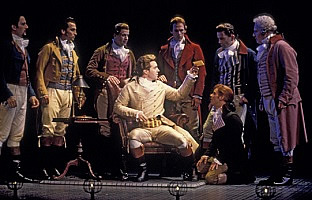
Emma Orczy (23 september 1865 – 12 november 1947) Scene uit de musical versie op Broadway, 1997
Der Tischler machet nicht durch Hobeln und Beziehn Zum Heiligthum ein Bild, du machst es durch dein Knien: Dein Vater hat dich nicht den Gottesdienst gelehret Wenn er die Peltze flickt, als wie es sich gehöret.
Wenn er die Götzen fand, die vor ihm stets verblichen, So sprach er: Ducket euch, ihr sollt in Ofen kriechen: Bedencke wie du dich hast deinem Gott entwandt: Was du verehrst, das hat dein Vater vor verbrannt.
Leben aus dem Tod An den Todt
O Todt, als ich dich recht, als wie ich sol, erkannt: Heiß ich dich allezeit mein neugebohrnes Leben: Ich wüste nicht, nach was ein Hertze solte streben, Im fall es nicht sein Thun auff diesen Port gewanndt:
Wir stehen in Gefahr, wann wir auff diese Thür, Die zu dem Leben geht nicht schicken unsre Sinnen, Wol dem, der zu der Post den Schlüßel kan beginnen: Ich lebte nicht, lebt' ich, o Tod, ohn dich allhier.
Ein Angst ohn alles Endt, ein ew'ge Müh' ohn Ruh Ist ohn den seelgen Tausch, das Leben, drum wir werben: Wir müßen aber vor, eh' als wir sterben, sterben, Dann vor dem Tode kommt man bloß dem Tode zu.
Daniel Czepko von Reigersfeld (23 september 1605 – 8 september 1660) Cover
Sister saying—‘Soon you'll be back in the ward,' sister thinking—‘Only two more on the list,' the patient saying—‘Thank you, I feel fine'; small voices, small lies, nothing untoward, though, soon, he would blink again and again because of the fingers of Lambert Rogers, rash as a blind man's, inside his soft brain.
If items of horror can make a man laugh then laugh at this: one hour later, the growth still undiscovered, ticking its own wild time; more brain mashed because of the probe's braille path; Lambert Rogers desperate, fingering still; his dresser thinking, ‘Christ! Two more on the list, a cisternal puncture and a neural cyst.'
Then, suddenly, the cracked record in the brain, a ventriloquist voice that cried, ‘You sod, leave my soul alone, leave my soul alone,'— the patient's dummy lips moving to that refrain, the patient's eyes too wide. And, shocked, Lambert Rogers drawing out the probe with nurses, students, sister, petrified.
‘Leave my soul alone, leave my soul alone,' that voice so arctic and that cry so odd had nowhere else to go—till the antique gramophone wound down and the words began to blur and slow, ‘ … leave … my … soul … alone … ' to cease at last when something other died. And silence matched the silence under snow.
Angels
Most are innocent, shy, will not undress. They own neither genitals nor pubic hair. Only the fallen of the hierarchy make an appearance these secular days.
No longer useful as artists' models, dismissed by theologians, morale tends to be low—even high class angels grumble as they loiter in our empty churches.
Neutered, they hide when a gothic door opens. Sudden light blinds them, footsteps deafen, Welsh hymns stampede their shadows entirely. Still their stink lingers, cold stone and incense.
But the fallen dare even to Downing Street, astonish, fly through walls for their next trick; spotlit, enter the dreams of the important, slowly open their gorgeous, Carnaby wings.
Dannie Abse (22 september 1923 – 28 september 2014)
“Een man met witten bef en zwarten steek op, en die ook met frisch rood doormarmerde wangen had, groette met den steek en opende mij zwijgend de glazen deur van het huis. Ik ben binnengetreden en eerst gekomen door een vertrek, dat geheel verlaten was; toen ben ik trappetreden opgegaan en door een tweede glazen deur plotseling gekomen in de doodekamer. Het was een kleine kamer, waar vele zware donkere gestalten, de hoofden aan-gebogen, zwijgend stonden en een enkele knielde; vóór hen was een open ruimte; aan de andere zijde daarvan lag, zeer verlicht door kaarsen op zilveren kandelaars, de doode recht ter neder. De wanden van dat, waar de doode plat in ter neder lag, waren wit aan de zijden, waarmede zij hem omgaven. Hij was beeld-schoon, gekleed in wit rag-fijn, met smalle witte krullen bezoomd, rein overkleed. Hij zag er uit gelijk toen hij een jongling was, in dien tijd toen hij het groote leven ging beginnen; maar als een jongeling, die rimpelloos schoon is in zijn slaap en heeft de kleuren van een grooten lentedageraad. Hij geleek van reine was, bestemd tot offerande, en de opgestoken vingers zijner handen waren als onbewegelijke kaarsen, waarlangs veel was reeds scheen gevloeid en die met onzichtbare vlammen brandden. Zijn twee kindren stonden daar. Zij hadden gladde, verweesde hoofden, blond van kleur. Zij schenen omgeven van verlatenheid en stonden met hun kleurige gezichten aan de zwarte muur der onbewegelijke schaar van vreemde mannen, terwijl hun vader zoo bizonder mooi als zij hem nooit hadden gezien en als een prachtig aangekleedde jonge kameraad daar bij hen nederlag. Ik ben voorbijgegaan en door een donkerte in een ander weer dagelichter vertrek gekomen, waar het zeer naauw en klein was. Er waren verscheidene oude vrouwen, in zwarte kleederen gekleed en wier oogen binnen de vuurroode randen gevangen vogels leken achter gloeyend brandende vensterkozijnen. Een bijna blinde oude vrouw met laag afhangende mat ròze boven-oogleden schreed binnen, laag en log en lichtlijk heen en weder wanklend, en scheen door te willen gaan ofschoon het huis hier eindigde. Een dorre jonge vrouw, met graauw gelaat, stond al-door aan de deur en schreide zeer.”
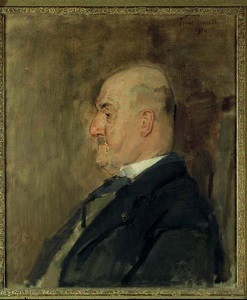
Lodewijk van Deyssel (22 september 1864 - 26 januari 1952) Portret door Isaac Israëls, 1934
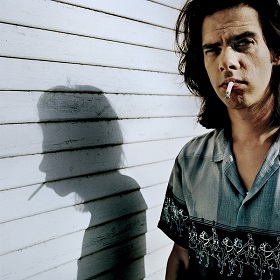
De Australische singer / songwriter, dichter, schrijver en acteur Nicholas Edward Cave werd geboren in Warracknabeal op 22 september 1957. Zie ook alle tags voor Nick Cave op dit blog.
Uit: The Death of Bunny Munro
“The sob doubles on itself, then doubles again, till it becomes gentle, wretched crying and it reminds Bunny of their first night together — Libby lying in his arms, in the throes of some inexplicable crying jag, in a down-at-heel hotel room in Eastbourne. He remembers her looking up at him and saying, `I'm sorry, I get a little emotional sometimes,' or something like that, and Bunny pushes the heel of his hand into his crotch and squeezes, releasing a pulse of pleasure into his lower spine. `Just take the fucking Tegretol,' he says, softening. `I'm scared, Bun. There's this guy running around attacking women.' `What guy?' `He paints his face red and wears plastic devil's horns.' `What?' `Up north. It's on the telly.' Bunny picks up the remote off the bedside table and with a series of parries and ripostes turns on the television set that sits on top of the mini-bar. With the mute button on, he moves through the channels till he finds some black-and-white CCTV footage taken at a shopping mall in Newcastle. A man, bare-chested and wearing tracksuit bottoms, weaves through a crowd of terrified shoppers. His mouth is open in a soundless scream. He appears to be wearing devil's horns and waves what looks like a big black stick. Bunny curses under his breath and in that moment all energy, sexual or otherwise, deserts him. He thrusts the remote at the TV and in a fizz of static it goes out and Bunny lets his head loll back. He focuses on a water stain on the ceiling shaped like a small bell or a woman's breast. Somewhere in the outer reaches of his consciousness he becomes aware of a manic twittering sound, a tinnitus of enraged protest, electronic sounding and horrible, but Bunny does not recognise this, rather he hears his wife say, 'Bunny? Are you there?' `Libby. Where are you?' `In bed. Bunny looks at his watch, trombones his hand, but cannot focus. Tor Christ's sake. Where is Bunny Junior?' `In his room, I guess. `Look, Libby, if my dad calls again . `He carries a trident,' says his wife. `What?' `A garden fork.' `What? Who?' `The guy, up north.' Bunny realises then that the screaming, cheeping sound is coming from outside.”
“Consider Vivien in the year 1922. She's waiting for the London train. It's a cold November morning, the station is windswept and rural, the sky is threatening snow, and the train is late. Vivien is single, large, ungainly, five foot eleven inches tall and twenty years old. She has no coat, just a tweed jacket and a long brown woollen scarf to keep her warm. She snatched the scarf from a peg just before she left home for the mile long walk to the station. The scarf is a dreary dusty old thing. Moths have been at it. It's been hanging on its peg by the back door amongst old coats, jackets, hats and caps for years. Not so long ago the scarf would have been noticed, laundered, darned, ironed, folded and put in its appropriate drawer within the hour. But time has passed and wars have happened and these days one just can't find the staff to pay attention to detail. I'm not asking you, reader, to step back in time. I'm asking you to stay happily where you are in the twenty-first century, looking back. Vivien has seared herself into my mind, this single stooping figure -she tends to stoop, being conscious that she is taller than most wom-en and quite a lot of men - as she waits alone for a train on a crucial day in her life in November 1922. So I offer Vivien and her fate to you, the reader. We like to dream the costume drama of Edwardian times, all fine clothes, glittering jewels and clean sexy profiles - but we are less drawn to the twenty years between the wars. Understandably. Limbless ex-servicemen beg for alms on hard-heart-ed city streets while hysterical flappers, flat-chested, dance and drink champagne in Mayfair night-clubs. Shell shock, the Fifth Horseman of the Apocalypse - what we now call post-traumatic stress syn-drome - still stalks the land. Life expectancy for the poor is forty-five; for the rich, sixty-five. Vivien is young and rich but no flapper. She is too large and ungainly to look good dancing, and one would certainly never guess she was rich from the frumpy way she dresses. Had she had a more exuberant personality her height would have seemed no great drawback; she could have sparkled and charmed and flung out her chest to the ad-miration of men and women both, but Vivvie was not like this. She suffered and let it be seen that she suffered. She stooped.“
Osip, you made me jump… Here I was squatting near to the barbed-wire fence that runs along the edge of this autumn woodland nearly bereft of foliage, by the bed of a purple spring, where I shed my role as a prisoner as soon as I bent over the carpet of leaves beside my knees. What wealth, what plentitude of colours and shades! The melancholy brown of the horse-chestnut leaves stretched out, their wrinkles straightened out, reshaped by the smothering-iron of time, disintegrating already in places but held together still by networks of thread-like blood-vessels. Lying supine, the leaves of oak trees still retained their spots of green and red, reminders of bygone youth and age, and here and there their surfaces blistering like thickening porridge stirred on a cooking stove, perhaps protesting the end of their sailing days or mourning their flight with every passing breeze. And then… two tiny leaves bent and conjoined and shaped like flower petals or maybe a barge, one ocher-yellow and the other pink; they must have fallen prematurely – but from where? that leafless bush, I guessed, five paces away, the one hardly taller than a dove. I gently picked the pink one by two fingers but did not sense a substance held between them.
Vertaald doorThomas Ország-Land
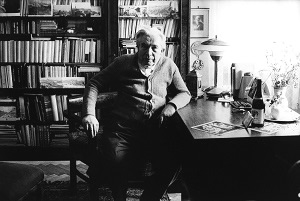
György Faludy (22 september 1910 – 1 september 2006) Portret door Ezüst György, 1990
De Duitse dichter en schrijver Hans Leip werd geboren op 22 september 1893 in Hamburg. Zie ook alle tags voor Hans Leip op dit blog.
Uit: Die Nächtezettel der Sinsebal
„Dann tanze ich das Spiegellied. Das Spiegellied? Oho! Was weiß mein Bein von mir? Was weiß mein Nacken von mir? Was weiß die weiße Haut? Der Vorhang ist zu, der Teppich grau und ein einziger Kuß. Da schläft mein Bett allein. Nein, gaffen die Kissen? Und pumpen die Puppen im Stuhl in der Kuhle die Mäuler zum Wundern rund? Die Berge schmunzeln auf den Bildern. Was macht die Lampe denn? Die Lampe macht sich winzig, rennt in mein Knotenhaar, brennt in mein Bronzepudelhaar, ein Edelstein, mein süßer Karfunk! Ei Fürstin, ei Engelbengel, hü! Ei Töchterlein, ei Schmatz, mein Schatz! Nun neigen sich die Arme sehr, die Schultern schleichen hinterdrein. Nun schlüpft das Knie davon, nun ruft das andre zärtlich nach. Schnipp, macht der Finger. Nun heben sich die Zehen, tirili. Nun scharwenzen die Hüften juja, nun klingeln ting, ting die Brüstelein. Nun stülpt eine Glocke über mich. 0 schwanker Trunk, dunkles Blau! Wer schwingt mich so, o halt, nein! 0 ja, schön! Noch fängt mich der Spiegel, steif grapst mich sein Mantel, nun klemmt er nicht mehr, schmal bin ich ihm weg, fängt mich nicht, fängt mich nicht! Nun Kreisel, nun Mond im Griff. Wirft mich ein Gaukler? Ein Walfisch schnappt mich. Feuer ist, Feuer ist! 0 schauert mich Eis! Nun kreiseln die Wiesen, viel Blumen wie Mücken, die Schwalben, die Rehe, o schwindelnder Duft; nun häng' ich im Wind, wie Zweige geschaukelt, wie Blätter geschleudert, wie Sternschnuppen blank. Nun schieß' ich hinauf, o dunkel, o sausend, nun schluckt mich die Sonne, nun ist sie mein Tanzrad, ist toll, ist toll, o Fieber, ich brenne! Zu Regenbögen gestriemt die Wände, die Puppen, die Stühle, mein Hemd, meine Kissen, mein Bett, meine Bücher, ich schwebe, ich falle! Da schneidet der Spiegel die Welt auseinander, er fängt mich. Er torkelt. Da steh' ich ja nackt. Mein Karfunkel dahin, ach, umgemünzt zum braven Mundgulden, zu den Pfennigen Tipf und Tupf, zum Spängelein Ungelöst, Ungetröst zwischen den hängenden Händen.“
Hans Leip (22 september 1893 – 6 juni 1983)
De Israëlische Hebreeuwse en Jiddische dichter en politicus Uri Zvi Greenbergwerd geboren op 22 september 1896 in Bialikamin, Lviv, in Galicië, destijds behorend tot Oostenrijk-Hongarije. Zie ook alle tags voor Uri Zvi Greenberg op dit blog.
Anxiety in my bones today
Anxiety in my bones today. I come to you with the feeling of one again Banished slowly and stealthily from sacred landscapes; Unredeemed landscapes of the enfeebled Although still in the hands of the Fire Riders, sons of Joshua Ben Nun today; And like the fickle, who do not know why they are that way, So I, who differ from them in my view of the future Cannot grasp without reason Why and wherefore this verdict of "lost tomorrow" can be possible With Jewish signature upon the paper: Back to the bottleneck.
Homesong
She is silent, my martyred mother, Her eyes rise against my face, not looking at me, but beyond. I look behind her, behind my back, at the wall, The hanging mirror is shrouded in a sheet And below, a barrel of darkest water, My father’s prayer shawl floating in it
Its silver neckpiece gone.
Uri Zvi Greenberg (22 september 1896 – 8 mei 1981)
“The Porthkerris Council School stood half-way up the steep hill which climbed from the heart of the little town to the empty moors which lay beyond. It was a solid Victorian edifice, built of granite blocks, and had three entrances, marked Boys, Girls, and Infants, a legacy from the days when segregation of the sexes was mandatory. It was surrounded by a Tarmac playground and a tall wrought-iron fence, and presented a fairly forbidding face to the world. But on this late afternoon in December, it stood fairly ablaze with light, and from its open doors streamed a flood of excited children, laden with boot-bags, book-bags, balloons on strings, and small paper bags filled with sweets. They emerged in small groups, jostling and giggling and uttering shrieks of cheerful abuse at each other, before finally dispersing and setting off for home. The reason for the excitement was twofold. It was the end of the winter term, and there had been a school Christmas party. Singing games had been played, and relay races won, up and down the assembly hall, with bean bags to be snatched and delivered to the next person in the team. The children had danced Sir Roger de Coverley, to music thumped out on the tinny old school piano, and eaten a tea of splits and jam, saffron buns, and fizzy lemonade. Finally they had lined up and, one by one, had shaken Mr. Thomas, the headmaster, by the hand, wished him a Merry Christmas, and been given a bag of sweets. It was a routine that was followed every year, but always happily anticipated and much enjoyed. Gradually the noisy outflux of children was reduced to a trickle, the late-leavers, those delayed by a search for missing gloves or an abandoned shoe. Last of all, as the school clock chimed a quarter to five, there came, through the open door, two girls, Judith Dunbar and Heather Warren, both fourteen years old, both dressed in navy-blue coats and rubber boots, and with woollen hats pulled down over their ears. But that was as far as the resemblance went, for Judith was fair, with two stubby pigtails, freckles, and pale-blue eyes; while Heather had inherited her colouring from her father, and through him, back over the generations of ancestors, from some Spanish sailor, washed ashore on the Cornish coast after the destruction of the Armada. And so her skin was olive, her hair raven-black, and her eyes dark and bright as a pair of juicy raisins.”
“No,” Samuel’s mother said. “We put that picture away.” “We did? I don’t remember that.” “It was your decision.” “It was?” he said, befuddled. He thought he was losing his mind. Years later, in a high-school biology class, Samuel heard a story about a certain kind of African turtle that swam across the ocean to lay its eggs in South America. Scientists could find no reason for the enormous trip. Why did the turtles do it? The leading theory was that they began doing it eons ago, when South America and Africa were still locked together. Back then, only a river might have separated the continents, and the turtles laid their eggs on the river’s far bank. But then the continents began drifting apart, and the river widened by about an inch per year, which would have been invisible to the turtles. So they kept going to the same spot, the far bank of the river, each generation swimming a tiny bit farther than the last one, and after a hundred million years of this, the river had become an ocean, and yet the turtles never noticed. This, Samuel decided, was the manner of his mother’s departure. This was how she moved away—imperceptibly, slowly, bit by bit. She whittled down her life until the only thing left to remove was herself. On the day she disappeared, she left the house with a single suitcase. The headline appears one afternoon on several news websites almost simultaneously: governor packer attacked! Television picks it up moments later, bumping into programming for a Breaking News Alert as the anchor looks gravely into the camera and says, “We’re hearing from our correspondents in Chicago that Governor Sheldon Packer has been attacked.” And that’s all anyone knows for a while, that he was attacked. And for a few dizzying minutes everyone has the same two questions: Is he dead? And: Is there video? The first word comes from reporters on the scene, who call in with cell phones and are put on the air live. They say Packer was at the Conrad Hilton Hotel hosting a dinner and speech. Afterward, he was making his way with his entourage through Grant Park, glad-handing, baby-kissing, doing all your typical populist campaign maneuvers, when suddenly from out of the crowd a person or a group of people began to attack. “What do you mean attack?” the anchor asks. He sits in a studio with shiny black floors and a lighting scheme of red, white, and blue. His face is smooth as cake fondant. Behind him, people at desks seem to be working. He says: “Could you describe the attack?”
De Nederlandse dichter en schrijver Jacobus Cornelis (Jaap) Hartenwerd geboren in Blaricum op 22 september 1930. Harten werd door een jarenlange vriendschap met actrice Else Mauhs (1885-1959) aangezet tot schrijven. In 1954 debuteerde hij met de dichtbundel “Studio in daglicht”. In 1964 verscheen met de verhalenbundel “Operatie Montycoat” zijn eerste proza. Harten was gefascineerd door de stad Berlijn, wat een belangrijke rol speelde in de roman “De getatoeëerde Lorelei“ (1968). Over Mauhs publiceerde hij in 1984 de biografische roman “Else Mauhs”, de ontvoering van een legende. Harten woonde in Den Haag en werkte bij het Nederlands Letterkundig Museum en Documentatiecentrum. Hij leefde samen met de kunstschilder Oskar Lens (1930-2017), die hij reeds kende vanuit zijn jeugd. Van zijn vader, de importeur van VolvoTrucks, erfde hij een grote geldsom. Lens en hij richtten daarvan in 1988 het Jaap Harten Fonds op, een stichting die projecten in de Nederlandse kunst en letteren ondersteunt.
Uit: De getatoeëerde Lorelei.
“In het wapen van Berlijn staat een beer. Nu wil ik daar niet mee spotten, want vroeger (en niet eens zo lang geleden ook) hebben in de Berlijnse bossen, in Grunewald, Spandau en Jungfernheide, wilde beren rondgelopen, en de echte Pruis vindt het geen belediging met een wilde, ruigbehaarde beer vergeleken te worden. Toch zou men, sprekend van Berlijn, eerder geneigd zijn aan de adelaar te denken; die koele roofvogel met zijn dreigende vleugels, die in twee wereldoorlogen verminkende explosieven op Europa heeft laten vallen. Dit verhaal speelt in Berlijn, in de tijd van de republiek van Weimar. Een tijd van vergeelde foto's met matelots, Bubikoppen en een verbannen keizer ergens in een kleine plaats in Nederland. Het geld duizelingwekkend gedevalueerd. Er wa was een groot tekort aan arbeid; er heerste vrijwel overal grote ontevredenheid. In MUnchen, maar soms ook in Berlijn, schilderden mannen in bruine hemden hakenkruizen op de muren. Je hoorde de naam Hitler meer en meer noemen. Hij was nog niet aan de macht, maar het gevaar sloop naderbij, concretiseerde zich hier en daar in geschreeuwde leuzen en vechtpartijen. Om kort te zijn: het was 1930. De Lorelei sleepte zich voort, een gedeukte parasol kribbig in haar rechterhand omhoog houdend, langs éen van de zandpaden aan de oever van de Wannsee, op weg naar het Teehaus. Ze naderde twee jongens, die haar met vriendelijke spot bekeken. `Und nun guck her, ich werde dir etwas zeigen. Die grosse Hure, die Hure Babylon, die dort am Wasser entlang geht,' zei Kraut tegen Charleston-Charly, die loom naast hem in het gras lag. Hij zei het te luid, maar waarschijnlijk had hij het zo bedoeld. De Lorelei, die het tweetal dicht genaderd was en zijn woorden gehoord moest hebben, keek hem evenwel schw5.rmerisch aan en gaf hem, hoewel ze deksels goed wist dat het een vergeelde theatertruc was, een tikje met haar parasol. `Kognak, um Gotteswillen!' De schaarse schmink die ze opgesmeerd had begon het al te begeven.”
“Breavman knows a girl named Shell whose ears were pierced so she could wear the long filigree earrings. The punctures festered and now she has a tiny scar in each earlobe. He discovered them behind her hair. A bullet broke into the flesh of his father's arm as he rose out of a trench. It comforts a man with coronary thrombosis to bear a wound taken in combat. On the right temple Breavman has a scar which Krantz bestowed with a shovel. Trouble over a snowman. Krantz wanted to use clinkers as eyes. Breavman was and still is against the use of foreign materials in the decoration of snowmen. No woollen muf-flers, hats, spectacles. In the same vein he does not approve of inserting carrots in the mouths of carved pumpkins or pinning on cucumber ears. His mother regarded her whole body as a scar grown over some earlier perfection which she sought in mirrors and windows and hub-caps. Children show scars like medals. Lovers use them as secrets to reveal. A scar is what happens when the word is made flesh. It is easy to display a wound, the proud scars of combat. It is hard to show a pimple. Breavman's young mother hunted wrinkles with two hands and a magnifying mirror. When she found one she consulted a fortress of oils and creams arrayed on a glass tray and she sighed. Without faith the wrinkle was anointed. "This isn't my face, not my real face." "Where is your real face, Mother?" "Look at me. Is this what I look like?" "Where is it, where's your real face?" "I don't know, in Russia, when I was a girl." He pulled the huge atlas out of the shelf and fell with it. He sifted pages like a goldminer until he found it, the whole of Russia, pale and vast. He kneeled over the distances until his eyes blurred and he made the lakes and rivers and names become an incredible face, dim and beautiful and easily lost. The maid had to drag him to supper.”
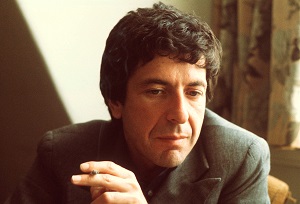
Leonard Cohen (21 september 1934 - 7 november 2016)
“Wake up, genius.” Rothstein didn’t want to wake up. The dream was too good. It featured his first wife months before she became his first wife, seventeen and perfect from head to toe. Naked and shimmering. Both of them naked. He was nineteen, with grease under his fingernails, but she hadn’t minded that, at least not then, because his head was full of dreams and that was what she cared about. She believed in the dreams even more than he did, and she was right to believe. In this dream she was laughing and reaching for the part of him that was easiest to grab. He tried to go deeper, but then a hand began shaking his shoulder, and the dream popped like a soap bubble. He was no longer nineteen and living in a two-room New Jersey apartment, he was six months shy of his eightieth birthday and living on a farm in New Hampshire, where his will specified he should be buried. There were men in his bedroom. They were wearing ski masks, one red, one blue, and one canary-yellow. He saw this and tried to believe it was just another dream—the sweet one had slid into a nightmare, as they sometimes did—but then the hand let go of his arm, grabbed his shoulder, and tumbled him onto the floor. He struck his head and cried out. “Quit that,” said the one in the yellow mask. “You want to knock him unconscious?” “Check it out.” The one in the red mask pointed. “Old fella’s got a woody. Must have been having one hell of a dream.” Blue Mask, the one who had done the shaking, said, “Just a piss hard-on. When they’re that age, nothing else gets em up. My grandfather—” “Be quiet,” Yellow Mask said. “Nobody cares about your grandfather.” Although dazed and still wrapped in a fraying curtain of sleep, Rothstein knew he was in trouble here. Two words surfaced in his mind: home invasion. He looked up at the trio that had materialized in his bedroom, his old head aching (there was going to be a huge bruise on the right side, thanks to the blood thinners he took), his heart with its perilously thin walls banging against the left side of his ribcage. They loomed over him, three men with gloves on their hands, wearing plaid fall jackets below those terrifying balaclavas. Home invaders, and here he was, five miles from town.”
« Je ne me souviens pas de mon enfance. Quand je le dis, personne ne me croit. Tout le monde se souvient de son passé; à quoi bon vivre si la vie est oubliée? En moi rien ne reste de moi-même; de zéro à quinze ans je suis face à un trou noir (au sens astrophysique: «Objet massif dont le champ gravitationnel est si intense qu’il empêche toute forme de matière ou de rayonnement de s’en échapper»). Longtemps j’ai cru que j’étais normal, que les autres étaient frappés de la même amnésie. Mais si je leur demandais: «Tu te souviens de ton enfance?», ils me racontaient quantité d’histoires. J’ai honte que ma biographie soit imprimée à l’encre sympathique. Pourquoi mon enfance n’est-elle pas indélébile? Je me sens exclu du monde, car le monde a une archéologie et moi pas. J’ai effacé mes traces comme un criminel en cavale. Quand j’évoque cette infirmité, mes parents lèvent les yeux au ciel, ma famille proteste, mes amis d’enfance se vexent, d’anciennes fiancées sont tentées de produire des documents photographiques. Je ne mens pas par omission: je fouille dans ma vie comme dans une malle vide, sans y rien trouver; je suis désert. Parfois j’entends murmurer dans mon dos: «Celui-là, je n’arrive pas à le cerner.» J’acquiesce. Comment voulezvous situer quelqu’un qui ignore d’où il vient? Comme dit Gide dans Les Faux-Monnayeurs, je suis «bâti sur pilotis: ni fondation, ni soussol». La terre se dérobe sous mes pieds, je lévite sur coussin d’air, je suis une bouteille qui flotte sur la mer, un mobile de Calder. Pour plaire, j’ai renoncé à avoir une colonne vertébrale, j’ai voulu me fondre dans le décor tel Zelig, l’homme-caméléon. Oublier sa personnalité, perdre la mémoire pour être aimé: devenir, pour séduire, celui que les autres choisissent. Ce désordre de la personnalité, en langage psychiatrique, est nommé «déficit de conscience centrée». Je suis une forme vide, une vie sans fond. Dans ma chambre d’enfant, rue Monsieur-le-Prince, j’avais punaisé, m’a-t-on dit, une affiche de film sur le mur: Mon Nom est Personne. Sans doute m’identifiais-je au héros.”.
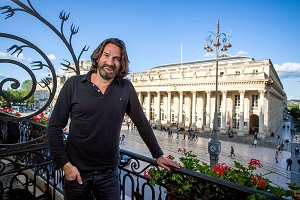
Frédéric Beigbeder (Neuilly-sur-Seine, 21 september 1965)
van elke reis brengt hij voor vrouw en dochter storm en stenen mee.
hij kauwt ter voorbereiding kiezels: ‘De kwolste kwt kwiewelt awn hwar gwt’ (13x) kijkt uit voor een paal of kortgerokt meisje om tegenaan te lopen.
in zijn onoplettendheid durft hij in retorische vragen te trappen en lokken echo's uit de keuken geen lawines uit? onder het puin bekijkt hij foto's in zijn lonely planet en bidt een reddingsteam.
Nota aan onze partner
bij overstromingen mag onze partner op een koe klimmen.
wat voorbijdrijft Onderrug Onderrug Onderrug Onderrug vraagt om de competentie het niet aan te raken
er is watertekort bij overstromingen. overstromingen maken onze partner flexibel in onwetendheid.
het vuur in een naburige stad is niet schadelijk van kilometers ver fucking Onderrug voor de gezondheid
„Mrs. Earle Poole, jr., better known to mends and family as Sookie, was driving home from the Birds-R-Us store out on Highway 98 with one ten-pound bag of sunflower seeds and one ten-pound bag of wild bird seed and not her usual weekly purchase for the past fikeen years of one twenty-pound bag of the Pretty Boy Wild Bird Seed and Sunflower Mix. As she had explained to Mr. Nadleshaft, she was wor-ried that the smaller birds were still not getting enough to eat. Every morning lately, the minute she filled her feeders, the larger, more ag-gressive blue jays would swoop in and scare the little bids all away. She noticed that the blue jays always ate the sunflower seeds first, and so tomorrow, she was going to try putting just plain sunflower seeds in her backyard feeders, and while the blue jays were busy eating them, she would run around the house as fast as she could and put the wild bird seed in the feeders in the front yard. That way, her poor finches and titmice might be able to get a little something, at least. As SHE DROVE OVER the Mobile Bay Bridge, she looked out at the big white puffy clouds and saw a long row of pelicans flying low over the water. The bay was sparkling in the bright sun and already dotted with red, white, and blue sailboats headed out for the day. A few people fishing alongside the bridge waved as she passed by, and she smiled and waved back. She was almost to the other side when she suddenly began to experience some sort of a vague and unusual sense of well-being. And with good reason. Against all odds, she had just survived the last wedding of their three daughters, Dee Dec, Cc Ce, and Le Le. Their only unmarried child now was their twenty-five-year-old son, Carter, who lived in Atlanta. And some other poor (God help her), beleaguered mother of the bride would be in charge of planning that happy occasion.”
“There was, until a year ago, a little and very grimy-looking shop near Seven Dials, over which, in weather-worn yellow lettering, the name of "C. Cave, Naturalist and Dealer in Antiquities," was inscribed. The contents of its window were curiously variegated. They comprised some elephant tusks and an imperfect set of chessmen, beads and weapons, a box of eyes, two skulls of tigers and one human, several moth-eaten stuffed monkeys (one holding a lamp), an old-fashioned cabinet, a flyblown ostrich egg or so, some fishing-tackle, and an extraordinarily dirty, empty glass fish-tank. There was also, at the moment the story begins, a mass of crystal, worked into the shape of an egg and brilliantly polished. And at that two people, who stood outside the window, were looking, one of them a tall, thin clergyman, the other a black-bearded young man of dusky complexion and unobtrusive costume. The dusky young man spoke with eager gesticulation, and seemed anxious for his companion to purchase the article. While they were there, Mr. Cave came into his shop, his beard still wagging with the bread and butter of his tea. When he saw these men and the object of their regard, his countenance fell. He glanced guiltily over his shoulder, and softly shut the door. He was a little old man, with pale face and peculiar watery blue eyes; his hair was a dirty grey, and he wore a shabby blue frock coat, an ancient silk hat, and carpet slippers very much down at heel. He remained watching the two men as they talked. The clergyman went deep into his trouser pocket, examined a handful of money, and showed his teeth in an agreeable smile. Mr. Cave seemed still more depressed when they came into the shop. The clergyman, without any ceremony, asked the price of the crystal egg. Mr. Cave glanced nervously towards the door leading into the parlour, and said five pounds. The clergyman protested that the price was high, to his companion as well as to Mr. Cave--it was, indeed, very much more than Mr. Cave had intended to ask, when he had stocked the article—and an attempt at bargaining ensued. Mr. Cave stepped to the shop-door, and held it open. "Five pounds is my price," he said, as though he wished to save himself the trouble of unprofitable discussion. As he did so, the upper portion of a woman's face appeared above the blind in the glass upper panel of the door leading into the parlour, and stared curiously at the two customers. "Five pounds is my price," said Mr. Cave, with a quiver in his voice."
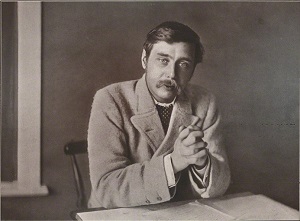
H. G. Wells (21 september 1866 - 13 augustus 1946) In 1901
„Durch die offene Tür gegenüber blickte man sodann in ein ferneres Zimmer, gleichfalls mit Gemälden verziert, durch welches der Bediente gegangen war mich zu melden. Es währte nicht lange.. so kam Goethe, in einem blauen Oberrock und in Schuhen; eine erhabene Gestalt! Der Eindruck war überraschend. Doch verscheuchte er sogleich jede Befangenheit durch die freundlichsten Worte. Wir setzten uns auf das Sofa. Ich war glücklich verwirrt in seinem Anblick und seiner Nähe, ich wußte ihm wenig oder nichts zu sagen. Er fing sogleich an von meinem Manuskript zu reden. »Ich komme eben von Ihnen her,« sagte er; »ich habe den ganzen Morgen in Ihrer Schrift gelesen; sie bedarf keiner Empfehlung, sie empfiehlt sich selber.« Er lobte darauf die Klarheit der Darstellung und den Fluß der Gedanken, und daß alles auf gutem Fundament ruhe und wohl durchdacht sei. »Ich will es schnell befördern,« fügte er hinzu; »heute noch schreibe ich an Cotta mit der reitenden Post, und morgen schicke ich das Paket mit der fahrenden nach.« Ich dankte ihm dafür mit Worten und Blicken. Wir sprachen darauf über meine fernere Reise. Ich sagte ihm, daß mein eigentliches Ziel die Rheingegend sei, wo ich an einem passenden Ort zu verweilen und etwas Neues zu schreiben gedenke. Zunächst jedoch wolle ich von hier nach Jena gehen, um dort die Antwort des Herrn von Cotta zu erwarten. Goethe fragte mich, ob ich in Jena schon Bekannte habe; ich erwiderte, daß ich mit Herrn von Knebel in Berührung zu kommen hoffe, worauf er versprach, mir einen Brief mitzugeben, damit ich einer desto bessern Aufnahme gewiß sei. »Nun, nun!« sagte er dann, »wenn Sie in Jena sind, so sind wir ja nahe beieinander und können zueinander und können uns schreiben, wenn etwas vorfällt.« Wir saßen lange beisammen, in ruhiger liebevoller Stimmung. Ich drückte seine Kniee, ich vergaß das Reden über seinem Anblick, ich konnte mich an ihm nicht satt sehen. Das Gesicht so kräftig und braun und voller Falten, und jede Falte voller Ausdruck. Und in allem solche Biederkeit und Festigkeit, und solche Ruhe und Größe! Er sprach langsam und bequem, so wie man sich wohl einen bejahrten Monarchen denkt, wenn er redet. Man sah ihm an, daß er in sich selber ruhet und über Lob und Tadel erhaben ist. Es war mir bei ihm unbeschreiblich wohl; ich fühlte mich beruhigt, so wie es jemandem sein mag, der nach vieler Mühe und langem Hoffen endlich seine liebsten Wünsche befriedigt sieht.“
Johann Peter Eckermann (21 september 1792 - 3 december 1854) Goethe en Eckermann door Otto Rasch, ca. 1920
Onafhankelijk van geboortedata
De Engelse schrijver Max Porter werd geboren in High Wycombe in 1981. Porter studeerde kunstgeschiedenis aan Courtauld in Londen en werkte jarenlang als zelfstandige boekhandelaar, wat hem de Young Bookseller of the Year Award opleverde. Sinds 2012 is hij lector bij Granta Books. Hij debuteerde in 2015 met “Grief Is the Thing with Feathers”.
Uit: Grief Is the Thing with Feathers
“Four or five days after she died, I sat alone in the living room wondering what to do. Shufing around, waiting for shock to give way, waiting for any kind of structured feeling to emerge from the organisational fakery of my days. I felt hung-empty. The children were asleep. I drank. I smoked roll-ups out of the window. I felt that perhaps the main result of her being gone would be that I would permanently become this organiser, this list-making trader in clichés of gratitude, machine-like architect of routines for small children with no Mum. Grief felt fourth-dimensional, abstract, faintly familiar. I was cold. The friends and family who had been hanging around being kind had gone home to their own lives. When the children went to bed the flat had no meaning, nothing moved. The doorbell rang and I braced myself for more kindness. Another lasagne, some books, a cuddle, some little potted ready-meals for the boys. Of course, I was becoming expert in the behaviour of orbiting grievers. Being at the epicentre grants a curiously anthropological awareness of everybody else; the overwhelmeds, the affectedly lackadaisicals, the nothing so fars, the overstayers, the new best friends of hers, of mine, of the boys. The people I still have no fucking idea who they were. I felt like Earth in that extraordinary picture of the planet surrounded by a thick belt of space junk. I felt it would be years before the knotted-string dream of other people’s performances of woe for my dead wife would thin enough for me to see any black space again, and of course – needless to say – thoughts of this kind made me feel guilty. But, I thought, in support of myself, everything has changed, and she is gone and I can think what I like. She would approve, because we were always over-analytical, cynical, probably disloyal, puzzled. Dinner party post-mortem bitches with kind intentions. Hypocrites. Friends. The bell rang again. I climbed down the carpeted stairs into the chilly hallway and opened the front door. There were no streetlights, bins or paving stones. No shape or light, no form at all, just a stench. There was a crack and a whoosh and I was smacked back, winded, onto the doorstep. The hallway was pitch black and freezing cold and I thought, ‘What kind of world is it that I would be robbed in my home tonight?’ And then I thought, ‘Frankly, what does it matter?’ I thought, ‘Please don’t wake the boys, they need their sleep. I will give you every penny I own just as long as you don’t wake the boy”.
Max Porter (High Wycombe, 1981)
De Nieuw-Zeelandse schrijver Paul Ewen werd geboren in Blenheim, Nieuw Zeeland in 1972. In 1995 verhuisde hij naar Azië waar hij zes jaar woonde, waaronder vier jaar in Saigon. Tegenwoordig woont hij in het zuiden van Londen. In Nieuw Zeeland werd zijn werk gepubliceerd in Landfall and Sport en in het Verenigd Koninkrijk zijn verhalen verschenen in de British Council's New Writing Anthology (bewerkt door Ali Smith en Toby Litt), en ook in het Times Higher Education Supplement en Tank Magazine. Hij heeft geschreven voor Dazed & Confused, en is een vaste medewerker aan Hamish Hamilton's online magazine Five Dials. Zijn eerste boek “London Pub Reviews” (2007) werd een kruising tussen Blade Runner en Coronation Street genoemd en 'een werk van een komisch genie. In 2014 verscheen “Francis Plug: How To Be A Public Author”, het boek waarmee hij bij een groter publiek bekend werd.
Uit:Francis Plug - How To Be A Public Author
“The water in Salman Rushdie’s glass is rippling. The glass itself is perfectly still, sitting flat on the even table surface, but the water inside is rippling. It’s Still water, but it’s rippling. I know it’s Still water because I can read the label on the bottle. Still Spring Water. I’m sitting in the front row. I can see it with my own eyes. Salman Rushdie has barely touched his water, unsurprisingly. The water was placed on the table shortly before 18:30, and he didn’t sit down until 19:07. So it’s been sitting there, warming, for nearly forty minutes. Imagine what it must taste like now, especially under all those bright lights. Like a heated swimming pool, or a glass of hot-water bottle water. Sometimes I drink the warm water in the shower when I’m washing my face, but I don’t swallow it because the taste is like something from an ornamental frog in a garden pond on a very hot day. So instead, I spit the water out down my tummy. And then I give my tummy a good soap down. Bacteria thrives in warm water. It’s rampant in waterbeds. I heard of a couple who never cleaned their waterbed, not once. You’re supposed to add chemicals to keep the heated water free from bugs. But this couple didn’t. Perhaps they didn’t know they needed to, or maybe they just forgot. Anyway, one day they were preparing to move house, and they emptied the contents of the waterbed bladder into their bath. The water that began to sludge out of the valve was filled with dozens of little scaly things with legs and no eyes. Little hairy mites, kicking about in their clean white tub. The couple were horrified. But there was more to come. A squelching noise was heard, and out slid a huge slimy worm, two metres in length, maybe more, thicker than your thumb. They’d been sleeping on that. Sleeping on a bed of worm. So don’t drink the complimentary water at your author events, because you might get worms. There are other dangers too. Perhaps your unattended water bottle in the empty auditorium has been tampered with. We only have to look at the lessons learned from Agatha Christie. People in her books are forever being poisoned.She even spells out what the poison is and how it’s administered. In their drinks. The organisers of this event must be only too aware of Agatha Christie’s back catalogue, and of the brugmansia flower, formerly known as the datura, a South American pendant-shaped plant belonging to the Solanaceae family, also famed for its spicy night scent, which is used by Amazonian tribes as distilled poison to tip their arrows. It doesn’t take an idiot to work this out.”