Romenu is een blog over gedichten, literatuur en kunst Maar Romenu is ook een professionele freelance vertaler Du-Ne en Ne-Du http://www.roumen-vertalingen.nl/
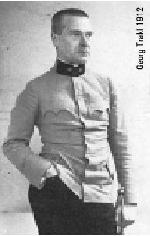
Georg Trakl werd op 3 februari 1887 in het conducteurshuis aan de Waagplatz 2 in Salzburg geboren. Zijn vader, Tobias Trakl, was een handelaar in ijzerwaren en zijn moeder, die ook psychische problemen had, was Maria Catharina Trakl, (meisjesnaam Halik). Voorts had hij nog drie broers en drie zussen. Margarethe (doorgaans Grethe genoemd) stond hem het naast, zelfs zodanig dat sommigen een incestueuze verhouding vermoeden. Zijn jeugd bracht hij door in Salzburg. Vervolgens bezocht hij van 1897 tot 1905 het humanistische gymnasium. Om toch een academische opleiding te kunnen volgen, werkte hij tot 1908 in de praktijk bij een apotheker. Sommigen vermoedden dat hij dit vooral deed om zichzelf opiaten te kunnen verschaffen. Bij het uitbreken van WO I werd Trakl als medicus naar het front in Galicië (heden ten dage in Oekraïne en Polen) gestuurd. Zijn gemoedsschommelingen leidden tot geregelde uitbraken van depressie, die verergerd werden door de afschuw die hij voelde voor de verzorging van de ernstig verwonde soldaten. De spanning en druk dreven hem ertoe een suïcidepoging te ondernemen, welke zijn kameraden nochtans verhinderden. Hij werd in een militair ziekenhuis opgenomen in Kraków, alwaar hij onder strikt toezicht geplaatst werd.Trakl verzonk daar in nog zwaardere depressies en schreef Ficker om advies. Ficker overtuigde hem ervan dat hij contact moest opnemen met Wittgenstein, die inderdaad op weg ging na Trakls bericht te hebben ontvangen. Op 4 november 1914, drie dagen voordat Wittgenstein aan zou komen, overleed hij echter aan een overdosis cocaïne
Paul Celan
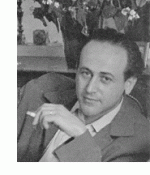
Paul Celan werd onder de naam Paul Antschel op 23 november 1920 geboren in Czernowitz, toentertijd de hoofdstad van de Roemeense Boekovina, nu behorend bij de Oekraïne. Paul Celans ouders waren Duitssprekende joden die hun zoon joods opvoedden en hem naar Duitse christelijke scholen stuurden. In 1942 werden Celans ouders door de Duitse bezetter naar een werkkamp gedeporteerd en daar vermoord. Hijzelf wist aanvankelijk onder te duiken, maar moest vanaf juli 1942 in een werkkamp dwangarbeid verrichten. Celan overleefde de oorlog. Via Boekarest en Wenen vestigde Celan zich in 1948 in Parijs. Daar was hij werkzaam als dichter, vertaler en doceerde hij aan de prestigieuze Ecole Normale Supérieure. Vermoedelijk op 20 april 1970 beëindigde hij zijn leven zelf door in de Seine te springen.
Gerard Reve
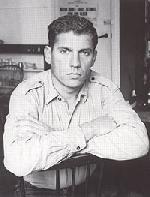
Gerard Reve over: Medearbeiders ”God is in de mensen, de dieren, de planten en alle dingen - in de schepping, die verlost moet worden of waaruit God verlost moet worden, door onze arbeid, aangezien wij medearbeiders van God zijn.” Openbaring ”Tja, waar berust elk godsbegrip op, elke vorm van religie? Op een openbaring, dat wil zeggen op een psychische ervaring van zulk een dwingende en onverbiddelijke kracht, dat de betrokkene het gevoel heeft, niet dat hij een gedachte of een visioen heeft, maar dat een gedachte gedachte of visioen hem bezit en overweldigt.”
Simon Vestdijk
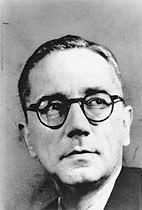
Simon Vestdijk (Harlingen, 17 oktober 1898 – Utrecht, 23 maart 1971) was een Nederlands romancier, dichter, essayist en vertaler. Zijn jeugd te Harlingen en Leeuwarden beschreef hij later in de Anton Wachter-cyclus. Van jongs af aan logeerde hij regelmatig bij zijn grootouders in Amsterdam, waar hij zich in 1917 aan de Universiteit van Amsterdam inschrijft als student in de medicijnen. Tijdens zijn studie die van 1917 tot 1927 duurde, leerde hij Jan Slauerhoff kennen.Tot 1932 is hij als arts in praktijken door heel Nederland werkzaam. In 1932 volgt zijn officiële schrijversdebuut met de uitgave van de bundel Verzen in De Vrije Bladen. Doorslaggevend voor Vestdijks uiteindelijke keuze voor de literatuur is zijn ontmoeting in 1932 met Eddy Du Perron en Menno ter Braak. Deze ontmoeting had tot resultaat dat hij redactielid werd van het tijdschrift Forum Kort daarop, in 1933, wordt zijn eerste novelle, De oubliette, uitgegeven. In hetzelfde jaar schrijft hij Kind tussen vier vrouwen, dat, eerst geweigerd door de uitgever, later de basis zal vormen voor de eerste drie delen van de Anton Wachter-romans. In 1951 ontvangt Vestdijk de P.C. Hooftprijs voor zijn in 1947 verschenen roman De vuuraanbidders. In 1957 wordt hij voor het eerst door het PEN-centrum voor Nederland voorgedragen voor de Nobelprijs voor de Literatuur, die hij echter nooit zal krijgen. Op 20 maart 1971 wordt hem de Prijs der Nederlandse Letteren toegekend, maar voor hij deze kan ontvangen overlijdt hij op 23 maart te Utrecht op 72-jarige leeftijd. Vestdijk was auteur van ca. 200 boeken. Vanwege deze enorme productie noemde de dichter Adriaan Roland Holst hem 'de man die sneller schrijft dan God kan lezen'. Andere belangrijke boeken van Simon Vestdijk zijn: "Kind van stad en land" (1936), "Meneer Visser's hellevaart" (1936), "Ierse nachten" (1946), "De toekomst de religie" (1947), "Pastorale 1943" (1948), "De koperen tuin" (1950), "Ivoren wachters" (1951), "Essays in duodecimo" (1952) en "Het genadeschot" (1964).
K.P. Kavafis K.P. Kavafis werd als kind van Griekse ouders, afkomstig uit Konstantinopel, geboren in 1863 in Alexandrië (tot vandaag een Griekse enclave) waar hij ook het grootste deel van zijn leven woonde en werkte. Twee jaar na de dood van zijn vader verhuist het gezin in 1872 naar Engeland om na een verblijf van vijf jaar naar Alexandrië terug te keren. Vanwege ongeregeldheden in Egypte vlucht het gezin in 1882 naar Konstantinopel, om na drie jaar opnieuw naar Alexandrië terug te gaan. In de jaren die volgen maakt Kavafis reizen naar Parijs, Londen en in 1901 zijn eerste reis naar Griekenland, in latere jaren gevolgd door nog enkele bezoeken. Op de dag van zijn zeventigste verjaardag, in 1933 sterft Kavafis in Alexandrië. De roem kwam voor Kavafis pas na zijn dood, dus postuum. Deels is dat toe te schrijven aan zijn eigen handelswijze. Hij was uiterst terughoudend met de publicatie van zijn gedichten, liet af en toe een enkel gedicht afdrukken in een literair tijdschrift, gaf in eigen beheer enkele bundels met een stuk of twintig gedichten uit en het merendeel van zijn poëzie schonk hij op losse bladen aan zijn beste vrienden.
Thomas Mann
Thomas Mann, de jongere broer van Heinrich Mann, werd geboren op 6 juni 1875 in Lübeck. Hij was de tweede zoon van de graankoopman Thomas Johann Heinrich Mann welke later één van de senatoren van Lübreck werd. Zijn moeder Julia (geboren da Silva-Bruhns) was Duits-Braziliaans van Portugees Kreoolse afkomst. In 1894 debuteerde Thomas Mann met de novelle "Gefallen". Toen Thomas Mann met 21 jaar eindelijk volwassen was en hem dus geld van zijn vaders erfenis toestond - hij kreeg ongeveer 160 tot 180 goldmark per jaar - besloot hij dat hij genoeg had van al die scholen en instituties en werd onafhankelijk schrijver. Kenmerkend voor zijn stijl zijn de ironie, de fenomenale taalbeheersing en de minutieuze detailschildering. Manns reputatie in Duitsland was sterk wisselend. Met zijn eerste roman, Buddenbrooks (1901), had hij een enorm succes, maar door zijn sceptische houding tegenover Duitsland na de Eerste Wereldoorlog veranderde dit volledig. Stelde hij zich tot aan de jaren twintig apolitiek op (Betrachtungen eines Unpolitischen, 1918), meer en meer raakte hij bij het Politiek gebeuren betrokken. Zijn afkeer van het nationaal socialisme groeide, zijn waarschuwingen werden veelvuldiger en heftiger. In 1944 accepteerde hij het Amerikaanse staatsburgerschap. Tussen 1943 en 1947 schreef Mann Doktor Faustus (zie Faust), de roman van de 'Duitse ziel' in de gecamoufleerd geschilderde omstandigheden van de 20ste eeuw. In 1947 bezocht hij voor het eerst sinds de Oorlog Europa, twee jaar later pas Duitsland. In 1952 vertrok hij naar Zwitserland. Op 12 augustus 1955 stierf hij in Zürich. Twintig jaar na zijn dood, in aug. 1975, is zijn literaire nalatenschap geopend: dagboekaantekeningen van 15 maart 1933 tot 29 juli 1955, alsmede notities uit de jaren 1918 tot en met 1921.Belangrijke werken zijn: Der Zauberberg, Der Tod in Venedig, Dokter Faustus , Joseph und seine Brüder en Die Bekenntnisse des Hochstaplers Felix Krull.
Rainer Maria Rilke
Rilke werd op 4 december 1875 geboren in Praag. Hij had al naam gemaakt als dichter met zijn bundels Das Stundenbuch en Das Buch der Bilder, toen hij de literaire wereld versteld deed staan en wereldfaam verwierf met de publicatie van zijn twee delen Neue Gedichte in 1907 en 1908. Hij verzamelde daarin het beste werk uit een van zijn vruchtbaarste periodes, die hij grotendeels doorbracht in Parijs. Rilke was daar diep onder de indruk gekomen van Rodin, bij wie hij een tijdlang in dienst was als particulier secretaris. Rodin, zei hij later, had hem leren kijken. Dit kijken kwam neer op intense concentratie, om het mysterie te kunnen zien ‘achter de schijnbare werkelijkheid'. Latere en rijpere werken als Duineser Elegien (1912-1923) en het ronduit schitterende Die Sonette an Orfeus (1924) illustreren Rilkes metafysische visie op het onzegbare, dat haar verwoording vindt in een hermetische muzikale taal. Op 29 december 1926 overlijdt Rilke in het sanatorium in Val-Mont aan de gevolgen van leukemie. Enkele dagen later wordt hij, overeenkomstig zijn wens, begraven op het kerkhof van Raron.
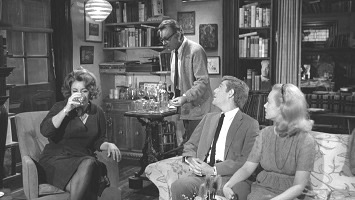
„GEORGE. Well. just stay on your feet, that’s all These people are your guess, you know, and… MARTHA. I can’t even see you I haven’t been able to see you for years… GEORGE. if you pass out, or throw up, or something… MARTHA. I mean, you’re a blank, a cipher… GEORGE. and try to keep your clothes on. too. There aren’t many more sickening sights than you with a couple of drinks in you and your skirt up over your head… MARTHA : …..a zero……… GEORGE. . . . your heads I should say . .. (The fiontdoorbell chimes.) MARTHA: Party! Party! GEORGE. Murderously) I’m really looking forward to this, Martha… MARTHA. (Same) Go answer the door. GEORGE. (Not moving.) You answer it. MARTHA. Get to that door, you. (He does not move.) I'll fix you, you… GEORGE. (Fake-spits.) To you (Door chime again.) MARTHA. (Shouting… to the door.) C’MON IN! (To George, between her teeth.) I said, get over there! GEORGE. (Moving toward the door.) All right, love whatever love wants. Isn’t it nice the way some people have manners, though, even in this day and age? Isn’t it nice that some people won’t just come braking into other people’s house: even if they do hear some subhuman monster yowling at ’em from inside…?
Scene uit de film van Mike Nichols met o.a. Richard Burton en Elizabeth Taylor (1966)
MARTHA. FUCK YOU! (Simultaneously with Martha’s last remark, George flings open the font door. Honey and Nick are framed in the entrance. There is a brief silence then…) GEORGE. (Ostensibly a pleased recognition of Honey and Nick, but really satifaction at having Martha’s explosion overheard) Ahhhhhhhhh! MARTHA. (A little too loud... to cover) HI! Hi, there…c’mon in! HONEY and NICK. (Ad lib.) Hello, here we are hi… (Etc.) GEORGE. (Very matter-off-factky) You must be our little guests. MARTHA. Ha, ha, ha, HA! Just ignore old sour-puss over there. C’mon in, kids give your coats and stuff to sour-puss. NICK. (Without expression.) Well, now, perhaps we shouldn’t have come. HONEY. Yes… it is late, …and… MARTHA. Late! Are you kidding? Throw your stuff down anywhere and c’mon in. GEORGE. (Vaguely walking away) Anywhere . .. furniture, floor doesn’t make any difference around this place. NICK. (To Honey) I told you we shouldn’t have come. MARTHA. (Stentorian) I said c’mon in! Now c’mon!”
Dolce far niente, P. C. Boutens, Breyten Breytenbach, Alfred Schaffer, Frans Kusters, Michael Nava, Justin Haythe, James Alan McPherson, Hans Arp
Dolce far niente
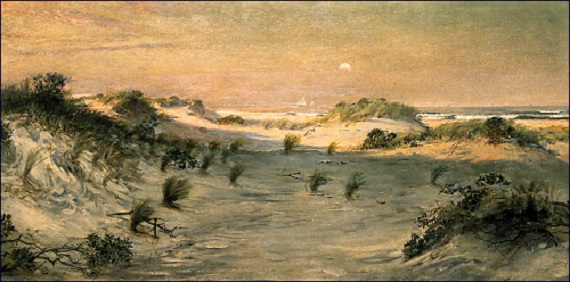
Sand Dunes at Sunset door Henry Ossawa Tanner, ca 1885 Dit schilderij hangt in de Green Room van het Witte Huis
Laatste zomerdag
Al de gouden middaguren Van de zonnen die verzonken, Stralen door dit blankdoorblonken Blindend dak van blauwe muren Op den stervensstillen lach Van den laatsten zomerdag.
In de dalen van de duinen Huivren wondre schemeringen Om de helderheid der dingen; En geen aêm vleugt langs de kruinen; Dieper dan de middagvreê Hijgt de stilte van de zee.
Als verwaasde glanzen dalen Door de sidderende luchten Vlakker al de breede vluchten Van verzilverd gouden stralen, Tot de glans in gloed ontblaakt Waar hij Zomers peluw raakt. . .
Mogen liefdes gouden uren Die uw oogen zijn vergeten Tot éen glans van hemelsch weten, Zóo uw witte peluw vuren, Ziel mijn ziel, waar uw gezicht In zijn laatsten glimlach ligt!
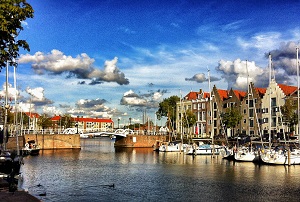
Pieter Cornelis Boutens (20 februari 1870 – 14 maart 1943) Middelburg, haven. Boutens werd geboren in Middelburg.
Waarom schrijf je altijd over de dood? Omdat ik een vriend zoek die de moeite loont om voor te sterven. – Daigu
een wind stilte waait om het huis de vrouw zegt dat ze kruimels strooit op het balkon voor de mussen en later is alles opgevreten maar je hebt nooit een vogel gezien pa is dood
wolken strooien een vlucht schaduwen voor de zon je zusters gebroken stem overbrugt een afstand van vele jaren: ‘huil maar zodat het binnenste ook weer kan genezen' de stadsklokken gal men opeens een ijskoud blauw gebeier dat slechts dood eeuwig is
hoe schrijf je een afwezigheid vast in het vers? mijn vader is vandaag overleden zaterdag negen december 1989 Johannes Stephanus Breytenbach om halftien 's morgens ik breek mijn woorden als kruimels om te vluchten of te begrijpen
witte vriessuiker over de blaren in het park onverwachts een snik in de borst opgeschrikt als een vogel gewekt uit zijn winterslaap hij was toch zo’n trotse man niemand tot overlast al die jaren geruïneerd grijs lichaam in een zaal vol oude grijze gedoofde lichte lijven
gisteren besefte hij pas goed dat zijn koudvuurbeen was afgezet en vanmorgen was hij nog kwaad want gebit en bril waren kwijt en toen draaide hij zijn hoofd weg van het licht en zuchtte en was hij dood en nu wacht de aarde
toch een verleden opengerukt zo oud als klokken die voor de dood zingen ik zit op mijn vaders schouders onder de koepel van een zoele nacht oud van sterren we gaan naar huis
vaarwel mijn haan mijn luipaard mijn gewroet in de bomen mijn trotse lichtwaaier over de kuif van de berg: en nu plukken we de sterren en zo begint mijn sterven
Breyten Breytenbach (Bonnievale, 16 september 1936)
Babygekrijs, dat de haren overeind laat staan. Daar weer bovenop de trage voetstappen die steeds luider klinken, een toilet dat alles schoonspoelt, met een reuzevaart, bij wijze van een geurig intermezzo. En op de achtergrond een prettig kwetterkoor van vogeltjes, de naklank van een schot, midden in de roos (of kraakbeen van een vluchtend dier), een juichend stadion plus het voortdurend beuken van de golven op de rotsen. Pak aan hier is je partituur, begin maar waar je in kunt vallen.
Een traditioneel gedicht
Het braakland in de verte. Een woord oud als de weg naar Rome, we hebben de verleiding niet weerstaan. Lijnen en plannen maken dit uitdijende weiland. We zijn aangekondigd - houd je mond toch, je ziet ons spoken, zoek een betrouwbare bron, huiverig voor iets
dat maar voorbij blijft gaan. Dan sta je recht en grijpt me beet. Nee, het was andersom, je viel zelfs in het slootje. ‘Klaar,’ sta je te gapen naderhand - je sopt terug je kleren in en niets en alles is veranderd, om vrolijk van te worden. We haperen, het lange gras gesmolten,
we konden erop wachten: een van ons raakt achterop. Jij was er al, jij ploetert voort. Tot uit het zicht. Wind. Een formatie trekvogels. Was dit volgens afspraak, dan hebben we elkaar niet goed begrepen, we zouden voor het donker thuis. Ik roep nog iets, en haak dan af.
“En de mensen - dat was afschuwelijk - hadden het niet eens in de gaten of het zou hun een rotzorg wezen. Zolang ze de metalen karretjes in de supermarkt konden volstouwen en het beeldscherm voldoende lolbroekerij van eigen bodem en de nieuwste ontwikkelingen in Peyton Place vertoonde, en doelpunten, niet te vergeten, zou alles hun een rotzorg wezen en hadden ze niets in de gaten. Ja, tenzij de buren gebeitste schrootjes achter het wandmeubel hadden en zij niet, of wanneer de voor duur geld gekochte kleren niet zo strak om het lichaam bleken te sluiten als de advertentie had beloofd. En wie de leeftijd van Cliff Richard had geraden kreeg van de omroeper een lichtgevende wekkerradio ten geschenke en na een goed antwoord op de vraag waar De Nachtwacht hing een zindelijke bak- en braadgrill daarbij. (Wij konden bewijzen dat Cliff Richard in het geheel niet bestond). En de gediplomeerde kenners van mens en maatschappij kweekten in de vrije tijd radijs, radijs en vleestomaten, volgden metselcursussen, bladerden fotoboeken over verantwoord bedgedrag door en verkondigden tijdens kantooruren dat die bezigheden eigenlijk veel meer waarachtigheid bezaten dan het werk waarvoor zij werden betaald. Maar misschien viel dat deze welvaartstelgen niet eens kwalijk te nemen en moest je de fout bij hun leermeesters zoeken, de heersers van de deelterreinen, die het samenvatten van uittreksels hoe langer hoe vaker onderbraken om zich de orang-oetan-roffel op het borstbeen toe te dienen, liefst op commando van een of andere waan van de dag, want dan bestond de kans dat ze de krant haalden en, wie weet, het televisiescherm. Op aandringen van Bertels waren wij naar het zolderzaaltje van ‘Huize Ditsel’ gegaan, de dansschool aan de Van der Brugghenstraat, waar de toenmalige rectormagnificus alsnog in eigen persoon zijn duit zou laten rinkelen in het zakje gekrakeel dat de aan de overzijde van de oceaan geslaakte kreet ‘God is dood’ in theologische kringen ooit had weten te wekken. De plaatselijke afdeling van het Thijmgenootschap organiseerde de avond, maar omdat wij van de veertien belangstellenden die de klim tot een goed einde hadden gebracht de enige mannen waren, had het er veel van weg dat we bij de V.V.A.O. op bezoek waren, de Vereniging van Vrouwen met Academische Opleiding, wier lezingen we eveneens slechts bij uitzondering oversloegen.”
Frans Kusters (16 september 1949 - 20 november 2012)
“He was arrested for being under the influence of PCP, possession of PCP, resisting arrest and battery on an officer. Geez, did the arresting officer go through the penal code at random? Novack scowled at me. Was anyone hurt? Just scuff marks, counsel. Was he examined by a doctor to determine whether he was under the influence? Did you ask him to submit to a urine test? Then all you can really prove against him is drug possession. Well, Novack said, I guess thats a matter of interpretation between you and the D.A. Are you going to want to see the guy? I'll talk to him, I replied, but first Ill want to interview these two, and I read him the names of the burglars. I interviewed the burglary suspects separately. They were bored but cooperative. They knew the system as well as I did. They had nothing by way of defense so the best I could do for them was try to plead them to something less serious than burglary. Id observed that repeat offenders were the easiest to deal with, treating their lawyers with something akin to professional courtesy. All they wanted was a deal. It was only the first timers who bothered to tell you they were innocent. After the interviews ended, I walked back to the booking office and poured myself a cup of Novacks coffee. I flipped him a quarter and asked to see Hugh Paris. They brought him in in handcuffs and a pair of jail blues so big that they fell from his shoulders and nearly covered his bare feet. His eyes were focused but he still looked disheveled. I thought, irrelevantly, of a picture of a saint I had seen as a boy, as he was being led off to his martyrdom. There was a glint of purity in Hugh Pariss eyes completely at odds with everything that was happening around him. The guard sat him down in the chair across from mine. I took out a legal pad and set it down on the table between us. I introduced myself as Henry Rios, from the public defenders office“.
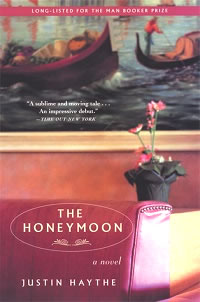
“A moment later, Maureen appeared in the hallway behind her. She held a pen in one hand, a cigarette in the other. 'Claudia,' she said. 'I didn't hear you come in.' Claudia turned and faced Maureen. 'You're still in your pyjamas,' Maureen laughed. 'It's the middle of the afternoon!' Claudia looked down at herself thoughtfully. 'Are you just getting up?' asked Maureen. 'I don't blame you with this never-ending rain ... Have you heard from your father? I have some mail. The envelopes look important. You can take them.' She turned away. 'I was going to make tea,' she said, and disappeared into the kitchen. Claudia stepped out of her shoes, leaned over and arranged them neatly against the wall. We did not say anything to one another, which was not unusual. I believed that we had an understanding. One night, when I was almost asleep, I had heard her on the phone, weeping instead of laughing. Street light came through the piece of coloured glass she had hung at the window of her old bedroom. Claudia came into the room without turning on the lights. After a moment's hesitation, she lay down on top of the covers beside me. I felt her legs and her breathing, the weight of her grown body. I watched her face soften into sleep. I reached out my hand and laid it over hers. I thought that one of us should stay awake in case my mother returned and discovered us there together, but soon I fell asleep as well. To my great relief when I awoke the next morning she had gone. Maureen came back with a small pitcher of milk in one hand and a plate of inexpensive petits fours in the other. She put them down on the table and switched on a lamp. The light made the sky seem darker still. 'Perhaps you can tell me if we should send any mail on to him directly ... How do you feel? You look pale.' She put her hand to Claudia's cheek. 'Petal,' she said. Claudia leaned forward and gave Maureen a kiss. 'Oh,' said Maureen, obviously surprised. 'Thank you.' Maureen looked old beside Claudia for the first time. Petal was my mother's name for me and Claudia was, in my eyes, a grown woman. Maureen returned to the kitchen for the tea tray. Claudia crossed the room and stood beside me, looking out. She opened the French doors and went out onto the patio as if she wanted a closer look. She stepped over the potted plants and from the railing she stepped into the sky. She had come to us for the height.“
“I went to the territory to renew my supply of stories. There were no new ones in the East at the time I left. Ideas and manners had coalesced into old and cobwebbed conventions. The old stories were still being told, but their tellers seemed to lack confidence in them. Words seemed to have become detached from emotion and no longer flowed on the rhythm of passion. Even the great myths floated apart from their rituals. Cynical salesmen hawked them as folklore. There was no more bite in humor. And language, mother language, was being whored by her best sons to suit the appetites of wealthy patrons. The were no new stories. Great energy was spent describing the technology of fucking. Black folk were back into entertaining with time-tested acts. Maupassant's whores bristled wtih the muscle of union organizers. The life-affirming peasants of Chekov and Babel sat wasted and listless on their porches, oblivious to the beats in their own blood. Even Pushkin's firebrands and noble brigands seemed content with the lackluster: mugging old ladies, killing themselves, snatching small change from dollar-and-dime grocers. During this time little men became afflicted with spells of swaggering. Men with greatness in them spoke on the telephone, and in private, as if bouncing safe clichés off the ear of a listener into an expectant and proprietary tape recorder. Everywhere there was this feeling of grotesque sadness, far, far past honest tears.”
James Alan McPherson (Savannah, 16 september 1943) Cover
Wir zogen hell durch Glanz und Duft. Nun tut das Licht mir weh und niemand ruft und zeigt mir eine Blume oder einen Stern.
Es blüht im Himmelsgrund zwischen Dunkelheit und Licht strahlend wie ein Stern dein gütiges Gesicht.
Du bist ein Stern und träumst in Gottes lichter Blume. Ich mag nicht weitergehen. Ich will auch schlafen. So wie du schläfst in Gold und tiefer Ferne in einem reinen Wiegen.
Verloren wie der alte Mond, der schon viel tausend Jahre stirbt, ist dieser arme Tränenmensch, der um die tote Rose wirbt.
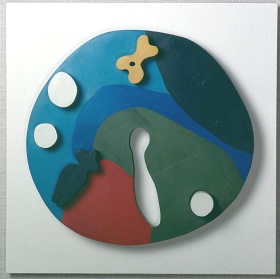
Hans Arp (16 september 1886 - 7 juni 1966) Hans Arp: Horloge, 1924
Tags:Dolce far niente, P. C. Boutens, Breyten Breytenbach, Alfred Schaffer, Frans Kusters, Michael Nava, Justin Haythe, James Alan McPherson, Hans Arp, Romenu
Dolce far niente, Alfred Tomlinson, Lucebert, Jan Slauerhoff, Chimamanda Ngozi Adichie, Agatha Christie, Orhan Kemal, Gunnar Ekelöf
Dolce far niente
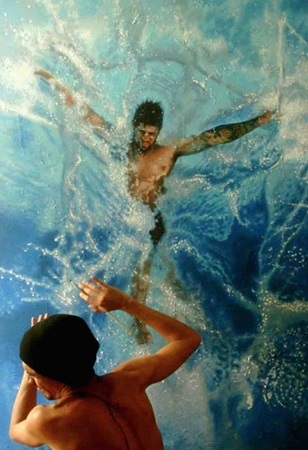
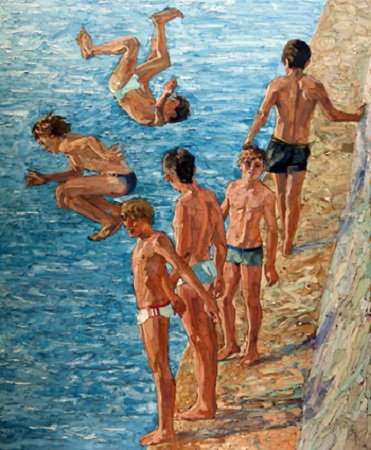
Gustavo Silva Nuñez poseert voor een door hem geschilderde zwemmer, 2015.
Swimming Chenango Lake
Winter will bar the swimmer soon. He reads the water’s autumnal hestitations A wealth of ways: it is jarred, It is astir already despite its steadiness, Where the first leaves at the first Tremor of the morning air have dropped Anticipating him, launching their imprints Outwards in eccentric, overlapping circles. There is a geometry of water, for this Squares off the clouds’ redundances And sets them floating in a nether atmosphere All angles and elongations: every tree Appears a cypress as it stretches there And every bush that shows the season, A shaft of fire. It is a geometry and not A fantasia of distorting forms, but each Liquid variation answerable to the theme It makes away from, plays before: It is a consistency, the grain of the pulsating flow. But he has looked long enough, and now Body must recall the eye to its dependence As he scissors the waterscape apart And sways it to tatters. Its coldness Holding him to itself, he grants the grasp, For to swim is also to take hold On water’s meaning, to move in its embrace And to be, between grasp and grasping, free. He reaches in-and-through to that space The body is heir to, making a where In water, a possession to be relinquished Willingly at each stroke. The image he has torn Flows-to behind him, healing itself, Lifting and lengthening, splayed like the feathers Down an immense wing whose darkening spread Shadows his solitariness: alone, he is unnamed By this baptism, where only Chenango bears a name In a lost language he begins to construe — A speech of densities and derisions, of half- Replies to the questions his body must frame Frogwise across the all but penetrable element. Human, he fronts it and, human, he draws back From the interior cold, the mercilessness That yet shows a kind of mercy sustaining him. The last sun of the year is drying his skin Above a surface a mere mosaic of tiny shatterings, Where a wind is unscaping all images in the flowing obsidian, The going-elsewhere of ripples incessantly shaping.
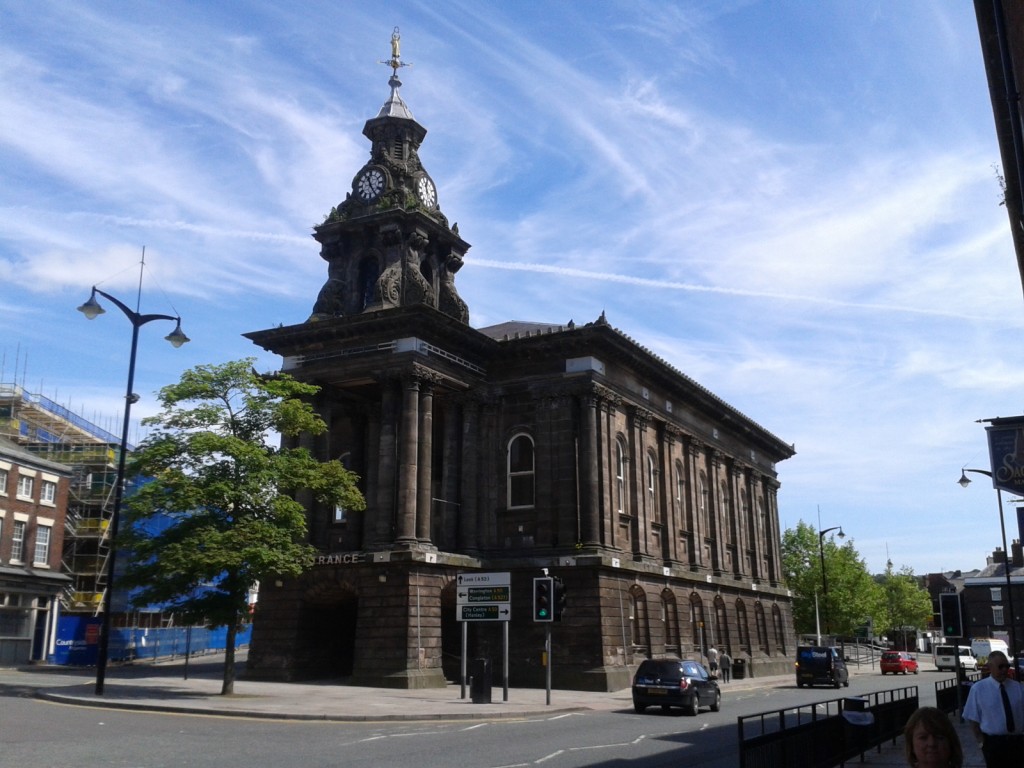
Alfred Tomlinson (8 januari 1927 – 22 augustus 2015) Stoke-on-Trent, Old Town Hall. Alfred Tomlinson werd geboren in Stoke-on-Trent.
noodweer weerlicht de noodklep open het sluimerraam dicht dromen dromen zich dood dodekop tooit zich
in het zwarte zwerk vlekken bleekmiddel het skelet kraakt een aangebrande wolk een blaar een sudderlap aan de slapen druif van droefenis
de versteende vissen beitel die uit de bedding terwijl gier fluistert blaas op de holle blik met het laatste zoeklicht de stilte stilt het tempeesten
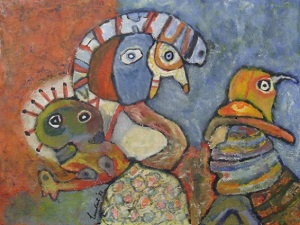
Lucebert: Hond & Kat III, 1988
arp
tegen de polsslag van het steen klopt de gedachte van de hand ritselt de rokzoom van trottoirs ademen rotsen over mij heen staat de oxyde der zee op de brandbreekbare ogen der aarde
dwars door mijn mond door breekt het harde gat van gebaar en mijn stem wenkt stilte galoppeer maar geen gewicht dat meer denkt
zo ben ik tot over mijn oren verloofd met het licht het licht koopt mij op loopt op mijn tred mijn hals mijn haar een mars van mens de echte mens die wenst
Soms weent zij uit: dat zij niet meer kan blijven Onbevlekte in verblijven, waar bedreigen Haar offerpijn en floers, waaronder lijven Den Dienst der wrede liefkozing bedrijven.
'k Geloof haar niet, maar neem haar lijfsgewaden. Nog naakt vernederd, smeekt zij de genade Te mogen gaan. Ik spot: ‘Ga zo, mijn gade!’ En sliep in zekerheid... Zij is gaan waden
Door diepe sneeuw en zich aan kuis ijs wonden. Zij dacht rechtuit te vluchten, liep een ronde: Des morgens aan een muur is zij gevonden,
Teruggedragen binnen mijn verblijven, Waar maagden haar bevrozen leden wrijven, Hervoorbereiden voor het feest der lijven.
De dagen gaan
De dagen gaan langs de aarde, lange horden - Nooit is de zon 't vermeêren moe geworden. Een koning sterft, godslasterend, meinedig - Nooit bleef een onbezette zetel ledig. Volksplantingen geraken in versterf - Reeds bloeien schonere uit hun bederf, Weer ondergaand met zinkende getijen. Nu is de tijd voor oude heerschappijen; Vermolmde staten wanklen - de Commune Zal rustig rijzen uit de roeste ruïne En zal een rijk zijn van de ganse aarde: Herberg voor volkeren, verlost van wallen, Bewoners van de veilge hemelhallen En in de ogen Gods gelijk van waarde.
Herfstwind
Herfstwind verdrijft de witte wolken, Ganzen trekken langs het lege zwerk, Nog geuren chrysanten en bloeien orchideeën, Kon ik mijn vroeger lief nu vergeten, Bijna was ik gelukkig, Met mijn bloemenboot op de Fen-rivier, Wit schuimt de stroom langs de boeg, Fluit en trom houden maat met de riemslag, Onder 't rumoer broeden sombre gedachten, Jeugd jaagt voorbij, dood staat onwrikbaar.
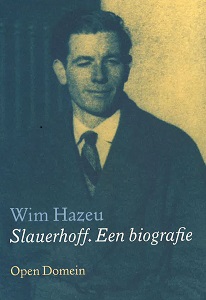
Jan Slauerhoff (15 september 1898 – 5 oktober 1936) Cover biografie
“It’s too tight,” Ifemelu said. “Don’t make it tight.” Because Aisha kept twisting to the end, Ifemelu thought that perhaps she had not understood, and so Ifemelu touched the offending braid and said, “Tight, tight.” Aisha pushed her hand away. “No. No. Leave it. It good.” “It’s tight!” Ifemelu said. “Please loosen it.” Mariama was watching them. A flow of French came from her. Aisha loosened the braid. “Sorry,” Mariama said. “She doesn’t understand very well.” But Ifemelu could see, from Aisha’s face, that she understood very well. Aisha was simply a true market woman, immune to the cosmetic niceties of American customer service. Ifemelu imagined her working in a market in Dakar, like the braiders in Lagos who would blow their noses and wipe their hands on their wrappers, roughly jerk their customers’ heads to position them better, complain about how full or how hard or how short the hair was, shout out to passing women, while all the time conversing too loudly and braiding too tightly. “You know her?” Aisha asked, glancing at the television screen. “What?” Aisha repeated herself, and pointed at the actress on the screen. “No,” Ifemelu said. “But you Nigerian.” “Yes, but I don’t know her.” Aisha gestured to the pile of DVDs on the table. “Before, too much voodoo. Very bad. Now Nigeria film is very good. Big nice house!” Ifemelu thought little of Nollywood ɹlms, with their exaggerated histrionics and their improbable plots, but she nodded in agreement because to hear “Nigeria” and “good” in the same sentence was a luxury, even coming from this strange Senegalese woman, and she chose to see in this an augury of her return home.”
Chimamanda Ngozi Adichi (Enugu, 15 september 1977)
'Unsolved mysteries.' Raymond West repeated the words with a kind of deliberate self-conscious pleasure. 'Unsolved mysteries.' He looked round him with satisfaction. The room was an old one with broad black beams across the ceiling and it was furnished with good old furniture that belonged to it. Hence Raymond West's approving glance. By profession he was a writer and he liked the atmosphere to be flawless. His Aunt Jane's house always pleased him as the right setting for her personality. He looked across the hearth to where she sat erect in the big grandfather chair. 'That's not what I mean. I was not talking philosophy,' Raymond said. 'I was thinking of actual bare prosaic facts, things that have happened and that no one has ever explained.' 'I know just the sort of thing you mean, dear,' said Miss Marple. 'For instance, Mrs. Carruthers had a very strange experience yesterday morning. She bought two gills of pickled shrimps at Elliot's. She called at two other shops and when she got home she found she had not got the shrimps with her. She went back to the two shops she had visited but these shrimps had completely disappeared. Now that seems to me very remarkable.' 'My dear Aunt,' said Raymond West with some amusement, 'I didn't mean that sort of village incident. I was thinking of murders and disappearances - the kind of thing that Sir Henry could tell us about by the hour if he liked.'
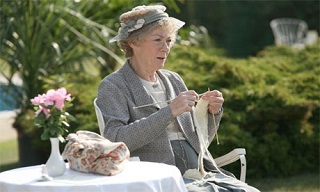
Agatha Christie (15 september 1890 – 12 januari 1976) Geraldine McEwan als Miss Marple in de serie “Agatha Christie’s Marple”, 2007 - 2009
“I thought they were wonderful people, particularly the father. He talked about various matters, smoothed his thick moustache in an authoritative manner and swore frequently. Meanwhile Nejip’s sister laid out a dining-cloth across the floor, laid a chopping-board down on it, set down little flannels we would be using as napkins and brought in the bread-box. She did all this as if playing a little game, smiling now and then and revealing a sparkling gold tooth whenever she did so. I wondered who she was smiling for: me or Gazi? After we had eaten our meal, drunk our coffees and chatted about things of no consequence, we retired to the beds Nejip’s sister had made up for us. Our beds had been laid out side by side. All the bedding was spotlessly clean, expertly patched here and there and smelling of soap. We climbed into our beds. ‘Ahhh…’ I sighed. ‘This is great!’ Gazi lifted his head up. ‘What? You mean the girl? I could get engaged to her immediately!’ I got very cross with him. ‘You unscrupulous…’ ‘No, that’s what you are! Now, I know that if I don’t beat you to it…’ ‘What?’ ‘Come on, I saw you. Giving her all those leery looks.’ The next morning we had a marvellous breakfast and wandered down to Galata. The day passed. ‘Once the money from your aunt comes through,’ said Gazi the next day, ‘we can invite Nejip out.’ ‘Yes, that’ll be good. We can take him out for a meal.’ ‘To a decent place. With raki and proper meze.’ ‘We’ll pay back Nevzat, too.’
Orhan Kemal (15 september 1914 – 2 juni 1970) Cover Turkse uitgave
Everyone is a world, peopled by blind beings in dark commotion against the self the king who rules them. In every soul thousands of souls are trapped, in every world thousands of worlds are hidden and these blind, these underworlds are real and living, though incomplete, as true as I am real. And we kings and princes of the thousand possibilities in us are ourselves servants, trapped in some greater creature, whose self and being we grasp as little as our own superior his superior. Our own feelings have taken the color of their love and death. As when a mighty steamship passes far out, under the horizon, lying in the evening glitter- - And we don’t know about it until the swell reaches us on the shore, first one, then another, and then many which strike and boom until everything has become as before. – Yet everything is different. So we shades are troubled by a strange unease When something tells us that others have gone ahead, That some of the possibilities have been released.
De Colombiaanse dichter, schrijver, hoogleraar en journalist Sergio Esteban Vélez Peláezwerd geboren op 15 september 1983 in Medellín. Hij publiceerde zijn eerste gedichtenbundel, "Destellos nocturnos" in 1996, toen hij 12 jaar oud was. Vélez studeerde rechten en politieke wetenschappen aan de Bolivariaanse Pontificale Universiteit en studeerde moderne talen aan Sherbrooke University, Hij is wekelijkse columnist voor de krant El Mundo. Hij was de oprichter van de Academia Antioqueña de Letras, samen met Octavio Arizmendi Posada, voormalig minister van Onderwijs van Colombia. In 2002 werd Vélez aangesteld als cultuurdirecteur van de Colegio Altos Estudios de Quirama. Hij won de Premio Nacional de Periodismo Simón Bolívar 2010 (de nationale journalistiekprijs Simon Bolivar), de Premio Internacional de Periodismo José María Heredia 2010 (Internationale prijs voor journalistiek Jose Maria Heredia 2010).) en de Premio Cipa a La Excelencia Periodística 2012. De dichter Olga Elena Mattei zegt dat Vélez het Andes-aspect van de huidige Colombiaanse poëzie vertegenwoordigt. Vélez werkt aan de Universiteit van Antioquia, Colombia.
Interior Orbit
In the center of the sacred enclosure, the genius, imprisoned in the orbit of himself, was lost in the night of time and insisted on seeking the theory of the liquid abysses immense in the confusing layers of the intimate nature of his ego
Theology Of Man
Image and likeness of God say the Scriptures that we were made. And I wonder if we have, the radiance of the divinity, the universal rhythm of balance, the existential transparency, the perfect metaphysical calligraphy, the rational power, the dimensional knowledge, in the theological measure of God
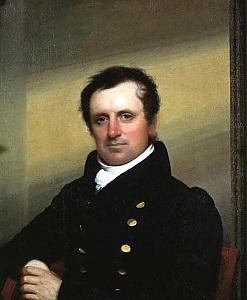
De Amerikaanse schrijverJames Fenimore Cooper werd geboren in Burlington, New Jersey op 15 september 1789 als zoon van een Congreslid van de Verenigde Staten. Nog voor zijn eerste verjaardag verhuisde het gezin naar Westchester County, New York. Reeds op veertienjarige leeftijd vatte hij zijn studies aan op Yale, maar behaalde daar uiteindelijk geen universitaire graad. Hij werd matroos op de koopvaardij en ging op negentienjarige leeftijd bij de marine. Daar behaalde hij de graad van adelborst nog voor zijn vertrek in 1811. Toen hij 22 was huwde hij met Susan DeLancey. Samen hadden ze 7 kinderen. Zijn eerste boek “Precaution” (1820) publiceerde hij anoniem, daarop verschenen er verschillende andere van zijn hand. In 1823 publiceerde hij “The Pioneers”, de eerste uit de Leatherstocking-reeks met de woudloper Natty Bumppo (deze figuur is gebaseerd op het leven en de avonturen van Daniel Boone) in de hoofdrol, waarin hij deze volgt in zijn vriendschap met de Delaware indianen en opperhoofd Chingachgook. Coopers beroemdste roman zou echter “The Last of the Mohicans” (1826) worden, een van de meest gelezen boeken uit de 19e eeuw. In 1826 verhuisde Cooper met zijn gezin naar Europa, om daar als vertegenwoordiger van de regering van de Verenigde Staten te gaan werken. Tijdens zijn verblijf daar schreef hij het in Parijs gepubliceerde “The Red Rover”, “The Waterwitch—one” en andere zeeverhalen. Hij raakte ook erg betrokken in politieke discussies over de Verenigde Staten en publiceerde daarover onder meer in Le National. In zijn drie volgende romans “The Bravo” (1831), “The Heidenmauer” (1832) en “The Headsman: or the Abbaye of Vigneron” (1833) verwerkte hij ook zijn republikeinse overtuigingen. In 1833 keerde hij terug naar Amerika, waar hij onmiddellijk “A Letter to My Countrymen” publiceerde, waarin hij scherp uithaalde naar de betrokkenheid van de Verenigde Staten in een aantal controversiële zaken waar hij in Europa mee te maken had gekregen.
Uit: The Last of the Mohicans
“It was a feature peculiar to the colonial wars of North America, that the toils and dangers of the wilderness were to be encountered before the adverse hosts could meet. A wide and apparently an impervious boundary of forests severed the possessions of the hostile provinces of France and England. The hardy colonist, and the trained European who fought at his side, frequently expended months in struggling against the rapids of the streams, or in effecting the rugged passes of the mountains, in quest of an opportunity to exhibit their courage in a more martial conflict. But, emulating the patience and self-denial of the practiced native warriors, they learned to overcome every difficulty; and it would seem that, in time, there was no recess of the woods so dark, nor any secret place so lovely, that it might claim exemption from the inroads of those who had pledged their blood to satiate their vengeance, or to uphold the cold and selfish policy of the distant monarchs of Europe. Perhaps no district throughout the wide extent of the intermediate frontiers can furnish a livelier picture of the cruelty and fierceness of the savage warfare of those periods than the country which lies between the head waters of the Hudson and the adjacent lakes. The facilities which nature had there offered to the march of the combatants were too obvious to be neglected. The lengthened sheet of the Champlain stretched from the frontiers of Canada, deep within the borders of the neighboring province of New York, forming a natural passage across half the distance that the French were compelled to master in order to strike their enemies. Near its southern termination, it received the contributions of another lake, whose waters were so limpid as to have been exclusively selected by the Jesuit missionaries to perform the typical purification of baptism, and to obtain for it the title of lake “du Saint Sacrement.” The less zealous English thought they conferred a sufficient honor on its unsullied fountains, when they bestowed the name of their reigning prince, the second of the house of Hanover. The two united to rob the untutored possessors of its wooded scenery of their native right to perpetuate its original appellation of “Horican.” Winding its way among countless islands, and imbedded in mountains, the “holy lake” extended a dozen leagues still further to the south. With the high plain that there interposed itself to the further passage of the water, commenced a portage of as many miles, which conducted the adventurer to the banks of the Hudson, at a point where, with the usual obstructions of the rapids, or rifts, as they were then termed in the language of the country, the river became navigable to the tide.”
James Fenimore Cooper (15 september 1789 - 14 september 1851) Portret door John Wesley Jarvis, 1822
Dolce far niente, Algernon Swinburne, Hans Faverey, Theodor Storm, Leo Ferrier, Corly Verlooghen, Bernard MacLaverty, Ivan Klíma
Dolce far niente
Hot Day door Sergej Sovkov, 2014
A Swimmer's Dream
V. A dream, a dream is it all — the season, The sky, the water, the wind, the shore? A day-born dream of divine unreason, A marvel moulded of sleep — no more? For the cloudlike wave that my limbs while cleaving Feel as in slumber beneath them heaving Soothes the sense as to slumber, leaving Sense of nought that was known of yore.
A purer passion, a lordlier leisure, A peace more happy than lives on land, Fulfils with pulse of diviner pleasure The dreaming head and the steering hand. I lean my cheek to the cold grey pillow, The deep soft swell of the full broad pillow, And close mine eyes for delight past measure, And wish the wheel of the world would stand.
The wild-winged hour that we fain would capture Falls as from heaven that its light feet clomb, So brief, so soft, and so full the rapture Was felt that soothed me with sense of home. To sleep, to swim, and to dream, for ever — Such joy the vision of man saw never; For here too soon will a dark day sever The sea-bird's wing from the sea-wave's foam.
A dream, and more than a dream, and dimmer At once and brighter than dreams that flee, The moment's joy of the seaward swimmer Abides, remembered as truth may be. Not all the joy and not all the glory Must fade as leaves when the woods wax hoary; For there the downs and the sea-banks glimmer, And here to south of them swells the sea.
Algernon Swinburne (5 april 1837 – 10 april 1909) Een zomers Londen. Swinburne werd geboren in Londen.
beklimt, desnoods: bestijgt een olifant (de olifant).
Zo gooide iemand eens een bal op. Deze stuiterde nog enige malen, bleef toen zo goed als stil liggen.
Het is net of het zo stil is
Het is net of het zo stil is;
zo heb ik mij aangetroffen.
Ik ga rechtstaan en rek mij uit. Ik draai mij om. Blijf roerloos staan.
Ik hoor hoe het wiel stil valt. Ik blijf zo staan.
Dat zachte gesuis
hindert niet: uit mijzelf komt het voort.
Denk iets dat je goed kent
Denk iets dat je goed kent.
Zeg: ze kamt haar haar. Herhaal het: zij haar haar kamt. Doe er een spiegel bij. Maak het vertrouwder dan je waarmaakt: de eerste sneeuw/het eerste riet. Hoe ze plotseling haar hoofd naar voren of naar achteren wierp. Zeg dat ze haar haar kamde; zich naar voren of naar achteren werpt. Terwijl het sneeuwde of riet werd; zich de eenbes verzwartte; en zij haar haar kamt.
„Mein Pferd war schon von selbst auf den Weg am Deich hinabgeschritten, der mich vor die Tür des Hauses führte. Ich sah wohl, daß es ein Wirtshaus war; denn vor den Fenstern gewahrte ich die sogenannten »Ricks«, das heißt auf zwei Ständern ruhende Balken mit großen eisernen Ringen, zum Anbinden des Viehes und der Pferde, die hier haltmachten. Ich band das meine an einen derselben und überwies es dann dem Knechte, der mir beim Eintritt in den Flur entgegenkam: »Ist hier Versammlung?« frug ich ihn, da mir jetzt deutlich ein Geräusch von Menschenstimmen und Gläserklirren aus der Stubentür entgegendrang. »Is wull so wat«, entgegnete der Knecht auf plattdeutsch – und ich erfuhr nachher, daß dieses neben dem Friesischen hier schon seit über hundert Jahren im Schwange gewesen sei –, »Diekgraf und Gevollmächtigten un wecke von de annern Interessenten! Dat is um 't hoge Water!« Als ich eintrat, sah ich etwa ein Dutzend Männer an einem Tische sitzen, der unter den Fenstern entlanglief, eine Punschbowle stand darauf, und ein besonders stattlicher Mann schien die Herrschaft über sie zu führen. Ich grüßte und bat, mich zu ihnen setzen zu dürfen, was bereitwillig gestattet wurde. »Sie halten hier die Wacht!« sagte ich, mich zu jenem Mann wendend, »es ist bös Wetter draußen; die Deiche werden ihre Not haben!« »Gewiß«, erwiderte er; »wir, hier an der Ostseite, aber glauben, jetzt außer Gefahr zu sein; nur drüben an der andern Seite ist's nicht sicher, die Deiche sind dort meist noch mehr nach altem Muster; unser Hauptdeich ist schon im vorigen Jahrhundert umgelegt. – Uns ist vorhin da draußen kalt geworden, und Ihnen«, setzte er hinzu, »wird es ebenso gegangen sein; aber wir müssen hier noch ein paar Stunden aushalten; wir haben sichere Leute draußen, die uns Bericht erstatten.« Und ehe ich meine Bestellung bei dem Wirte machen konnte, war schon ein dampfendes Glas mir hingeschoben. Ich erfuhr bald, daß mein freundlicher Nachbar der Deichgraf sei; wir waren ins Gespräch gekommen, und ich hatte begonnen, ihm meine seltsame Begegnung auf dem Deiche zu erzählen. Er wurde aufmerksam, und ich bemerkte plötzlich, daß alles Gespräch umher verstummt war. »Der Schimmelreiter!« rief einer aus der Gesellschaft, und eine Bewegung des Erschreckens ging durch die übrigen. Der Deichgraf war aufgestanden. »Ihr braucht nicht zu erschrecken«, sprach er über den Tisch hin; »das ist nicht bloß für uns; Anno 17 hat es auch denen drüben gegolten; mögen sie auf alles vorgefaßt sein!«
Theodor Storm (14 september 1817 - 4 juli 1888) Cover
“Ze is direkt anders tegen mij. Ik ben geen Hindostaans kind meer uit het distrikt. Ze hoeft het gevaar in mij niet meer te bezweren. Ze let nu beter op mij. Zij rekent mij niet meer tot de Hindostanen. Ook niet tot de Creoolse kinderen met kroeshaar en een donkere huid. Maar weer tot die groep, die anderen zijn. Die het dichtst bij de Hollanders horen en worden gerekend. Een ongedefinieerde elite. Lichtgekleurden, met glad of bijna glad haar, kinderen van hoge functionarissen, voor wie het niet meer uitmaakt of zij glad of kroeshaar, een donkere of lichte huid hebben. Zij hebben een status. (…)
Dit verleden heeft mij gevormd. Mijn studie hervormd, tot wat het nu is. Eenmaal in Holland was het deze kracht, welke mijn westerse conceptie als concertpianist deed exploderen. [...] Mijn geest werd zuiverder, ik kon beter begrijpen en enthousiaster zoeken. Het huis waarin ik werd grootgebracht, geen bedrog, maar een verleden waarin ik werd gevormd. Ik was geen verrader onder de Hindostanen. Ik rook de Neger zijn zweet en ik wist dat Javaanse vrouwen soms op sirih pruimden.”
Daar vloeit van de zon het schoonste licht af het licht van Suriname ik meet in het woud het beste hout het hout van Suriname
bouw dan een huis van licht en hout voor de beste vrouw de vrouw van Suriname hang in de prilste dauw de mooiste vlag uit de vlag van Suriname laat alle fiere kinderen het schoonste volkslied zingen het lied van Suriname!
Dit wankel huis
Hindostanen en Creolen hebben het gezegd de laatsten het bevolen er is een avontuur te vondeling gelegd.
en wij staan onbehulpzaam toe te zien hoe het bederf invreet in de huid van 't jonge kind
God had ik maar de macht een lied te zingen waarnaar men luistert in dit wankel huis dat zo gebarsten is en dreigt omver te vallen in een onverhoedse nacht.
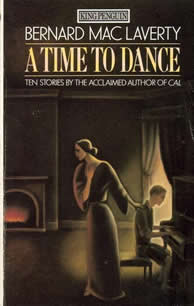
“She was always shouting. Last night, for instance, she had started into him for watching T.V. From the side. She had dragged him round to the chair in front of it. ‘That’s the way the manufacturers make the sets. They put the picture on the front. But oh no, that’s not good enough for our Nelson. He has to watch it from the side. Squint, my arse, you’ll just go blind – stark, staring blind.’ Nelson had then turned his head and watched it from the front. She had never mentioned the blindness before. Up until now all she had said was, ‘If you don’t wear them patches that eye of yours will turn in till it’s looking at your brains. God knows, not that it’ll have much to look at.’ His mother was Irish. That was why she had a name like Skelly. That was why she talked funny. But she was proud of the way she talked and nothing angered her more than to hear Nelson saying ‘Ah ken’ and ‘What like is it? ’ She kept telling him that someday they were going back, when she had enough ha’pence scraped together. ‘Until then I’ll not let them make a Scotchman out of you.’ But Nelson talked the way he talked. His mother had called him Nelson because she said that she thought his father had been a seafaring man. The day the boy was born she had read an article in the Reader’s Digest about Nelson Rockefeller, one of the richest men in the world. It seemed only right to give the boy a good start. She thought it also had the advantage that it couldn’t be shortened, but she was wrong. Most of the boys in the scheme called him Nelly Skelly.”
Bernard MacLaverty (Belfast, 14 september 1942) Cover
Uit: Lovers for a Day (Vertaald door Gerald Turner)
'Well take good care of yourself 'Why don't you believe me?' 'Don't cause me grief, Kateřina.' The door opens. The witch with the coffee pot lets out some of the pale blue light and typewriter din. Is that you, Kateřina — how are you — fine thanks — it suits you, every inch the young lady, where did you buy the skirt, and you're bigger than your Mum, come on show me, you really are — it's my hair that does it, I tease it. 'You're not up to something are you, Kateřina?' 'No, I'm not, really Mum.' She has powdered the wrinkles round her eyes — for that slob, but what's she supposed to do, now that Daddy avoids her? 'No, really, Mum. It's lovely out.' 'What's up, Kateřina? You're being distant, somehow. Don't stay out late.' 'No, I won't.' She says goodbye to the one-armed watchman. Outside it is bright and sunny and oddly deserted. The rush hour is over. He's probably just getting up. They get up late in student residences. If only I'd been able to study too. I'd have enjoyed it: preferably biology or literature. But those two would have had to keep me for the four years and 'where would they have found the money, those penniless pen-pushers? He has to pay for his tart and she has to keep her slob, if she's going to have any fun any more — I'd sooner hang myself.”
De Tsjechische dichter Otokar Březinawerd geboren op 13 september 1868 in Počátky, Bohemen. Březina was de tweede zoon van Ignaz Jebavy en zijn derde vrouw Catherine Fáková. Na zijn eindexamen aan de middelbare school in Telč was hij 1887-1888 docent in Jinošov. In 1888 behaalde hij zijn lerarendiploma en werkte vervolgens als basisschoolleraar tot 1901 in Nová, vervolgens tot 1925 in Jaroměřice. In 1919 ontving hij een eredoctoraat van de Karelsuniversiteit en in hetzelfde jaar werd hij lid van de Tsjechische Academie. In 1925 gaf hij het beroep van leraar op, dat hij als een noodzakelijk kwaad beschouwde. In 1928 ontving hij de Nationale Prijs voor Literatuur, schreef voor de Moderne Revue en studeerde daarnaast filosofie en moderne natuurwetenwetenschappen. Hij stierf aan een aangeboren hartafwijking. Březina werd twee keer (1924, 1928) genomineerd voor de Nobelprijs voor de Literatuur. Březina behoorde tot de literaire kring Česká Moderna. Hij begon onder de invloed van Baudelaire als symbolist, en gaf een specifiek Tsjechisch tintje aan deze internationale kunstbeweging. Maar hij overwon snel zijn eerste pessimisme en wendde zich tot een metafysische idealisme, uitgedrukt in mystieke-extatische hymnen. Naast zijn poëzie schreef Březina ook filosofische essays, die hij introduceerde als nieuw genre in de Tsjechische literatuur.
Es sangen die brennenden Sterne
Jede Sekunde, stets treu unserem Posten Im mystischen Tanze der Welten Kreisen wir im Kosmos. In die strahlenden Sphären der Geister hauchen wir verführerisch Schönheit. Um unsere Häupter, In Aureolen Funkeln goldene Haare Gespannt wie klingende Lassos Von der Windsbraut des Fluges.
Auf unsere Wangen, extatisch erglühend, Kühlende Zeiten uns wehen Und ermattet vom Glücke unseres Fluges, Vom Glanze schmerzlicher Wonne entkräftet, Mit einem Aufschrei, der fliegt durch das Weltall, Harmonisch und jauchzend, Sinken wir, mystische Tänzerinnen, Und in unserem Blute, wie in Rosen begraben, Sterben wir.
Eintreten Schwestern auf unsere Plätze, Glanzumflossene, Und in dem Liede, das durch der Ewigkeit Zwielicht dahinströmt, In stets wachsenden Wogen, In neue, stets neue Räume, dringt vorwärts, In der Nebelgestirne erhobenem Staube, Der strahlende Vortrab des Mysterium.
Vertaald door Emil Saudek
Illusion
I lit a cigarette, by window sitting, lost in my thoughts my gaze before me drifted, around my head smoke clouds to dusk retreating, my soul by florid reminiscence wafted.
When – maybe by the flight of thought uplifted or with the rising blue smoke tide abetting – a young girl’s form my far off gaze was greeting, pouting, a pair of smiling lips she shifted…
How beauty charmed her locks forever sable! To kiss, to kiss, to kiss, her sensual calling – what strained in twain beneath lace braiding able.
How in a joyful dream the head spins, reeling… I blew the smoke… Oh woe, oh woe apalling! Dusk coldly barren squinted back, unfeeling.
Vertaald door Václav Z J Pinkava
Otokar Březina (13 september 1868 - 25 maart 1929)
Dolce far niente, Novalis, Tõnu Õnnepalu, Roald Dahl, Janusz Glowacki, Jac. van Looy, Nicolaas Beets, Marie von Ebner-Eschenbach
Dolce far niente
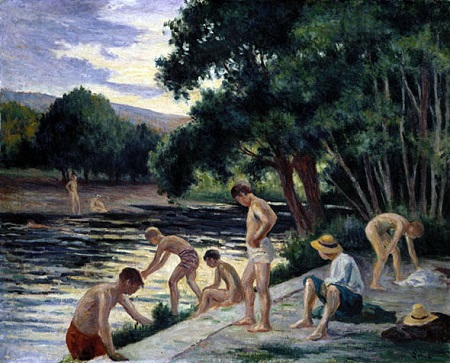
Baigneurs sur les rives de la Cure door Maximilien Luce, z.j.
Badelied
Auf Freunde, herunter das heiße Gewand Und tauchet in kühlende Flut Die Glieder, die matt von der Sonne gebrannt, Und holet von neuem euch Mut.
Die Hitze erschlaffet, macht träge uns nur, Nicht munter und tätig und frisch, Doch Leben gibt uns und der ganzen Natur Die Quelle im kühlen Gebüsch.
Vielleicht daß sich hier auch ein Mädchen gekühlt Mit rosichten Wangen und Mund, Am niedlichen Leibe dies Wellchen gespielt, Am Busen so weiß und so rund.
Und welches Entzücken! dies Wellchen bespült Auch meine entkleidete Brust. O! wahrlich, wer diesen Gedanken nur fühlt, Hat süße entzückende Lust.
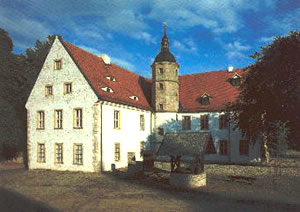
Novalis (2 mei 1772 - 25 maart 1801) Schloss Oberwiederstedt, geboortehuis van Novalis
There is no freedom spring air glowing and surging around us on this festival of the last melting snow when the alder catkins are heavy with yellow dust and the earth is heavy with water and the eyes feel heavy wwith the beauty of light when joy comes and races hands free down the hill the lark falls through the air when the sky enfolds us into its perfect void whose colours have no name blue blue blue a thousand times everything with different meanings but the dead grass and the earth smell as for the first time in my life and the pines begin to rustle when suddenly an icy cold damp gust of wind from the sea and the pinetops swaying in the sky as if in the midst of a great sadness for there is no freedom
“My four friends and I had come across a loose floor-board at the back of the classroom, and when we prised it up with the blade of a pocket-knife, we discovered a big hollow space underneath. This, we decided, would be our secret hiding-place for sweets and other small treasures such as conkers and monkey-nuts and birds’ eggs. Every afternoon, when the last lesson was over, the five of us would wait until the classroom had emptied, then we would lift up the floor-board and examine our secret hoard, perhaps adding to it or taking something away. One day, when we lifted it up, we found a dead mouse lying among our treasures. It was an exciting discovery. Thwaites took it out by its tail and waved it in front of our faces. ‘What shall we do with it?’ he cried. ‘It stinks!’ someone shouted. ‘Throw it out of the window quick!’ ‘Hold on a tick,’ I said. ‘Don’t throw it away.’ Thwaites hesitated. They all looked at me. When writing about oneself, one must strive to be truthful. Truth is more important than modesty. I must tell you, therefore, that it was I and I alone who had the idea for the great and daring Mouse Plot. We all have our moments of brilliance and glory, and this was mine. ‘Why don’t we,’ I said, ‘slip it into one of Mrs. Pratchett’s jars of sweets? Then when she puts her dirty hands into grab a handful, she’ll grab a stinky dead mouse instead.’ The other four stared at me in wonder. Then, as the sheer genius of the plot began to sink in, they all started grinning. They slapped me on the back. They cheered me and danced around the classroom. ‘We’ll do it today!’ they cried. ‘We’ll do it on the way home! You had the idea,’ they said to me, ‘so you can be the one to put the mouse in the jar.’ Thwaites handed me the mouse. I put it into my trouser pocket. Then the five of us left the school, crossed the village green and headed for the sweet-shop. We were tremendously jazzed up. We felt like a gang of desperados setting out to rob a train or blow up the sheriff’s office. ‘Make sure you put it into a jar that is used often,’ somebody said. ‘I’m putting it in Gobstoppers,’ I said. ‘The Gobstopper jar is never behind the counter.’
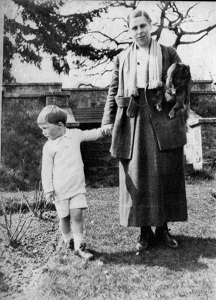
Roald Dahl (13 september 1916 – 23 november 1990) Hier met zijn moeder in de tuin van hun huis in Ty Mynydd, circa 1919.
Uit: Good night, Jerzy (Vertaald door David Frick)
““oger nodded. “Either way, we wish you success. Of course, a crowd of people will immediately gather to attack you, screaming that they knew him better, and that that wasn’t how it was at all. But that shouldn’t bother you, since you screwed first. But just don’t count on us. Because we aren’t all that certain there’s anyone left in New York, apart from us, who still remembers who Jerzy was in the first place.” “Well, now you’re exaggerating,” I said. Raul uncorked another bottle; the three cats joined the black one at our feet and formed a teeming mass of meowing and howling, scratching and biting. The orgy of the castrates was beginning. The next day the weather turned bad, and it suddenly began to pour. Still, I went to Barnes & Noble, a huge bookstore of several stories on Broadway, across from Lincoln Center, and asked for a book on Kosiński. “Who? Could you spell the name?” the young salesperson asked me. I spelled it once, then once again, then again, but now through clenched teeth. He tapped on the computer keyboard, shook his head, and said: “Nothing here.” “Nothing? “Nothing. I sagged, was filled with doubt, and gave up on Jerzy.”
Janusz Glowacki (Poznań, 13 september 1938) Hier op het strand in Chałupy met de schilderzusjes Wahl, 1970
Hij komt met geruisloze vleugelslag aan, De donkerlokkige knaap, Hij staart met zijn peinzende ogen mij aan, De dromen-brengende Slaap.
Hij vouwt om mijn peluw zijn wieken wijd Met loom gebogene lijn En over mijn voorhoofd zijn adem verglijdt In schaduw van maneschijn.
Dan aan mijn legerstee zet hij zich neer, Het hoofd in de handen geleund, En nokkende preevlend zuchten teer, Hebben zijn lippen gekreund:
‘Gedreven van wereld-tot-wereldkust Door de ogen der dagende Dag, Ik voer met mij mede verdoving en rust In eindeloos zelfbeklag.
Ach, waarom liet ik mijn broeder alleen, Mijn tweelingbroeder de Dood, Sluimeren wilde ik gaan tot hem heen, Sluimeren zoet in zijn schoot.’
Zo weent hij en hult met wanhopig gebaar, Met angstig vertrokkene mond, Het vochte gelaat zich in 't ravenzwart haar, Dat om zijn handen zich rondt.
Tot plotseling hij rijst, als door furiën gejaagd Zie ik hem omziende staan, Wijl diep in het Oosten de morgen daagt, De ochtend in 't kleed van saffraan.
Als iemand die schrik overmande, hij staat, Rillend van vleugelen licht, Doch eer hij verruist en verder weer gaat, Drukt hij de oogleên mij dicht.
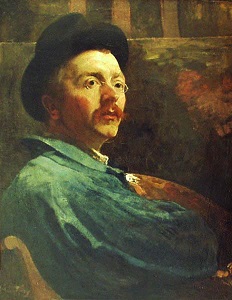
Jac. van Looy (13 september 1855 – 24 februari 1930) Zelfportret met blauwe schilderskiel, 1896
“Het is December; zijn hout moet gehakt, en hij gaat rond met zijn opzichter, om te zeggen welke opgaande boomen aan de beurt liggen en welk hakhout het kapjaar heeft bereikt. Ook is de jacht nog niet gesloten, en hij laadt ‘groote zes’ op zijn geweer in plaats van ‘kleine’, want het haas heeft, zoowel als gij, zijn winterpels aan, en als hij tot den donker toe de 30 weitasch over den rechter- en den hagelzak over den linkerschouder gedragen heeft, en het overgehaald geweer in de hand, en een paar hazen en een paar houtsnippen voor zijn vrienden in de stad bovendien, dan eet hij als een wolf, en wèl zoo goed als gij, mijnheer, al gloeide uw kantoorkachel ook nog zoo, en al hebt gij u ook nog zoo geanimeerd op de beurs. Des avonds is hij veel te moe om zich te vervelen; hij maakt zich gemakkelijk met kamerjapon en pantoffels, en heeft het zeer druk over het haas, dat hij in ‘den looper’ schoot en dat schreeuwde als een kind; het haas, dat hij vlak in de ‘kamer’ schoot, en morsdood lag; en het haas, daar hij ‘de wol’ heeft zien afstuiven, dat ook werkelijk over den ‘bol’ buitelde, maar toen de beenen weer opnam, om hier of daar in een verborgen hoek te gaan liggen sterven; of wel, met het wagen van gissingen, waar dat haas mag zijn gaan ‘drukken’, dat hij in de wijdte opgaan zag, en waar de snippen mogen zijn neergevallen, daar zijn geweer op geketst heeft.”
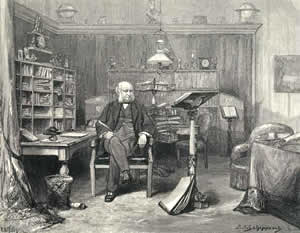
Nicolaas Beets (13 september 1814 – 13 maart 1903) Beets in zijn studeervertrek. Tekening door P. A. Schipperus, 1885
Auf Bergeshöhen schneebedeckt, Auf grünen Hügeln weitgestreckt Erglänzt die Morgensonne; Die tauerfrischten Zweige hebt Der junge Buchenwald und bebt Und bebt in Daseinswonne.
Es stürzt in ungestümer Lust Herab aus dunkler Felsenbrust Der Gießbach mit Getose, Und blühend Leben weckt sein Hauch Im stolzen Baum, im niedren Strauch, In jedem zarten Moose.
Und drüben wo die Wiese liegt, Im Blütenschmuck, da schwirrt und fliegt Der Mücken Schwarm und Immen. Wie sich's im hohen Grase regt Und froh geschäftig sich bewegt, Und summt mit feinen Stimmen.
Es steigt die junge Lerche frei Empor gleich einem Jubelschrei Im Wirbel ihrer Lieder. Im nahen Holz der Kuckuck ruft, Die Amsel segelt durch die Luft Auf goldenem Gefieder.
O Welt voll Glanz und Sonnenschein, O rastlos Werden, holdes Sein, O höchsten Reichtums Fülle! Und dennoch, ach - vergänglich nur Und todgeweiht, und die Natur Ist Schmerz in Schönheitshülle.
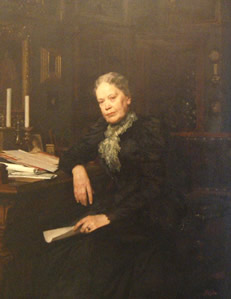
Marie von Ebner-Eschenbach (13 september 1830 - 12 maart 1916) Portret door Julius Schmidt, 189